Meet the Yellow Arrow Publishing 2026 chapbook authors
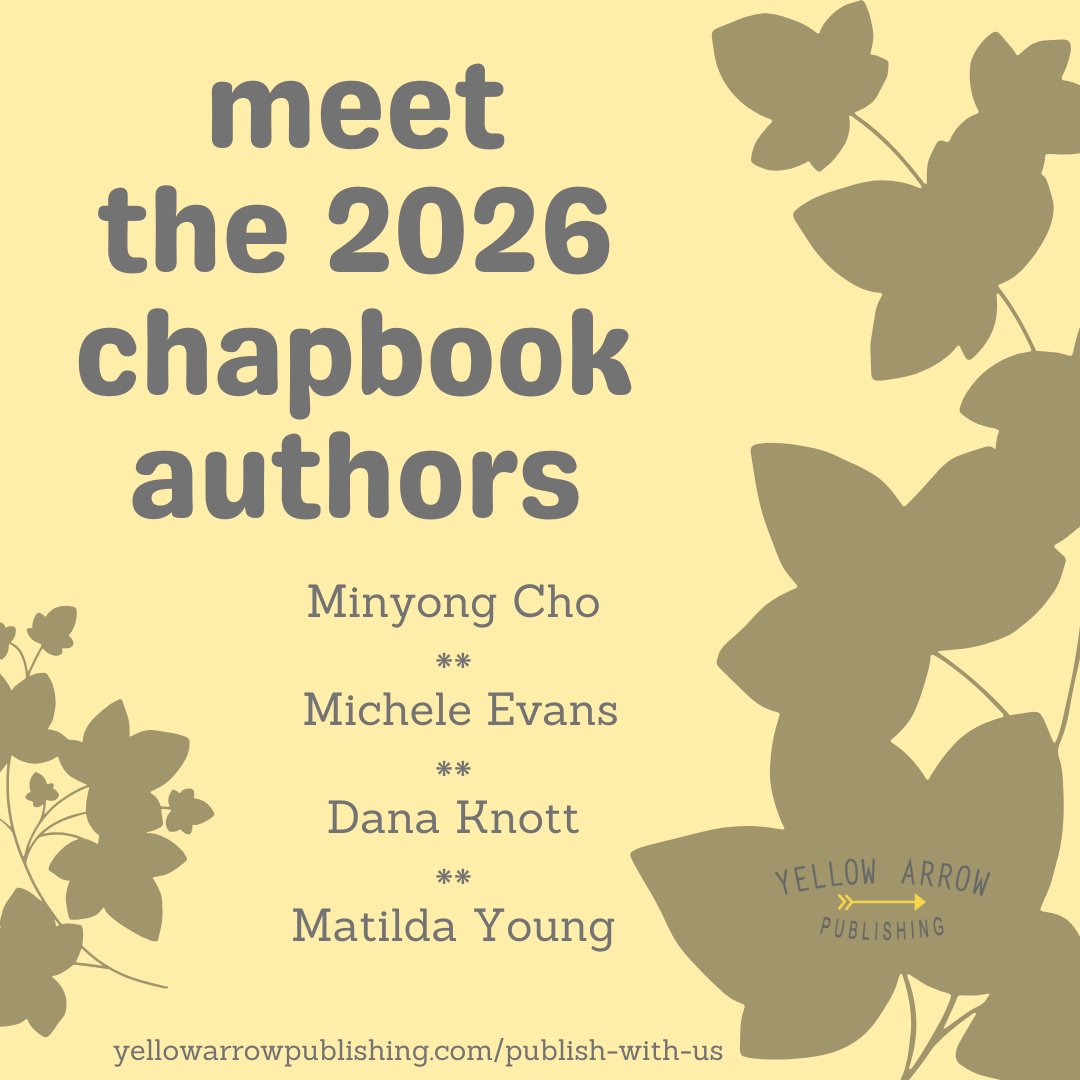
From 2020 to 2025, Yellow Arrow Publishing has had the privilege of publishing 17 chapbooks (for information about the creative minds behind these collections, visit yellowarrowpublishing.com/publish-with-us). Some of our authors published their first books with us while others had gotten their feet wet in the past but wanted to dive into something slightly different and more intimate. Several are from the Baltimore area while others are from all over the United States, with one author (shout out to Roz Weaver . . . are guinea pig and first chapbook author) from England. We’ve learned so much over the years and grown with each writer, figuring out with each book how to best support our authors. With 2026, we were looking for collections that made us laugh and made us cry and for authors that it would be an honor to work with.
In two rounds over several months, we read through the beautiful submissions we received, creating a longlist, then shortlist, and eventually selecting the three authors we would love to work with in 2026 while adding a fourth earlier in the year from our 2024 submissions. It was difficult to email submitters to let them know our decision (writing an acceptance email is as hard as a decline as you never know how either message will be received), but the process is done, and we are so excited to work with the four chosen.
So, without further ado, let’s meet the 2026 Yellow Arrow chapbook authors!
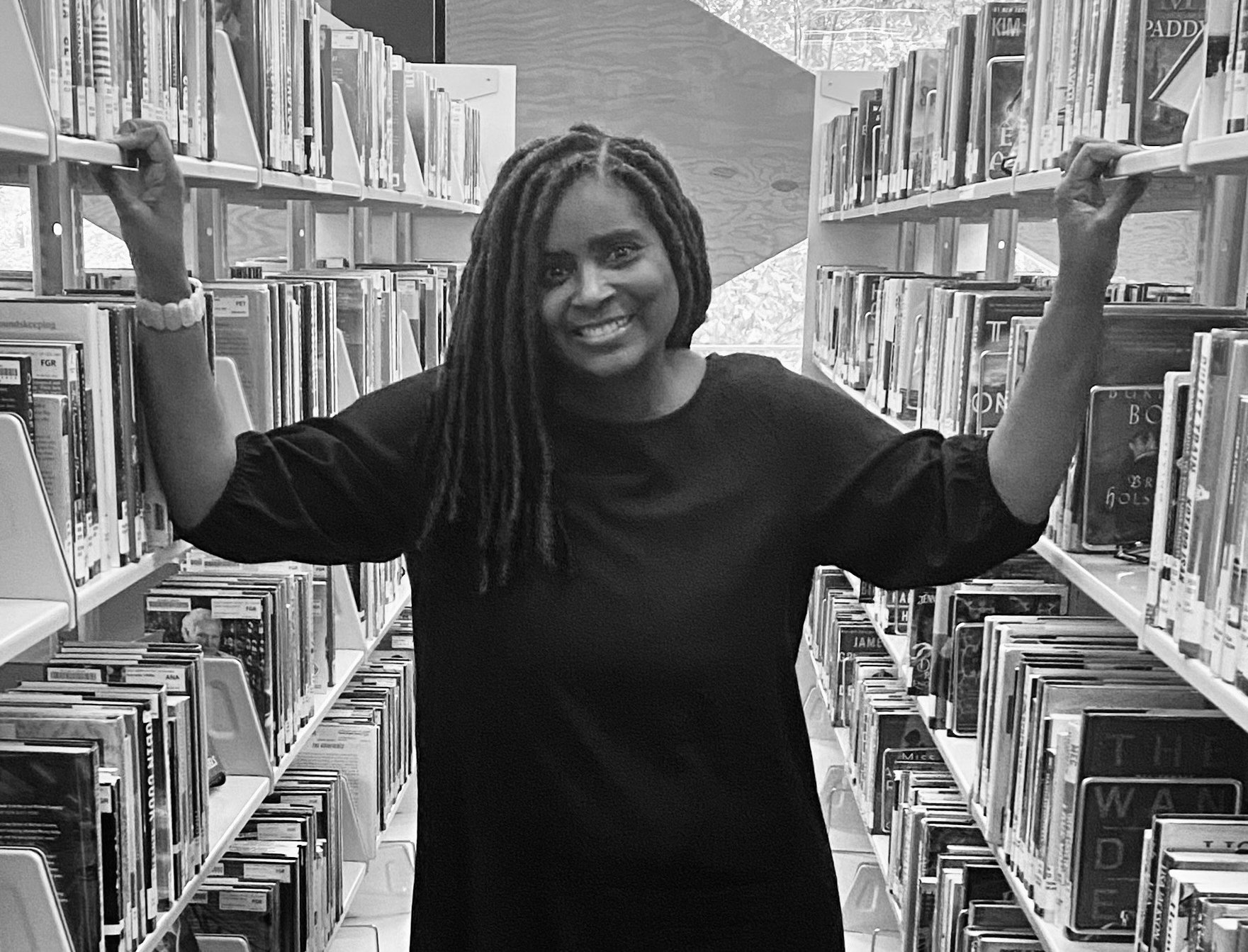
Michele Evans
februaries
coming February 2026
Photo K. Evans
Michele Evans is the author of the debut poetry collection purl (Finishing Line Press, 2025), which was nominated for the 2025 Maya Angelou Book Award. She is a fifth-generation Washingtonian (D.C.), writer, teacher, and adviser for Unbound, an award-winning Northern Virginia high school literary magazine. This Watering Hole Fellow studied English at Smith College, King’s College London, and the Graduate School at the University of Maryland. Her poems have appeared in Gargoyle, Mid-Atlantic Review, Porcupine Literary, Spoken Black Girl Magazine, Welter Magazine, Zora’s Den, and elsewhere.
She lives online at awordsmithie.com.
About februaries: Composed over a 10-year period, februaries celebrates the contributions and achievements of Americans often showcased only during Black history month. Inspired by the African American Read-In, an event established in 1990 by the Black Caucus of the National Council of Teachers of English (NCTE), the poems in februaries pay homage to literary legends Maya Angelou and Alice Walker alongside lesser-known gems Dr. Joanne V. Gabbin and E. Ethelbert Miller. februaries also draws inspiration from an assembly of established and emerging writers with ties to the DMV (Washington, D.C., area) region. The poems within this chapbook honors the idea that Black history should be “celebrated, appreciated, or narrated” well-beyond the annual 28-day celebration.
When did you first realize that words have power?
I wrote my first story when I was six years old. It was called “A Christmas Memory.” My brother helped illustrate it, my mother typed it, and my father bound it with the stapler we kept in the kitchen junk drawer. The moment I showed my self-published book to my kindergarten teacher was the moment I first realized words have power. Most of the memories from my elementary school days are fragmented and incomplete—except this one. I remember my teacher’s smile when she read my written words. I remember her walking me down the long hallway to the school library. I remember the librarian giving my book a call number, gluing a pocket on the last page to house the checkout card, and placing my book of words in circulation. I remember how it felt to see my book on a low shelf accessible to me and my peers whenever we visited the library.
At six, I was too young then to really understand how powerful words can be, especially to young people, to young writers, and to those who are finding the courage to share their voice and stories with the world. I will forever be grateful to my family and my first educators for teaching me a valuable lesson on the power of words. It is one of the primary reasons I became a high school English and creative writing teacher. In many ways, I think I have been trying to recreate a version of that core childhood experience for the students in my own classroom.
What made you decide to submit this chapbook to Yellow Arrow Publishing this year?
When Yellow Arrow selected “malea,” one of my purl poems, for publication in Yellow Arrow Journal ELEVATE in 2024, I had the opportunity to work with a poetry editor for the first time. Since I was an emerging poet at the time and someone who suffered from bouts of imposter syndrome, I was incredibly grateful for the opportunity to work with the Yellow Arrow team.
Because februaries celebrates poets from the Washington, D.C., metropolitan region, I hoped to work with a local publisher. When Yellow Arrow chose my chapbook, I was thrilled. From scheduling a release date that did not conflict with the launch of my first book purl to using my son’s art for the cover and interior pages, Yellow Arrow has been accommodating, patient, and so incredibly supportive.
With the efforts to silence and censor artists from diverse backgrounds, I appreciate their commitment to amplify women’s voices. Now more than ever it is important for artists to create and for their stories to be shared. I am so proud to be part of the Yellow Arrow family and hope my collection will shine a spotlight on the incredible work they’ve been doing for over a decade.
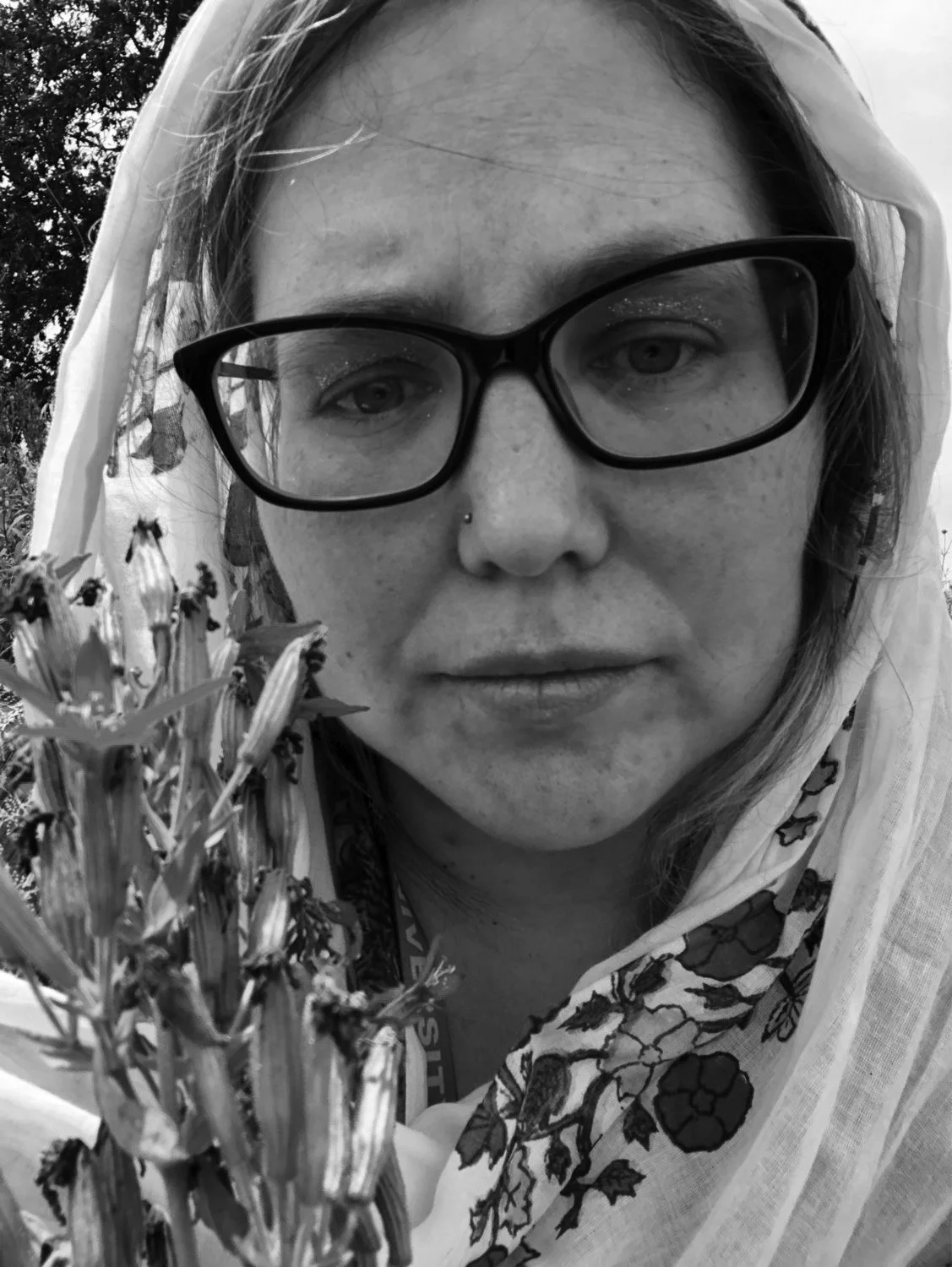
Dana Knott
Girl, Drowning
coming April 2026
Born in Chicago, Dana Knott (she/her) resides in Delaware, Ohio, and works in Columbus as Director of Libraries at the Columbus State Library. She occasionally teaches a course she designed on storytelling and social justice at Antioch University. Dana holds a MA in English, a MA in Library and Information Science, and a PhD in education for organizational leadership. She wrote the poems contained in Girl, Drowning during the COVID-19 lockdown, a disruptive yet surprisingly creative time when Dana also launched tiny wren lit, which publishes micropoetry online with downloadable zines for each issue. She is a lover of beautiful, tiny things. tiny wren also publishes tiny chapbooks in print and thematic anthologies. She has a sizable collection of various, old editions of The Rubaiyat of Omar Khayyam and a growing collection of Edward Gorey signed books, first editions, and ephemera. Her work has appeared in Yellow Arrow Journal’s EMBLAZON issue, Bitter Oleander, One Art, Feral: A Journal of Poetry and Art, The York Literary Review, right hand pointing, Dust Poetry Magazine, Ethel Zine, Minerva Rising, Cosmic Daffodil, East Ridge Review, and Moss Puppy Magazine. Her micro chapbook Funeral Flowers was published by Rinky Dink Press in 2024.
About Girl, Drowning: The poems in Girl, Drowning were inspired by Elizabeth Eleanor Siddal (1829–1862), a preRaphaelite model, muse, poet, and artist. Much attention rests on Siddal’s fame as the model for John Everett Millais’ Ophelia (1851–1852), her laudanum addiction, and the exhumation of her corpse years after her death for her husband Dante Gabriel Rossetti to retrieve a poetry manuscript he placed in her coffin. The poems within Girl, Drowning intend to amplify Elizabeth’s voice and fill in other details of her life, including her aspirations as a poet and artist and her desire for autonomy.
When did you first realize that words have power?
I have sat with this question for several days. I am fascinated with words. I love diving into the Oxford English Dictionary to explore the etymology of words, and I even keep a list of words that captivate me. I often pull from this list to add magical sparks to my poetry. Words have the power to convey beauty, delight, and awe. When I first read Walt Whitman’s “Song of Myself,” I was so struck by his words that I had to stand up and read his poem out loud like some poetry street preacher. There are poems and passages that I return to often to reconnect with the emotions and thoughts certain works have evoked: Madeline Miller’s Circe, Isabel Allende’s House of the Spirits, Jane Hirshfield’s “For What Binds Us,” which I read as my wedding vow. Yet, words have the power to inflict harm, to scar, to diminish or dismiss a person’s identity. Words require responsibility, empathy, knowledge of often problematic origins. Words require sensitivity to people’s humanity, emotions, and experiences. I am also horrified by words, more specifically the irresponsible and insensitive use of words to “own” others. Each day I try to think carefully about the words I use in conversation, in emails, and my creative work. I sometimes do not use my words wisely. It takes energy and self-awareness and an openness to criticism and growth. It takes personal interrogation of privileges and prejudices and the dark web of mind and soul. I fear that my response does not adequately capture my relationship with words and their power. I think we all recognize that key moment when we first spoke the word “No” to assert our will and autonomy. I am not one to hold my tongue; out of a sense of righteousness I must say my piece, which smacks of privilege, but I hope that my words center empathy, care, compassion, and connection rather than wound.
What made you decide to submit this chapbook to Yellow Arrow Publishing this year?
I was drawn to Yellow Arrow because it uplifts the voices of those who identify as women and acknowledges the intersection of gender with race, ethnicity, class, and ability, etc. We have shared experiences as women, but also uniquely individual experiences shaped by the many facets of identity and our place in systems that privilege or oppress. My chapbook gives voice to one specific woman, her ambitions and art, and I know that Yellow Arrow will treat this passion project of mine with the utmost care.
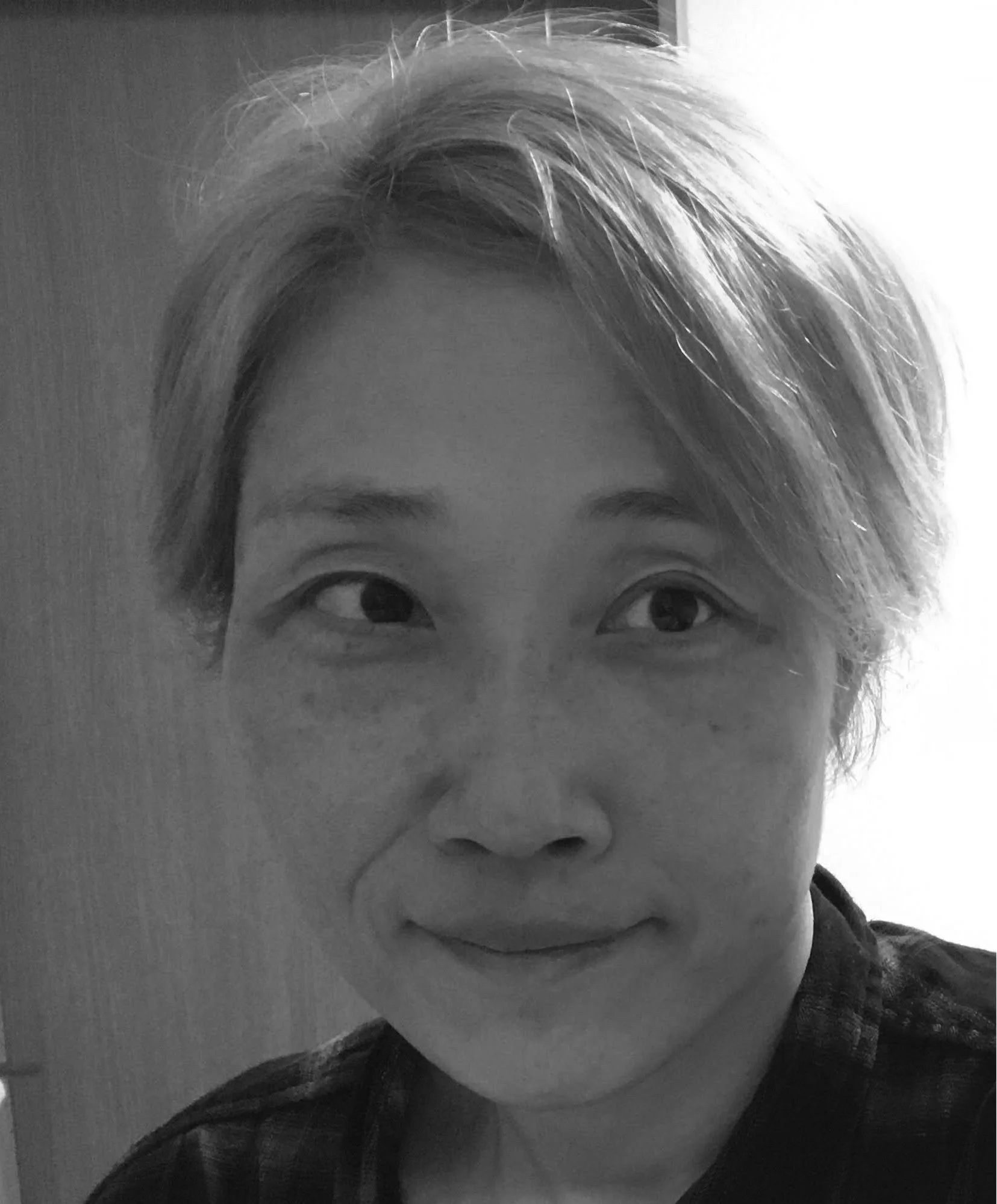
Minyong Cho
Wall Down Ramallah
coming July 2026
Born and raised in Seoul, Korea, Minyong Cho was 16 when her family immigrated to California. Soon after, her father was incarcerated for a month for physically assaulting her, and then she went to MIT on a full scholarship. By the time she moved to Ramallah through her PhD program at the University of Michigan, she had been analyzing her memories of child abuse every day for 13 years. Two chapters of her first and upcoming chapbook, Wall Down Ramallah, were published in LIT magazine and Ponder Review in June 2025.
About Wall Down Ramallah: In 2007 a 32-year-old Korean woman went to Ramallah to finish her dissertation in Islamic art history. While there, she sifted through her memories from being a child in Seoul, to answer one question that gnawed at her: why did her parents abuse her but not her sister? While in Jerusalem, she experienced a kind of psychosis that made her homeless for days and unable to sleep. After leaving Jerusalem under suspicious, troubling circumstances and somehow making her way to New Jersey, she felt free from her memories for the first time in life. Wall Down Ramallah explores this painful moment in her life and how she migrated in time and space to take down her personal walls to become content with the idea of permanently being outside of any “home.”
When did you first realize that words have power?
Coincidentally, a chapter in Wall Down Ramallah describes when I first realized that words have power. When I was five, a stranger walked into our unlocked house and sexually assaulted me. As soon as my parents returned a few hours later, I told them everything. To my surprise, it agitated them so much that my mother even called my college-educated aunt for advice. I was in awe. I didn’t know my words could galvanize them. From then on, I quietly decided I would tattle on everyone, forever.
What made you decide to submit this chapbook to Yellow Arrow Publishing this year?
I had always wanted to write a nonfiction prose about the clear turning point in my life in 2008, when I left Jerusalem. I tried a number of times over the years but didn’t really start until 2024. When I finished it this year, I felt that this was going to be my greatest accomplishment. I searched for a publisher who could understand what this memoir means to me and to the readers, rather than its profitability. Yellow Arrow stuck out as a nonprofit with ample experience publishing books by women of color and promises to provide support even after publication. I applied in a heartbeat, and here I am.
Matilda Young
Drift
coming October 2026
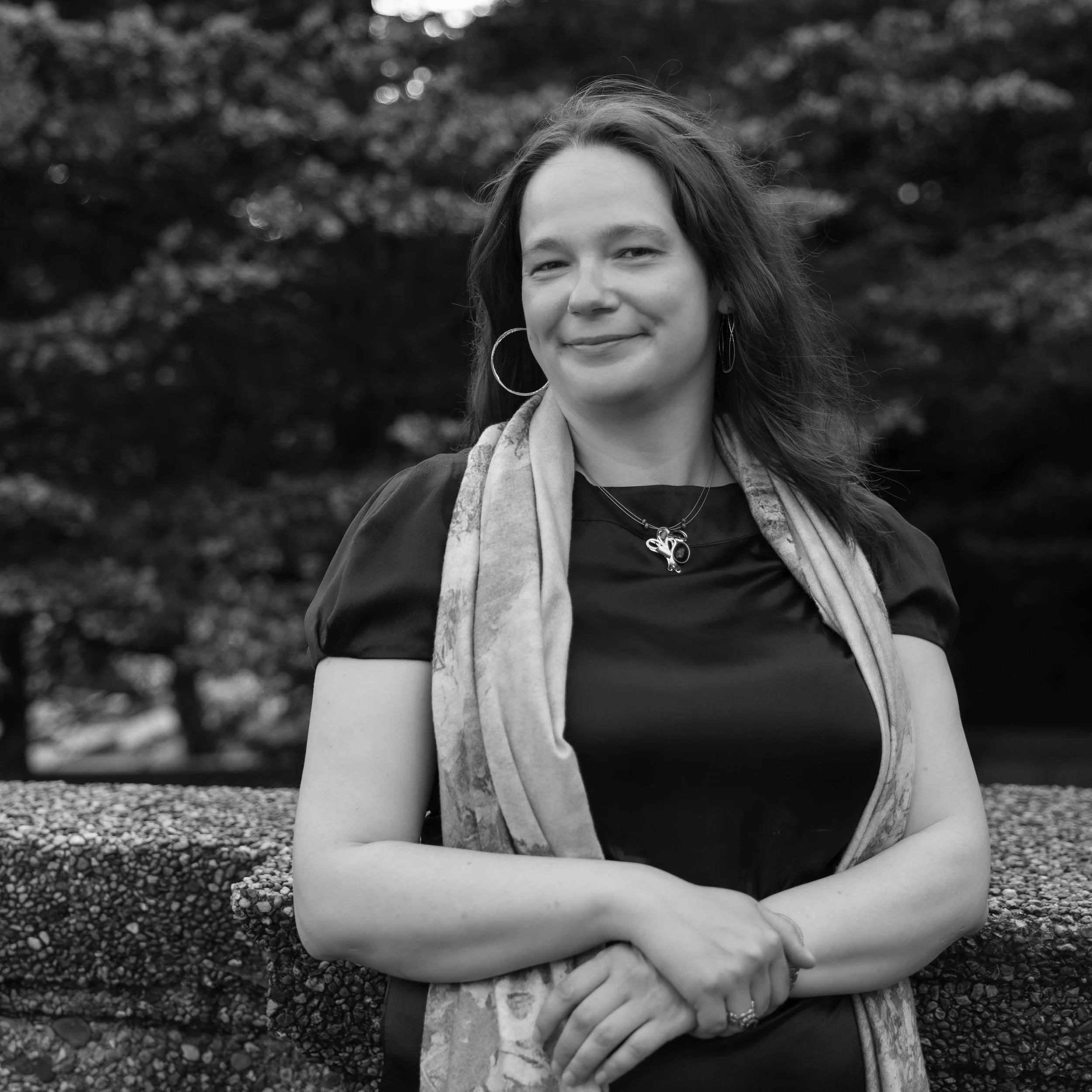
Matilda Young (she/they) is a writer with a MFA in poetry from the University of Maryland. They have been published in several journals, including Anatolios Magazine, Breakwater Review, and Entropy Magazine’s Blackcackle. She enjoys Edgar Allan Poe jokes, haphazard suburban birding, and being obnoxious about the benefits of stovetop popcorn.
About Drift: Water is always moving and so are we. As we move through time, we navigate love, loss, a whole lot of disappointment, and even more delight. Through different voices and occasions, the poems in Drift try to speak to this movement with humor, tenderness, and gratitude. Water is always moving, and so are we.
When did you first realize that words have power?
My mother would sing folk songs to me as a lullaby—“Streets of Laredo,” “Red River Valley,” “Swing Low, Sweet Chariot.” Their words to me meant comfort and adventure and family. When I could read, I would pour over my mom’s book of folk lyrics. These were some of my first poems, and I learned that they were connection—something sacred to be shared.
What made you decide to submit this chapbook to Yellow Arrow Publishing this year?
I went to my first Yellow Arrow event in Patterson Park many years ago, before the pandemic, where writers and friends and family gathered on picnic blankets to enjoy each other’s work. Since then, Yellow Arrow has continued to be a bright spot in my writing life, and I am grateful for the opportunities I’ve had to collaborate with the team and the great writers they work with. I love this community, and I love how this community shows up for each other and for Baltimore.
Over the past few months we’ve been working with Michele on februaries and can’t wait to work with Dana, Minyong, and Matilda next year to put out there incredible collections. We would also love to acknowledge all the wonderful collections we received this summer. Thank you to everyone who submitted and shared. In particular, we would love to give a shout out to both our longlisted (part of the top 30) and shortlisted authors (part of the top 15).
Meet our shortlisted authors:
Rebecca Brock
Camille Carter
Maryah Converse
Noriko Nakada
Mari Ramier
Neha Rayamajhi
Cat Speranzini
Shelley Stoehr
Cherrie Woods aka Cherrie Amour
Ariel Zhang
Meet our longlisted authors:
Jacquese Armstrong
Trish Broome
Susan Carroll
Alyx Chandler
Roxanne Christiana
Hillary Gonzalez
Jamie Hennick
Beth Kanter
Candice M. Kelsey
Sandra Levy
Cathlin Noonan
Kavitha Ratha
Mary Adamitz Scrupe
Elizabeth Sine
Bethany Tap
Thank you to everyone who took the time to send your words to us. Every writer has a story to tell and every story is worth telling. We are so proud of everyone we publish at Yellow Arrow.
Yellow Arrow Publishing is a nonprofit supporting women-identifying writers through publication and access to the literary arts. You can support us as we BLAZE a path for women-identifying creatives this year by purchasing one of our publications or a workshop from the Yellow Arrow bookstore, for yourself or as a gift, joining our newsletter, following us on Facebook or Instagram, or subscribing to our YouTube channel. Donations are appreciated via PayPal (staff@yellowarrowpublishing.com), Venmo (@yellowarrowpublishing), or US mail (PO Box 65185, Baltimore, Maryland 21209). More than anything, messages of support through any one of our channels are greatly appreciated.