Yellow Arrow Publishing Blog
Gratitude is a Divine Emotion: Yellow Arrow Interns

“Gratitude is a divine emotion: it fills the heart, but not to bursting; it warms it, but not to fever.”
from Shirley by Charlotte Brontë
One of the many ways Yellow Arrow Publishing encourages women writers and women in publishing is through inclusion within the organization itself. We welcome (and thrive with) our volunteers and interns, not only for our own benefit but to also (hopefully) provide a prospective future publisher with some necessary tools and knowledge about the publishing world. And even if a volunteer/intern does not plan to continue within the publishing world, the tools and knowledge of working in a women-led, collaborative organization. One that champions the different and the unique. One that looks for partners and allies rather than simple connections.
We try to find each volunteer, each intern, space in our organization to grow and flourish in the area they are most interested in (and of course where we need the most help!). Past staff members have worked at our live events and at Yellow Arrow House. They hand bound our publications and put as much love and tenderness into each copy as we could hope. Today they focus on the ins and outs of releasing a publication, running a publishing company, and our community-driven projects. Tasks can range from editing to formatting, marketing, and putting together events and workshops. Above all else, our interns support and champion staff/board, authors, workshop attendees, and themselves. We are so thankful to have had them with us on this journey.
So let’s introduce one of our summer 2026 interns (you met Taylor Trotta, publication management intern, in our spring intern edition here!). Each has our appreciation.
Emma Harding, Editing Intern
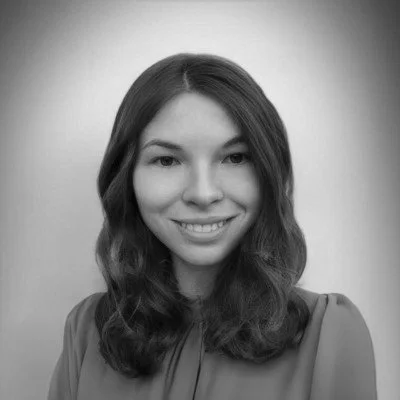
Lives in Armada (are-MAY-da), Michigan
What do you do? As an editing intern for Yellow Arrow Publishing, my main goal is to assist with the publications program on a variety of publication-related projects, working directly with the Editor-in-Chief.
Where do you go to school? I am in my second year as a MFA (poetry) candidate at Georgia College & State University. I will graduate in May 2028. Prior to that, I graduated from Central Michigan University in 2024.
What are you currently working on? I am building on my handyman skills by conducting minor renovations to my parents’ Victorian craftsman home from the 1800s. When it is too hot out, I work on my goal of reading 70 books this year (most of which are graphic novels).
Emma Harding hails from Armada, Michigan, as a neurodivergent woman pursuing a MFA in creative writing at Georgia College & State University. Her poetry, flash fiction, and visual art can be found in several journals, including Sketches, Artifex, Central Review, streetcake Magazine, and Spectrum Magazine. In her free time, Emma enjoys reading graphic novels with her cats, Alfie and Berry “Barry” Barneby Harding.
She’s currently planning on working remotely for a book publishing company’s production and design department.
What is your favorite course at school? Why did you choose to take it?
My American Sign Language (ASL) (Levels 1 and 2) courses at Central Michigan University. I needed to complete my foreign-language credits, and, because of my Auditory Processing Disorder, I found that ASL was easier for me to learn than most other languages. Before she passed away, the professor was energetic, supportive, and compassionate during COVID-19 whether it be online or in-person. She was part of the reason why I gained so much respect and admiration towards the Deaf culture and community.
Have you read anything this year that has stuck with you?
Joe Sacco’s Palestine graphic novel’s abrasive, overwhelming art style conveyed the chaotic undertakings of surviving in present-day Palestine to where I could feel the story, regardless of the words written.
Why did you choose an internship with Yellow Arrow?
I’m not a fan of absolutes. Nothing is absolute, even this. But since middle school, I believed that everyone has a story to tell, and everyone should have a chance to tell their story in their voice. So when I visited the Yellow Arrow website, “Women’s voices have historically been underrepresented in literature” resonated with me. I wanted to use my skills and abilities to amplify underrepresented voices and contribute to their cause.
What is your favorite part of your internship so far?
My favorite part of the internship has been making the graphics. It gives me a chance to blend my background in visual art with the literary world. Working in Canva to design promotional images, collage stories, and postcards for upcoming books—like Wall Down Ramallah, Ghosts Only I Can See, and Little by Little—allows me to think about what visual elements and prompt images best represent the themes of our authors’ writing. It is incredibly rewarding to play around with background colors, fonts, and interior artwork to create a cohesive aesthetic that helps celebrate and uplift women writers.
*****
Thank you to everyone who supports these women and all writers who toil away day after day. Please show them some love in the comments below or on social media. If interested in joining us as an intern, you can learn more at yellowarrowpublishing.com/internships.
Yellow Arrow Publishing is a nonprofit supporting women-identifying writers through publication and access to the literary arts. You can support us as we LUMINATE a path for women-identifying creatives this year by purchasing one of our publications or a workshop from the Yellow Arrow bookstore, for yourself or as a gift, joining our newsletter, following us on Facebook or Instagram, or subscribing to our YouTube channel. Donations are appreciated via PayPal (staff@yellowarrowpublishing.com), Venmo (@yellowarrowpublishing), or US mail (PO Box 65185, Baltimore, Maryland 21209). More than anything, messages of support through any one of our channels are greatly appreciated.
Embracing Your Voice: Wall Down Ramallah by Minyong Cho
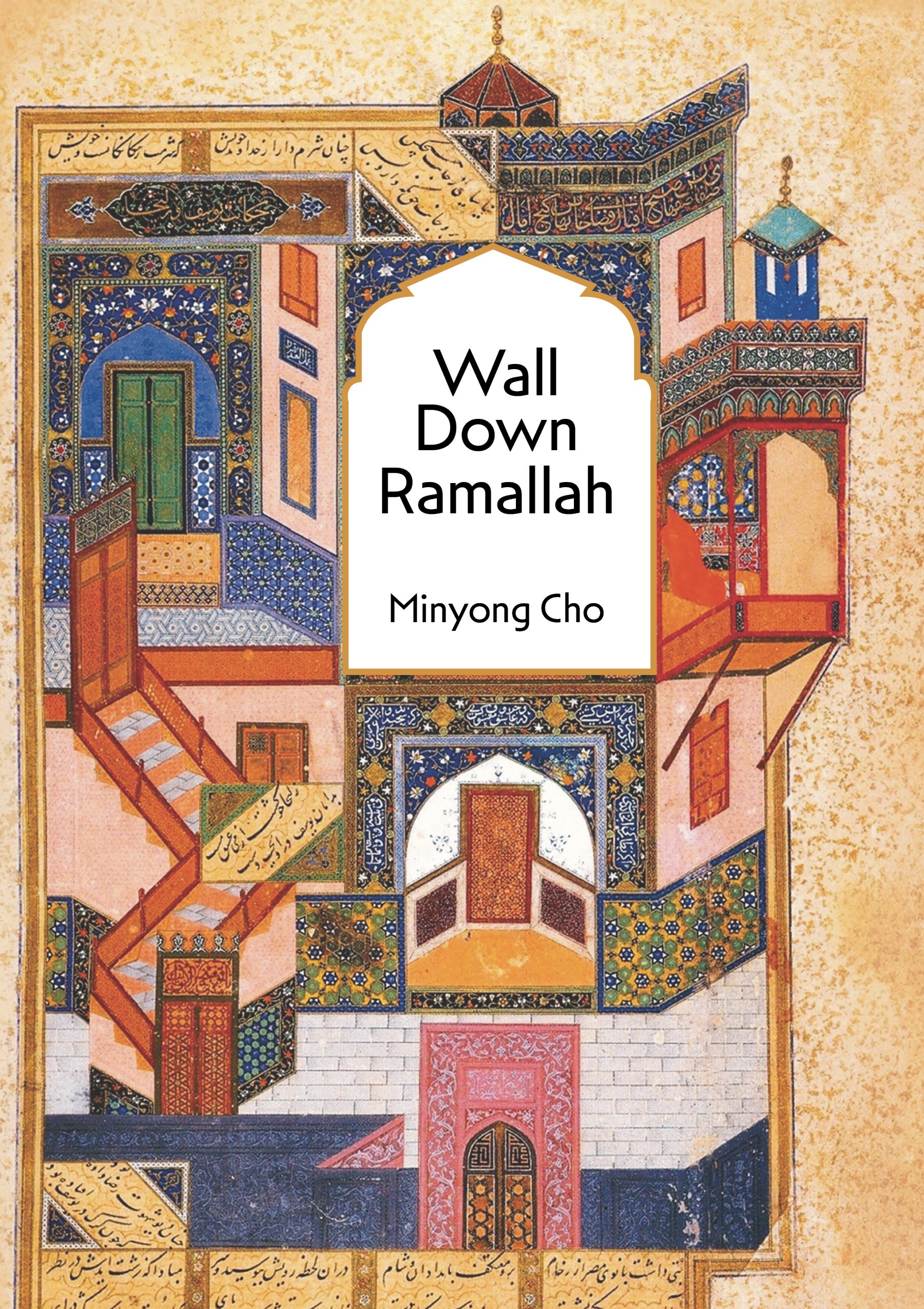
Yellow Arrow Publishing announces the release of our third chapbook of 2026, Wall Down Ramallah by Minyong Cho. Since its establishment in 2016, Yellow Arrow has devoted its efforts to advocate for all women writers through inclusion in the biannual Yellow Arrow Journal as well as single-author publications and Yellow Arrow Vignette, and by providing strong author support, writing workshops, and volunteering opportunities. We at Yellow Arrow are excited to continue our mission by supporting Cho in all her writing and publishing endeavors.
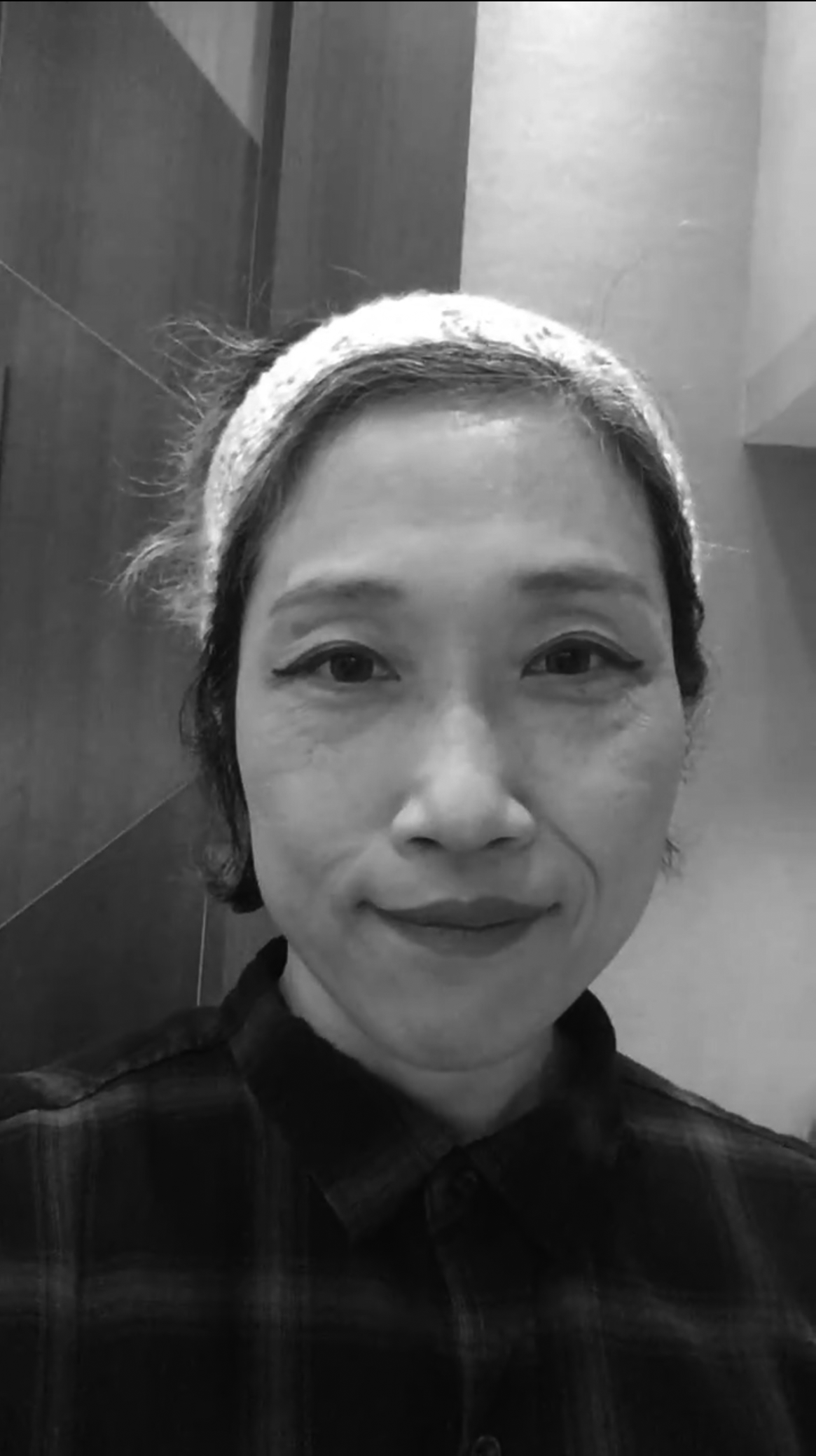
Born in Seoul, Korea, Cho immigrated to California when she was 16. In 2007, then 32 years old, she moved to the West Bank to finish her PhD dissertation in Islamic art history. There, one question about her past gnawed at her: why did she experience abuse as a child but not her sister? In Wall Down Ramallah, Cho alternates memories of Korea with her life in Palestine, eliciting feelings of being completely and permanently outside any “home.” In liminal spaces like the Qalandia military checkpoint and the haunted hallways of a Jerusalem dormitory, and through the thin walls of the houses she moved through, she pieced together what her parents might have been hiding behind closed doors. The result of her profound, heartbreaking obsession with her personal history is Wall Down Ramallah.
The cover image is Yusuf fleeing the Advances of Zulaikha (1488) by Kamal Al-Din Behzad, currently in the Egyptian National Library and Archives and in the public domain on Wikimedia Commons. Cover design is by Alexa Laharty. According to Cho, the painting “has a claustrophobic interior space that matches the tone of Wall Down Ramallah, so I asked [Alexa] to use it as an inspiration for the book cover. It turns out this image is in the public domain, so Alexa added the title and my name to one of the depicted rooms to create the best cover for my book.”
Paperback and PDF versions of Wall Down Ramallah are now available from the Yellow Arrow bookstore. If interested in purchasing more than one paperback copy for friends and family, check out our discounted wholesale prices here. You can also search for Wall Down Ramallah wherever you purchase your books, including Amazon, Barnes & Noble, and Kobo. To learn more about Cho and Wall Down Ramallah, check out our recent interview with her.
You can find Cho on Instagram @walldownramallah and connect with Yellow Arrow on Facebook and Instagram, to share some love for this chapbook. You can also share a review with any of the major distributors or by emailing editor@yellowarrowpublishing.com. We’d love to hear from you.
*****
Yellow Arrow Publishing is a nonprofit supporting women-identifying writers through publication and access to the literary arts. You can support us as we LUMINATE a path for women-identifying creatives this year by purchasing one of our publications or a workshop from the Yellow Arrow bookstore, for yourself or as a gift, joining our newsletter, following us on Facebook or Instagram, or subscribing to our YouTube channel. Donations are appreciated via PayPal (staff@yellowarrowpublishing.com), Venmo (@yellowarrowpublishing), or US mail (PO Box 65185, Baltimore, Maryland 21209). More than anything, messages of support through any one of our channels are greatly appreciated.
The Art of Letting Go
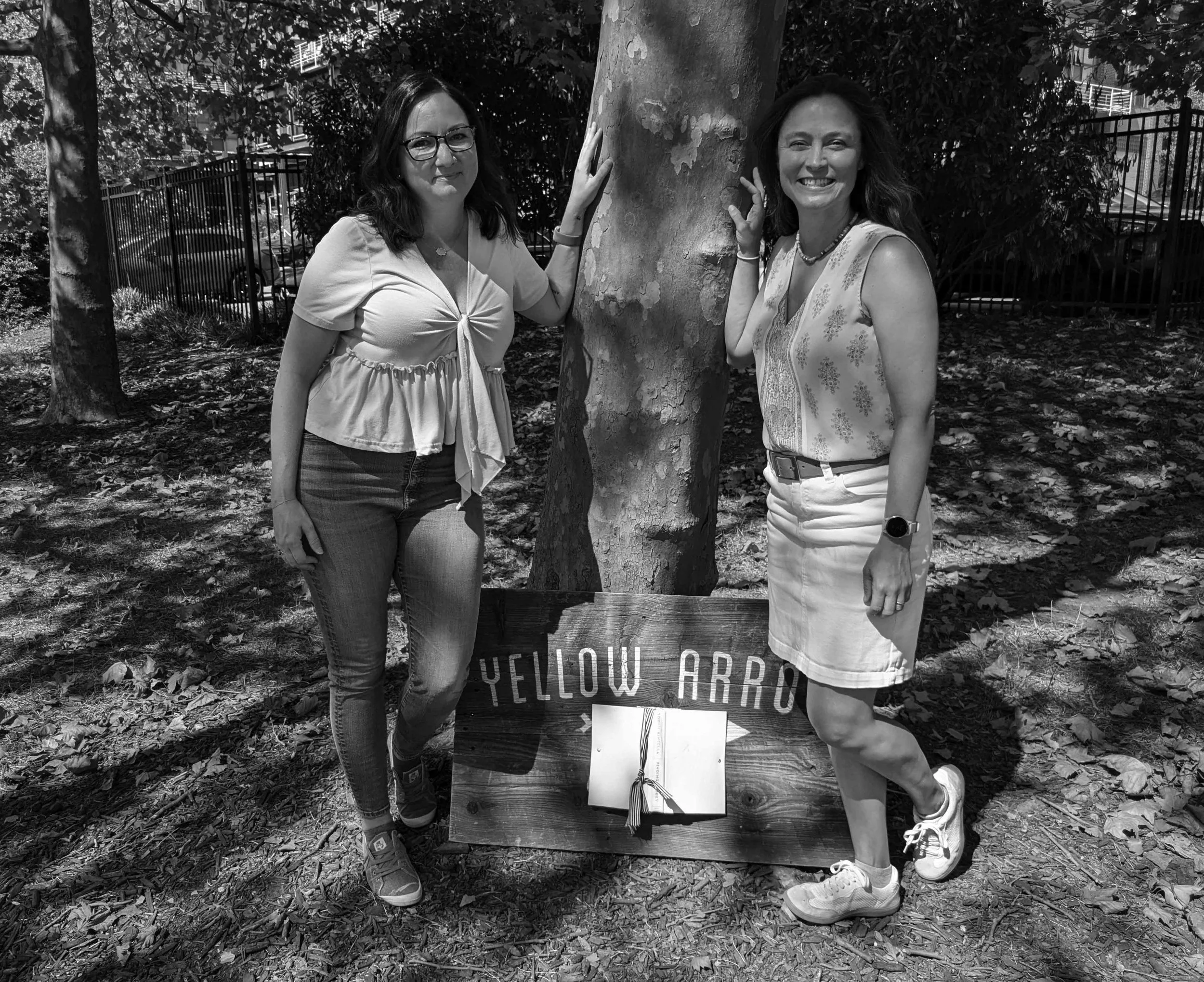
Yellow Arrow Publishing would like to announce the next guest editors (we’ve decided on two!) for Yellow Arrow Journal: Gwen Van Velsor and Annie Marhefka. They are both well known to our community, and we are excited to have both oversee the creation of our Vol. XI, No. 2, issue (fall 2026) during our 10-year anniversary. What better way to celebrate 10 years of Yellow Arrow Publishing than with the founder and current executive director reflecting and illuminating women creatives together!
With that in mind, we think the topic of the issue is fitting and can’t wait to see what everyone sends in. Creative practices require a certain letting go, whether it be in the act of writing or in the moment when the writing is shared with others. We don’t know where our creativity will lead, and we don’t know what will become of it. For Yellow Arrow Journal, Vol. XI, No. 2, we are interested in hearing about those moments in life, in the creative process or otherwise, when you let go of the outcome.
MARK YOUR CALENDARS:
Theme announcement: July 20
Submissions open: August 1
Submissions close: August 31
Issue release: November 10
Gwen Van Velsor loves writers and writing and finds great value in the act of creating and sharing the written word. She founded Yellow Arrow Publishing in 2016 in Baltimore, Maryland, after publishing her first book. Her work has appeared on various platforms since then, as handbound books, on websites, and on library shelves. Her fulfilling work with Yellow Arrow contributed to the publication of many other writers, of which she is immensely proud. Her current yellow arrows have led to candidacy for rostered ministry in the ELCA Lutheran church while pursuing a MDiv at United Lutheran Seminary. Gwen is from Portland, Oregon, and is proud to call Baltimore home, where she lives with her daughter and enjoys swimming, hiking, and camping.
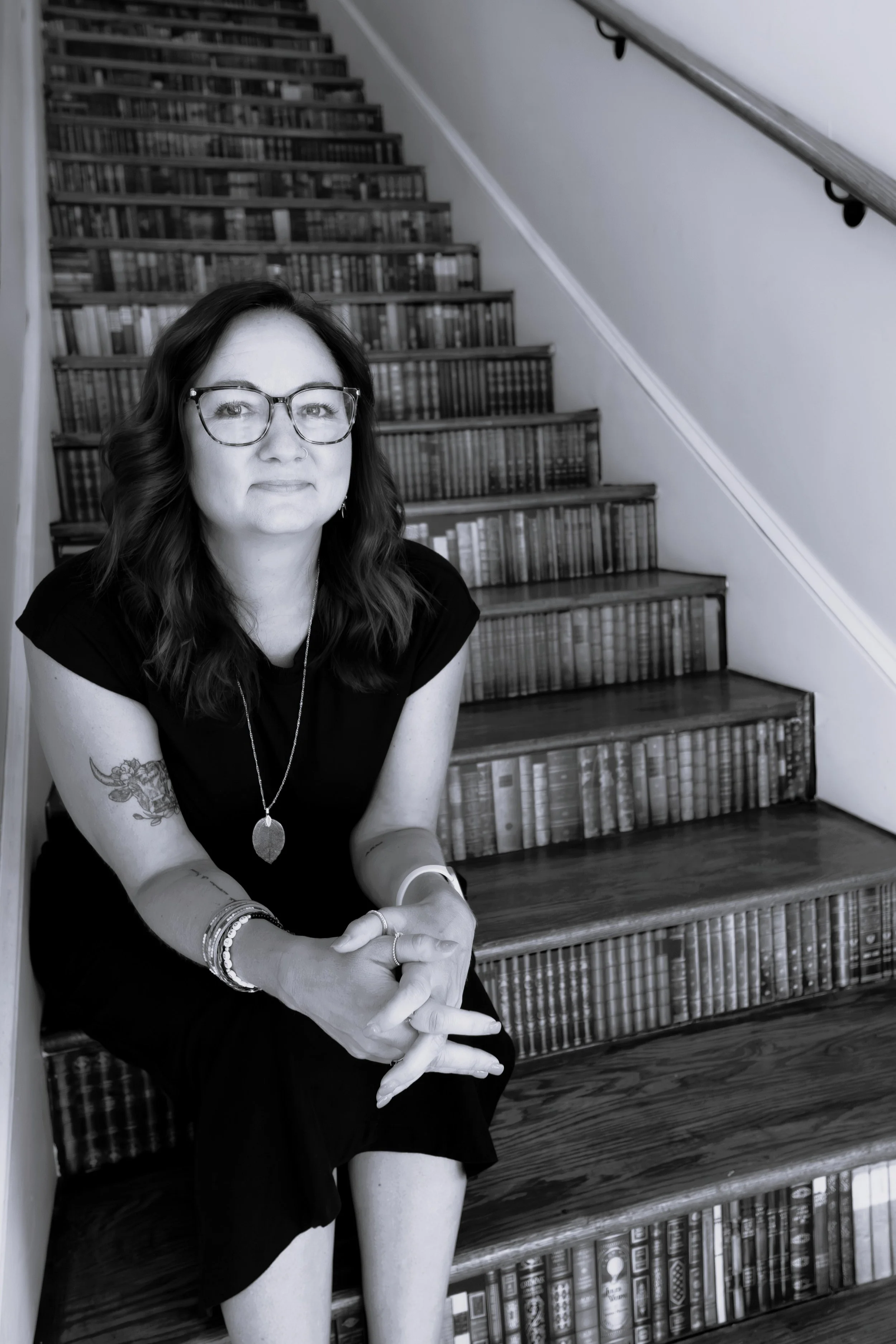
Annie Marhefka is a writer in Baltimore, Maryland; she is the recipient of the 2024 Eunice Williams Nonfiction Prize, has been featured on The Slowdown Show and has been nominated for the Pushcart Prize and Best of the Net. Annie is the executive director at Yellow Arrow Publishing, a Baltimore-based nonprofit empowering women-identifying writers. Annie has received support from the Maryland State Arts Council, Gullkistan Center for the Arts, Martha’s Vineyard Institute for Creative Writing, and Tin House. She has a BA in creative writing and a MBA from Washington College and is a MFA candidate at the University of Baltimore. She has authored two collections: Strangers We Know By Heart with Garden Party Collective and Baltimore, a travelogue memoir, for the Writer in Sites series by Scrawl Place. When Annie is not writing, she is usually trying to find her way back to the water. Follow Annie on Instagram @anniemarhefka and at anniemarhefka.com.
Please follow Yellow Arrow on Facebook and Instagram for the theme announcement. Below, both Gwen and Annie explore the idea of letting go at pivotal moments of their lives. We look forward to working with Gwen and Annie over the next few months and can’t wait to hear your words.
By Gwen Van Velsor
Back in the summer of 2014, along with many other pilgrims, I walked hundreds of miles across Spain on the Camino de Santiago. This ancient path leads to a cathedral in Santiago de Compostela where people across many generations have journeyed for thousands of reasons. It’s true that I was very blessed to have the time and the funds to make such a trek; it is also true that this was not a vacation. I was in serious spiritual trouble and did not know where to turn. Perhaps a difficult physical challenge coupled with a willingness to let a higher power guide my steps would bring me some clarity. Each day for a couple of months, I set out early in the morning on the path, following yellow arrows painted on signposts along the way. Upon arriving in Santiago, at the foot of the cathedral, I had no clarity. I had sore feet, tired shoulders, visits by earth angels, fresh bread and cold spring water at my most famished moments, but no answers. So I kept walking. At “The End of the World,” in Finisterre, where the Camino meets the sea, I could walk no longer. There was nothing left to do but let go and hope for the damn best.
And that’s when life really got interesting. I didn’t just let go; I plunged into life. I was a girl in her 30s who had lived for someone else’s dreams her entire adulthood. In quick succession, I opened a coffee shop called Yellow Arrow Coffee in Colorado, wrote the first draft of Follow That Arrow, closed the coffee shop, moved to Baltimore, got remarried, started Yellow Arrow Publishing, and had a baby. Along the way, I had learned to allow the arrows to be my guide by letting go and trusting (with varying degrees of success) that more arrows would appear.
When I got the news in 2020 that our family would be stationed in Bosnia and Herzegovina for three years, I was equal parts thrilled about the adventure ahead and crushed by the reality that I would not be able to run Yellow Arrow Publishing any longer. Learning the publishing arts and creating a writing community was such a fulfilling and important part of my life, and the thought of letting go of the work sent me into deep grief. I couldn’t understand how the arrows had led here; I must have made a wrong turn. I did not want to let my colleagues and the writers down.
Something beautiful happened along the way. The team carried on, continued the mission and the work, and the community flourished. Annie offered a holy yes to leading Yellow Arrow with her many gifts. It was in this letting go that I realized Yellow Arrow Publishing was its own collaborative of collective wisdom, gathered over the flame of the written word. All of you offered a holy yes as well, and this community has carried on and grown and offered light and love to so many.
By Annie Marhefka
In late 2017, my family experienced the sudden loss of my mother. My grieving process over the next few years was not one of letting go, though; it was one of clinging on for (my own) dear life. My mother left behind troves of journals with a plea for me to carry on her writing, to write her story for her. At that time, everything in my life was under my full control. I had built a successful career in human resources, I was in a stable marriage, I had two lovely children. I managed the household, and the schedules, and the trips. I planned everything for myself, my family, my friends—I had color-coded lists for every football tailgate menu, spreadsheets and itineraries for every group vacation, and a to-do list for every party I hosted.
But I kept thinking about my mother’s letters to me, about her insistence that I should be writing, that the ability to craft a story was my true purpose. And eventually, I decided to leave my job as a full-time HR executive and start my own consulting business so that I could devote more time to my writing. I was terrified that people would think I was foolish to leave my steady job—and in fact, many people did think that and told me so. But some people told me they thought I was brave. I didn’t feel brave, though—I felt scared. And I felt like no one around me truly understood this feeling I had that writing was what I was meant to be doing. I felt alone.
I applied for the writers-in-residence at Yellow Arrow in 2020, and honestly, I was shocked when I received the email from Gwen that I had been selected for the program. At our first meeting, Gwen told me I was the exact type of writer she had created the program for. What stood out to me in that exchange was that Gwen considered me a writer. I hadn’t published anything yet—I thought of myself as my world viewed me—as a woman/mother/wife/friend/HR professional . . . who also wrote. That conversation with Gwen made me realize that being a writer was my core identity. I felt seen.
When Gwen relocated and the board asked me to consider the role of executive director, there was nothing I wanted more than to play even a small part in helping create that feeling of belonging for other emerging writers. Learning the literary landscape and independent publishing industry was challenging and took years (and I’m still learning every day!). But at every step, I felt convicted that this was the right path for me to be on. Each writer I encountered served as a reminder, my own little yellow arrows at every turn.
In 2024, I was offered an opportunity to join an artists’ residency program in Laugarvatn, Iceland, a small town on the Golden Circle route that boasted nothing more than a hot spring, a community pool, and a gas station. It was almost an hour to the nearest grocery store or hospital, though I could find dozens of waterfalls and Icelandic ponies any direction I went. I was there without a car, without television or streaming services, without family to support with childcare; my kids had no more toys and games than they could fit into a child-sized backpack for the month.
I had been to Iceland several times before, and I had gone in search of the northern lights often, to no avail. I learned that you cannot control whether you see the northern lights. You could rent a car, pay for a seasoned tour guide, plan your trip in the perfect season, and still fail. So many factors need to align—light pollution levels, low cloud cover, dark skies, high latitudes, and perfect solar winds.
In the past year in particular, a lot has changed in my life, and most of it has changed in a way that means significant uncertainty for me. In some ways, I don’t know what my life will look like a year from now. Letting go of the control I used to have has felt like both a recklessness and an indulgence. It is a way of giving in to the universe, of throwing your hands up luxuriously and just trusting that you will somehow land where you’re supposed to. It is like that moment when all the atmospheric conditions align, and you look up and see the aurora borealis dancing for you. It is the moment when you suddenly imagine how many other human beings are looking up at that same alluring sky and viewing her through their own unique lenses. It is the moment when you know exactly how you will take an experience and craft it into art.
These are the background stories on our journeys and how those journeys have intersected through the work here at Yellow Arrow. But what does that mean for us right now, today? Where do these stories take us from here? We look forward to reading your pieces on what letting go has meant to you, trusting that these stories and poems will lead us, as a community, right where we need to be in this next issue of Yellow Arrow Journal.
*****
Yellow Arrow Publishing is a nonprofit supporting women-identifying writers through publication and access to the literary arts. You can support us as we LUMINATE a path for women-identifying creatives this year by purchasing one of our publications or a workshop from the Yellow Arrow bookstore, for yourself or as a gift, joining our newsletter, following us on Facebook or Instagram, or subscribing to our YouTube channel. Donations are appreciated via PayPal (staff@yellowarrowpublishing.com), Venmo (@yellowarrowpublishing), or US mail (PO Box 65185, Baltimore, Maryland 21209). More than anything, messages of support through any one of our channels are greatly appreciated.
On Receiving Acceptance Letters to School

By Sophia Nguyen, written April 2026
To be honest, I was prepared to strike out and spend a year personal training for a living. To accept the shame of moving back in with my parents and spend all my free time revising and rethinking and doubting and sinking into a cycle of self-immolation and sadness and apathy.
So when I received that first acceptance email, I read it until my vision blurred. Not with tears, my shock didn’t allow for that, but with screen fatigue.
When I was putting together my MFA application, I knew that the quality of my writing was what mattered the most. But I couldn’t help but fixate on my resume, the lack of literary journal publications, writing awards, or anything that would point me out as a writer worth noticing. It didn’t help that I was submitting speculative work, which is historically known to be not received as well as literary fiction by a large majority of the MFA programs in this country. Things are certainly changing, but there was no way for me to know how fast.
In any case I knew I had to give my best work and just hope that no matter the genre, it would be well received by at least one program. I sent in the stories that excited me, that made me love this craft no matter how many times I wanted to throw my laptop at the wall. They were the stories I was the most proud of, the ones closest to my heart. That’s what made the whole process even more nerve wracking. I had heard of the endless cycle of rejections, the years people had spent revising and submitting, over and over again. And I’ve always known that this field was one rooted in subjectivity, that there was no right answer or golden goose story that could get you in anywhere. So I tried to steel myself, to encase my nerves in cement all 19 times I clicked the submit button.
And then came the hardest part: the waiting. I was afraid. I had never received any validation on my writing outside of encouragement from my mentors. But what did that mean against the monolithic face of my future? I wanted to move forward. I wanted more focused time in the classroom, I wanted a community of people that I could understand and be understood by, purely through the sharing of each other’s drafts in workshops and in readings. And most of all, I wanted someone to see value in my work. Because as much as I loved those stories, a parent typically falls in love with their child. I wanted to hear someone else tell me that they wanted me to keep going. I wanted and I wanted until my stomach turned and my skin crawled, and I made myself sick with longing.
I started with the rejection emails. The “we regret to inform you,” the “we receive so many wonderful applications every cycle and we regret that we cannot admit them all.” And I’m ashamed to admit that the first one hit as hard as it did. And the second, and the third. I’d managed to build an emotional dam during the waiting months. It was strong, it seemed to be just what I needed. I was ready. Until I wasn’t, and the cracks formed, and my days began to lose their color as winter swept my college campus, as I trudged through the snow and skirted the ice. I spent hours staring at the ceiling, staring at walls. I’d applied to 19 schools and all of them could reject me. I applied to 19 schools, what if I had to read 19 rejection letters? My shoulders curved into themselves more and more noticeably as the weight of my anxieties grew heavier. It didn’t help that the country was quickly deciding that the humanities were not necessary anymore. What if the programs I coveted admittance to were axed before I could even step foot on campus? And then there was the question of my age, my inexperience. What if people didn’t believe I could contribute to their community, because I had lived so little life? It didn’t matter that most days I had lived a little too much life. The numbers were hard to argue against. I tried to accept my fate, to accept that I might have to wait before I could be a student again. I wondered who I’d be if not a student. I worried that the thought, in itself, was an issue. And I worried that who I was right now, was not enough.
But then, the word “Congratulations” appeared.
Now that the new chapter I desired so much is unfolding in front of me, it’s easier for me to talk about the application process now. But I haven’t forgotten the wintry days I spent hating my work, hating the life I had chosen for myself. I haven’t forgotten the self-doubt. And from what I’ve heard, unfortunately, that doesn’t go away.
I have no doubt I will get even more intimately acquainted with rejection. I think by the end of my life, it will be my most consistent companion. And right now, that fact is easier to bear than it was. I will learn how to better harden myself, and to better protect myself and my work.
I wasn’t sure if I wanted to write this. I was afraid it would come off as arrogant, as if I were bragging about my success. But I wanted the space to reflect, and so selfishly, I am writing this now.
I harbor a lot of guilt for the way I treated myself while I waited. The wounds are still fresh, and I am continually reapplying salves and bandages. I hold even more regret when I remember the cruel ways I thought about my work. Because if I don’t see the value in it, then why do I write in the first place? And if how I see my work is the most important thing, then doesn’t that mean I should take a little more care of my feelings? Doesn’t that mean that I am also worth something, with or without an acceptance letter?
Sophia Nguyen is from Pembroke Pines, Florida, with a BA in English, with a concentration in creative writing, and minors in comparative literature and Japanese from Indiana University, Bloomington. She will be pursuing an MFA in fiction at the University of Kansas in the fall. Sophia primarily writes speculative dystopian fiction but has experience writing literary fiction, poetry, and prose. She has worked as a reader and in editorial and social media marketing roles with academic and literary journals and has both participated in and helped organize writers’ conferences. Sophia is looking forward to continuing her experience of and helping to bolster up the literary community.
*****
Yellow Arrow Publishing is a nonprofit supporting women-identifying writers through publication and access to the literary arts. You can support us as we LUMINATE a path for women-identifying creatives this year by purchasing one of our publications or a workshop from the Yellow Arrow bookstore, for yourself or as a gift, joining our newsletter, following us on Facebook and Instagram, or subscribing to our YouTube channel. Donations are appreciated via PayPal (staff@yellowarrowpublishing.com), Venmo (@yellowarrowpublishing), or US mail (PO Box 65185, Baltimore, Maryland 21209). More than anything, messages of support through any one of our channels are greatly appreciated.
Meet a Board Member: Laura Duarte-Hazan
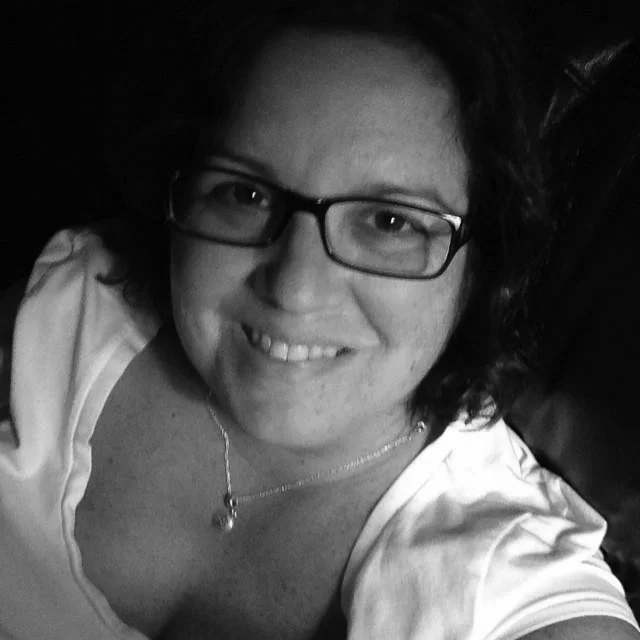
Yellow Arrow Publishing would like to introduce Laura Duarte-Hazan, a board member. Laura is a librarian with the Enoch Pratt Free Library, where she moderates the weekly Light Street Writers Exchange. This read and critique group is a core program for the Light Street Branch of the Pratt for over 10 years. In addition to supporting the writing community, Hazan has her own fiction and nonfiction published in Strongly Worded Women, Northern Virginia Magazine, and Sex and Violins. She was chair of the Washington Writer Conference for three years and a writer-in-residence for the Highlandtown Arts District in Baltimore, where she resides.
Laura says, “As one of the first Yellow Arrow writers-in-residence, I’m excited to return to help Yellow Arrow grow and succeed. My main priorities are linking Yellow Arrow to the Enoch Pratt Free Library so we can partner on readings and events and working with Kerry Graham on the Yellow Arrow Collective.”
Tell us a little something about yourself:
I’m a librarian with the Enoch Pratt Free Library, where I moderate the weekly Light Street Writers Exchange. I’m formerly the Conference Chair for the Washington Writers Conference. I completed my first novel, Little Boxes, at Arizona State University’s Piper Writing Center. In addition to having my work published, I have one award-winning poem. I’ve been to all 50 states and have fallen in eight of them.
What do you love most about Baltimore?
Charm City. The Land of Pleasant Living. The City that Reads. All the assorted monikers for Baltimore are true in some way. This city is charming and quirky with its distinct neighborhoods. I find it pleasant to live here. I love going on my rooftop deck and looking across the harbor at Fort McHenry. Where else can you live next to both a city icon (I live next to Natty Boh) and a historic locale? As a librarian for the City of Baltimore, I see daily that this city does read—all ages, all genres.
How did you get involved with Yellow Arrow?
My first experience with Yellow Arrow may have been before Yellow Arrow was Yellow Arrow. I attended a reading during a Highlandtown Friday Night Artwalk in a basement pottery studio. There, Gwen and others read. Afterward I inquired about doing a reading in the future and was embraced. A few months later I found myself doing a reading in the same basement pottery studio. A couple of years after that I applied and was selected as part of the first cohort of Yellow Arrow writers-in-residence. I’m excited to return as a member of the board.
What are you working on currently?
I’m currently applying to MFA low-residency programs and polishing my first novel.
What genre do you write the most and why?
I mostly write long fiction, romcom to be specific. Not hockey romance!
Can you recall an early memory that might have sparked your love of writing/reading?
When I was a kid there was a television show called Lou Grant that my sister and I loved to watch. It was a newsroom show, a big city newspaper. I loved the activity of a busy newsroom, and that’s when I fell in love with becoming a writer. Ironically, I have never been a journalist!
What book is on the top of your to-be-read pile?
The Artist’s Way by Julia Cameron and The Natural by Bernard Malamud.
Who has inspired and/or supported you most in your writing journey or in everyday life?
My husband Steve.
If you could have a workspace anywhere, where would it be and why? What would it look like?
I like to be a little chilly so I can also be cozy. But I also love the beach. So . . . a beachfront cottage in the winter with a roaring fireplace, a cozy couch, and my sweet, fluffy dog.
What advice do you have for new writers or anyone starting a new adventure?
Don’t let fear keep you from experiencing something new. Life is filled with scary circumstances; embrace the ones that will help you grow.
What’s your vision for Yellow Arrow in 2026?
I want to see Yellow Arrow become a lasting light for the Baltimore female-identifying artist community.
*****
Yellow Arrow Publishing is a nonprofit supporting women-identifying writers through publication and access to the literary arts. You can support us as we LUMINATE a path for women-identifying creatives this year by purchasing one of our publications or a workshop from the Yellow Arrow bookstore, for yourself or as a gift, joining our newsletter, following us on Facebook and Instagram, or subscribing to our YouTube channel. Donations are appreciated via PayPal (staff@yellowarrowpublishing.com), Venmo (@yellowarrowpublishing), or US mail (PO Box 65185, Baltimore, Maryland 21209). More than anything, messages of support through any one of our channels are greatly appreciated.
Spotlight on nat raum and fifth wheel press
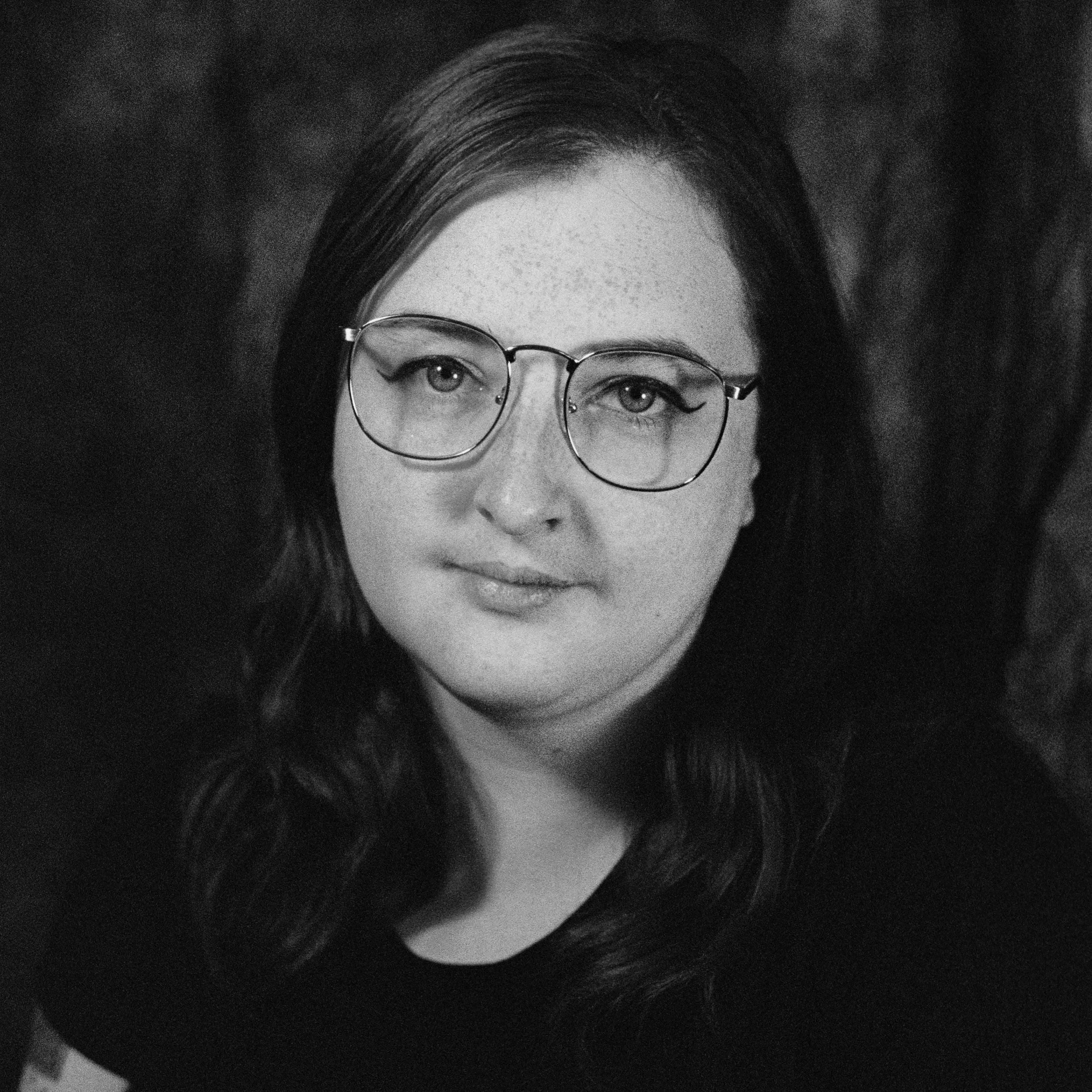
By Kelsey Hyeri Ko, written April 2026
On a crisp morning in early April 2026, I sat down with nat raum of fifth wheel press at Sophomore Coffee in Baltimore’s Old Goucher neighborhood. raum, who walks in wearing a baseball cap ironically emblazoned with “Parkville Dad” across the front, has a casual steadiness about them. I find them fresh off the heels of the Association of Writers & Writing Programs (AWP) Conference & Bookfair, which found its home in Baltimore this past March for the first time since 2003, and welcomed over 10,000 writers into the city for a weekend.
During AWP, raum had organized several off-site events, including a queer “literary circus” themed event called Balancing Act. When I walked into Club Car for the event last March, every seat was packed, and the energy from poets and audience members alike was palpably jubilant, a celebration of queer joy and art.
In that month, raum had also organized a reading event associated with Fruitcake, the queer reading series that they launched a few years ago. After being struck with excitement during their experiences reading in Philadelphia’s queer poetry scene, they had a conversation with a connection at Ottobar about bringing something like that to Baltimore. The rest was history. The reading series is now in its third year.
When there’s a call to create a space for queer writing in Baltimore, raum makes it happen. And even in the aftermath of organizing multiple events in March, raum talks about hitting the ground running in returning to their own writing and ongoing projects. As we nurse our coffees, they tell me how AWP being in town impacted their writing practice.
“I didn’t do a whole lot of writing in March,” raum says. “It was so chaotic with AWP being in Baltimore. But this April I’m doing the 30/30 Project by Tupelo Press, which is writing 30 poems in 30 days, so I’ve jumped fully back into it. I don’t really have anything that I’m writing towards in particular. I’m just playing around, and that’s been really fun.”
Writing as a practice that infuses both playfulness and fun, as well as consistency and discipline—it’s something I’m struck by throughout my hour-long conversation with raum. As I explore their relationship to writing, they rattle off more of the various writing challenges they’ve participated in and created for others, whether it’s the Aurelie 30 or the Randomizer, a generative writing workshop that they created to gamify the creative writing process.
“It’s very loosely based on the Food Network show The Tournament of Champions, where they spin the wheel and make the dish. You spin the one for the prompt, you spin the one for the form, and you spin the one for a wild card—and that’s gotten me writing in form a lot lately,”raum says. “A huge thing that my master’s program taught me was: How can we make constraints fun? How do constraints inform our writing?”
The catalyst for fifth wheel press, a small press that raum founded in 2019 for queer and trans artists, is in this spirit of constraints actually leading to more creativity. Originally founded by raum as a photobook press for photographers, Baltimore-based fifth wheel press has since published everything from monographs and zines to chapbooks and anthologies.
“I was trying to get a book published, and I was just sending my work out to various publishers, and they all rejected me,” raum says. “I was desensitized to rejection at this moment, but then I kind of was like, ‘Okay, who are these people publishing?’ I did a deep dive into who photography publishers were really circling in on in the year 2019, and I felt like it was just all cishet white dudes.”
After this experience of trying to get a seat at the table, raum decided to build their own creative outlet to elevate marginalized voices, based right out of Baltimore.
“It was very much like, if you can’t beat them, join them,” raum says. “If there’s not a space for work like mine, like my friends’ [work], it needs to exist.”
raum holds an MFA in creative writing & publishing arts from the University of Baltimore now, but they didn’t always necessarily expect to make writing the heartbeat of their creative life. While they’ve always enjoyed writing stories all throughout their childhood and into high school, when it came to pursuing their undergraduate studies, they decided to hone in on photography. After they graduated from the Maryland Institute College of Art in 2018, they found their way back to writing after experiencing creative burnout.
“The only thing I really could do at the time was write. Anything visual was just off the table. I was so burnt out, I had no interest in engaging with my art practice,” raum says. “I've always felt like I can just pick up writing anywhere and just do it. It’s not like photography, where I have to pick up my camera, do lighting, get the film developed. It just felt like a way to be creative without pushing myself to. That’s the really special thing about writing. You can do it on pen and paper, you can do it on a laptop, you can do it anywhere.”
Writing: a flexible medium that can ebb and flow with where you are, shaped and influenced by circumstances.
This ethos seems to carry over to raum’s work with fifth wheel press, which has indeed been everywhere this year, expanding and shifting in new ways. Throughout the month of June, they’ve released a free microchapbook every day in celebration of Pride Month, modeled after the summer microchapbook series from Ghost City Press. Earlier this year in March, they launched a new annual awards anthology called Monarch to recognize the best new queer writing and art published by literary magazines and independent presses.
“Monarch is like the queer Pushcart Awards,” raum says. “I was thinking about the Lambda Literary Awards and how they’re amazing in the recognition they provide for queer books, but there’s not really anything for people who are publishing in literary magazines and journals. I worked with a really phenomenal team of basically eight of some of my best friends. We’re taking the year off from single-author collections, and that’s led me to be a little bit more open about the kind of projects that I’m trying.”
raum is a poet, but in many ways, they are also a true multidisciplinary artist. Whether it’s providing freelance services editing manuscripts for other writers or creating the arts calendar and writing pieces for the Baltimore Beat, their footprint extends beyond the queer-focused writing spaces they’ve created. They create zines through their project Ramen Zine Distro. They have a background in marketing and continue to offer and use their skills in design and photography for their creative projects and freelance clients. Many of the promotional materials and cover art for their projects, they’ve designed.
It’s no surprise then that raum also approaches their writing and editing process in this multidisciplinary way. As an editor, raum views it from a lens more akin to that of a museum curator.
“I really see the value in things as they are. I’ll occasionally offer an edit to a writer, but I really do tend to publish work that I feel is ready to be published, which I think goes into that curator mentality versus editor mentality,” raum says. “Sequencing the anthology is so much fun. I take a list of everything that is like being published, and I think: What are we working with here? What are the themes? What are the vibes? What is the form? And then it all just kind of flows together from there.”
There’s this reverent nature to the way raum talks about writing—this feeling of trust and intuitiveness that is tangible in how they approach their own work, and that of others. The process of editing and creating an anthology is about feeling, curating, showcasing, uplifting. The process of writing is as natural and instinctual as breathing.
“I trust my own vision so much as a writer. I really stand behind my work. . . . So I’m very inclined to trust a writer in the way that they present something. This isn’t necessarily how I would have done it, but I understand why they are doing it,” raum says.
We chat briefly about the commodification of art and the way in which capitalism has turned creativity, which is such an essential part of human nature, into profitable side hustles. It lingers with me—the way that they talk about their writing with such a sense of confidence in the midst of all of this, the rat race that we live in. I can’t help but feel curious about it. They describe the periods of time in which they’ve received rejection after rejection, and while it feels like a “slog” at times, raum says that they don’t internalize them. Yet as a writer, there’s this tension in the fact that finding a platform for your art also means opening yourself up to a world of rejection. What’s their secret?
“I have just always written because I don’t know anything else,” raum says simply. “My creative self is a huge part of me, and I think that is ultimately where that confidence comes from. Knowing that no matter what happens professionally, I’m doing this for myself.”
I’m brought back to how we first began our conversation by talking about how constraints can sometimes help creativity come more easily. Perhaps then, facing the constraints of rejection means cultivating a deep, unwavering knowing that your work matters, regardless of what others say. Or maybe, such as in the genesis of fifth wheel press, that constraint can also motivate you to create new spaces for voices that need to be uplifted. After all, doesn’t queerness exist in juxtaposition to that which is conventional, or that which boxes you, aligning you with the status quo? The greatest radical act then could be that in the face of a world telling you “No,” writing and writing and writing anyway, and perhaps even opening doors for others along the way.
Learn more about fifth wheel press at fifthwheelpress.com and nat raum on Instagram and X @gr8earlofhell, Bluesky @gr8earlofhell.bsky.social, and on their website at natraum.com.
Kelsey Hyeri Ko is a Korean American writer, creative, and psychotherapist based in Baltimore. Her work and words have appeared in The Atlantic, Baltimore Magazine, and Maryland Matters. You can find them at kelseyhko.com or on Instagram @stringtheoretical.
nat raum (b. 1996) is a queer disabled artist, writer, and editor based on unceded Piscataway and Susquehannock land in Baltimore. They hold a BFA from the Maryland Institute College of Art and a MFA from the University of Baltimore. They are the author of origin trilogy, journal of various worries, and many others.
*****
Yellow Arrow Publishing is a nonprofit supporting women-identifying writers through publication and access to the literary arts. You can support us as we LUMINATE a path for women-identifying creatives this year by purchasing one of our publications or a workshop from the Yellow Arrow bookstore, for yourself or as a gift, joining our newsletter, following us on Facebook or Instagram, or subscribing to our YouTube channel. Donations are appreciated via PayPal (staff@yellowarrowpublishing.com), Venmo (@yellowarrowpublishing), or US mail (PO Box 65185, Baltimore, Maryland 21209). More than anything, messages of support through any one of our channels are greatly appreciated.
Inhabiting Your Voice: A Conversation with Minyong Cho
What was my father doing in his room alone? I imagined him shivering and whining like a scared cat behind the closed doors. I should have thrown away his wig like I emptied his soju bottles in the toilet.
And I wondered what Jiyoung saw.
“Wig”
Minyong Cho is a Korean-born writer and scholar whose work is shaped by memory, migration, and multilingualism. Born and raised in Seoul, her family later immigrated to the U.S., where her early experiences sparked a trajectory from rumination to research and ultimately personal resolution. Her search for answers about the role of abuse in her childhood home and her journey to study the compelling visual cultures of the Middle East collide to create an intimate and unflinching voice.
Wall Down Ramallah, which will be published by Yellow Arrow Publishing in July 2026 and is now available for preorder at yellowarrowpublishing.com/store/wall-down-ramallah-paperback, reclaims personal narrative, explores fragmented identity, and illuminates an underrepresented yet powerful perspective. The memoir invites readers to reconsider the concepts of belonging, resilience, and closure, and to recognize the power of owning your past and present.
Melissa Nunez, Yellow Arrow interviewer, and Cho connected to discuss the role of language, memory, and trauma in shaping selfhood and lived experience. They also reflected on the major themes of the memoir, including connections between personal and political histories, and the importance of women—especially immigrant women—authoring their own stories.
Who are some women-identified writers who inspire you?
My favorite book ever is Nervous Conditions by Zimbabwean author Tsitsi Dangarembga. Her clear, controlled voice, loaded with implied turmoils, gives me the chills. Shin Kyung-sook can describe how it feels to be a Korean woman like no other, especially in her Please Look After Mom. I also admire Julie Alden Cullinane, the author of Yellow Arrow’s chapbook Ghosts Only I Can See. Her story of taking pearls off a necklace one by one transported me to an unfamiliar place, which I would like to emulate in my writing.
Why did you pursue a PhD in Islamic art history?
I took a term off in college to visit Cameroon, where I saw a mosque for the first time. I heard azan from a gray bridge over a waterless river, in awe of the jewel-like textiles that adorned those headed toward the mosque. I knew I couldn’t live without studying it.
How did you hear of Yellow Arrow and what led you to submit your chapbook?
I was looking for independent publishers for Wall Down Ramallah and found Yellow Arrow on pw.org. It immediately appealed to me as a nonprofit that publishes female authors, so I submitted within days.
Can you share with us the process of selecting the cover art for your chapbook?
A 15th-century painting of Yusuf fleeing Zulaikha by Kamal Al-Din Behzad has a claustrophobic interior space that matches the tone of Wall Down Ramallah, so I asked Yellow Arrow creative director Alexa Laharty to use it as an inspiration for the book cover. It turns out this image is in the public domain, so Alexa added the title and my name to one of the depicted rooms to create the best cover for my book.
As a language learner myself, I am always intrigued and amazed by those who speak multiple languages. Can you speak a bit about your experience learning languages and how it has impacted your creative perspective and writing processes?
Learning English was difficult, and I thought I would never be able to understand anyone. It took years to finally feel comfortable speaking English, but then after that, learning a third, fourth, or fifth language wasn’t as difficult. Because Korean and English use completely different scripts, picking up the Arabic or Chinese scripts, for example, was not a great hurdle for me. Reading medieval manuscripts for my PhD research was something else, though, and made me see the historical dimension of a language.
Multilinguality is central to who I am as a person and shapes everything I do, including writing. Switching between languages allows me to become a different version of myself. I am always fragmented in a way because no one language can express all my thoughts and feelings. I try not to translate between myselves, which I believe makes my voice unique.
Beneath our composed faces, however, lurked old, rotting fractures in our spines, like my memories from childhood.
“Checkpoint”
There are a lot of subtle yet strong connections between political trauma (war and oppression) and domestic trauma (physical and emotional abuse) in your writing. Can you discuss what connects these traumas for you and how you overcome residual negativity and triggers?
This connection is one of the themes of Wall Down Ramallah. Political trauma is just as internalized as domestic trauma, and statehood deeply affects family dynamics. Collective memories of political trauma are not easily forgotten, similarly to personal memories of domestic trauma.
I know the word “overcome” is used often in this context, but I’m not sure if anyone actually “overcomes” negativity or triggers. More accurately, one learns to live with them, just as an amputee might adapt physically and mentally to a life without a limb.
This idea of being between homes is very poignant in a time with many issues around the world resulting in displacement, immigration, and other complications that lead to a loss of a sense of belonging. What encouragement can you give to those dealing with these issues?
Displacement and migration have formed much of human history, moving us to new environments and redistributing powers among us.
To a degree I feel that many of us today demand a sense of belonging as a requirement for happiness. Though it’s nice to have, there are also benefits without it. For example, we can empathize better with others and grow our character through changes. Being between homes for decades was a way for me to exist as an adult survivor of child abuse. It served as a liminal space I needed to transform from a victim to an independent thinker.
This is not to undermine how painful it is to have one’s home wrecked or to be uprooted without a guarantee to come back. Once safety is stripped away, it is no longer a problem of belonging but more of survival. In that kind of dire situation I focused on survival first. I hope nobody has to deal with that. If I can offer a word of encouragement, it does get better after, and there will be an after if you survive.
To me, “home” meant nothing. Moving was more like home. It was comforting to be on the way. I belonged in transit, in the darkness between houses.
“Ongdalsam”
Wall Down Ramallah is composed of many short chapters, flash narratives and slices of your life that encapsulate some very big events and powerful themes. Can you talk about how you organized this?
I first wrote down whatever came to my mind about a turning point in my life in 2007–2008, before which I was obsessed with my childhood, and after which I rarely thought about it. As a visual person, I had mental pictures of this transition, so it was easy for me to organize them into chapters. Through this structure I wanted to convey a loss of control, a sense of fragmentation, and a nostalgic yet melancholic tone.
The memoir ends at a place of some closure for the narrator but not complete resolution for the reader. What would you want the audience to come away with after having read your work?
The audience can come away with anything. In fact, I hope they see things I never imagined when writing Wall Down Ramallah.
What I think they might come away with is that we all write our own histories, and what we choose to remember is significant. Sometimes apologies, explanations, or facts will not bring us a closure we seek. A resolution can look different for each individual.
What advice do you have for fellow women-identified writers? Any advice specifically for those writing about difficult topics?
I have more advice for female immigrants whose mother tongue is not English, since all topics are difficult to write for us. From early on we are told our English isn’t good enough, which paralyzes us forever, even after we learn to speak English well. When I first started writing a few years ago, I kept telling myself my voice is different and is needed in English literature. My motivation comes from not wanting my story to be told by someone else, who is born and raised in the U.S. Along with all the other female immigrants, I would love to start a movement to write our stories ourselves to present our perspectives in our voices directly to the world.
Do you have any projects in the work you would like to share with our audience?
Yes! I’m writing a full-length novel. It’s a dual narrative and deals with mortality and secrets. An aging professor leans to her intellect while struggling to keep down her secret desire to break free from her public image in the U.S. In her visit to Korea to find a place to retire, she engages in intimate online conversations with her former student, a recent college graduate looking for a job. He doesn’t tell her he is in multiple online relationships, one of which is becoming violent, and he is experiencing episodes of psychosis, especially after his dog’s death. She has to choose between pursuing taboo love and staying in Korea, or she is doomed to continue on as before. He, on the other hand, fails to get a job or stability to his dismay, falls deeper into derealization, and shatters their beliefs.
I’m also rewriting Wall Down Ramallah in Korean, hoping to publish it in Korea.
Thank you, Nunez and Cho, for such a thoughtful conversation. You can order your copy of Wall Down Ramallah from Yellow Arrow Publishing at yellowarrowpublishing.com/store/wall-down-ramallah-paperback.
Born in Seoul, Korea, Minyong Cho immigrated to California when she was 16. In 2007, then 32 years old, she moved to the West Bank to finish her PhD dissertation in Islamic art history. There, one question about her past gnawed at her: why did she experience abuse as a child but not her sister? In Wall Down Ramallah, Cho alternates memories of Korea with her life in Palestine, eliciting feelings of being completely and permanently outside any “home.” In liminal spaces like the Qalandia military checkpoint and the haunted hallways of a Jerusalem dormitory, and through the thin walls of the houses she moved through, she pieced together what her parents might have been hiding behind closed doors. The result of her profound, heartbreaking obsession with her personal history is Wall Down Ramallah.
Melissa Nunez makes her home in the Rio Grande Valley region of south Texas, where she enjoys exploring and photographing the local wild with her homeschooling family. She writes an anime column at The Daily Drunk Mag and is a prose reader for Moss Puppy Mag. She is also a staff writer for Alebrijes Review and interviewer for Yellow Arrow Publishing. You can find her work on her website at melissaknunez.com/publications and follow her on Twitter @MelissaKNunez and Instagram @melissa.king.nunez.
*****
Yellow Arrow Publishing is a nonprofit supporting women-identifying writers through publication and access to the literary arts. You can support us as we LUMINATE a path for women-identifying creatives this year by purchasing one of our publications or a workshop from the Yellow Arrow bookstore, for yourself or as a gift, joining our newsletter, following us on Facebook or Instagram, or subscribing to our YouTube channel. Donations are appreciated via PayPal (staff@yellowarrowpublishing.com), Venmo (@yellowarrowpublishing), or US mail (PO Box 65185, Baltimore, Maryland 21209). More than anything, messages of support through any one of our channels are greatly appreciated.
To Outline or Not to Outline: A Writer’s Neverending Question
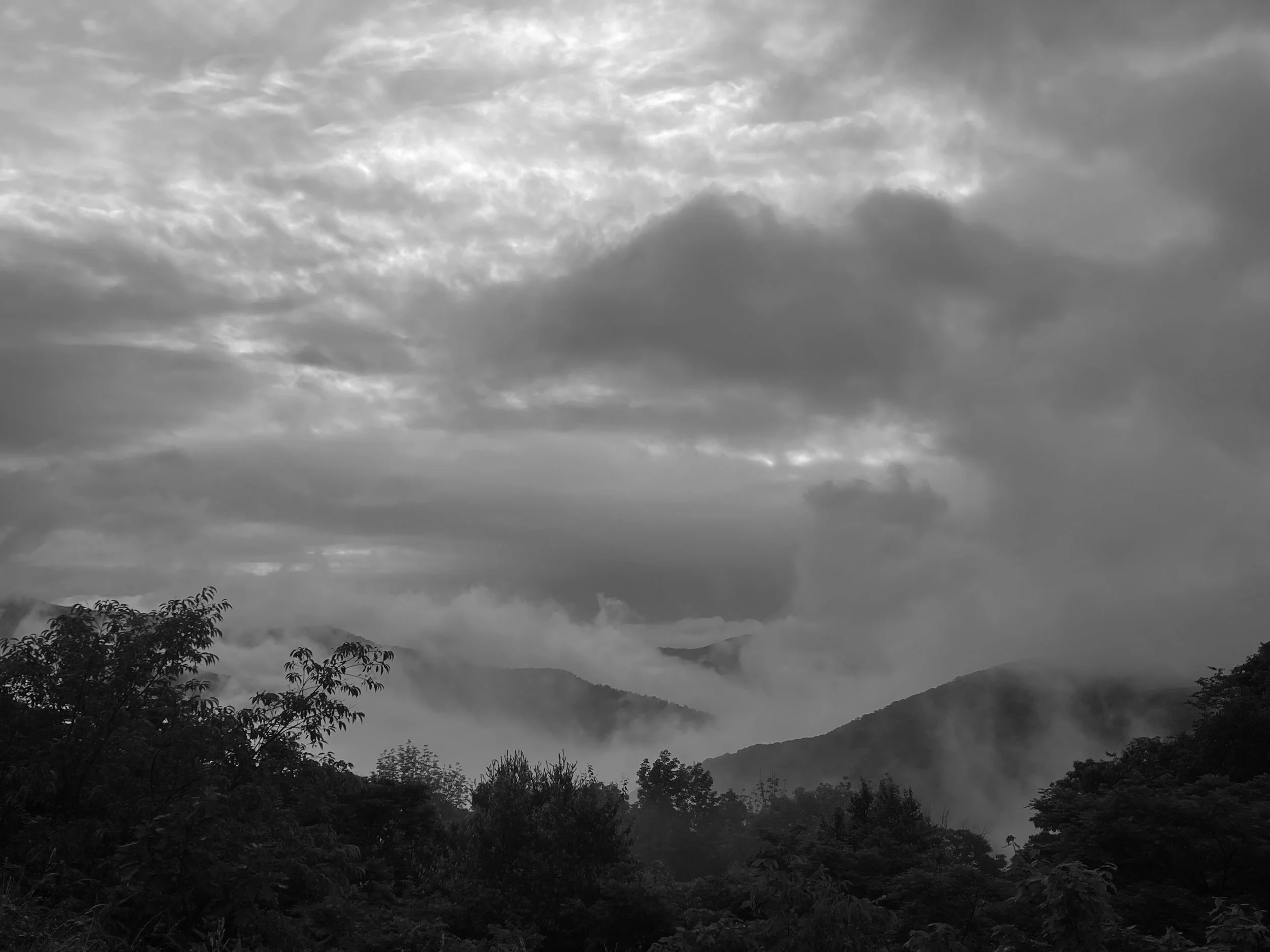
Shenandoah National Park, Virginia, 2020
By Camille Leah (Cam) Barrón, written April 2026
Shakespeare gave us the question of “to be or not to be.” Writers everywhere have their own existential crisis: to outline or not to outline.
If you’ve ever stared at a blank page wondering whether to map out your ideas first or just dive in, you’re in good company. The answer—as with most things in writing—is that it depends.
Academic Writing: Yes, Always Outline
When it comes to academic writing, I will spare you the suspense: outline. Every time, without exception.
Academic writing is often, at its core, rhetorical in nature. And rhetoric has given us a gift that too few students often use: classical arrangement theory. The rhetorical canon of arrangement (dispositio) refers to the art of selecting and ordering persuasive strategies, and classical arrangement theory provides a blueprint that has stood the test of time. (No, really. Aristotle taught us this in the fifth century BCE.) The structure goes by its Latin names—exordium, narration, partition, confirmation, refutation, peroration—but you likely know its modern descendant: the five-paragraph essay.
Here’s one of the cool things about arrangement: because rhetoric is entirely audience- and goal-driven, you don’t have to follow the formula rigidly. You can reorganize, minimize, or even remove sections to suit your argument.
After years of living and breathing rhetoric as a writing major, here is my recipe for a successful academic paper:
Step One: Draft a working thesis. It doesn’t have to be perfect; that’s why it’s called working. You just need something to point you in a direction.
Step Two: Research, research, research. Cast a wide net. Take advantage of scholarly databases you may have access to. Collect every quote you might possibly need, even ones you’re not sure about yet. While you’re at it, start a separate document for your works cited (references)—you’ll thank yourself later.
Step Three: Build a rough outline. List out the sections of arrangement you’ll need. Divide your confirmation (the body of your argument) into the main points of your thesis. Drop your quotes directly into the sections they best support. Having everything in one place before you start writing is a game changer.
Step Four: Write a detailed sentence outline. This was an addition to my process as suggested by one of my favorite rhetoric professors a few years ago, and it has been even more helpful as time goes on. Go through your rough outline and write a topic sentence for each point. Underneath each topic sentence, explain your points in full sentences. For every quote, write a sentence that connects it back to your central argument.
Step Five: Write the paper. If you’ve done steps one through four properly, this stage is almost anticlimactic. You can copy and paste much of your detailed sentence outline directly onto your draft. Add transitions, let the writing breathe, and you’ll find your paper is almost done.
Step Six: Revise and edit, then edit and revise again. Print your work and read it aloud—your ears can catch errors your eyes might skip over on a screen. Time management is key because returning to a draft after even one day gives you a fresh perspective that no amount of time staring at a screen can replicate.
I’ll admit it: I like outlining so much that I do it twice. Academic writing is focused, regimented, and produces consistent, defensible results when done properly. When the stakes are high and clarity is nonnegotiable, the outline is your best friend.
This kind of writing demands full concentration, and the space where it happens should reflect that. For me, that means my home office or the quiet floor of the library with noise-cancelling headphones on. I find that having my environment as structured as the work itself produces the best results.
Creative Writing: It Depends
Creative Nonfiction: Sometimes
For creative nonfiction, I usually outline, though not with the same rigor as with academic writing. In fact, I wrote an outline for this very blog post. When I’m working on creative nonfiction, I typically follow steps one, two, three, five, and six, from the academic process, skipping the detailed sentence outline. The goal is simply to have a map: To know what I want to say and make sure I don’t forget anything important once I’m writing.
Creative nonfiction writing lives in the in-between space. It demands the honesty and structure of a good argument, but it breathes like a story. The outline keeps me honest without constraining my voice.
With creative nonfiction, where I write is more flexible—my office, a coffee shop, out in nature. Unlike academic writing, I don’t need silence and a closed door. It comes down to what the piece needs and what I need to have in front of me while I’m writing. Sometimes that’s quiet. Sometimes that’s a little background noise and a cup of tea.
Poetry: Unequivocally, No
I love rhetoric. It’s the form I spend most of my time working in. But poetry was my first love, and it follows entirely different rules. Or, more importantly, that the poet makes the rules.
For poetry, I outline nothing. Ever.
Inspiration for poetry comes from everywhere: a snip of a song, a road sign glimpsed from a car window, a thought that surfaces in the shower, a conversation overheard in line for coffee, something seen in nature that catches the light in just the right way. Pinning that down into a formal structure before you’ve written a single line would be like trying to catch fog.
What I do instead is keep running lists—in notebooks, on my phone, on scraps of paper wherever I happen to be—full of words and phrases captured in the spark of the moment to return to later. These are the seeds, though, not the plan.
And then, when it’s time to actually write, I go outside.
The Appalachian Mountains at Dawn
During the pandemic in 2020, I found something that changed the way I understood my own writing practice.
I started making early morning drives out to Shenandoah National Park in Virginia. I would leave early enough to arrive at the crack of dawn, before the park officially opened and just in time to watch the sunrise. I’d back my car up to one of the 75 overlooks along Skyline Drive, open the trunk, and sit in the back, looking out at the Appalachian Mountains rolling away into the distance.
I brought a notebook. And I wrote.
It didn’t have to be good. I wasn’t chasing a poem with a specific shape or a particular meaning. I just wanted to look and feel and write. To let the mountains and the light and the crisp morning air move through me and see what came out on the page.
I did this at least once a week for months.
That practice is still, to this day, my favorite way to write poetry: to be in nature, to connect with something larger than myself, and to just let the writing follow. There’s no outline for that. There can’t be.
So, to Outline or Not to Outline?
It depends.
It depends on your goal, your genre, your audience, and what the work demands of you, in a given moment. Academic writing calls for structure because structure is part of the argument. Creative nonfiction benefits from a loose map. Poetry resists being planned.
What I’ve learned is that the question isn’t really about outlines at all. It’s about knowing yourself as a writer: understanding when you need scaffolding, and when you need to let it go and trust your intuition.
Sometimes the best writing comes from a careful plan executed with discipline. And sometimes it comes from sitting in the back of your car at dawn, watching the sun rise over the mountains, and just writing down whatever comes.
This is my process—one writer’s way of moving through the world and onto the page. It doesn’t have to be yours. Maybe you’re a pantser who writes every first draft in a white-hot rush and sorts it out later. Maybe you color-code your outlines and laminate them. Maybe you’re like me and you do both.
I will always advocate for outlines loudly, and in most genres, without apology. But here’s what I keep coming back to: the most important thing about the writing process is that it happens. Whatever gets you to the page—and keeps you there—is the right process for you.
Camille Leah (Cam) Barrón (she/her) is a junior at Loyola University Maryland majoring in writing with a minor in gender & sexuality studies. She grew up devoting much of her time to reading, writing, and playing lacrosse and has since developed a deep commitment to women’s empowerment and language as a tool for connection, argumentation, and social change. Her academic and creative work centers on rhetoric and poetry with a particular focus on conversations surrounding her Méxican heritage, mental health, gender-based violence, and feminist thought.
*****
Yellow Arrow Publishing is a nonprofit supporting women-identifying writers through publication and access to the literary arts. You can support us as we LUMINATE a path for women-identifying creatives this year by purchasing one of our publications or a workshop from the Yellow Arrow bookstore, for yourself or as a gift, joining our newsletter, following us on Facebook and Instagram, or subscribing to our YouTube channel. Donations are appreciated via PayPal (staff@yellowarrowpublishing.com), Venmo (@yellowarrowpublishing), or US mail (PO Box 65185, Baltimore, Maryland 21209). More than anything, messages of support through any one of our channels are greatly appreciated.
Spotlighting Indigenous Independent Press
By Avery Wood, written December 2025
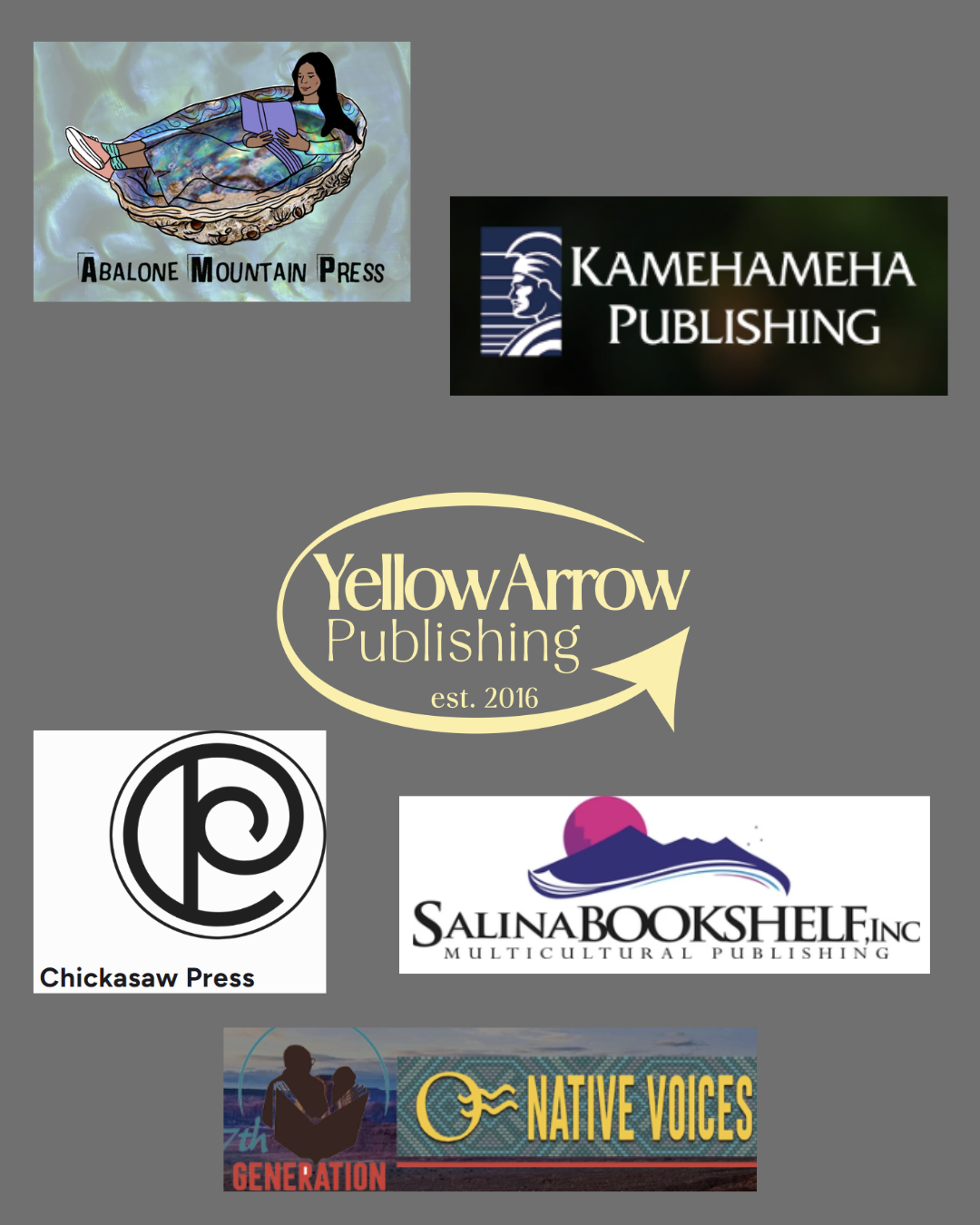
At Yellow Arrow, we believe in uplifting marginalized voices and supporting the intersection of womanhood. In this blog, I focus on giving a spotlight to independent presses and publishers that support or are run by Indigenous peoples, with a focus on poetry and prose, as well as history, heritage, and children’s books. As an organization dedicated to womanhood in all its forms, Yellow Arrow wants to use its platform to highlight incredible Indigenous-led presses whose work we admire.
Abalone Mountain Press
In a recent blog, I spotlighted Abalone Mountain Press, a women-owned independent publishing house created by Amber McCrary, a Diné woman. McCrary is a Red House Clan born for Mexican people who was originally from Shonto, Arizona and raised in Flagstaff, Arizona. Through various multimedia works such as chapbooks, zines, anthologies, coloring books, their blog and podcast, and their Abalone Writing Circle, Abalone Mountain Press supports and uplifts Indigenous voices in the Phoenix area and beyond. Their work includes themes like Indigenous culture, mental health, queerness, spirituality, the natural world, Native masculinity, and more. Find Abalone Mountain Press at abalonemountainpress.com or on Instagram and Facebook @abalonemountainpress.
Chickasaw Press
If you are interested in more history and heritage nonfiction, you can support Chickasaw Press, operated by Chickasaw natives. Housed in Ada, Oklahoma, it publishes about Chickasaw history, culture, and language. Their imprint, White Dog Press, established in 2013, explores popular genres and creative projects and includes children’s literature, historical fiction, young adult, poetry, and other creative works. In 2023, they further expanded with another imprint, Leaning Pole Press, that acts as an outlet for Chickasaw authors and scholars in a variety of genres and subjects beyond the Chickasaw historical and cultural experience. You can find countless Chickasaw Press resources available on their website at aachompa.com/pages/chickasawpress, including an app (Choctaw Hymns App), a Chickasaw dictionary, a national curriculum, a Chickasaw Nation Culture and Humanities YouTube, and a language learning software called Rosetta Stone. You can also find them on Instagram and Facebook @chicksawpress.
Kamehameha Publishing
Another nonfiction and education-focused Indigenous publishing company is Kamehameha Publishing, a Hawaiian-owned and operated publisher setting out to amplify ʻōlelo Hawaiʻi, ʻike Hawaiʻi, and kuanaʻike Hawaiʻi and deliver engaging content on Hawaiian culture for all ages. Originally known as Kamehameha School Press, established in 1888, Kamehameha Publishing currently works to publish and distribute Hawaiian language, culture, and community-based materials. One noteworthy title is Lurline Wailana McGregor’s Between the Deep Blue Sea, winner of the American Indian Library Association’s 2010 American Indian Youth Literature Award for Best Young Adult Book. Find and support them at kamehamehapublishing.org or on Facebook and Instagram @kamehamehapublishing.
Native Voices Books
Native Voices Books from Tennessee is dedicated to celebrating and promoting Indigenous cultures, publishing children’s books, craft books, coloring books, and both Cherokee and Iroquois history and cultural books. One notable title is Sisters in Spirit by Sally Roesch Wagner about the Haudenosaunee (Iroquois) influence on early American feminists, an example of their mission to illuminate intersectionality and Native feminism in the Indigenous community. Other powerful themes in their publications include health and wellness, spirituality, warrior culture, and family. You can find Native Voices at their website, bookpubco.com/native-voices, or on Instagram and Facebook @nativevoicesbooks.
Salina Bookshelf, Inc.
Independent publisher Salina Bookshelf, Inc., founded in 1994 in Arizona, specifically focuses on publishing Navajo (Diné) and southwest tribal content. They publish textbooks, children’s picture books, children’s chapter books, informational texts, reference books, audio books, and language learning materials, and they specialize in dual Navajo-/English- and Hopi-/English-language books along with textbooks used to teach Navajo language in schools. Saad Lá Tah Hózhóón: A Collection of Diné Poetry is a collection they published in 2019 about author Rex Lee Jim’s relationship to his land, his people, and his language, Diné Bizaad (Navajo Language), translated into English. You can find Salina Bookshelf, Inc., at their website, salinabookshelf.com, or follow them on Instagram and Facebook @salinabookshelf.
Honorary Mention: Milkweed Editions
Milkweed Editions, although not Indigenous owned, is another independent press I want to highlight. They are one of the most prestigious independent publishers in the U.S., and one of the most successful at amplifying voices of Indigenous peoples and other marginalized communities. Some of their world-renowned titles include Braiding Sweetgrass by Robin Wall Kimmerer and You Are Here: Poetry in the Natural World by Ada Limón. They are a beautiful organization that prides itself on taking risks on debut and experimental writers, and they operate entirely as a nonprofit. Founded in 1980 in Minneapolis, Minnesota, they’ve successfully published over 350 books of literary fiction, nonfiction, and poetry. Their slogan is “Because reading should be life-changing,” which is perfectly encapsulated by their revolutionary works that encompass themes like love, mental health, intersectionality, childhood, climate change, kinship, music, time, and more. They continue to support authors from a variety of backgrounds: Indigenous, LGBTQ+, Asian American, Pacific Islander, African American, Palestinian, Hispanic, Latinx, the climate activist community, and those writing in non-English languages. You can find and support them on their website at milkweed.org, at book and poetry readings around the world, through their Minnesota book clubs, membership opportunities, and on Instagram @milkweed_books and Facebook @milkweed.books.
In researching all the presses I mention, I was moved by the sheer breadth of stories being told, whether through language preservation apps or online zine poetry projects. All these unique forms of storytelling work to challenge the status quo and bring both positivity and perspective to Indigenous culture. Join me in celebrating all these amazing publications as they continue to amplify the voices of Indigenous peoples across the United States and work to preserve their vibrant and essential cultures. Indigenous stories are vital, and those who work to publish these incredible authors are truly doing fantastic work.
Avery Wood (she/her) is a rising senior at North Carolina State University, pursuing a BA in English with a focus on creative writing and a BS in business administration. Born and raised in Raleigh, North Carolina, Avery’s love for literature began with her work as lead editor for her high school literary magazine and continues to be a central part of her life through her involvement with her college’s literary journals. Following graduation, she intends to bring her passion for business and creative writing to the publishing industry.
*****
Yellow Arrow Publishing is a nonprofit supporting women-identifying writers through publication and access to the literary arts. You can support us as we LUMINATE a path for women-identifying creatives this year by purchasing one of our publications or a workshop from the Yellow Arrow bookstore, for yourself or as a gift, joining our newsletter, following us on Facebook and Instagram, or subscribing to our YouTube channel. Donations are appreciated via PayPal (staff@yellowarrowpublishing.com), Venmo (@yellowarrowpublishing), or US mail (PO Box 65185, Baltimore, Maryland 21209). More than anything, messages of support through any one of our channels are greatly appreciated.
Thriving with Curiosity: Reflecting on the WONDER Issue
By Heather Brown Barrett
When Yellow Arrow Journal’s Editor-in-Chief, Kapua Iao, invited me to be the next guest editor, I thought her email was a mistake, sent to the wrong person. After several long and confused minutes and rereads, I realized she meant me. I emailed her back to say YES and thank her before I could talk myself out of it! I felt incredibly nervous, but excited and grateful for the opportunity.
I suggested an issue grounded in curiosity and creativity, because I am compelled by curiosity and curious what fuels other creatives. Together with the other issue’s team members, we chose the theme WONDER. When all was said and done, we had almost 300 submissions for the issue! Wado/ᏩᏙ (thank you) to our submitters for trusting us with their delightful poems, prose, and works of art. Seeing each cover art submission and reading every written submission was a joy and an experience I will never forget. I am in awe of the talent and vulnerability of submitters. There was a variety of interpretations, and pieces delighted, inspired, and surprised me. One of my favorite aspects of the process was going through all the submissions with the reading team and seeing how pieces landed for them, reading their thoughts on individual written works and artworks.
I always knew editors have a tough job, but I now have an even deeper appreciation for how hard this process is. Declining a submission is very difficult. Having been on the receiving end of many declines in my writing journey, I know it stings. But I also know editors are telling the truth when they say they must decline good writing because of lack of space or thematic reasons, or when they encourage a writer to submit again, or when they say that they enjoyed a piece of writing. Choosing the final works was a tough process because we received so many beautiful and interesting and worthy pieces.
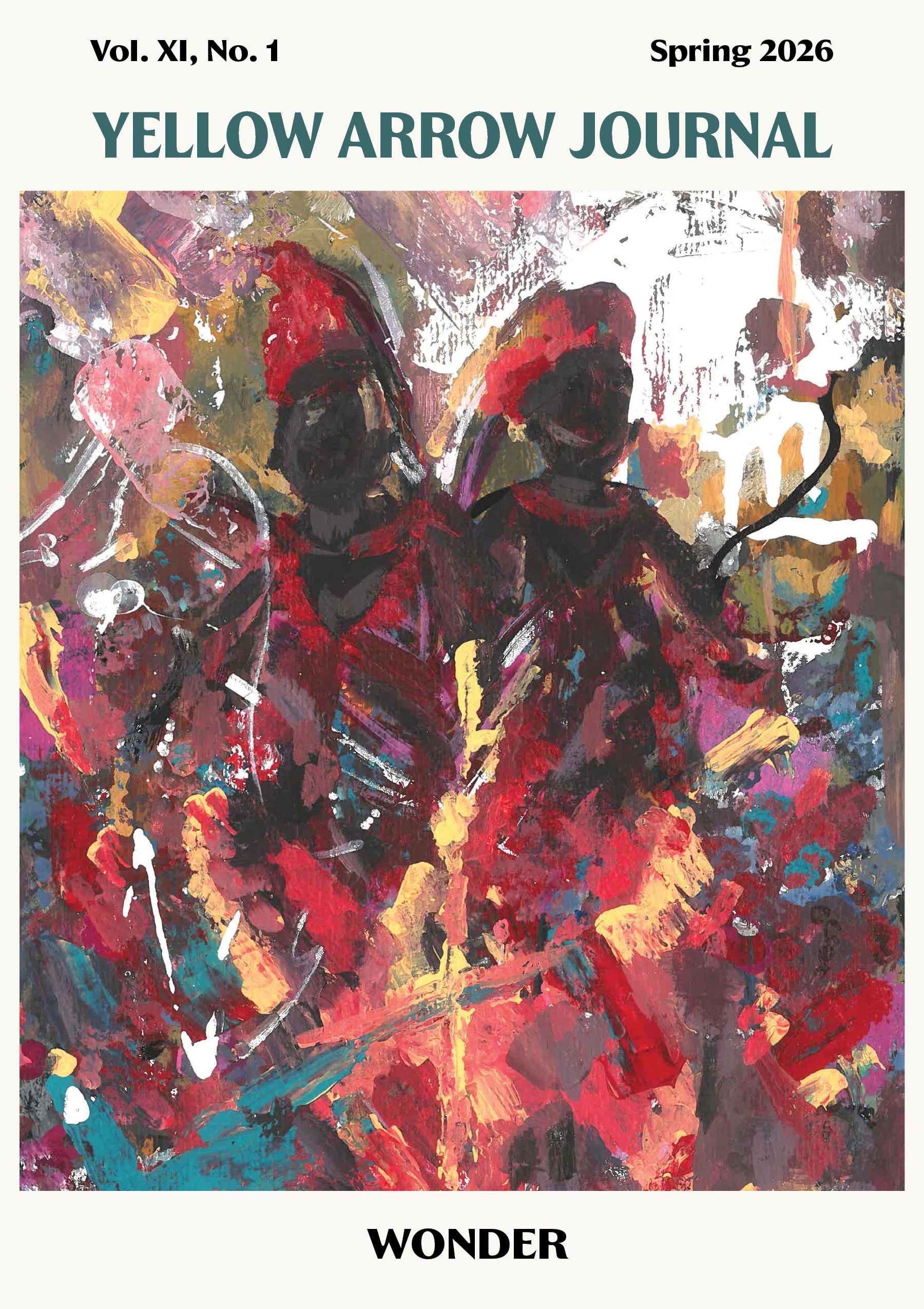
For WONDER, pieces with a strong sense of the author and voice stood out to me. Our contributors experience the self in relation to nature, writing, autism, mental illness, childhood, playfulness, aging, friendship, love, motherhood, loneliness, longing, and more. As I said in my introduction within the issue, each intriguing piece from WONDER’s 28 poets and writers sings with the strength of voice, and the whole is a brilliant chorus. Anita Grace Brown’s thought-provoking and colorful artwork, Twin Heathers, adorns our volume, affirming the depth within. It’s an honor to lift up our writers and our cover artist!
The Yellow Arrow Journal team is amazing, and their care and respect for each submission and its author is evident in every step of the process. Despite our different cities and time zones, the team could connect through email and Google and virtual meetings, to work together on decisions. Creating an issue is a labor of love. All the work the other team members did behind the scenes did not go unnoticed by me. There are so many tasks, big and small, that have to be done, and clear communication is key. Everyone has done an amazing job, and I am so grateful to Yellow Arrow Publishing for their part in this process, and for gifting me this opportunity to join them on the journey.
I’ve enjoyed every step of this process and am proud to be a part of the Yellow Arrow community and its amazing literary citizenship. I’m filled with gratitude, humbled, and honored by this experience. Wado/ᏩᏙ (thank you), Yellow Arrow Journal, for offering a space for women authors to shine.
Wado/ᏩᏙ (thank you), too, dear readers, and I hope you enjoy the words you read in WONDER. I am beyond thrilled to share these amazing voices with you!
Paperback and PDF versions are now available from the Yellow Arrow bookstore. Discounts are also available (here) if you would like to purchase copies for friends and family (minimum purchase of five). You can also search for Yellow Arrow Journal on any e-book device or anywhere you purchase print and electronic books, including Amazon and most other distribution channels. Discounted bundles of both our 2026 issues are also available from our bookstore.
And join us for the reading of WONDER, An Ever Burning Fire: WONDER, on June 9 at 7:00 p.m. You can find the RSVP and Zoom link here.
Heather Brown Barrett is an award-winning poet in southeastern Virginia. She mothers her young son and contemplates life, the universe, and everything with her writer husband. She is a Cherokee Nation citizen, the membership chair of The Poetry Society of Virginia, a member of The Muse Writers Center, and a former board member of Hampton Roads Writers. Her work has appeared in Literary Mama, The Ekphrastic Review, Yellow Arrow Journal, formidable Woman sanctuary, Black Bough Poetry, OyeDrum Magazine, and elsewhere and has been nominated for Best of the Net. Her poetry is featured in the global TELEPHONE exhibition and was previously featured on the Dahlgren Railroad Heritage Trail as part of The Poetry Society of Virginia’s Poetry on the Trail project and in the Suffolk Center for Cultural Arts Everyone Has a Story exhibit. Much of her work is influenced by themes and dualities of motherhood, modes of forgiveness and grace, and the types of subjects that plague most poets, like death, grocery stores, and birds. She’s the author of Water in Every Room (Kelsay Books, 2025), a collection of poems embodying the fluctuations of emotion and form in new motherhood.
*****
Yellow Arrow Publishing is a nonprofit supporting women-identifying writers through publication and access to the literary arts. You can support us as we LUMINATE a path for women-identifying creatives this year by purchasing one of our publications or a workshop from the Yellow Arrow bookstore, for yourself or as a gift, joining our newsletter, following us on Facebook or Instagram, or subscribing to our YouTube channel. Donations are appreciated via PayPal (staff@yellowarrowpublishing.com), Venmo (@yellowarrowpublishing), or US mail (PO Box 65185, Baltimore, Maryland 21209). More than anything, messages of support through any one of our channels are greatly appreciated.
Meet a Board Member: Lindsay A. Chudzik
Yellow Arrow Publishing would like to introduce Lindsay A. Chudzik, a board member. Lindsay has been a community-engaged professor and practitioner for over 15 years, currently serving as the coordinator of engagement and service-learning at the University of Baltimore. Her debut novel, The Most Cake, is forthcoming from Wildling Press. Lindsay’s short stories and essays have appeared in several journals, including The Chiron Review, Defenestration, Dogwood: A Journal of Poetry and Prose, Ghost Town, Haunted Waters Press, Magnolia Review, Map Literary, Parhelion, Pembroke Magazine, and more. Additionally, she was the founder and Editor-in-Chief of Feels Blind Literary and serves as a peer editor for articles related to service-learning for the Journal for the Study of Cooperative and Experiential Education. Lindsay is a Pushcart Prize nominee and the recipient of several awards for excellence in community-engaged teaching and leadership. In her free time, she loves pizza, pupusas, politics, pop culture, and punk rock, as well as every dog she’s ever met.
Lindsay wanted to say this about working with Yellow Arrow:
“When I lived in Richmond, Virginia, for 15 years, I was immersed in the literary community there. This started when I earned my MFA in fiction and playwrighting from Virginia Commonwealth University (VCU), but my involvement deepened post-graduation through my work as a board member for James River Writers and as the assistant director of RVA LitWalk. I was an associate professor at VCU, where I taught research and creative writing, but I also facilitated many community-based writing courses as well. This included creative nonfiction courses for returning citizens at Opportunity. Alliance. Reentry. (OAR) and Grove House, the latter a residential program for women who were recently released from incarceration, as well as creative writing courses for girls living in public housing.
I met some of the staff for Yellow Arrow at CityLit Fest last spring, and I was immediately drawn to their mission, as most of the creative and scholarly work I’ve done has centered around elevating the voices of women and girls. I also knew I needed to get involved in the literary community in Baltimore. Though relatively new here, I consider Baltimore my soulmate city. The key piece missing was a connection to other writers, but Yellow Arrow felt like a natural fit.”
Tell us a little something about yourself:
My short stories and essays have been nominated for Pushcart Prizes and have appeared in several journals (see above). I took a bit of a break from writing short stories to work on my debut novel, The Most Cake, which is slated to launch later this year with Wildling Press. This novel is the first piece I’ve written that’s Young Adult, but since writing it, I’ve become obsessed with all things Young Adult to the point that I’m pretty sure the folks at Netflix think I’m 13. The Most Cake is set over five days in 1996 and explores the ways we do and don’t talk about intergenerational trauma, addiction, and sexual assault, though it’s also a punk rock love story and a tribute to Courtney Love, a musician who I wanted to reclaim as the feminist hero I believe she is.
What do you love most about Baltimore?
I’ve lived in Wilmington, Delaware, Philadelphia, New York City, Richmond, Chapel Hill, North Carolina, and Savannah, Georgia, but I currently live in Baltimore, and I’m confident this will be my forever home. As I mentioned above, I consider it my soulmate city. There is so much creativity and quirk—I hate that word, but it’s hard to think of another that captures what I’m trying to say—and every day here feels like a new adventure. What impresses me most, however, is how warm, kind, and connected residents of Baltimore are. Aside from the neighborhood where I grew up in Wilmington, I’ve never known so many of my neighbors. A few here and there, sure, but I know so many people in Ridgeley’s Delight! We have monthly happy hours, an annual gala, and more. We also live just beside Camden Yards, so Orioles season feels particularly special. I can’t imagine living anywhere else!
What are you working on currently?
Now that most of the work on my debut novel is behind me, I’m finishing my short story collection, Check ‘Yes’ If You Like Us. Some of these stories were previously published, while others are brand new, though some of the characters appear in multiple stories. I hope to be ready to query the collection by mid-summer. I’ve also started my second novel, a dark comedy about a neighborhood association gone awry. My roots are in playwrighting, however. Given that Baltimore has such a vibrant theater community, my goal is to get back into playwrighting over the next year as well.
What genre do you write or read the most, and why?
I mostly write fiction that could be categorized as dark comedy, though my debut novel is Young Adult. It’s also apparently historical fiction because it’s set in the 1990s (this was hard for me to hear). I write creative nonfiction as well.
I love reading one-act plays, short stories, novels (especially Young Adult and magical realism), and memoirs. Bonus is if any of these are funny. My favorite recent book is More Strange Than True by CJ Spatro, the perfect book for anyone who loves dogs, humor, magic, and Philadelphia. I happen to love all four.
Can you recall an early memory that might have sparked your love of writing/reading?
There are so many! I loved reading from an early age. Whenever I had to go to the doctor as a child, my mom would bribe me with new Bernstein Bears books. I also preferred reading to people over having them read to me. This is embarrassing, but when I saw my first Broadway show in elementary school, Cats, that was the moment I knew I wanted to be involved in theater in some way. In middle school, we read a theatrical adaptation of The Diary of Anne Frank that I found abysmal, so I tried to rewrite it in a way that better captured the original work. I don’t think any writer could do this project justice other than Anne Frank, of course, but this was the first time I realized I wanted to be a writer in a concrete way.
What book is on the top of your to-be-read pile?
Well, I just purchased six books this morning [that I write this]! I think I’m going to start with The Road to Tender Hearts by Annie Hartnett.
Who has inspired and/or supported you most in your writing journey or in everyday life?
My mom inspired me to pursue all my dreams, including writing. She taught me to always be my authentic self and to be unapologetic about this, no matter who it made uncomfortable. This landed me in a lot of trouble in my Catholic high school, but this has served me well throughout the rest of my life. My mom was also the funniest person I ever met, and I hope I at least capture a tenth of her humor in my writing.
My mom’s passing in October 2023 was the most difficult experience I’ve navigated, but I also met my absolute soulmate during that time (we’re getting hitched in October 2026 at the site where Edgar Allan Poe is buried in Baltimore). Bobby has since become my biggest supporter, feeling genuine excitement when I succeed and making it possible for me to consistently carve out time for writing and all the other things I care about.
If you could have a workspace anywhere, where would it be and why? What would it look like?
I honestly prefer a noisy workspace with a lot going on around me, so a bar or café in Baltimore is perfect. Being able to eavesdrop on others’ conversations always inspires me. If I’m at home or in a quiet office, I’ll get distracted by dogs, making snacks, and basically every other thing other than writing.
What advice do you have for new writers or anyone starting a new adventure?
Connect with other writers! This does not mean you need to be in an MFA program to do so. There are so many opportunities to meet and, more importantly, learn from other writers. Find those opportunities and dive in! While every case is different, I learned far more about writing and publishing post-MFA.
Also, if you are writing anything at all, you are a writer! You don’t need to be published. You don’t need to write for hours each day. Do make time for yourself to write and be consistent about it, though. No one else will do that for you!
What’s your vision for Yellow Arrow in 2026?
I would love to help plan Baltimore-based events to engage more writers in the city. I’m also interested in leading writing workshops for community members, particularly those who have been historically marginalized or overlooked by literary circles.
*****
Yellow Arrow Publishing is a nonprofit supporting women-identifying writers through publication and access to the literary arts. You can support us as we LUMINATE a path for women-identifying creatives this year by purchasing one of our publications or a workshop from the Yellow Arrow bookstore, for yourself or as a gift, joining our newsletter, following us on Facebook and Instagram, or subscribing to our YouTube channel. Donations are appreciated via PayPal (staff@yellowarrowpublishing.com), Venmo (@yellowarrowpublishing), or US mail (PO Box 65185, Baltimore, Maryland 21209). More than anything, messages of support through any one of our channels are greatly appreciated.
Weaving Curiosity and Creativity: Yellow Arrow Journal (Vol. XI, No. 1), WONDER
I am safe
in the cocoon I’ve grown from my own sweet skin,
carrying scars like a thrash
of poison ivy—
“A Close and Ugly Thing” by Samantha J. Pomerantz
WONDER, the just-released issue of Yellow Arrow Journal, Vol. XI, No. 1, guest edited by Heather Brown Barret, explores the interplay between curiosity and creativity and how it informs discovery in the personal creative process and encourages artistry and fulfillment for women-identifying writers. We are grateful to have had the opportunity to work with the team, the authors, and the cover artist on this issue, and privileged to be able to share it (and them) with you. Heather says about the creatives and their work within and on the cover of the issue, “Their rich interiorities surface. Each intriguing piece sings with the strength of voice, and the whole is a brilliant chorus. . . . I’m honored to witness the talent and resilience of our WONDER authors and to share this collection with you.”
Paperback and PDF versions are now available from the Yellow Arrow bookstore. Discounts are also available (here) if you would like to purchase copies for friends and family (minimum purchase of five). You can also search for Yellow Arrow Journal on any e-book device or anywhere you purchase print and electronic books, including Amazon and most other distribution channels. Discounted bundles of both our 2026 issues are also available from our bookstore.
Heather Brown Barrett is an award-winning poet in southeastern Virginia. She mothers her young son and contemplates life, the universe, and everything with her writer husband. She is a Cherokee Nation citizen, the membership chair of The Poetry Society of Virginia, a member of The Muse Writers Center, and a former board member of Hampton Roads Writers. Much of her work is influenced by themes and dualities of motherhood, modes of forgiveness and grace, and the types of subjects that plague most poets, like death, grocery stores, and birds. She’s the author of Water in Every Room (Kelsay Books, 2025), a collection of poems embodying the fluctuations of emotion and form in new motherhood.
WONDER features Rebecca A. Adelman, Clara Akagi, Malaika King Albrecht, Elizabeth Birch, Ute Carson, Roxanne Christiana, Erin Edinger, Johanna Elattar, Katherine Mercurio Gotthardt, Rozalija Grace, Erica Monique Graham, Maya Klauber, Annie Rachele Lanzillotto, Elsie SQ LEE, Lynda Madison, Cheryl Martone, Amelia Napiorkowski, Diane Wilbon Parks, Emily Patterson, Mandira Pattnaik, Kathryn Petruccelli, Samantha J. Pomerantz, Argelia Salmon, Ciana Socias, Bethany Tap, Dana Trick, Jody Wallace, and Tanya K. Young.
The cover art is called Twin Heathers and was created by Anita Grace Brown. You can learn more about Anita in a recent Q&A at yellowarrowpublishing.com/news/spotlight-anita-grace-brown-yaj-wonder.
A huge thanks to the Yellow Arrow team for helping to shape this issue: guest Heather Brown Barrett, creative director Alexa Laharty, and executive director Annie Marhefka, along with the WONDER editorial team, Sydney Alexander,Camille Leah (Cam) Barrón, Rita Collins, Arrieonna Derricoatte, Jill Earl, Jen M. Eyre, Barbara Frey, Meg Gamble, Kapua Iao, Acacia Markel Justice, Siobhan McKenna, Sara Palmer, Mickey Revenaugh, Nicky Ruddell, Mel Silberger, and Taylor Trotta.
We hope you enjoy reading WONDER as much as we enjoyed creating it. Thank you for your continued encouragement of Yellow Arrow Publishing and the creatives involved in WONDER.
*****
Yellow Arrow Publishing is a nonprofit supporting women-identifying writers through publication and access to the literary arts. You can support us as we LUMINATE a path for women-identifying creatives this year by purchasing one of our publications or a workshop from the Yellow Arrow bookstore, for yourself or as a gift, joining our newsletter, following us on Facebook or Instagram, or subscribing to our YouTube channel. Donations are appreciated via PayPal (staff@yellowarrowpublishing.com), Venmo (@yellowarrowpublishing), or US mail (PO Box 65185, Baltimore, Maryland 21209). More than anything, messages of support through any one of our channels are greatly appreciated.
Yellow Arrow Vignette Luminate 2026 Submissions are Now Open!
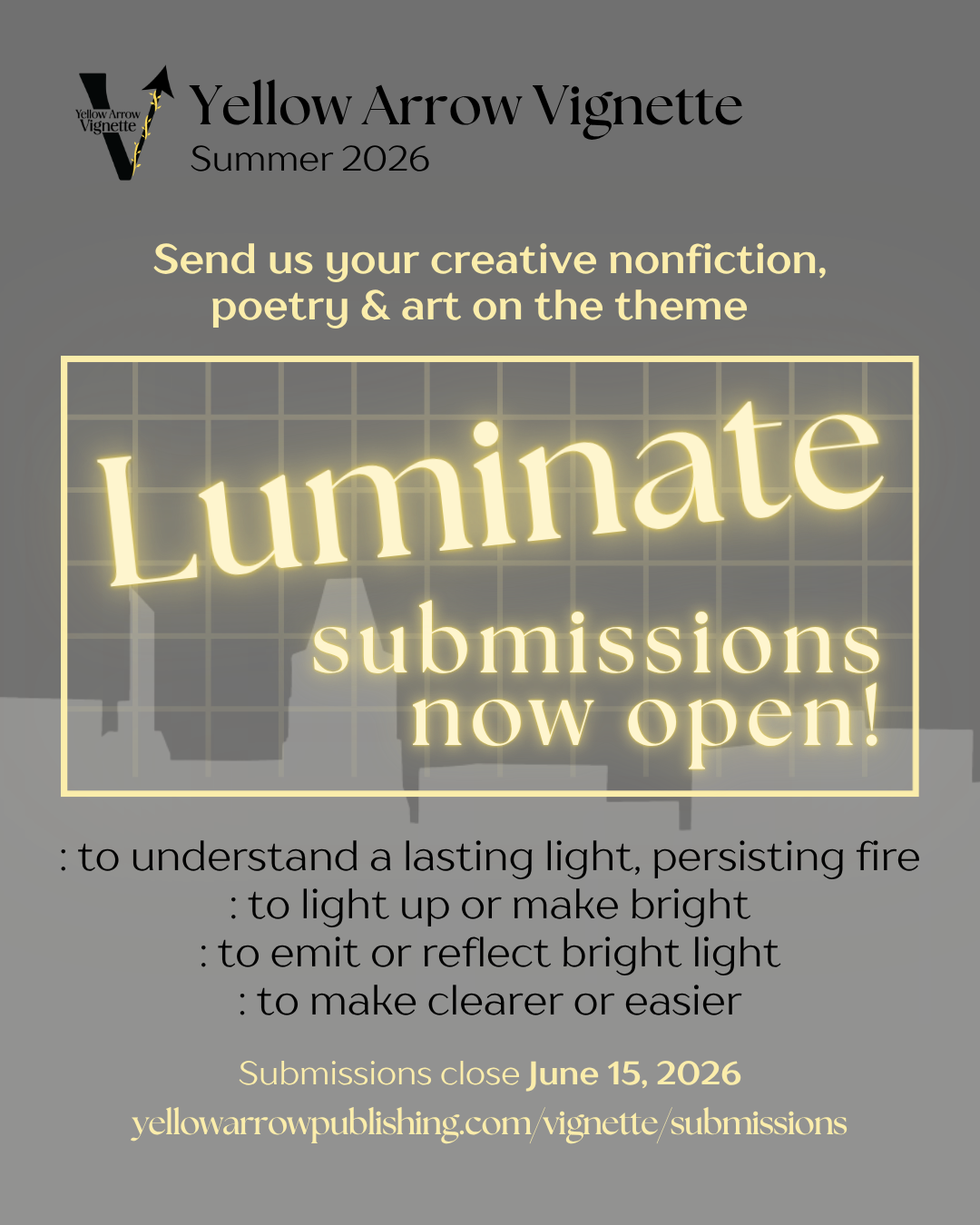
Welcome to the first day of open submissions for Yellow Arrow Vignette LUMINATE! Now in its fifth season, Yellow Arrow Vignette is an online series developed to better feature women-identifying creatives and share their voices beyond Yellow Arrow Journal and our single-author publications. This year, submissions for Vignette are open from May 15 to June 15 and will align with the 2026 Yellow Arrow yearly value Luminate.
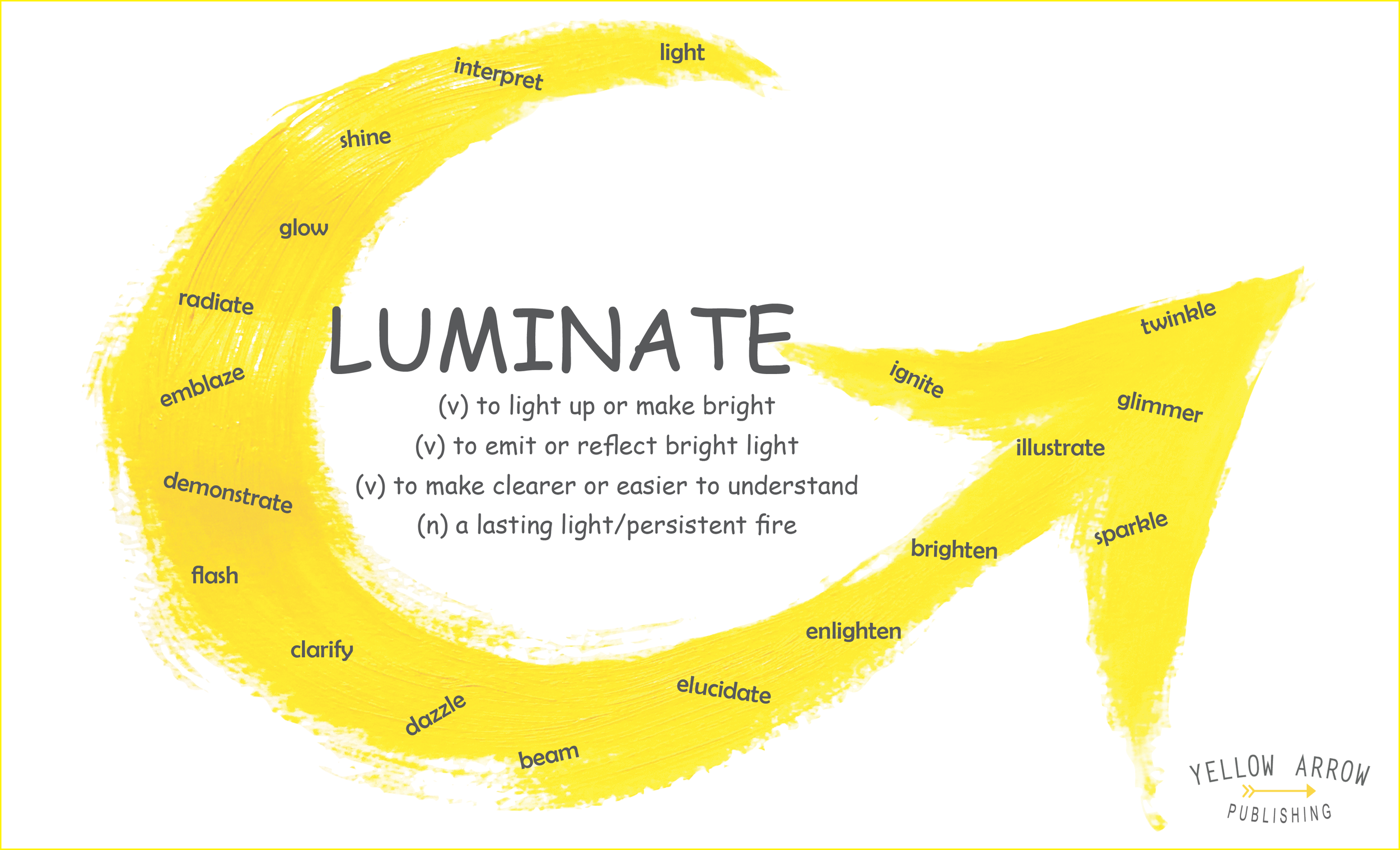
If you currently live, grew up in, or recently lived in the Baltimore area and are a creative who identifies as a woman, read the guidelines at yellowarrowpublishing.com/vignette/submissions and submit through our Yellow Arrow Vignette LUMINATE form.
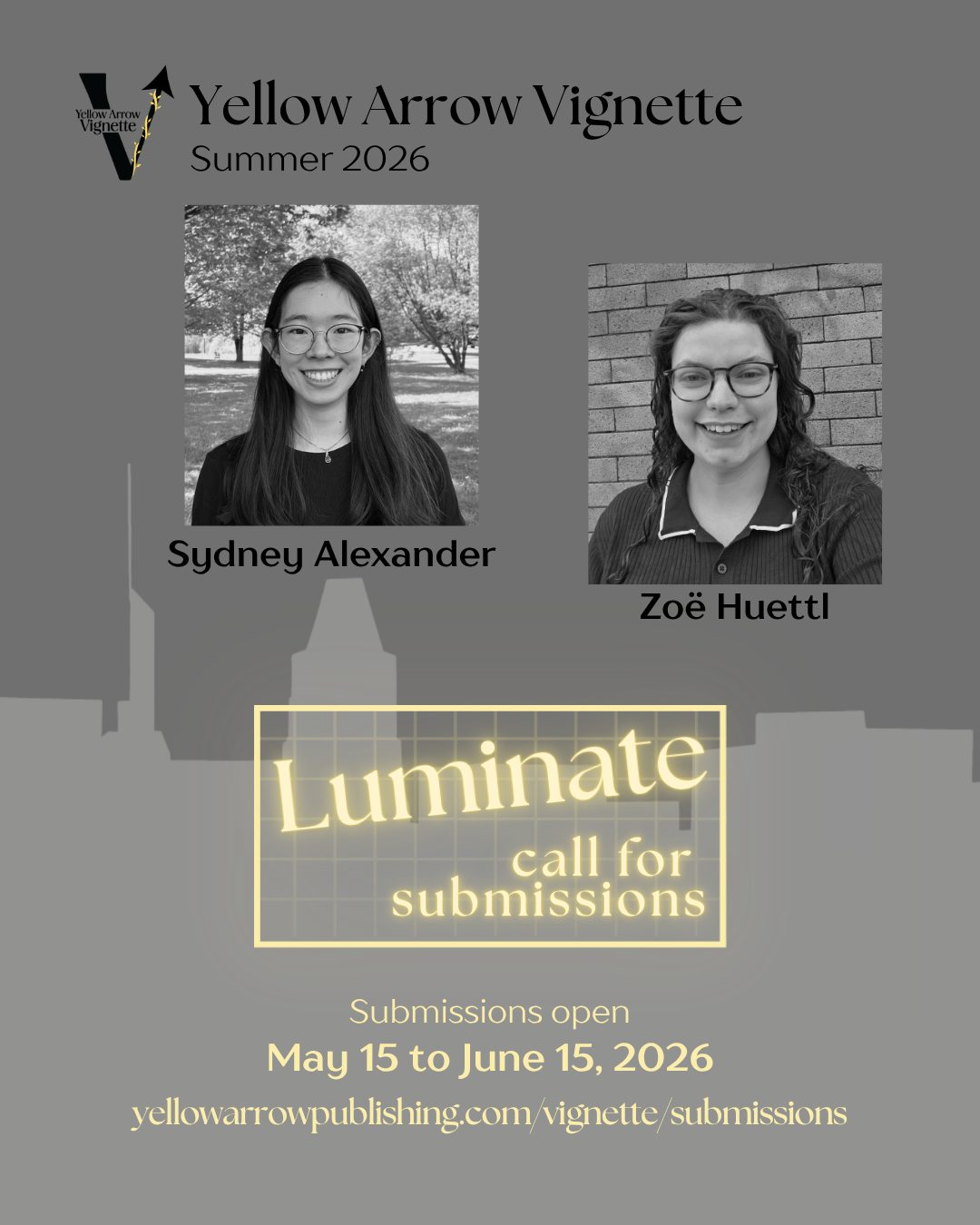
This year, we are excited to work with a new team on Vignette. Sydney Alexander, publications fellow, will be our Vignette Managing Editor, working directly with this year’s guest editor, Zoë Huettl (she/her). Sydney grew up in the Baltimore area and graduated from Middlebury College with a joint degree in English and geography. At Yellow Arrow Publishing, she previously served as an intern, an editorial associate, and a reader. She has also worked at New England Review and Galiot Press. Zoë is a poet and educator from Chicago, Illinois, and a current MFA student at the University of Baltimore. When not crafting or writing, she can be found haunting local alleys with her dog, Harper.
LUMINATE is elemental, existential. Without a light source, there is only darkness. This is why we want to shine a neon light onto Baltimore creatives this year.
: to be shaken, electrified into vivid color
: to blare with welcome
: to embrace and celebrate the self that has been contained for too long
: to buzz with audacity
: to seep into darkness
: to call others like you to find their home
Below, you can read more about Zoë’s interpretation of LUMINATE and how she is excited to see what other Baltimore creatives are welcoming and celebrating in their artistic lives.
I moved to Baltimore in August of 2025, itching to belong to a new place, anxious to see who I could become here. The heat shocked me and fogged my glasses, curling my hair further and further. As I settled in, I was looking for where to belong, and I found the bright, infectious welcome of the queer and artistic communities.
As I begin my work as the guest editor of Yellow Arrow Vignette LUMINATE, I am inspired by the places, people, and events that shone under their own vibrant power and beckoned me. I think of my classmates and colleagues and their warm conversations, of the coffee shop around the corner where I pour over thin poetry volumes, of the spell-binding tension of a crowd waiting for the band’s entrance. I think of my first, tender friendships, chatting over metal water bottles and scattered notebooks. The people I’ve met in Baltimore glow with their passions, their identities, their experiences, and their joy. In their light, I have found my own spark.
I ask you, creatives, to consider how you burn:
What do you show others that invites them to express themselves?
How do you create a community that is vibrant, resilient, and resisting the dark?
How do you celebrate the aspects of self that are luminous in yourself and in those around you?
If there was a neon sign above you, what would it say? To what are you open to, and do you stay open late?
We are writing in a political climate that is increasingly divisive, hostile, and antihuman. In our work and in our communities, we can embody our values brightly and show others that they belong. We can resist the encroaching forces that tell us to shrink, to hide, to dim ourselves. I can’t wait to read what you send in.
For Yellow Arrow Vignette LUMINATE, we’re looking for creative nonfiction, poetry, and cover art by creatives who identify as women and have a connection to the Baltimore area. For more about what this means and for information on how to submit, please visit yellowarrowpublishing.com/vignette/submissions and submit your piece using our Yellow Arrow Vignette LUMINATE form. If you have any questions, send them to submissions@yellowarrowpublishing.com. The online issue will be released in August.
We look forward to reading the submissions for Yellow Arrow Vignette LUMINATE and sharing stories with you. Since its founding in 2016, Yellow Arrow has worked tirelessly to make an impact on the local and global community by advocating for writers who identify as women. Yellow Arrow proudly represents the voices of women from around the globe. Creating diversity in the literary world and providing a safe space is deeply important. Every writer has a story to tell and every story is worth telling.
*****
Yellow Arrow Publishing is a nonprofit supporting women-identifying writers through publication and access to the literary arts. You can support us as we LUMINATE a path for women-identifying creatives this year by purchasing one of our publications or a workshop from the Yellow Arrow bookstore, for yourself or as a gift, joining our newsletter, following us on Facebook and Instagram, or subscribing to our YouTube channel. Donations are appreciated via PayPal (staff@yellowarrowpublishing.com), Venmo (@yellowarrowpublishing), or US mail (PO Box 65185, Baltimore, Maryland 21209). More than anything, messages of support through any one of our channels are greatly appreciated.
When Opportunity Presents Itself: What Yellow Arrow Interns Do and Why it is So Important
By Hannah Bishoff, written December 2025
Over the years, Yellow Arrow Publishing has taken on many great interns to help support and fulfill its mission of uplifting women’s voices through publication and access to the literary arts. Not only is it important to provide each and every intern, each young woman in college, with the necessary experiences and skills learned throughout their internship, but it is also essential to bring on as many helping hands as possible to be able to continue doing great work. Being a part of a small press like Yellow Arrow, one that focuses on uplifting women writers and creatives and providing opportunities for women publishers, is also inherently unique and even more so significant for the functioning and diversity of the publishing world and the individual female experience.
Going back in time, you will find that women were never regarded as an important aspect of the publishing industry. In fact, publishing came to be known as a gentlemen’s career where women largely served as secretaries or published under a pseudonym, as their skills were always doubted when compared to higher-ranking positions. One of the first woman publishers in American history has collectively been named as Elizabeth Timothy, who inherited the South Carolina Gazette in the 1730s and 1740s after her husband’s death. Yet she still did not even publish under her own name, but the name of her teenage son who had legally taken over his father’s business. There are plenty of other examples of early American female publishers who followed this same path as Elizabeth Timothy—inheriting the business from a father or husband who died, making all the decisions, but using the name of a male relative to publish the work under. A specifically rare instance of a woman who did not hide behind a male pseudonym was Mary Katherine Goddard—the second printer for the Declaration of Independence, whose name appears just below John Hancock’s as the printer of the document.
Throughout this time, female authors were able to break through the literary industry. Works from authors like Mary Shelley, Jane Austen, and the Bronte sisters, dating all the way back to 1818, began to show proof that women could indeed write “compelling literature with complex themes and important social commentary.” But while light began to be shed onto female authors in the industry, female publishers still had work to be done. As women started to edit and publish under their true identities, they were only able to work on areas deemed as “female”—those of fashion magazines or related to domestic life.
Flashing forward to the present, this so-called “gentleman’s career” is now overwhelmingly dominated by women. A report from 2024 done by The Publishers Association shows that 68% of their respondents identify as female, which was even a slight increase from two years prior in 2022. This was also based only on responses from 9,707 people from 52 publishing companies. So the work from women before us seemed to have paid off. As more and more of these women in the 20th century graduated from college with humanities degrees, a career in publishing just became more attractive. Women would be hired for lower-level, secretarial positions, but this did not deter them from pursuing a true career in publishing. A 20th-century shift led to an opening of editorial positions that were previously dominated by men. But even though women today make up most of the publishing industry, it is true that these female-dominated roles are mainly lower-level positions, and that the male influence still has some control over the industry. And though a recent emergence has begun to place women in some executive positions, much work is needed to be done if we want to strive for complete relevancy of the female voice. It is true that “women are less likely to obtain a . . . mentor who is highly placed in a firm and who can provide the kinds of career assistance . . . that is critical to career success.” And this is where the work of Yellow Arrow comes to play—being part of an organization that advocates for female voices is integral not only for professional experience but also for overall female success.
Now—you are thinking about becoming an intern with Yellow Arrow but are not sure what one does? Well, you have come to the right place. As an intern myself, I aim to shed light on my experience, as well as that of my counterpart, this fall semester. I truly believe this experience has been a crucial one for my professional career—and for any young woman who strives to work in publishing, literature, or even just to give back to other women. It is incredibly important to be a part of a female-dominated space like Yellow Arrow to contribute to overall diversity in the creative fields and to understand the need for more female voices in today’s society. (See also another intern’s, Jackie Alvarez-Hernandez’s, point of view about interning with Yellow Arrow in 2022 at yellowarrowpublishing.com/news/week-yap-publications-intern-alvarez-hernandez.)
To give a little backstory, let’s flash back to earlier this year—the summer of 2025—when I first applied to be the fall publications intern at Yellow Arrow. I had found this opportunity through my school, Towson University’s, English department web page. After diligently filling out the application, it quickly fell to the back of my mind as something that would probably not work out, but at least I applied, right? I had nearly forgotten about it until I received an email from Annie Marhefka, Yellow Arrow’s executive director, wanting to set up an interview. I almost did not respond, but I am so, so glad I did. (So this is me encouraging every prospective intern to respond to that email!)
The tasks that ensued during the months to come were everything that I had hoped for. As publications intern, I focused on the specific works that were to be published during my time, and others that were recently published. These included the last chapbook of 2025, Naming a Dying Thing by Vic Nogay, the second journal edition of 2025, Vol. X, No. 2, KAIROS, and the first chapbook of 2026, februaries by Michele Evans. After many (many) rounds and rounds of proofreading and copyediting, these pieces worked their way into a special place in my heart. With Yellow Arrow, mundane tasks such as countless proofreads and copyedits are not just what they sound like they might be. They are tasks that further connect you to Yellow Arrow’s overall mission of uplifting women’s creative voices. They are tasks that make you feel like you really are a part of this project, this mission, and that you are in yourself helping to make a difference in a world where it really is necessary.
Not only do interns get to work firsthand on publications, but I was also tasked with copious promotional work for these pieces. Tasks like these are just as important as getting pieces ready for publication because they work toward putting these women’s voices out there, to hopefully be heard and be read by as many people as possible. I made graphic promotional images and even created social media and blog posts to further grow the emphasis and collection of content on female writers and creatives. Along with this, I also helped prepare and submit publications for nationally recognized awards. Knowing that women are being nominated and acknowledged for literary prizes through your work and the hard work of the entire Yellow Arrow community just proves how integral organizations like Yellow Arrow are to the literary and creative worlds.
Similar to the work of the publications intern, Yellow Arrow also takes on a program management intern. And while she also works to further Yellow Arrow’s mission of uplifting women’s creative voices through access to the literary arts, the program management intern, rather than focusing on current publications, focuses on Yellow Arrow’s countless programs which go to increase participation and growth of creative female minds. A program management intern should expect to also help with copyediting and proofreading publications, but instead of working to promote these specifically, she creates social media posts about workshops and current events and even takes control of the monthly newsletter.
I asked my counterpart this semester, Avery Wood, about her experience as well and what being an intern with Yellow Arrow meant to her, and it is clear that our ideas and outcomes are quite similar. When asked why working with a small press like Yellow Arrow means to her, she wrote, “At an early age . . . I was drawn specifically to women’s stories. They were my own. It wasn’t until I was older that I realized there weren’t nearly enough of them out there and that I wanted to change that by empowering women-identifying writers with reservoirs full of untold narratives.” Interns at Yellow Arrow work to not only further Yellow Arrow’s organizational mission, but to fulfill her own personal goals and values as well. Like my own experience, she also wrote, “The most rewarding thing will always be helping edit and create a brand new beautiful work of art to be published.” Being an intern at Yellow Arrow, working to grow the world of female literature and women-run publishing, is a truly rewarding experience.
Looking back in time, it is clear that these opportunities were not always available to us. This just makes it all the more important that we take these opportunities whenever we are given them. And that we work to provide as many opportunities for as many other women out there as we possibly can. There is so much work out there to be done, and we interns at Yellow Arrow are glad to be a part of it.
Several sources were used to write this blog:
Caplette, Michele. “Women in Book Publishing: A Study of Careers and Organizations.” In Books: The Culture and Commerce of Publishing, edited by Lewis A. Coser, Charles Kadushin, and Walter W. Powell. Basic Books, 1982.
Claro, Lyndsey. “Women in the Gentleman’s Career of Publishing.” Princeton University Press blog, March 6, 2020. press.princeton.edu/ideas/women-in-the-gentlemans-career-of-publishing?srsltid=AfmBOoriVFaAQHtzoiTJXWzHr_PCw3pc7GKAi8zcaxQX7PDKZWzR2y8h.
Lavrack, Nicole. “Pioneer Women in Publishing: A Timeline.” The Society of Young Publishers blog, September 13, 2025. thesyp.org.uk/2025/09/pioneer-women-in-publishing-a-timeline.
Joynson, Jasmine. “2024 Workforce Report Published.” Publishers Association, December 5, 2024. publishers.org.uk/2024-workforce-report-published.
Hannah Bishoff is a senior English major at Towson University with a minor in business, communications, and the liberal arts. On the weekends, she works at a coffee shop in Towson and when not in class she enjoys reading, drawing, shopping, and watching TV. She hopes to continue working in publishing in the (near) future, if all goes well.
*****
Yellow Arrow Publishing is a nonprofit supporting women-identifying writers through publication and access to the literary arts. You can support us as we LUMINATE a path for women-identifying creatives this year by purchasing one of our publications or a workshop from the Yellow Arrow bookstore, for yourself or as a gift, joining our newsletter, following us on Facebook and Instagram, or subscribing to our YouTube channel. Donations are appreciated via PayPal (staff@yellowarrowpublishing.com), Venmo (@yellowarrowpublishing), or US mail (PO Box 65185, Baltimore, Maryland 21209). More than anything, messages of support through any one of our channels are greatly appreciated.
Spotlight on Anita Grace Brown: Yellow Arrow Journal XI/01 WONDER Cover Artist
Anita Grace Brown is a multidisciplinary artist exploring the intersections of the imaginal, the spiritual, and the visceral, somatic human experience. Drawing from personal healing, nature’s symbolism, and the textures of memory, her work investigates vulnerability and the alchemy of the self. Often dancing, chanting, and practicing breath work before beginning to paint, she embraces the “messy middle” with patience. Creativity has become a space for reconciliation, resilience, and resurrection!! She invites viewers into spaces where the human, the divine, and the imaginal dwell. Anita is also the cover artist for the first issue of Yellow Arrow Journal, Vol. XI, on WONDER, guest edited by Heather Brown Barrett. The issue comes out on May 19 and is currently available for preorder at yellowarrowpublishing.com/store/yellow-arrow-journal-wonder-paperback. We are excited to showcase Twin Heathers on the cover of WONDER.
According to Anita, “I had just completed this piece for actor Cade Meyer (side note: I sent the original artwork to Cade, who never received it through the mail. . . . In an even more recent update, I’ve discovered that the painting was at least delivered to his building!), who played a lead in the Broadway musical Heathers—so the palette is theatrical.” She adds, “On a Friday (the day after seeing the show!) my friend Kelly suggested I submit some art, saying that I had 24 hours to meet Yellow Arrow Journal’s deadline. I trusted the unfolding.”
For Heather, choosing the final cover came down to the mystery and expressive brush strokes offered by Anita’s Twin Heathers. Two subtle figures, similar but not exact; do they represent two selves present in each of us, or two different entities, like friends, or enemies? Are they children, or spirits, or flowers? Are they all of these? Interpretations abound. It’s a garden, a riot of color, and it’s thought-provoking. Thank you, Anita, for sending us your artwork and for letting us showcase it to our community.
Recently, Anita answered some questions about herself and her aspirations.
How does the synergy of curiosity and creativity encourage your personal artistic process?
I have understood the yin/yang symbol to be an accurate depiction of the harmony of discipline and surrender. When I enter flow state, my curiosity builds! As I begin to create, I allow the messy middle to unfold, and my inner child is grateful and thrilled that I do not admonish her for making ugly art. She doesn’t see ugly. She is simply happy to be part of my process. Eventually a corner is turned, and the art begins to tell me what or who it wants to be. It’s incredibly satisfying. My pieces speak back to me about my journey of healing and wholeness.
What part of the creative process do you find most challenging?
I will tell myself you must have beginner’s mind. That leads to telling myself it is time to structure a piece just for the purposes of being disciplined. I will often go on YouTube to learn from someone and attempt something basic with color and shape. Once I have named this, I usually let it go! And my next piece will be all joy and delight to me. But I must name what may be required to remain in flow.
What do you like most about painting in a loose, expressive style? Is this how you would describe your style?
I love those terms. I have not described my style too much. It’s evolving. But what I like most about my “style” is my commitment to sit and enter. I know it gives me energy. I know it’s essential for my mental health. And oftentimes, what’s created will be gifted, and I’ll know in my heart who I’m creating for.
Are there subjects, themes, or motifs that you return to in your artwork?
Yes!! I paint a lot of pregnant women, Jesus, bodies, Eastern images, such as Buddha faces, and nature (trees, flowers, birds, etc.).
What inspired you to paint Twin Heathers?
The Broadway show Heathers. I write about narcissism, empathy, and the drama triangle often, and how, in my experience, Christ has removed me from this dynamic, which repeated in cycles throughout my life. The show was so darkly comedic, revealing that through art and drama we can redeem pain and find our way to liberation. I came home and painted Twin Heathers as a gift for one of the leads, who is a friend of a friend.
How do you define success as an artist?
To delight in my work.
Is there anything in particular that you would like to share about yourself or your art?
For my entire life I held the story “I can’t draw a stick figure”— like a lot of people. Healing my sacral chakra through body prayer yoga delivered a flow of creative energy in my mid-40s, which showed up as poetry. A few years later, I began to be interested in expressing myself through charcoal and acrylics and took a few lessons. I would love for anyone reading this to know you can unblock energy and create simply for creation’s sake. It doesn’t have to be for anyone else. Making it for yourself is always enough—like, what would you be doing instead?
(Side note from Heather: here’s another thing that Anita shared with me. She goes to Goodwill in search of donated original art with the intention of repurposing it and keeping some components. Recently she found and repurposed a charcoal drawing by a man from 1985, the year she turned 20!)
Where online can readers connect with you or see your work?
I share my work primarily on Instagram @anitagracebrown and sometimes on Facebook. I am just beginning to pursue an online store on Etsy for prints and cards.
Thank you, Anita, for finding the time to answer our questions and for being a part of WONDER. And thank you to everyone for supporting the creatives involved in the issue. You can preorder your copy of WONDER at yellowarrowpublishing.com/store/yellow-arrow-journal-wonder-paperback. If you want to reserve a copy of both issues of 2026, make sure to pick up a discounted journal bundle at yellowarrowpublishing.com/store/yellow-arrow-journal-bundle, for yourself or as a gift.
Heather Brown Barrett is an award-winning poet in southeastern Virginia. She mothers her young son and contemplates life, the universe, and everything with her writer husband. She is a Cherokee Nation citizen, the membership chair of The Poetry Society of Virginia, a member of The Muse Writers Center, and a former board member of Hampton Roads Writers. Much of her work is influenced by themes and dualities of motherhood, modes of forgiveness and grace, and the types of subjects that plague most poets, like death, grocery stores, and birds. She’s the author of Water in Every Room (Kelsay Books, 2025), a collection of poems embodying the fluctuations of emotion and form in new motherhood.
*****
Yellow Arrow Publishing is a nonprofit supporting women-identifying writers through publication and access to the literary arts. You can support us as we LUMINATE a path for women-identifying creatives this year by purchasing one of our publications or a workshop from the Yellow Arrow bookstore, for yourself or as a gift, joining our newsletter, following us on Facebook or Instagram, or subscribing to our YouTube channel. Donations are appreciated via PayPal (staff@yellowarrowpublishing.com), Venmo (@yellowarrowpublishing), or US mail (PO Box 65185, Baltimore, Maryland 21209). More than anything, messages of support through any one of our channels are greatly appreciated.
Meet a Staff Member: Sydney Alexander
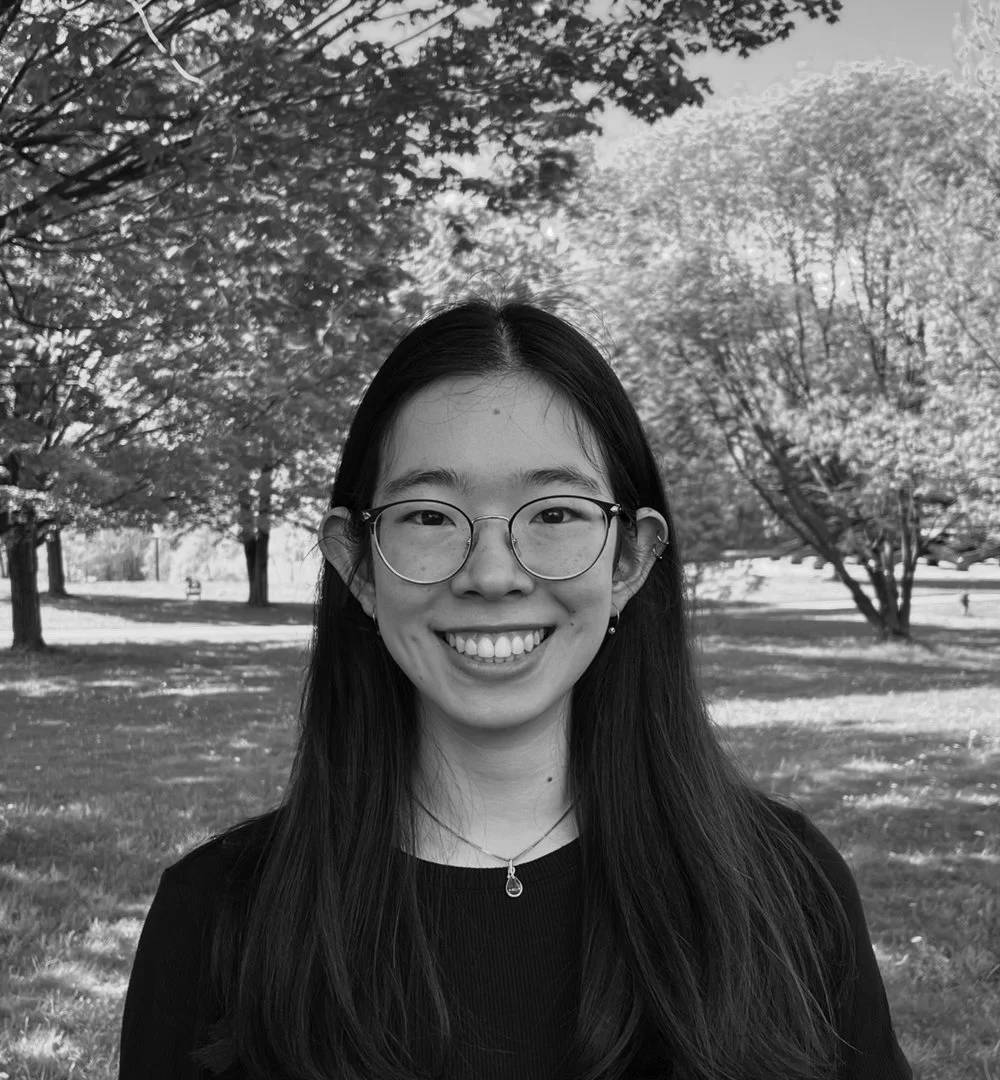
This year, a publications fellowship was created at Yellow Arrow Publishing to give a woman-identifying creative the opportunity to experience how a publishing company runs. We are grateful to everyone who applied and interviewed for the position and are excited to introduce Sydney Alexander, our inaugural publications fellow. Sydney grew up in the Baltimore area and graduated from Middlebury College with a joint degree in English and geography. At Yellow Arrow, she previously served as an intern, an editorial associate, and a reader. She has also worked at New England Review and Galiot Press.
Sydney says, “It’s really special to be able to look at Yellow Arrow’s bookshop and remember each of the publications I worked on, knowing that I was able to contribute to putting something so tangible together. I’m excited to work on Yellow Arrow’s forthcoming publications and meet all the new authors.”
Tell us a little something about yourself:
I recently graduated from Middlebury College and will be moving to New York City at the end of the summer.
What do you love most about Baltimore?
I love the bookstores of Baltimore. Atomic Books in Hampden and Greedy Reads in Fells Point are my two favorites, and I love that they curate weirder, more experimental fiction than your typical bookstore. I feel like this speaks to Baltimore’s sort of alternative scene and the way that weird art thrives here, which is my favorite kind!
How did you get involved with Yellow Arrow and what do you do for us?
The summer after my freshman year of college, I interned at Yellow Arrow, where I was first introduced to its many publications, authors, and staff members. At the end of my internship, I joined the staff as a reader and editorial associate and stayed for several years. I’m excited to be back as the inaugural publications fellow, and I look forward to the administrative and logistical experience it’ll bring. There is so much that goes on behind the scenes of a literary magazine and publisher, and I’m excited to contribute! I think Yellow Arrow’s devotion to its mission of uplifting women writers is really meaningful, and I love how it connects me to Baltimore’s literary community.
What are you working on currently?
I’m currently working on a collection of magical realist short stories.
What genre do you write and/or read the most and why?
I love speculative fiction and magical realism. I don’t know why, but I love reading weird, magical books. Some of my favorite authors include Karen Russell and Carmen Maria Machado. I also love really winding, beautiful prose, like what Joyce Carol Oates and Janet Fitch write.
Can you recall an early memory that might have sparked your love of writing/reading?
When I was in elementary school, my dad got me to read a lot of high fantasy classics: The Belgariad, The Once and Future King, Firebrand, you name it. I don’t really read much high fantasy anymore, but I remember those as being really formative. I also read tons of comics: Gunnerkrigg Court, Bone, and Calvin and Hobbes, to name a few. I think all these together developed my love for weird, speculative lit.
What book is on the top of your to-be-read pile?
I just picked up Little Nothing by Marisa Silver at Greedy Reads the other day. I had never heard of it before, but when I saw it on the shelf I was really drawn to the cover.
Who has inspired and/or supported you most in your writing journey or in everyday life?
My family, my friends, and my college professors.
If you could have a workspace anywhere, where would it be and why?
Somewhere with either a view of trees or a view of a city skyline, but preferably trees. I’ve also been collecting postcards and bookmarks over the years, and I also often find inspiration in having those up on my walls around my desk. Otherwise, somewhere near windows that let in a lot of natural light.
What advice do you have for new writers or anyone starting a new adventure?
Read a lot. Watch movies and television. Read the news. Strike up conversations with random people and learn about their lives. Be open to the world. There is so much to be gained from engaging with art and with people. Otherwise, follow your natural interests wherever they may lead you.
What’s your vision for Yellow Arrow in 2026?
My vision for Yellow Arrow in 2026 is to continue growing and uplifting the voices of women writers.
*****
Yellow Arrow Publishing is a nonprofit supporting women-identifying writers through publication and access to the literary arts. You can support us as we LUMINATE a path for women-identifying creatives this year by purchasing one of our publications or a workshop from the Yellow Arrow bookstore, for yourself or as a gift, joining our newsletter, following us on Facebook and Instagram, or subscribing to our YouTube channel. Donations are appreciated via PayPal (staff@yellowarrowpublishing.com), Venmo (@yellowarrowpublishing), or US mail (PO Box 65185, Baltimore, Maryland 21209). More than anything, messages of support through any one of our channels are greatly appreciated.
Her View Friday

Yellow Arrow Publishing supports women-identifying writers from a wide variety of backgrounds, not just because it’s the right thing to do, but because it makes us stronger. Women’s voices have historically been underrepresented in literature, and we aim to elevate those voices and stories through our programs, publications, and support.
Part of our mission in supporting and uplifting women-identifying creatives is to promote the Yellow Arrow community’s individual accomplishments. We’d like to further expand that support and promotion outside of our Yellow Arrow publications. Twice a month, we’d like to give a shout out to those within the Yellow Arrow community who recently published:
single-author publications
single pieces in journals, anthologies, etc., as well as prizes/awards, book reviews, and podcasts/interviews
You can support our authors by reading this blog and their work, sharing their news, and commenting below or on the blog. Congratulations to all the included authors. We are so proud of you!
Every writer has a story to tell and every story is worth telling
“When Time Unfurls the Tongue” by Heather Brown Barrett
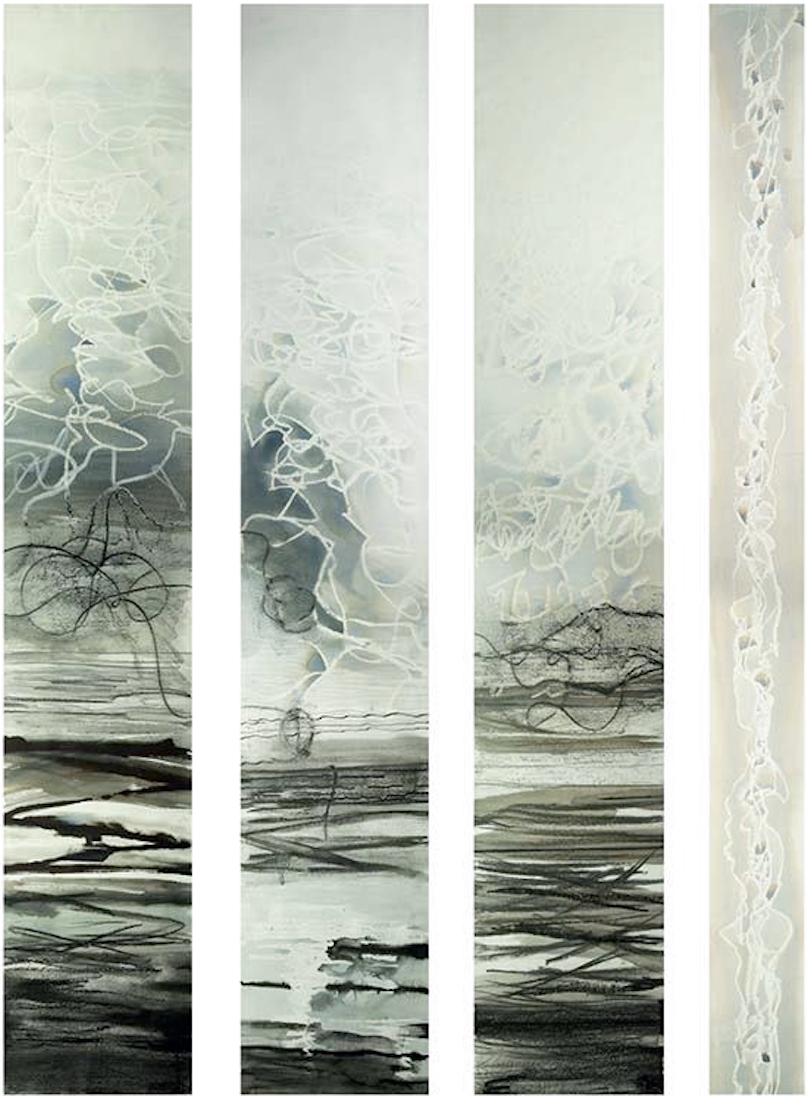
Genre: poetry
Name of publication: The Ekphrastic Review
Date Released: March 6, 2026
Type of publication: online
ekphrastic.net/the-ekphrastic-challenges/stephanie-grainger-ekphrastic-responses-curated-by-kate-copeland (scroll down page)
Yellow Arrow (past and present) board, staff, interns, authors, residents, and instructors alike! Got a publication coming out? Let us help celebrate for you in Her View Friday.
Single-author publications: here.
Single pieces as well as prizes/awards, book reviews, and podcasts/interviews: here.
Please read the instructions on each form carefully; we look forward to congratulating you!
*****
Yellow Arrow Publishing is a nonprofit supporting women-identifying writers through publication and access to the literary arts. You can support us as we LUMINATE a path for women-identifying creatives this year by purchasing one of our publications or a workshop from the Yellow Arrow bookstore, for yourself or as a gift, joining our newsletter, following us on Facebook or Instagram, or subscribing to our YouTube channel. Donations are appreciated via PayPal (staff@yellowarrowpublishing.com), Venmo (@yellowarrowpublishing), or US mail (PO Box 65185, Baltimore, Maryland 21209). More than anything, messages of support through any one of our channels are greatly appreciated.
Musing About the Muse: Girl, Drowning by Dana Knott
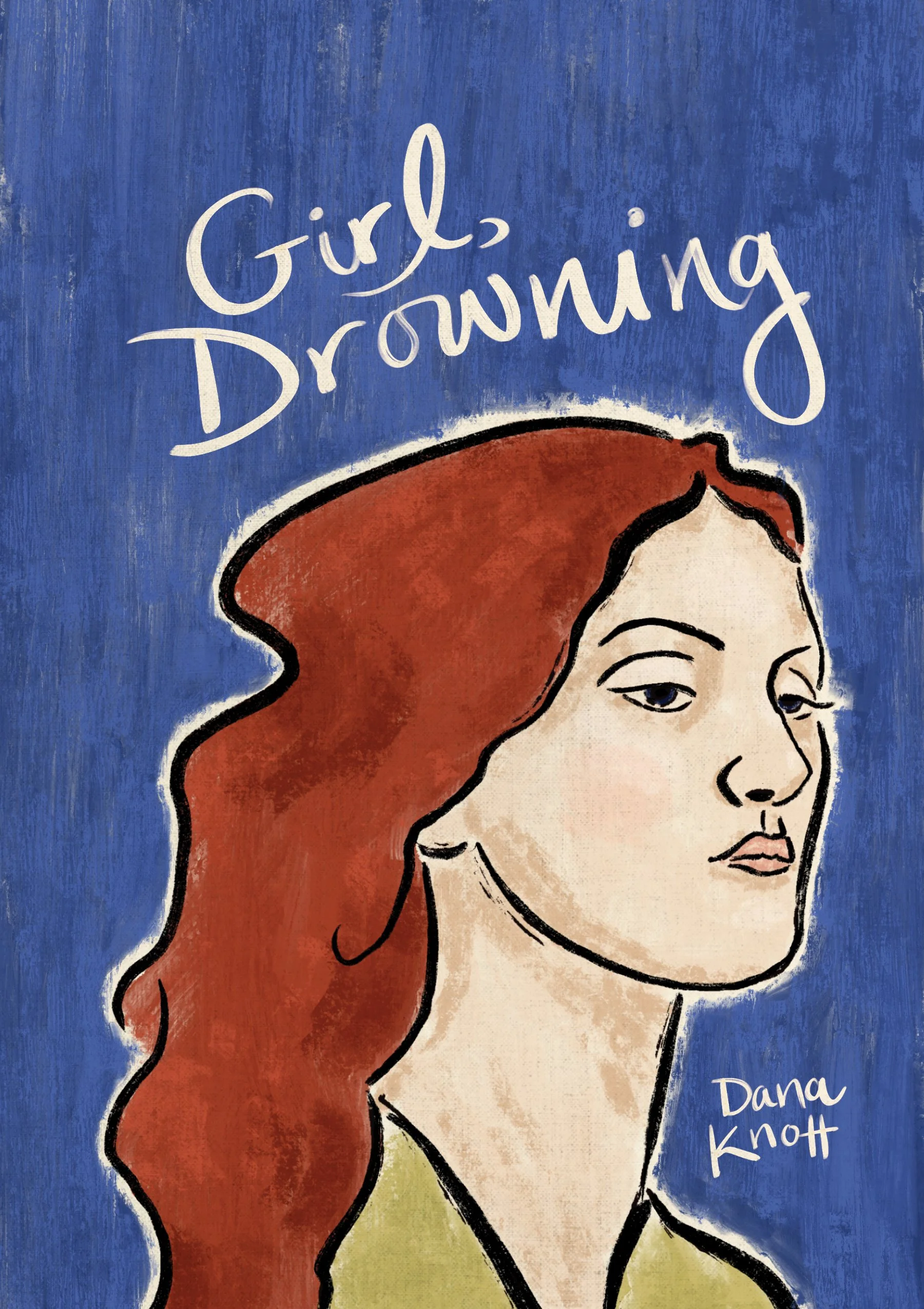
Yellow Arrow Publishing announces the release of our second chapbook of 2026, Girl, Drowning by Dana Knott. Since its establishment in 2016, Yellow Arrow has devoted its efforts to advocate for all women writers through inclusion in the biannual Yellow Arrow Journal as well as single-author publications and Yellow Arrow Vignette, and by providing strong author support, writing workshops, and volunteering opportunities. We at Yellow Arrow are excited to continue our mission by supporting Knott in all her writing and publishing endeavors.
The poems within Girl, Drowning by Dana Knott (she/her) were inspired by Elizabeth Eleanor Siddal (1829–1862), a pre-Raphaelite model, muse, poet, and artist. Much attention rests on Siddal’s fame as the model for John Everett Millais’ Ophelia (1851–1852), her laudanum addiction, and the exhumation of her corpse years after her death, so that her husband, artist and poet Dante Gabriel Rossetti, could retrieve a poetry manuscript he placed in her coffin. Girl, Drowning intends to amplify Siddal’s voice and fill in other, rich details of her life, including her aspirations as a poet and artist and her desire for autonomy. Beneath the surface lies a woman who longed to be seen and loved as Siddal, the individual, rather than model, muse, and wife.
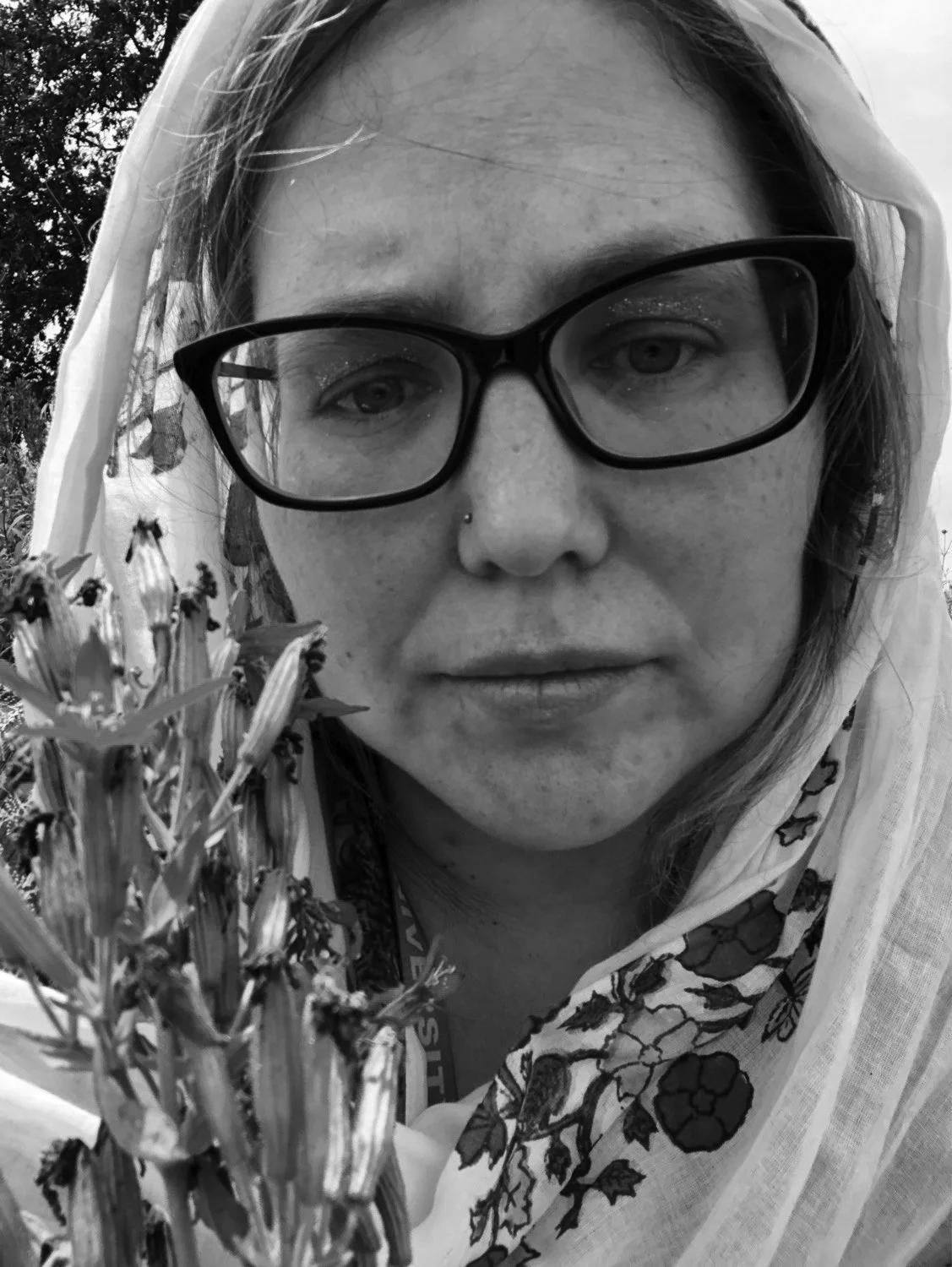
Knott, born in Chicago, Illinois, and residing in Delaware, Ohio, works in Columbus as Director of Libraries at the Columbus State Library. She launched tiny wren lit, which publishes micropoetry online with downloadable zines for each issue, in 2021 and published the microchapbook Funeral Flowers (Rinky Dink Press) in 2024.
The cover was created by Alexa Laharty, and the interior images were drawn by Elizabeth Eleanor Siddal. According to Knott,
“The contrast between how he saw her and how she saw herself always strikes me. That’s why I love Alexa [Laharty]’s cover art. It feels in-between. Not the hyper-idealized muse, but not only the severe self-portrait either. There’s strength, pride, and containment. The blue tones echo water, but without recreating Millais’ Ophelia. She isn’t floating. She’s upright and looking outward. Not at us, but beyond us. Separate. Self-possessed. I think Laharty captured that balance beautifully, and I completely fell in love with it. It’s powerful to have a woman artist depict Siddal in this way. Laharty also selected some of Siddal’s drawings to include in the book, which is incredible. Readers can see what Siddal was trying to achieve in her own art, and that addition means so much.”
Paperback and PDF versions of Girl, Drowning are now available from the Yellow Arrow bookstore. If interested in purchasing more than one paperback copy for friends and family, check out our discounted wholesale prices here. You can also search for Girl, Drowning wherever you purchase your books including Amazon, Barnes & Noble, and Kobo. To learn more about Knott and Girl, Drowning, check out our recent interview with her.
You can find Knott on Facebook @dana.a.knott and Instagram @danerbird and connect with Yellow Arrow on Facebook and Instagram, to share some love for this chapbook. You can also share a review to any of the major distributors or by emailing editor@yellowarrowpublishing.com. We’d love to hear from you.
*****
Yellow Arrow Publishing is a nonprofit supporting women-identifying writers through publication and access to the literary arts. You can support us as we LUMINATE a path for women-identifying creatives this year by purchasing one of our publications or a workshop from the Yellow Arrow bookstore, for yourself or as a gift, joining our newsletter, following us on Facebook or Instagram, or subscribing to our YouTube channel. Donations are appreciated via PayPal (staff@yellowarrowpublishing.com), Venmo (@yellowarrowpublishing), or US mail (PO Box 65185, Baltimore, Maryland 21209). More than anything, messages of support through any one of our channels are greatly appreciated.
Meet a Staff Member: Arrieonna Derricoatte
Yellow Arrow Publishing would like to introduce Arrieonna Derricoatte (she/her), a reader. Arrieonna is currently a candidate for a master’s in public administration at Ohio State University. She holds a bachelor’s in English with a concentration in writing, rhetoric, and literacy and minors in human rights and professional writing. She is passionate about reading and community-building around arts, education, and policy. Arrieonna has been on the editorial team for Yellow Arrow Journal, Vol. X, No. 1, UNFURL (spring 2025), and Urban Arts Space’s first issue of the arts publication Artist Commune Journal. After school, she hopes to further her career in nonprofit administration and policymaking while seeking a career in publishing. She can be found on Instagram @arrieonnaderricoatte.
Arrieonna says, “I look forward to reading incredible pieces by women writers and being a part of a space that uplifts us. The women at YAP really care about working in the community as authors, writers, and listeners.”
Tell us a little something about yourself:
I am the oldest of seven siblings and that is a core part of my identity and experience.
What do you love most about where you live?
The thing I love most about Columbus, Ohio, is its very strong art community. There are many organizations there that are dedicated to Black and Brown artists.
How did you get involved with Yellow Arrow and what do you do for us?
I was a program management intern at Yellow Arrow in the spring of 2025. I was part of the editorial team for a publication at the time and am excited to continue to be a part of the team as a reader.
What are you working on currently?
I am currently working on research related to taxes and budgets in the state of Ohio and exploring progressive taxes that are more equitable for learnable communities.
What genre do you write or read the most and why?
Outside of research papers for grad school, I write poetry in my spare time. I am working on an archival project using docupoetics to preserve community memory. I read historical fiction most often because I appreciate the way prose and literary language can be used to emphasize themes and movements in a particular time.
Can you recall an early memory that might have sparked your love of writing/reading?
I always enjoyed group reading in primary school, but I was drawn back into reading through various fan fiction and self-publishing platforms. I would be up reading ‘til four in the morning some nights.
What book is on the top of your to-be-read pile?
A book that would be at the top of my to-be-read list would be This Lovely City (2020) by Louise Hare, a historical fiction novel set in 1950s London, following Jamaican immigrant and jazz musician Lawrie Matthews as he navigates post-war life, love, and prejudice after arriving in London on the HMT Empire Windrush.
Who has inspired and/or supported you most in your writing journey or in everyday life?
My close friends who know I write, my teachers, and other women writers in my community.
If you could have a workspace anywhere, where would it be and why?
If I could have a workspace anywhere, it would be in London, in a public library in Brixton. I spent a lot of time there when I studied abroad. I could stretch my legs in Brockwell Park whenever I needed to.
What advice do you have for new writers or anyone starting a new adventure?
Giving yourself grace, starting something can be challenging.
What’s your vision for Yellow Arrow in 2026?
My vision for Yellow Arrow this year is to hold a space for women writers who still burn in the dark and light others on their path.
*****
Yellow Arrow Publishing is a nonprofit supporting women-identifying writers through publication and access to the literary arts. You can support us as we LUMINATE a path for women-identifying creatives this year by purchasing one of our publications or a workshop from the Yellow Arrow bookstore, for yourself or as a gift, joining our newsletter, following us on Facebook and Instagram, or subscribing to our YouTube channel. Donations are appreciated via PayPal (staff@yellowarrowpublishing.com), Venmo (@yellowarrowpublishing), or US mail (PO Box 65185, Baltimore, Maryland 21209). More than anything, messages of support through any one of our channels are greatly appreciated.
Meet a Staff Member: Kelsey Hyeri Ko
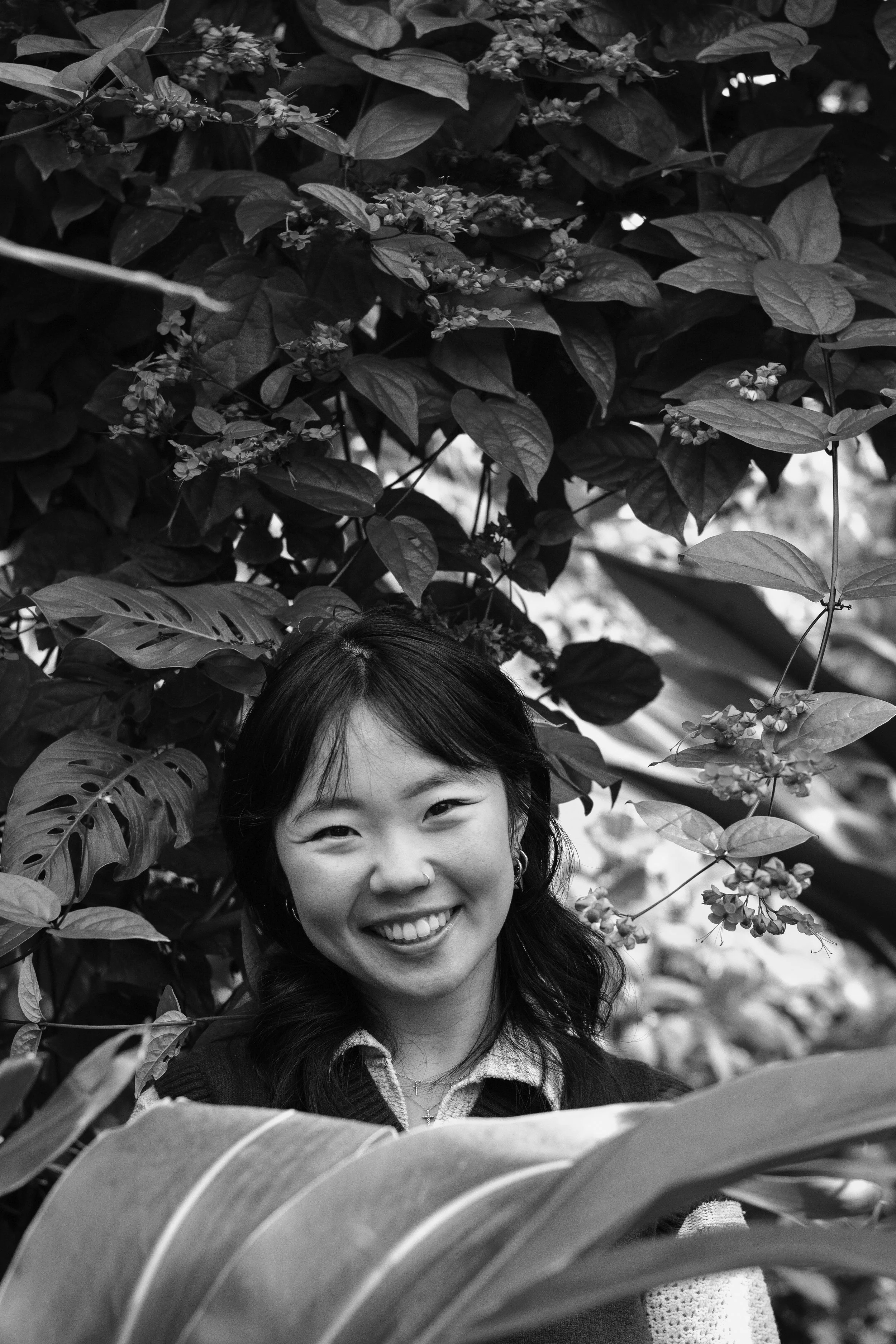
Yellow Arrow Publishing would like to introduce Kelsey Hyeri Ko (she/they), a reader. Kelsey is a Korean American writer, creative, and psychotherapist based in Baltimore, Maryland. Her creative practice is guided by diasporic blues, ancestral wisdom, queer theory, deep presence, and the dream of collective liberation. They are a reader with Yellow Arrow, and their work and words have appeared in The Atlantic, Baltimore Magazine, and Maryland Matters. You can find them online at kelseyhko.com or on Instagram @kkollagerie.
Kelsey says, “I’m most looking forward to being in a collaborative community with other like-minded writers and readers and the opportunity to be a part of the process of shaping and bringing a publication into fruition.”
Tell us a little something about yourself:
My creativity and artistry are multidisciplinary. Beyond the written word, I love the performing arts, visual arts, and fiber arts. You can also find me at the theater, singing or playing music, or making creations through crochet and collage!
What do you love most about Baltimore?
Where do I start? I love that the people who choose to call our magical little city home love it fiercely and unapologetically. I love that it’s the place where I grew up and had my coming-of-age from age 18 until now. I love that it’s a city with a small-town feel—that it’s so easy to know my neighbors, fellow café hoppers, and local shop owners by name, that you run into people on a quick walk to the corner store to grab a bottle of wine. I love that it’s so easy to build community and that it’s home to my chosen family, some of the most remarkable people I know.
How did you get involved with Yellow Arrow and what do you do for us?
I am a reader with Yellow Arrow! Yellow Arrow has been on my radar for ages through a friend who was a writer-in-residence, through glimpses I saw of staff members tabling at different book events throughout the city, and also through my time working as a barista at Bird-in-Hand Coffee & Books, which Yellow Arrow has a partnership with. I wanted to join the Yellow Arrow team because I believe that good writing starts from doing a whole lot of reading. While in a season of coping with personal tumult, immense growth, and intense change over the past two years—thanks to my Saturn return, for folks plugged into the astrology world—I found myself continually returning to my creative practices like writing, which I had used to process and to cope with difficult emotions since childhood. I felt inspired to nurture a consistent creative writing process for my own inner child, and felt that being in community with other writers and readers would be the best way for me to do that.
What are you working on currently?
I’m currently working on crocheting a tank top for myself! Learning how to crochet over the past year has taught me so much about frustration tolerance and the humbling nature of being a beginner again. As a mental health professional, I’ve been thinking about how the repetitive motion simulates the mechanism of fidget toys and how its tactile nature can be helpful for both taking the edge off restlessness and cultivating mindfulness.
What genre do you write or read the most and why?
I read and write poetry that’s both lyrical and free verse. I also enjoy writing creative nonfiction and love reading memoirs and personal essays. I have a deep fascination with the raw truth and emotions of everyday people, and I find that these genres allow me to access these stories and feelings in a very tangible way. I recently finished the memoir Ma & Me by Putsata Reang, recommended to me by a friend, and cried crocodile tears while finishing the last chapter.
Can you recall an early memory that might have sparked your love of writing/reading?
My earliest memories of reading and writing come in flashes. There’s sitting next to my grandfather in Seoul while he would read Korean children’s books to me until his voice was hoarse because I couldn’t ever get enough. There’s learning how to read for the first time and feeling as though the world was coming alive around me in a way I’d never experienced before—the feeling of wonder as I sounded out the words on road signs, bulletin boards, and flyers is something I still remember. There’s reading fantasy books like Inkheart and The Thief Lord by Cornelia Funke, which took me to places far beyond the suburban homes and cornfields of my school-age years growing up in Pennsylvania. All these moments shaped me into becoming a voracious reader and writer.
What book is on the top of your to-be-read pile?
Hot Girls with Balls by Benedict Nguyễn! It’s a satire that’s queer, trans, and about volleyball. I went to see her book tour event last summer in D.C., with a friend and got my signed copy, but as my to-read pile has grown and time has gotten away from me it’s fallen by the wayside. It’s been great seeing the recent media and pop culture interest in the hotness and queerness of sports with Challengers and Heated Rivalry,but I want to read more works from trans authors, and I think it’s more important than ever to elevate these voices given our current political climate.
Who has inspired and/or supported you most in your writing journey or in everyday life?
I feel grateful that throughout my education, I’ve had English and poetry teachers see a spark of potential in me and tell me to pursue writing. When I find myself in a slump, I remember their words and feel a desire to keep going—it’s a big part of why I stepped into the classroom and taught English for several years. I’m also inspired by my lineage and my ancestors. My grandfather wrote poetry and the Kim clan in which he and my ancestors belong to is known for its many scholars and poets. Both my maternal grandparents were educators in the Korean language arts. They remind me that the art of writing is not just about me but about honoring all those who have come before me.
If you could have a workspace anywhere, where would it be and why?
Jeju Island in South Korea! My paternal side of the family is descended from there through the Jeju Ko clan. Jeju is a beautiful subtropical island with its own unique culture separate from mainland Korea. It has volcanoes, forests, hiking trails, waterfalls, beaches, flower fields, cafés, and amazing seafood. . . . Basically a writer’s paradise. I’m imagining staying somewhere overlooking the water to do my morning and evening writing, spending time in nature for inspiration, and immersing myself in the local writing scene at different cafés. Sounds absolutely dreamy.
What advice do you have for new writers or anyone starting a new adventure?
Just play—let go of self-consciousness and follow your impulse to create! Performance anxiety, fear of my art being “good enough,” and the pressure of perception have been the biggest blocks to my creativity and has kept me from writing for months and years at a time. Capitalism has a way of ruining everything. Whenever I allow myself to playfully follow my whimsy and wonder, I realize that creation is a human instinct. We have been drawing on cave walls long before we built societies. When I follow my intuition, I find that I have everything I need to be an artist.
What’s your vision for Yellow Arrow in 2026?
I reread The Fire Next Time by James Baldwin last year and have been feeling called to his words. I’ve been meditating on this quote from him: “The precise role of the artist, then, is to illuminate that darkness, blaze roads through that vast forest, so that we will not, in all our doing, lose sight of its purpose, which is, after all, to make the world a more human dwelling place.”
I think he already said it best. As we witness fascism, genocide, war, internment, and suffering all around us, I hope that the words we choose to amplify this year can be guiding lights that illuminate the darkness.
*****
Yellow Arrow Publishing is a nonprofit supporting women-identifying writers through publication and access to the literary arts. You can support us as we LUMINATE a path for women-identifying creatives this year by purchasing one of our publications or a workshop from the Yellow Arrow bookstore, for yourself or as a gift, joining our newsletter, following us on Facebook and Instagram, or subscribing to our YouTube channel. Donations are appreciated via PayPal (staff@yellowarrowpublishing.com), Venmo (@yellowarrowpublishing), or US mail (PO Box 65185, Baltimore, Maryland 21209). More than anything, messages of support through any one of our channels are greatly appreciated.