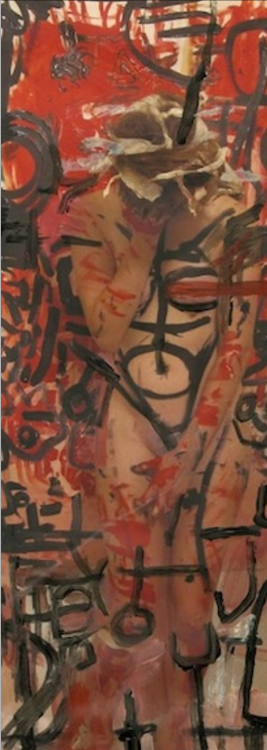
Yellow Arrow Publishing Blog
The Mosaic of Belonging

Yellow Arrow Publishing is excited to announce the next guest editor for Yellow Arrow Journal, Keshni Naicker Washington, who will be overseeing the creation of our Vol. VI, No. 2 issue on “belonging-ness,” exploring what it means to belong or un-belong, our nearness or distance (intimacy or alienation) from others and ourselves. According to Keshni, “To belong or not to belong is a subjective and personal experience that can be influenced by a number of factors within ourselves and our surrounding environment and is a fundamental human motivation, found across all cultures and creeds.”
Keshni considers her creative endeavors a means of lighting signal fires for others. Born and raised in an apartheid segregated neighborhood in Kwa-Zulu Natal, South Africa, she now also calls Washington, D.C. home. And after nine years here has finally gotten used to Orion being the right way up in the night sky. Her stories are influenced by her evolving definition of home and the tides of political and social change that move us all. She is an alumnus of VONA and TIN HOUSE writing workshops. Connect with her keshniwashington.com and on Instagram @knwauthor.
Please follow Yellow Arrow on Facebook and Instagram for the theme announcement for Vol. VI, No. 2 at the end of this month. Below, you can read Keshni’s perspectives on belonging. We look forward to working with Keshni over the next few months.
By Keshni Naicker Washington, written July 2021
On the fifth of December 2013, I awoke to the news that “tata Madiba”—Nelson Mandela—would no longer walk this earth. The already cold and gray Thursday morning in D.C. turned drearier as I carried my sorrow, along with my laptop and lunch, onto the metro train that would take me downtown and to work. The rush-hour train was packed with jacket and woolen hat clad commuters. As we emerged from the underground tunnel and traversed the gray Potomac River, I caught a glimpse of the Washington Memorial impaling the cloudy sky. Hot tears came fast as the loss of tata (grandfather) sunk in. If anyone saw, they did not show it. I was a South African immigrant in mourning. Unseen in a crowd. Might as well have been on an alien planet.
The chasm between where I had come from and where I now lived gaped before me. I grew up in an apartheid segregated neighborhood called Chatsworth, in the province of Kwa-Zulu Natal. We lived in small government houses that leaned against each other, where the bathrooms were outside. Neighbors shared everything: gossip, festivals (Eid, Diwali, Christmas), and at least two house walls. You were always seen. But under the apartheid system, your worth, freedom of movement, and access was dictated by your skin, and the straightness of your hair, and codified into law. To survive, that young girl in Chatsworth defined herself by the things she did not want to be, a shield against so many destructive things that apartheid South Africa was telling her about where she belonged and what she could or could not be. And therein lies the rub (no matter which side of the Atlantic Ocean): there will always be forces trying to fit you into a category to tell you where you belong.
Almost without fail whenever I am in an Uber in D.C., at some point the driver detects the difference in my accent and enquires, “Where are you from?”
I answer, “South Africa.”
It’s almost always followed by, “But where are your parents from?”
“South Africa.” My answer is truthful.
My grandfather’s release from indenture papers was found among my grandmother’s things when she passed. He had died when my dad was very young. My grandmother, who was illiterate, eked out a means of supporting her children by selling vegetables. I do remember my maternal grandfather who died when I was a young girl. He worked from a young age, for the span of his life, as a clothes presser in a textile factory. They were all descended from the indentured sugar cane workers, brought by ship, by the British from their Indian colony to their African one, to toil under lifetime contracts that would be passed to their children.
The Uber drivers and others in D.C. assess my brown skin, black eyes, and straight black hair, against my claim that I have belonged to Africa for generations. I don’t feel compelled to fill in the blanks. I am a proud South African . . . who is also now becoming American. And after almost a decade here I (really) have finally gotten used to Orion being the right way up in the night sky and driving on the other side of the road.
As an adult, learning to be comfortable within my own skin has meant an unlearning, a deconstruction, of imposed definitions and more crucially my defenses against such prejudices. These mosaic pieces of “self” shift and rearrange themselves inside me as new experiences are added. When we truly see ourselves, we are also free to “belong” or choose not to, on our own terms. We are free to bestow a light on the other and allow them to belong.
From my apartment in D.C. on a cold December in 2013, I watched U.S. President Barack Obama at Nelson Mandela’s memorial service in South Africa. He spoke about the Nguni concept of Ubuntu, saying, “There is a word in South Africa—Ubuntu—a word that captures Mandela’s greatest gift: his recognition that we are all bound together in ways that are invisible to the eye; that there is a oneness to humanity; that we achieve ourselves by sharing ourselves with others, and caring for those around us.”
*****
Yellow Arrow Publishing is a nonprofit supporting women writers through publication and access to the literary arts. Thank you for supporting independent publishing.
Meet an Artist: Kalichi Lamar

from the 2021 art series
Storytelling takes place in many different forms, not just writing. When an artist shares a piece with others they also share a piece of who they are with their audience. We see the expression of their aesthetic, culture, and identity woven into their work.
This is definitely visible in the artwork for Yellow Arrow Journal. During each journal submission period, we ask for creative nonfiction, poetry, and cover art that reflects a chosen theme. We get incredible artwork created in various media and choose the one that best represents the theme.
To celebrate our talented cover artists, we will be releasing a series of blogs to share their stories and the importance that art has on their lives.
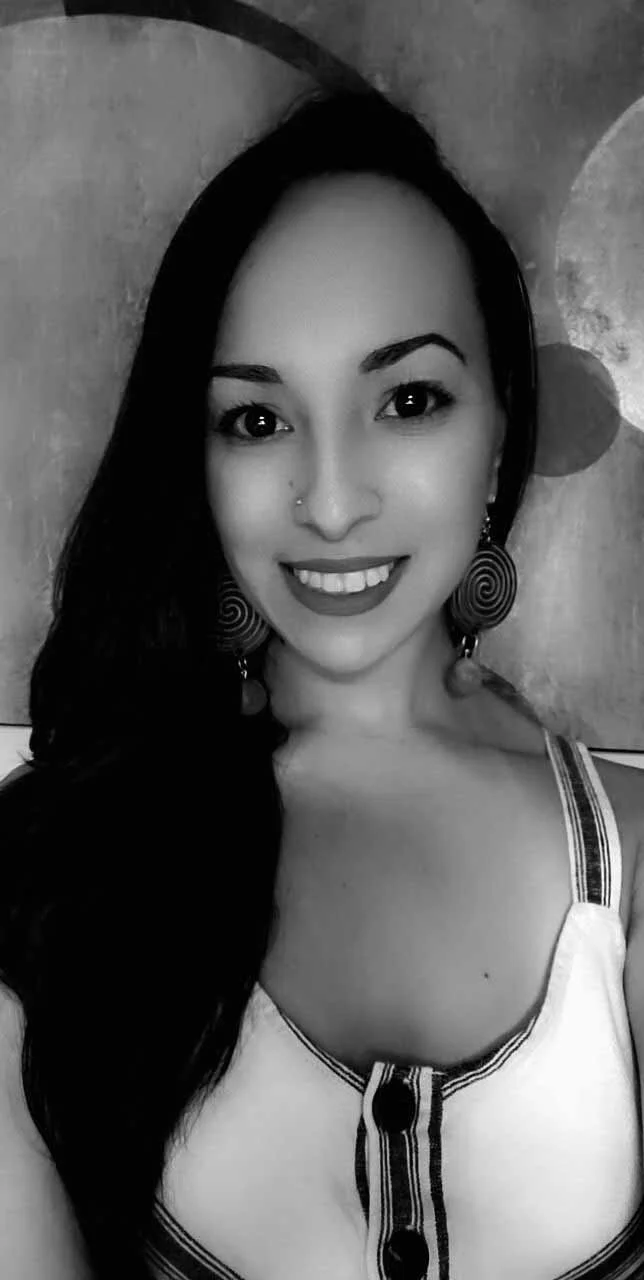
The second artist that we are featuring in our Art Series is Kalichi Lamar. Kalichi’s first name is Taíno for “fountain of the high mountain.” She is a Higuayagua-Taino from the island of Borikén where her roots are tied to her name and her connection to nature. Kalichi has an MS/MA in Psychology and Arts in Medicine, and she has worked professionally with cancer patients and the elderly. Additionally, Kalichi runs an online shop of wood-burn pieces, crafted items, and creative wellness sessions. Her work is inspired by nature and Taíno roots. As smoke envelops her space, it becomes incense and prayer infused into each piece. Kalichi creates to inspire others to reconnect to self, nature, and Spirit. Her art piece, “Nature Springs From Her” was seen on the cover of Yellow Arrow Journal: RENASCENCE, Vol. VI, No.1, Spring 2021.
You can find Kalichi at kalichisessentials.com or on Instagram and Facebook.
Kalichi recently took some time to answer a few questions for us.
As an artist what types of habits have you developed when creating art?
One of the most important habits I developed when creating art is the state of mindfulness. This mindfulness often transfers to a flow state. I get into this state by tending my plants in my art space, turning on instrumental music, lighting candles or incense, thanking the Creator and my ancestors, and allowing natural light to come in. This sets the tone to create and puts me in a headspace for inspiration. The result is often an intuitive and meditative creation.
What are your top five tips for aspiring artists?
Great question! My five tips for aspiring artists would be:
Start with a small, economical kit. If you are not sure what method you like, it’s best to start small; rather than purchasing all the oil paints, oil brushes, etc., to then realize you don’t enjoy or are not good at oil painting.
Try a variety of genres. You might not be good at painting, but you might be amazing at collages. Or, you might be a great jewelry maker or woodcarver. There are a plethora of creative outlets. So, try different art methods to find your niche.
Keep creating! Don’t stop creating, even if it does not take off professionally. Create because it comes from your soul.
Avoid comparing yourself to other artists. Art is subjective to each person’s taste. What may seem like an amazing art piece to one person, might not be to another. Additionally, each person’s skill develops differently. Therefore, don’t compare yourself! Art can be so many things and opportunities! Each artist has their own unique ability. Hone in on yours, fall in love with it. If it brings you joy, keep creating!
Make sure you create from your soul. Your art is a reflection of you.

What inspired you to submit to Yellow Arrow?
I learned about Yellow Arrow through a fellow tribal sister. She told me about Yellow Arrow’s RENASCENCE edition and its mission to give voices to marginalized/self-identifying women. I fell in love with this mission and felt it was a great opportunity to give a voice and exposure to my Taíno community. Every day, I am grateful I was given the opportunity.
Thank you, Kalichi, for answering our questions. You can purchase a paperback or PDF of RENASCENCE in the Yellow Arrow bookstore, along with other Yellow Arrow publications.
*****
The 2021 art series was created and put together by Marketing Associate, Michelle Lin. Yellow Arrow Publishing is a nonprofit supporting women writers through publication and access to the literary arts. Like us on Facebook and Instagram for news about the next journal submissions period. Thank you for supporting independent publishing.
Meet an Artist: Jeanne Quinn
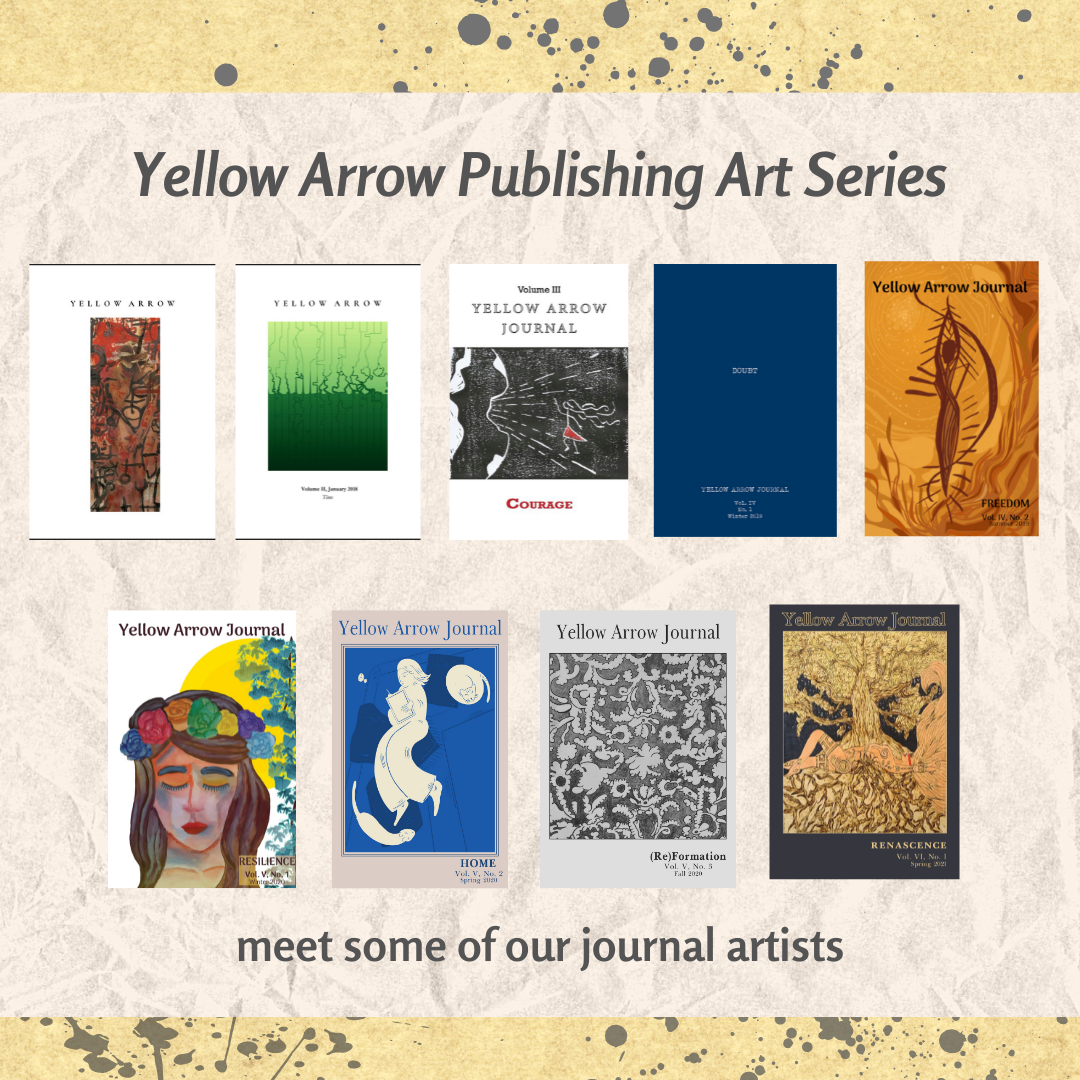
from the 2021 art series
Storytelling takes place in many different forms, not just writing. When an artist shares a piece with others, they also share a piece of who they are with their audience. We see the expression of their aesthetic, culture, and identity woven into their work.
This is definitely visible in the artwork for Yellow Arrow Journal. During each journal submission period, we ask for creative nonfiction, poetry, and cover art that reflects a chosen theme. We get incredible artwork created in various media and choose the one that best represents the theme.
To celebrate our talented cover artists, we will be releasing a series of blogs to share their stories and the importance that art has on their lives.
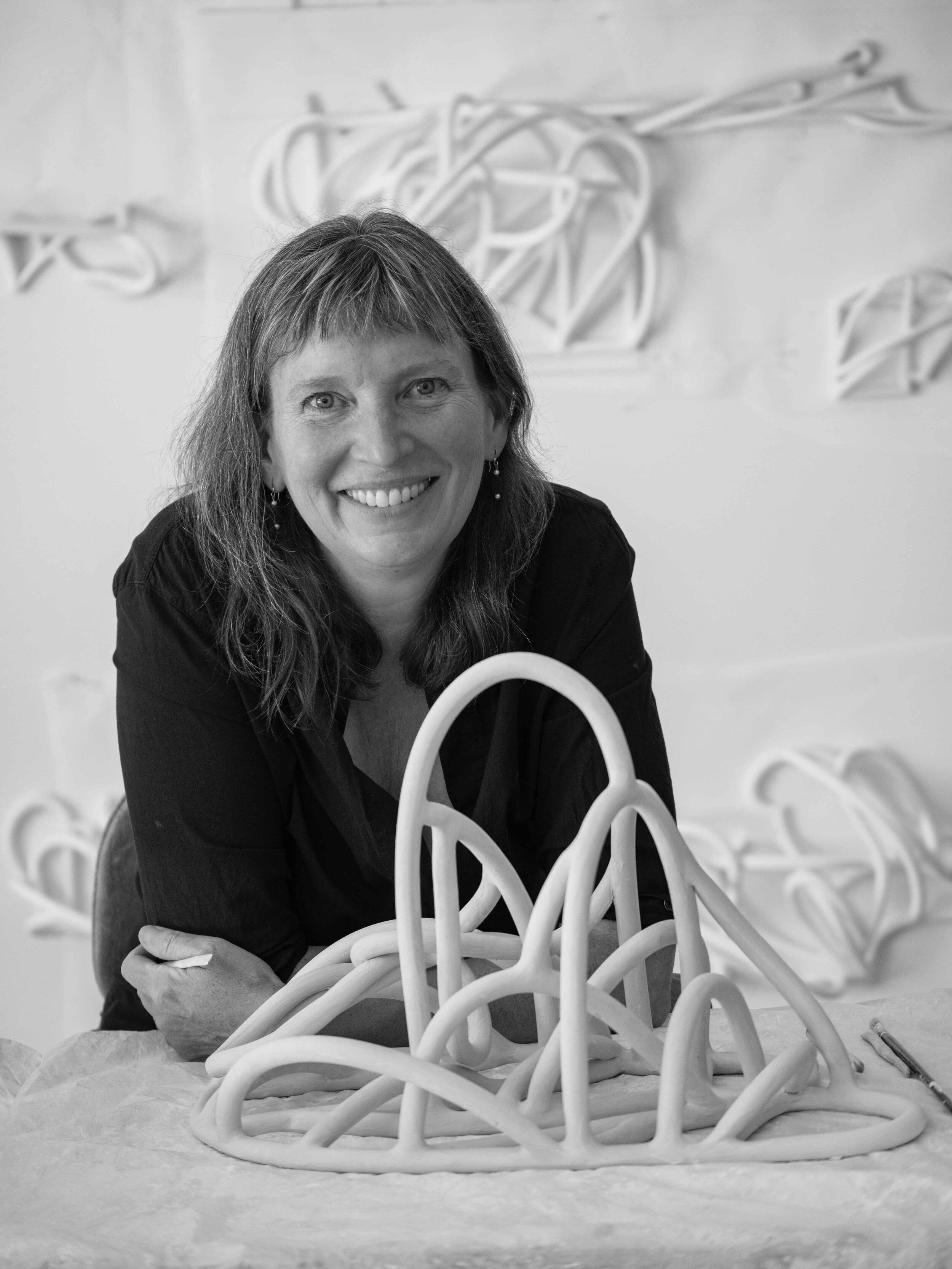
The first artist that we are featuring in our Art Series is Jeanne Quinn. Jeanne creates theatrical installations that attempt to remind us that everything is ephemeral. She studied art history and baroque music performance at Oberlin College, and earned her MFA in ceramics from the University of Washington. She has exhibited widely, including Denver Art Museum, the Milwaukee Art Museum, the Kemper Museum for Contemporary Art, and Art Basel/Design Miami. She has been awarded residencies at the MacDowell Colony, the European Ceramic Work Centre, Zentrum für Keramik Berlin, and many others. She is a professor and chair of the Department of Art and Art History at the University of Colorado. Her art piece, “Lace Drawing,” was seen on the cover of Yellow Arrow Journal, (Re)Formation, Vol. V, No. 3, Fall 2020.
You can find Jeanne at jeannequinnstudio.com or on Instagram and Facebook.
Jeanne recently took some time to answer a few questions for us.
Who inspired/influenced your journey as an artist the most?
I saw Anne Smith’s work in a show in Boston in 1990. I was incredibly inspired by what she was doing with surface decoration on ceramics and shelves and took a class from her at a local ceramics studio. I ended up becoming her studio assistant, and she served as a mentor, getting me started studying at the University of Colorado and then at the University of Washington, in ceramics. There have been many important teachers along the way—most importantly, Betty Woodman—but I never would have gotten started without Anne’s encouragement and smarts in navigating the journey. You can find Anne on Instagram or at annesmith.net.
What inspired the piece that you created for Yellow Arrow?
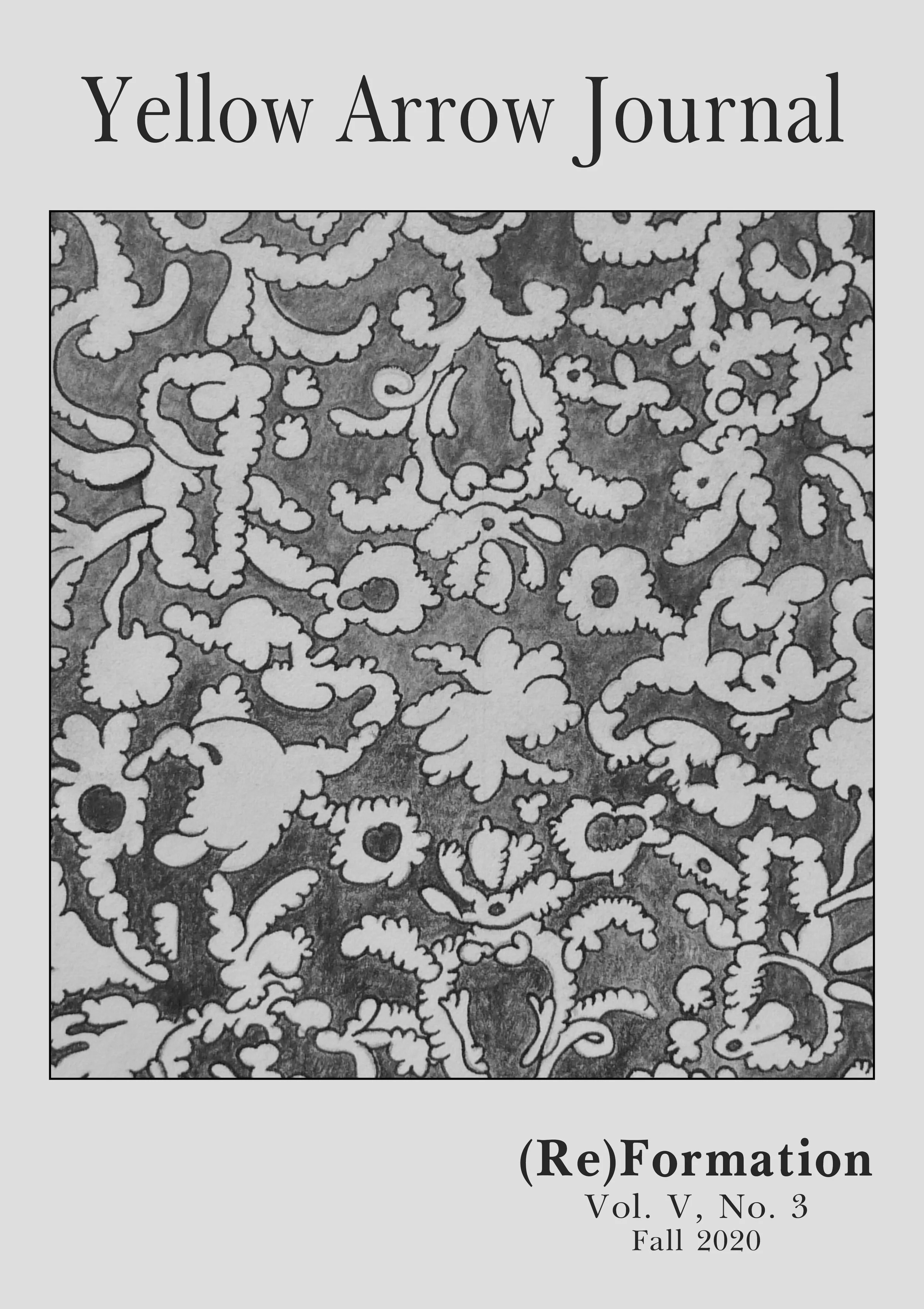
My mother sent me an article from the Washington Post that included a photograph of a beautiful piece of lace. She knew I had always been interested in lace, and we had a small collection of pieces tatted by my great-grandmother, which she passed on to me. The photograph she sent inspired me to start drawing lace, which I’ve done continuously ever since. I love translating something so crafted and material into an image, since, as a ceramicist, I usually do the reverse.
What projects are you currently working on?
I’m making an installation, Dust And A Shadow, for an exhibition at the Centre des Arts Visuels in Montreal. It’s my response to the isolation and general experience of Covid. I started with a drawing of some baroque architectural moldings and turned those into dimensional, linear ceramic wall sculptures. The shadows of the pieces are rendered in clear vinyl adhered to the wall, so they are both shadowy and reflective.
Thank you, Jeanne, for answering our questions. You can purchase a paperback or PDF of (Re)Formation in the Yellow Arrow bookstore, along with other Yellow Arrow publications.
*****
The 2021 art series was created and put together by Marketing Associate, Michelle Lin. Yellow Arrow Publishing is a nonprofit supporting women writers through publication and access to the literary arts. Like us on Facebook and Instagram for news about the next journal submissions period. Thank you for supporting independent publishing.
Awaken and Reflect: Yellow Arrow Journal (Vol. VI, No. 1) RENASCENCE

When we first announced the theme of our just released Yellow Arrow Journal issue, Vol. VI, No. 1 (spring 2021), on RENASCENCE, we were eager to read through submissions and explore the idea of cultural resurrection through the eyes of diverse authors/artists that identify as women. And we received many thoughtful, wonderful pieces that explored the idea of a personal/cultural renaissance, reviving something that was once dormant. We thank everyone who took the time to send us their experiences and wish we could have published them all. That said, the chosen pieces and contributors resonated with Taína (our guest editor), the Yellow Arrow team, and each other in a way we did not expect. Alone, each piece explores a poignant moment in life. A reflection on a moment or even a lifetime of moments.
Together, as a complete issue, the pieces delve into personal and collective cultural identity and how we might view (and could view) moments or reflections we didn’t think to contemplate. As Taína states:
Some pieces are nostalgic, bittersweet gifts from the depths of our memories that we cling to, while others are terror-filled nightmares we cannot awaken from fast enough, and still others are calls to action that will not be ignored. Each included story is a petroglyph on a cave wall, a flag planted in paper and ink. Each author is an explorer of their own culture, not discovering or conquering—for the stories of our ancestors have always been there waiting—but acting as pioneers of the past, revisiting and reclaiming the deep-rooted whispers and reflecting them into the future.
Perfect-bound and PDF versions are now available from the Yellow Arrow bookstore. Discounts are also available (here) if you would like to purchase copies for friends and family (minimum purchase of five). You can also search for Yellow Arrow Journal on any e-book device or anywhere you purchase books, including Amazon and most other distribution channels.
If you preordered your paperback copy before today, you will receive your free PDF shortly. Thank you for following our prerelease Renascence LIVE! events and for supporting our contributors. And don’t forget to join us June 4 at 7:00 pm EST for Renascence: A Reading, featuring authors of the issue and hosted by Taína. Details and how to connect to the reading can be found here.
We hope you enjoy reading RENASCENCE as much as we enjoyed creating it. Thank you for your continued encouragement of Yellow Arrow Publishing and the women involved in RENASCENCE.
*****
Yellow Arrow is Publishing is a nonprofit supporting women writers through publication and access to the literary arts. Thank you for supporting independent publishing.
Nature Springs From Her: Yellow Arrow Journal Vol. VI, No. 1 RENASCENCE
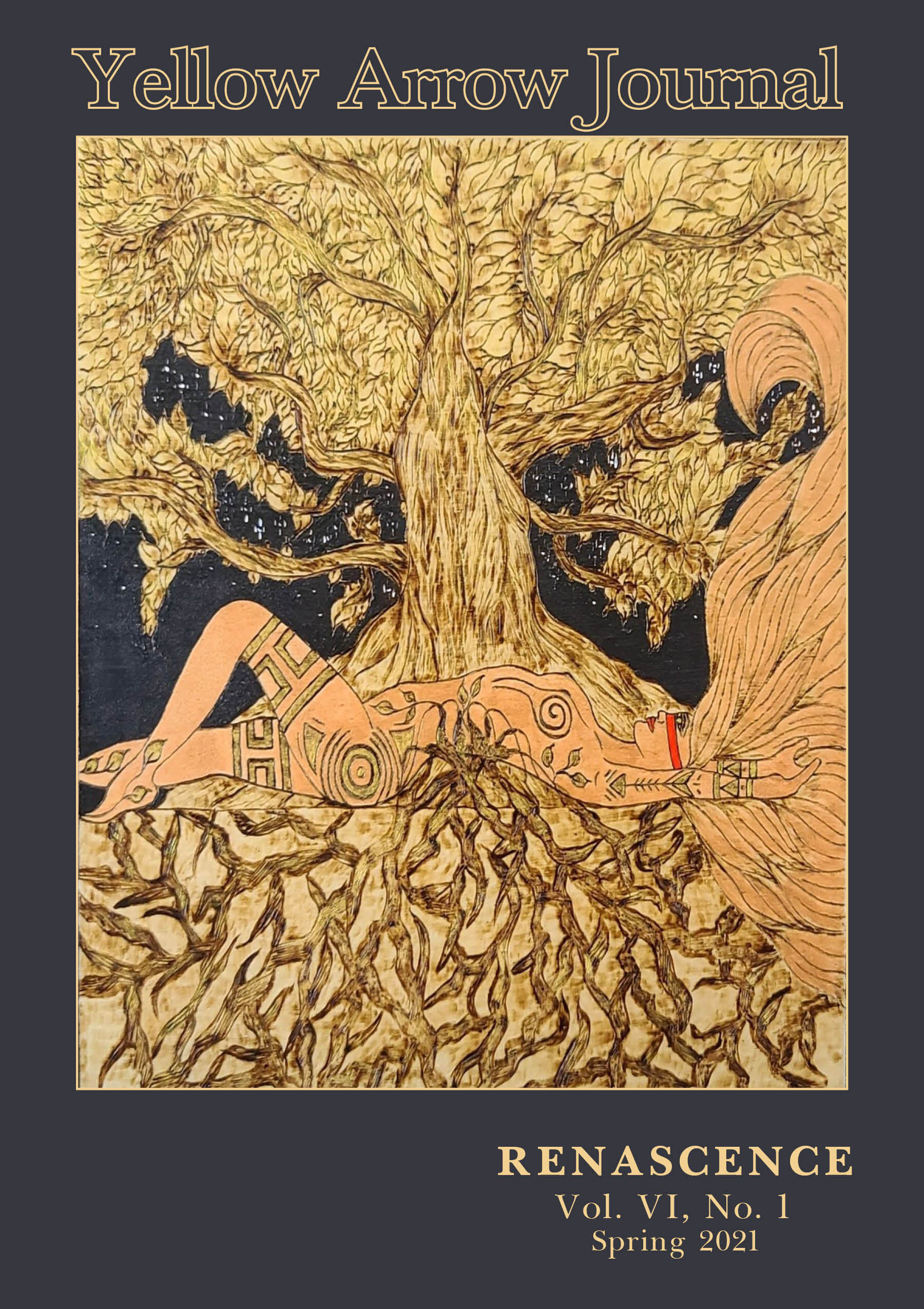
It’s official! The cover of our Yellow Arrow Journal issue on RENASCENCE (Vol. VI, No. 1, Spring 2021) is here and PRESALE has commenced! “Nature Springs From Her” by Kalichi Lamar, pyrography on a wood panel, was inspired by the ceiba tree, the national tree of Borikén (Puerto Rico). It is also the sacred tree of her people, the indigenous Taínos. This tree was used to build canoes and is believed to have a direct connection to the spirit world and secrets of Atabey (mother earth). Rather than say more here, we’ll let Kalichi, Taína, and some of our authors explore the significance of “Nature Springs From Her” and RENASCENCE through a series of Facebook Live events starting tomorrow with Kalichi. Renascence LIVE! is a celebration of the hard work put into this journal issue by Taína, the Yellow Arrow team, and the authors/artist. It is an opportunity for the contributors and Taína to speak for themselves. To explain why renascence and cultural resurrection resonated with them.

By Taína
This issue of the Yellow Arrow Journal was born in an email where an idea was shared that was just too big for a blog post. That idea was writing about cultural resurrection.
When Yellow Arrow Publishing invited me to be guest editor of this issue, I leaped at the chance. I was thrilled not just to take up space as a Taíno woman, but for the chance to amplify the voices of other marginalized writers and to share with them the power to declare their existences in paper and ink.
It’s no secret that I am a disciple of paper and ink. Of all of the weapons that could be proffered, these are the ones I will always choose. In the correct hand, paper and ink are tools of resistance. Of rebellion. Like my ancestor etching petroglyphs on the caves of Isla Mona, it is daring to make permanent a fleeting existence. The fuel which has ignited revolutions and birthed nations. In the hands of the silenced, paper and ink is a re-claimation. A renascence. It is ours.
It calls us to an awakening, not just of things that were dormant, but systemically silenced. This Yellow Arrow Journal issue on RENASCENCE is an invitation to journey through each other’s cultural renascence in the various manifestations awakening can take. Some pieces are nostalgic, bittersweet gifts from the depths of our memories that we cling to, while others are terror-filled nightmares we cannot awaken from fast enough, and still others are calls to action that will not be ignored. Each included story is a petroglyph on a cave wall, a flag planted in paper and ink. Each author is an explorer of their own culture, not discovering or conquering—for the stories of our ancestors have always been there waiting—but acting as pioneers of the past, revisiting and reclaiming the deep-rooted whispers and reflecting them into the future.
That this issue was almost too easy to put together, is a testament to the Yellow Arrow team, and to the authors and artists who dared to submit to us. Even the challenges we’ve faced along the way have manifested themselves into crucial learning experiences. For this, I am deeply grateful to everyone at Yellow Arrow, but especially to our Editor-in-Chief Kapua Iao, for making this experience one of profound growth and meaning.
I’d also like to invite you all to a marvel at the cover of this issue and to watch Renascence LIVE!, where we’ll find out all about who our authors/artists are and how they connected to the theme. There’ll even be time for comments and questions from you! I can’t wait to see you there!
If that isn’t enough, we’re giving you a free PDF of RENASCENCE with every preorder before May 20! That means you can have access to the beautiful cover art, and the incredible experience of renascence, on launch day!
For we will be ancestors one day and this renascence is our legacy.
Taína is a Baltimore-based Higuaygua Taíno writer, on a mission to write the Taíno culture into existence the same way the colonizers have attempted to erase it: one word, one Taíno at a time. Her essay “Killing Ty” appeared in Yellow Arrow Journal Vol. V, No. 1 RESILIENCE and was nominated for a 2021 Pushcart Prize. Find out more at TainaWrites.com and connect with her on Instagram @tainaconcurls or on Facebook @TainaWrites.
*****
Yellow Arrow Publishing is a nonprofit supporting women writers through publication and access to the literary arts. To learn more about publishing, volunteering, or donating, visit yellowarrowpublishing.com. Follow us on Facebook and Instagram to learn more about future publishing, event, and workshop opportunities. Publications are available at our bookstore, on Amazon, and from most distributors.
Yellow Arrow Journal Submissions are Now Open!

Yellow Arrow Publishing is excited to announce that submissions for our next issue of Yellow Arrow Journal, Vol. VI, No.1 (spring 2021) are open March 1–31 addressing the topic of Cultural Resurrections: the act of bringing a culture back from extinction or near extinction.
For too long history has been written by victors, resulting in a narrative absent of the tales of colonized cultures. If by ink and paper an entire people can be erased, then by ink and paper they can be resurrected. This issue’s theme will be:
Renascence
reviving something that was once dormant
How does your culture shape your personal identity? What part of your culture has been lost, or nearly lost? How was it lost? Why?
How have cultural absences affected your life? Strengthened it? Made it more difficult? What do you wish you had learned in school about your cultural identity?
What parts of your personal identity have been awakened/reawakened by your cultural identity? How?
Share the lost stories of your culture, write your histories back into existence. EMERGE.
Yellow Arrow Journal is looking for creative nonfiction, poetry, and cover art submissions by writers/artists that identify as women, on the theme of Renascence. Submissions can be in any language as long as an English translation accompanies it. For more information regarding journal submission guidelines, please visit yellowarrowpublishing.com/submissions. Please read our guidelines carefully before submitting. To learn more about our editorial views and how important your voice is in your story, read About the Journal. This issue will be released in May 2021.
We would also like to welcome our first guest editor for Yellow Arrow Journal: Taína, a proud Higuayagua Taíno writer on a mission to reclaim her indigenous Taíno culture and write her people back into existence with the same tools colonizers used to erase them. Taína was one of our incredible Yellow Arrow Journal RESILIENCE writers as well as one of our 2021 Pushcart Prize nominees. Connect with her at tainawrites.com or on Instagram @tainaconcurls. You can also learn more about Taína from her recent Yellow Arrow blog post on rewriting traditions.
The journal is just one of many ways that Yellow Arrow Publishing works to support and inspire women through publication and access to the literary arts. Since its founding in 2016, Yellow Arrow has worked tirelessly to make an impact on the local and global community by hosting literary events and publishing writers that identify as women. Yellow Arrow proudly represents the voices of women from around the globe. Creating diversity in the literary world and providing a safe space is deeply important. Every writer has a story to tell, every story is worth telling.
You can be a part of this mission and amazing experience by submitting to Yellow Arrow Journal, joining our virtual poetry workshop, volunteering, and/or donating today. Follow us on Facebook and Instagram to learn more about future publishing and workshop opportunities. Publications are available at our bookstore, on Amazon, or from most distributors.
*****
Yellow Arrow Publishing is a nonprofit supporting women writers through publication and access to the literary arts. To learn more about publishing, volunteering, or donating, visit yellowarrowpublishing.com.
Rewriting Tradition

Yellow Arrow Publishing is excited to announce our first guest editor for Yellow Arrow Journal, Taína, who will be overseeing the creation of our Vol. VI, No. I issue on cultural resurrections. Taína is a proud Higuayagua Taíno writer on a mission to reclaim her indigenous Taíno culture and write her people back into existence with the same tools colonizers used to erase them. Connect with her at www.tainawrites.com or on Instagram @tainaconcurls.
Please follow us on Facebook and Instagram for the theme announcement at the end of this month. Below, you can read Taína’s perspectives on rewriting traditions.
By Taína
Originally written November 2020, updated February 2021
Our first Thanksgiving in our new home was in 2019, down the block from my brother. My family of four’s geographical shift tipped the family balance 5:2 in Baltimore’s favor, beginning what we thought would be a new tradition of having my parents over for Thanksgiving at our house. This year (2020) only proved us partly wrong.
For most of us, 2020 has been downright dystopic. A pandemic has taken over 400,000 Americans and has rewritten every aspect of life down to our most time-honored traditions. Bridal gowns are now designed with coordinating face masks. Birthday songs are sung through Zoom. Hugging now expresses a deeper intimacy, while avoidance has become a love language. Halloween was hollow and Thanksgiving thinner than ever, all to the tune of being gaslighted by those who insisted their right to celebrate supersedes life itself.
If I’m being honest, I’ve never really liked Thanksgiving. It’s always been more of a day built on resentment than gratitude. As a child, before I knew the Pilgrim and Indian story was a fabrication, I resented the long boring day of tortuous aromas that would fill me up long before they were tasted, so I could never eat as much as I wanted. As a teenager, I resented Mount Saint Dishmore waiting to be handwashed after the meal. These resentments were only aggravated when I discovered the first Thanksgiving was really a post-victory celebration of the massacre of 700 Pequots right in the middle of their Green Corn Festival. The year I found out about how Lincoln decreed the first official Thanksgiving should be scheduled one month to the day before the anniversary of the hanging of 38 Dakota warriors—the largest one-day mass execution in American history, I skipped it altogether.
I chose a man whose indifference toward the day was so synchronous with mine, he agreed to get married on Thanksgiving. We intended to rebrand it all together and secure a perpetual excused absence from having to celebrate at all, though we missed the fine print that said the pass didn’t apply to young children missing their parents on a day most people spend with their families.
As a person who has experienced the extreme erasure of being forced in school to memorize the names of the ships, but never once being taught the name of the people those ships carried into slavery (except that Columbus accidentally called them “Indians” and it stuck), despite being named after those people, I couldn’t understand why my family wanted to celebrate Thanksgiving at all. Along with the knowledge that Indigenous people don’t celebrate anything with gluttony and food waste, let alone following it up with a hunger game of shopping on Black Friday, I have no shortage of reasons to despise this day. So the irony was not lost on me, when last year, after a lifetime of resisting and resenting this day, the torch was passed on, and to me—the most unlikely Thanksgiving host in our family.
My reaction was equally ironic. I was just as surprised as anyone else to discover myself researching how to fold cloth napkins into pumpkin shapes and cooking multiple dishes, but the realization that the days of default gathering at my childhood home were over, made me eager to impress my parents. Yes, I wanted to reassure them we would thrive here, so close to my brother, in our new city, but it was more than that. I wanted to let them see that they had shown me how to keep the torch lit.
I found myself wishing my grandmother could see her daughter relaxing with mulled wine, instead of her usual solo marathon of cooking, while her children and grandchildren collaborated to serve her. I imagined the room filling with my ancestors. I could almost hear the generations of grandmothers proudly boasting to one another, “She gets that from me.” My brother, by far the most superior meat smith in the family, made the Thanksgiving turkey and the pernil; my mother brought her arroz con gandules all the way from New Jersey. There was stuffing and cranberry sauce, potatoes, and desserts. I’d even incorporated an Indigenous dish. I couldn’t get over how proud my ancestors must have felt watching us, and all at once, realization struck. The story they might have told us about this day was a lie, but all of the sufferings my ancestors endured was the origin story of the meal we were sharing. Just by gathering, we were writing the sequel. The one where the Indigenous return and thrive.
My 2020 table has not escaped estrangement. My parents are too high risk to travel, especially as out-of-state visitors. Still, I found myself surprisingly more grateful than I’ve ever been before. Despite the year’s trials, the torch is still burning and our story continues.
I am grateful that the empty spaces at my table are by choice and not by tragedy. My parents have already received the first dose of the vaccine, and I am grateful for the advancements in medical science without which we would be experiencing devastation at bubonic proportions. I am so excited by the promise of what reunions will feel like after such long separations, that the quiet winter holiday celebrations felt more precious than any of their predecessors.
I am grateful for the voices of the Indigenous who recently made themselves heard more loudly than ever. This next Congress will see more Native representatives than ever before in history, and there has even been an Indigenous appointment to our new Presidential Cabinet.
Most of all, I’m grateful to share this story in this space, because as a Taíno woman, I wasn’t even expected to exist, let alone write about it.
*****
Yellow Arrow Publishing is a nonprofit supporting women writers through publication and access to the literary arts. Thank you for supporting independent publishing.
An Expedition into the Nature of Our Hearts
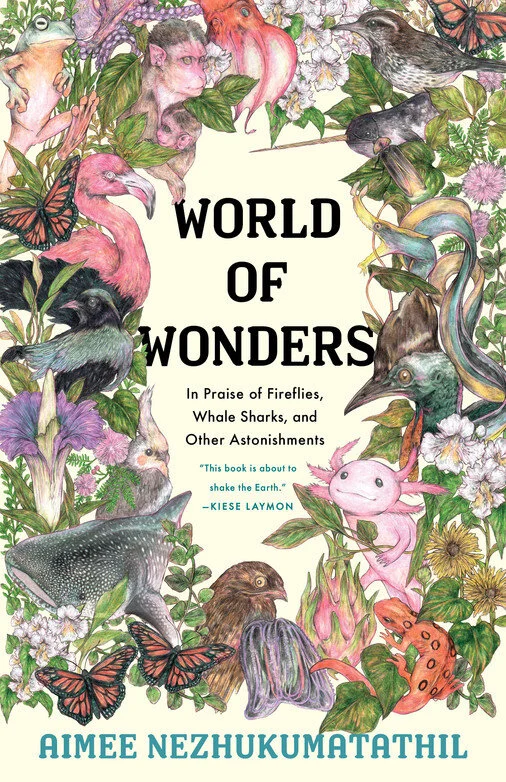
Read Siobhan McKenna’s book review of World of Wonders: In Praise of Fireflies, Whale Sharks, and Other Astonishments by Aimee Nezhukumatathil, published in Yellow Arrow Journal’s Vol. V, No. 3 (Re)Formation issue (fall 2020). Information about where to find World of Wonders and (Re)Formation is below.
Catalpa trees or catalpa speciosa can grow to be almost 60 ft tall, have “foot-long leaves,” and “can give two brown girls in western Kansas a green umbrella from the sun.” So begins Aimee Nezhukumatathil in the first essay of World of Wonders: In Praise of Fireflies, Whale Sharks, and Other Astonishments. This book of 28 lyrical essays weaves together fascinating tidbits about species in our natural world with Nezhukumatathil’s own journey of finding self-acceptance and the meaning of living in a country where being ‘other’ must be navigated on a daily basis. Through the essays, characteristics found within nature reflect Nezhukumatathil’s own qualities as she moves through everyday life.
In her included essays—most titled after a natural wonder and its scientific name—Nezhukumatathil acts as the narrator of a National Geographic documentary. As our guide, she begins in the landscape of her youth where she realized that growing up with a Filipina mother and Indian father set her apart from other children and would color nearly every aspect of her life in the years to come. From there, she whisks the reader from the sweet fields of love as she knew her husband was the one when he “didn’t blanch” at her adoration for the corpse flower (whose scent is reminiscent of “a used diaper pail left out in the late August sun” (70)) to the depths of motherhood where in swimming with a whale shark, she realized that she was “unprepared to submit [herself] so completely to nature” (89) with the implications of the worst occurring: a motherless son.
Nezhukumatathil, an author of four other collections of poetry, spellbinds the reader with her sensory imagery. She compares the petals of a touch-me-not to something that “look[s] as if someone crossed a My Little Pony doll with a tiny firework” (25) and envelops the reader in the smell of a monsoon: like the “wind off the wings of an ecstatic teeny bat” mixed with “banana leaves drooping low,” and “clouds whirring so fast across the sky” (58–59). In fact, every essay is saturated in lush prose that transports the reader alongside Nezhukumatathil as she is slowly sipping a dragon fruit cocktail in “Mississippi when the air outside is like a napping dragon’s exhalations” (115).
But the beauty found in her lyricism does not detract from the gravitas of the messages that underlie her essays. As a daughter of immigrant parents, Nezhukumatathil calls us to be better to one another when faced with diversity and to not succumb to tropes where racism can be chalked up as a sign of older times or the ignorance of children.
In her essay “Monodon monoceros,” she speaks of channeling the narwhal’s preference for swimming through “chunky ice rather than open seas” (35–36) when a boy on her school bus “flipped his eyelids inside out” (38) after she explained to him that her mom was in fact Filipino and not Chinese. And in “Ambystoma mexicanum,” she presents that remembering the smile of an axolotl (thin and tough) “can help you smile as an adult even if someone on your tenure committee puts his palms together as if in prayer every time he sees you off-campus, and does a quick, short bow, and calls out, Namaste!” (45) despite telling him repeatedly that she’s Methodist. Nezhukumatathil demands that we alter what we teach our children about those different from ourselves and how we internalize these differences as adults. By illustrating these cringeworthy and far too common microaggressions, she cries for us to be curious, not assumptive about the questions to which we do not know the answers.
Yet, instead of seeking pity, Nezhukumatathil burns with a firm resolve to find home wherever her feet seep into the soil by calling on the natural world around her. Similar to a red-spotted newt, which takes time “wandering the forest floor before it decides which pond to call home” (139), Nezhukumatathil moved from places such as Arizona, Iowa, and Western New York, before settling in Mississippi with her husband. And although her move from Western New York was precipitated after she became weary “of acquaintances at the post office asking about ‘my people,’” she wonders what would have happened if she saw a red-spotted newt in the midst of a bleak New York winter “skittering under the surface of the ice” (142) as they often do. Like the perseverant newt, Nezhukumatathil thinks she might have stayed, calling to mind that “all this time, my immigrant parents had been preparing me to find solace in multiple terrains and hoping to create a feeling of home wherever I needed to be in this country” (143).
Nezhukumatathil’s disposition toward finding goodness in the face of adversity and using the natural world as a guiding light is what ultimately defines her work and seems especially timely in light of our country’s current social and ecological climate. To me, Nezhukumatathil’s essays serve as a call to action as unmatched wildfires continue to ravage the west coast and racial discrimination is brought to the front of a long-overdue national conversation. Her skillful synthesis of these intense topics into short digestible anecdotes—while still channeling hope—is the precise writing we need right now for us to feel stirred to work toward the daunting tasks of preserving our earth and dismantling racial injustice in our country.
As the compilation winds down, Nezhukumatathil introduces the reader to a Casuarius casuarius or southern cassowary. These flightless birds are native to New Guinea and Australia and are relied upon to preserve biodiversity as a keystone species. Most interestingly, Nezhukumatathil teaches us, in her colorful, rhythmic prose, cassowaries have a call that can’t be heard by humans, but only felt—a “rumble” (148) deep in our bones. She ponders on this feeling: “suppose that boom shaking in our body can be a physical reminder that we are all connected” (149). This musing echoes again and again as the reader encounters each creature and sees a reflection of themselves staring back. Because, Nezhukumatathil warns, in order to reform how we commune with human beings—nature—we must remember that all that is precious in our world will be lost if we do not slow down and feel the vibrations of the earth; feel the beat of each other’s hearts.
Paperback and pdf copies of (Re)Formation are available in the Yellow Arrow bookstore or through most online bookstores. Book of Wonders was published by Milkweed Editions (2020; 184 pages). For more information, visit milkweed.org/book/world-of-wonders.
Siobhan McKenna is a middle child and a lover of bike-packing and practicing yoga. She enjoys writing essays, poetry, and long-winded letters to friends. For the past nine years Siobhan has lived in the charming city of Baltimore, but beginning in the spring she will start work as an ICU travel nurse—moving to a different city every three months to work, write, and explore all that this crazy, broken, and beautiful country holds. You can follow her on Instagram @sio_han.
******
Yellow Arrow Publishing is a nonprofit supporting women writers through publication and access to the literary arts. Thank you for supporting independent publishing.
Shaping and Reshaping: Yellow Arrow Journal's (Re)Formation

“I think of the trees and how they simply let go . . .” From The Journals of May Sarton: Volume One: Journal of a Solitude, Plant Drawing Deep, and Recovering by May Sarton
Yellow Arrow Publishing, like many others, has had to adapt and reform during the current, tumultuous times we are living in. This (re)formation has been a challenge as well as a pleasure, and our contributing authors are prepared to share their experiences of formation and change with the world. The release of Yellow Arrow Journal’s (Re)Formation issue, Vol. V, No. 3 (fall 2020), is an opportunity for Yellow Arrow, the included authors, and all our readers to come to terms with the state of the world along with the state of ourselves. The theme (Re)Formation holds a certain duality that sets this issue apart from previous journals. Through varying takes on formation as well as reformation, contributors express the ways they have been formed and reformed over time. The era we are living through renders this theme especially pertinent and we at Yellow Arrow hope you will find some peace within this issue from the comfort of your own HOME.
Yellow Arrow Journal continues to support and inspire women in the literary arts by featuring poetry, creative nonfiction, book reviews, and cover art from any and all who identify as women. This issue of the journal serves as a collection of thoughts upon the way identity is shaped and perhaps reshaped throughout the hardships and joys of life. And by including synonyms for formation and reformation at the end of each piece, Yellow Arrow Journal authors are able to convey a sense of what these terms mean to them and just how much duality this theme holds in and of itself. Through stories of tragedy, hope, and soul-searching, we at Yellow Arrow hope this issue will inspire you to continue to evolve and to never stop pushing forward.
Paperback and PDF versions of (Re)Formation are now available at the Yellow Arrow store. You can also search for Yellow Arrow Journal or Yellow Arrow Publishing on any e-book or anywhere you purchase books. We would also like to invite everyone to our prerecorded A Reformative (Re)Formation Reading, which will be released on our YouTube Channel (and shared through Facebook and Instagram) November 25 at 6:00 p.m. The reading will feature several of our authors from this issue and will be hosted by our poetry editor, Ann Quinn.
Finally, if you would like to share any encouragement for our incredible staff or the (Re)Formation authors please do so through Facebook/Instagram or even in the video comments when the reading is released.
***
Yellow Arrow Publishing is a nonprofit supporting women writers through publication and access to the literary arts. Thank you for your continued support.
Yellow Arrow Journal Submissions Now Open!
Yellow Arrow Publishing is excited to announce that submissions for our next issue, fall 2020 (Vol. V, No. 3) are now open September 1–30 on the theme:
(Re)Formation
Spending the time to create something—to give shape to a place, a person, yourself, or an idea—is a significant step in life. Then imagine needing to reform it, make an improvement.
What does it take to shape or form something? Ourselves? How do we sustain what we form? Why is it meaningful?
How do we know when reformation is necessary? Why is it necessary sometimes? What can we gain through such a transformation?
Can a personal (re)formation become a community act? How? Why might this be necessary at times?
For more information regarding all journal submission guidelines, please visit yellowarrowpublishing.com/submissions. Please note that our guidelines have recently changed; read them carefully before submitting. To learn more about our editorial views and how important your voice is in your story, read About the Journal. Every writer has a story to tell and every story is worth telling.
The journal is just one of many ways that Yellow Arrow Publishing works to support and inspire women through publication and access to the literary arts. Since its founding in 2016, Yellow Arrow has worked tirelessly to make an impact on the local and global community by hosting literary events and publishing writers that identify as women. Creating diversity in the literary world and providing a safe space is important to us. Yellow Arrow proudly showcases the voices of women from around the globe.
You can be a part of this mission and amazing experience by submitting to Yellow Arrow Journal, publishing full-length creative nonfiction and poetry chapbooks, joining our virtual workshops and events, volunteering, or donating today. Publications are available at our bookstore, on Amazon, or on any eReader. Click here for information about current and future changes to the Yellow Arrow family.
***
Yellow Arrow Publishing is a nonprofit supporting women writers through publication and access to the literary arts. To learn more about publishing, volunteering, or donating, visit yellowarrowpublishing.com.

New Release: HOME

Like the rest of the world in this time of pandemic, the volunteers of Yellow Arrow Publishing are experiencing Home in a new way now. However, they have mustered all of their resilience showcased in the most recent issue of Yellow Arrow Journal to push forward with the release of the new issue, HOME. As stated by Ella Peary in Authors Publish, Yellow Arrow sees “creativity as an act of service and a path toward communal empathy.” This connection and empathy is needed now more than ever. The theme—originally intended to represent the organization’s move into its own offices at Yellow Arrow House—has become impactful and relevant beyond what YAP’s board and editors could have imagined. As a result, this issue has become a masterful piece of collaboration among strong women working to create, illustrate, and define “Home.”
As always, Yellow Arrow Journal supports and inspires women in the literary arts by featuring poetry and creative nonfiction from women writers as well as one art piece per issue to serve as its cover, but the HOME issue introduces several new developments that promise to make this the best issue yet. It’s no secret that YAJ is growing in popularity, and in size as well. After receiving around 300 submissions—a record high for the young journal—Editor-in-Chief Kapua Iao made the decision to extend the journal so its readers would not miss any of the engaging pieces and promising writers connected to YAJ for lack of space. With creative nonfiction, one of our authors, Roberta S. Kuriloff, takes the reader through the experience of literally and figuratively building her home in “Unearthing Home.” Poets such as Paula Bonnell, Ann Howells, Stephanie Kadel Taras, Hannah Rousselot, and Cynthia Gallaher have contributed some of the issue’s poems sure to inspire conversation and community. In exciting news, the journal will include a book review for the first time ever, opening with local writer Kara Panowitz’s review of Landing on Your Feet and Putting Down Roots: 21 Rituals to Transform Your Life and Interior Space by Sherry Burton Ways. Her review inspires energy and persistence in the current world, making this a promising addition to the journal’s lineup and a form sure to be included in future issues. The amazing writers mentioned here are only some of those included in the issue. HOME features women writers from all over the United States as well as Canada, Germany, and Pakistan.
Perfect-bound and PDF versions, as well as our annual subscription, are available at the YAP store. You can also search for Yellow Arrow Journal on any e-book device. Although Yellow Arrow traditionally produces a limited edition, hand-bound version of the journal in an effort to emphasize the humanness behind the writing, YAP trusts that this will shine through in the writing itself, despite the hand-binding process being on-hold for the moment.
YAP’s founder Gwen Van Velsor states in her introduction to the issue, “It is our mission to always bring hope and positivity to our publications and to our work. And now, more than ever, we offer this issue to you as a font of goodwill during a time when great healing must be our task.” Yellow Arrow would like to encourage its readers to support small businesses, literary magazines, and presses as we all struggle through this tough moment in history together. They hope they can count on your support and look forward to the day when their other programs can resume and allow everyone to gather again in creativity and community. Buy HOME and join us for a virtual reading on June 5th from 6 to 7PM featuring authors from the issue and hosted by writer-in-residence Stephanie Garon.
We are RESILIENT!

It’s time to celebrate the launch of the latest Yellow Arrow Journal, RESILIENCE. As a Baltimore-based nonprofit, Yellow Arrow Publishing prides itself on supporting women writers and ensuring their voices are heard.
Yellow Arrow Journal features poetry and creative nonfiction from women writers as well as one art piece per issue to serve as its cover. The works included showcase feelings of optimism and hope and proudly represents voices of women from around the globe.
This issue features work by: Margie Deeb, Stephanie Garon, Haadia Hyder, Sandra Kacher, Kimberly Knowle-Zeller, Martha McLaughlin, Rissa Miller, Meesh Montoya, Sarah Nelson, Ariele Sieling, Gina Strauss, Taína, Claire Taylor, Naomi Thiers, and Gail Thomas
Cover art by: Megha Balooni
To purchase an issue or subscribe annually, visit the YAP store. Yellow Arrow Journal issues are also available on your eBook.
The journal is just one of many ways that Yellow Arrow Publishing works to support and inspire women through publication and access to the literary arts. Since founded in 2016, Yellow Arrow has worked tirelessly to make an impact on the community by hosting literary events and publishing local writers, because of the importance of sharing the underrepresented voices of women in literature. To Yellow Arrow Publishing, creating diversity in the literary world is deeply important work. Furthermore, creating space in which women can participate in the literary arts gives an opportunity for social change and the expansion of literary norms. The RESILIENCE issue, as with all Yellow Arrow projects, is about contributing to the voice of the community by sharing the voices of women in the hopes of creating a cultural ripple effect of empathy, compassion, and understanding. As it states on the Yellow Arrow website, “Expressing who we are and sharing our experiences, strength, and hope, deepens the understanding of the human condition, allowing us all to better empathize with one another.” You can be a part of this mission by subscribing to Yellow Arrow Journal. Each subscriber gets a limited edition hand-bound copy of the journal twice per year.
If you are in the Baltimore area, please come celebrate the launch of RESILIENCE at Yellow Arrow House on February 7th. Many of our contributors will be reading their work and discussing what resilience means to them. Full details on the event here.
RESILIENCE
Yellow Arrow Journal Announces New Theme
Submissions open November 1st and your voice is needed!
With the official start of Autumn, Yellow Arrow Publishing has turned its attention to production of the upcoming winter issue of the Yellow Arrow Journal with the announcement of its new theme: Resilience. As a Baltimore city-based nonprofit, YAP prides itself on supporting women writers and ensuring their voices are heard. This cannot happen, however, unless they have the work of women to share. Submissions will be open for “Resilience” from November 1st through November 30th.
The Yellow Arrow Journal features poetry and creative nonfiction from women writers as well as one art piece per issue to serve as its cover. The works included showcase feelings of optimism and hope. Creative nonfiction submissions must be between 500 and 5,000 words upon submission and only one submission per author is accepted per issue. Poetry, on the other hand, can be any length and five submissions per author are accepted for each issue provided they have all been compiled into one document for submission. Yellow Arrow proudly represents the voices of women from around the globe and accepts works in languages other than English as long as the author also provides an English translation for their piece. When it comes to the cover, the Yellow Arrow Journal excitedly welcomes paintings, drawings, prints, photos, graphic design, comics, and anything else related to the theme of “Resilience,” that women artists are able to dream up. As a special thanks, all contributors receive $10.00 USD and one free hard copy of the issue in which they are featured. More information regarding the submission guidelines and process can be found on the Yellow Arrow website at https://www.yellowarrowpublishing.com/submissions.
The journal is just one of many ways that Yellow Arrow Publishing works to support and inspire women through publication and access to the literary arts. Since being founded in 2016, they have worked tirelessly to make an impact on the community by hosting literary events and publishing local writers, because` they see the importance of sharing the underrepresented voices of women in literature. To Yellow Arrow Publishing, creating diversity in the literary world is deeply important work. Creating space in which women can participate in the literary arts gives opportunity for social change and the expanding of literary norms. The upcoming “Resilience” issue of the journal, as with all Yellow Arrow projects, is about contributing to the voice of the community by sharing the voices of women in the hopes of creating a cultural ripple effect of empathy, compassion, and understanding. As it states on the Yellow Arrow website, “Expressing who we are and sharing our experiences, strength, and hope, deepens the understanding of the human condition, allowing us all to better empathize with one another.” You can be a part of this mission by contributing to the Yellow Arrow Journal.

FREEDOM is here!

Cover art by Amber Sliter
We are delighted to announce the release of the latest issue of the Yellow Arrow Journal, FREEDOM. A talented group of women and identifying writers submitted their creative nonfiction and poetry for Vol. IV, No. 2 of our biannual literary journal. Below is more detailed information about each writer. You can purchase a hand-bound copy here, sign up for an annual subscription here, download a PDF version here, or look for it on your eReader.
Each copy is lovingly hand bound and printed in small batches.
Thank you for supporting independent publishing.
Editor-in-Chief
Kapua Iao
Editors
Meredith Eilola, Eleanor Hade, Alexa Laharty, Mindy Stokes, and Gwen Van Velsor
Contributors
Katherine Anderson Howell is a 2018 Pushcart Prize Nominee from Washington, D.C. A mother of two children and a recovering academic, she currently studies esthetics, skin care, and makeup at the Aveda Institute in Washington, D.C. and is the editor of Fandom as Classroom Practice: A Teaching Guide (2018). Her poems can be found in Stillwater Review, Beltway Poetry Quarterly,e Account, Misfit Magazine, and Mojave He[art] Review among others. Other work is forthcoming in Whale Road Review. Follow her on Twitter at twitter.com/@genKatieOrgana.
Raga Ayyagari is an emerging poet who is inspired by nature, family history, and identity and enjoys learning from conversations with strangers. Her work has previously appeared in Stanford University’s Leland Quarterly Journal. She works as a public health research analyst in Washington, D.C. and enjoys both technical and creative writing.
Linda M. Crate’s work has been published in a myriad of magazines both online and in print. She has six published chapbooks: A Mermaid Crashing Into Dawn (Fowlpox Press - June 2013), Less an A Man (The Camel Saloon - 2014), If Tomorrow Never Comes (Scars Publications - 2016), My Wings Were Made to Fly (Flutter Press - 2017), and splintered with terror (Scars Publications - 2018), more than bone music (Clare Songbirds Publishing - 2019), as well as one micro-chapbook Heaven Instead (Origami Poems Project - 2018). She is also the author of the novel Phoenix Tears (2018).
Margie Deeb’s passion for beauty is the heartbeat of the art she creates and writes. She has published five books on color and beading, one of which the Library Journal voted the Best Craft How-To book of 2009. She has published countless print and digital articles on design and color and is a professional art director, graphic designer, illustrator, and color expert. She conducts design, color, and writing workshops for artists online and throughout the United States and Canada. Her art has been featured in galleries across the United States and in many books and publications.
Jenny Fraser is an artist from the east coast of Australia. She has a background in art and media education spanning over two decades. After completing her undergraduate degree, she taught art and film and media in high schools. In 2009, she then completed a Master of Indigenous Wellbeing at Gnibi, Southern Cross University. In 2017, she also graduated with a Creative Research PhD in ‘The Art of Healing and Decolonisation’ through Batchelor Institute in the Northern Territory. Her current focus is in native foods, body work, floral arts, and being able to use their raw energy to benefit healing and to help people to help themselves.
Betsy Housten is a Brooklyn-based queer writer and massage therapist. She earned her MFA at the University of New Orleans where she won three awards and served as Associate Poetry Editor of Bayou Magazine. Her work appears in Rogue Agent, The Hunger,Lunch, Bone & Ink Press, Longleaf Review, and elsewhere, and has been nominated for Best New Poets, Best of the Net, and the Pushcart Prize. Find her at betsyhoustenwrites.com.
M. Kanani Milles is a Native Hawaiian writer who has been living and gardening in Connecticut and New Hampshire since 2003. She shares a small plot of land (stolen from the Quinnipiac) with her husband and two young daughters, a dozen chickens, two goats, and a hive of bees. She is writing her way to healing as her mind–body struggles to come to terms with a stage IV cancer diagnosis.
Ann Quinn is the author of the poetry chapbook Final Deployment (Finishing Line Press - 2018). Her poetry has appeared in a wide variety of publications including Potomac Review, Little Patuxent Review, Broadkill Review, Haibun Today, and Snapdragon, and is included in the anthology Red Sky: Poetry on the Global Epidemic of Violence Against Women. She is a Pushcart Prize nominee and her poem “Three Years after my father’s Final Deployment to the Gulf of Tonkin” won the 2015 Bethesda Literary Arts Festival poetry contest, judged by Stanley Plumly. Ann is a graduate of the Pacific Lutheran University MFA program. She teaches reflective and creative writing and music and lives with her family in Catonsville, Maryland. Please visit online at www.annquinn.net.
Amber Sliter is an artist and activist living and creating in Buffalo, New York. Amber studied painting and art history at the University at Buffalo where she received several awards and scholarships. The Rumsey Scholarship funded participation on a Minoan archaeological dig in Crete, Greece. Her art explores natural and synthetic relationships, relating to her experience as a woman living in the Anthropocene era. Her work ranges between sculptural paintings, installations, and murals to activist prints and performances. Amber is currently apprenticing in a woman run woodworking shop.
Ashley Stimpson is a freelance writer based in Baltimore, Maryland. Her work has appeared or is forthcoming in Longreads, Johns Hopkins Magazine, Potomac Review, Little Patuxent Review, and elsewhere. See more of her work at www.ashleystimpson.com.
Sarah Van Sciver is a freelance writer, artist, mother, personal chef, and a FEEL practitioner residing in Baltimore, Maryland. Her passion for writing stems from the healing and recovery from PTSD she has experienced through working with horses. She is currently working on a memoir about the healing effects horses have on humans who experience trauma. To find out more about Equine Experiential Learning, to view her artwork, and to read other essays, please visit https://untetheredmare.com/.
Nancy Wade is a Colorado native who has lived in Boulder since 2002. She earned a BA in Communications in 2000 and an MA in Spiritual Memoir in 2009. Her career includes 15 years in legal word processing and 20 years as an employment administrator in the Human Resources Department of a scientific research organization. Retired since 2015, she enjoys spending time with her husband, two grown children, two stepsons, and especially with her two lively grandsons, ages 6 and 9. In retirement, she has more time for reading and writing, mostly in the memoir genre.
Roz Weaver is a spoken word performer and internationally published poet living in England. She has been published in a number of journals, zines, and anthologies, including most recently with Snapdragon, Voice of Eve, and Cultivate. In 2018, her work was displayed at the annual Rape Crisis UK Conference, as well as being displayed and performed at two further exhibitions in London— ‘Th Sunlight Project’ and ‘Testimony,’ the latter as part of a conference hosted by UN Goodwill Ambassador Emma Watson. More recently, her work has been on exhibit with London based ‘What You Saying?’ and performed at Leeds International Festival.
Matilda Young is a writer working for a civil rights nonprofit with an MFA in Poetry from the University of Maryland. She lives in Washington, D.C. with a poet, an environmental lawyer, and an angry ginger cat. She has been published in several journals, including Sakura Review, The Golden Key, and District Lit.
Yellow Arrow Journal: Winter 2019
The Winter 2019 edition of the Yellow Arrow Journal is now available as a hard copy, PDF, or an ebook on your Kindle.
This season we explored the theme of "Doubt" through creative nonfiction and poetry by T.J. Butler, Jessica Cappelluti, Diane Finlayson, Jessica Gregg, Tami Lauteren, Edele C. Morgan, Ann Quinn, Mindy Stokes, and Roz Weaver.
Thank you to our hard working editorial staff, to the talented writers, and of course to you, our beloved readers.
Support independent publishing through an annual subscription to the journal. Our hard copy editions are printed in small batches and bound by hand.

Submissions open

Submissions open OCTOBER 1st to NOVEMBER 30th 2018 for the winter 2019 issue of the Yellow Arrow JournalGuidelines:-The theme is "Doubt." We leave it up to authors to interpret the theme however they choose.-Submissions of creative nonfiction and poetry by women and identifying authors welcomed.-Submissions for cover art by women and identifying artists welcomed. Must supply a high resolution image. Cover art can be a painting, drawing, print, photo, graphic design or anything else you dream up.-Submissions of creative nonfiction must be no more than 5,000 words, however any piece between 500 and 5,000 words will be considered. You may submit up to 5 poems per author.-Please send your submissions in the body of an email to info(at)yellowarrowpublishing.com. Cover letters are not necessary unless you need to explain how your piece relates to the theme. Attachments are not accepted.-We are seeking pieces of writing with an optimistic or hopeful vibe.-Multiple submissions are fine, but please do let us know if your piece gets published elsewhere in the mean time.-Please no previously published work aside from blogs and personal websites. If you're not sure, just ask.-Accepted submissions may be edited for content and grammar. We will seek your permission before editing.-Submissions are $.99 per piece of creative nonfiction and $.99 for up to 5 poetry submissions. Payment accepted here. If you are unable to pay for your submission, please explain this in your submission email and we will permit scholarships on a case by case basis.-You will hear back from us by December 17th, 2018 regarding your submission.-If your piece is selected, you will receive payment of $10USD and one free hard copy of the journal.Send submissions to: info(at)yellowarrowpublishing.com
Yellow Arrow Journal, Vol. III, Courage

Dear Yellow Arrow Family,Volume III of the Yellow Arrow Journal is here and we couldn't be more excited and proud to share it with all of you. The theme this time around is "Courage." Inside you will find a collection of poetry and essays by writers who identify as women from all over the world.We hope you consider supporting independent publishing by subscribing to the journal, purchasing a single hard copy, downloading a PDF, or reading it on your Kindle.A very special thank you goes out to our volunteer staff Kapua, Leila and Maggie who spent hours and hours sifting through submissions, editing, formatting and looking over many revisions with a close eye. We so appreciate your dedication to this project.If you happen to get a copy of this journal in your hands you'll notice it is hand bound with string. That's right, we sat and stitched them with needle and thread, because we love you. Also because we wanted to produce a product that was entirely in-house. In the past we had printed copies made through Amazon because it was cheap and easy. Cheap and easy isn't a bad thing, but we just really wanted to give you a journal that was touched by our very own hands and made special for each of you.We hope you enjoy this volume,Gwen Van Velsor
Yellow Arrow Journal, Volume II, January 2018

We are proud to present the second volume of our biannual literary journal. The theme is Time.Thank you to all the courageous writers who offered their precious time to this edition.To read the journal as a PDF, please click the link or image below. To purchase a hard copy for $7.00 (including shipping), please email info@yellowarrowpublishing.com with your name, mailing address, and preferred payment method. Or, purchase on Amazon for $10.00. You may download the ebook version for $.99 on your Kindle or ereading device.
Cover art by Marie Hassell Doctorchik
Yellow Arrow Journal: Volume I, July 2017
We are proud to present the first volume of our biannual literary journal. The theme is Journey. Creating this compilation was a journey of its own, and we are very grateful for your support and readership.Thank you to all the talented and brave writers who submitted their hearts and souls to this enterprise.To read the journal as a PDF, please click the link or image below. To purchase a hard copy, please email info@yellowarrowpublishing.com