Yellow Arrow Publishing Blog
Submitting Poetry: Better the Second Time Around

From January 2021
By Sara Palmer
As a childhood and teenage poet, I dreamed of becoming a “real” writer. But as a young adult, I was not a risk-taker. Writing as a hobby was safe; writing as a profession, terrifying. I wanted a secure career, not one where I would have to struggle to make ends meet. So, in college, I majored in psychology and went on to get my PhD. As a researcher and psychotherapist, I was able to explore from another angle what I loved most in literature—the complexities of human character. And I did plenty of writing, albeit mostly professional articles and books.
I continued writing poetry on the side, inspired by my clients’ lives, my own experiences, and my love of nature. While taking an adult education poetry class, I had my first how-to lesson in submitting to journals. This was back in the pre-Internet age. There were fewer journals, and the competition was fierce. Submissions had to be typed and mailed with a formal cover letter and a stamped, self-addressed envelope (SSAE), for the return of poems not chosen for publication. Serious submitters kept stacks of envelopes addressed to multiple journals, with the cover letters and SSAEs already tucked inside; as each freshly rejected submission was returned, they would slip the poems into the next envelope in the stack and send it off again.
I lasted about a year at this game before buckling under the deluge of rejections. The silence of editors pushed my anxiety through the roof—there was no way to tell if my poems were simply not a good fit for a particular journal, or if they were total trash. With no external input, my mind raced around a groove of self-doubt and self-criticism, quashing my creativity. When I couldn’t take it anymore, I put away my envelopes and called it quits.
I didn’t take another poetry class for many years, but I never stopped writing. I charmed my friends and family with personalized rhyming poems, which were read aloud at parties to oohs and ahs and treasured by their recipients. And I wrote “serious” poems about love, loss, nature, family, and illness, which were read aloud once to my husband or a close friend, then shoved into a file cabinet, never to be seen again.
But in recent years, after retiring from my psychology career, I’ve reinvested myself in my poetry. I’ve discovered some forgotten gems in my neglected file cabinet, dusted them off and polished them up. And I’ve written many new ones. I’ve taken poetry classes, joined a writers’ group, and participated in a poetry reading. Through these experiences I’ve learned that my poems can stimulate memories, elicit emotions, and offer novel viewpoints—they are effective and worthy. Am I Emily Dickinson? No way. Sylvia Plath? Not hardly. But that’s OK, because as a 60-something, still-emerging poet, I no longer want to let perfection stand in the way of goodness—my goodness. And so, many years after quitting the submissions game, I’ve picked up my virtual envelopes and started over.
In my youth, I measured success by the kudos I received from experts and authority figures. Acceptance by an editor was as—or maybe more—important to me than whether ordinary readers would read and enjoy my work. Self-publishing was not an option—though I knew of remarkable self-published chapbooks, deep down in my approval-seeking soul, I saw this as a last resort for losers. Looking back, I’m ashamed of my addiction to external approval. I’m ashamed of my cowardice, letting fears of rejection keep me from submitting my work. Thankfully, I’ve matured now, and grown a tougher hide. I don’t worry about the judgment of editors. I don’t agonize over whether my poetry meets an elusive standard of artistic worth. My goals are simply to hone my craft, try my best, and get my poems out into the world for people to hear and read. And that’s incredibly liberating.
So, how do I do it? Well, electronic submission has simplified the process these days, but the number of journals is overwhelming. Since my primary goal is to get my poems out to readers, I’ve devised a simple starter strategy: find journals with an issue theme (I use Duotrope’s calendar for this), find poems in my collection (or write new ones) that fit the theme, edit or rework as needed, and hit submit! Then sit back, relax, and wait for the rejections to roll in!
Over the past year, I’ve submitted 19 poems to 11 journals and poetry contests. I’ve had 12 rejections and one publication—and six poems are still out for review. The joy of seeing one of my poems printed in a journal was indescribable. As for the rejections—let’s call them nonacceptances—I felt no pain. I’ve adjusted my expectations and changed my labels. I know that at most journals, most of the time, it’s most likely that the editors will not accept my poems. But this is not the same as rejecting them. And it’s certainly not the same as rejecting me.
Now I imagine the editor like the judge in a baking contest. She tastes hundreds of treats; each is unique, all are sweet. She can only give a prize to the one most pleasing to her palate. I submit poems of many flavors and trust that a few will be so delicious to the taster that she’ll grant them a place on her table. My inbox will no doubt remain filled with rejected confections. But I will be filled with the sweetness of (self-)acceptance, with the joy of sharing my work, and with pride in myself for sticking with it the second time around.
Sara Palmer wrote her first poem in second grade, and since then, poetry has been her vehicle for self-expression, healing, and enjoyment. During her career as a psychologist, Sara specialized in emotional and social aspects of disability, chronic illness, and caregiving. She published articles and chapters for professionals and several books for patients and families, most recently Living with HHT: Understanding and Managing Your Hereditary Hemorrhagic Telangiectasia (2017). Now retired from psychology, she devotes more time to creative writing and volunteer work. Sara is on the Boards of Cure HHT and Yellow Arrow Publishing. She lives in Baltimore with her husband and dog and enjoys close ties with her adult children, two young grandchildren, and numerous friends.
******
Yellow Arrow Publishing is a nonprofit supporting women writers through publication and access to the literary arts. Thank you for supporting independent publishing.
Allow Women to Be Strong
By Linda M. Crate
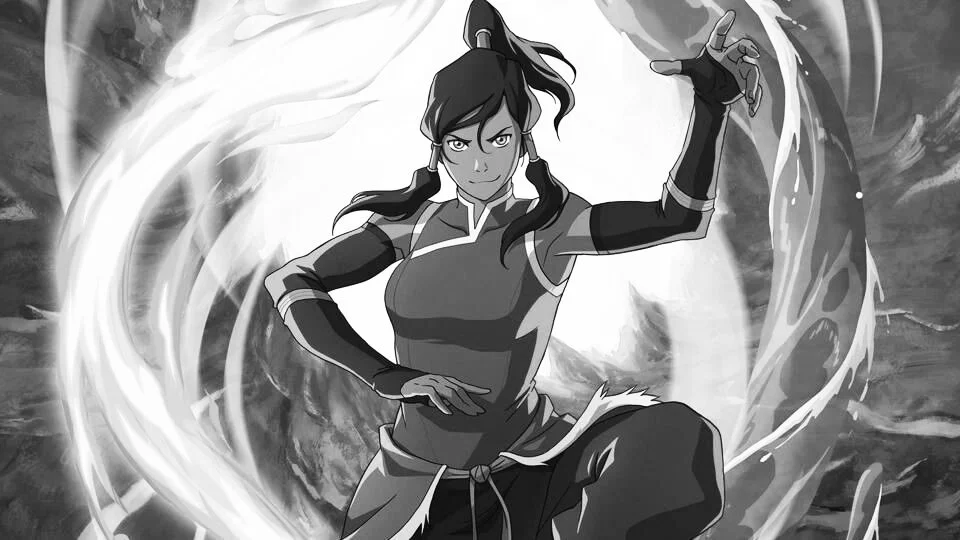
I happen to deeply love the Avatar series. I started by watching Avatar: The Last Airbender and The Legend of Korra. What I’ve noticed, however, is that some of those in the fandom are really sexist. They call Korra weak and they point out all of her flaws while giving male characters the benefit of the doubt, excusing their bad behavior.
Korra is a girl who is powerful and faces not only tough battles against tough adversaries but she has to fight against PTSD, depression, and other traumas. Yet she does so. She thinks it is weak to ask for help (which is honestly a trait of hers that I relate to) despite having friends that are willing and able to help her. She learns, in the end, to lean on her friends for strength, and becomes even stronger for it.
It is rather disheartening to me that women, strong women, are often seen as weak or hated simply because they are not men. People act as if we’re not all flawed, imperfect beings trying to live our best lives. They will try to pick away at our strength and our power because the fact that we can still go on despite all the situations in life that try to break us is terrifying to them.
I’ve experienced this as a woman writer—I sometimes am not taken seriously because of the subject matter I write about. When I do write about serious or heavy topics in some poems and about love in other ones, the love poems are sometimes the ones that are picked up.
I once wrote about the man who attempted to assault me, only to have a male editor tell me that it made him feel nothing. I cannot tell you how angry that made me—like the suffering of another person doesn’t make you feel anything? The editor then proceeded to tell me to send him more writing when I could write well. If that’s not insult to injury, I don’t know what it is.
Women aren’t all whimsical and romantic creatures that can only write about sunshine and rainbows. Sometimes talking about the dark things that have happened to me actually helps heal me, and strong people need places where they can be vulnerable. In society, I think this is a huge problem. Emotions are seen as weaknesses. They are not. Women should be able to express themselves, men should be able to express themselves; we should all be respected for the things that we feel. I feel like people let men publish things that are just mediocre or don’t make me feel anything, but a woman sometimes is expected to be completely flawless and exquisite to even get noticed as a writer.
Women should be able to write about the things that they want to write about and still be respected.
I want to write about things other than love because love isn’t the only thing I’ve experienced in life.
We deserve to be seen as something other than lovers. Women deserve to be seen for our strength, our fight, our ferocity, and our ability to stand tall despite everything that tried to break us.
Women are strong, they are powerful, and our voices deserve to be heard no matter what we’re talking about. We need to stop discriminating against people based on their gender. We all have talents and abilities that can be strengthened and become better with time, and we all deserve that chance.
I am not weak because I am a woman, but you might be weak if you believe someone is weak for being a woman.
Linda M. Crate is a Pennsylvanian born in Pittsburgh but raised in Conneautville. Her work has been published in numerous magazines and anthologies, both online and in print. She is the author of six poetry chapbooks, the latest two which are the samurai (October 2020) and More Than Bone Music (March 2019). She also is the author of the novel Phoenix Tears (June 2018) and two micropoetry collections. Recently, she has published two full-length poetry collections, Vampire Daughter (February 2020) and The Sweetest Blood (February 2020). Follow her on Facebook, Instagram @authorlindamcrate, or Twitter @thysilverdoe.
*****
Yellow Arrow Publishing is a nonprofit supporting women writers through publication and access to the literary arts.
Rejection\Acceptance

By Courtney Essary Messenbaugh
Originally written November 2020
This is not a story about 2020 and its discontents; at least not in the way we’re all so accustomed at this point. However, it does start in January of 2020, when I wrote down the following goal: I would submit at least three poems a month to literary publications. Small, but achievable, exactly how I like my goals.
Prior to that moment, I’d spent years jotting down disheveled words in scattered notebooks, hoping they’d someday morph into complete literary pieces that sang. I had taken one formal poetry class and being a writer had long been an aspiration that I dared not even utter because it involved risk and possible, even probable, failure. My life had theretofore been the result of a series of actions based on what I felt was expected of me and what would provide income and consistency. I had gotten a good education and followed a path of sensibility and safety, but had never taken the time to think about what really made me tick or what would truly sustain me.
Adulthood has a knack for kidnapping dreams sometimes and I had let it take off with several of mine. But, as I inched toward middle age, I began to contemplate the value of my time and knew that I needed to make some changes. I had spent much of my adult life with Stockholm syndrome, entranced by the gleam of superficial expectations and status, but never fulfilled, and knew it was time to try to rescue my dreams that still lingered.
Writing was scary because it was new. I was unproven, a total novice. Comfort and perceived expertise were not crutches on which I could rely. It was humbling and incredibly uncomfortable, but I began to reject the notion that failure was not an option. Failure was exactly the option I needed to start breaking free of the captors that had held me hostage for so long. I decided to reject my old way of looking at the world and start writing. In this sense, my writing was born of rejection.
Although the rejection of my own stale worldview felt like a triumphant way to leap into a writing career, the rejection of my actual writing was something altogether different. As I began to submit poems, I became intimately involved with this other sort of rejection. My poetry—those carefully honed pieces of me that I had put onto the page—were being denied left and right. For example, I’ve so far submitted a total of 94 poems this year and received exactly two acceptances. That’s about a 98% rejection rate. If I were in school, I’d have an A+ in Rejection.
Initially, all of this rejection felt personal. It felt like a referendum on the validity of my innermost thoughts and ideas. It even felt like a referendum on who I am as a person. It roused that lifelong voice that’s always casually simmering with “Am I enough? Am I good enough?” and turned it into a loud and consistent chorus. That voice really starts to bellow when I read other poets’ work. There are some poets writing today whose work is miraculous, whose work I will never match.
And that’s OK. The more I read of them, the more I want to create.
As time has gone on this year (and my goodness, time has gone on and on and on!), I have begun to meet my rejections with acceptance. The very thing I want—external acceptance—is the very thing I need to internally embrace. Now, all of these rejected poems later, I remember the buoyancy of the two acceptances and even have held on to several of the more personal and kind rejections. I’m living a duality of rejections: the kind it took for me to start writing and the kind I get about my writing.
As I move into this rejection\acceptance mindset, I have come to rely on two virtues: patience + persistence. Both have turned out to be quite useful in 2020 (for all kinds of reasons, you might relate . . .), and I know I will need them just as much, maybe even more, in 2021. I recently walked away from the safe, income-giving job I had been clinging to for the past 13 years and am going to throw more of myself and my time into writing this new year. I’m terrified. But I’m open. Rejection will be the proof that I’m trying. Persistence will be the way I tell myself to keep writing, keep rewriting, keep reading, keep learning, keep submitting, keep expanding. Persistence will be the muscle memory that every rejection is a tiny step toward possibility.
Not getting rejections, would mean that I’m not trying. And if I’m not trying, then there doesn’t seem to be much point of anything. Trying is enough. I am enough. And some days, I’m even starting to believe that.
Courtney Essary Messenbaugh currently lives in Colorado and delights in the blanket of neon blue sky there. Her work has appeared in the Yellow Arrow Journal and FERAL: A Journal of Poetry and Art. You can find her on Instagram @courtneyessary and Twitter @courtney_essary.
*****
Yellow Arrow Publishing is a nonprofit supporting women writers through publication and access to the literary arts. Thank you for supporting independent publishing.
The Light is on its Way: A Thank You to Family and Friends

Dear supporters, authors, readers, and staff,
We began the year with the theme of RESILIENCE for Yellow Arrow Journal. Little did we know at that time how important the quality of resilience would be to all of us this year. The last two issues of Yellow Arrow Journal—HOME and (Re)Formation—were also timely, as well as cathartic, for our staff. And we hope each issue, each piece of writing, provides the same sense of hope to our supporters, authors, and readers, now and in the future. This year has pushed us to accept change and work even harder to ensure that women writers are heard and valued. With change comes growth and with growth comes a new version of the self. As Bailey Drumm points out in her review of Michelle Obama’s Becoming in (Re)Formation, “You must own your story. No one else can for you. Approach the world as it should be, rather than complain about the world as it is. That’s how change is created. We learn from each other, and in learning we transform.”
Despite everything thrown at us this year, we have reformed and reshaped ourselves and are proud of all that we have accomplished over the past 12 months. And it is all thanks to you. We would like to send a huge thank you to everyone who began this journey with us, joined this journey with us, and have yet to find their way to Yellow Arrow. We appreciate all the volunteers, submitters, authors, readers, and donors who have found their way to our (now virtual) doors.
If you haven’t had a chance to watch A Reformative (Re)Formation Reading, please do. Put a face to the words you read. Hear from the authors themselves, about the duality of formation and reformation. Champion our four incredible 2020 Writers-in-Residence, who faced a mountain of obstacles themselves but still managed to create their insightful publication and reading launched earlier this month. Pick up a copy of Smoke the Peace Pipe and the samurai from the Yellow Arrow bookstore today. Learn more about the strengths of these authors and how putting pen to paper can be part of the healing process. And finally, congratulate our 2021 Pushcart nominees who did all the hard work; we are happy to support them, now and in the future.
Look for Ellen Reynard’s upcoming chapbook No Batteries Required to be released in April 2021 and our next journal issue, a special topic issue we are extremely proud of, in May 2021, as well as several other publications slated for release throughout the year. And please keep an eye out for upcoming publication opportunities on the horizon that have yet to be announced. In the short term, workshops continue to be on pause, except for the excellent “A Year in Poetry” with Ann Quinn. Be sure to reserve your spot for the final two sessions on January 2 and February 6. Stay tuned for workshop announcements for 2021.
Yellow Arrow depends on the emotional and financial support of those who value our work; your continued support means everything to us. Donations are appreciated via Paypal (info@yellowarrowpublishing.com), Venmo (@DonateYAP), or US mail (PO Box 12119, Baltimore, MD 21281). You can further support us by purchasing one of our publications from the Yellow Arrow bookstore (check out our Overstock SALE!), joining our newsletter, following us on Facebook or Instagram, or subscribing to our YouTube channel.
Once again, thank you for supporting independent publishing and women writers.
Sincerely,
Yellow Arrow Publishing
Letter from the Editor

Dear Readers and Writers,Yellow Arrow Publishing inspires, supports, and publishes non-traditional, female identifying writers in the genre of creative nonfiction. We seek to target wonderful, vibrant voices seldom heard in the literary community due to barriers such as academic literacy, disability, access to creative opportunities, or English language proficiency. We do this because for every one woman who manages to get published, there are a hundred more with equally important stories to tell. Yellow Arrow Publishing is focused on knocking these barriers down by allowing women to express themselves however they come to the page. We create a safe space for women to be proud of their work and their lives and their stories, to share without fear of scorn or shame. Women’s voices are underrepresented in literature, and we are here to be part of turning that tide. Sadly, there is a great deal of collective shaming directed toward female writers. A stern “how dare you?” echoes all around. As women, there are a lot of expectations around taking care of people, holding ourselves back so that others can shine, and keeping quiet. So when we have the guts to say, “this is me,” it is often taken as narcissistic, egocentric or arrogant. Providing opportunities for people to muster the courage to express themselves is deeply important work. We see creativity as an act of service, making this project not just about great literature, but about contributing to the collective voice. It’s about saying, yes, we belong here, too. There is no shame in that, just as there is no shame in singing, in sculpting, or in taking pictures. We must share our voices so that our daughters and our nieces can know that her experience is valuable. So that the little neighbor girl up the street will read our stories and say, “me, too.” Expressing who we are and sharing our experience, strength and hope deepens the understanding of the human condition, allowing us all to better empathize with one another. Along with telling stories, one of my gifts in life is the capacity to inspire others to be brave, to dare to be the best version of themselves. The process of writing has brought me so much joy and purpose over the years, especially after finishing my first book. It became clear that drawing creativity out in others would be a way that I could give back and find fulfillment beyond my own creative aspirations.Join us by submitting your story along the theme of "journey," for our first literary magazine, due out in July. See the submissions tab for more information.Cheers,Gwen
What We Do
Art is a shared experience. You express how you experience the world, sometimes abstractly, with your body, in color and in black and white. We share it with words. Creative non-fiction is just another way of shouting it out, of expressing who we are and sharing that experience. There is no shame in that, just as there is no shame in singing, in sculpting, in taking pictures. Sadly, there is a great deal of collective shaming directed towards female artists. A stern “how dare you?” echoes all around. As women, there are a lot of expectations around taking care of others, holding ourselves back so that others can shine, and keeping quiet. So when we have the guts to say, “this is me,” it is often taken as narcissistic, egocentric or arrogant. We find ourselves stuck telling other people’s stories, or carving our own art down to fit a mold. We at Yellow Arrow Publishing are tired of this. We strive to share who we are, to place our names among the poets, the playwrights, and the painters. We must share our voices, we must join this collective, so that our daughters and our nieces and the little neighbor girl up the street can know that her experience is valuable, too. We allow women the space to be proud of their work and their lives and their stories. To share without fear of scorn or shame. There are so many women out there, doing amazing things that are extraordinary and absolutely ordinary, and have rich value all the same. We share these stories and add to that wondrous shared experience called art.