Yellow Arrow Vignette | LUMINATE
A Book Can Be A Star
Linda Voss
In my mind’s eye, I have a picture of my astronaut sister, Janice Voss, floating, motionless, curled up by the middeck window of the Space Shuttle Endeavour. Bits of brown hair, having escaped her French braid, float about her face. It is sleep time. Most of the crew has retired to the sleep lockers. The middeck creaks, slightly flexing under the forces of free fall as Endeavour orbits the earth upside down and belly up. The noises are mechanical—a slight hiss of airflow, a computer ping. The lights are low with the day’s activities battened down or locked away.
Out the window, the glorious Earth turns slowly against the blackness of space beyond. The first sight of the radiance of our blue planet suspended in the desolate void of space has brought grown men to revelation (Edgar Mitchell) and despair (William Shatner).
At the end of her day, Janice is in a world of her own, attention absorbed, reading Madeleine L’Engle’s A Wrinkle in Time by earthlight. For Janice, reading the science fiction story that inspired her journey by the light reflected off the Earth was a highlight of her first spaceflight. It was a moment unique to space, an off-world experience she had dreamed of since childhood.
For potential space travelers like my sister Janice in sixth grade, L’Engle’s story laid out a map for navigating a challenging, uncharted world. Instead of a simple tale of a teenage girl traveling across space to save her family, the story provided a blueprint for how Janice approached life: you figure out what you need to do to solve the problem. As Janice later noted, the book’s appeal “was the sense that you just figure out what you need to do to solve the problem. You use all the resources and you pull all these interesting technologies together, whatever you can find, to solve the problem with the help of your family and friends.” But what truly resonated with Janice at nine years old was Meg’s sudden realization that maturity demands action. Adults can’t always fix things; sometimes it’s up to you. You don’t have to know how to succeed; you just have to take the necessary next step. Janice thought it was the best thing she had ever read and promptly went back to the library and checked out the rest of the science fiction section. Thus began a life-long love of science fiction, or as our oldest sister, Vicky, calls it, “not yet science fact.”
Published in 1962 by Farrar, Straus and Cudahy, Madeleine L’Engle’s A Wrinkle in Time captured the mind-expanding excitement of the 1960s Space Race. Something new rising. While L’Engle was drafting her novel, NASA was building rockets and testing candidate pilots to see who would carry the nation’s aspirations off planet. Much like the uncharted worlds of L’Engle’s speculative fiction, NASA didn’t know much about how to select astronauts. While the Russians launched the first woman, Valentina Vladimirovna Tereshkova, into space in 1963, women in America weren’t allowed to apply until 1977.
In the 1960s, girls reading Wrinkle could find themselves the heroine at the heart of the story. For the four girls in my family, imagined worlds made more sense than the world we lived in. In the real world, women couldn’t be astronauts and boys were supposedly better at math than girls. But for the female math whizzes of our family, one of those things didn’t make sense and the other wasn’t true.
Although L’Engle thought Wrinkle was the best book she’d written of her previous five books, publishers didn’t know what to make of her young adult story featuring a girl in the male-dominated genre. The manuscript was rejected twenty-six times before finding a home. For the same reasons it almost didn’t get published, Wrinkle was the perfect story to empower my sister at the beginning of the space age.
When the book finally broke through, L’Engle went stratospheric. The book won the Newbery Medal in 1963. It has been in print ever since, continuing to sell as new generations discover it.
If Janice grew up wanting to be Meg, in some sense, L’Engle wanted to be Janice. When Janice asked L’Engle if she would like Janice to fly her book in space, L’Engle had replied, “Of course I would! But I had to ask her why she wouldn’t take me!”
Asked about the possibility of life in outer space, L’Engle once remarked,, “To think that we’re the only [planet] with life on it would be mathematically irrational.” She made that statement years before Janice became the Science Director on the Kepler Space Telescope looking for Earth-like planets. Kepler was launched in 2009, two years after L’Engle died and three years before Janice herself died of breast cancer in 2012. The Kepler Space Telescope data showed that one out of every four stars likely hosts at least one planet in the zone that supports life.
L’Engle intended her books to lead “young people into an expanding imagination.” Somewhere in that space of dreaming that belongs only to the very young, where all things are possible, L’Engle’s space adventure ignited in Janice a passion for an impossible dream.
“A book, too, can be a star…a living fire to lighten the darkness, leading out into the expanding universe,” L’Engle said. The bold vision of her story, published against the odds, accomplished its mission. A journey through time and space, a footstep in moondust, an Earth-like planet orbiting a distant star all whisper, “Imagine.” A heart that hears that song can take the second star to the right straight on ‘til morning.
About the author
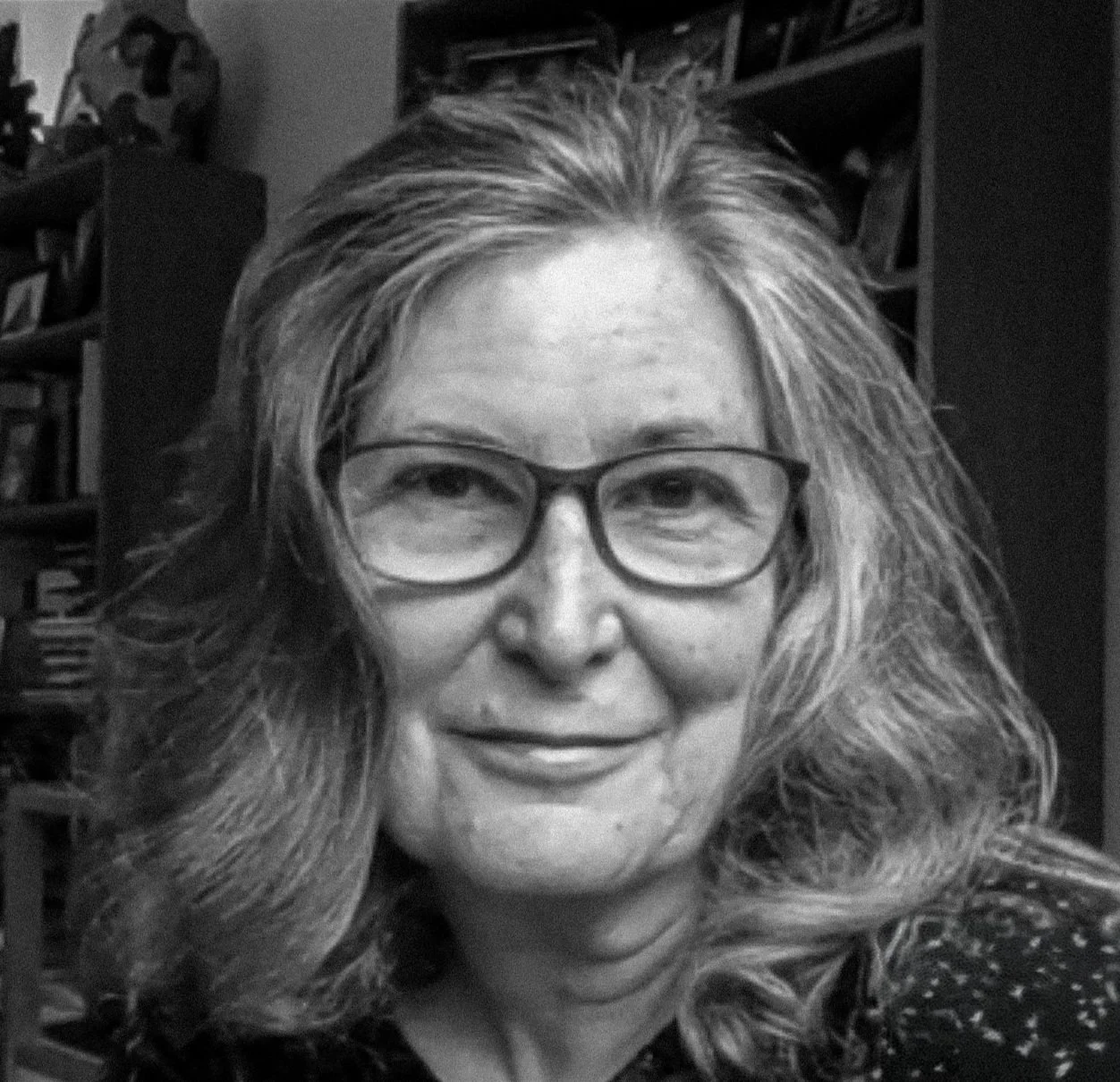
Linda Voss is a graduate of Indiana University in journalism and science with a master’s from Johns Hopkins in creative nonfiction. She has written and spoken about space for Discovery Channel Publishing's The Infinite Journey, the Discovery Center Museum in Rockford, Illinois, Macmillan Encyclopedia, Aerospace America, and Ad Astra magazines. Part-owner of a family farm in Indiana, Voss has written about endangered soil species for Lancaster Farming and environmental topics like “trophic cascade” on her Substack, inklingstar.substack.com. She lives in Arlington, Virginia, with her rescued dog and cat and is writing a portrayal of her sister’s journey to becoming an astronaut.