Legacy in Bloom: A Conversation with Michele Evans about februaries
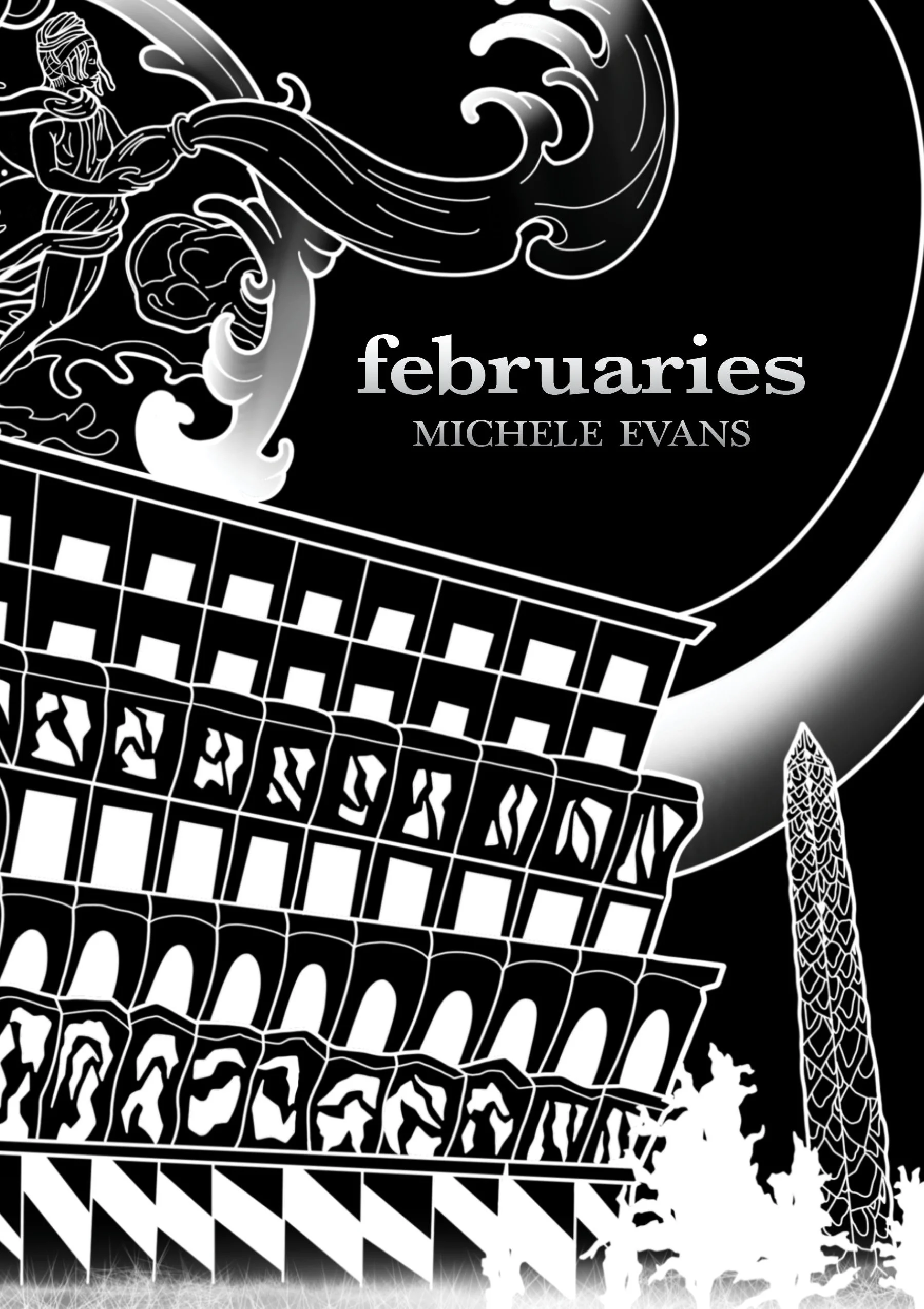
With februaries, poet and educator Michele Evans invites readers into a conversation about art, ancestry, and the everyday acts that keep language alive. In her new chapbook, which will be released by Yellow Arrow Publishing in February 2026, she transforms celebration into conversation, weaving the voices of Black writers, the rhythms of the classroom, and the pulse of her community into a lyrical archive. Her work exists in that generative space between teaching and creating, where reflection becomes ritual and the act of writing becomes a gesture of gratitude.
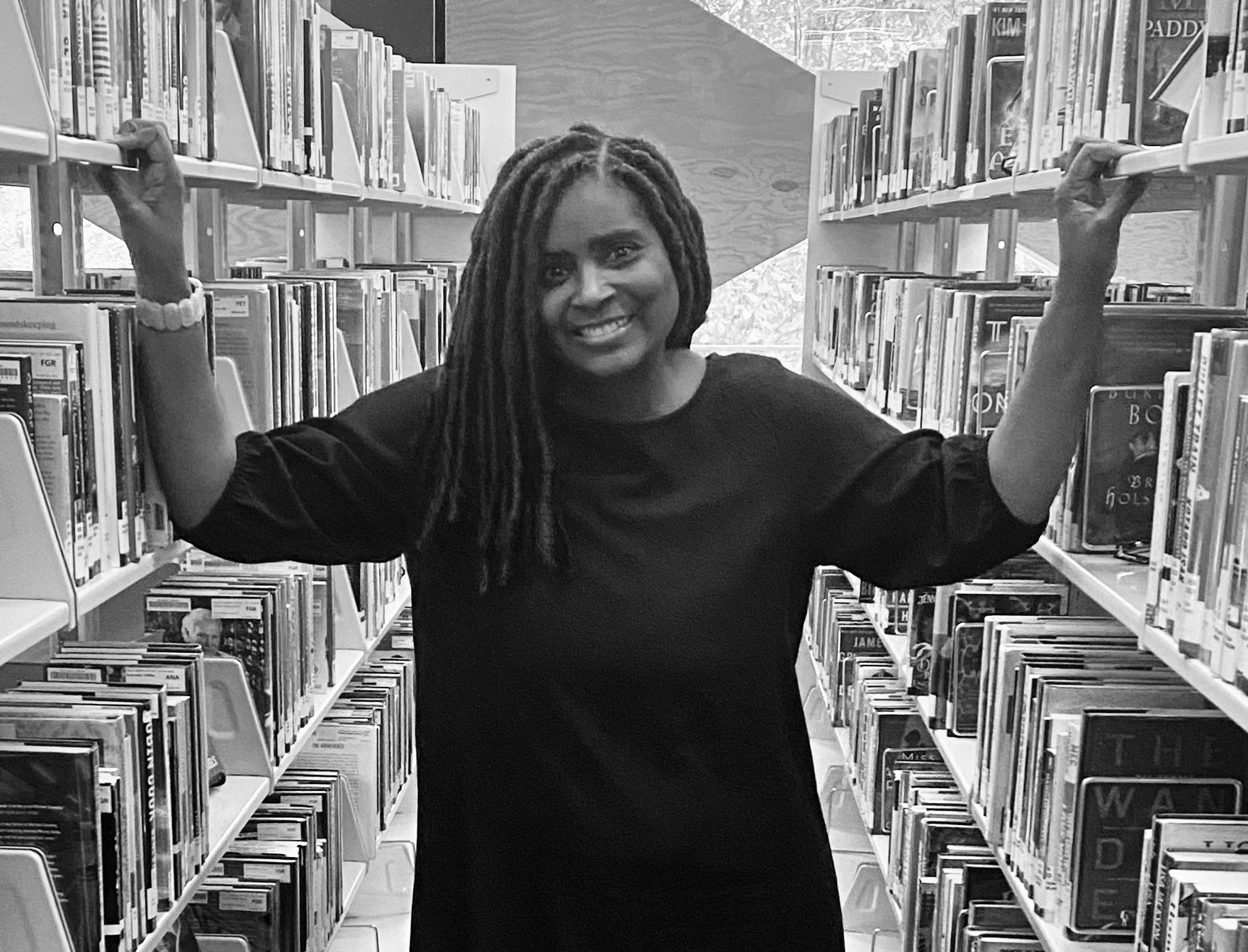
Photo K. Evans (Instagram @snapsbykee44)
Throughout her teaching career, Evans has cultivated literary appreciation through her dedication to building positive habits and environments for her students, which is highlighted in her involvement in her school’s African American Read-In. In February 1990 the first National African American Read-In was established by the Black Caucus of the National Council of Teachers of English (NCTE). Twenty-five years after the inaugural event, the English Department at Broad Run High School in Loudoun County, Virginia, where Evans has taught for more than two decades, held its first read-in on February 25, 2015, to celebrate Black History Month.
Evans’ second poetry collection, februaries, emerged from these readings, evolving into both homage and self-portrait. The collection extends Yellow Arrow’s mission through a lens that is as intimate as it is communal. You can preorder a copy of februaries at yellowarrowpublishing.com/store/februaries-paperback; the collection will be released February 3.
Evans and Yellow Arrow interviewer, Melissa Nunez, connected to discuss the origins of februaries, the creative lineage of Black women poets, the importance of community and form, and the enduring beauty found in language, legacy, and love.
so when the rain pummels, and the fire burns,
and the wind smacks, and the snow pounds,
and the overseer strikes, this conductor knows
she must be greater than the rest, knows she must
be fearless, boundless, tireless, selfless because
freedom means nothing to one until it means
everything to all.
“≤: less than or equal to?”
Aside from the incredible, notable names already acknowledged in your collection, who are some women-identified writers who inspire you?
In addition to Maya Angelou and Alice Walker who are acknowledged in the collection, there are so many writers that inspire me. Because februaries is a chapbook of poems, I will focus on poets. First and foremost, I wouldn’t be where I am today if it weren’t for my poetry ancestors: Gwendolyn Brooks, Nikki Giovanni, June Jordan, and Audre Lorde. I had the opportunity to meet Giovanni before her death, and I was so awe struck I couldn’t even find the words to tell her how much of an impact her writing has had on me as a black person, a woman, an educator, and a writer. “Changes” and “The Blues” are two of Giovanni’s newer poems from Make Me Rain (Harper Collins, 2020) that really speak to me as an emerging poet. Other living poets who inspire and influence my writing are Rita Dove, Nicole Sealey, Evie Shockley, and Natasha Trethewey.
The concept behind your collection, februaries is resonant and substantive. Can you share the process that brought this collection from idea to completed work?
I am a high school English and creative writing teacher at Broad Run High School. Since 2015 the English Department has hosted an African American Read-In in February to celebrate Black History Month. Taking inspiration from the NCTE event, we invite a published writer from the Washington, D.C., metropolitan area (the DMV) to our school to read from their body of work, share anecdotes about their writing journey, and offer encouragement to an audience of young writers. The purpose of the annual program is threefold: (1) to foster an appreciation of literature, (2) to shine a literary spotlight on favorite Black authors, and (3) to create valuable learning experiences that lead to stimulating conversations about literacy and diversity. To that end students and staff are also encouraged to read pieces written by Black authors. For more than 10 years I have written and read an original poem at Broad Run’s Read-In. While I was working on the manuscript for purl (2025), my first poetry collection, I realized I had another collection forming. februaries not only celebrates the literary contributions of Black writers connected to the DMV but also chronicles my growth as a poet.
How did you hear of Yellow Arrow? What inspired you to submit your chapbook?
In early 2023 I was an emerging poet actively searching for a writing community or organization in the DMV when I saw a post from Yellow Arrow on Instagram. As a graduate of Smith, a woman’s college, Yellow Arrow’s commitment to amplifying women’s voices was appealing to me. Later that year I submitted a chapbook manuscript of poems for consideration. Because it was shortlisted, I decided to send “malea,” one of the poems from the manuscript to the submission call for Yellow Arrow Journal ELEVATE (Vol. IX, No. 1). They accepted my poem and took great care preparing it for publication. After ELEVATE’s release, Yellow Arrow invited me to read at their online launch for the journal and also featured me in their .Writers.on.Writing. feature. Since februaries celebrates writers connected to the DMV, I am thrilled Yellow Arrow, a Maryland press, is bringing it into the world.
Can you talk about the cover selection process?
The art on the cover was created by my son Harrison Evans (Instagram @yatsby_harry999). He is a self-taught artist currently finishing a tattoo apprenticeship. In many ways both of us are emerging artists, and I am committed to spotlighting him and his creative gifts whenever I can. Harrison also drew the cover of purl and all the art on my website, awordsmithie.com. I am so appreciative to Yellow Arrow for giving me the opportunity to use his art for the cover and interior pages. Because februaries pays homage to the literary contributions from DMV creatives, I asked Harrison to include something that represents the region. After reading the poems penned for my school’s Black History Month annual event, Harrison drew a landscape of the Washington Monument and the Smithsonian’s National Museum of African American History and Culture. Hovering above the buildings in the skyline is a rendering of Aquarius—the water bearer, the zodiac sign for people born from January 21 to February 19 and the figure often associated with intellect and independence, the one pouring knowledge and ideas into the world.
Your poems encompass a broad and intriguing range of historical topics and figures. How did you come to the combination of Rihanna and Maya Angelou for “973.0496”?
I wrote “973.0496” in the first few weeks of 2023. For most of my teaching career, I have maintained a classroom library for my students by purchasing books each school year. To offset expenses I scour library sales, used bookshops, and thrift stores for titles from different genres I deem appropriate for my high school students. In 2023 book bans were on the rise across the country in schools and public libraries, and for the first time in my career, I wondered if my classroom library might be viewed as a liability to some rather than a valuable resource for all. Book banning and the rewriting and erasure of American history were weighing heavy on my mind when I sat down to draft this poem. I often listen to music as I am writing and while I don’t remember the exact moment, I do know that Rihanna’s song “Lift Me Up” from the 2022 movie Black Panther: Wakanda Forever (2022) was on heavy rotation. The lyrics “lift me up, hold me down, keep me close, safe and sound” were stuck in my head so I scribbled them in my journal. I was torn between using this line and one from Angelou’s poem “Still I Rise” for my first attempt at writing a golden shovel, a form created by Terrance Hayes and inspired by Gwendolyn Brooks. In the end I decided to write a double golden shovel to honor both Angelou and Rihanna.
write, they say, what upsets you, threatens you, paper moon scribbles, raising up
me and others like me with bowed heads, clasped hands resisting earth’s choke hold.
“973.0496”
You bring an impressive array of poetic forms to the pages of februaries. What prompted your experimentation?
Even though februaries is my second book, I still feel like I am an emerging poet, one who is still trying to discover a signature voice and style. Because of this I am always experimenting with form. In this collection readers will find many forms including several invented by Black writers: the duplex, skinny, eintou, and golden shovel. Each section in this chapbook includes a skinny poem inspired by the featured read-in writer and a tribute poem that I wrote after the event. I especially enjoyed experimenting with the skinny form, which was invented by Truth Thomas in a Tony Medina Poetry workshop at Howard University in D.C. For each skinny poem, I treated the first and last line like a cento by borrowing a quote or a verse from (most of) the tribute poets. Harrison’s art and the skinny poems are like bookends for each year and section.
Let’s talk about “can I buy a vowel”? What experience would you like this form to awaken in your audience?
In 2019 Broad Run High School invited Camisha L. Jones to be our featured speaker for the read-in. She read several poems from Flare (Finishing Line Press, 2017), her chapbook about her personal experience with hearing loss and chronic pain. I was moved not only by her verses but also by her resilience in the face of what she names an “invisible disability.” My poem “can i buy a vowel?” takes its inspiration from the line “Being hard of hearing is kinda like filling in the blanks / of a Wheel of Fortune puzzle” from her poem “The Sound Barrier.” All the e’s have been removed from lines of my poem, which makes it more challenging to read. By attempting to show on the page how it might sound to someone with hearing loss, I hope readers will remember everyone is battling something. And sometimes those battles are invisible. “can i buy a vowel?” is a reminder to extend grace, understanding, empathy, kindness, and love because we never know what someone is going through. I also hope that those battling visible and invisible disabilities will be encouraged by the poem’s message.
There is an abundance of powerful and lyrical imagery in your poetry. Can you expand a bit on what drew you to the nature imagery in “dark, and lovely, and limitless”?
My children gifted me a small African violet for my birthday the year I wrote “dark, and lovely, and limitless.” Because my birthday is the day after Valentine’s Day, the floral selections in shops are often picked over. The ubiquitous red or pink rose bouquets with baby’s breath have been replaced with plants like violets, kalanchoe, and cyclamen. Little did my kids know their selection was quite appropriate since African violets are the birth flower for the month of February. When I began drafting this poem for my school’s 2022 read-in event, I was sitting at my desk looking at their gift and battling an episode of writer’s block. Instead of picking up a book to read (my normal remedy), I decided to research care for my little houseplant. That’s when I discovered its scientific name, Saintpaulia ionantha. Seeing images of all the vibrant varieties online reminded me of the famous quote from Alice Walker’s The Color Purple (Harcourt Brace Jovanovich, 1982): “I think it pisses God off if you walk by the color purple in a field somewhere and don’t notice it.” Although the flowers in the iconic scene when Celie and Shug are walking in a field of purple are not African violets, that image inspired me to include nature imagery in my poem. I mixed in details about plant care with its East Africa origins in some of the lines. Given how much inspiration I gleaned from Alice Walker who was also born in February, it seemed quite fitting that I wrote this poem as a tribute to her.
she hails from purple mountains majesty
east african fields, her mother’s land
draped in amethyst petals, leaves jaded
in velvet, crowns rooted in smoky quartz
“dark, and lovely, and limitless”
Do you have any advice to share with fellow women-identified writers?
Develop healthy reading and writing habits. My students in my English and creative writing classes read a book of choice or write in their journals for 15–20 minutes every class. I call it Daily Pages. One class they write and then the next class they read. For me it’s about helping them create habits, build stamina, develop their voice, and discover favorite genres and authors. Ironically, I should have been listening to my own advice and applying those lessons to my writing life. Octavia Butler (Bloodchild: And Other Stories, Seven Stories Press, 1995) once said this about habits: “First forget inspiration. Habit is more dependable. Habit will sustain you whether you’re inspired or not. Habit will help you finish and polish your stories [and poems]. Inspiration won’t. Habit is persistence in practice.” A second piece of advice would be to join a writing group, take a class or workshop, and/or apply to a writer’s retreat or residency. Carving out time in your schedule to focus solely on writing and surrounding yourself with other writers has been so helpful to me.
wake up because everything isn’t black or white.
wake up because bad things happen
when you ignore right from wrong.
wake up because only a fool’s mate wastes precious seconds.
wake up because enough is enough.
wake up because a draw won’t do this time.
“run the ‘gambit’”
Are you working on or planning any future projects you’d like to share with our readers?
For the last two years I have spent a lot of time preparing two different poetry collections for publication, learning how to market them online using social media, and calendaring readings, interviews, and craft chats. While it has been nice to be booked and busy, I am excited to slow down a bit and get back to spending time just reading and writing. During the pandemic, I paused working on a long fiction project that has been in progress for more than 10 years. Although it will be nice to read and write without hovering deadlines, I can’t forget what Toni Morrison said, “If there’s a book that you want to read, but it hasn’t been written yet, then you must write.”
Thank you Michele and Melissa for such a thoughtful conversation. You can order your copy of februaries from Yellow Arrow Publishing at yellowarrowpublishing.com/store/februaries-paperback and find out more about Michele Evans on her website at awordsmithie.com and follow her on Instagram @awordsmithie.
Michele Evans, the author of the poetry collection purl, returns with februaries—a chapbook of poems inspired by her participation in the National African American Read-In (AARI) founded by the Black Caucus of the National Council of Teachers of English (NCTE). Chronicling and preserving the achievements and contributions of ancestors Harriet Tubman, Billie Holiday, Maya Angelou, and others, februaries, a museum constructed of poignant poems diverse in form, reminds readers: Black History is American History, and it should be “celebrated, appreciated, and narrated” well beyond the annual 28-day observance.
Inspired by the literary tradition established by an assembly of living legends from the Washington, D.C., metropolitan area, such as Dr. Joanne V. Gabbin and E. Ethelbert Miller, Evans, a fifth-generation Washingtonian (D.C.) and English teacher, revisits significant and complicated moments from America’s past to spark necessary and challenging conversations about the future of humanity.
Melissa Nunez makes her home in the Rio Grande Valley region of south Texas, where she enjoys exploring and photographing the local wild with her homeschooling family. She writes an anime column at The Daily Drunk Mag and is a prose reader for Moss Puppy Mag. She is also a staff writer for Alebrijes Review and interviewer for Yellow Arrow Publishing. You can find her work on her website at melissaknunez.com/publications and follow her on Twitter @MelissaKNunez and Instagram @melissa.king.nunez.
*****
Yellow Arrow Publishing is a nonprofit supporting women-identifying writers through publication and access to the literary arts. You can support us by purchasing one of our publications or a workshop from the Yellow Arrow bookstore, for yourself or as a gift, joining our newsletter, following us on Facebook or Instagram, or subscribing to our YouTube channel. Donations are appreciated via PayPal (staff@yellowarrowpublishing.com), Venmo (@yellowarrowpublishing), or US mail (PO Box 65185, Baltimore, Maryland 21209). More than anything, messages of support through any one of our channels are greatly appreciated.