Before the First Amendment: Elizabeth Timothy and the Women Who Built the American Press
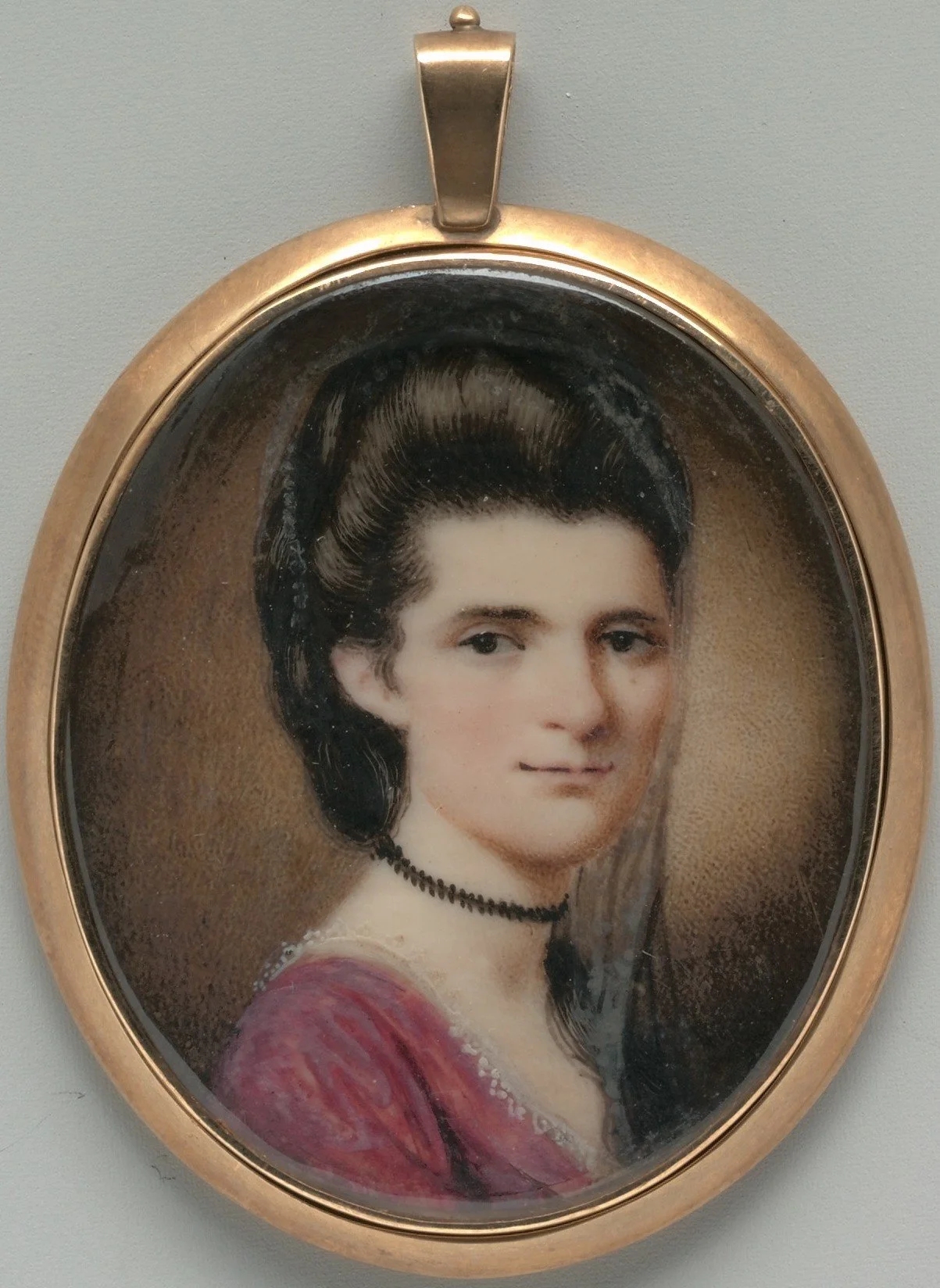
Elizabeth Ann Timothy - painting by Henry Benbridge (MET, 26.286). Wikimedia Commons (commons.wikimedia.org/wiki/File:Elizabeth_Ann_Timothy_MET_DP168945.jpg)

By Kavitha Rath, written February 2026
In 1738 a widow stood in a South Carolina print shop with a choice to make.
Her husband, Lewis Timothy, had died unexpectedly. A French Protestant Huguenot, he left France for The Netherlands to flee religious persecution. There, he learned Dutch printing techniques and married his wife, Elizabeth. The Timothy family then emigrated to Philadelphia, where Lewis was appointed by Benjamin Franklin to operate the South Carolina Gazette.
At a time when women had little formal engagement in public life, Elizabeth stepped forward to manage the enterprise after her husband’s death. Often recognized as the first woman to work in American journalism and publishing, she assumed control of the Gazette, establishing a precedent that would later be recognized in the tradition of “printer’s widows” who took over colonial presses after their husbands’ deaths.
However, Elizabeth Timothy was not just preserving her husband’s work. She was exercising authority in a space rarely open to women—and doing so with notable business acumen.
Liminal Authority
The transition was careful and intentional. The masthead was changed to read “Printed by Peter Timothy,” her then 13-year old son, since she could not run it under her name. In the first issue published after her husband’s death, Elizabeth ran a notice explaining that she would oversee the paper as interim editor and publisher until Peter came of age. Legally and culturally, the authority was framed as temporary and male-bound, but in practice, it was hers.
This liminal positioning illuminates how women often occupied the margins of formal power while exercising real control. She managed subscriptions, negotiated advertising contracts, oversaw printing logistics, and stabilized the paper’s finances in a fragile colonial economy. Benjamin Franklin himself later praised her competence.
Long before the First Amendment enshrined freedom of the press, an immigrant woman was already practicing it.
An Immigrant at the Foundation
Elizabeth’s Dutch origins are not incidental.
The Dutch Republic of the 17th and early 18th centuries was one of Europe’s great centers of printing, commerce, and intellectual exchange. Amsterdam was known for publishing religious dissent, scientific discovery, political debate—and sometimes texts banned elsewhere. The Dutch were merchants not only of goods but of ideas, including notions of pluralism and coexistence.
Dutch commercial and printing networks extended into their colonies as well. In the 19th century, colonial print infrastructures in places like Indonesia would later provide tools that nationalist movements used to articulate resistance. As in many imperial systems, the press outlived the authority that sought to contain it.
That paradox feels familiar in early America. Before independence, colonial newspapers were already shaping dissent, debate, and political imagination. The American Revolution did not invent the press; it was incubated within it.
At a time when immigration is often framed as a strain on national identity, Elizabeth’s story offers a quiet correction. The institutions we call foundational—journalism, public discourse, civic exchange—were built not only by native-born statesmen but also by newcomers who carried traditions of print, trade, and resilience across oceans.
The Press as Literature and Subversion
Colonial newspapers were not modern newsrooms. Intercolonial communication was slow, and fresh “hard news” was often scarce. Legal and cultural restrictions discouraged and even punished overt political commentary.
As a result, many colonial weeklies resembled literary journals as much as news bulletins. Their pages included philosophical essays, moral reflections, personal anecdotes, satire, and poetry in various forms. Literature became a vehicle for indirect discourse—a way to explore ideas that could not always be addressed explicitly.
To control a newspaper in that era was to shape the rhythm of civic life: what a colony discussed, debated, feared, or hoped. Elizabeth helped maintain that channel at a formative moment in American public culture.
A Quiet, Complicated Revolution
Elizabeth did not publish manifestos about women’s rights nor publicly call for gender equality. Her revolution was quieter.
In the 18th century, women had few opportunities to engage in public affairs. Yet, she negotiated contracts, oversaw production, and ensured consistent publication in a volatile environment. Competence itself became a form of subversion.
At the same time, her life reflects the contradictions of her era. Like many white colonists in South Carolina, she owned slaves for her household. Any celebration of her achievements must sit alongside this reality. She was a woman navigating restricted civic space—and a beneficiary of a brutal system. Both truths coexist.
A Lineage of Women in Print
Elizabeth’s story catalyzes a lineage of women in publishing.
In the 19th century, Margaret Fuller became editor of The Dial and later one of America’s first female foreign correspondents. She asserted that women were not merely subjects of writing, but architects of intellectual discourse, and her editorial leadership widened the boundaries of who could speak in public forums.
Later, Ida B. Wells wielded the press as a tool of direct moral confrontation. As editor and coowner of The Memphis Free Speech, she documented the horrors of lynching with relentless precision. She understood that controlling the narrative was essential to challenging violence. The printed page became not just a record, but a weapon against injustice. (For more information about Ida B. Wells, see a blog written by Yellow Arrow Publishing 2022 intern Piper Sartison at yellowarrowpublishing.com/news/honoring-ida-b-wells-sartison.)
In the 20th century, Toni Morrison reshaped literary culture both as a writer and as an editor at Random House. Before becoming a Nobel laureate, Toni Morrison championed Black authors whose voices might otherwise have been sidelined. She did not simply contribute to literature; she altered its infrastructure, ensuring that marginalized stories found durable form.
Across centuries, the pattern holds: women have been integral to publishing and the press, even when their contributions were obscured by legal or social constraints that rendered their authority provisional, indirect, or uncredited.
Small Presses, Present Tense
Today, the landscape of publishing looks very different from a colonial print shop. Digital platforms accelerate circulation, creating new opportunities for women and historically marginalized writers. At the same time, corporate consolidation narrows certain channels even as independent spaces proliferate. The Fourth Estate has not disappeared, but it has dispersed.
And the central questions remain:
Who gets to print?
And who gets printed?
Small presses and community-driven literary organizations carry forward the quiet revolution Elizabeth Timothy embodied. These outlets operate with intention rather than scale, prioritize relationships over market dominance, and understand publishing as stewardship of diverse voices.
Women-led presses, including community-rooted organizations like Yellow Arrow Publishing, Abalone Mountain Press (spotlighted in a recent blog by past intern, Avery Wood, at yellowarrowpublishing.com/news/spotlight-abalone-mountain-press-wood), Tupelo Press, and Harbor Review, continue to amplify the voices of women-identifying writers and other marginalized groups. They create platforms for emerging writers, for perspectives historically excluded, and for hybrid or experimental forms that resist easy categorization.
In this way, the lineage from colonial gazette to contemporary chapbook is not as distant as it might seem.
Then, as now, the work involves:
Identifying and curating voices
Managing circulation and distribution
Building community through ideas in text
Holding space for coexistence and pluralism (or belonging and inclusion)
Inheritance and Responsibility
Women’s History Month invites both celebration and reflection of our past and future.
The American press was never built by a single demographic, ideology, or generation and instead was shaped by immigrants, widows, editors, activists, and writers who understood that information is power—and that power requires responsibility.
Elizabeth Timothy’s story reminds us that leadership is not always loud, but sometimes it looks like the quiet continuity and daily grind of showing up at the press each morning and ensuring the paper goes out on time.
Before the First Amendment, there was a woman born in The Netherlands, emigrating through Philadelphia, and running a newspaper in a colonial port city—proving that the American page has always been more plural, resilient, and quietly revolutionary than we often remember. While the press is protected by the Constitution, it exists because of people who are willing to take on the labor—and risk—of publishing. Women have been doing that from the beginning; it is time to reveal, amplify, and luminate their voices.
Several sources were used to write this blog:
Adam, Ahmat B. The Vernacular Press and the Emergence of Modern Indonesian Consciousness (1855–1913). Cornell University Press, 1995.
Baker, Ira L. “Elizabeth Timothy: America’s First Woman Editor.” Journalism Quarterly 54, no. 2 (1977). doi.org/10.1177/107769907705400207
Bishop, Lindsay C. “Elizabeth Timothy, First Female Publisher and Charleston Resident: A Story of Perseverance.” Charleston Women Magazine. charlestonwomen.com/featured/elizabeth-timothy-first-female-publisher-and-charleston-resident-a-story-of-perseverance
“Elizabeth Timothy: First Woman Editor-Publisher in America.” History of American Women blog. womenhistoryblog.com/2008/10/elizabeth-timothy.html
Friedman, Tyler Paige. “Women’s History in Charleston: The Femme Sole.” Instagram post, March 12, 2024. @walkandtalkchks. instagram.com/p/C4akx-2MHI6
“An International News Medium: The European Dissemination of 17th-Century Dutch Newspapers.” Europeana, November 21, 2019. europeana.eu/de/stories/an-international-news-medium-the-european-dissemination-of-17th-century-dutch-newspapers
King, Martha J. “Elizabeth Timothy.” South Carolina Encyclopedia. scencyclopedia.org/sce/entries/timothy-elizabeth/
Kavitha Rath is a writer based in Maryland, whose publications have appeared in Strange Horizons, Mythic Delirium, Papercuts Magazine, and more. She serves as a belonging and inclusion advocate for Yellow Arrow Publishing. Follow Kavitha on Instagram @kavithanrath, Tumblr @ishtarverse, and at kavitharath.wordpress.com.
*****
Yellow Arrow Publishing is a nonprofit supporting women-identifying writers through publication and access to the literary arts. You can support us as we LUMINATE a path for women-identifying creatives this year by purchasing one of our publications or a workshop from the Yellow Arrow bookstore, for yourself or as a gift, joining our newsletter, following us on Facebook and Instagram, or subscribing to our YouTube channel. Donations are appreciated via PayPal (staff@yellowarrowpublishing.com), Venmo (@yellowarrowpublishing), or US mail (PO Box 65185, Baltimore, Maryland 21209). More than anything, messages of support through any one of our channels are greatly appreciated.