Muse Mayhem: A Conversation with Dana Knott
Stand slender as a brush stroke.
Silence the mind and still the body.
Let the heart mimic the grave
beats of a windup metronome.
“Supermodel”
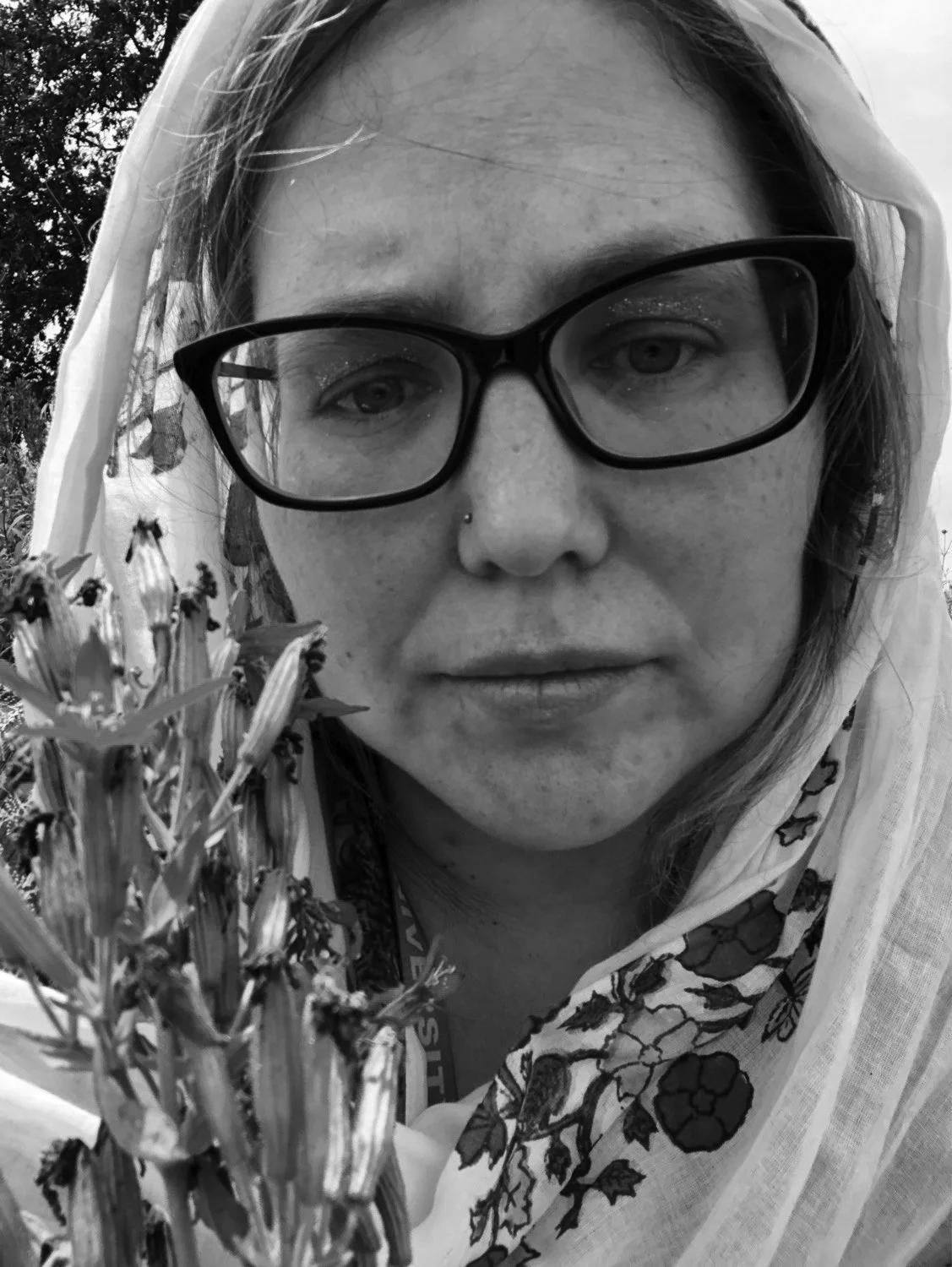
Dana Knott is a librarian, writer, and publisher (among many other amazing roles!) based in Ohio. Her passion for art in all its forms and its accessibility is evident in her work, her words, and her daily life. She brims with knowledge of and admiration for diverse and unsung voices in the creative community—past and present.
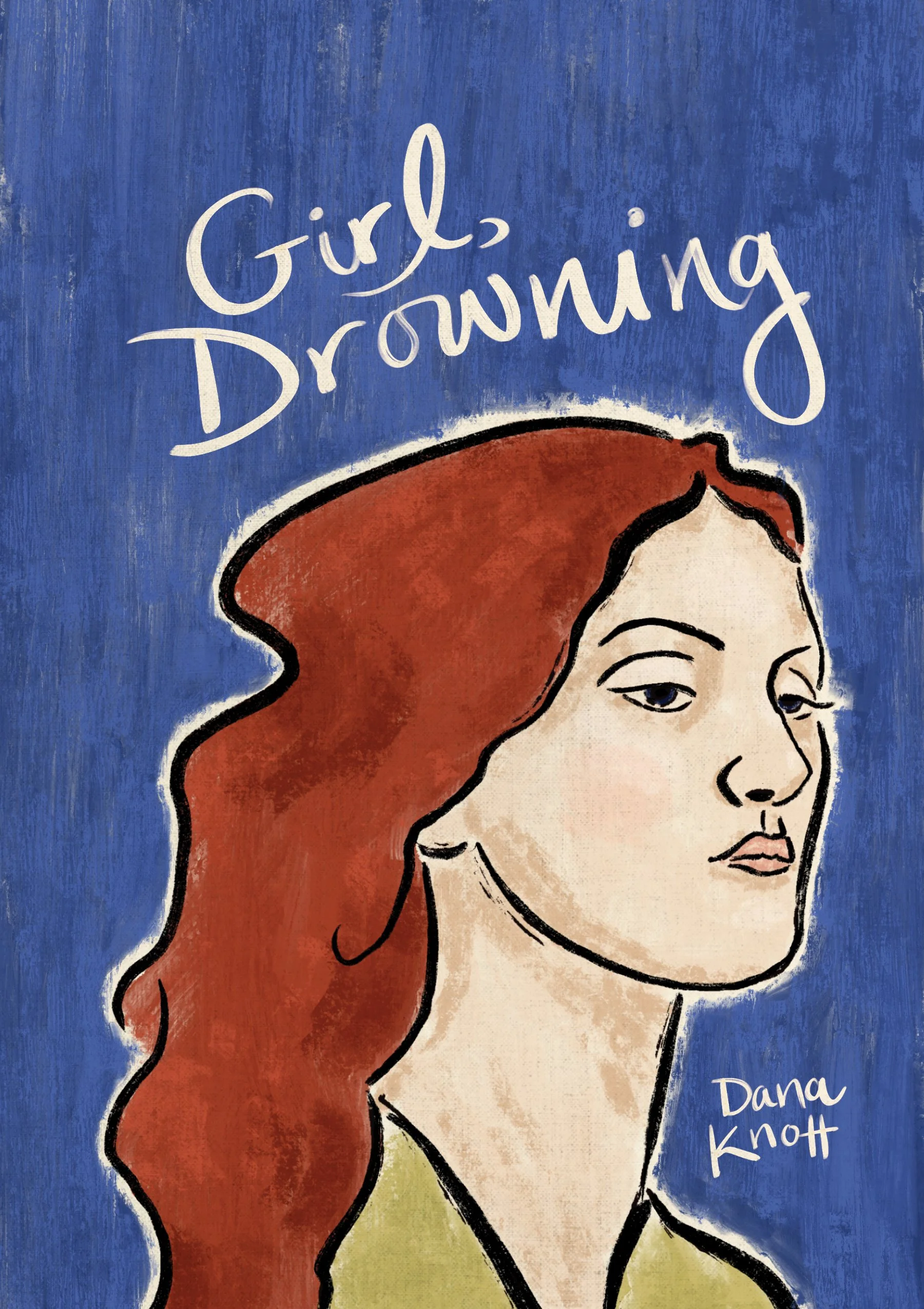
Knott’s poetry collection, Girl, Drowning, which will be published by Yellow Arrow Publishing in April 2026 and is now available for preorder at yellowarrowpublishing.com/store/girl-drowning-paperback, is an exploration of the myth-shrouded life of artist Elizabeth Eleanor Siddal and the societal constraints faced by women artists of her time. It also encompasses themes of gender and power dynamics and the complex experience of the model/muse. Her work is a must read for those who love discovering the layers of humanness that make up an enigmatic and mysterious figure, page by page.
Melissa Nunez, Yellow Arrow interviewer, and Knott connected to discuss the birth and development of this poetry collection, along with the challenges and experiences of women in literature (and the bigger art community) and the significance of an equitable and supportive community for all creatives.
Who are some women-identified writers who inspire you?
There are so many inspiring authors in both poetry and prose. In poetry, the writing of Jane Hirschfield always stands out to me. I think of the poet and novelist H.D. and the imagery of her mythology poems. Lucille Clifton is another go-to for me. When I feel like I’m in a poetry drought, I turn to a poet, Kenneth Rexroth, who translated anthologies of Chinese poems, many of which were written by women. They contain such beautiful images and bring so much nature to the page but also dig deep into the experience of being a woman and sometimes feeling trapped.
For prose authors, I think of Madeleine Miller, who wrote Circe and The Song of Achilles. Circe is an audiobook that I can listen to on repeat. I also read and reread the words of Emily St. John Mandel, who wrote Station Eleven, The Glass Hotel, and Sea of Tranquility. I go back to these comfort pieces. I’m in Ohio right now, where Toni Morrison is from, and her birthday is coming up. In the library where I work, and others across the state, we are celebrating Toni Morrison and her works. I think her words have awed and impacted many of us from the first read. I also admire Isabel Allende for her use of magical realism. The House of the Spirits is another work that really stayed with me. It focuses on women’s resilience and creativity and connects storytelling and heritage across time.
I also have a small press and online lit mag called tiny wren lit at tinywrenlit.com. I think of some of the women I’ve published, such as Jennifer Browne, Kortney Garrison, and Vic Nogay (who also has a poetry collection, Naming a Dying Thing, published by Yellow Arrow).
What drew you to the story of Elizabeth Eleanor Siddal and how is her story relatable to a modern audience?
I think I have a similar story to many people who majored in English. I focused on British literature in undergrad and continued that focus for my master’s. I was taking a class and reading a lot of authors from that period. What’s interesting is that we weren’t reading Siddal’s work, but her husband’s, Dante Gabriel Rossetti’s, poetry. My professor mentioned the story of Rossetti putting his manuscript of poems in his wife’s casket and regretting it seven years later, working with his agent to have her exhumed by bonfire. I was struck by that because not once was it mentioned that she was not just Rossetti’s wife, but an artist, a poet, and a model. Of course, we didn’t read any of her poems. I didn’t even know she was a writer. In many ways, she’s been this character from history with two defining moments. We have her posing in the bathtub as Ophelia for John Everett Millais (tate.org.uk/art/artworks/millais-ophelia-n01506), and then the gothic element of her being exhumed. Both events are surrounded by romanticized imagery. When you think about the moments that stand out in your own life, a person is complex, layered, and full of detail. Yet her life is limited to two moments where she is a vessel for men.
For the Ophelia painting, she posed in a bathtub wearing an elaborate wedding-like gown. The bath water was kept warm by candles and oil lamps underneath. The painter was absorbed in his work, not noticing the candles going out and the water turning cold, to the point that she became ill. We know she didn’t say anything. Is that weakness? Passivity? Or professional strength and resilience? People don’t like women who complain. There’s complexity in that moment. Unfortunately, she became seriously ill, and many point to that as contributing to her use of laudanum. Years later, when she was exhumed, there was the myth that she looked as beautiful as ever, that her red hair had continued to grow (which is another romantic notion). The reality after being in the ground that long is likely very different. I was fascinated by the macabre, romantic aspects, as I was around 19 at the time, and it felt dramatic and compelling.
What is it like to inhabit the voice of another?
I’ve always been fascinated by how people lived, especially in Victorian times. With Siddal it started with reading everything about her, from the biographies to the criticism. I’ve always been interested in history and its connection to art and literature, and how the context of a time impacts art and one’s ability to create it.
First, I wanted to know the circumstances of her life, the biographical details. Many of the major scholars on Siddal are women, and I benefit from their labor of bringing attention to her not as a passive victim, but as someone with her own aspirations and talent. It makes you wonder how many more women we might know if there had been more feminist recognition of women’s art at the time. It’s not that long ago that we gained real access to Siddal’s poems, which brought them critical attention. There’s something wonderful about reading her poetry now and seeing it appreciated. Scholars like Jan Marsh have curated exhibits focused on Siddal and other women creators of the time. I also think about Lucinda Hawksley, who worked to give Siddal recognition beyond being someone’s muse. Hawksley is a descendant of Charles Dickens, who famously left his wife for a much younger actress, and the power dynamics there are like those in Siddal’s life. That historical grounding mattered to me.
I’m 50 now, and I began writing the poems within Girl, Drowning during the pandemic. I’m not sure I could have written them earlier. My life experience mattered. In the years leading up to 50, I felt a loss of control. I had left a job and started a new one that felt unstable. My health was also fragile as I had to have a hysterectomy. Even with a grown child it is strange how much femininity can feel tied to your uterus. Severe health problems made my body feel unreliable. My marriage, which had been steady for years, felt unstable for a time. As someone who values control, I felt I had lost it in every area, and it was frightening and humbling. I took those emotions, reread biographies of Siddal, and put myself into a kind of method acting, pulling everything to the surface and writing from there. Afterward, the emotion just sat at the top. I stopped at 20 poems in the collection, though I’ve written more since. After inhabiting who I thought she was so deeply, I couldn’t write for a while. It was too much sadness. In many ways, I was using Siddal as a muse in thinking about loss of control. That theme shows up often in my writing, feeling passive, then trying to reclaim energy and agency. Between the girl in the bathtub and the girl in the grave, there’s so much more of her story to tell. I wove in small details from my own life with dramatic license. (In “Accidental Death,” a poem about her dying, historically, there were four doctors who tried to resuscitate her, and the first one pumped her stomach, but for dramatic effect I have it as the fourth doctor.) I wanted emotional truth, even if not every detail is historically exact.
Beyond biographies, I immersed myself in primary texts. I read the Rossetti family letters, the inquest into her death, and descriptions of her. Only a handful of her own letters survive. I placed pieces of those letters into the poems to anchor them historically, especially the one written after she lost her child. At that time, she struggled with severe laudanum addiction while pregnant with her second baby. Some scholars analyze her through a medical lens, questioning anorexia, control over the body, and illness as a way to hold onto someone. It’s uncomfortable, but it’s part of the conversation. Some even describe her as manipulative, while others emphasize Rossetti’s cruelty. He despised Siddal’s dependence on laudanum, yet later became addicted himself to chloral hydrate, morphine, and alcohol. The codependency runs both ways. They were both complex characters, but he had more power.
I like the idea of connecting deeply with someone else’s story—using your voice to speak for them, even though it remains your voice. The poems in my collection mirror that complexity. There are other women fascinated by Siddal. There was even a Kickstarter project where an artist gathered Siddal’s poetry into a volume. She had red hair herself and staged photographs embodying Siddal. It’s interesting how people continue to inhabit her image. She’s still a muse, but more than that, she represents a woman with talent and unrealized possibility. What if she had the support she needed?
The girl will look at herself
horrified, fascinated, as if
staring into a crystal ball
from which death emerges,
a blazing scarlet poppy.
“Girl, Drowning”
How did you hear of Yellow Arrow and what led you to submit your collection?
I’m very bad about sending out my work. My husband pushes me to get it out there, but I love publishing other people’s work and being supportive without expecting anything in return. That’s one thing I love about Yellow Arrow. Joining their community of authors is such a welcoming, nurturing process. Everything about the mission and reputation of the press inspired me to submit my collection. When I see the list of poets in the journal, I’m in awe. I’ll admit I felt a bit of imposter syndrome seeing the amazing authors published alongside me. I’m just excited to read their stories. The diversity of women, ideas, and experiences is exciting, and that support is given so freely and generously by the press.
That’s something I try to do with my own lit mag. I don’t charge reading fees or expect people to put money down for contests or to fund it, just provide access and support. It’s amazing what that kind of opportunity can mean. What would it have meant for Siddal? When Siddal created her art, you had someone like Coventry Patmore, famous for the poem “The Angel in the House,” promoting this ideal of the devoted, domestic wife. And then looking at Siddal’s art and suggesting Rossetti must have helped her. That assumption says so much.
Can you share with us the process of selecting a title and cover art for your poetry collection?
It’s interesting because the manuscript originally had a different title: Vermilion Dove. Vermilion (not just red) and dove because Siddal was often likened to a dove (Rossetti called her that). They all had nicknames in their circle, but it began to feel objectifying. Originally, the first poem in the manuscript leaned into the supermodel myth, but I decided instead to frame the collection around those two defining moments: the girl in the bathtub and the girl in the grave. I wanted to begin with the bathtub and end with the exhumation, reflecting how we tend to see her, even as I challenge that framing. I also thought carefully about using the word “girl” instead of “woman.” There’s the focus on youth and beauty but also the way calling someone a girl diminishes power. Many women, at all ages, are still called girls. I’ve experienced that myself. Being called a girl carries that sense of not being taken seriously, and I wanted to highlight that. Drowning, of course, plays into the Ophelia myth. Water imagery is layered—drowning can symbolize surrender, escape, release. You could go full The Awakening with it. There’s also the question of Siddal’s sexuality, whether she and Rossetti were intimate before marriage, the rumors of abortion, and the rapid pregnancies after they wed. Who’s to say? Some of that is imaginative reconstruction.
The title is striking because it enters through the familiar image, the Ophelia figure, but in the poem she gazes back. The artist looks at her, but she looks back and questions him. What do you know about being a woman? About desperation? About the women who drowned in the Thames because they were ruined or pregnant and saw no escape? Even now, that obsession with purity lingers. What does he really know, beyond painting beautiful women? There’s also the way Rossetti obsessively drew her. One poem references the sheer number of sketches, so many that they seem to spill everywhere. You see endless depictions of her, often idealized. Then you look at her self-portrait, and it’s starkly different. Severe, almost critical. The contrast between how he saw her and how she saw herself always strikes me. That’s why I love Alexa [Laharty]’s cover art. It feels in-between. Not the hyper-idealized muse, but not only the severe self-portrait either. There’s strength, pride, and containment. The blue tones echo water, but without recreating Millais’ Ophelia. She isn’t floating. She’s upright and looking outward. Not at us, but beyond us. Separate. Self-possessed. I think Laharty captured that balance beautifully, and I completely fell in love with it. It’s powerful to have a woman artist depict Siddal in this way. Laharty also selected some of Siddal’s drawings to include in the book, which is incredible. Readers can see what Siddal was trying to achieve in her own art, and that addition means so much.
Can you talk about the concept of a muse and the balance of power and prejudice, maybe even oppression that comes with the role?
It’s hard not to think about the muse in comparison to a sex worker. Sex work can mean being objectified, paid to satisfy someone else’s need, controlled by financial circumstances, sometimes by men who profit from that labor. There were rumors about Fanny Cornforth, one of Rossetti’s models, who came from the working class. Some depict her as a prostitute, though who knows how valid that is. She stood in contrast to Siddal, as she was fleshier and more sensual, whereas Siddal was pale, red-haired, and almost fragile. Siddal helped make red hair fashionable at a time when it could be seen as demonic. That pale, sickly aesthetic, the deathly “heroin chic” of the 1850s, became desirable. With sex work, there’s also the idea of agency. Is there power in controlling your body, in evoking desire? Or is that power always limited by who ultimately controls the money and reputation? That tension feels similar to the muse. On the one hand, you’re an object of inspiration. On the other, you evoke desire, creativity, obsession. Is there power in that? Maybe. But it’s complicated. It ties into the broader gender dynamics, including women’s relationships with each other.
In “Pre-Raphaelite Death Cult” I reference the idea that there’s a special place in hell for women who hurt other women. That quote is often attributed to Madeleine Albright, and it resurfaced during Hillary Clinton’s campaign. It became a kind of cultural shorthand—printed on coffee cups, circulated everywhere. Even Taylor Swift has spoken about the scrutiny she faces, especially from other women, about her body, her relationships, and her success. Nothing is taboo when it comes to women in the public eye. There’s that persistent “mean girl” vibe. I experienced some of that in graduate school. My first English program felt competitive and hostile. When you gather so many ambitious people in one place, it can become unhealthy. I wasn’t in the creative writing track, but I still wrote poetry. A few times I won awards, and some people suggested my husband must have written the poems. The irony was that the poem in question was deeply personal about working in a cancer center, handling paperwork that exposed me to intimate details of people’s lives while watching their health decline or improve. Yet the response wasn’t support, it was suspicion. And it wasn’t only men who said it. That kind of internalized sexism, that competition, can come from anywhere.
So the question becomes: how do women support each other? How do we resist that dynamic? One positive outcome of the pandemic was the rise of online writing communities. As a Gen Xer, I grew up connecting with people physically through school, neighborhoods, and workplaces. The idea of forming deep creative connections online felt strange at first, but during the pandemic, I found an incredible community of writers. People like Taylor Byas, who is not only an extraordinary poet but also a generous human being. I was able to bring her to my library for a poetry reading and workshop. Those connections matter. In contrast to the isolation and competition I experienced earlier, that sense of mutual uplift feels radical. It’s the opposite of the “special circle in hell” dynamic. It’s women amplifying one another instead of diminishing.
There is a line in your poem “The First Dose” that is so simple and straightforward and yet speaks volumes to the position of women in Siddal’s era and, unfortunately, attitudes that still linger in the present day: “Laudanum, a tincture / of opium, Victorian / cure-all in cocktail form / for teething babies / and troubled women.” Can you expand on the importance of calling out and confronting inequities both past and present?
It’s fascinating how prevalent laudanum was. You’d take a few drops, feel drowsy, passive, wrapped in a kind of haze. I’ve often imagined what that must have felt like for Siddal with that fog settling in. There were even advertisements suggesting you give it to teething babies to keep them quiet. Just drug them into compliance, and that connects to something darker. The impulse to keep women quiet through drugs, through institutionalization, through “treatments.” I think of Charlotte Perkins Gilman and The Yellow Wallpaper. Isolating a woman, removing stimulation, confining her for her own supposed good, not wanting her to embarrass you, not wanting her behavior to reflect poorly on you. It’s about control.
Siddal wasn’t the only one navigating those expectations. Annie Miller, who modeled for William Holman Hunt, was also “trained” to be a lady. Rossetti had affairs with her, too. There’s this pattern of men selecting working-class women, shaping them into something more socially acceptable, refining them, but also rendering them more passive. If drugs helped smooth that process, then so be it. I recently read The Bell Jar after many years of meaning to. The electroshock treatments, the insulin-induced comas, all methods to make women compliant, less troublesome. Zelda Fitzgerald comes to mind, too, the accusations that F. Scott Fitzgerald borrowed from her diaries, and then she’s institutionalized. Again, questions of power, authorship, control. It’s all part of the same conversation—who gets to create, who gets labeled unstable, and who gets silenced. It is an issue that, unfortunately, women and those in positions of less power still deal with today.
As a publisher yourself, how was the experience of writing and submitting as compared to that of selecting and publishing the work of others?
I think a big part of publishing is wanting to make the author happy, making sure they feel you’ve handled their work with care and reflected their vision. When I talk to someone I’m going to publish, I ask: “What’s your vision? How do you see the cover? The presentation?” I see it as a labor of love. I don’t expect anything except the privilege of putting beautiful work into the world and supporting it. One of my favorite moments is when an author receives their copies and tells me how happy they are. I love using linen covers—that tactile smoothness, the feel of it in your hands. It matters. I recently bought a small chapbook from Ethel Zine by Kortney Garrison. She wrote about Julian of Norwich, and I was drawn to how concisely and beautifully she captured that mystic’s experience. I probably overuse words like “beautiful” and “lovely,” but that’s honestly how so much of this work feels to me. It’s collaborative. Sometimes an author wants something I might not have chosen myself, but I honor that and often see that it works. Other times I suggest small touches they hadn’t considered, and later they appreciate it. That back-and-forth feels very feminist to me. Not “this is how we’re doing it,” but listening and shaping together. I’ve heard stories of authors fighting publishers over titles or covers. My experience with Yellow Arrow has been nurturing. I’ve never felt dismissed; I’ve felt heard.
Art has always been emotional for me. I grew up near Chicago, and the Art Institute has one of Rossetti’s posthumous paintings of Siddal. But when I was 20 and in London, seeing Millais’ Ophelia in person was overwhelming. The Tate has an extraordinary Pre-Raphaelite collection, and they mounted an exhibit called The Rossettis, featuring Dante Gabriel, Christina, William Michael—and importantly, Siddal’s work centered among them. The only other venue for that exhibition was the Delaware Art Museum in Wilmington. My husband and I drove from Ohio to Delaware the final weekend that it was open just to see it. It felt like a pilgrimage. Seeing so many of Siddal’s works together brought tears to my eyes. You think about that old idea, what might someone have created if they’d had full support and opportunity? What could Siddal have been with different circumstances, better health, more training, more access? That’s why it’s so distressing when schools cut art and music programs, when art becomes accessible only to the elite. It’s a privilege to drive across states to see an exhibit.
One of the most moving moments was seeing a preserved lock of Siddal’s red hair, discovered among papers and later archived by the museum. Standing there, looking at that fragment of her physical presence, was overwhelming. I walked through the exhibit several times, and at one point alone, just to take it in quietly. They also displayed pages from the manuscript Rossetti placed in her coffin, and you could see the damage, the wormholes. It quietly dismantled the myth of perfect preservation. The reality was there in front of you. That same weekend we visited the Brandywine Museum to see the Wyeth family’s work (my husband has written ekphrastic poems about them). It became a day of immersion in art. I really believe everyone deserves these moments of standing before something and feeling connected to history, creativity, and possibility.
If I should find Heaven, let it be
the woods flooded with bluebells,
their perfume fresh, leafy, and clean,
where we sought shelter from rain
and drank water from a sweet spring,
“Wake”
What advice do you have for fellow women-identified writers?
It’s hard to put yourself out there and build confidence in your art. How do you become confident? Do you need someone to tell you that you’re good, or is it about developing community and finding trusted people to bounce ideas off? Is it being open to revision?
When I was younger, I wasn’t good about keeping drafts. I’d write something, edit it immediately, cut lines, and only keep the final version. Now I’d say to hold on to everything. Keep those versions. You may return to them later with new clarity. Especially with the Siddal poems, revision mattered. For example, the last poem, “Wife of Rosetti,” originally had the title “Tales of the Macabre” and was in two sections. The first focused on a story Siddal reportedly told at dinner parties about a neighbor who carried her over puddles in muddy streets and later murdered his wife. He dismembered her, scattered the body, and lived with his mistress before being caught and attempting suicide in custody. He was eventually hanged, while the mistress was transported to Botany Bay. The second section was the poem you see now, which focuses on Rossetti’s possession of her even in death and the digging up of her body. At first, I liked the pairing. It felt almost like tabloid fodder to pair these two macabre stories. But eventually I realized the poem was stronger when I cut the first section and focused entirely on Siddal. The other story distracted from that central moment. I still have the original draft. I don’t know if I’ll use it, but keeping it gave me the freedom to make the harder decision.
Revision often means making difficult choices for the good of the poem, even when you’re attached to what you cut. Community helps with that as does time. Letting a poem sit and returning to it. Complex details can pull you in as a writer but sometimes you have to decide which ones serve the poem and which don’t. So, I think confidence comes partly from craft, from understanding that first drafts are rarely right. It comes from revision, from trusting the process, from saving everything, from keeping a notebook of lines, images, headlines that catch your attention. It comes from not being afraid to make hard editorial decisions. We almost never get it right the first time. And that’s okay.
Do you have any projects in the works you would like to share with our audience?
I’ve been writing little poems here and there. It’s hard not to respond to what’s happening in the country. Sometimes I write very sarcastic poems about the government, but I don’t send them out. Other times I worry about being too inactive, too passive in the face of what feels like real harm. What do we risk by speaking? What do we risk by staying silent? I work in a public institution as an educator, and there are times I feel I have to set aside my personal beliefs. In a state like Ohio (heavily gerrymandered and increasingly red) there’s a tension. It has not been a swing state for years. That sense of complicity, of compromise, seeps in. I’ve read poems written in response to recent events. Amanda Gorman’s poem about Renée Good stood out to me—it felt authentic. Some other poems about the same events feel opportunistic, almost exploitative, like people rushing to publish their “moment” poem. I think authenticity matters. Gorman writes as a Black woman whose lived experience shapes how she understands injustice. There’s a difference between speaking from that place and writing toward a trend. So, I think a lot about responsibility and how we use poetry, when we speak, and why. And sometimes the question isn’t just what we write, but what actions we take beyond writing.
At the same time, I’m still working on Pre-Raphaelite poems. I haven’t sent many out. I’m reading deeply again about other members of the Brotherhood and the so-called sisterhood and considering more portraits. I’ve also been drawn toward more scholarly work on Siddal. I’ve gone down a rabbit hole researching Victorian pregnancy, obstetrics, and women’s medical care. What was that experience like for her—losing a child, delivering a stillborn baby, struggling with health and addiction? What kind of support did she have? So much goes unsaid in the letters. You read Rossetti’s brief comments to his mother, “she is doing well,” and the understatement is staggering. What isn’t being said? The grief, the trauma, the guilt. We don’t really talk about postpartum depression in that era, but it must have existed. How might that have shaped her final months?
Research can become consuming. There’s a point where you think, I know too much. And then you have to decide how much to use, and where you’re taking liberties. When I thought about sharing the book with the Pre-Raphaelite Society, I wondered whether it would be judged on historical precision. But it isn’t a scholarly monograph. It’s a poetic interpretation. It is memoir braided with history. We learn history through film all the time (Titanic, Braveheart, Saving Private Ryan) and we accept that those versions are shaped by perspective. That’s what this book is: Siddal as seen through my eyes.
What symbol represents you as a writer?
One reason I’ve thought so much about dove imagery in writing this collection is personal. When I got married, I read a Jane Hirshfield poem as part of our vows. We didn’t have a traditional ceremony but went to Colorado and officiated our own wedding. The poem felt like a statement of what binds us.
My husband writes poetry, too. In the early years of our relationship, there were tensions surrounding creative competition and different levels of ambition about sending work out. We’ve been together over 30 years now, and like any long marriage, there have been times when we pulled apart and came back together. Now we’re each other’s biggest champions. He used to call me his dove, his love dove. Our son, Callum, whose name also means dove or peace, carries that imagery, too. He’s our dove. So, when I return to dove imagery, it isn’t only about Siddal. It’s layered with my own life. Maybe I gravitate toward the dove because I value peace, calm, and steadiness, even if that calm is often impossible.
I’ve always gravitated toward roles centered on helping and championing others. I’m a library director and a professor, and supporting other people’s success feels natural to me. But there’s complexity there, too. Librarianship is a female-dominated profession and predominantly white, which raises its own issues around representation and diversity. Because it’s women heavy, the profession is often devalued. There’s a kind of vocational awe attached to librarians and teachers, the idea of sacred service, but also a belittling. There is a sense that it’s lesser than, less professional. That tension resonates with me. The desire to nurture and support, and the way those roles can be diminished precisely because they are associated with women. There’s a parallel there between the dove as peace and gentleness, and the way gentleness can be misread as weakness.
Thank you, Melissa and Dana, for such a thoughtful conversation. You can order your copy of Girl, Drowning from Yellow Arrow Publishing at yellowarrowpublishing.com/store/girl-drowning-paperback.
The poems within Girl, Drowning by Dana Knott (she/her) were inspired by Elizabeth Eleanor Siddal (1829–1862), a pre-Raphaelite model, muse, poet, and artist. Much attention rests on Siddal’s fame as the model for John Everett Millais’ Ophelia (1851–1852), her laudanum addiction, and the exhumation of her corpse years after her death, so that her husband, artist and poet Dante Gabriel Rossetti, could retrieve a poetry manuscript he placed in her coffin. Girl, Drowning intends to amplify Siddal’s voice and fill in other, rich details of her life, including her aspirations as a poet and artist and her desire for autonomy. Beneath the surface lies a woman who longed to be seen and loved as Siddal, the individual, rather than model, muse, and wife.
Knott, born in Chicago, Illinois, and residing in Delaware, Ohio, works in Columbus as Director of Libraries at the Columbus State Library. In 2021 she launched tiny wren lit, which publishes micropoetry online with downloadable zines for each issue, and in 2024 published the microchapbook Funeral Flowers (Rinky Dink Press).
Melissa Nunez makes her home in the Rio Grande Valley region of south Texas, where she enjoys exploring and photographing the local wild with her homeschooling family. She writes an anime column at The Daily Drunk Mag and is a prose reader for Moss Puppy Mag. She is also a staff writer for Alebrijes Review and interviewer for Yellow Arrow Publishing. You can find her work on her website at melissaknunez.com/publications and follow her on Twitter @MelissaKNunez and Instagram @melissa.king.nunez.
*****
Yellow Arrow Publishing is a nonprofit supporting women-identifying writers through publication and access to the literary arts. You can support us as we LUMINATE a path for women-identifying creatives this year by purchasing one of our publications or a workshop from the Yellow Arrow bookstore, for yourself or as a gift, joining our newsletter, following us on Facebook or Instagram, or subscribing to our YouTube channel. Donations are appreciated via PayPal (staff@yellowarrowpublishing.com), Venmo (@yellowarrowpublishing), or US mail (PO Box 65185, Baltimore, Maryland 21209). More than anything, messages of support through any one of our channels are greatly appreciated.