
Yellow Arrow Publishing Blog
the samurai by Linda M. Crate: discovering your strength within
Yellow Arrow Publishing is overjoyed to kick off the fall with the release of a new chapbook, the samurai, by Linda M. Crate. Since its establishment in 2016, Yellow Arrow has devoted its efforts to advocate for all women writers through inclusion in the biannual Yellow Arrow Journal and a multitude of writing workshops, community events, and volunteering opportunities. We at Yellow Arrow are excited to continue our mission by supporting Linda in all her writing and publishing endeavors.
The word ‘samurai’ can loosely be translated into meaning “those who serve.” In Linda’s chapbook, illustrated by Ann Marie Sekeres (annmarieprojects.com), this interpretation is especially pertinent. This collection of poems speaks of rebirth, reincarnation, and lessons from the past as a means to a better future. For Linda, this is through a past life discovered in a very vivid dream that had both awed and confused her.
Within this dream, Linda was visited by a strong, courageous woman—a samurai—who showed her how to listen to her past, learn from her mistakes, and inherit the future she deserves. The Onna-bugeisha (female martial artist) were female samurai. They were a type of female warrior who mostly belonged to the Japanese nobility. This collection was titled “the samurai” because this is what the woman in the dream wished to be known as. She was a fighter and a survivor, as is Linda.
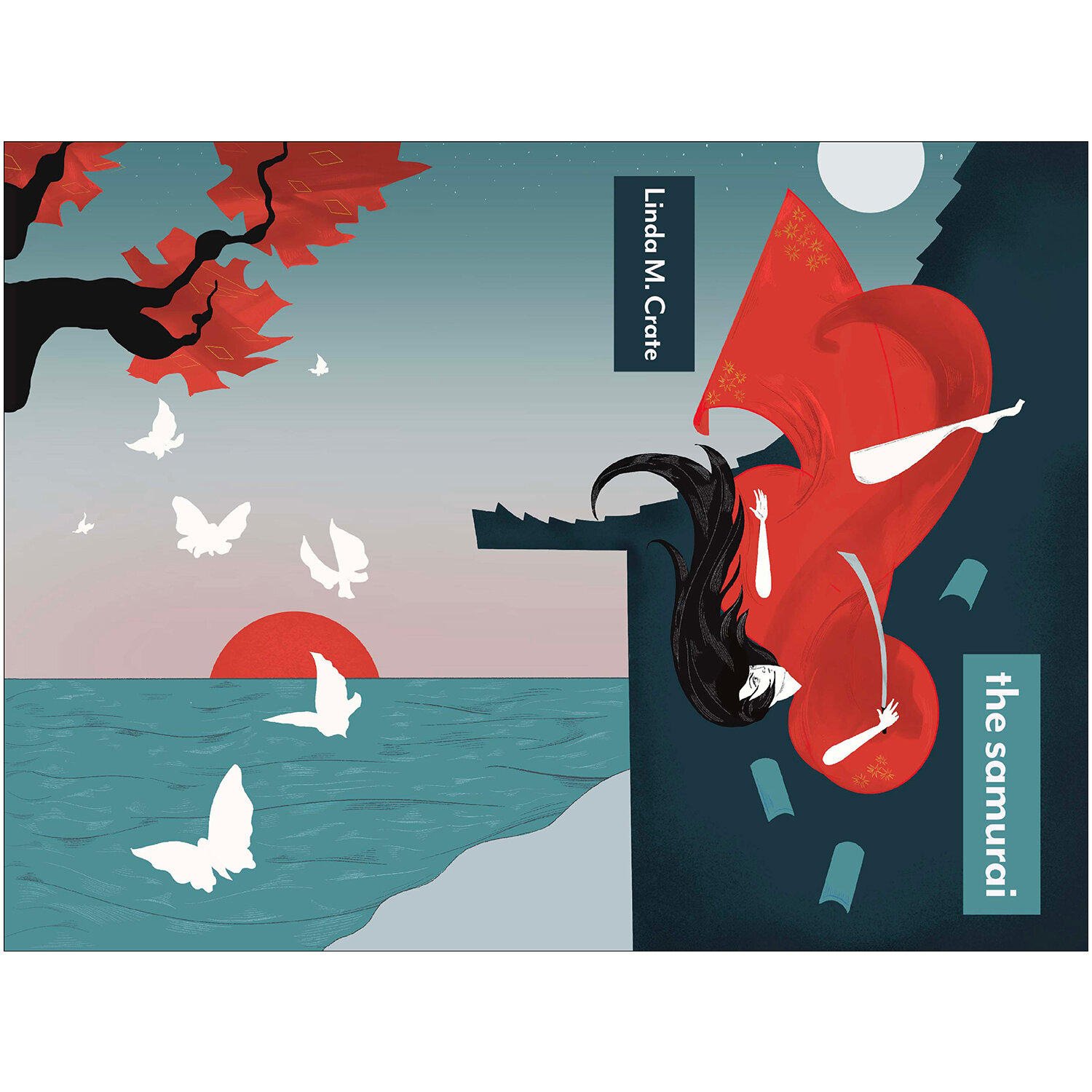
The 21 poems included in this chapbook encourage readers to dive deep within themselves and to use the past as a tether to the right path for the future. The cover art was inspired by the 19th-century Japanese woodcut tradition and several prints by artists such as Utagawa Kunikiyo that focused on rooftop fighting and falling warriors. Butterflies represent the souls of the dead which inspired Ann Marie to include them both in the cover and interior illustrations.
Linda is a Pennsylvanian born in Pittsburgh but raised in Conneautville. Her work has been published in numerous magazines and anthologies, both online and in print. She is the author of six poetry chapbooks, the latest of which is More Than Bone Music (March 2019). She also is the author of the novel Phoenix Tears (June 2018) and two micropoetry collections. Recently, she has published two full-length poetry collections, Vampire Daughter (February 2020) and The Sweetest Blood (February 2020). Linda is also a two-time Pushcart nominee.
Paperback and PDF versions of the samurai are now available from the Yellow Arrow Publishing bookstore! You can also search for the samurai wherever you purchase your books including Amazon and most distribution channels. Connect with Yellow Arrow Publishing, Linda, or Ann Marie on Facebook, Instagram, or Twitter to share some love for this chapbook. To learn more about Linda and the samurai, check out our recent interview with her.
***
Yellow Arrow Publishing is a nonprofit supporting women writers through publication and access to the literary arts. To learn more about publishing, volunteering, or donating, visit yellowarrowpublishing.com.
the samurai: a conversation with Linda M. Crate

They say to let go of your past, but I think that this is a mistake.
Sometimes the past tethers you on the right path for your future.
The word ‘samurai’ can loosely be translated into meaning “those who serve.” In Linda M. Crate’s soon to be released chapbook, the samurai, illustrated by Ann Marie Sekeres (annmarieprojects.com), this interpretation is especially pertinent as her collection of poems stems from a dream in which a samurai appeared and inspired her to heal from past experiences to activate her full potential. Linda’s upcoming Yellow Arrow Publishing chapbook about rebirth, past lives, and learning from experience is now available for PRESALE and will be released October 2020.
A Yellow Arrow editorial associate, Siobhan McKenna, interviewed Linda about the samurai, reading messages from our dreams, and learning to choose how we move forward after darkness threatens to saturate our lives.
YAP: The basis of this chapbook came from a vivid dream you had, could you speak a little more about that?
When I have dreams, most of them I remember in bits of pieces, but I don’t really remember them very well. But the [samurai] in [this] dream was very quiet and subtle—she had a presence. I’ve [even] had a few daydreams about the figure from this book. She is very prominent when I see her in my dreams, but the one dream I had at first was just the one where she’s fighting for her emperor—the ruler of her country—and ends up falling off the roof. The dream was terrifying because I felt the falling [of the samurai] and it triggered something. I woke up scared and had to remind myself that I wasn’t falling off a building. It was very lifelike and it felt like it was happening to me in the moment.
YAP: Why do you believe you were having these dreams?
I believe that we have past lives. I didn’t always believe that, which I talk a little bit about in the chapbook. And when a fellow student at school mentioned a past life, I thought, eh, I don’t know about that, but this dream was so powerful and she was so prominent that I thought, well you know maybe there is something to that. Because why else would I be having a dream about somebody who is so different from me and [had] a very different life? Now, sometimes [dreams] are just your subconscious babbling but sometimes they are messages.
YAP: What made you want to turn this dream into a collection of poems?
I thought that I needed to honor [the samurai]. I felt like I needed to put down in words what happened in my dream and make it more of a reality—I wanted to share my experience. And I feel like there are unexplainable things in life and connections that we don’t really understand, and I feel like our past lives could be key to parts of our personality.
YAP: Why did you think the format of a series of poems rather than a short story served this dream better?
I think that with a short story you start at one point and then end up at another and what you originally set out to write isn’t always what comes out in the end, but you can get some of the concepts that you want in there. But ultimately, the characters take the reigns and make it theirs—at least mine do—mine are very vocal. So I thought I’m going to sit down and write this and see if this works. And I feel like as a cohesive form, [a series of poems] did work as a stream of consciousness [for me to convey] what I needed to say.
YAP: Zen Buddhism, introduced into Japan from China, held a great appeal for many samurai and in Zen Buddhism, there is a belief that salvation comes from within, which is a prominent theme in your chapbook. Did you think about this belief system as you were writing?
Oh very much so—I’m very Zen! In college, I took a lot of theology courses because I wanted to know what other cultures believed in. I wanted to know more about what people believed and why people are the way they are. I’m also very connected to nature, and I feel like we have to save ourselves. As much as we like the hero to save us, sometimes we have to be our own hero because there isn’t always going to be someone there for you. Unfortunately, people have let me down a lot in my life, and I’ve had to rely on myself. And in a way it’s sad, but I’m glad I’m this way because it [has made] me stronger.
YAP: Historically, samurai were mainly men, and female warriors were known by a different name [Onna-bugeisha]. Did you research more about Japanese culture after dreaming about the samurai woman and how did you navigate using this traditionally masculine term?
I did. I feel like [the term] samurai just captured how I felt about her and how she felt about herself. I know there is a different term, but why does it have to be that way? Why does it have to be that the man gets more recognition than the woman? Why does the woman have to be lower than a man? It was very important for me to place [the women in my dream] on equal footing, and I knew people were more familiar with samurai. It’s important to have a term that people understood. Some people might have found it interesting [to use the female term] while other people would’ve said, “I don’t know what that is.” A lot of people do their research, but then there’s others who just want something to read that they can relate to or are intrigued by.
YAP: In this chapbook, there is a theme of choosing “tranquility and places of hope” such as in the poem, “the kindest moonlight.” Do you think we have a choice when it comes to focusing on the light versus dark in our lives?
Oh, absolutely. I mean no one chooses to go through dark periods and dark phases, but I feel like there is always that little glint of hope, that little horizon, that light at the end of the tunnel. And I think if you try to focus your sight on your future and getting out of the present darkness—that’s a lot easier. If you dwell on the darkness, the bad times, the bad things, you’re going to feel like there’s anger dragging you down because there’s no hope. And I’ve never wanted to live in a world without hope. I’m the eternal optimist I guess. The one that’s always going to push forward; always going to believe that we can achieve better things and better worlds. You can’t choose if you have a mental illness or somebody dying, but you can choose to either dwell or choose to overcome. My mom told me when I was younger that you have two choices: you can be a victim or a survivor. So I’ve always chosen to be a survivor because I refuse to be in that vulnerable place where nothing can be better than this right now.
YAP: What are your thoughts on the cover image and how your chapbook is represented at first glance?
I absolutely adore the cover image. I think it's a good representation of my dream and of the content in the chapbook. I also love that the exterior has butterflies as they're representative of the idea of rebirth and reincarnation, which are also themes that I cover in the chapbook. I think the idea of connections [to the] past and present is nicely conveyed here. I really appreciate the time and input each of the editors took in trying to help me polish my book. I'm also thankful that Anne Marie was so receptive to my ideas and curious to understand the chapbook and the ideas that were in it. I think that's what makes the illustrations work so flawlessly with my words.
YAP: I know the interior images haven’t been released yet, but how do you think they relate to the themes in your book?
I think [the woman] is a good depiction of the strength and ferocity of a warrior—she also has that schooled face which doesn't betray her emotions, which is something that I touch upon in the chapbook. I think the interior [images work] well with not only the title, but my depiction of the woman in my dream.
YAP: In your profession, you write a great deal of fiction, how do you find the process of writing fiction versus poetry different and/or similar?
It’s different in that with poetry you can talk about yourself and anybody else in your life or situation. But when I’m working on novels or short stories usually a character comes to me and I build around a theme until it develops into something else. And they’re similar in a way because it is a process and it doesn’t always come out right the first time so you have to think [about] what works and what doesn’t work and go from there. But to me, it depends on the day and what I’m feeling—what mood I’m in. Sometimes I feel like writing more fiction and then there’s other days when poetry is what comes more naturally. It’s funny because people ask, “How do you decide?” and it’s just my mind has a switch and whatever the switch says is what we go with.
YAP: In the past, you have published with Yellow Arrow, why did you choose to publish with us again?
I always like them and their philosophy. I’ve always felt that they are very respectful of my work and me. I usually write darker themes and writing [for Yellow Arrow] allowed me to focus on something positive and [the samurai] is a pretty positive figure in my life so I wanted to see what I could come up with. It was a different experience for me and it’s good to challenge [myself] once in a while so that’s what I did.
YAP: What do you hope people take from the chapbook?
We can learn from the past, but our lives aren’t set in stone. If you are going through something negative in your life, it can get better. And sometimes you need to listen to that little voice inside your head that keeps telling you to go forward because it’s important to follow your dreams, to have hope, and begin again. As painful as it is to lose your old self, you have to in order to grow.
*****
Every writer has a story to tell and every story is worth telling. Thank you Linda and Siobhan for such an insightful conversation. Yellow Arrow Publishing is a nonprofit supporting women writers through publication and access to the literary arts.
Hope and Healing
Smoke the Peace Pipe
Yellow Arrow Publishing Releases a New Chapbook!
Baltimore, MD
A new chapter opens in the story of Yellow Arrow Publishing with the release of our first chapbook, Smoke the Peace Pipe, by Roz Weaver. Since its establishment in 2016, Yellow Arrow has devoted its efforts to support all women writers through inclusion in the biannual Yellow Arrow Journal, our Writers-in-Residence program, and a multitude of writing workshops and community events. We at Yellow Arrow are excited to continue our mission by supporting Roz in all her writing and publishing endeavors.
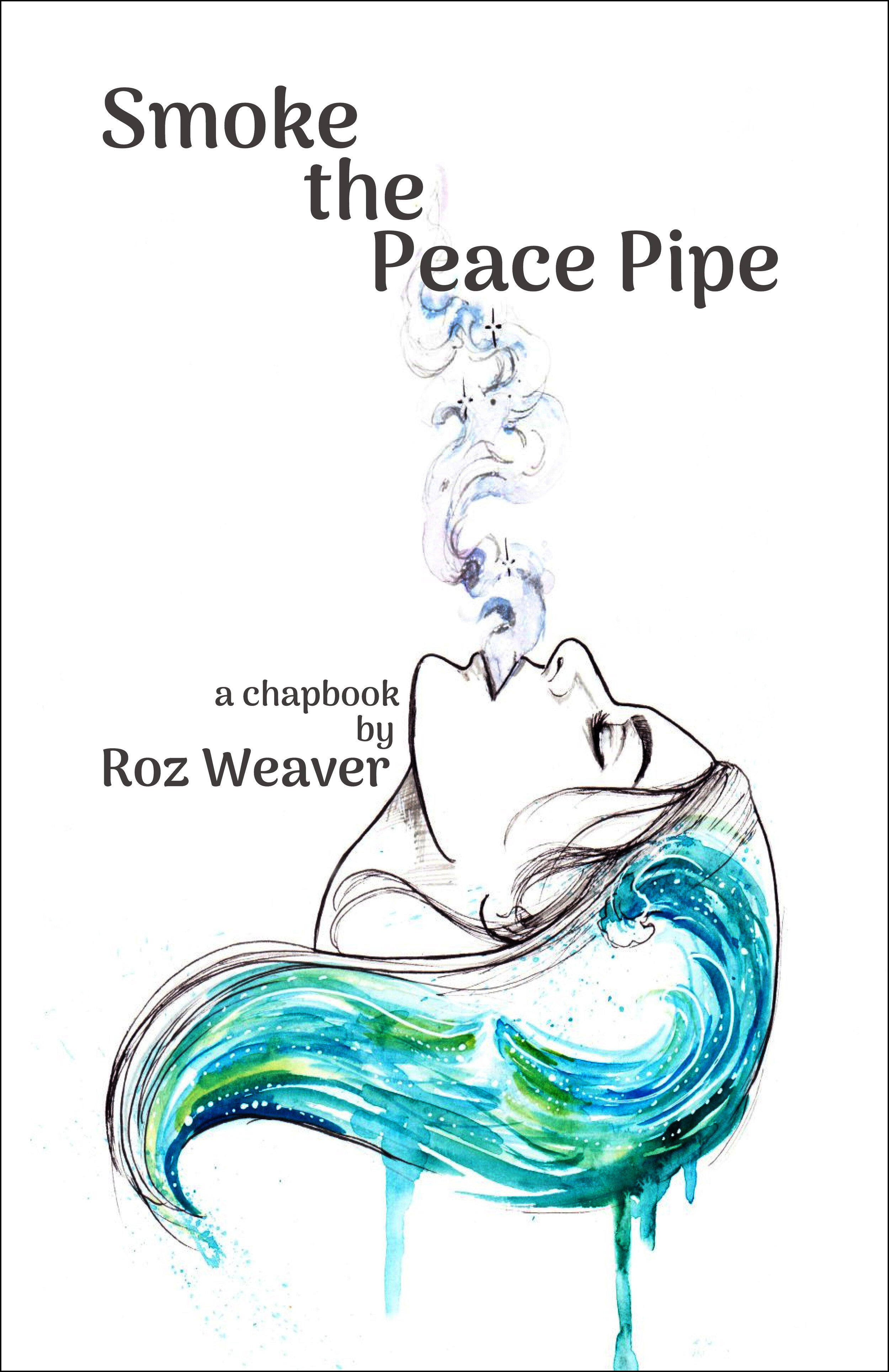
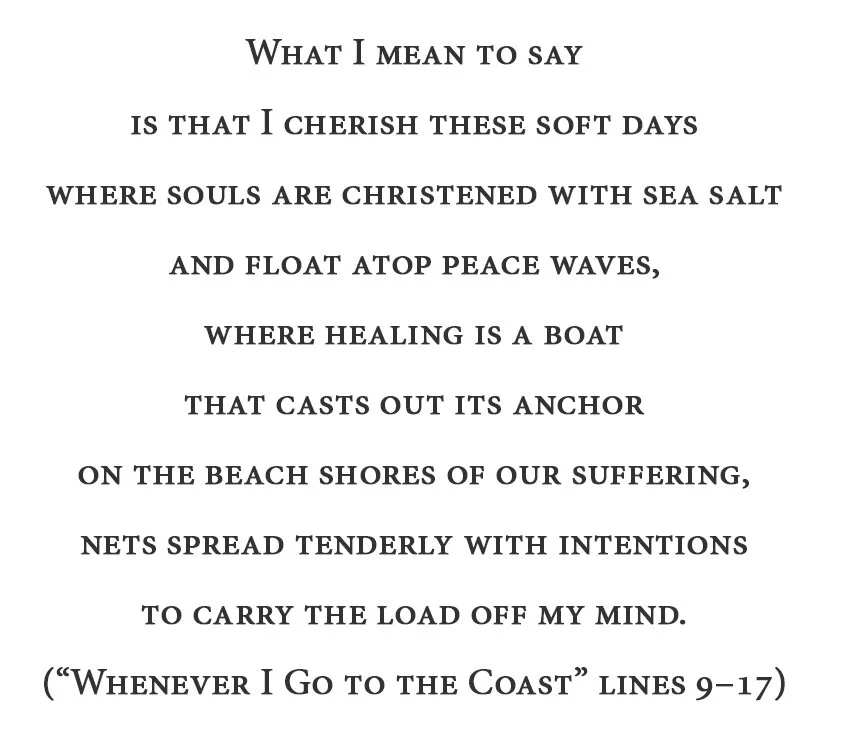
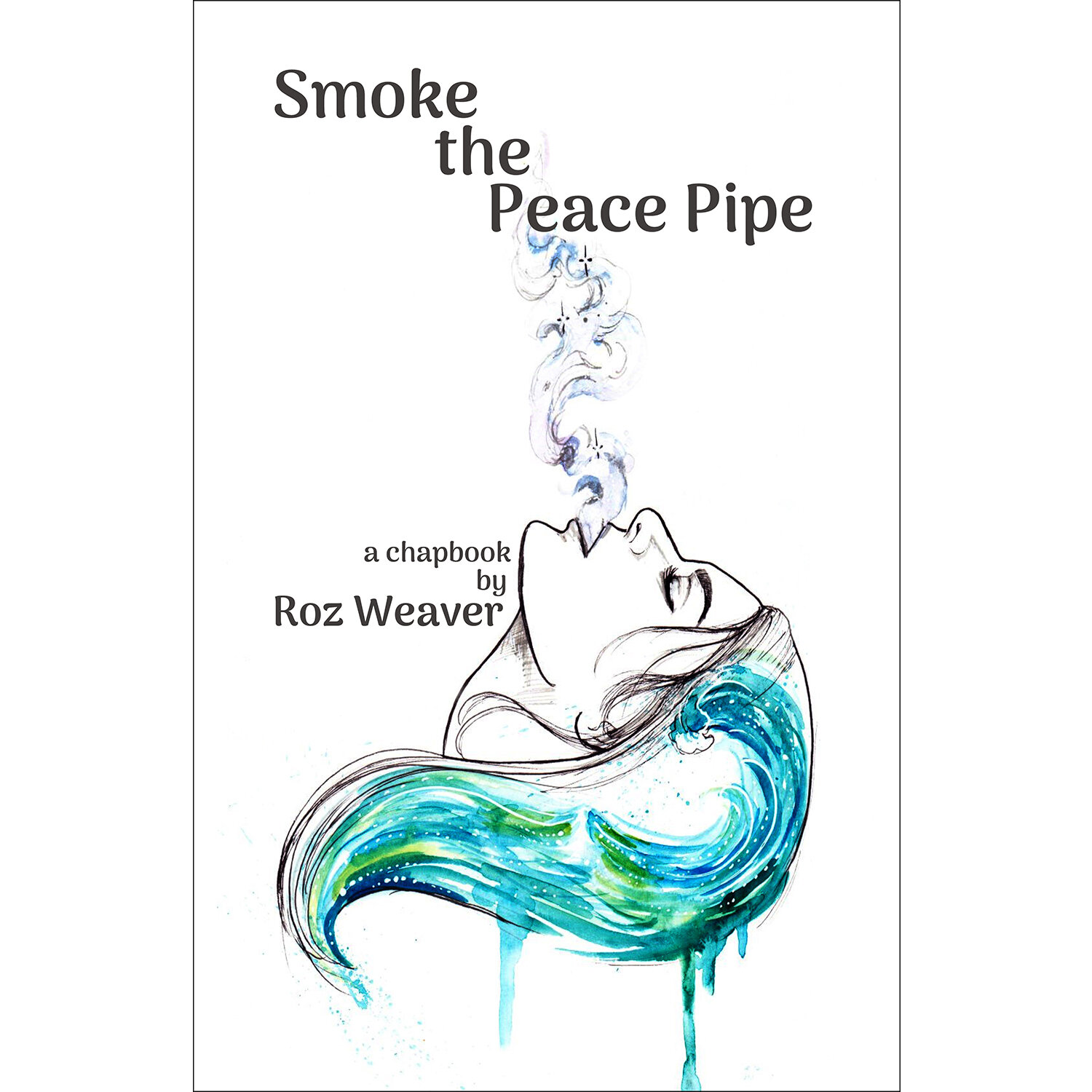
Smoke the Peace Pipe is a collection of poems inspired by the author’s experience of trauma and how this settled in her body, sometimes as her own worst enemy. Through this chapbook, Roz encourages the possibility that we all can find hope and healing by showing up in the present moment, in the environment and with people around us, and through a shared appreciation of nature, spiritual exploration, and sacred connection with the Earth. By sitting and sharing a peace pipe with ourselves, we have an opportunity to bear what we thought was unbearable and make space for the possibility of a bigger picture. The 26 included poems bring every reader on a journey, from pain, trauma, and separation, toward recovery in the form of transformation, healing, self-love, and spirituality. The cover art by Joanne Baker was inspired by Roz’s poetry, the feeling of emotion, ideas and words, ebbing and flowing like an ocean. All-consuming but cleansing.
Roz is a current resident of West Yorkshire, England, working as a social worker and therapist while studying for her MA in Creative Writing at Teeside University. She began writing poetry in early 2017 as a solitary means of exploring her experiences of trauma and was subsequently published for the first time in January 2018. Roz then began developing some of her writing for spoken word. Her most recent work has been on exhibit with Awakenings, a Chicago-based arts collective of survivors of sexual violence, as well as the London Design Festival, and performed at Leeds International Festival and the renowned Edinburgh Fringe. Roz is currently teaching a (sold out!) Yellow Arrow workshop, “Poetry as Therapy,” in which classmates can explore the therapeutic aspects of poetry as a way of creatively expressing their thoughts and feelings. You can learn more about Roz in our interview with her from last month.
Paperback and PDF versions of Smoke the Peace Pipe are now available from the Yellow Arrow Publishing bookstore. You can also purchase paperback copies from Amazon and e-book copies from most distribution channels. You are welcome to leave reviews on Amazon, Goodreads, your own websites/platforms, or by sending us a direct email with your thoughts. Connect with Yellow Arrow Publishing or Roz on Facebook, Instagram, or Twitter to share some love for her chapbook. If you don’t have time to send a review, just know that we appreciate you.
***
Yellow Arrow Publishing is a nonprofit supporting women writers through publication and access to the literary arts. To learn more about publishing, volunteering, or donating, visit yellowarrowpublishing.com.
Transformation Through Poetry: A Conversation with Roz Weaver
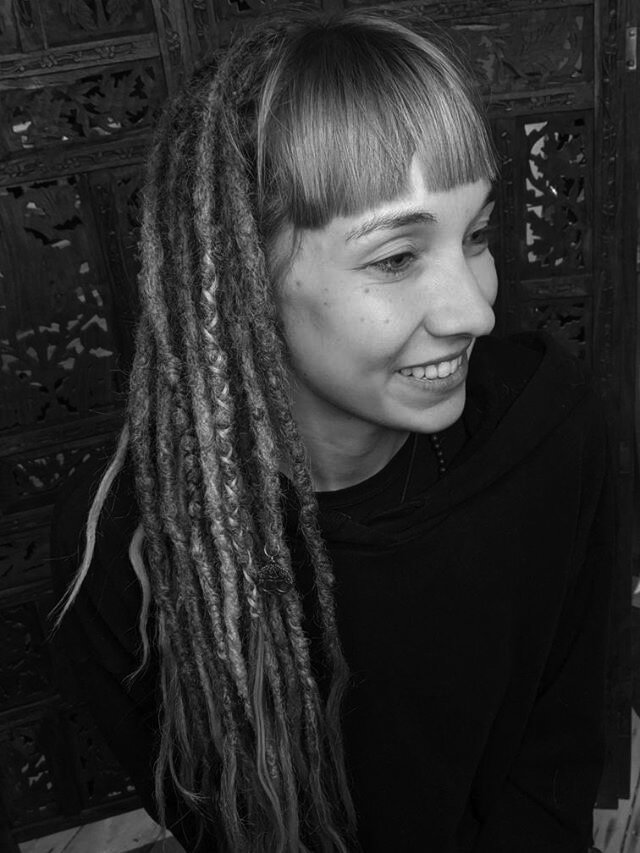
Roz Weaver is a poet and spoken-word artist who grew up by the beach in Fornby, near Liverpool, England. She now resides in Leeds where in addition to writing poetry she works as a social worker and is a licensed therapist. Weaver’s upcoming Yellow Arrow Publishing chapbook on trauma and transformation, Smoke the Peace Pipe, is now available for presale and will be released August 2020. Beginning Tuesday, July 21, Weaver will host a six-week “Poetry as Therapy” online workshop with Yellow Arrow.
Yellow Arrow editorial associate, Siobhan McKenna, spoke with Weaver about her new chapbook, spoken word, and her thoughts on using poetry as a therapy tool at a time when our world is in need of great healing.
YAP: How did you begin writing poetry?
I enjoyed drama as I was growing up and about three and a half years ago, I started writing and reading poetry. After I watched a TED Talk by Rupi Kaur, I read some of her poetry and started writing. I think some of the stuff that she talks about in her poetry is something that gave me the confidence to think about how I would word what I wanted to talk about. [My poetry] was all really terrible to start with, but then I went from there.
YAP: How did you start performing as a spoken-word artist?
Similar to how I started writing, I had in my head for about a year a piece that I thought would be really good as a spoken-word piece and there was a spoken-word night in Manchester and I put my name on the list, but I backed out a few days beforehand because I was terrified. It took about a year after that to try again, and I still have never performed that poem! But after that, I never started to specifically design my poems for spoken word, but I would go up on the stage more often. [Spoken word] still makes me feel anxious most of the time—I don’t really like it! But you have to keep putting yourself in that discomfort zone. I do get that buzz from performing, but all before it I’m a bunch of nerves!
YAP: What does spoken word bring to poetry?
I think it can bring something really different from page poetry. There are some great places around where I live that do spoken-word events and the poetry can blend to almost being like music or song—its lyrics, its rap, some of them have live bands that will improvise to the rhythm of how someone is speaking. And sometimes, there will be someone sitting in the audience who needs to hear what you’re talking about whether it’s a shared experience, a reframing of perspective, or they’re ignorant to the thing someone is talking about and they need to have that learning. There is also a community feel [during spoken-word performances] when everybody clicks their fingers when they agree with a bit in a poem—rather than clapping or whooping, which might interrupt the speaker—I find [the clicks] really cute and adds to the vibe.
YAP: How do you translate spoken to written?
When I am doing a spoken-word poem it takes me forever because I start it and then I try to find the next line and it will take me hours or days or weeks to put one together. And generally for spoken word, in order to speak long about a subject, I need to be pretty passionate about a subject that I can’t just summarize on a page.
YAP: Do you find different meanings coming through when performing spoken-word poetry that you didn’t realize when you originally wrote the piece?
[One poetry line] that I may think is a very significant line in a piece, someone else will jump to something completely different and say that was the bit that they really identified with, which is often similar to page poetry. Lines can be interpreted in really different ways and whether its spoken-word or page poetry, once [a poet has] written something we don’t have a say in what it means to other people. I really don’t like when someone introduces their piece and the introduction about their piece is as long as their piece. I think it prevents somebody in the audience from interpreting the piece in a different way and sometimes the way in which someone interprets your poem is better than what your original meaning was and you say [jokingly], “Oh, yeah, I totally meant that.”
YAP: How can poetry be used as a type of therapy?
Poetry is a form of expression, and I’ve found it’s easier to put things into words in a poem rather than speaking to somebody face-to-face. For example, sometimes in a conversation with someone they want to find a solution, and with a poem, you can leave it hanging with the raw emotion and you don’t have someone else giving you advice. Sometimes, you have the words for something, but you don’t know how to feel about it yet or you can be quite numb to something and it’s only after I wrote a poem that I’ve really connected what is going on for me.
YAP: What inspired you to create the “Poetry as Therapy” workshop [now sold out!] for YAP?
I’m in my final module of my creative writing masters and in my first year, we were asked to build a set of workshops. I have quite a lot of personal interest around therapy and poetry therapy because it is a bigger thing in America, but it doesn’t exist in the UK so I wanted to build on that idea. So I created the workshops for a university module and they were sitting there and I thought it would be nice at one point to do something with them. The original ones that I put together were for women who had experienced violence so for the Yellow Arrow sessions I adapted them.
YAP: Who should attend your workshops?
Anybody! I think if people are interested in poetry, creative writing in general, or if people are trying to work through things that are going on for them then it might be a good tool to start that journey. I am a qualified therapist but the workshops aren’t therapy. People don’t have to share anything that they don’t want to. A lot of [the workshop] will be [completing] different exercises and prior readings and going away and trying some of the [activities] out by yourself. I’m sure I’ll do all the exercises along with people—I probably need it right now as well!
YAP: Why were you drawn to publish with Yellow Arrow Publishing?
I love Yellow Arrow. It’s been two years since I was first published by [Yellow Arrow Publishing] in one of their journals. I’ve been published two or three times, and I’ve always found the process lovely. Gwen [the YAP founder] would handwrite thank-you notes and post me this hand-bound journal from America and it’s just lovely. I find it to be a very supportive environment, warm, welcoming, and I love that it promotes writers who identify as women. It feels like so much care is taken with people’s work. They care about you, and I really love the ethos of the organization.
YAP: The title of your chapbook, Smoke the Peace Pipe, sounds like a direct call to action and almost invites the reader to join with you as well, was this intentional and how did you settle on the title of the chapbook?
I wish that is why I chose that! I settled on it after I had already ordered the [poems in the] chapbook to flow from a place of challenge and dark to moving into the light and [“Smoke the Peace Pipe”] worked perfectly as the final poem. I was trying to think of titles, and I liked it as the overall theme of the book—finding peace with yourself. [Smoke the Peace Pipe] has that meaning with me.
Sometimes we are our own worst enemies, and we have all these different parts of ourselves, which we don’t let exist at the same time. We lock-off bits, we avoid things, and we don’t see how we can feel different feelings at once; we feel like we need to be on this linear trajectory. There’s a poet named, Ijeoma Umebinyuo and she has a poem that says sometimes, “Healing comes in waves / and maybe today / the wave hits the rocks / and that’s ok” and I wanted to get that across.
I suppose the peace pipe, in terms of symbolism as well, is a link to something spiritual, nature, mother earth, and to the things that can help heal us. The peace pipe as a symbol is something really sacred, and I wanted to honor where that comes from and not use the phrase lightly. I’m really aware that the meaning and the history are not mine. And I wanted to pay tribute to [the fact] that we learn from other communities and other ways of being, other ways of knowing.
YAP: How did you choose the cover art for the chapbook?
The cover [was] designed by a tattoo artist in Scotland, Joanne Baker. She was a fine arts grad before she got into tattooing. She did one of my tattoos that was in part inspired by Rupi Kaur. I love [Joanne’s] artwork and I wanted to do it with someone British and after thinking about how we could make it work, Joanne was up for it. I sent Joanne a few poems and she came back with a few different ideas and it worked like that. She’s just an amazing artist and she had never done a book cover before so for her it was something to add to the portfolio. It felt really good to collaborate with her rather than pick an image that didn’t have any meaning for me.
YAP: 2020 has been a turbulent year in many ways. What role does poetry play in the face of an ongoing pandemic and fervent call for action against racial injustice?
I think people have had a lot of alone time whether to read or write. And linking back to poetry as therapy, poetry is definitely a way to express frustrations, fears, or keep a record of the small daily things to be grateful for. I think for me I’ve seen more impactful poetry, not around coronavirus, but more around Black Lives Matter. I’ve seen a lot of spoken word that has shown up, and I hope that stays. There are a couple poets on Instagram who I follow with minority backgrounds and some of the work they share is so inspiring it just leaves me at a loss for words. I think poetry sparks debate and conversations. And I think that’s needed whether it is because people are feeling lonely or as a way to continue to inspire us and to think about and change how we do things and move to a new normal in terms of coronavirus or a new normal around Black Lives Matter or trans rights. And none of this is new; it was just buried. The other day I was listening to a poet in the UK, Benjamin Zephaniah. He is a spoken-word/music/performance poet and he wrote a song called, “Dis Policeman Keeps On Kicking Me to Death.” And he wrote that almost 10 years ago in relation to one of his family members who had a similar death to George Floyd, but in the UK. So one story just hits the news, but it’s been happening everywhere all the time, which is really scary.
YAP: Is there a limit to how poetry gives us access to someone else’s lived experiences?
I think someone has to be in a place to hear it, especially if it’s something that challenges their world views or something that could be triggering. At spoken-word events, some people will have trigger warnings before a piece. And it’s ok that we don’t get something that someone is talking about because it is beautiful that there are so many different perspectives—as long as it’s not harmful to somebody else.
YAP: What knowledge or feelings do you hope readers gain from reading your chapbook?
To put some context to it, the trauma I refer to is related to my experience with sexual violence. I didn’t want to expand loads because trauma can come in so many different ways for people, and I wanted it to be relatable to people who have been through anything. I hope that people can know that things get better. In terms of my healing, [it has been helpful] knowing that there are other people out there who get it and that you are not alone. If it reaches one other person and that makes them realize that someone has gone through something similar, survived, and is all right, then that is really important.
There is an article in The Independent that in the UK only 1.5% of rapists that are charged by police are prosecuted by the Crown Prosecution Service. I don’t know what world we are living in, but it’s not one that feels like it takes this stuff seriously. I think systems are failing so many people. And sometimes I read stuff like that and I think about all of the people who don’t report things to the police and why would they when that’s the statistic. And why would they when a lot of the police in the system treat women like they do—because it is majority women who experience [sexual violence]. For me, it is finding alternative ways for healing when you don’t always get the response that you want from the systems around you, from the people who you would want to get criminal justice from, and from people who are close to you who don’t know how to respond. [My chapbook] is something that can say that you are not alone and there are ways you can explore this and things that you can do to start to feel better.
*****
Every writer has a story to tell and every story is worth telling. Thank you Roz and Siobhan for such an insightful conversation. Yellow Arrow Publishing is a nonprofit supporting women writers through publication and access to the literary arts.