Amy Mackin on the Good, the Bad, and the Ugly of Her Publishing Journey
“It’s really a labor of love”
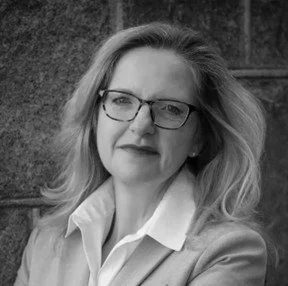
Amy Mackin writes at the intersection of education, cultural history, public health, and social equity. Her work has appeared in outlets such as The Atlantic, Chalkbeat, The Washington Post, Witness, and The Shriver Report. She earned her MA in American studies from the University of Massachusetts and her MFA in nonfiction writing from Vermont College of Fine Arts. Over the last several years, she has held leadership writing roles in the public health, science, and higher education sectors. Mackin loves the fickle weather and spectacular landscapes of New England, where she resides with her family and always at least one friendly feline.
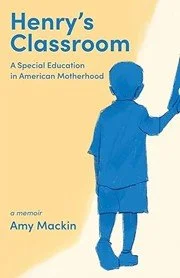
In a recent conversation with Yellow Arrow summer 2025 publications intern Kate Tourison, Mackin reflects on the unexpected challenges and heartfelt successes that came with publishing her memoir Henry’s Classroom: A Special Education in American Motherhood with Apprentice House Press this past spring.
With Henry’s Classroom, Mackin combines her family’s personal experiences with years of research, exploring the medical, social, and educational barriers her son encountered during early childhood, ultimately revealing a larger story of ineffective systems that are failing millions of families across America.
“My son, who I call Henry in the book, was diagnosed with developmental delays at 16 months old, which set us on the journey of engaging with early intervention services and then moving into the special needs preschool, and then from kindergarten through fifth grade with the district's special education program,” explains Mackin. When reflecting on the publication process, Mackin relays some of the difficulties she encountered, starting with submitting her work, stating that “that’s probably the most difficult part.” Mackin reached out to a number of literary agents, wanting her story to be published by big-name companies like Penguin Random House or Simon & Schuster. The querying process, however, was much more challenging than she had anticipated.
“I had two agents respond to me, both of whom I admired their work and would have been thrilled for them to have represented the book, and they both asked for additional pages, then they both asked for the full manuscript, and ultimately they both rejected it,” Mackin says, laughing. “One said there was too much research in the memoir for them, and the other said there was not enough research in the memoir for them.”
Finally, Mackin chose to pivot. “I had decided that I was going to take a break because I had been kind of worn out by the process, but I had a couple of friends who had had really good experiences with small presses, so I decided I was going to go that route.” As she began looking into independent presses, Mackin stumbled across Apprentice House Press, a student-run book publisher located in Baltimore, Maryland.
I had never heard of Apprentice House,” she explains. “But I said, you know what, I'm just going to submit and see what happens, and then I heard back from Apprentice House maybe six weeks later, saying that they were actually interested in publishing it. I was thrilled.”
For Mackin, this had been a long time coming. Henry’s Classroom had started as a project for her MFA, and it had gone through several subsequent iterations and genre changes before Mackin began thinking seriously about publication. “Writing, you know, it was very much a solitary, isolating thing, generally. Even with me, I was in a low-residency MFA program for some of this, and once that ended, I didn't have a local writing group or anything like that to bounce these kinds of ideas off of, so it was very, very isolating. It’s very uncertain about, you know, the quality of what you’re putting out there, if people will resonate . . . you’re not really sure if you told the story or gave the story, honored it the way you wanted to, and so it’s been incredibly validating for me hearing some people’s reaction to the book.”
After having signed with Apprentice House, Mackin spent the next year working on a final draft for publication. On May 6, 2025, Henry’s Classroom became available to the public. But the work did not end there—for Mackin, marketing and publicity was half of the battle.
“I did hire an independent publicist. It is really expensive, I mean, I think that needs to be out there. I purchased the amount of services I could afford, and I ended it at that. It was helpful, but I do also think that you can do it yourself, just because I think when you’re publishing with a small press, you’re typically not getting an advance . . . you’re doing all the editorial work, and all of the publicity work, the writing, in your spare time. And a lot of us are introverts by nature, and we’re not really comfortable self-promoting. So I mean, you only do it because you really believe in the story you have to tell, and you really believe in the power of books. It’s a lot, and you know, it’s really a labor of love,” she concedes.
Ultimately, Mackin boils it down to two primary objectives. First, realizing your target audience:
“I made a decision pretty early on that I would [be] helping other families navigate this, or sometimes just letting other families or parents vent about the frustration of the system. So I’m interested in engaging with educators, and parents and families, and I’m kind of targeting that group. I did a book launch event, I’ve done a couple of book signings where people came out and wanted to talk about these things, and it was great. Just last week I actually spoke at an international conference on maternal scholarship, and the reactions have been really, really positive, and it’s led to really great discussion. That’s been probably the best part of all of this, just the conversations I’ve been able to have.”
Mackin’s second piece of advice is to look to other successful writers for inspiration: “Find books similar to yours that have been published with a similar size press and see where they’re getting promoted. And then, you know, contact those podcasters, contact those magazines, those newspapers, and say, ‘Hey, I saw that you covered this book, I write in a similar vein, wondered if you’d be interested in doing a feature on this.’ A local press is definitely your friend when you’re an independent author, and your local communities are going to want to support you.”
In addition to nearby news outlets, Mackin turned to her local booksellers and librarians. “I took my book, and I kind of drove around maybe a 90-minute radius as soon as the book came out. I talked to independent booksellers and many were very willing to consign my book and put it on their bookshelves, and also to have a book talk or a book signing event with me.”
When asked if there is anything she would have done differently, from start to finish, Mackin offers one last piece of wisdom to writers in her position: “I wish that I had entertained the idea of a small press publication sooner,” says Mackin. “I think a lot of writers feel like the goal is to get a literary agent, to publish with one of the Big Five, to get those reviews by the big industrial reviewers, all of that. And I think that is a laudable goal for a lot of people and is appropriate but depending on what your goal is for your own work, really think about that. Because for me, this meets the goal that I was trying to get to. And, getting published with a Big Five wouldn’t necessarily. I am so grateful that this book is out in the world now and is allowing me to have these conversations in a larger way that I know it's helpful to me and I feel like has been helpful to other people.”
You can find Henry’s Classroom: A Special Education in American Motherhood, published by Apprentice House Press, at Bookshop.org. Thank you, Amy and Kate, for such a great conversation about publishing.
Kate Tourison (she/her) is a rising senior at Loyola University Maryland where she majors in English and communication with a specialization in advertising and public relations. As a lifelong book lover, she is thrilled to join the Yellow Arrow team and engage with an inspiring community of women writers. During her spare time, she enjoys watching old episodes of Gilmore Girls, taking long walks with her dog, and, of course, reading! You can find her at @katetourison on Instagram.
*****
Yellow Arrow Publishing is a nonprofit supporting women-identifying writers through publication and access to the literary arts. You can support us as we BLAZE a path for women-identifying creatives this year by purchasing one of our publications or a workshop from the Yellow Arrow bookstore, for yourself or as a gift, joining our newsletter, following us on Facebook or Instagram, or subscribing to our YouTube channel. Donations are appreciated via PayPal (staff@yellowarrowpublishing.com), Venmo (@yellowarrowpublishing), or US mail (PO Box 65185, Baltimore, Maryland 21209). More than anything, messages of support through any one of our channels are greatly appreciated.