Unsettling the Silence: A Conversation with Vic Nogay
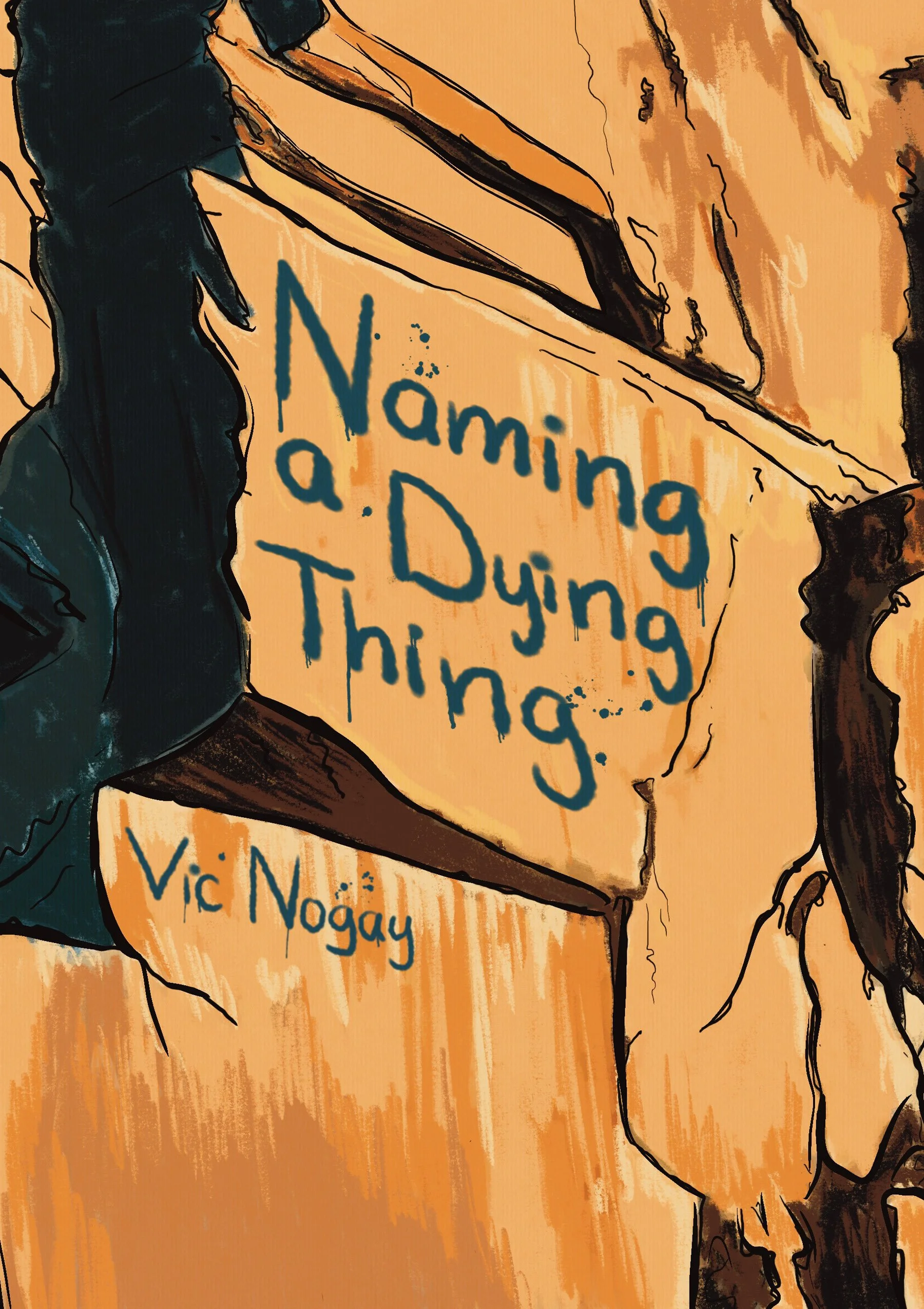
Poetry is often born from tension—the space between beauty and loss, the sacred and the ordinary, the personal and the political. In her soon-to-be-released poetry collection Naming a Dying Thing, Vic Nogay invites readers into this space with a voice that is at once lyrical and unflinching. Her work lingers on themes of motherhood, loss, and nature, encompassing the cycles that both sustain and unsettle us.
Nogay is a writer, reader, and editor from Ohio with a richly variegated publication archive (find out more at vicnogay.com/publications). Her second poetry collection, Naming a Dying Thing, to be published by Yellow Arrow Publishing in October 2025, is a reckoning with memory and present experience woven together as a “tarnished treasure” of the self. This collection reflects our mission while carving a powerful place for itself in contemporary poetry. You can get your copy of Naming a Dying Thing at yellowarrowpublishing.com/store/naming-a-dying-thing-paperback.
Melissa Nunez, Yellow Arrow interviewer, and Nogay connected with each other to discuss the inspirations behind Naming a Dying Thing, the role of sound and rhythm in her work, the push-and-pull of modern motherhood, and the grounding force of nature.
I am trying to find wonder in the world, but I have
driven many highways, seen you flayed, our names
in paint, sprayed and slipping down the length of you.
“Appalachians”
Who are some of your favorite women-identified writers?
Toni Morrison, Maggie Smith, Louisa May Alcott, Tess Taylor, Alison Stine, Tiffany McDaniel, Natalie Babbitt, Kalynn Bayron, Amy Turn Sharp, Tiana Clark, R. F. Kuang, Claire Taylor, Amy DeBellis, Madeline Anthes, Barbara Kingsolver, Gabrielle Zevin, Amy Butcher, Gwendolyn Kiste, and Rachel Harrison . . . just to name a few!
How did you discover Yellow Arrow Publishing? What inspired you to submit Naming a Dying Thing?
I can’t say for certain, but I’m pretty sure I discovered Yellow Arrow on Twitter back when it hosted a thriving literary community. I submitted this collection to Yellow Arrow and a select few other presses whose missions aligned with my own. I love that Yellow Arrow is a nonprofit indie publisher that puts their mission at the forefront of who they are. A press that vocally and proudly exists to champion all women-identified writers is a community I am so grateful to be a part of.
What inspired the creation of this poetry collection?
The pandemic unlocked some kind of portal in my brain that sucked me back into a creative writing practice I had been avoiding for years. It forced me to reckon with a past gilded by time and memory, as well as my more present experiences with motherhood, marriage, miscarriage, and general political/social chaos. Over the past five years, my writing has returned to the same topics, turning them over and over again looking for answers that don’t exist. At least I haven’t found them yet. Having these pieces together in one collection is like holding a piece of my soul in my hands, a record of my life. A tarnished treasure, but treasure all the same.
Can you walk us through the cover selection process?
As a reader, I love closing a book and returning to the cover with new eyes, finding nods or clues the author gave us right from the beginning, and I wanted readers to have that same experience with this collection. I discussed this concept with [Yellow Arrow Creative Director] Alexa Laharty, and she was totally on board! We explored several images in the collection and felt the spray paint on the blasted mountain rock face was unique, evocative, and representative of the collection as a whole.
I’m holding you and my breath
while your big bluestem heart beats
under thunder and a sturgeon moon.
“Now you are six”
There are many strong themes in this collection, one of which is motherhood. In your opinion, what does “motherhood” mean in a modern society? What has changed and what has remained the same?
For me, motherhood is like breathing—a constant oscillation between restriction and expansion, limitation and growth. I find my experience as a mother to be healthiest and most fulfilling when I remove myself as much as possible from the context of our modern society. It’s impossible to do, of course, but the effort is worthwhile. I find modern expectations of motherhood do not embrace the essential push/pull, only the push, only the expansion, only the expectations. Modern society offers mothers no relief. My resistance is in taking relief wherever I can find it.
I was struck by the balance of beautiful lyricism with a brazen, unadorned honesty in your poetry (e.g., “Testimony” and “Folk tale”). What drew you to this contrast in voice?
A change of voice within a poem is often striking, even unsettling. When I employ this change, I deliberately want to unsettle. Unsettle the poem, unsettle the reader, unsettle myself, unsettle the systems that confine us. It’s a hex on injustice and those who wield it like a weapon. I hope it feels like the curse it is intended to be.
I love the skillful use of alliteration, assonance, and repetition in poetry. My eye was drawn to words connected to the concept of the “sacred,” words like “hallow” and “burrow,” which appear in multiple places in multiple forms in this collection. Can you speak to the allure of these words/concepts for you?
I think words with two vowel sounds split by a double consonant have always felt so rich and warm and earthy to me. I like the contrast of exploring the ethereal, sacred, and unknowable with words that feel tangible, resonant, and specific. Contrast gives a poem anticipatory movement. The sounds and rhythm of words are as important as their definitions.
At ten weeks, for six days, I labored;
my body exiled my body.
When it was over, I did not look
but let my love hallow
“Testimony”
Another thread apparent in this collection is love and relationship. In your opinion, how does love both connect and divide us from others? How does this play out in marriage and in parenthood?
Woof, this is a tough one for me. I have no authority to speak on this topic. I’m just fumbling through it all. The poems are as close to opinions as I get.
The cycle of growth and decay in nature is very present in the imagery of your poetry. How does this speak to patterns in our personal lives?
I grew up very disconnected from the natural world, and I think this lack of familiarity or understanding created a dependence on the heavily curated, manufactured illusion of reality in suburban America. Even now, I’m not a skilled outdoorswoman by any stretch, but the time I’ve spent learning about and caring for native Ohio plants and wildlife has connected me to it all, removed the flimsy false barrier between humanity and the rest of this one earth. The natural life cycle, and feeling acutely a part of it, has been surprisingly comforting and inspiring.
light me up & listen
for the passerine,
furious & thrumming—
ten thousand tiny bird wings
out of my mouth.
“birds are singing in december when you say that you are leaving me”
Aside from writing, you are also an editor at Identity Theory and have worked on editing for other publications in the past. How does that experience compare to working with Yellow Arrow on your own personal collection?
It’s fascinating to switch sides! As an editor, I feel very confident and responsible for supporting the writers I publish. It feels a little intimidating to be the writer in this scenario. Like, who am I to publish a book? I wish the editorial confidence carried over to my writing persona!
Do you have any advice for fellow women-identified writers?
I feel a deeply ingrained pull to see and consider multiple perspectives of my own life and experiences. But when I’m writing that inclination dissolves. What am I saying? Poetry is not diplomatic; the only person your words owe a voice to is you.
Do you have any hobbies outside of the writing world that help bring balance or peace to your mind and life?
Oh yes. My dear sweet chickens! I have 11 bantam hens that are just entering their first laying season. Caring for them daily feels so essential. I feel so small and indebted to them. I love cleaning their coop, watching them forage, talking with them, and snuggling. I have never felt a peace like this.
Are there any future projects you are currently working on you would like to share with our readers?
I am at work on my first novel. It’s a ghost story, but that’s all I can tell you for now!
Thank you Vic and Melissa for such an engaging conversation. You can order your copy of Naming a Dying Thing from Yellow Arrow Publishing at yellowarrowpublishing.com/store/naming-a-dying-thing-paperback. You can find out more about Vic Nogay online @vicnogaywrites.
Like humid Ohio summers, often wistful and lovely, yet undeniably heavy, Naming a Dying Thing by Vic Nogay is a sticky collection. At times a confrontation, at others an abdication, the poems within this offering reckon with the roles of women and mothers in a society that demands they be somehow everything and nothing all at once. Naming a Dying Thing contemplates and subverts success and failure in love and in life, holding both up to a hostile American reality. There are no answers here.
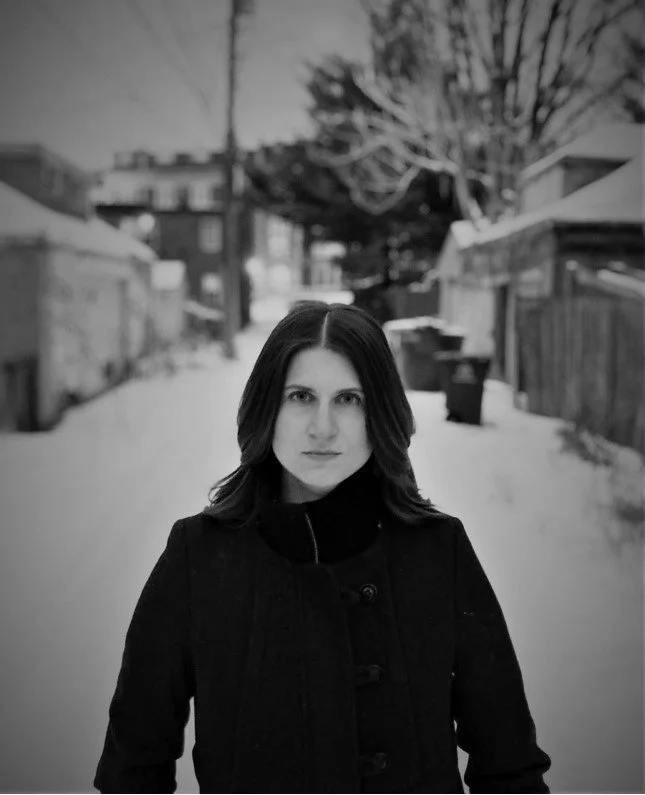
Nogay is a Pushcart Prize and Best Microfiction nominated writer from Ohio. She is the author of the micropoetry chapbook under fire under water (tiny wren, 2022) and is the microeditor of Identity Theory. With Naming a Dying Thing, Nogay avows the labor of motherhood and loss, bears the weight of a changing world, and unspools the taut line of memory, leaving the frayed edges to rest out in the sun.
Melissa Nunez makes her home in the Rio Grande Valley region of south Texas, where she enjoys exploring and photographing the local wild with her homeschooling family. She writes an anime column at The Daily Drunk Mag and is a prose reader for Moss Puppy Mag. She is also a staff writer for Alebrijes Review and interviewer for Yellow Arrow Publishing. You can find her work on her website at melissaknunez.com/publications and follow her on Twitter @MelissaKNunez and Instagram @melissa.king.nunez.
*****
Yellow Arrow Publishing is a nonprofit supporting women-identifying writers through publication and access to the literary arts. You can support us as we BLAZE a path for women-identifying creatives this year by purchasing one of our publications or a workshop from the Yellow Arrow bookstore, for yourself or as a gift, joining our newsletter, following us on Facebook or Instagram, or subscribing to our YouTube channel. Donations are appreciated via PayPal (staff@yellowarrowpublishing.com), Venmo (@yellowarrowpublishing), or US mail (PO Box 65185, Baltimore, Maryland 21209). More than anything, messages of support through any one of our channels are greatly appreciated.