Inhabiting Your Voice: A Conversation with Minyong Cho
What was my father doing in his room alone? I imagined him shivering and whining like a scared cat behind the closed doors. I should have thrown away his wig like I emptied his soju bottles in the toilet.
And I wondered what Jiyoung saw.
“Wig”
Minyong Cho is a Korean-born writer and scholar whose work is shaped by memory, migration, and multilingualism. Born and raised in Seoul, her family later immigrated to the U.S., where her early experiences sparked a trajectory from rumination to research and ultimately personal resolution. Her search for answers about the role of abuse in her childhood home and her journey to study the compelling visual cultures of the Middle East collide to create an intimate and unflinching voice.
Wall Down Ramallah, which will be published by Yellow Arrow Publishing in July 2026 and is now available for preorder at yellowarrowpublishing.com/store/wall-down-ramallah-paperback, reclaims personal narrative, explores fragmented identity, and illuminates an underrepresented yet powerful perspective. The memoir invites readers to reconsider the concepts of belonging, resilience, and closure, and to recognize the power of owning your past and present.
Melissa Nunez, Yellow Arrow interviewer, and Cho connected to discuss the role of language, memory, and trauma in shaping selfhood and lived experience. They also reflected on the major themes of the memoir, including connections between personal and political histories, and the importance of women—especially immigrant women—authoring their own stories.
Who are some women-identified writers who inspire you?
My favorite book ever is Nervous Conditions by Zimbabwean author Tsitsi Dangarembga. Her clear, controlled voice, loaded with implied turmoils, gives me the chills. Shin Kyung-sook can describe how it feels to be a Korean woman like no other, especially in her Please Look After Mom. I also admire Julie Alden Cullinane, the author of Yellow Arrow’s chapbook Ghosts Only I Can See. Her story of taking pearls off a necklace one by one transported me to an unfamiliar place, which I would like to emulate in my writing.
Why did you pursue a PhD in Islamic art history?
I took a term off in college to visit Cameroon, where I saw a mosque for the first time. I heard azan from a gray bridge over a waterless river, in awe of the jewel-like textiles that adorned those headed toward the mosque. I knew I couldn’t live without studying it.
How did you hear of Yellow Arrow and what led you to submit your chapbook?
I was looking for independent publishers for Wall Down Ramallah and found Yellow Arrow on pw.org. It immediately appealed to me as a nonprofit that publishes female authors, so I submitted within days.
Can you share with us the process of selecting the cover art for your chapbook?
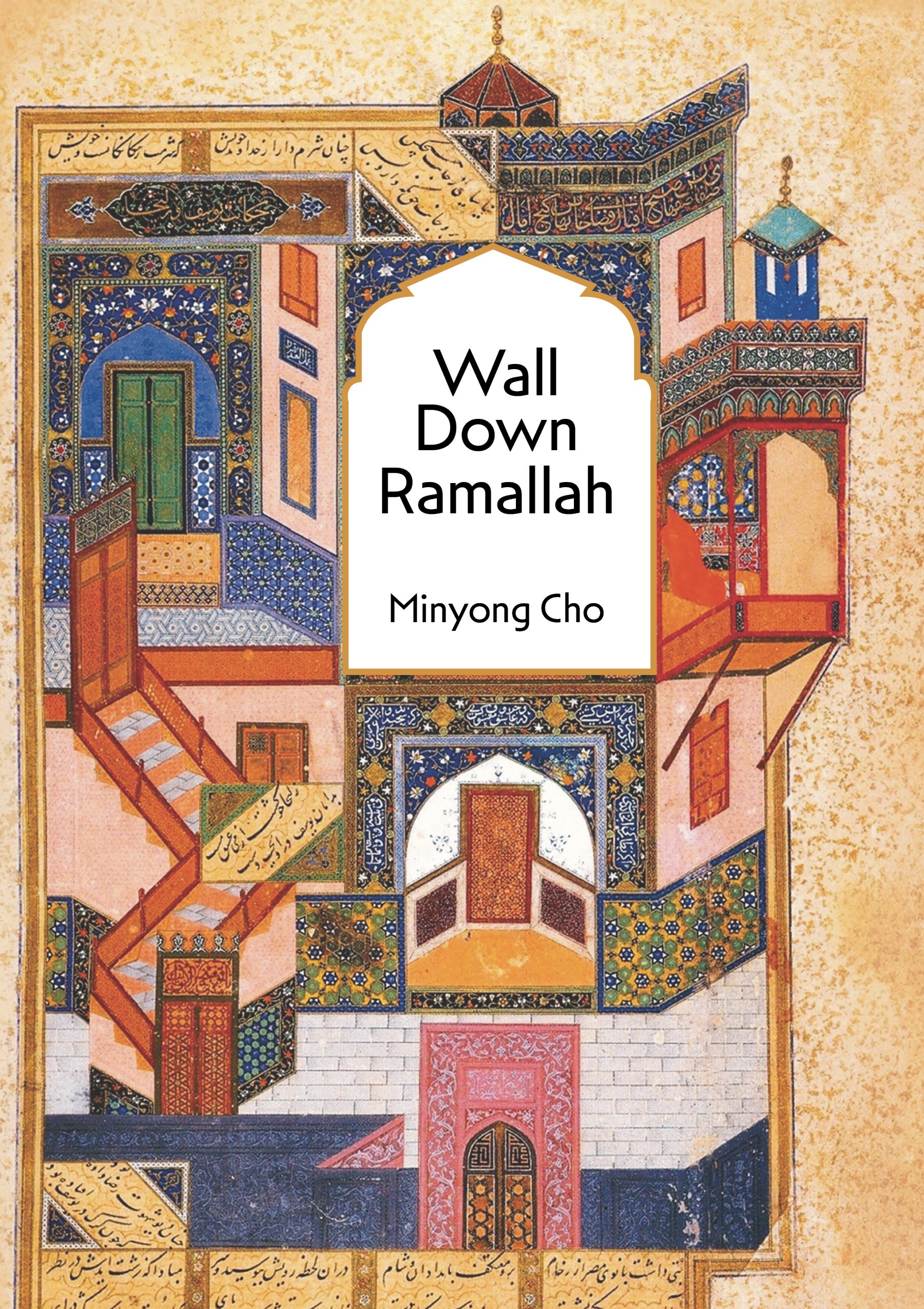
A 15th-century painting of Yusuf fleeing Zulaikha by Kamal Al-Din Behzad has a claustrophobic interior space that matches the tone of Wall Down Ramallah, so I asked Yellow Arrow creative director Alexa Laharty to use it as an inspiration for the book cover. It turns out this image is in the public domain, so Alexa added the title and my name to one of the depicted rooms to create the best cover for my book.
As a language learner myself, I am always intrigued and amazed by those who speak multiple languages. Can you speak a bit about your experience learning languages and how it has impacted your creative perspective and writing processes?
Learning English was difficult, and I thought I would never be able to understand anyone. It took years to finally feel comfortable speaking English, but then after that, learning a third, fourth, or fifth language wasn’t as difficult. Because Korean and English use completely different scripts, picking up the Arabic or Chinese scripts, for example, was not a great hurdle for me. Reading medieval manuscripts for my PhD research was something else, though, and made me see the historical dimension of a language.
Multilinguality is central to who I am as a person and shapes everything I do, including writing. Switching between languages allows me to become a different version of myself. I am always fragmented in a way because no one language can express all my thoughts and feelings. I try not to translate between myselves, which I believe makes my voice unique.
Beneath our composed faces, however, lurked old, rotting fractures in our spines, like my memories from childhood.
“Checkpoint”
There are a lot of subtle yet strong connections between political trauma (war and oppression) and domestic trauma (physical and emotional abuse) in your writing. Can you discuss what connects these traumas for you and how you overcome residual negativity and triggers?
This connection is one of the themes of Wall Down Ramallah. Political trauma is just as internalized as domestic trauma, and statehood deeply affects family dynamics. Collective memories of political trauma are not easily forgotten, similarly to personal memories of domestic trauma.
I know the word “overcome” is used often in this context, but I’m not sure if anyone actually “overcomes” negativity or triggers. More accurately, one learns to live with them, just as an amputee might adapt physically and mentally to a life without a limb.
This idea of being between homes is very poignant in a time with many issues around the world resulting in displacement, immigration, and other complications that lead to a loss of a sense of belonging. What encouragement can you give to those dealing with these issues?
Displacement and migration have formed much of human history, moving us to new environments and redistributing powers among us.
To a degree I feel that many of us today demand a sense of belonging as a requirement for happiness. Though it’s nice to have, there are also benefits without it. For example, we can empathize better with others and grow our character through changes. Being between homes for decades was a way for me to exist as an adult survivor of child abuse. It served as a liminal space I needed to transform from a victim to an independent thinker.
This is not to undermine how painful it is to have one’s home wrecked or to be uprooted without a guarantee to come back. Once safety is stripped away, it is no longer a problem of belonging but more of survival. In that kind of dire situation I focused on survival first. I hope nobody has to deal with that. If I can offer a word of encouragement, it does get better after, and there will be an after if you survive.
To me, “home” meant nothing. Moving was more like home. It was comforting to be on the way. I belonged in transit, in the darkness between houses.
“Ongdalsam”
Wall Down Ramallah is composed of many short chapters, flash narratives and slices of your life that encapsulate some very big events and powerful themes. Can you talk about how you organized this?
I first wrote down whatever came to my mind about a turning point in my life in 2007–2008, before which I was obsessed with my childhood, and after which I rarely thought about it. As a visual person, I had mental pictures of this transition, so it was easy for me to organize them into chapters. Through this structure I wanted to convey a loss of control, a sense of fragmentation, and a nostalgic yet melancholic tone.
The memoir ends at a place of some closure for the narrator but not complete resolution for the reader. What would you want the audience to come away with after having read your work?
The audience can come away with anything. In fact, I hope they see things I never imagined when writing Wall Down Ramallah.
What I think they might come away with is that we all write our own histories, and what we choose to remember is significant. Sometimes apologies, explanations, or facts will not bring us a closure we seek. A resolution can look different for each individual.
What advice do you have for fellow women-identified writers? Any advice specifically for those writing about difficult topics?
I have more advice for female immigrants whose mother tongue is not English, since all topics are difficult to write for us. From early on we are told our English isn’t good enough, which paralyzes us forever, even after we learn to speak English well. When I first started writing a few years ago, I kept telling myself my voice is different and is needed in English literature. My motivation comes from not wanting my story to be told by someone else, who is born and raised in the U.S. Along with all the other female immigrants, I would love to start a movement to write our stories ourselves to present our perspectives in our voices directly to the world.
Do you have any projects in the work you would like to share with our audience?
Yes! I’m writing a full-length novel. It’s a dual narrative and deals with mortality and secrets. An aging professor leans to her intellect while struggling to keep down her secret desire to break free from her public image in the U.S. In her visit to Korea to find a place to retire, she engages in intimate online conversations with her former student, a recent college graduate looking for a job. He doesn’t tell her he is in multiple online relationships, one of which is becoming violent, and he is experiencing episodes of psychosis, especially after his dog’s death. She has to choose between pursuing taboo love and staying in Korea, or she is doomed to continue on as before. He, on the other hand, fails to get a job or stability to his dismay, falls deeper into derealization, and shatters their beliefs.
I’m also rewriting Wall Down Ramallah in Korean, hoping to publish it in Korea.
Thank you, Nunez and Cho, for such a thoughtful conversation. You can order your copy of Wall Down Ramallah from Yellow Arrow Publishing at yellowarrowpublishing.com/store/wall-down-ramallah-paperback.
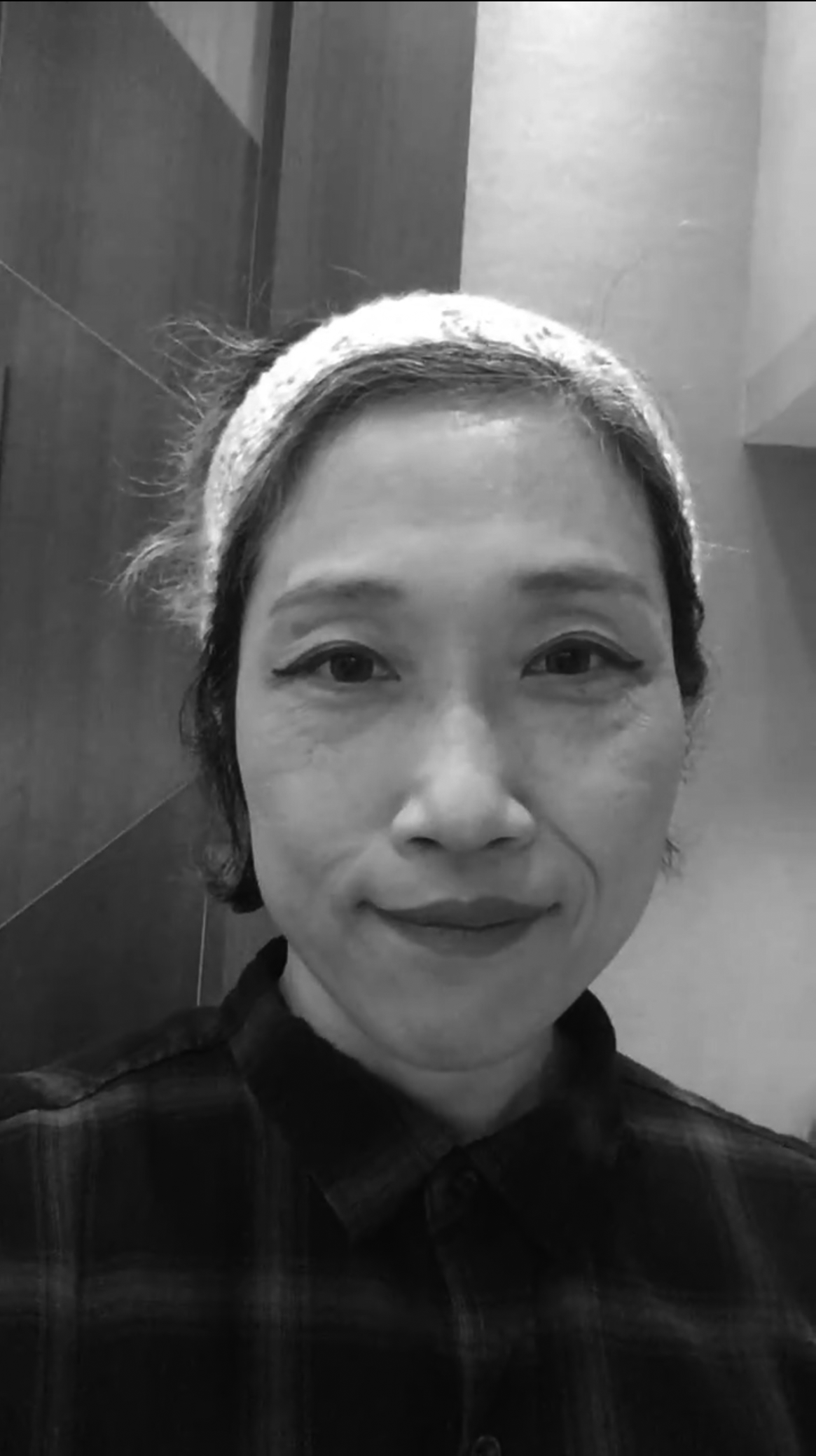
Born in Seoul, Korea, Minyong Cho immigrated to California when she was 16. In 2007, then 32 years old, she moved to the West Bank to finish her PhD dissertation in Islamic art history. There, one question about her past gnawed at her: why did she experience abuse as a child but not her sister? In Wall Down Ramallah, Cho alternates memories of Korea with her life in Palestine, eliciting feelings of being completely and permanently outside any “home.” In liminal spaces like the Qalandia military checkpoint and the haunted hallways of a Jerusalem dormitory, and through the thin walls of the houses she moved through, she pieced together what her parents might have been hiding behind closed doors. The result of her profound, heartbreaking obsession with her personal history is Wall Down Ramallah.
Melissa Nunez makes her home in the Rio Grande Valley region of south Texas, where she enjoys exploring and photographing the local wild with her homeschooling family. She writes an anime column at The Daily Drunk Mag and is a prose reader for Moss Puppy Mag. She is also a staff writer for Alebrijes Review and interviewer for Yellow Arrow Publishing. You can find her work on her website at melissaknunez.com/publications and follow her on Twitter @MelissaKNunez and Instagram @melissa.king.nunez.
*****
Yellow Arrow Publishing is a nonprofit supporting women-identifying writers through publication and access to the literary arts. You can support us as we LUMINATE a path for women-identifying creatives this year by purchasing one of our publications or a workshop from the Yellow Arrow bookstore, for yourself or as a gift, joining our newsletter, following us on Facebook or Instagram, or subscribing to our YouTube channel. Donations are appreciated via PayPal (staff@yellowarrowpublishing.com), Venmo (@yellowarrowpublishing), or US mail (PO Box 65185, Baltimore, Maryland 21209). More than anything, messages of support through any one of our channels are greatly appreciated.