To Outline or Not to Outline: A Writer’s Neverending Question
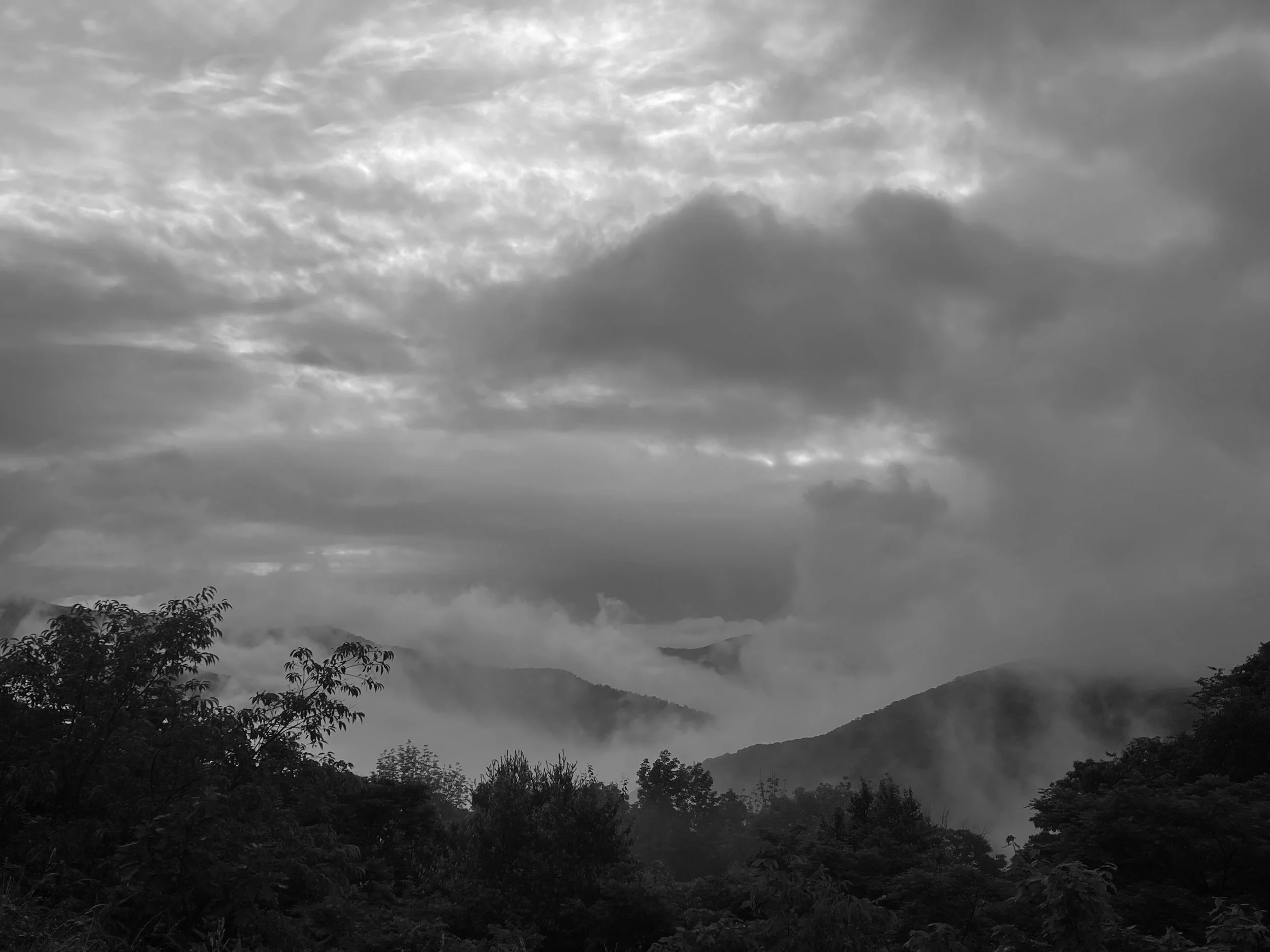
Shenandoah National Park, Virginia, 2020
By Camille Leah (Cam) Barrón, written April 2026
Shakespeare gave us the question of “to be or not to be.” Writers everywhere have their own existential crisis: to outline or not to outline.
If you’ve ever stared at a blank page wondering whether to map out your ideas first or just dive in, you’re in good company. The answer—as with most things in writing—is that it depends.
Academic Writing: Yes, Always Outline
When it comes to academic writing, I will spare you the suspense: outline. Every time, without exception.
Academic writing is often, at its core, rhetorical in nature. And rhetoric has given us a gift that too few students often use: classical arrangement theory. The rhetorical canon of arrangement (dispositio) refers to the art of selecting and ordering persuasive strategies, and classical arrangement theory provides a blueprint that has stood the test of time. (No, really. Aristotle taught us this in the fifth century BCE.) The structure goes by its Latin names—exordium, narration, partition, confirmation, refutation, peroration—but you likely know its modern descendant: the five-paragraph essay.
Here’s one of the cool things about arrangement: because rhetoric is entirely audience- and goal-driven, you don’t have to follow the formula rigidly. You can reorganize, minimize, or even remove sections to suit your argument.
After years of living and breathing rhetoric as a writing major, here is my recipe for a successful academic paper:
Step One: Draft a working thesis. It doesn’t have to be perfect; that’s why it’s called working. You just need something to point you in a direction.
Step Two: Research, research, research. Cast a wide net. Take advantage of scholarly databases you may have access to. Collect every quote you might possibly need, even ones you’re not sure about yet. While you’re at it, start a separate document for your works cited (references)—you’ll thank yourself later.
Step Three: Build a rough outline. List out the sections of arrangement you’ll need. Divide your confirmation (the body of your argument) into the main points of your thesis. Drop your quotes directly into the sections they best support. Having everything in one place before you start writing is a game changer.
Step Four: Write a detailed sentence outline. This was an addition to my process as suggested by one of my favorite rhetoric professors a few years ago, and it has been even more helpful as time goes on. Go through your rough outline and write a topic sentence for each point. Underneath each topic sentence, explain your points in full sentences. For every quote, write a sentence that connects it back to your central argument.
Step Five: Write the paper. If you’ve done steps one through four properly, this stage is almost anticlimactic. You can copy and paste much of your detailed sentence outline directly onto your draft. Add transitions, let the writing breathe, and you’ll find your paper is almost done.
Step Six: Revise and edit, then edit and revise again. Print your work and read it aloud—your ears can catch errors your eyes might skip over on a screen. Time management is key because returning to a draft after even one day gives you a fresh perspective that no amount of time staring at a screen can replicate.
I’ll admit it: I like outlining so much that I do it twice. Academic writing is focused, regimented, and produces consistent, defensible results when done properly. When the stakes are high and clarity is nonnegotiable, the outline is your best friend.
This kind of writing demands full concentration, and the space where it happens should reflect that. For me, that means my home office or the quiet floor of the library with noise-cancelling headphones on. I find that having my environment as structured as the work itself produces the best results.
Creative Writing: It Depends
Creative Nonfiction: Sometimes
For creative nonfiction, I usually outline, though not with the same rigor as with academic writing. In fact, I wrote an outline for this very blog post. When I’m working on creative nonfiction, I typically follow steps one, two, three, five, and six, from the academic process, skipping the detailed sentence outline. The goal is simply to have a map: To know what I want to say and make sure I don’t forget anything important once I’m writing.
Creative nonfiction writing lives in the in-between space. It demands the honesty and structure of a good argument, but it breathes like a story. The outline keeps me honest without constraining my voice.
With creative nonfiction, where I write is more flexible—my office, a coffee shop, out in nature. Unlike academic writing, I don’t need silence and a closed door. It comes down to what the piece needs and what I need to have in front of me while I’m writing. Sometimes that’s quiet. Sometimes that’s a little background noise and a cup of tea.
Poetry: Unequivocally, No
I love rhetoric. It’s the form I spend most of my time working in. But poetry was my first love, and it follows entirely different rules. Or, more importantly, that the poet makes the rules.
For poetry, I outline nothing. Ever.
Inspiration for poetry comes from everywhere: a snip of a song, a road sign glimpsed from a car window, a thought that surfaces in the shower, a conversation overheard in line for coffee, something seen in nature that catches the light in just the right way. Pinning that down into a formal structure before you’ve written a single line would be like trying to catch fog.
What I do instead is keep running lists—in notebooks, on my phone, on scraps of paper wherever I happen to be—full of words and phrases captured in the spark of the moment to return to later. These are the seeds, though, not the plan.
And then, when it’s time to actually write, I go outside.
The Appalachian Mountains at Dawn
During the pandemic in 2020, I found something that changed the way I understood my own writing practice.
I started making early morning drives out to Shenandoah National Park in Virginia. I would leave early enough to arrive at the crack of dawn, before the park officially opened and just in time to watch the sunrise. I’d back my car up to one of the 75 overlooks along Skyline Drive, open the trunk, and sit in the back, looking out at the Appalachian Mountains rolling away into the distance.
I brought a notebook. And I wrote.
It didn’t have to be good. I wasn’t chasing a poem with a specific shape or a particular meaning. I just wanted to look and feel and write. To let the mountains and the light and the crisp morning air move through me and see what came out on the page.
I did this at least once a week for months.
That practice is still, to this day, my favorite way to write poetry: to be in nature, to connect with something larger than myself, and to just let the writing follow. There’s no outline for that. There can’t be.
So, to Outline or Not to Outline?
It depends.
It depends on your goal, your genre, your audience, and what the work demands of you, in a given moment. Academic writing calls for structure because structure is part of the argument. Creative nonfiction benefits from a loose map. Poetry resists being planned.
What I’ve learned is that the question isn’t really about outlines at all. It’s about knowing yourself as a writer: understanding when you need scaffolding, and when you need to let it go and trust your intuition.
Sometimes the best writing comes from a careful plan executed with discipline. And sometimes it comes from sitting in the back of your car at dawn, watching the sun rise over the mountains, and just writing down whatever comes.
This is my process—one writer’s way of moving through the world and onto the page. It doesn’t have to be yours. Maybe you’re a pantser who writes every first draft in a white-hot rush and sorts it out later. Maybe you color-code your outlines and laminate them. Maybe you’re like me and you do both.
I will always advocate for outlines loudly, and in most genres, without apology. But here’s what I keep coming back to: the most important thing about the writing process is that it happens. Whatever gets you to the page—and keeps you there—is the right process for you.
Camille Leah (Cam) Barrón (she/her) is a junior at Loyola University Maryland majoring in writing with a minor in gender & sexuality studies. She grew up devoting much of her time to reading, writing, and playing lacrosse and has since developed a deep commitment to women’s empowerment and language as a tool for connection, argumentation, and social change. Her academic and creative work centers on rhetoric and poetry with a particular focus on conversations surrounding her Méxican heritage, mental health, gender-based violence, and feminist thought.
*****
Yellow Arrow Publishing is a nonprofit supporting women-identifying writers through publication and access to the literary arts. You can support us as we LUMINATE a path for women-identifying creatives this year by purchasing one of our publications or a workshop from the Yellow Arrow bookstore, for yourself or as a gift, joining our newsletter, following us on Facebook and Instagram, or subscribing to our YouTube channel. Donations are appreciated via PayPal (staff@yellowarrowpublishing.com), Venmo (@yellowarrowpublishing), or US mail (PO Box 65185, Baltimore, Maryland 21209). More than anything, messages of support through any one of our channels are greatly appreciated.