Yellow Arrow Publishing Blog
A Delicate Art Form: CNF Interviews
By Siobhan McKenna, written July 2021
from the creative nonfiction summer 2021 series
In the artistic realm, structure often surprisingly enables creativity. Within poetry many iconic poems follow specific meters, famous painters learned the basics before venturing into abstract styles. And conducting an interview for a creative nonfiction piece is no different. The interview is a delicate balance between applying a clear form to your conversation while also allowing yourself, as the interviewer, to flow with remarkable or unforeseen information. Below, we dive into a few guidelines to conduct a successful and thoughtful interview.
1. Research
For an interview to go smoothly, a writer sets up the conversation for success through their preparation. Before the interview, a writer must be familiar with the background of their subject and understand the basic context surrounding the interview by conducting research on their subject. Within the Yellow Arrow community, research often looks like reading brief bios or the material of an upcoming chapbook to be published by one of our writers or poets.
2. Prepare Questions
When researching, it is helpful to take note of significant themes or intriguing sections and then form questions that you think would lead to an interesting conversation. Preparing questions ahead of the conversation is vital because they help outline how you would like your conversation to go. Still, if a conversation moves in a surprising way, it is beneficial to comment and ask follow-up questions rather than remaining attached to your script. In other words, be genuinely curious.
3. Be Human
Curiosity, as well as empathy, can transform a rigid Q&A session into an earnest and illuminating conversation. As the interviewer, responding with an emotional response—if moved—can shift the conversation to a more intimate place that may give rise to meaningful or surprising answers. While originally known for his outlandish questions and crude comments, Howard Stern evolved his interviewing style over the years to incorporate more empathy and to draw on personal experience. In a 2015 interview with Stephen Colbert, Stern asked Colbert about whether part of the reason that he became a comedian is that he felt compelled to “cheer up” his mother after his father and two brothers died in a plane crash (2). While hesitant at first, Colbert eventually comments, “There’s no doubt that I do what I do because I wanted to make [my mother] happy—no doubt” and follows up with a question for Stern:
COLBERT: How [did] you know to ask that question?”
STERN: Because I spent many years cheering up your mother, as well. I didn’t want to tell you this.
(LAUGHTER)
STERN: No, no. What happened—my mother lost her mother when she was nine. And my mother became very depressed when her sister died, and I spent a lot of years trying to cheer up my mother. And I became quite proficient at making her laugh and doing impressions and doing impressions of all the people in her neighborhood.
In the conversation that follows, Stern and Colbert discuss how their experiences with trying to make their mothers happy shaped their relationship with women and their careers. If not for vulnerability on both sides of the conversation, this insightful glance into how some people may process and transform tragedy as young children and their relationship to their parents could have been glossed over.
4. Build Rapport
Nevertheless, deeper conversations like the one between Colbert and Stern depend on the rapport that you have built with the interviewee. According to Terri Gross, “Tell me about yourself” are the only four words that you need to know in order to conduct an interview (1). Gross, the host of NPR’s Fresh Air, has been conducting interviews on the segment since the 1980s and insists that opening with a broad introduction allows the subject to begin telling their story without the interviewer posing any assumptions. Being broad can allow the interviewee to define how they view themselves and their work and lead to creating a safe space where they will feel not feel judged by their answers, but rather better understood.
5. Transcribe
Once finished, there are several ways to transcribe your discussion into a creative nonfiction piece. One method can be to write a brief introduction of your subject and conversation followed by a direct transcript, which alone can be very poignant. Another common method is to paraphrase your conversation and use direct quotes to emphasize certain points in conjunction with your own observations when conducting the interview. Rachel Kaadzi Ghansah’s interview of Missy Elliot does an excellent job of showcasing how to include biographical information, her questions, and her reflections of her subject as she sat on set for one of Missy’s photoshoots (4):
Across the street from the photo studio, the Chelsea Piers are turning themselves over to the night. And Missy’s publicist and team are in a hurry to make sure I’m not taking up too much of her time, but Missy herself doesn’t seem rushed to go anywhere yet. If anything, she seems deliberate. She sips through a straw from a cup of fresh-squeezed juice, and then she holds the cup with both hands. Her baseball cap is cocked to the side, and her two-inch nails are painted iridescent blue. Her legs are open but locked at the ankle. She looks in command—even more so because she is smiling.
I want to know more about her absences from the spotlight. What is it like to reenter a world where Twitter can determine who becomes president, where music can feel like it was created to last for exactly for one minute and then disappear into the ether?
Yeah, it is a brave new world, she agrees. But she isn’t despondent. Not at all.
“One thing I won’t do is compromise.” She takes another sip of juice and thinks for a moment. “I will never do something based on what everybody else is telling me to do. . . . I’ve been through so many stumbling blocks to build a legacy, so I wouldn’t want to do something just to fit in. Because I never fit in. So. . . .”
I wait for her to finish her sentence, but she doesn’t. Her smile just grows into a laugh, a shy one, and then she shrugs. As if to say, take it or leave it, love me or leave me.
6. Final Notes
At Yellow Arrow, we love that as a style of creative nonfiction, the interview allows the writer to create a unique piece that not only tells us about the subject but can delve into deeper truths about our society through the conversation. We often use the interview when promoting new books to help illuminate the book’s themes and to gain a glimpse into the thoughts of the writer before releasing their work. Take a glance back at an interview with Patti Ross from February 2021, whose chapbook, St. Paul Street Provocations, was just published by Yellow Arrow. And make sure to read next week’s blog from an interview I did with Ute Carson (find her bio here!), whose chapbook, Listen, will be published by Yellow Arrow Publishing in October 2021. Presale begins next week!
Delve into Some Other Interview Styles:
Profile: Rachael Kaadzi Ghansah: Her Eyes Were Watching the Stars: How Missy Elliot Became an Icon, https://www.elle.com/culture/celebrities/a44891/missy-elliott-june-2017-elle-cover-story/
Radio Show Transcript: Terri Gross. ‘Fresh Air’ Favorites: Howard Stern, https://www.npr.org/2019/12/31/790859106/fresh-air-favorites-howard-stern
Traditional Q&A: Jordan Kisner. tUnE-yArDs Made a Pop Album About White Guilt—And It’s Fun as Hell, https://www.gq.com/story/tune-yards-made-a-pop-album-about-white-guilt-and-its-fun-as-hell
(1) Kerr, Jolie. “How to Talk to People, According to Terry Gross.” The New York Times. 17 Nov. 2018. https://www.nytimes.com/2018/11/17/style/self-care/terry-gross-conversation-advice.html
(2) Gross, Terri. “‘Fresh Air’ Favorites: Howard Stern.” NPR. 31 Dec. 2019. https://www.npr.org/2019/12/31/790859106/fresh-air-favorites-howard-stern
(3) Friedman, Ann. “The Art of the Interview.” Columbia Journalism Review. 30 May 2013. https://archives.cjr.org/realtalk/the_art_of_the_interview.php
(4) Kaadzi Ghansah, Rachael. “Her Eyes Were Watching the Stars: How Missy Elliot Became an Icon” Elle. 15 May 2017. https://www.elle.com/culture/celebrities/a44891/missy-elliott-june-2017-elle-cover-story/
Siobhan McKenna was born and raised in the suburbs of Philadelphia. She stumbled upon Yellow Arrow while living in Baltimore and has loved every minute of working as an editorial associate. Siobhan is currently working as a travel ICU nurse in Seattle and is loving biking and hiking throughout the Pacific Northwest. She holds a bachelor’s degree in writing and biology from Loyola University Maryland and an MSN from Johns Hopkins University. You can follow her on Instagram @sio_han.
******
Thank you to everyone who followed along with our creative nonfiction summer 2021 series. Yellow Arrow Publishing is a nonprofit supporting women writers through publication and access to the literary arts. Thank you for supporting independent publishing.
Yellow Arrow Journal Submissions are Now Open!

Yellow Arrow Publishing is excited to announce that submissions for our next issue of Yellow Arrow Journal, Vol. VI, No. 2 (fall 2021) is open September 1–30 addressing the topic of “belonging-ness,” exploring what it means to belong or un-belong, our nearness or distance (intimacy or alienation) from others and ourselves.
This issue’s theme will be:
Anfractuous:
full of windings and intricate turnings
things that twist and turn but do not break
How has your “belonging-ness” been shaped by your own personal life journey? Have you taken any sharp unpredictable turns, or has it been a slower accumulation or a shedding?
Is it necessary to “belong” to be happy? How has your sense of who you are been a process of “un-belonging”?
How have your circumstances (the land you live in or don’t live in/your family history) or your conscious choices (your chosen family/career/passions) tempered or shaped your understanding of your own belonging?
Yellow Arrow Journal is looking for creative nonfiction, poetry, and cover art submissions by writers/artists that identify as women, on the theme of Anfractuous. Submissions can be in any language as long as an English translation accompanies it. For more information regarding journal submission guidelines, please visit yellowarrowpublishing.com/submissions. Please read our guidelines carefully before submitting. To learn more about our editorial views and how important your voice is in your story, read About the Journal. This issue will be released in November 2021.
We would also like to welcome this issue’s guest editor: Keshni Naicker Washington. Keshni considers her creative endeavors a means of lighting signal fires for others. Born and raised in an apartheid segregated neighborhood in Kwa-Zulu Natal, South Africa, she now also calls Washington, D.C. home. And after nine years here has finally gotten used to Orion being the right way up in the night sky. Her stories are influenced by her evolving definition of home and the tides of political and social change that move us all. She is an alumnus of VONA and TIN HOUSE writing workshops. Connect with her keshniwashington.com and on Instagram @knwauthor. You can also learn more about Keshni through her Vol. V, No. 3 (Re)Formation piece “Alien” and her Yellow Arrow Journal .W.o.W. #20.
The journal is just one of many ways that Yellow Arrow Publishing works to support and inspire women through publication and access to the literary arts. Since its founding in 2016, Yellow Arrow has worked tirelessly to make an impact on the local and global community by advocating for writers that identify as women. Yellow Arrow proudly represents the voices of women from around the globe. Creating diversity in the literary world and providing a safe space are deeply important. Every writer has a story to tell, every story is worth telling.
You can be a part of this mission and amazing experience by submitting to Yellow Arrow, joining our virtual poetry workshop, volunteering, and/or donating today. Follow us on Facebook and Instagram to learn more about future publishing and workshop opportunities. Publications are available at our bookstore and through most distributors.
*****
Yellow Arrow Publishing is a nonprofit supporting women writers through publication and access to the literary arts. To learn more about publishing, volunteering, or donating, visit yellowarrowpublishing.com.
Getting Personal with Personal Narratives
By Katherine Chung, written July 2021
from the creative nonfiction summer 2021 series
We often forget how important events and celebrations can be. Sometimes we forget to write things down or take a photo of an event. Oftentimes, we do not realize how important something, or someone, is until we lose them. While this last sentence describes my life perfectly, it also sounds like something that we may hear from our parents or mentors.
Personal narratives are like short chapters of an individual’s complete memoir. This specific style of writing allows people to recall a memory and share a personal experience through writing. Such short stories can be about a specific experience and can be intense and hard to comprehend. And wonderful.
Typically, authors write in the first person when they are describing personal experiences. And by writing from their unique point of view, authors can use their five senses to vividly describe a scenario to their audience. This descriptive language also allows the audience to step into the authors’ shoes. Authors are able to set a rich setting so that the audience knows when and where (and why) the personal narrative took place. Some authors like to add quotes and photos to their narratives to make their stories feel more personal. And sometimes some authors use their photos as cover images while others may put a collage of photos at the end of the story. Each author who writes a personal narrative can be as specific or general as wanted to tell a story.
Most personal narratives are written in prose and are 1–5 pages long. They do not need to be exceptionally long since most events written about occur in a quick instance, such as a few hours.
The most common technique used for personal narrative writing is storytelling, which allows authors to retell a story that has made them who they are today or allowed them to overcome a life obstacle. It may even be difficult for an author to recall a memory from the past to write about, but the storytelling element allows an author to add a fictional aspect to a personal story. For example, some authors choose to change a person’s name for the sake of privacy. In another example, an event could be boring so fictional additions might spice things up.
By reading more personal narratives, readers can discover more about others, whether different or alike. Grow as readers and learn about new topics and events that they never knew about before. And as we know, it can sometimes be easier to read an excerpt or a chapter rather than an entire biography about an individual. No one’s life is ever happy and easy. Oftentimes, it is easier to read a person’s story in small, narrative doses.
As a writer, I believe that it is important to write personal narratives, even though they may not be for everyone. I have been through a lot in my short lifetime and believe that it is important to share the darkest (along with the brightest) moments so that others do not have to feel alone. I find it is difficult to write about the saddest and most tragic moments that have happened to me. It is also hard to read about those moments.
But writing personal narratives helps me gain a better mindset about how I want to share my story. And knowing that some people relate to my stories while others may learn something entirely new about themselves is incredible. That is the power of sharing memories and narratives, whether through a short vignette or a longer memoir.
Even the most famous writers struggle to write their own narratives. Here are a few of my favorite personal narratives and memoirs if you are interested:
I Know Why the Caged Bird Sings by Maya Angelou
Crying in H Mart by Michelle Zauner (from The New York, 2018)
Disability Visibility: First Person Stories From the 21st Century edited By Alice Wong
Peach: an Exceptional Teen’s Journey for Universal Acceptance by Jenevieve Woods
Katherine Chung is a Senior at Towson University studying English and Creative Writing. She will graduate in December 2021. Katherine currently lives in Gaithersburg, Maryland with her parents. During her free time, she loves to write short stories and memoirs, read young adult books, and update her blog. To read her blog, visit katchung13.wixsite.com/website.
******
Yellow Arrow Publishing is a nonprofit supporting women writers through publication and access to the literary arts. Thank you for supporting independent publishing.
Meet an Artist: Megha Balooni

from the 2021 art series
Storytelling takes place in many different forms, not just writing. When an artist shares a piece with others they also share a piece of who they are with their audience. We see the expression of their aesthetic, culture, and identity woven into their work.
This is definitely visible in the artwork for Yellow Arrow Journal. During each journal submission period, we ask for creative nonfiction, poetry, and cover art that reflects a chosen theme. We get incredible artwork created in various media and choose the one that best represents the theme.
To celebrate our talented cover artists, we will be releasing a series of blogs to share their stories and the importance that art has on their lives.
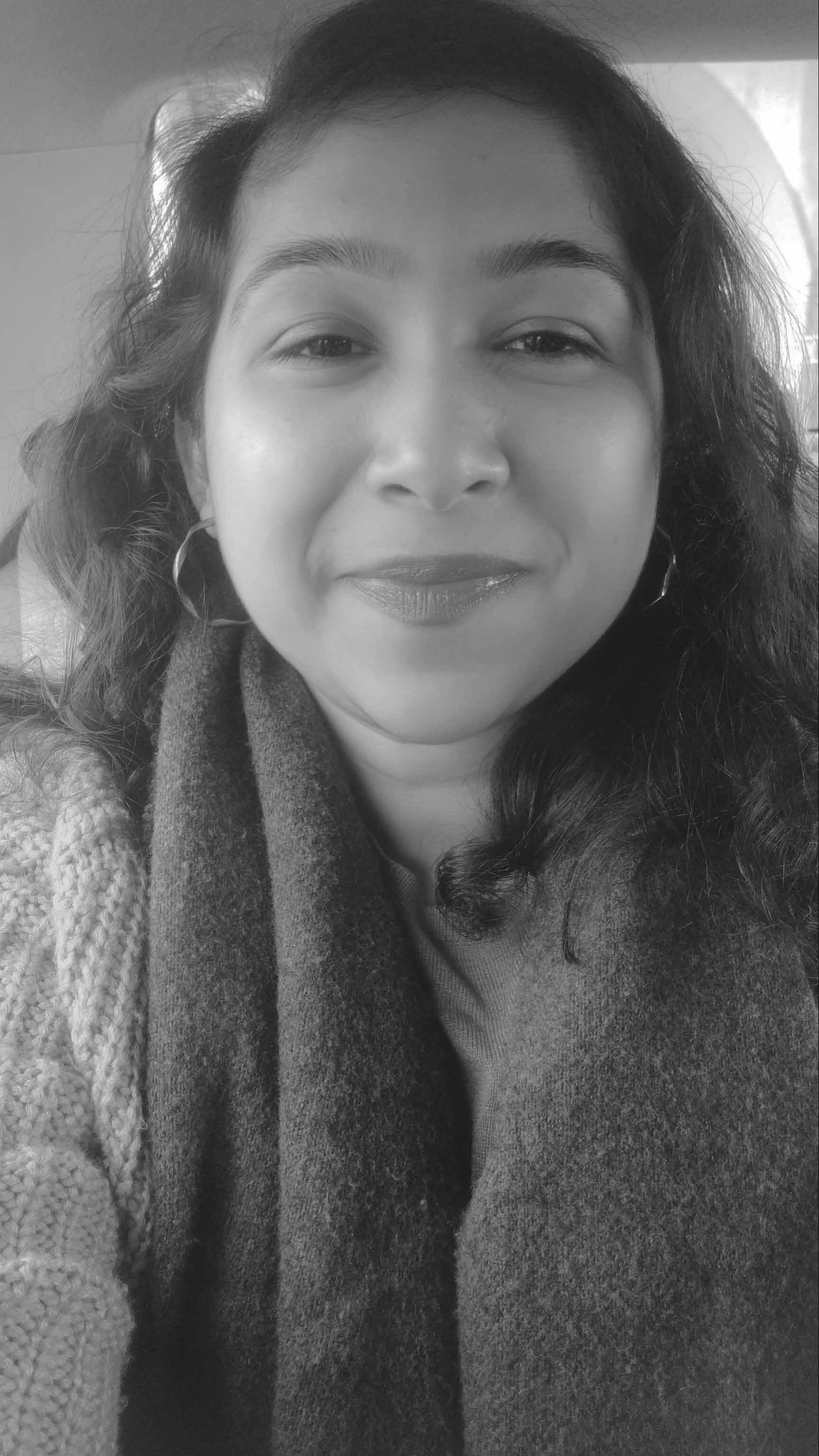
The fourth artist that we are featuring in our Art Series is Megha Balooni. Megha is an architect currently residing in India. Realizing her love for stories—written and visual—from early on, she believes these two mediums to be her most strong communications tool. Through her visual designs, she is striving to curate a more inclusive and optimistic world. Her works take inspiration from nature, emotions, and expressions. She also contributes to World Architecture Community, an online architectural publication platform, where she enjoys curating interviews. She enjoys reading, cooking, and spending time wondering. Her art piece, “Lidya,” was seen on the cover of Yellow Arrow Journal, Resilience: Vol. V, No. 1, Winter 2020.
You can find Megha at thelidyart.com or on Instagram and Facebook. And in September, you can see her incredible artwork on the covers of Yellow Arrow’s EMERGE zines: Pandemic Stories and Coming into View. More information about EMERGE will be available soon.
Megha recently took some time to answer a few questions for us.
What do you love most about art and why?
Just the fluidity and how there is no right or wrong in art. Humans are conditioned to abide by rules otherwise we would go bonkers. But with art, you can truly discover yourself. It can be a way for you to express and cope. It can be a way to feel good about yourself, it could be healing.
What are your top five tips for aspiring artists?

Some learnings that I can definitely say apply to all creative endeavors: make a vision board that includes your inspiration and aspirations, have faith in yourself and your abilities, allow yourself to learn and unlearn as you grow (shed that past skin if it doesn’t feel like you anymore!), there’s space for everyone to thrive, and don’t allow your insecurities project onto your personality. Things might seem rocky and too bright some days but if you keep pursuing, it will create a path for you. And lastly, love what you do!
In three words how would you describe your aesthetic in art?
My aesthetic takes inspiration from nature, emotions, and female expressions. It’s a culmination of what I’m feeling the most at the moment which contributes to the colour palette and textures.
Thank you, Megha for answering our questions. You can purchase a PDF of Resilience in the Yellow Arrow bookstore, along with other Yellow Arrow publications.
*****
The 2021 art series was created and put together by Marketing Associate, Michelle Lin. Yellow Arrow Publishing is a nonprofit supporting women writers through publication and access to the literary arts. Thank you for supporting independent publishing.
The Mesmerizing Power of Literary Journalism

By Siobhan McKenna, written June 2021
from the creative nonfiction summer 2021 series
“Frank Sinatra, holding a glass of bourbon in one hand and a cigarette in the other, stood in a dark corner of the bar between two attractive but fading blondes who sat waiting for him to say something. But he said nothing; he had been silent during much of the evening, except now in his private club in Beverley Hills he seemed even more distant. . . . Sinatra had been working in a film that he now disliked, could not wait to finish; he was tired of all the publicity attached to dating the twenty-year-old Mia Farrow, who was not in sight tonight. . . . Sinatra was ill. He was the victim of an ailment so common that most people would consider it trivial. But when it gets to Sinatra it can plunge him into a state of anguish, deep depression, panic, even rage. Frank Sinatra had a cold.”
~ Gay Talese, Esquire, 1966 (1)
I remember listening to the rich tone of Gay Talese’s voice as I walked between campus buildings during college. Through my earphones, This American Life played an entire podcast episode dedicated to Sinatra and had included Talese’s piece, “Frank Sinatra Has a Cold.” As I listened, I puzzled over how a writer could incorporate so many intimate details about the subject into his piece. How did he know what the “fading blondes” or even Sinatra were thinking? After all, the piece came about because Sinatra wouldn’t grant Talese an interview because his agency kept claiming Sinatra had a cold, therefore Talese interviewed anyone he could find who knew Sinatra (1). Amused and fascinated, I loved being immersed in the world of Sinatra through Talese’s vivid descriptions; I thought, is this what writing can sound like? Later, in a creative nonfiction class, I would come to study the same piece and discover that Talese’s “Frank Sinatra Has a Cold” is heralded as one of the most iconic examples of literary journalism.
Literary journalism is known by a variety of names including new journalism, narrative journalism, and literary nonfiction—to name only a few (2). Over the years, the exact boundaries of literary journalism have been subject to debate but broadly are described as nonfiction essays that employ fiction techniques to develop the reporting (3). Different techniques that literary journalists use include dialogue, first-person narration, and scene-setting for the piece to read like a novel (2).
Although literary journalism has been around for a long time with some scholars citing Mark Twain as an early example, the genre became more defined after Tom Wolfe and E.W. Johnson released The New Journalism in 1973 (2). The New Journalism was a collection of essays that included a piece the anthology was named for, by Wolfe, as well as 21 other works that fit Wolfe’s definition of literary journalism, by writers such as Talese, Truman Capote, Norman Mailer, and Joan Didion.
One of my favorite contemporary writers within this genre is Jordan Kisner. I love Kisner’s essays because of her ability to glide effortlessly between reporting and self-reflection—one of the gems that make literary journalism separate from traditional “unbiased” journalism. In her essay, “Las Marthas,” Kisner describes a Martha Washington pageant in the Texas border town of Laredo all the while inserting bits about her struggle with racial identity in order to make the piece fit into a larger context of what it means to be White, to be Hispanic, to be American in our country today (4). Other essays of hers find the seemingly incongruent connections between subjects: the opioid crisis in an Ohioan county and her mortality, the history of tattoos, and the quest to encapsulate that which is indefinable (5).
Kisner’s writing runs on the notion that “subjectivity [can] foster credibility,” something that Joan Didion helped pave the way for as she reported on such events like the Manson Murders and the chaos of 1960s Los Angeles with a front seat view from her own couch and neighbors’ living rooms in the Hollywood Hills (6). Didion capitalized on the concept that not all journalism must be written without feeling. Literary journalism takes you to the scene of the crime and candidly inserts emotions because humans fail time after time to be dispassionate creatures. Literary journalism’s brilliance lies in the spaces where the writing can transport the reader as we all try to make sense of our own place in the nooks and crannies of the world. And perhaps Didion defines literary journalism best of all when she begins her essay, “The White Album,” with the words:
We tell ourselves stories in order to live. . . . We look for the sermon in the suicide, for the social or moral lesson in the murder of five. We interpret what we see, select the most workable of the multiple choices. We live entirely, especially if we are writers, by the imposition of a narrative line upon disparate images, by the “ideas” with which we have learned to freeze the shifting phantasmagoria which is our actual experience. (7)
Dive into some literary journalism:
Gay Talese: “Frank Sinatra Has a Cold”
Jordan Kisner: “Las Marthas”
Joan Didion: “Holy Water”
Rachel Kadzi Ghansah: “A Most American Terrorist: The Making of Dylann Roof”
(1) Talese, Gay. “Frank Sinatra has a Cold.” Esquire. April 1966. www.esquire.com/features/ESQ1003-OCT_SINATRA_rev_
(2) Masterclass Staff. How to Recognize and Write Literary Journalism. 8 Nov. 2020. https://www.masterclass.com/articles/how-to-recognize-and-write-literary-journalism
(3) Keeble, Richard Lance. “Literary Journalism.” Oxford Research Encyclopedias. 30 July 2018. https://doi.org/10.1093/acrefore/9780190228613.013.836
(4) Kisner, Jordan. “Las Marthas.” The Believer. 1 Oct. 2019. https://believermag.com/las-marthas/
(5) Kisner, Jordan. Thin Places: Essays from the In Between. Macmillian, 2020.
(6) Whitefield, Jack. “New Journalism: What Can the Media Learn?” The Indiependent. 9 Feb. 2021. https://www.indiependent.co.uk/new-journalism-what-can-the-media-learn/
(7) Didion, Joan. “The White Album.” The White Album. Simon & Schuster, 1979. eBookCollection. (HooplaDigital).
Siobhan McKenna was born and raised in the suburbs of Philadelphia. She stumbled upon Yellow Arrow while living in Baltimore and has loved every minute of working as an editorial associate. Siobhan recently began working as a travel nurse in Seattle. As she moves to a different city every three months to work as an ICU nurse, Siobhan looks forward to writing about all that this crazy, broken, and beautiful country holds. She holds a bachelor’s degree in writing and biology from Loyola University Maryland and an MSN from Johns Hopkins University. You can follow her on Instagram @sio_han.
******
Yellow Arrow Publishing is a nonprofit supporting women writers through publication and access to the literary arts. Thank you for supporting independent publishing.
Meet an Artist: Ann Marie Sekeres

from the 2021 art series
Storytelling takes place in many different forms, not just writing. When an artist shares a piece with others they also share a piece of who they are with their audience. We see the expression of their aesthetic, culture, and identity woven into their work.
This is definitely visible in the artwork for Yellow Arrow Journal. During each journal submission period, we ask for creative nonfiction, poetry, and cover art that reflects a chosen theme. We get incredible artwork created in various media and choose the one that best represents the theme.
To celebrate our talented cover artists, we will be releasing a series of blogs to share their stories and the importance that art has on their lives.

The third artist that we are featuring in our Art Series is Ann Marie Sekeres. Ann Marie is an illustrator whose drawings have appeared in publications worldwide. She recently illustrated the cover for the samurai by Linda M. Crate, published by Yellow Arrow. She lives in the New York area and draws every day. Follow her work on Instagram @annmarieprojects and at annmarieprojects.com. Her art piece, “Couch,” was seen on the cover of Yellow Arrow Journal HOME: Vol. V, No. 2, Spring 2020.
Ann Marie recently took some time to answer a few questions for us.
If you weren’t an artist today, what would you be doing?

I’m 51. I think part of getting older is that you no longer identify yourself by one label or profession. I do a lot of different stuff. I’m an artist when I’m drawing. I’m a student when I try to speak French. It’s okay to do a million different things and some of them, not very well. I didn’t feel that way as a kid. I wanted to be one great thing. Life, at least mine, turned out much different than that.
Who is your favorite artist and why?
Florine Stettheimer. For embracing the girly in early American modernism.
What inspired the piece that you created for Yellow Arrow?
I was thinking of Henri Matisse and his shapes and drawings. That was the goal.
Thank you, Ann Marie, for answering our questions. You can purchase a PDF of HOME in the Yellow Arrow bookstore, along with other Yellow Arrow publications.
*****
The 2021 art series was created and put together by Marketing Associate, Michelle Lin. Yellow Arrow Publishing is a nonprofit supporting women writers through publication and access to the literary arts. Like us on Facebook and Instagram for news about the next journal submissions period. Thank you for supporting independent publishing.
The Mosaic of Belonging

Yellow Arrow Publishing is excited to announce the next guest editor for Yellow Arrow Journal, Keshni Naicker Washington, who will be overseeing the creation of our Vol. VI, No. 2 issue on “belonging-ness,” exploring what it means to belong or un-belong, our nearness or distance (intimacy or alienation) from others and ourselves. According to Keshni, “To belong or not to belong is a subjective and personal experience that can be influenced by a number of factors within ourselves and our surrounding environment and is a fundamental human motivation, found across all cultures and creeds.”
Keshni considers her creative endeavors a means of lighting signal fires for others. Born and raised in an apartheid segregated neighborhood in Kwa-Zulu Natal, South Africa, she now also calls Washington, D.C. home. And after nine years here has finally gotten used to Orion being the right way up in the night sky. Her stories are influenced by her evolving definition of home and the tides of political and social change that move us all. She is an alumnus of VONA and TIN HOUSE writing workshops. Connect with her keshniwashington.com and on Instagram @knwauthor.
Please follow Yellow Arrow on Facebook and Instagram for the theme announcement for Vol. VI, No. 2 at the end of this month. Below, you can read Keshni’s perspectives on belonging. We look forward to working with Keshni over the next few months.
By Keshni Naicker Washington, written July 2021
On the fifth of December 2013, I awoke to the news that “tata Madiba”—Nelson Mandela—would no longer walk this earth. The already cold and gray Thursday morning in D.C. turned drearier as I carried my sorrow, along with my laptop and lunch, onto the metro train that would take me downtown and to work. The rush-hour train was packed with jacket and woolen hat clad commuters. As we emerged from the underground tunnel and traversed the gray Potomac River, I caught a glimpse of the Washington Memorial impaling the cloudy sky. Hot tears came fast as the loss of tata (grandfather) sunk in. If anyone saw, they did not show it. I was a South African immigrant in mourning. Unseen in a crowd. Might as well have been on an alien planet.
The chasm between where I had come from and where I now lived gaped before me. I grew up in an apartheid segregated neighborhood called Chatsworth, in the province of Kwa-Zulu Natal. We lived in small government houses that leaned against each other, where the bathrooms were outside. Neighbors shared everything: gossip, festivals (Eid, Diwali, Christmas), and at least two house walls. You were always seen. But under the apartheid system, your worth, freedom of movement, and access was dictated by your skin, and the straightness of your hair, and codified into law. To survive, that young girl in Chatsworth defined herself by the things she did not want to be, a shield against so many destructive things that apartheid South Africa was telling her about where she belonged and what she could or could not be. And therein lies the rub (no matter which side of the Atlantic Ocean): there will always be forces trying to fit you into a category to tell you where you belong.
Almost without fail whenever I am in an Uber in D.C., at some point the driver detects the difference in my accent and enquires, “Where are you from?”
I answer, “South Africa.”
It’s almost always followed by, “But where are your parents from?”
“South Africa.” My answer is truthful.
My grandfather’s release from indenture papers was found among my grandmother’s things when she passed. He had died when my dad was very young. My grandmother, who was illiterate, eked out a means of supporting her children by selling vegetables. I do remember my maternal grandfather who died when I was a young girl. He worked from a young age, for the span of his life, as a clothes presser in a textile factory. They were all descended from the indentured sugar cane workers, brought by ship, by the British from their Indian colony to their African one, to toil under lifetime contracts that would be passed to their children.
The Uber drivers and others in D.C. assess my brown skin, black eyes, and straight black hair, against my claim that I have belonged to Africa for generations. I don’t feel compelled to fill in the blanks. I am a proud South African . . . who is also now becoming American. And after almost a decade here I (really) have finally gotten used to Orion being the right way up in the night sky and driving on the other side of the road.
As an adult, learning to be comfortable within my own skin has meant an unlearning, a deconstruction, of imposed definitions and more crucially my defenses against such prejudices. These mosaic pieces of “self” shift and rearrange themselves inside me as new experiences are added. When we truly see ourselves, we are also free to “belong” or choose not to, on our own terms. We are free to bestow a light on the other and allow them to belong.
From my apartment in D.C. on a cold December in 2013, I watched U.S. President Barack Obama at Nelson Mandela’s memorial service in South Africa. He spoke about the Nguni concept of Ubuntu, saying, “There is a word in South Africa—Ubuntu—a word that captures Mandela’s greatest gift: his recognition that we are all bound together in ways that are invisible to the eye; that there is a oneness to humanity; that we achieve ourselves by sharing ourselves with others, and caring for those around us.”
*****
Yellow Arrow Publishing is a nonprofit supporting women writers through publication and access to the literary arts. Thank you for supporting independent publishing.
Meet an Artist: Kalichi Lamar

from the 2021 art series
Storytelling takes place in many different forms, not just writing. When an artist shares a piece with others they also share a piece of who they are with their audience. We see the expression of their aesthetic, culture, and identity woven into their work.
This is definitely visible in the artwork for Yellow Arrow Journal. During each journal submission period, we ask for creative nonfiction, poetry, and cover art that reflects a chosen theme. We get incredible artwork created in various media and choose the one that best represents the theme.
To celebrate our talented cover artists, we will be releasing a series of blogs to share their stories and the importance that art has on their lives.
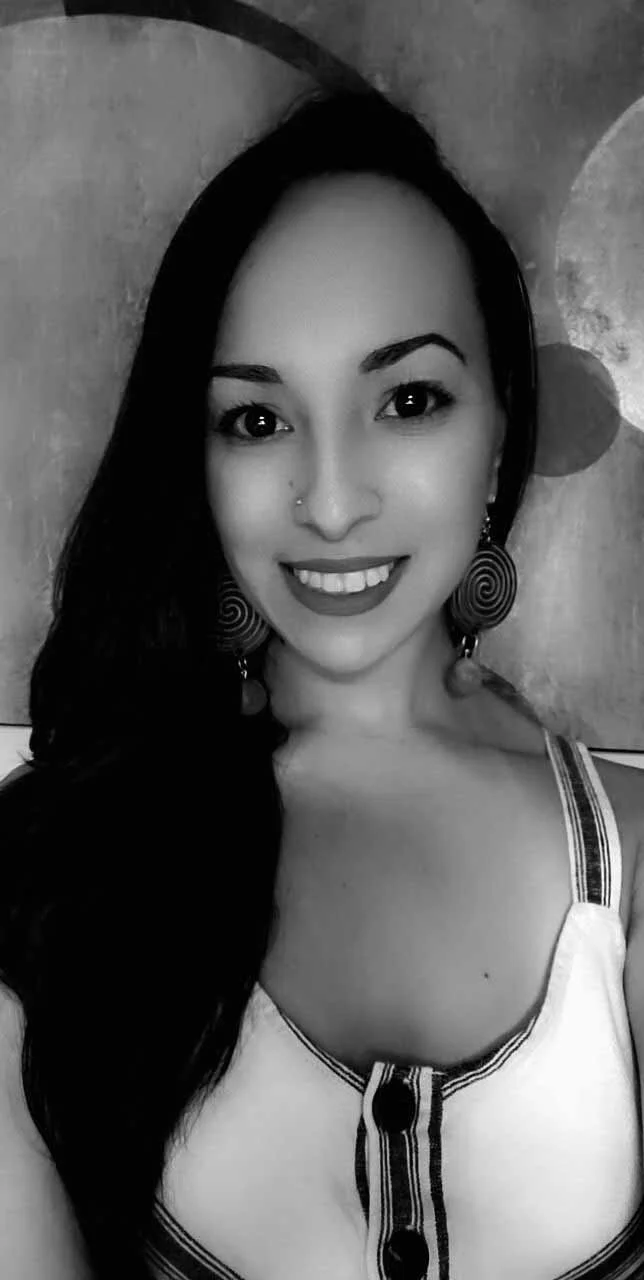
The second artist that we are featuring in our Art Series is Kalichi Lamar. Kalichi’s first name is Taíno for “fountain of the high mountain.” She is a Higuayagua-Taino from the island of Borikén where her roots are tied to her name and her connection to nature. Kalichi has an MS/MA in Psychology and Arts in Medicine, and she has worked professionally with cancer patients and the elderly. Additionally, Kalichi runs an online shop of wood-burn pieces, crafted items, and creative wellness sessions. Her work is inspired by nature and Taíno roots. As smoke envelops her space, it becomes incense and prayer infused into each piece. Kalichi creates to inspire others to reconnect to self, nature, and Spirit. Her art piece, “Nature Springs From Her” was seen on the cover of Yellow Arrow Journal: RENASCENCE, Vol. VI, No.1, Spring 2021.
You can find Kalichi at kalichisessentials.com or on Instagram and Facebook.
Kalichi recently took some time to answer a few questions for us.
As an artist what types of habits have you developed when creating art?
One of the most important habits I developed when creating art is the state of mindfulness. This mindfulness often transfers to a flow state. I get into this state by tending my plants in my art space, turning on instrumental music, lighting candles or incense, thanking the Creator and my ancestors, and allowing natural light to come in. This sets the tone to create and puts me in a headspace for inspiration. The result is often an intuitive and meditative creation.
What are your top five tips for aspiring artists?
Great question! My five tips for aspiring artists would be:
Start with a small, economical kit. If you are not sure what method you like, it’s best to start small; rather than purchasing all the oil paints, oil brushes, etc., to then realize you don’t enjoy or are not good at oil painting.
Try a variety of genres. You might not be good at painting, but you might be amazing at collages. Or, you might be a great jewelry maker or woodcarver. There are a plethora of creative outlets. So, try different art methods to find your niche.
Keep creating! Don’t stop creating, even if it does not take off professionally. Create because it comes from your soul.
Avoid comparing yourself to other artists. Art is subjective to each person’s taste. What may seem like an amazing art piece to one person, might not be to another. Additionally, each person’s skill develops differently. Therefore, don’t compare yourself! Art can be so many things and opportunities! Each artist has their own unique ability. Hone in on yours, fall in love with it. If it brings you joy, keep creating!
Make sure you create from your soul. Your art is a reflection of you.

What inspired you to submit to Yellow Arrow?
I learned about Yellow Arrow through a fellow tribal sister. She told me about Yellow Arrow’s RENASCENCE edition and its mission to give voices to marginalized/self-identifying women. I fell in love with this mission and felt it was a great opportunity to give a voice and exposure to my Taíno community. Every day, I am grateful I was given the opportunity.
Thank you, Kalichi, for answering our questions. You can purchase a paperback or PDF of RENASCENCE in the Yellow Arrow bookstore, along with other Yellow Arrow publications.
*****
The 2021 art series was created and put together by Marketing Associate, Michelle Lin. Yellow Arrow Publishing is a nonprofit supporting women writers through publication and access to the literary arts. Like us on Facebook and Instagram for news about the next journal submissions period. Thank you for supporting independent publishing.
Poems About the Feelings We Don’t Talk About: A Review of Gigi Bella’s Big Feelings

By Darah Schillinger, written June 2021
In her first full-length collection, Big Feelings (from Game Over Books, a Boston-based publisher of marginalized voices), Gigi Bella creates a place of understanding—a place for her audience to relate to something bigger than themselves—by coupling raw honesty with down-to-earth humor that together elevates the soul. Though her poems embody unapologetic womanhood, Big Feelings celebrates the vulnerable alongside the feminine, acknowledging that vulnerability comes with the uncertainty and struggle that defines our narratives.
The book’s story begins in the acknowledgments, where she writes:
“the world is always ending but somehow it’s weirdly never all the way over. we only have each other & our stories & our reckless dreams. we are all just a big tangled ball of our big big feelings.”
The language of apocalypse reflects the unprecedented times the world has lived through and the resilience of humanity, immediately emphasizing the importance of storytelling and understanding one another. Her thank-you(s) comfort the soul, presenting as a thick page of genuine, poetic connection that guides us into the stories she tells in a way that politely invites us to listen.
A ghost metaphor defines the early poems of Big Feelings, appearing and disappearing whenever the speaker needs a way to describe the transparent identity of a person who feels as if “something used to be there but [they] can’t find it anymore” (11). Ghost girl is an alter-ego that the poem’s speaker uses when the weight of feelings becomes overwhelming, and it isn’t until the ghost becomes a solid, living person that the speaker replaces ghosts with the idea of living for better reasons. The speaker “evaporate(s) into the ghost that they have made [her] into” (11), but then replaces that image of death with all the reasons she has to live, such as taking care of a street kitten, staying to love someone else who deserves it, or even living just to prove to others that you can.
In the poem, “ode to ducky the bodega kitten,” the speaker sees herself in the kitten’s life in the “big trash city,” which reminds her “that / feeling small / only means that i am / so so alive” (14). Taking care of the kitten seems to be the first significant step from the speaker’s ghost identity, realizing that her own survival of the things that make her feel invisible is what makes living worthwhile. In the poem, “twitter sestina for suicidal ideation,” the speaker shifts from kitten to romantic partner, describing love as “just staying when you could be anywhere” (29). Choosing to leave the comfort of her ghost persona to be present for her partner is synonymous with love—a selfless reason for remaining alive. Bella parallels the speaker’s relationship with that of Ariana Grande and Pete Davidson as a recognizable allusion to what she has experienced with her partner while also drawing attention to the time and care needed when loving someone struggling with mental health. Pete and Ariana make several appearances throughout the book, acting as a familiar connection between the speaker’s partner, and the public relationship of two people that she sees an aspect of her relationship in.
The speaker then shifts to a funnier reason for living rooted in her ethnicity, where she asks, “isn’t that the most mexican thing? staying alive when it feels like no one wants you to?” (41) The speaker finds humor in her Great-Aunt Esperanza’s determination to outlive her sister, identifying her stubbornness with her identity as a Mexican woman. She uses the stereotypes attributed to her identity to make a point about living as defiance, a message that carries with her throughout the book. The speaker’s ethnic identity is a cohesive part of the joy she has found in living, as seen in the poem, “lessons i learned from selena”:
bedazzle until your brown is so loud, you can sew it into a dress
my grandmother is frida kahlo, molded into hospital bed and we are surviving and we are alive
These recognitions of the connection between defiance and ethnicity seem to tie into the speaker’s will to live, proving her point of living in spite of feeling as though others don’t want you to. The ghost image is a visual reminder of the speaker’s discomfort with the complexity of emotions, but the language of living for others and in spite of others overpowers any comfort one may find in fading away.
Big Feelings also discusses abuse and assault in a way that helps readers who are victims feel understood while simultaneously educating those who may not understand the severity or impact of the trauma that victims go through. In the poem, “FROM MY EX,” the speaker capitalizes the entire poem to make the distinction that it is a new, more aggressive speaker, and writes, “I NEVER HIT YOU / ONLY CALLED YOU WASTED” (20). The language used is obviously verbally abusive, yet the new speaker ironically defends himself by stating that he was never physically abusive and therefore a “GOOD MAN” (20). Bella adds this poem to show the ways people can manipulate their partners and abuse them even without physical confrontation, sharing these experiences to show others what non-physical abuse can sound like. In “[good screams//bad screams],” the speaker opens up about her sexual assault and the lasting trauma that comes with it, running sentences and words together to visually represent the confusion and emotional disorientation that victims may feel in the aftermath. The speaker immediately calls
out the subject’s performative feminism, saying (34):
“. . .when you vote or post on facebook about women’s rights or think about your mom & your sister i want you to remember my face”
She brings to our attention the contrast between saying, posting, or writing about feminism, and having actual, genuine respect for women, two things that look the same but are vastly different in practice. Claiming to support women or minorities is not enough to make one a feminist, and Bella’s ability to recognize that performance and call it out so others can learn and grow from it while remaining so vibrantly honest and vulnerable with her audience makes her an incredible advocate for victims and herself.
Bella has taken the time to write from a place of personal struggle and shared it with the world to help others feel seen, having used pop culture and religious imagery to reflect the kind of modern storytelling deserving of a modern audience. Between the blazing social critiques, discussions of violence against women, and the draining reality of mental health struggles, Big Feelings has solidified itself as a space of understanding for those who feel invisible, reminding us to embrace those uncomfortable feelings we’re so reluctant to discuss. Thanks to Bella, we can all feel the same big feelings with the turn of a page.
Bella, Gigi. Big Feelings. Game Over Books, 2020.
Darah Schillinger is a rising senior at St. Mary’s College of Maryland studying English Literature with a double minor in Creative Writing and Philosophy. She previously interned for the literary magazine EcoTheo Review in summer 2020 and has had poetry published in her school literary journal, AVATAR, and in the Spillwords Press Haunted Holidays series for 2020. Darah currently lives in Perry Hall, Maryland with her parents and in her free time she likes to write poetry and paint.
******
Yellow Arrow Publishing is a nonprofit supporting women writers through publication and access to the literary arts. Thank you for supporting independent publishing.
Meet an Artist: Jeanne Quinn
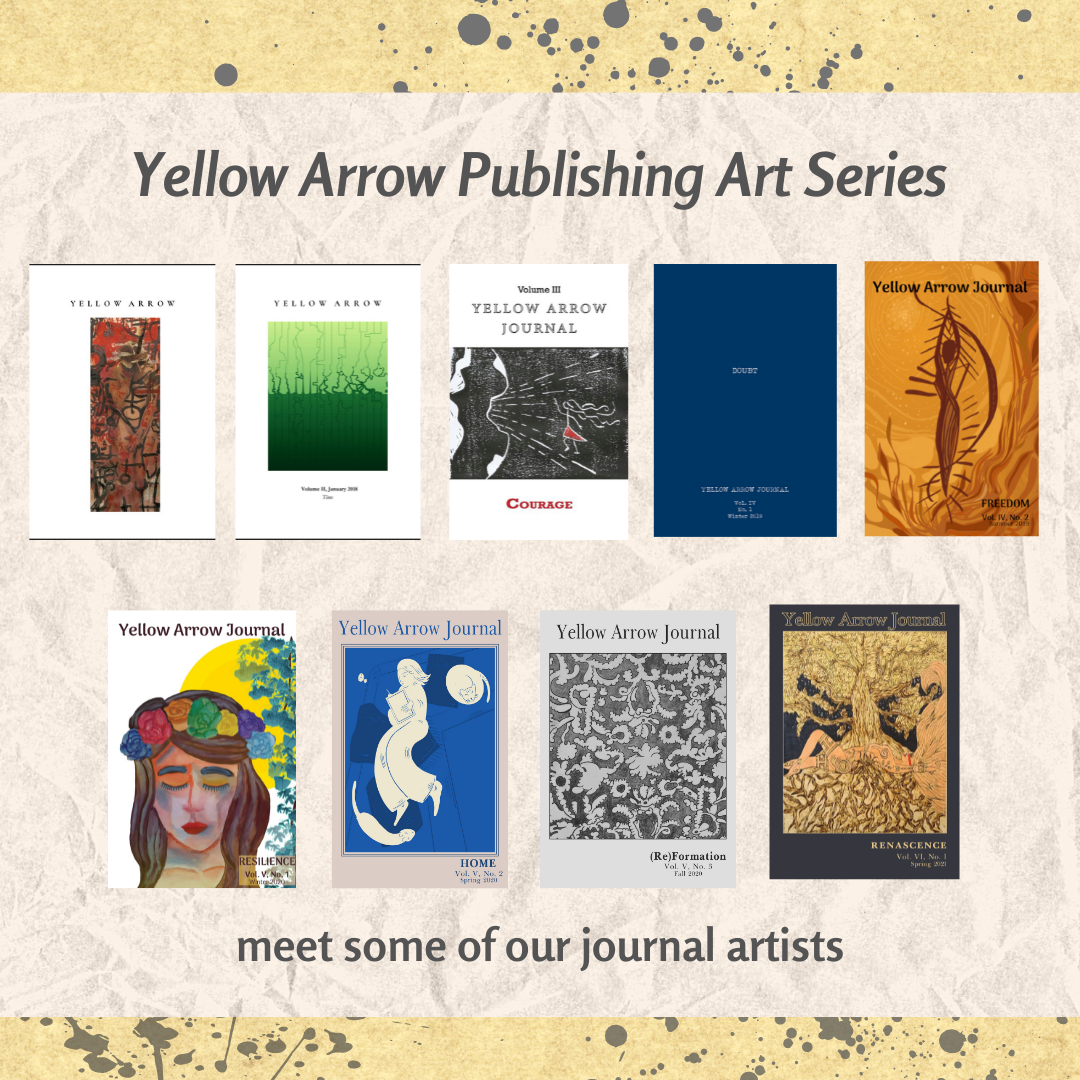
from the 2021 art series
Storytelling takes place in many different forms, not just writing. When an artist shares a piece with others, they also share a piece of who they are with their audience. We see the expression of their aesthetic, culture, and identity woven into their work.
This is definitely visible in the artwork for Yellow Arrow Journal. During each journal submission period, we ask for creative nonfiction, poetry, and cover art that reflects a chosen theme. We get incredible artwork created in various media and choose the one that best represents the theme.
To celebrate our talented cover artists, we will be releasing a series of blogs to share their stories and the importance that art has on their lives.
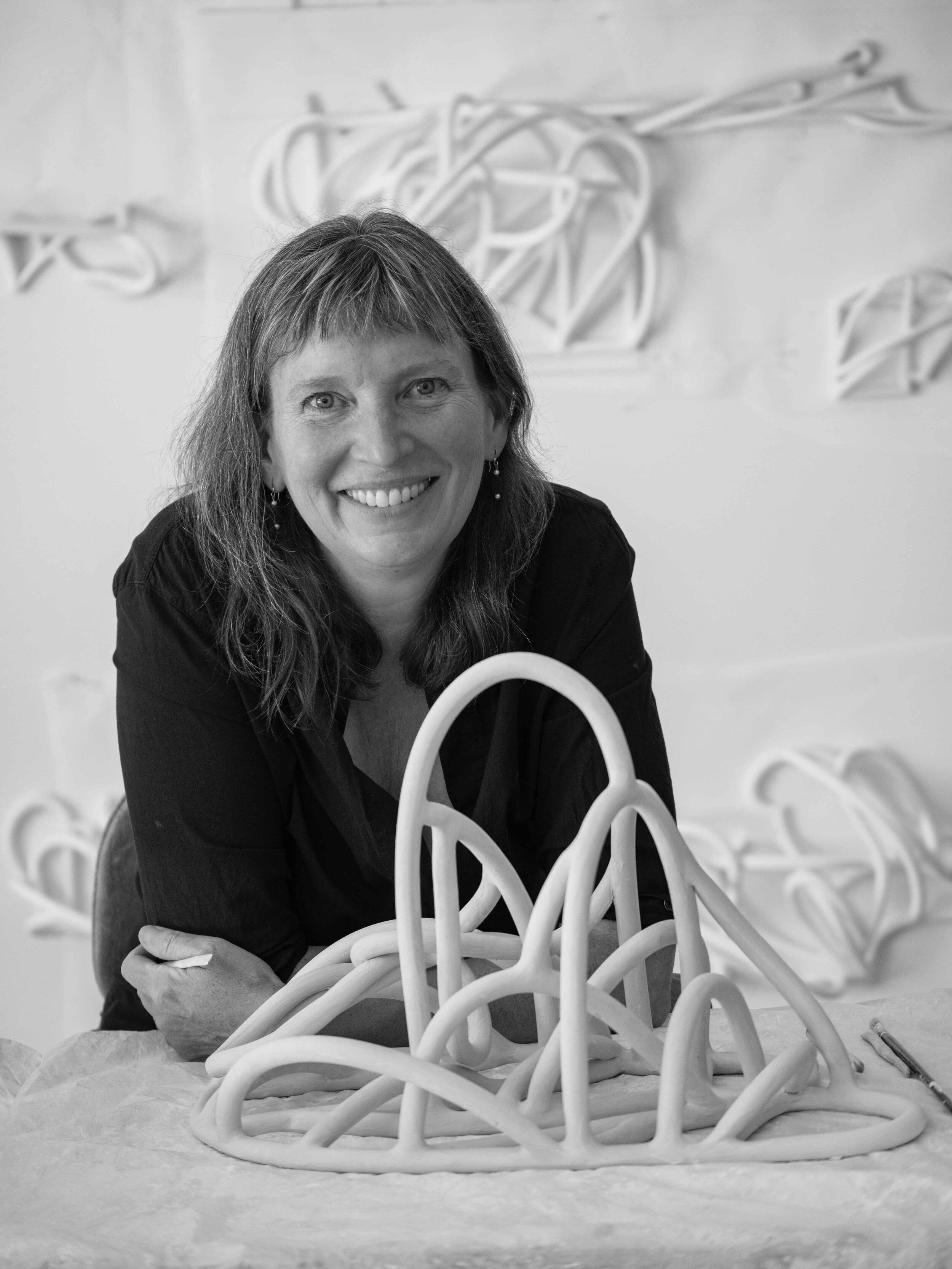
The first artist that we are featuring in our Art Series is Jeanne Quinn. Jeanne creates theatrical installations that attempt to remind us that everything is ephemeral. She studied art history and baroque music performance at Oberlin College, and earned her MFA in ceramics from the University of Washington. She has exhibited widely, including Denver Art Museum, the Milwaukee Art Museum, the Kemper Museum for Contemporary Art, and Art Basel/Design Miami. She has been awarded residencies at the MacDowell Colony, the European Ceramic Work Centre, Zentrum für Keramik Berlin, and many others. She is a professor and chair of the Department of Art and Art History at the University of Colorado. Her art piece, “Lace Drawing,” was seen on the cover of Yellow Arrow Journal, (Re)Formation, Vol. V, No. 3, Fall 2020.
You can find Jeanne at jeannequinnstudio.com or on Instagram and Facebook.
Jeanne recently took some time to answer a few questions for us.
Who inspired/influenced your journey as an artist the most?
I saw Anne Smith’s work in a show in Boston in 1990. I was incredibly inspired by what she was doing with surface decoration on ceramics and shelves and took a class from her at a local ceramics studio. I ended up becoming her studio assistant, and she served as a mentor, getting me started studying at the University of Colorado and then at the University of Washington, in ceramics. There have been many important teachers along the way—most importantly, Betty Woodman—but I never would have gotten started without Anne’s encouragement and smarts in navigating the journey. You can find Anne on Instagram or at annesmith.net.
What inspired the piece that you created for Yellow Arrow?
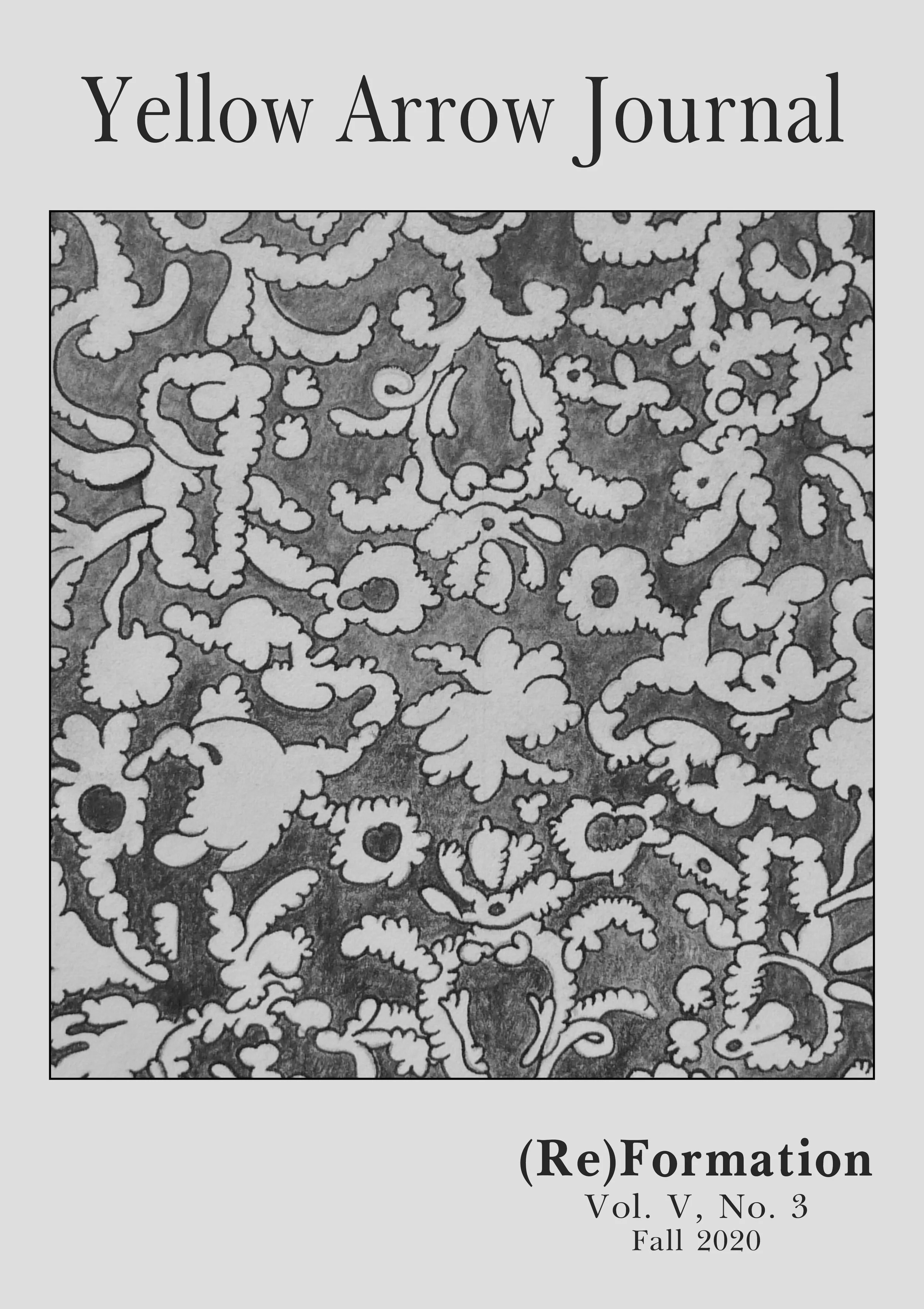
My mother sent me an article from the Washington Post that included a photograph of a beautiful piece of lace. She knew I had always been interested in lace, and we had a small collection of pieces tatted by my great-grandmother, which she passed on to me. The photograph she sent inspired me to start drawing lace, which I’ve done continuously ever since. I love translating something so crafted and material into an image, since, as a ceramicist, I usually do the reverse.
What projects are you currently working on?
I’m making an installation, Dust And A Shadow, for an exhibition at the Centre des Arts Visuels in Montreal. It’s my response to the isolation and general experience of Covid. I started with a drawing of some baroque architectural moldings and turned those into dimensional, linear ceramic wall sculptures. The shadows of the pieces are rendered in clear vinyl adhered to the wall, so they are both shadowy and reflective.
Thank you, Jeanne, for answering our questions. You can purchase a paperback or PDF of (Re)Formation in the Yellow Arrow bookstore, along with other Yellow Arrow publications.
*****
The 2021 art series was created and put together by Marketing Associate, Michelle Lin. Yellow Arrow Publishing is a nonprofit supporting women writers through publication and access to the literary arts. Like us on Facebook and Instagram for news about the next journal submissions period. Thank you for supporting independent publishing.
Creative Nonfiction: Nature Writing

By Melissa Nunez, written June 2021
from the creative nonfiction summer 2021 series
Nature writing is fertile ground for a writer, especially a female writer, to examine through vivid imagery and powerful metaphor the beauty, vulnerability, and strength within and without us.
Mother Earth. Mother Nature. Motherland. Across cultures and time, the connection between the female body and nature is an enduring thread.
I consider myself an amateur naturalist, but I wasn’t always this drawn to my natural environment. In my desire to instill in my children respect for our planet, for all its inhabitants, I found renewed wonder, fresh eyes with which to observe plants and creatures. After so much time as an observer, it felt very natural to make the leap from memoir and narrative nonfiction writing to nature writing, to take my words about myself (my body) and apply them to the natural world around me (earth body). I task myself with taking things that seem quite ordinary—an everyday blackbird perched on a car hood, the common daisy sprouting from the base of a stop sign—and approaching them from new angles, forming unexpected correlations. The surprise of discovering and sharing new information, a contrasting perspective.
Nature writing is also a medium in which to discuss oppression, exploitation, and inequality, considering how much habitat has been destroyed, how many creatures are endangered, have been erased. The importance of these losses is more evident in some areas of the globe than others, is considered more relevant for some people than others. Prejudices continue to inhabit our seemingly modern life, in both subversive and overt forms, adopted as norms inherent to the structure of day-to-day living. Many injustices are no longer so secret but are still susceptible to all manner of rug sweeping. Through ecological writing, we can explore how the actions we take, the choices we make, impact the world around us. Each decision has the rippling potential of exponential impact on the microcosms and ecosystems surrounding us. Poisons used to control populations of one creature marked pest (ants, rodents, coyotes) can damage countless others (raptors, reptiles, people). Trees mowed down to make room for cars and buildings displace countless animals who once dwelled there. Walls constructed to inhibit the migration of unwanted people inhibit the migratory movement of dwindling creatures—pollinators and wildcats.
We don’t always like looking too closely in the mirror, at times afraid of what we might see. This is where I find nature writing can function much like fantasy or science fiction, taking you to another world and showing you imbalances that seem so clear when presented with varying degrees of separation. You can take slices of your life and your environment and work through existing imbalances—those of sexism, racism, classism—connecting what is yours, what is mine to a more universal feminine (human) experience. Connecting what is happening with disappearing creatures to disappearing cultures, trampled bodies, and silenced voices.
With nature writing comes the potential to prompt reflection on and examination of our perspectives, our interactions with those around us—living things of human, plant, and animal kind. Our world isn’t perfect, people aren’t perfect, but we can be better. Taking a general reverence and respect for the natural world and making it a more personal experience can ignite a desire to do better. Nature-inspired writing can give a new voice to many who are fighting to be heard. It offers the opportunity for us to try, for even just a moment, to see the world from a different point of view.
The following works showcase the wide spectrum of the genre of nature writing, each author inspiring in their individual approach, style, and voice.
Pilgrim at Tinker Creek by Annie Dillard
Smith Blue by Camille T. Dungy
Vesper Flights by Helen Macdonald
World of Wonders: In Praise of Fireflies, Whale Sharks, and Other Astonishments by Aimee Nezhukumatathil (see also Yellow Arrow staff member Siobhan McKenna’s review from Yellow Arrow Journal (Re)Formation)
You can find Melissa’s beautiful, nature-based essay “What is Mine” in Yellow Arrow Journal, Vol. VI, No. 1, RENASCENCE. Get your copy today.
Melissa Nunez is an avid reader, writer, and homeschooling mother of three living in the Rio Grande Valley region of South Texas—a predominantly Latin@ community. Her essays have appeared in Yellow Arrow Journal, The Accents Review, and Folio, among others. Follow her on Twitter @MelissaKNunez.
*****
Yellow Arrow Publishing is a nonprofit supporting women writers through publication and access to the literary arts. Thank you for supporting independent publishing.
Inspiring Locations to Write in Baltimore, Maryland

By Siobhan McKenna, written June 2021
As a freelance writer, there are few things that motivate me to sit down and write more than the promise that I’ll be able to sip on a latte as I string sentences together. For me, writing is an experience, and being able to cultivate that experience by writing at a coffee shop or in a park prevents me from being distracted by the dirty laundry calling out or the bathroom that suddenly needs a deep clean. Finding a space to write whether it’s professionally, therapeutically, or for pleasure is not only a great way to focus but can also inspire creativity. Writing outside your home office is also a great way to support local businesses and see flyers for writing and reading events as they slowly emerge once more.
Below is a list of some Baltimore old and new favorites to bring your laptop, notebook, and a pen to in order to get your caffeine fix and channel your creative process. Remember to check a café’s Instagram or website for its most up-to-date policies regarding COVID-19.

Pitango Bakery + Café, 903 S Ann Street
Neighborhood: Fell’s Point
IG @pitango_bakery_cafe; pitangogelato.com/location/pitango-bakery-cafe/
The Fell’s Point Pitango’s corner location, tucked away from busier Thames Street and situated along a quiet harbor inlet, makes it a classic spot for writing. Many times, I have found myself heading down early in the day to take in the morning light scattering off the water as I shake away brain fog. Between sentences, you can admire joggers and stroller-pushing parents cruising along the waterfront path as tiny bakery birds flit around searching for croissant crumbs. Currently, the café has ample outside seating underneath umbrellas as the Baltimore summer saunters in.

Charles M Halcott Square, 104 S Duncan Street
Neighborhood: Butcher’s Hill
baltimoregreenspace.org/charles-m-halcott-square/
In spring and summer, this “secret” park (as I like to call it) is alive with butterflies swooping from petal to petal. Halcott Square is not truly a secret, but because of its location down an alley and its lack of visitors whenever I come to write, I often feel like I’m the only one who knows about its location despite the well-maintained flowers and free, up-to-date copies of the local neighborhood newsletter. In this quaint pocket park, there are picnic tables and benches that enable you to post up underneath the shade of a tree after grabbing an iced oat milk latte and muffin from Charmed Kitchen just a short walk down the street as you concentrate on writing your novel’s next chapter.

Red Emma’s Bookstore Coffeehouse, 1225 Cathedral Street
Neighborhood: Midtown
Named after Emma Goldman, a Lithuania immigrant to the United States and activist who fought for many causes including women’s rights (1), Red Emma’s is a bookstore, coffee shop, and community event space that is completely worker-run and strives to create a strong social justice network in Baltimore. Located in the midtown section of the city, Red Emma’s is a spot I often find myself when I want to gain insight into the minds of other writers and more information on specific social movements. I appreciate perusing Red Emma’s extensive collection of books that expound the reasons for the inequality and injustice that has plagued Baltimore and ultimately the entire country and being able to reflect in my journal over a vegan breakfast sandwich and latte.

Druid Hill Park, 900 Druid Park Lake Dr.
Neighborhood: Druid Hill Park
bcrp.baltimorecity.gov/parks/druid-hill
Built in 1860, Druid Hill Park is a wilder version of Patterson Park. While the park is landscaped beautifully, there are more opportunities to lose yourself deep among the 745 acres (vs Patterson’s 137) of forest and winding paths past The Maryland Zoo and Victorian-era Rawlings Conservatory. I love this park because there are spots where I can completely immerse myself in nature and trade in the hum of trucks for the rustle of wind through the leaves and the trickling offshoots of the Jones Falls stream. On my way to a shady patch of trees, I’ll pick up coffee and breakfast at Dovecote in Reservoir Hill which reopens with a community celebration the weekend of Juneteenth for the first time since it closed during the pandemic.

Good Neighbor, 3827 Falls Road
Neighborhood: Hampden
IG @goodneighborshop; goodneighborshop.com/
Despite opening amid the pandemic (2), Good Neighbor has been able to woo Baltimore café fanatics (aka me) with its unique collection of local and global goods (think ceramics, Scandinavian design, and glassware), flower-filled wood patio, and of course, it’s coffee. Good Neighbor’s outdoor space is situated on a hill overlooking Falls Road with The Greenhouse at Good Neighbor—a plant and flower studio with fresh and dried blooms—nestled on top of the incline. When I write here, I can feel the creative energy that flows through the space. Co-owners, husband and wife, Anne Morgan and Shawn Chopra, set up both the inside and outside of their shop to be an aesthetically delightful and comforting atmosphere where I can admire tangerine and periwinkle buds under the cover of umbrellas while finishing up my most recent blog post for Yellow Arrow Publishing.

The Parks of Mount Vernon Place
Neighborhood: Mount Vernon
Bathed in the shadow of the Washington Monument, Mount Vernon Place is four squares that surround the first monument to our earliest president. All four parks are great spaces to write, but West Mount Vernon Place has always been my favorite. Many times, I have found myself in the west green space writing poetry on one of the green benches as a cellist from the nearby Peabody Conservatory tests a new composition. I take a moment between lines to admire the Gothic-style churches, fountains, and Victorian buildings along the perimeter of the square. And yet, as with most historical spots in Baltimore, prejudice is planted among the beauty. In the north square, the empty pedestal of Roger B. Taney stands as a reminder of what has fed the soil. In August 2017, the Taney statue, along with three other Confederate sympathizing monuments in the city, was removed in the dark of night (3). Taney, a Chief Justice of the United States Supreme Court, wrote the Dred Scott court decision, “which stated that African Americans—enslaved and free—were property and could never be citizens of the United States” (4). As a white writer in Baltimore, it is important for me to acknowledge and sit with the legacy of white supremacy that grew and continues to fuel Baltimore and the rest of our country. The dichotomy of writing about intense topics among the flowers, fountains, and empty pedestals helps me to reflect and write about where our city and country have been and the path that I am taking to reconcile our past and current history of discrimination.
Other Inspiring Coffee Spots & Parks
Coffee: OneDo, Bird in Hand, Café Dear Leon, Vent Coffee Roasters
Parks: Canton Waterfront Park, Wyman Park Dell, Sherwood Gardens
(1) “Who is Emma?” Red Emma’s. https://redemmas.org/about.
(2) Dash, Julekha. “A stylish and eclectic ‘Good Neighbor’ moves onto Falls Road.” Baltimore FishBowl. August 2020. https://baltimorefishbowl.com/stories/hampden-adds-a-good-neighbor-to-falls-road/.
(3) Pitts, Jonathan M. “Four Confederate statues once stood as Baltimore landmarks.” The Washington Post. March 2021. https://www.washingtonpost.com/local/baltimore-confederate-statue-pedestals/2021/03/30/56543c2a-9170-11eb-bb49-5cb2a95f4cec_story.html.
(4) “Roger Brooke Taney Monument, 1887.” Baltimore Planning. https://baltimoreplanning.wixsite.com/monumentcommission/taneymonument.
Siobhan McKenna was born and raised in the suburbs of Philadelphia. She stumbled upon Yellow Arrow while living in Baltimore and has loved every minute of working as an editorial associate. Siobhan recently began working as a travel nurse on the West Coast. As she moves to a different city every three months to work as an ICU nurse, Siobhan looks forward to writing about all that this crazy, broken, and beautiful country holds. She holds a BA in writing and biology from Loyola University Maryland and an MSN from Johns Hopkins University. You can follow her on Instagram @sio_han.
******
Yellow Arrow Publishing is a nonprofit supporting women writers through publication and access to the literary arts. Thank you for supporting independent publishing.
A Highlight on Jeannie Vanasco
By Brenna Ebner, written December 2020
from the creative nonfiction summer 2021 series

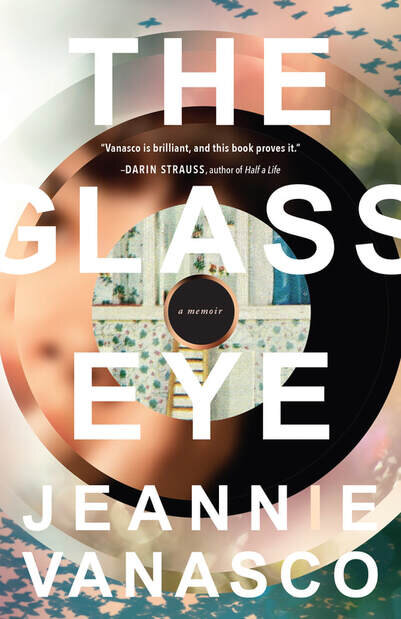
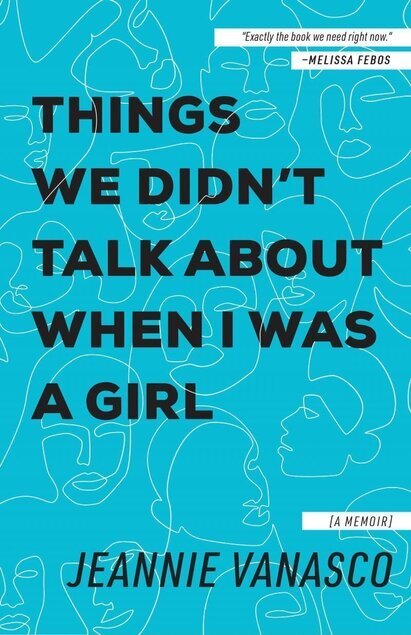
With two books, The Glass Eye (2017) and Things We Didn’t Talk About When I Was A Girl (2019), Jeannie Vanasco has started and continued important conversations regarding not only herself but women in general. She stands as a strong advocate for those who share in her struggles and speaks for many who have not yet been able to speak out for themselves. Vanasco has done this as a professor, advisor, and mentor to myself and many students at Towson University, and now for others through her writing. Everything from her balance of subjective and objective thinking to her writing style as she examines her experiences is refreshingly honest with a fluid tone as if she were there telling you her story in person. The peeks into her thought process that she shares with us give the reader a taste for the frustration, confusion, and weight Vanasco herself has carried thus far and a sense of the weight many others carry around as well.
Within her first book, The Glass Eye, Vanasco immediately delves into tough topics such as grief and mental health. She battles with the death of her father and the mania that comes with being named after her passed half-sister, but seeing her grapple with these hurdles makes it easy to sympathize even if we haven’t found ourselves in quite the same situation. Her problems, though maybe not immediately like our own, still delve into relatable realms, and Vanasco’s writing on her experience gives those struggling with grief room to feel validated. With this, she normalizes the discussion around the difficulty of letting someone go and struggling with something unseen. We not only see Vanasco lift herself up as she grows through this but also lift others up by creating a space for those who might relate in struggling to grasp their reality. As a topic, that is difficult to put into words; being able to see Vanasco go through it herself helps others to feel seen and heard as they deal with their own mental and emotional afflictions.
Vanasco continues to do this further in her second book, Things We Didn’t Talk About When I Was A Girl, when she opens up about her experience of not only being raped but then confronting her rapist years later. It’s a huge feat that she doesn’t take lightly for herself and what it could mean for others who share her experience, and we see this as she relays moments of reevaluation on her actions to reach out to him. In the wake of the #MeToo movement, Vanasco elaborates further on the impacts and grieving process surrounding this all too common trauma. Her book encourages us to continue the discussion around accountability and accept that healing is not a linear process for most of us. It’s a difficult discussion to be had especially when it is shared with someone so negatively associated with your life, but Vanasco’s fortitude is commendable.
While Vanasco’s books share her own journey through processing grief and trauma, they also lend themselves to others’ journeys through similar hurdles not only in the way she addresses these topics but also in her open writing style. While most authors are very honest in their memoir writings, Vanasco’s transparency goes above as we read moments of her worrying about how we will interpret her “characters” and how she wants to discuss certain topics but struggles to go about it. In this way, Vanasco takes her vulnerability and makes it a strength by breaking down any walls and adding a new layer of trust between her and the reader. In all these ways in which Vanasco brings up, discusses, and processes these topics and issues she becomes an important writer for women and others who may also share in her experiences. Her books test boundaries and limits and help to make what is uncomfortable in society, especially for women, much more comfortable to discuss through her candor. It’s with this that we can find a great appreciation in Vanasco’s writing.
Brenna Ebner is the CNF Managing Editor at Yellow Arrow Publishing and has enjoyed growing as a publisher and editor since graduating from Towson University in May of 2020. In between this time, she has interned with Mason Jar Press and Yellow Arrow and continues to pursue her editing career with freelance work.
*****
Yellow Arrow Publishing is a nonprofit supporting women writers through publication and access to the literary arts. Thank you for supporting independent publishing.
St. Paul Street Provocations by Patti Ross: Advocacy and Social Justice

Yellow Arrow Publishing announces the release of our latest chapbook, St. Paul Street Provocations, by Patti Ross. Since its establishment in 2016, Yellow Arrow has devoted its efforts to advocate for all women writers through inclusion in the biannual Yellow Arrow Journal as well as single-author publications, and by providing strong author support, writing workshops, and volunteering opportunities. We at Yellow Arrow are excited to continue our mission by supporting Patti in all her writing and publishing endeavors.
St. Paul Street Provocations is a compelling look at current social issues, such as homelessness, that remain sidelined and ignored by those in power. It largely explores experiences and exchanges Patti had while living in Baltimore, Maryland from 2010 to 2013, just one block south of North Avenue on St. Paul Street. She found herself in a neighborhood slighted by its own city. Patti listened, wrote, and became an advocate. The nine poems intertwined with Patti’s stunning artwork work in tandem to give a voice to what Patti herself witnessed over the past decade.


Patti graduated from Washington, D.C.’s Duke Ellington School for the Performing Arts and The American University. After graduation, several of her journalist pieces were published in the Washington Times and rural American newspapers. Retiring from a career in technology, Patti has rediscovered her love of writing and shares her voice as the spoken-word artist little pi. Her poems are published in the Pen In Hand Journal, PoetryXHunger website, and Oyster River Pages: Composite Dreams Issue, among others.
Paperback and PDF versions of St. Paul Street Provocations are now available from the Yellow Arrow bookstore! Those who ordered a paperback before release will receive their free PDF (with colored interior images!) shortly. If interested in purchasing more than one paperback copy for friends and family, check out our discounted wholesale prices here. You can also search for St. Paul Street Provocations wherever you purchase your books including Amazon, Barnes & Noble, and Kobo. To learn more about Patti and St. Paul Street Provocations, check out our recent interview with her. Keep a lookout for info on Patti’s book launch!
You can find Patti at littlepisuniverse.com or on Facebook and Instagram, and connect with Yellow Arrow on Facebook and Instagram, to share some love for this chapbook.
*****
Yellow Arrow Publishing is a nonprofit supporting women writers through publication and access to the literary arts. To learn about publishing, volunteering, or donating, visit yellowarrowpublishing.com. If interested in writing a review of St. Paul Street Provocations or any of our other publications, please email editor@yellowarrowpublishing.com for more information.
The Significance of Memoirs
By Brenna Ebner, written January 2021
from the creative nonfiction summer 2021 series
Did you know that Merriam-Webster Dictionary defines a memoir as a narrative composed from personal experience? While this certainly describes the genre, Joan Didion, a well-known memoirist herself, summarizes the intricacies behind memoirs better when she explains, “I write entirely to find out what I’m thinking, what I’m looking at, what I see and what it means. What I want and what I fear.” When we read a memoir we indulge in an unreliable narrator. Just as in fiction, where we have to sustain belief, we have to do the same to a memoir, trusting the narrator/author to tell their truth and believing it because it is theirs. But our memories are not always reliable and we can’t help our biases. Maybe what happened to someone didn’t play out the exact way they remember or certain details become lost to time. So a memoir may have more fiction than nonfiction, more embellishments than truths. But as it is what the author believes, does that make it false? This is where the controversy around the genre is found.
Opinions, feelings, and memories all change and that is something memoirists must keep in mind if and when they choose to recount their life or certain parts of it. But it is also why one could place the memoir under nonfiction. I think what keeps memoirs in the creative nonfiction category is how each is written by real people recounting real experiences and showing us how such experiences shaped them. We can’t necessarily tell them they are wrong because each piece of writing is their truth. Because of that, readers are drawn to them. Reading a memoir is an opportunity to:
Relate to one another and gain validation when we’ve experienced our own version of the same tragedy or celebration
See a new point of view and gain other experiences and live other lives when we are stuck living our own
Be humbled by realizing the complexity of life and how so many individual worlds are out there, besides your own, that are filled with great ups and downs
Watch authors grapple with the same large themes in life we must and try to make black and white of such themes in such a gray world.
Not only does this draw me to memoirs, specifically, but it also makes me grateful for those who write them. It can be difficult to relive moments in our lives and recount them for the sake of others and ourselves. It can be difficult to be vulnerable and open and invite judgment and criticisms.
I also think it’s significant that people are offering themselves to us so vulnerably because it sparks compassion, sympathy, and empathy. Although not always! Sometimes a memoir is good because it makes you upset. Not every life lived and decision made will be welcomed by readers. We are complicated, complex, and unique individuals, each of us. Regardless, I think even such controversial memoirs still remain important as they ignite discussion and exploration within ourselves and within our societies.
I’d like to argue that what makes a memoir good is its ability to do just that. When I can finish a memoir and leave with a new perspective and understanding, of either myself or the world around me (even just one aspect of it, because the world is very big after all), then I know it was a successful read. It may not happen with each and every memoir I read; both myself as a reader and the memoirist must be open to exploring outside ourselves and our limited aspects of the world. This process of reflection is refreshing to experience. With this in mind, it is very rare for a memoir to be a simple read, and for that reason, I recommend them as a genre to indulge in.
For those interested in reading some memoirs, my recommendations include:
The Year of Magical Thinking by Joan Didion
Girl, Interrupted by Susanna Kaysen
Tonight I’m Someone Else by Chelsea Hodson
Mother Winter by Sophia Shalmiyev
Heart Berries by Terese Marie Mailhot
Mean by Myriam Gurba
In The Dream House by Carmen Maria Machado
The Glass Eye by Jeannie Vanasco (see also here)
Abandon Me by Melissa Febos
Brenna Ebner is the CNF Managing Editor at Yellow Arrow Publishing and has enjoyed growing as a publisher and editor since graduating from Towson University in May of 2020. In between this time, she has interned with Mason Jar Press and Yellow Arrow and continues to pursue her editing career with freelance work.
******
Yellow Arrow Publishing is a nonprofit supporting women writers through publication and access to the literary arts. Thank you for supporting independent publishing.
Coming Together Across the Table (or on Zoom)
by Sandra Kacher, from March 2021
It takes courage to write, courage to reveal, and courage to hear what people have to say about your words. Brené Brown says, “Courage starts with showing up and letting ourselves be seen.”
A poetry writing group is the perfect place to practice this courage.
When I was in my 40s, I promised myself I would write a mystery novel by the time I was 50. I did, but it didn’t go anywhere because the first time I heard the faintest criticism I shut down. Extreme, I know, but some of us are timid and way too vulnerable to other people’s opinions. When I picked up a pen again it was to write poetry, and I knew I had to toughen up if I was going to create anything worthwhile.
I’ve heard people say, in response to change suggestions, “Well, I just write for myself.” I don’t understand why a person would write (or paint, or cook, or garden, etc.) just for themselves. I see creativity as a gift meant to be shared, and creations benefit from honest and compassionate responses from our peers.
Thus, the poetry writing group. Such a group is comprised of a small number (3–8?) of poets who come together regularly to read their work to each other and listen to the responses elicited by that work. My first rule for finding a group is “pick carefully.” I’ve been in competitive poetry groups where the feedback is harsh in the name of “just being honest.” I’ve also been in groups where the level of commitment and experience is less than mine. It has been important for me to find groups with the right level of skill (so I can trust their insight) and also with the right level of love. Love for poetry, love for the process, love for daring to believe we (I) have something to say in poetic form. I don’t have to be best friends with everyone, but I do need to trust that their intention is to be genuinely helpful.
I’m now in several writing groups and I’ve asked my writing buddies to share why they keep coming and keep working so hard.
Here is a summary of their responses:
Accountability: “Having to bring a poem on a predictable and regular basis heightens my commitment. It helps me keep going through the dry times.”
Quality Enhancement: “The others in a workshop often notice things (both positive and negative) in the poem that I have not and offer solid ideas to improve the poem.”
Networking, Identity, and Belonging: “I enjoy being with my tribe . . . others who share my interest in poetry . . . and often other important values. Others offer ideas [regarding] prompts, craft, readings, workshops, teachers, books, submission calls that enrich my writing life.”
Fun: “In addition to everything else, a sweet relationship with smart, perceptive, funny, beautiful women; one that deepens every encounter.”
How do we create such communities? I started with going to poetry meet-ups in my community (after procrastinating for several months. It does take courage!) and met several poets with whom I am now in groups. One group started with two of us who shared a love of San Miguel de Allende and Spanish, along with writing. We each invited others to join us. That group now has five wonderful women (a deliberate choice) who have been meeting and improving for several years. One of my groups grew out of a shared class—a common way to find compatible members. Two of us also tuned into Billy Collins’ podcasts and responded to a group of male poets who were looking for women to balance things out.
We began with ground rules for listening and responding. We found that starting with sharing “the gold” we hear and finishing with a round of “rust” creates a balanced atmosphere and allows for building trust to hear critiques. In that same group we begin with a SPIRE check-in—how am I Spiritually, Physically, Intellectually, Relationally, and Emotionally? We aren’t rigid but we do cover those areas, and through this kind of check-in, we’ve come to admire, understand, and love each other. Another group I’m in is purely reading and critiquing, equally useful for improving our work but less warm and personal (however, I’ve found sharing poetry can’t help but lead to personal connection). The degree of personal sharing depends on the desires of members. It seems to me it takes at least six months, more like a year, to get into a really good groove together.
I am a better poet than I was three years ago, and I thank my group members for that. I encourage anyone who wants to be a better writer to find a tribe of writers and plunge in!
Sandra Kacher comes to writing poetry after years of hearing about the inner lives of hundreds of therapy clients. She brings the same compassion and sense of irony to her poetry as she brought to listening to hundreds of therapy clients. Touched by Mary Oliver and heartened by Billy Collins, she brings a heart for beauty and an ear for music to her writing. She hopes poetry shares the ways she is moved by nature, human life, and all the flotsam that catches her eye. As an older poet, she is shaped daily by intimations of mortality, and most of her work is touched by loss—past or to come. Poetry keeps her open, fights off cynicism in a world that leaves her listless these days.
*****
Yellow Arrow Publishing is a nonprofit supporting women writers through publication and access to the literary arts. Thank you for supporting independent publishing.
Telling the Truth Beautifully

By Kerry Graham, written March 2021
from the creative nonfiction summer 2021 series
Your life is a collection of stories.
Powerful. Painful. Profound.
And it’s not just the milestones or the unbelievable tales you can tell again and again. Your life, even in its mundane moments, is a series of stories.
Many of us are raised to understand stories as fiction: made from imagination. Or if someone tells us a “true story,” it’s outrageous in some regard. Hard to believe.
But those aren’t our only options for storytelling. There’s a magnificent in-between, stories that are engaging, original, relatable.
And honest.
Creative nonfiction is telling the truth beautifully, even—especially?—when the truth is anything but. It’s crafting a story from the reality of your lived experience. It’s reflecting on what you’ve endured, accomplished, and explored, and finding narrative structure within that. When you write creative nonfiction, you chisel away the entirety of your days to the pieces you’d find in a plot: beginning, middle, end. You create characters out of the people you’ve shared conversations, meals, office space, children, bus stops, public parks with. You write the words shouted, whispered, thought. Your readers weren’t with you, but through your words, you make us feel like we were. For a few paragraphs, or pages, or maybe even the course of a memoir, you invite us into the world as only you know it.
As a writer, I’ve attempted numerous genres. My favorite, by far, is creative nonfiction. When I put the truth to paper, I not only get to do what I love—create art out of language—I get to remember, reflect, understand my own life. The opportunity to make meaning of any given moment reminds me that each instant is a blessing. When we write creative nonfiction, we “taste life twice,” as Anaïs Nin, a French-Cuban-American writer, famously said.
Although creative nonfiction can be about anything we know to be true, I write almost exclusively about one thing: my lovelies. This is my 10th year teaching high school English in Baltimore City public schools, and since my earliest days in the classroom, I’ve called my students “my lovelies.” I write about how they inspire, worry, nurture, frustrate me. I write because my lovelies make each of my days meaningful—so meaningful that, often, it takes the painstaking process of delicately arranging our interactions on a page for me to fully grasp them. I also write because of what it gives my readers, most of whom have never been to Baltimore, Maryland, let alone inside our public schools: a chance to learn. Empathize. Reexamine. Wonder.
The impact creative nonfiction has on its readers is another reason I revere this genre. Reading someone else’s true stories grants readers a chance to connect—to people, places, experiences—they might have never before considered.
Anaïs Nin said, “We write to expand our world when we feel strangled, or constricted, or lonely.” As a writer, I wholeheartedly agree, though I’d argue that’s also why we read, especially creative nonfiction.
Kerry Graham lives, teaches, writes, and kayaks in Baltimore. Her vignettes have appeared in The Citron Review, Crack the Spine, and Gravel, among others. Her personal essays have most recently appeared in HuffPost. Connect with her on social media @mskerrygraham.
******
Yellow Arrow Publishing is a nonprofit supporting women writers through publication and access to the literary arts. Thank you for supporting independent publishing.
The Power of Vulnerability

By Michelle Lin, written May 2021
Can vulnerability really be viewed as a weakness? Black lesbian mother warrior poet, Audre Lorde, argued that vulnerability is a source of strength that can be used to comment on societal issues and prevent a feeling of isolation (1). This is seen in how Lorde opened up about her experiences with the lack of inclusion she faced from White feminists while participating in a feminist panel, her struggle with acceptance within the Black feminist community due to her sexuality, and her ability to discuss her experiences as a cancer survivor.
As a Black lesbian feminist, Lorde demanded equality for both Black feminists and lesbians on several feminist panels, where Lorde spoke out about the divisions seen within the feminist community regarding race and sexuality. This is mentioned by Emily Bernard when she explored Lorde’s essay, “The Master’s Tools Will Never Dismantle the Master’s House” (1), which called out White feminists for their lack of inclusion:
“And yet, I stand here as a Black lesbian feminist, having been invited to comment within the only panel at this conference where the input of Black feminists and lesbians is represented. What this says about the vision of this conference is sad, in a country where racism, sexism, and homophobia are inseparable. To read this program is to assume that lesbian and Black women have nothing to say about existentialism, the erotic, women’s culture and silence, developing feminist theory, or heterosexuality and power.”
Despite their efforts to stand up for equality, Lorde showed that White feminists only created one panel for both Black feminists and lesbians, thus portraying the lack of inclusion at the Second Sex Conference in New York in 1979 (1). By capturing this lack of inclusion, Lorde demonstrated that there were still divisions within the feminist community when addressing race and sexuality. Lorde pointed out that Black feminists and lesbians have just as much to say on the topics that White feminists addressed at their panels. To exclude women of different races and sexualities centers the focus of women’s rights issues on one particular group, thus leading to the inability to address issues that women of all different backgrounds and sexual orientations experience on a daily basis.
Lorde furthered her point that White feminists should recognize the inequality that they have imposed on people of color in her poem, “Who Said It Was Simple,” where Lorde called out White feminists for their oppression of people of color (2):
Sitting in Nedicks
the women rally before they march
discussing the problematic girls
they hire to make them free.
An almost white counterman passes
a waiter brother to serve them first
and the ladies neither notice nor reject
the slighter pleasure of their slavery.
In this stanza of the poem, Lorde pushed White feminists to recognize those who work for them, and that their ability to attend the marches is connected to those who help them—people of color. When White feminists fail to recognize those who aid them, they are unable to see that they, too, play a role in the oppression of people of color. Lorde vocalized that the inequalities that people of color face are still present even during a women’s movement.
As a writer, Lorde also discussed the issues she experienced as a Black lesbian feminist who often received criticism from the Black feminist community for her sexuality: “. . . now walking into rooms full of / black faces / that would destroy me for any / difference / where shall my eyes look?” (1). The act of emphasizing her difference in the excerpt demonstrates that Lorde was unable to find any form of reassurance coming from the Black feminist community because she identified as a lesbian. By mentioning this point, Lorde amplified the fractures seen in the Black feminist community that prevents Black feminists and lesbians from unifying to fight against the inequalities that they collectively experience as women.
Along with sharing her experiences as a Black lesbian feminist, Lorde’s ability to be vulnerable with her audience is seen when discussing her experiences battling breast cancer in 1978, liver cancer in 1984, and later, ovarian cancer in 1987 (1). By addressing cancer in her writing, Lorde opened up the opportunity for others to connect with her to discuss the effects of cancer: “She knew that speaking out about her own experiences with cancer had the potential to liberate other women to talk about the effects of the disease on their own lives” (1). When cancer survivors, like Lorde, share their own stories, it allows others to feel less isolated in their struggles when dealing with the disease, and it also invites others to explore a topic that isn’t largely discussed (1).
The lack of representation of individuals addressing the topic of sickness is captured in Margaret Kissam Morris’ article “Audre Lorde.” Morris mentions that disease isn’t covered in society due to the prioritization of youth and healthiness (3):
“In mainstream American society, an obsession with youth has rendered the subject of aging, disease, and dying undesirable topics for public discourse outside of the medical, psychological, and religious contexts.”
Morris argues that the failure of representing those struggling with diseases in everyday discussion would naturally lead to a negative association to sickness. When an individual, like Lorde, discusses her experiences in a piece of writing within The Cancer Journals, that person demonstrates that fostering a conversation around the topic not only prevents the feeling of isolation that a patient may be experiencing but also opens up an opportunity for the public to recognize that sickness is a part of the human experience, thus reducing the stigma that was once associated with the topic.
Throughout the process of battling cancer, Lorde took a stance, sharing her experiences by refusing to wear prosthetics despite being told that her decision would result in her being viewed as unprofessional in a workplace environment: “Her objection to prosthetics was a rejection of another kind of silence and erasure and a defiant refusal to conform to the expectations of others when it came to the way she chose to move in the world” (1). By refusing to conform to the norm, Lorde commented on the cultural issues of how women should be presented in the workplace, making a statement to the medical community and women in general on how women shouldn’t have to conform to a norm in order to be viewed as professional. Through sharing her personal experiences with cancer, Lorde demonstrated that vulnerability can prevent the feeling of isolation as well as raise awareness on the ongoing issues related to women’s rights in both the medical and feminist communities.
By discussing these three issues in her writing—inequality within the feminist community in terms of representation of lesbians and Black women, fractures within the Black feminist community when discussing the topic of sexuality, and her experiences with cancer—Lorde communicated that the first step to developing understanding with and compassion to one another, is through writing and sharing the stories that weren’t previously told. Through reading about these experiences, Lorde’s audience will then be able to recognize and demand change.
As a writer, Lorde spoke to me because of her ability to tap into vulnerability as an opportunity to raise awareness of the issues experienced in her everyday life. Throughout my experience with coming out, I found myself actively searching for stories written by women who are LGBTQ+. One thing that I have noticed is that the stories and experiences that I came across, whether through videos I stumbled across on the Internet or in the novels and poetry books that I read, these stories were predominantly written by or told through the perspective of White women. In doing so, I found myself struggling to see myself within the stories that I was watching and reading. When a writer, like Lorde, speaks up about her own experiences, she not only opens up an opportunity for LGBTQ+ women of color to relate to the pieces she has written but also invites them to become a part of diversifying the narratives being told in the LGBTQ+ community.
(1) Bernard, Emily. “Warrior Poet.” New Republic 252, no. 4 (April 2021): 58–61.
(2) Lorde, Audre. “Who Said It Was Simple.” Poetry Foundation. Orig. from 1973. https://www.poetryfoundation.org/poems/42587/who-said-it-was-simple.
(3) Morris, Margaret Kissam. “Audre Lorde.” Frontiers: A Journal of Women Studies 23, no. 1 (March 2002): 168.
Michelle Lin was a senior at Towson University who graduated in Spring 2021. She had previously worked as the Online Poetry Editor for volume 69 of Towson University’s Literary Magazine Grub Street. Michelle currently lives in Lutherville – Timonium, Maryland. During her free time, she enjoys reading and writing poetry, and playing guitar. To read her writing follow her on her Instagram @m.l_writes.
*****
Yellow Arrow Publishing is a nonprofit supporting women writers through publication and access to the literary arts. Thank you for supporting independent publishing.
Creative Nonfiction: Representations and Truths

By Brenna Ebner
from the creative nonfiction summer 2021 series
Creative nonfiction is a perplexing genre and while many first think of it as rigid and boring retellings of historical events, that isn’t quite accurate. This specific genre of writing is focused on retelling but in an imaginative way with an emphasis on prose. That is what makes creative nonfiction different from other nonfiction styles of writing. In fact, its focus on prose and writing skills is often shared with fiction and poetry. And that is where the creative part of the genre comes in. The author must find a way to recall and explore in a captivating, realistic, and most of all trustful way since the genre is centered around the concepts of truth and reality.
This can be difficult since we each are biased in our points of views. Plotting and research, however, can ensure a thoughtful attention to detail and (as much as possible) accurate representation. Considering this, readers of the genre get an opportunity to explore many topics, themes, ethics, morals, etc., as we compare lives and opinions and learn from them.
Moreover, a creative nonfiction author tries to stick to what really happened. And while this seems very straightforward, one’s personal truths, experiences, and perceptions may not match another’s reality of a situation as it is solely based on one person’s memory as much as the accompanying research. This subjective take on the objective shows the reader how the world around us may be understood in many different ways and that the truth can take various forms depending on each person’s perspective.
We get questions all the time about what qualifies as creative nonfiction and wanted to jot down our thoughts about this. So what do we think falls into this category? Well, practically anything. Some specific and popular types of creative nonfiction writing include:
Memoirs – narrative writing with the focus on connected personal experiences or a point of view all connected to a theme (e.g., Mean by Myriam Gurba)
Personal narratives – narrative writing focused on one singular event, big or small, that connects back to your personal outlook and opinions (e.g., Queer Brown Voices: Personal Narratives of Latina/o and LGBT Activism by Uriel Quesada, Letitia Gomez, and Salvador Vidal-Ortiz)
Biographies – chronological events in the life of a specific person (not the author) with no focus on a particular experience (e.g., Lady Romeo: The Radical and Revolutionary Life of Charlotte Cushman, America's First Celebrity by Tana Wojczuk)
Autobiographies – chronological events in the life of the author with no focus on a particular experience (e.g., My Autobiography of Carson McCullers by Jenn Shapland)
Literary journalism – factual reporting mixed with narrative writing, often includes research and is similar to journalism but with the prose style of fiction so it doesn’t sound as rigid (e.g., Invisible No More: Police Violence Against Black Women and Women of Color by Andrea Ritchie)
Even writing such as interviews, nature writing, and sports writing can be included in creative nonfiction. It can take any form such as diaries and journals (check out The Folded Clock: A Diary by Heidi Julavits), lyrics (described as mixing poetry with essay; check out Citizen: An American Lyric by Claudia Rankine), and graphics (graphic narratives and novels; check out Fun Home: A Family Tragicomic by Alison Bechdel). The sky’s the limit!
Overall, creative nonfiction is a broad and welcoming genre that can encompass so much with so few rules: retell your experience, be it big or small, and do so in an original and expressive way. And with this, we then are able to read about millions of other aspects, opinions, histories, realities, and more. We can find deep and personal reflection taking place, gray areas being explored, and marginalized groups finally having a voice.
We can learn and grow in ways that are enthralling and fascinating as readers, writers, and editors of creative nonfiction, on both a personal and global level. And that is where my own personal interest in creative nonfiction comes from. It’s a powerful way to become more enlightened about not just the world around myself but the individuals who inhabit it and make it what it is. There is so much I have discovered that I was blind to previously and I’m so grateful to be able to learn directly from others such as in our most recent Yellow Arrow Journal RENASCENCE where I got to discover a whole new side to our world and its history that includes numerous cultures, experiences, beliefs, opinions, and ways of being. In any way you experience creative nonfiction, you get to grow yourself and grow with others as writers emerge from the margins of our society and readers and editors become more aware from their powerful works.
And why we at Yellow Arrow focus on creative nonfiction along with poetry. Check out some of our blog posts (every Tuesday!) throughout the summer as we take a closer look at this genre and why people love this writing style.
Brenna Ebner is the CNF Managing Editor at Yellow Arrow Publishing and has enjoyed growing as a publisher and editor since graduating from Towson University in May of 2020. In between this time, she has interned with Mason Jar Press and Yellow Arrow and continues to pursue her editing career with freelance work.
*****
Yellow Arrow Publishing is a nonprofit supporting women writers through publication and access to the literary arts.
Meet a Staff Member: Annie Marhefka
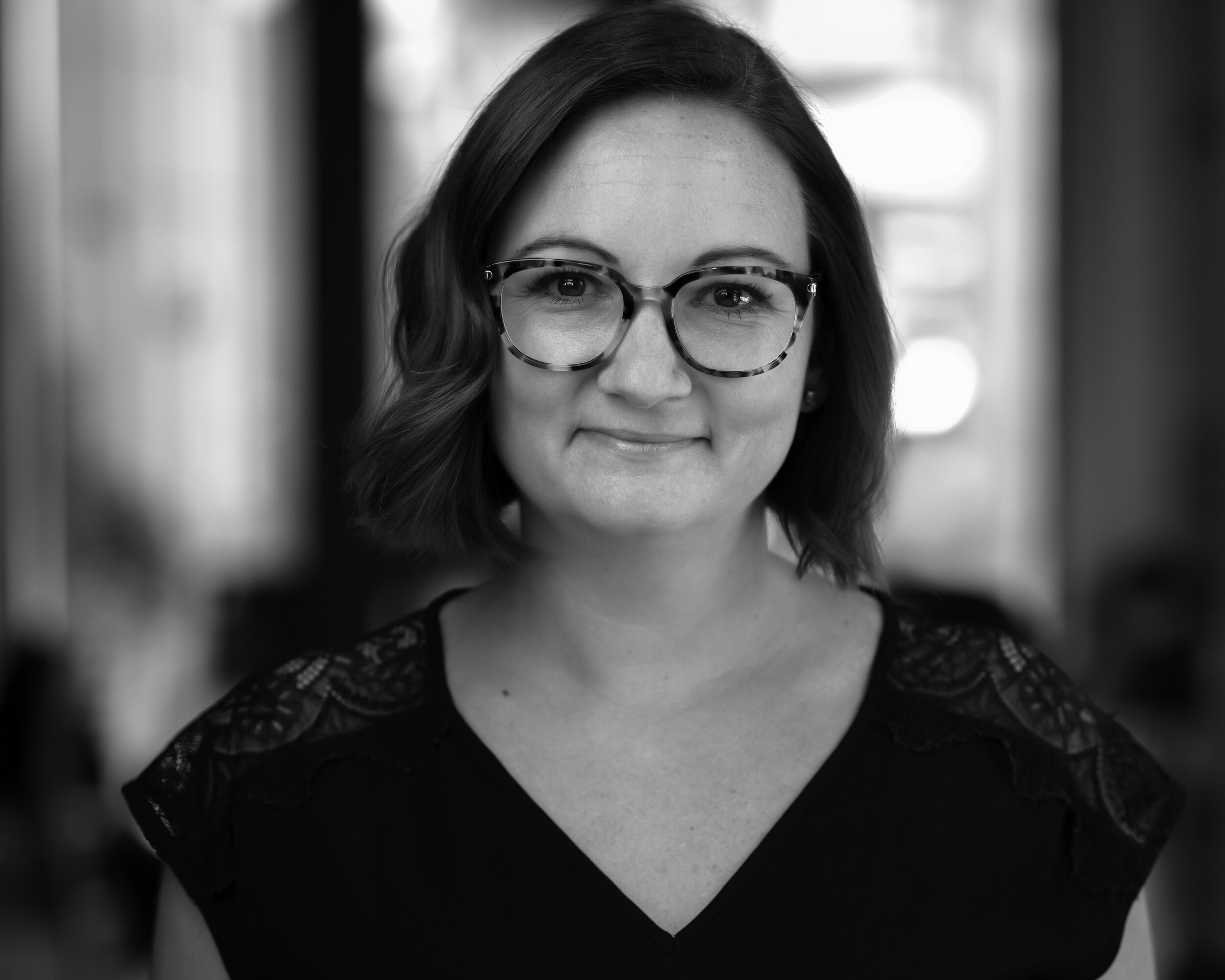
Yellow Arrow Publishing is incredibly excited to officially introduce our new Executive Director, Annie Marhefka, to the Yellow Arrow family. Annie is a writer, HR consultant, and mama residing in Baltimore, Maryland, with her husband John and their daughter Elena. When she’s not reading or writing, she loves traveling, building puzzles, and hiking with her toddler. Her work has been featured on Coffee + Crumbs. Annie is working on a memoir about mother/daughter relationships; you can find her writing on Instagram and at anniemarhefka.com.
Here’s what Annie had to say about joining Yellow Arrow:
There are really three core areas I feel passionate about in my work: helping organizations grow and thrive, creating/writing, and empowering women. It feels very serendipitous to have found a role where I can combine my background and talents to contribute to all of these passions under one (virtual) roof. I’m thrilled to get to know the Yellow Arrow community better and support its ongoing vision.
Annie took some time recently to answer some questions for us. Show her some love in the comments or on Facebook/Instagram!
Tell us a little something about yourself:
My professional career has centered around using my HR expertise to help organizations grow and thrive. I love helping businesses create from scratch and use culture as a driving force for change and development. I spent over a decade helping to build and grow one of the largest providers of K-12 online education in the U.S. as Head of HR and later COO. Most recently, I established an HR consulting firm, The Vivi Group, and provide services to organizations in the areas of organizational design, employee engagement, change management, communications, talent development, and policy and risk management.
What do you love most about Baltimore?
I truly find Baltimore charming in its diverse landscape, culture, people, and food. I love that I can walk between neighborhoods in the city, but also that I can spend weekends on my father’s boat on the bay; that I can have a delicious dinner at Gunther & Co. or steamed crabs in the backyard; that I can be one of thousands tailgating for a Ravens game or catch incredible live music in Fells Point at a cozy dive bar. I love Baltimore’s grit, quirkiness, and charm.
How did you get involved with Yellow Arrow and what do you do?
In 2020, I was awarded a writing residency at Yellow Arrow. I was one week into my residency when the state of the COVID-19 pandemic had begun to shut things down, and so I had to figure out a way to complete my residency virtually. Along the way, I met some incredibly talented writers and supporters of Yellow Arrow and was drawn to the sense of connection and support surrounding the organization.
What are you working on currently?
I spend my time juggling many different passions! My toddler is about to start preschool but until recently, she was my main nine-to-five gig. I am working through edits of the first draft of my memoir about mother/daughter relationships. I am in the process of launching a volunteer-run writing initiative called The Salt Box Creative along with some very talented local writers. I also provide HR services through my consulting business.
What genre do you write and why?
I write mostly creative nonfiction, but lately have also been dabbling in some poetry as well. I am fueled by relationships (and coffee), so I love using my writing as a way to explore connections between individuals.
Who is your favorite writer and why?
It’s so hard for me to pick just one! Instead, I will share some writers I’m currently loving! I just finished What Kind of Woman, a poetry collection by Kate Baer that was just stunning. I am still going back and rereading certain poems that spoke to my soul (and recommending them to all of my female friends). I am also reading Beth Kephart’s Handling the Truth: On the Writing of Memoir, which has really helped me hone in on the craft of writing memoirs as I work on mine.
Who has inspired and/or supported you most in your writing journey?
My mother was my biggest inspiration and also the biggest supporter of my writing. When I was young, she was a stay-at-home mom to me and my brothers but during that time, she also built her own poetry business from scratch. She would meet with individuals and talk to them about a loved one and then write a poem for them. I would help her pick out the perfect stationery and frame the gifts for birthdays, anniversaries, weddings. She really touched people with her poems, and it inspired me to find work that I was passionate about, and that would mean something to others.
What do you love most about writing?
I love that writing can serve such different purposes for different individuals. For me personally, it is both a vocation, a therapeutic endeavor, an act of self-reflection, and a creative outlet. I love reading something that I connect with deeply, and I love when my writing evokes the same feeling for someone else.
What advice do you have for new writers?
I recently participated in a writing workshop where we had to write three pages every morning, longhand. This was a little bit of a shock to my system, as I hadn’t written longhand since college; my handwriting is terrible, and I usually prefer the efficiency of typing on my laptop. By the third day, my hands were cramping, and I felt like I was just writing a lot of garbage. But at some point, it turned into a habit and I started writing some really good stuff—better than anything I’d typed in months. I realized that without the distraction of my laptop tools, I was able to just dump out my thoughts without editing myself along the way. It was really freeing. I often go back and find little gems in those pages that I can turn into something great, and it’s something I’ve tried to keep up. So my advice would be to try to write every day, even if it feels like you’re just producing garbage.
*****
We are so fortunate to have Annie join our team. Yellow Arrow Publishing is a nonprofit supporting women writers through publication and access to the literary arts. Thank you for supporting independent publishing.