
Yellow Arrow Publishing Blog
Follow your spark, your ember: Yellow Arrow Vignette BLAZE
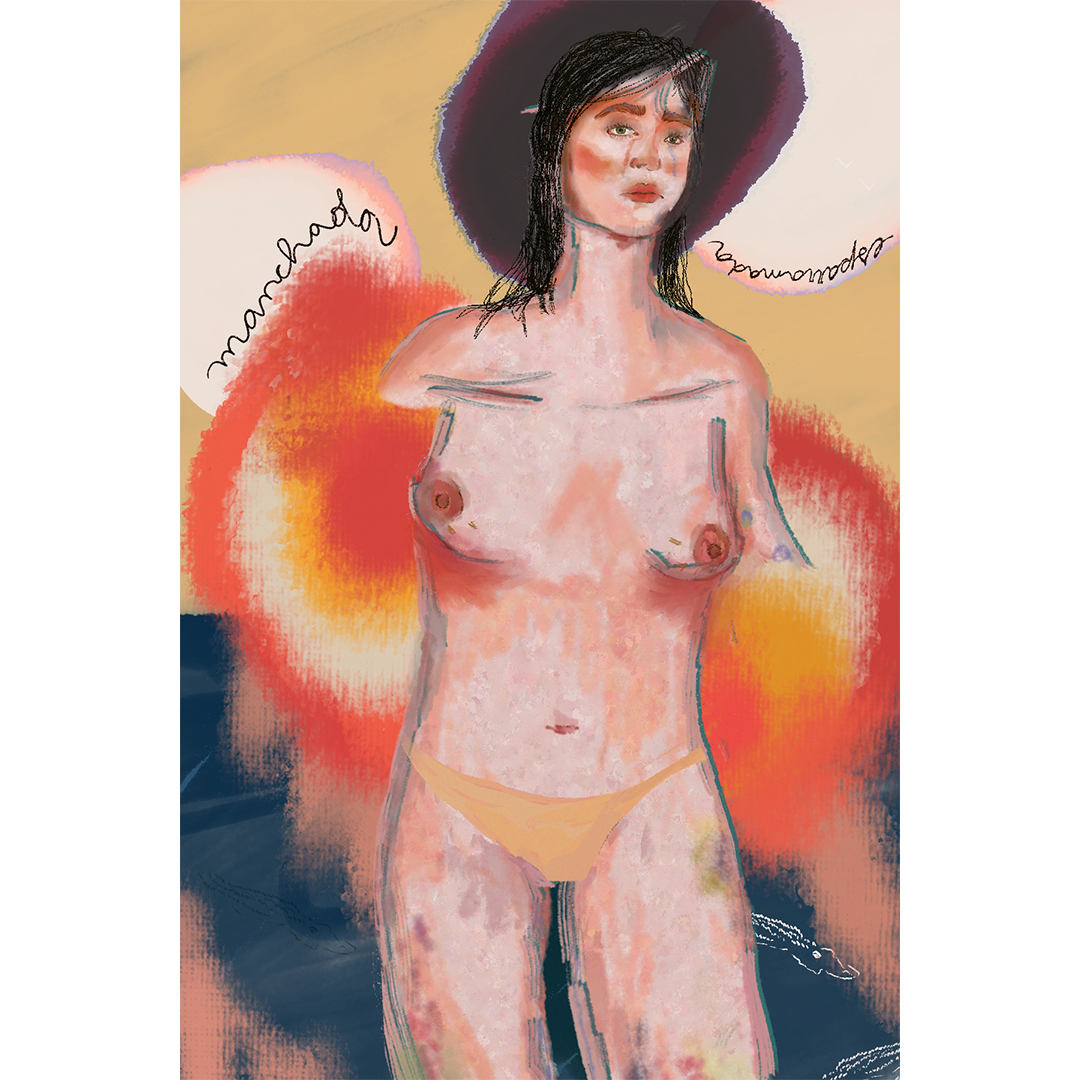
Welcome to the fourth issue of Yellow Arrow Vignette, Yellow Arrow Publishing’s online creative nonfiction and poetry series. For this issue, we aligned with our 2025 yearly value BLAZE.
The heat of passion. The beginning of a flame. The way the wind takes a spark or an ember and carries it, igniting more fire (or change) elsewhere. The changing of seasons. Transformation. The concept of being in heat and the way our sexual desires can send out their own strong signals—a blaze of pheromones. A blaze of glory. And, of course, the temptation to burn it all down.
With that, here is the BLAZE issue of Yellow Arrow Vignette:
Vignette BLAZE continues to focus on sharing and augmenting the creative work of voices and themes that aren’t heard loudly enough, showcasing writers who live in or are otherwise connected to our home base of Baltimore. We want our readers to experience the spectrum of voices that Charm City offers.
Before diving into the pages and words of our incredible BLAZE authors, explore the ‘cover art’ for the issue on the landing page, “Manchada” by Clara Longo de Freitas. Longo de Freitas is an illustrator and writer. Her editorial artwork has been published at The Washington Post, The Hill, and NPR. She enjoys painting with acrylic and drawing with ink in her free time, especially rats and bats. Originally from Brazil, she has called Baltimore, Maryland, her home for three years, where she lives with her 9-year-old Brittany Spaniel. According to Longo de Freitas,
“The theme BLAZE suggested a release, the expansion of something ‘conspicuously brilliant.’ What happens after that initial spark? The one that leads to combustion, that jolts you and your surroundings into movement. BLAZE also suggests shedding light. I painted a woman radiating her insides out, revealing herself, albeit not completely graceful. She is burnt and hurt and bruised. But I doubt she regrets it. Because BLAZE is also about direction, and it doesn’t look like she will be going back.”
Discover more of Longo de Freitas’ work at claralongodefreitas.com. We hope you see the intensity burning in the cover art and through the poetry and creative nonfiction in BLAZE. Thank you to all the writers who followed the call and sent in their beautiful pieces. We were amazed by the breadth of our collection of submitters and hope that you have the opportunity to blaze your own path. And to the incredible creatives who let us include their work in BLAZE: Catarina Broccolino, Rebecca Brock, Trinity Chapree, Brianna Coleman, Tracy Dimond, Kat Flores, Kassie Foster, Thomasin LaMay, Clara Longo de Freitas, Kavitha Rath, Lillian Deja Snortland, Liz Swanson, Veracruz, Marceline White, and Kitty Yanson. Thank you for trusting us with your words.
And of course, thank you to the Yellow Arrow Vignette team, Catharine Robertson and Sophia Graney, along with the rest of the staff that worked on BLAZE: Kristen Caruso, Jill Earl, Jennifer M. Eyre, Meg Gamble, Kerry Graham, Kapua Iao, Nat Kaplan, Alexa Laharty, Anna Leonard, Annie Marhefka, Siobhan McKenna, Kait Quinn, and Mickey Revenaugh. Our staff diligently read through every submission, worked on edits, and contributed amazing feedback!
The reading for Vignette BLAZE is 6:00 p.m. Friday, September 5, at Bird in Hand. RSVP here. See all events from Bird in Hand.
*****
Yellow Arrow Publishing is a nonprofit supporting women-identifying writers through publication and access to the literary arts. You can support us as we BLAZE a path for women-identifying creatives this year by purchasing one of our publications or a workshop from the Yellow Arrow bookstore, for yourself or as a gift, joining our newsletter, following us on Facebook and Instagram or subscribing to our YouTube channel. Donations are appreciated via PayPal (staff@yellowarrowpublishing.com), Venmo (@yellowarrowpublishing), or US mail (PO Box 65185, Baltimore, Maryland 21209). More than anything, messages of support through any one of our channels are greatly appreciated.
Worldbuilding Tips and Tricks: Making Your Setting Feel Real

By Jacqueline Goldman, written March 2025
Worldbuilding is an essential part of storytelling, shaping the way readers experience a fictional world. A strong setting enhances immersion, deepens character interactions, and adds layers of meaning to the narrative. Whether you’re creating a world for a novel, a screenplay, or a creative project, thoughtful worldbuilding makes the difference between a forgettable backdrop and a vibrant, living world that captivates audiences.
Worldbuilding is one of the most exciting yet daunting aspects of storytelling, whether you’re writing a novel, designing a Dungeons & Dragons campaign, or developing a setting for a creative project. A well-built world immerses readers, players, or audiences in a setting that feels lived-in, consistent, and full of possibilities. But how do you craft a world that feels real? Here are some key tips and tricks to bring your setting to life.
1. Start with the Big Picture
Before diving into the fine details, establish the broader framework of your world. Ask yourself fundamental questions:
What is the genre and tone of your world? High fantasy, grimdark, post-apocalyptic, steampunk?
What is the level of technology and magic?
Is it a single continent, a massive archipelago, or an entire universe?
How do people in this world survive? What are their sources of food, water, and shelter?
What are the major conflicts or struggles that shape the world’s current state?
Answering these macrolevel questions will help set the foundation for everything else.
2. History Shapes the Present
A world without history is a flat world. Consider major events that have shaped its present state:
Wars, revolutions, and conflicts
Natural disasters and their impact
The rise and fall of civilizations
The evolution of magic, technology, or religion
You don’t need to write a full history textbook, but having a rough timeline of key events will add depth to your world.
3. Culture is More Than Aesthetic
Culture isn’t just about architecture and clothing—it influences everything, from language and customs to politics and religion. Consider:
How do different regions or races interact?
What are their traditions, celebrations, and taboos?
What are the major religions and belief systems?
How do people express themselves through art, music, or literature?
Try to think beyond stereotypes—cultures should feel nuanced, with internal conflicts and unique customs.
4. Economy and Trade Matter
A setting feels more real when it has a functioning economy. Consider:
What is the primary currency?
What are the major exports and imports?
How do people make a living?
Are there economic disparities between regions?
Economic factors shape the interactions between different regions and influence political relationships, creating opportunities for conflict or cooperation. Whether it’s bustling trade cities, agricultural hubs, or isolated villages, these economic structures determine the wealth and power dynamics within a society.
5. Geography Influences Everything
Where people live affect their culture, economy, and daily life. Think about:
Climate and weather patterns
Major landmarks (rivers, mountains, deserts, forests)
Natural resources and their scarcity
How geography affects warfare, trade, and expansion
A world with vast deserts will have different survival tactics and trade routes than one dominated by ice and tundra.
6. Language and Naming Conventions
Names carry weight, and consistent linguistic rules make a world feel organic. Think about:
Naming conventions for cities, regions, and people
How different cultures speak and communicate
Slang, idioms, or dialects
Multiple languages (do they evolve over time?)
Avoid using real-world names unless you have a reason; unique, internally consistent names strengthen immersion.
7. Magic and Technology Need Rules
If your world has magic or advanced technology, establish clear rules:
Who can use magic or access technology?
Are there limits? What are the costs?
How does it impact daily life?
Are there laws or organizations that regulate it?
A well-thought-out system prevents plot holes and keeps the world believable.
8. Politics and Power Structures
Governments, factions, and leaders shape your world’s conflicts and alliances:
What type of governance exists? Monarchies, republics, theocracies?
Who holds power and how is it maintained?
Are there secret societies, rebel groups, or criminal organizations?
How do different factions interact?
Political intrigue can add rich storytelling elements and logical motivations for characters.
9. Daily Life and Small Details
Big picture worldbuilding is important, but the small details make it feel lived-in:
What do people eat?
How do they celebrate milestones like birth, marriage, and death?
What are common superstitions?
What games do children play?
A bustling marketplace, a folk song sung at a tavern, or a regional dish can make your world feel authentic and tangible in a way that grand landscapes or epic quests cannot. These everyday moments ground the setting in a reality that feels familiar, even if it's entirely fantastical.
10. Balance Planning and Organic Growth
While it’s important to establish key details of your world, leave room for discovery and flexibility. A rigidly planned setting can feel artificial, while one that evolves naturally can surprise both the creator and the audience. Consider:
Which aspects of your world must remain fixed?
Where can you allow room for development as the story unfolds?
How can you incorporate new ideas without breaking established lore?
Are you allowing characters and events to shape the world naturally?
Sometimes, the most interesting elements emerge during storytelling itself, allowing your world to grow in unexpected but logical ways.
Final Thoughts
Worldbuilding can be a long and sometimes overwhelming process, but it’s also one of the most rewarding aspects of creative storytelling. Remember that not every detail needs to be planned from the start—sometimes, the best elements of a world develop as the story unfolds. Keep notes, stay flexible, and allow your world to breathe and evolve over time.
Worldbuilding is an art, and no world is ever truly finished. The best settings feel like they existed long before the story started and will continue to evolve after it ends. Whether you’re designing for a novel, a game, or just for fun, these tips will help you craft a setting that feels deep, immersive, and full of possibilities.
So go forth and build—but don’t forget to leave a little magic behind the curtain!
Jacqueline Goldman (she/her) is an aspiring publishing professional and junior at Loyola University Maryland pursuing a degree in communication and media with a specialization in journalism and a minor in writing and business journalism. With experience as managing editor-in-chief for The Greyhound, nonfiction editor at Corridors Literary Magazine, and acquisitions editor at Apprentice House Press, she enjoys shaping compelling narratives and pushing the envelope.
*****
Yellow Arrow Publishing is a nonprofit supporting women-identifying writers through publication and access to the literary arts. You can support us as we BLAZE a path for women-identifying creatives this year by purchasing one of our publications or a workshop from the Yellow Arrow bookstore, for yourself or as a gift, joining our newsletter, following us on Facebook or Instagram, or subscribing to our YouTube channel. Donations are appreciated via PayPal (staff@yellowarrowpublishing.com), Venmo (@yellowarrowpublishing), or US mail (PO Box 65185, Baltimore, Maryland 21209). More than anything, messages of support through any one of our channels are greatly appreciated.
BLAZE-ing the Path: The Importance of Yellow Arrow Publishing and Yellow Arrow Vignette

The creation of Yellow Arrow Publishing in 2016 by Gwen Van Velsor (read more about it at yellowarrowpublishing.com/news/foundations-yellow-arrow-van-velsor) was not just the creation of an independent publishing group. Through the inspiration of the Camino de Santiago, yellow arrows blazing the trail forth, the birth of Yellow Arrow meant the beginnings of a profound mission and team with the recognition that “every writer has a story to tell and every story is worth telling.” The purpose and importance of Yellow Arrow lives in its commitment to truth and words created from the brilliance of woman-identifying creatives. The vibrance of life, literature, and creativity that springs from the genius of female writers is proudly amplified through the call to action of Yellow Arrow as an entity.

Even more poignantly aligned with the mission of Yellow Arrow, is the purpose of Yellow Arrow Vignette: a seasonal, digital publication of a collection of poetry, creative nonfiction, and starting in 2024, a selected piece of cover art. Every summer, Yellow Arrow inspires creatives and writers with a central theme to that season’s Vignette, Yellow Arrow’s yearly value, guiding them as they spin poems and stories of life and living to be shared with an audience of readers and visionaries alike.
This year, Yellow Arrow Vignette 2025 was pleased to light the way into the summer with BLAZE, calling out to writers and storytellers and creatives with Baltimore roots to ignite their sparkling truths and values into written words. Managed by Catharine Robertson, Vignette Managing Editor, and Sophia Graney, Vignette intern, BLAZE calls forth the imagery of blazing a trail, of sparking the imagination, of illuminating the way, of being brilliant and perfectly resplendent. Truly, with BLAZE, Yellow Arrow works to encompass the true beginnings of Yellow Arrow as a press.
Perhaps now, more than ever, it becomes imperative to amplify voices that were previously unheard, allowing creatives to shout their values and opinions and stories from the rooftops. For what feels like forever, women’s voices have been pushed to the wayside, falling victim to domineering words and “wisdom” from male philosophy and prose. By being able to focus on woman-identifying voices, we are highlighting perspectives that might not have otherwise been known, giving a chance for the world to learn more about what the everyday woman experiences. This is precisely the plight of George Eliot (Mary Ann Evans) when she wrote her essay “Silly Novels by Lady Novelists” in 1856. By simply believing that all women were able to write—and therefore consume—were mediocre romances with not a singular true feminine thought or experience to illuminate the truth, a massive injustice was given to female audiences. The truth of struggle and anxiety and hurt and betrayal that women experience was never explained, and a veil of misleading joy was the only valuable takeaway from these “silly novels” that led female readers down a tragic path.
Yet, it becomes important to note that there is a path beyond the veil and a light illuminating the truth of our modern day. Yellow Arrow aims to uplift the voices that have such specific and integral things to say, allowing the strength of powerful stories to be heard and shared. With stress from life, politics, and even each other, being able to write and have the words be published on a page makes everyone realize they are not alone in their feelings.
The path to stronger voices is not the only thing being illuminated. With the work of Yellow Arrow, the value of the press’ mission allows for light and illumination to the literary arts. We live in a world of words: from social media posts, to news articles, to classical literature, to signs along the road, to the very same silly novels that George Eliot disapproves of. Spoken, written, collected, and shared, we all live a life that is inescapable from the constant stream of consciousness and thought from another. The remarkable objective about Yellow Arrow—especially Vignette—is that while the mission is to share every story that is possible, the truth becomes that publication through Yellow Arrow expands the reach for people to access literature. Vignette being published digitally allows for a new format that is not just purchased physical copies. As well as that, publishing voices that are underrepresented means that there is now access to new stories that might never have been told before. Expanding the reach of a written word, one step at a time, no matter how insignificant it may seem, is the most important facet of why Yellow Arrow publishes.
Passing through the hands of directors, editors, readers, and interns, each piece of art entrusted to the Yellow Arrow team has been treated with the utmost care and compassion. The fact of the matter is that any sort of written work is a celebration in its own right. The idea that someone with a story took the time to share it with the rest of the world is a wonderful feat of creativity and strength and purpose.
The mission of Yellow Arrow was born on the Camino de Santiago Walk, a path traversed by millions of pilgrims over centuries of life. The mission of Yellow Arrow was sparked by those that have walked The Way before and is carried on by those who will walk it in the future. Each step we take, each poem we write, each picture we paint adds to the blazing inferno of emotion and creativity that is so valuable in a world that threatens to stall each movement of progress. Through the power of uplifting voices and the shining purpose of Vignette, Yellow Arrow works tirelessly in reminding the world that “every writer has a story to tell and every story is worth telling.”
Yellow Arrow Vignette will be released this month, and we are eager to share the words of those included. To learn more about Vignette, visit yellowarrowpublishing.com/vignette/submissions. Thank you for championing our writers and for sharing their beautiful words.
Sophia Graney is a rising senior at Loyola University Maryland double majoring in English and writing with a keen interest in Shakespearean studies. With a myriad of passions, Sophia is constantly writing, organizing, and advocating for the student body as part of Loyola’s student government or chatting with friends for hours in the on-campus Starbucks. When not studying or writing her own poetry and prose in Loyola’s humanities building, Sophia can be found at Loyola’s rock-climbing wall or at the beach in her hometown of Fairfield, Connecticut. Find her on Instagram @sophia.graney.
*****
Yellow Arrow Publishing is a nonprofit supporting women-identifying writers through publication and access to the literary arts. You can support us as we BLAZE a path for women-identifying creatives this year by purchasing one of our publications or a workshop from the Yellow Arrow bookstore, for yourself or as a gift, joining our newsletter, following us on Facebook or Instagram, or subscribing to our YouTube channel. Donations are appreciated via PayPal (staff@yellowarrowpublishing.com), Venmo (@yellowarrowpublishing), or US mail (PO Box 65185, Baltimore, Maryland 21209). More than anything, messages of support through any one of our channels are greatly appreciated.
Meet a Staff Member: Emily García

Yellow Arrow Publishing would like to introduce Emily García, events manager. Emily holds an MFA in writing from California College of the Arts and was born and raised in Oakland, California, though she now lives in Baltimore, Maryland. Her work has appeared in ZYZZYVA Magazine, Hobart Magazine, South Dakota Review, 34THPARALLEL Magazine, Wallstrait Journal, and BmoreArt Magazine.
Emily says, “I’m so looking forward to getting to know everyone and to planning some fun events for our team and community.”
What do you love most about Baltimore?
Baltimore has been an adjustment (we moved here from the Bay Area for my husband’s job) but after two years, it’s started to grow on me. I love the old house we live in and the ease and quickness with which we’ve gotten to know our neighbors. People have been kind and inclusive.
How did you get involved with Yellow Arrow and what do you do for us?
Funny enough, I ran into Annie [Marhefka] at the Association of Writers & Writing Program’s (AWP’s) conference in Los Angeles this year when I went over to check out the Yellow Arrow booth. My work background is in restaurants and events and when I asked about getting involved with Yellow Arrow, Annie told me the team was looking for help with events. Since I’m newer to Baltimore, I’d been wanting to connect with the local literary scene, and it seemed like a perfect opportunity.
What are you working on currently?
I just started writing my second novel, and I almost always have a short story going so I can switch back and forth between projects.
What genre do you write the most and why?
I write mostly fiction. It’s my favorite genre to read.
Can you recall an early memory that might have sparked your love of writing/reading?
I can’t remember a time when I wasn’t reading; I was a shy, awkward kid and sitting quietly with a book somewhere was when I felt the happiest.
What books are on the top of your to-be-read pile?
Vincenzo Latronico’s Perfection and Elif Batuman’s Either/Or.
Who has inspired and/or supported you most in your writing journey?
I’ve been very lucky to have had so much support! My family, my husband, my friends, my teachers.
If you could have a workspace anywhere, where would it be and why?
I’m a sucker for northern California and the Central Coast so . . . probably somewhere in Marin County or Santa Cruz. A beautiful little study with a view of the Pacific. Comfy chair, big desk, built-in bookshelves.
What advice do you have for new writers?
Keep going! Don’t stop!
What’s your vision for Yellow Arrow in 2025?
I’m really excited that AWP is coming to Baltimore next year—it’s a great opportunity to welcome people and show off the city. I envision us hosting some wonderful events over the course of the conference.
*****
Yellow Arrow Publishing is a nonprofit supporting women-identifying writers through publication and access to the literary arts. You can support us as we BLAZE a path for women-identifying creatives this year by purchasing one of our publications or a workshop from the Yellow Arrow bookstore, for yourself or as a gift, joining our newsletter, following us on Facebook or Instagram, or subscribing to our YouTube channel. Donations are appreciated via PayPal (staff@yellowarrowpublishing.com), Venmo (@yellowarrowpublishing), or US mail (PO Box 65185, Baltimore, Maryland 21209). More than anything, messages of support through any one of our channels are greatly appreciated.
Yellow Arrow Journal (X/02) KAIROS Submissions are Now Open!
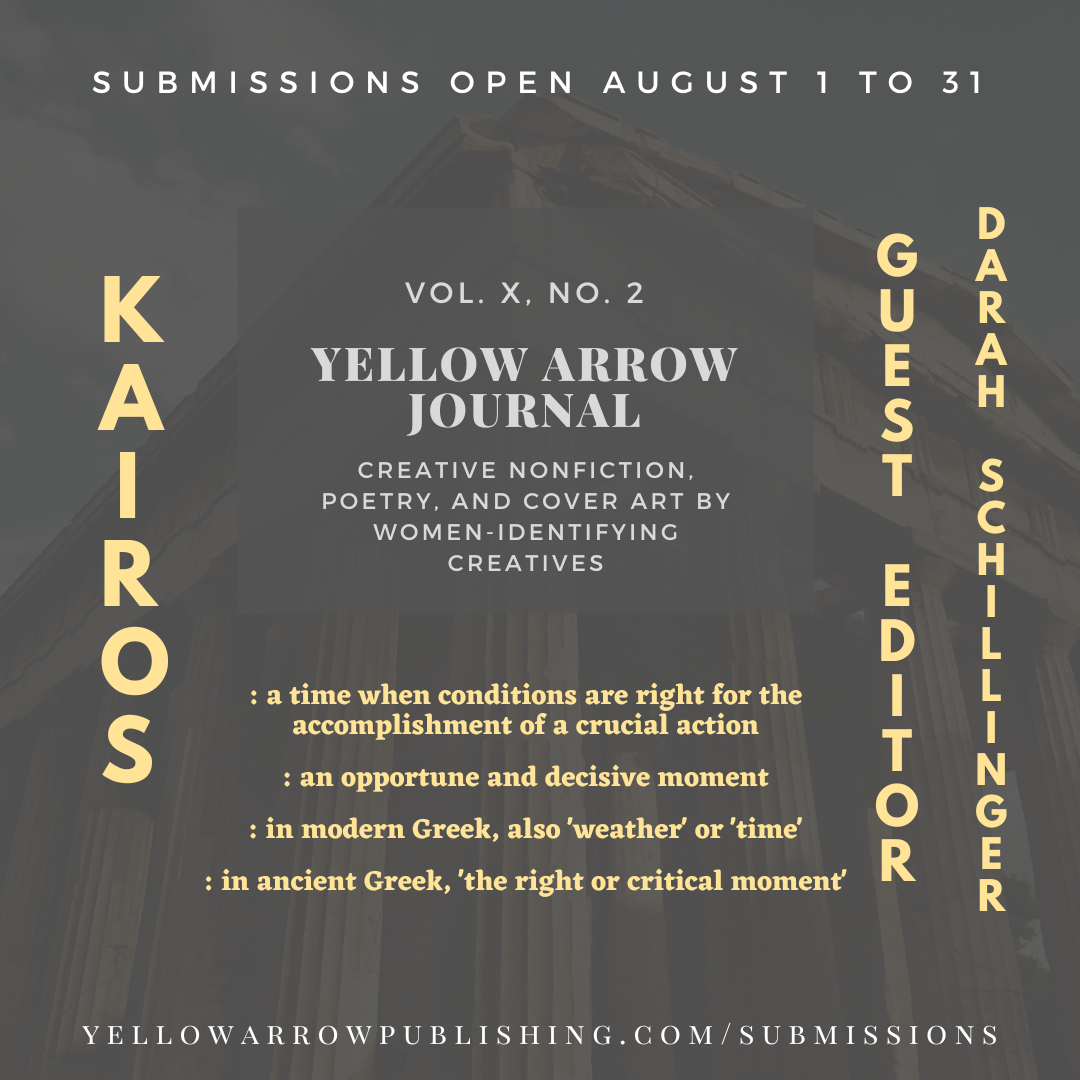
Yellow Arrow Publishing is excited to announce that submissions for our next issue of Yellow Arrow Journal, Vol. X, No. 2 (fall 2025) are open August 1-31, exploring the aftermath and aftereffects of catalytic moments, forged from either small flash fires or conflagration. And in her introductory blog, guest editor Darah Schillinger (she/her) explained how moments of her life, even those painful, helped to shape the person she is today.
“Over the two and half decades of my life so far, I have become and unbecome, unveiled and recovered, so many parts of my identity that when I look at a picture of myself young (“straight, neurotypical, healthy”) I instead see a child that I haven’t spoken to in 20 years and wish well. As a writer, I have spent much of my adult life considering the aftermath of these catalysts, looking for meaning in them and the varied ways these moments have shaped my present and future. And while finding some kind of meaning, every now and then, I know, and am okay with the fact, that I will continue to discover new things about myself through these events.”

By working through the aftermaths of each moment, each event, Darah was able to discover more about who she is and who she wants to be. Darah is a writer based in Lexington Park, Maryland. Her poems have appeared in AVATAR Literary Magazine, Yellow Arrow Journal, Maryland Bards Poetry Review, Empyrean Magazine, Grub Street Magazine, and The Eunoia Review and on the Spillwords Press website. In October 2024, her poem, An elegy for the Pompeii woman the Internet wants to fuck, was named a finalist for the Montreal International Poetry Prize. Her first poetry chapbook, when the daffodils die, was released in July 2022 by Yellow Arrow Publishing. Her second collection, Still Warm, is a work in progress.
The second issue of volume X will reflect on this idea, our (collective/individual) experiences with the blazes, trials, and/or life events that shape both our present and imagined futures as we search for our path(s) forward. This issue’s theme is KAIROS
: a time when conditions are right for the accomplishment of a crucial action
: an opportune and decisive moment
: in modern Greek, also ‘weather’ or ‘time’
: in ancient Greek, ‘the right or critical moment’
Here are some guiding questions about the topic and theme:
Consider the long-term effects of an event, feeling, or experience. How has it shaped you, your speaker, or your writing as a whole?
Has this impactful experience uncovered something positive?
What is the timeliness of your writing? What is it about now that makes you want to reflect?
When you write, what is it you are looking for? If you’re unsure, search for something.
Yellow Arrow Journal is looking for creative nonfiction, poetry, and cover art submissions by writers/artists who identify as women, on the theme of KAIROS. Submissions can be in any language as long as an English translation accompanies it. For more information regarding journal submission guidelines, please visit yellowarrowpublishing.com/submissions. Please read our guidelines carefully before submitting. To learn more about our editorial views and how important your voice is in your story, read about the journal. This issue will be released in November 2025.
The journal is just one of many ways that Yellow Arrow Publishing works to support and inspire women-identifying creatives through publication and access to the literary arts. Since its founding in 2016, Yellow Arrow has worked tirelessly to make an impact on the local and global community by advocating for writers who identify as women. Yellow Arrow proudly represents the voices of women from around the globe. Creating diversity in the literary world and providing a safe space is deeply important. Every writer has a story to tell, every story is worth telling.
*****
Yellow Arrow Publishing is a nonprofit supporting women-identifying writers through publication and access to the literary arts. You can support us as we BLAZE a path for women-identifying creatives this year by purchasing one of our publications or a workshop from the Yellow Arrow bookstore, for yourself or as a gift, joining our newsletter, following us on Facebook or Instagram, or subscribing to our YouTube channel. Donations are appreciated via PayPal (staff@yellowarrowpublishing.com), Venmo (@yellowarrowpublishing), or US mail (PO Box 65185, Baltimore, Maryland 21209). More than anything, messages of support through any one of our channels are greatly appreciated.
Gratitude is a Divine Emotion: Yellow Arrow Interns

“Gratitude is a divine emotion: it fills the heart, but not to bursting; it warms it, but not to fever.”
from Shirley by Charlotte Brontë
One of the many ways Yellow Arrow Publishing encourages women writers and women in publishing is through inclusion within the organization itself. We welcome (and thrive with) our volunteers and interns, not only for our own benefit but to also (hopefully) provide a prospective future publisher with some necessary tools and knowledge about the publishing world. And even if a volunteer/intern does not plan to continue within the publishing world, the tools and knowledge of working in a women-led, collaborative organization. One that champions the different and the unique. One that looks for partners and allies rather than simple connections (see our current list of partners here).
We try to find each volunteer, each intern, space in our organization to grow and flourish in the area they are most interested in (and of course where we need the most help!). Past staff members have worked at our live events and at Yellow Arrow House. They hand bound our publications and put as much love and tenderness into each copy as we could hope. Today they focus on the ins and outs of releasing a publication, running a publishing company, and our community-driven projects. Tasks can range from editing to formatting, marketing, and putting together events and workshops. Above all else, our interns support and champion staff/board, authors, workshop attendees, and themselves. We are so thankful to have had them with us on this journey.
So let’s introduce the summer 2025 interns. Each has our appreciation.
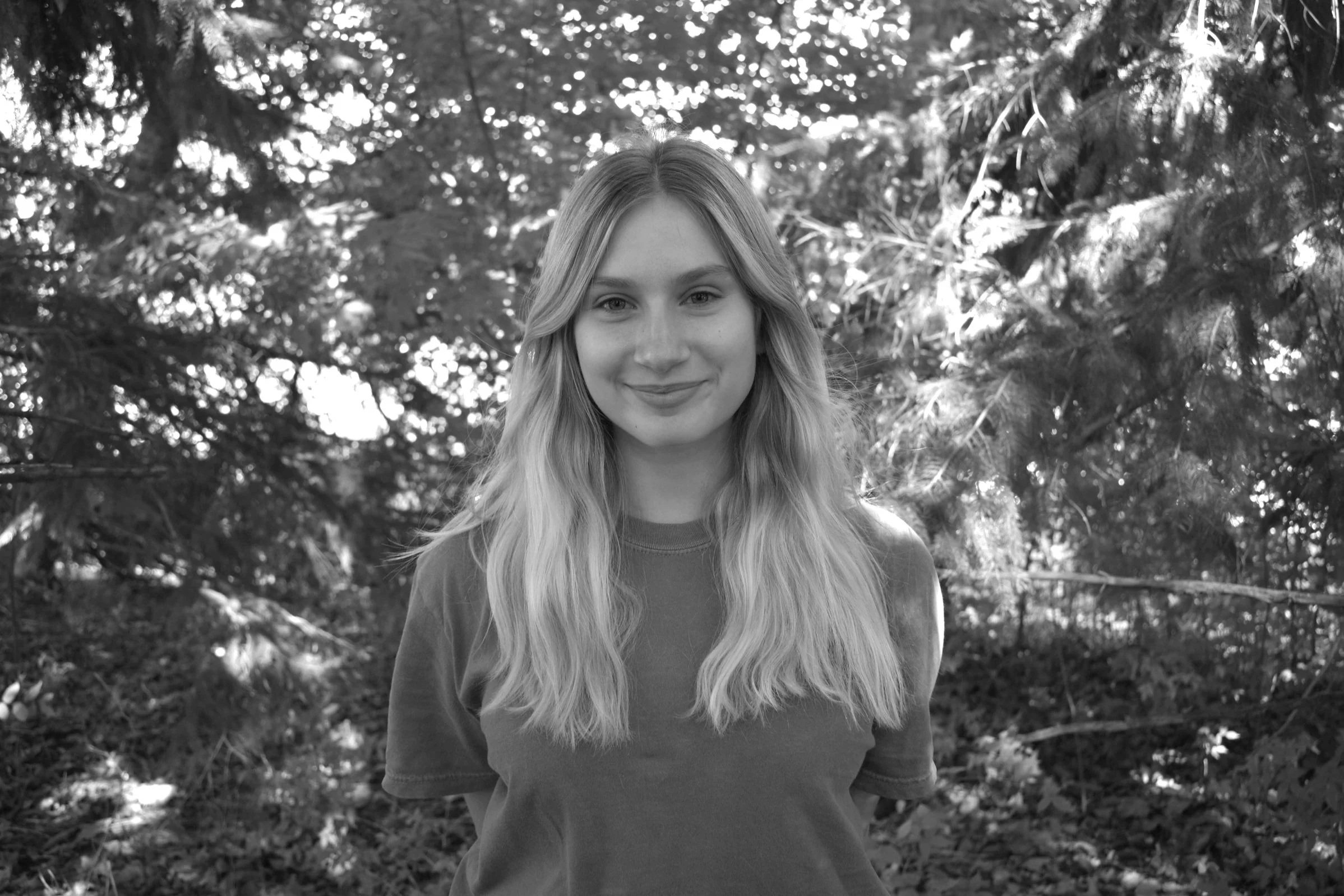
Kristen Caruso, Program Management Intern
From Hillsborough, New Jersey
What do you do? For Yellow Arrow, I work on the promotion for upcoming events, submissions, and [workshops and writers-in-residence] applications, creating social media graphics and pamphlets, scheduling posts, and writing captions. I also read and voted on the Vignette BLAZE submissions, edited part of the Yellow Arrow website, wrote blog posts, and created the July newsletter.
Where do you go to school? I’m a student at the University of Rochester, graduating in 2027.
What are you currently working on? Outside of Yellow Arrow, this summer I’m a calculus student, a writer of poetic prose and unfinished stories, an avid public library goer, a 5k runner, and an ocean swimmer.
Kristen Caruso (she/her) is a rising junior at the University of Rochester but calls New Jersey home. As a double major in English (creative writing) and business, with a minor in French, she hopes to combine her areas of study in a career in the publishing industry. Kristen’s interest in publishing began as the editor-in-chief of her high school’s yearbook organization and continues to thrive on the editorial board of her university’s art and literature journal, LOGOS. She enjoys coffee, the color green, poetry, nonfiction about trees, the ocean, Rochester snow, New Jersey pizza, music that’s somewhat bad, and lists that are too long. Find her on Instagram @kris10caruso.
She still has two more years left of school, but hopes to continue writing and learning for now, and eventually work in the publishing industry.
What is your favorite course at school? Why did you choose to take it?
I really enjoyed both my Intro to Fiction Writing and Intro to Poetry Writing courses. They were the first times I’ve truly been a part of a writing community, and I loved talking about writing and getting feedback from my peers.
Have you read anything this year that has stuck with you?
For my poetry writing class, I read Then the War, a collection of poetry by Carl Phillips. His work is just absolutely striking, and I connected deeply with a lot of his motifs—the ocean, forests, trees. Phillips came to my school to do a Q&A and a reading, and I loved hearing him talk about his work and how his life has impacted it.
Why did you choose an internship with Yellow Arrow?
When I first heard about Yellow Arrow, I was struck by its mission. Finding a cause worth working for and being passionate about was really important to me. And after meeting and working with people, I see how passionate they all are about it too.
How are things going so far?
Things are going really well! Everyone I have met and worked with are so kind and passionate about what they do. I love that my position requires me to meet different people and work on different projects.
Sophia Graney, Vignette BLAZE intern

From Fairfield, Connecticut
What do you do? I help a lot with all the work related to Yellow Arrow Vignette this summer. So far I’ve done lots of reading and reviewing/voting. Coming up is a lot of work in terms of sending emails, creating graphics and marketing for social media and for the website, and helping organize a launch event. As well as that, I’m helping more generally on reading and voting on chapbook submissions.
Where do you go to school? I’m going into my senior year at Loyola University Maryland! Graduation is expected to be May 2026.
What are you currently working on? Outside of Yellow Arrow, I’m working at my summer job at a beach. As well as that, I’m preparing for my senior year and my incoming role as student body president at Loyola. I’m also working on a few slow projects of beginning work for my senior thesis, teaching my younger cousin to read, and taking as many photos of life as possible.
Sophia Graney is a rising senior at Loyola University Maryland double majoring in English and writing with a keen interest in Shakespearean studies. With a myriad of passions, Sophia is constantly writing, organizing, and advocating for the student body as part of Loyola’s student government or chatting with friends for hours in the on-campus Starbucks. When not studying or writing her own poetry and prose in Loyola’s humanities building, Sophia can be found at Loyola’s rock-climbing wall or at the beach in her hometown of Fairfield, Connecticut. Find her on Instagram @sophia.graney.
She’ll [soon] be applying to graduate schools for funded English PhD programs!
What is your favorite course at school? Why did you choose to take it?
I can’t exactly choose one. I have two favorite courses that I have stuck with me. One was a civic literacy writing class where we learned about lots of issues facing literacy rates in our country and ways around Baltimore that were helping aid in the pursuit of reading and literary access. It was a service-based class that was taught by my favorite teacher and seemed like a no brainer to take. My other favorite class was my Shakespeare Histories and Tragedies class. I just love Shakespeare and learning about my favorite plays in a college setting was really exciting.
Have you read anything this year that has stuck with you?
On Photography by Susan Sontag.
Why did you choose to do an internship with Yellow Arrow?
Yellow Arrow was introduced to me by my friend Mel Silberger who had an internship with the press when I was a first year and she was a junior. She carried on with the group her senior year and to me, it just felt like something I wanted to be a part of, especially when I learned more about the mission of Yellow Arrow. Feminism and gender-based advocacy is a niche I have carved out for myself throughout my time in college and being a part of a woman-identifying press that aims to uplift voices is so important to me and just seemed like something I wanted to be a part of, even if just a little.
How are things going so far?
Excellent! I’m really loving the work that I’m doing. It didn’t feel like much in the beginning, just because it was a slow and steady stream of work. Now it’s more a cohesive list of objectives to complete, and I can start to see my work and its tangible effects which is always super awesome.
Kate Tourison, Publications Intern

Lives in Ellicott City, Maryland
What do you do? So far, I’ve had the pleasure of working closely with [editor-in-chief Kapua Iao] to read, format, and edit for Yellow Arrow chapbooks and Yellow Arrow Vignette BLAZE, create social media graphics to promote publications and writers in the community, engage with the Yellow Arrow website, Instagram, and Facebook, and begin writing some of my own pieces for the Yellow Arrow blog.
Where do you go to school? I go to Loyola University Maryland and will graduate next year, in May 2026.
What are you currently working on? It’s been a slow summer for me. I’ve just finished my fourth (and final) summer orientation at Loyola as a part of the new student and families programming. It’s always a highlight for me to help welcome the incoming class of first-year students and prepare for the fall semester. Aside from that, I’ve mostly been focused on graduate program research and working at my local ice cream shop.
Kate Tourison (she/her) is a rising senior at Loyola University Maryland where she majors in English and communication with a specialization in advertising and public relations. As a lifelong book lover, she is thrilled to join the Yellow Arrow team and engage with an inspiring community of women writers. During her spare time, she enjoys watching old episodes of Gilmore Girls, taking long walks with her dog, and, of course, reading! You can find her at @katetourison on Instagram.
She would love to continue working in publishing after graduation in some capacity, but being an English professor has also been a life-long dream. So I guess we shall see!
What is your favorite course at school? Why did you choose to take it?
This is a really tough one. I’m going to have to go with a tie between my seminars on Banned Books and James Joyce. The course on banned books was a no-brainer for me because I have always been passionate about reading and promoting diverse voices in literature and having conversations about the influence of modern politics on censorship. The class was an absolute blast. The class on James Joyce, on the other hand, was somewhat of a last minute decision. Ulysses was one of those books that felt impossibly daunting, even as an English major. The class, however, was such a rewarding experience with the most wonderful professor, and I can now confidently say that Joyce is one of my favorite writers.
Have you read anything this year that has stuck with you?
My gosh, I’ve gained a few new favorites this year. One that has really stuck with me is one of my first reads of the year, Yellowface by R.F. Kuang. The book follows June Hayward, a white woman and failed writer, after she steals a manuscript from successful Chinese American author Athena Lui and publishes it as her own. Kuang satirizes the U.S. publishing industry, commenting on the “push” for racial diversity and exploitation of minority stories and voices while simultaneously shedding light on the dangerous world of social media and “cancel culture.”
Why did you choose to do an internship with Yellow Arrow?
A friend of mine had previously interned for Yellow Arrow, and told me about their very positive experience. Combined with my interest in the company’s mission and ethos, working with Yellow Arrow was my top choice.
How are things going so far?
Amazing!
*****
Thank you to everyone who supports these women and all writers who toil away day after day. Please show them some love in the comments below or on social media. If interested in joining us as an intern, you can learn more at yellowarrowpublishing.com/internships.
Yellow Arrow Publishing is a nonprofit supporting women-identifying writers through publication and access to the literary arts. You can support us as we BLAZE a path for women-identifying creatives this year by purchasing one of our publications or a workshop from the Yellow Arrow bookstore, for yourself or as a gift, joining our newsletter, following us on Facebook or Instagram or subscribing to our YouTube channel. Donations are appreciated via PayPal (staff@yellowarrowpublishing.com), Venmo (@yellowarrowpublishing), or US mail (PO Box 65185, Baltimore, Maryland 21209). More than anything, messages of support through any one of our channels are greatly appreciated.
Her View Friday

Yellow Arrow Publishing supports women-identifying writers from a wide variety of backgrounds, not just because it’s the right thing to do, but because it makes us stronger. Women’s voices have historically been underrepresented in literature, and we aim to elevate those voices and stories through our programs, publications, and support.
Part of our mission in supporting and uplifting women-identifying creatives is to promote the Yellow Arrow community’s individual accomplishments. We’d like to further expand that support and promotion outside of our Yellow Arrow publications. Twice a month, we’d like to give a shout out to those within the Yellow Arrow community who recently published:
single-author publications
single pieces in journals, anthologies, etc., as well as prizes/awards, book reviews, and podcasts/interviews
You can support our authors by reading this blog and their work, sharing their news, and commenting below or on the blog. Congratulations to all the included authors. We are so proud of you!
Every writer has a story to tell and every story is worth telling

“Intervals” by Heather Brown Barrett from Virginia
Genre: poetry
Name of publication: The Ekphrastic Review
Date Released: June 27, 2025
Type of publication: online (scroll down to find the poem)
ekphrastic.net/the-ekphrastic-challenges/kaz-ogino-ekphrastic-writing-responses
Find Heather on Instagram @heatherbrownbarrett.
PRIZES/AWARDS
“Song” by Rebecca Brock from Virginia
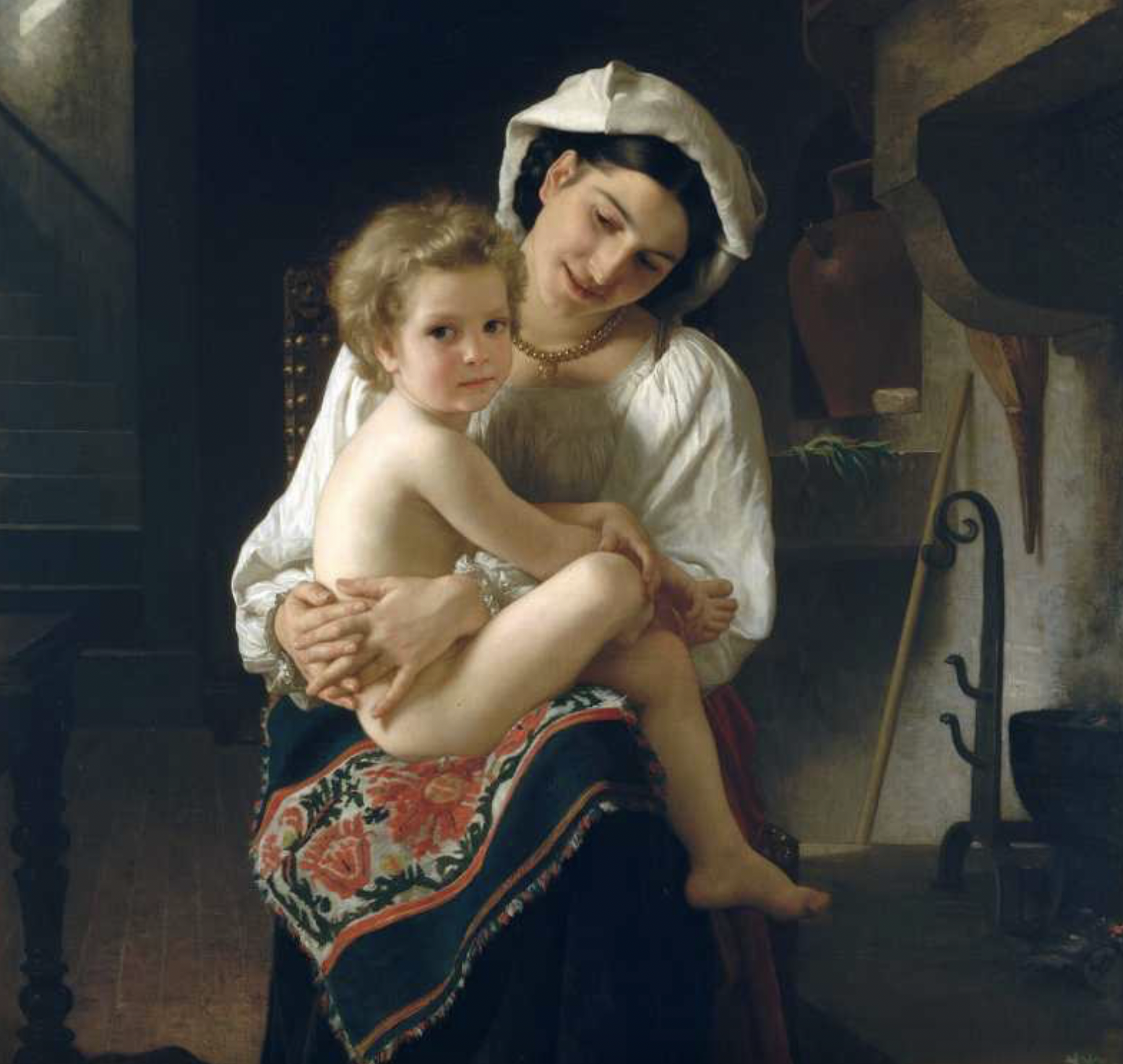
Genre: poetry
Name of award: 2025 Lascaux Prize in Poetry from The Lascaux Review
Date: June 26, 2025
lascauxreview.com/contest-results/
Find Rebecca on Instagram @rebecca_brock.writer.
Yellow Arrow (past and present) board, staff, interns, authors, residents, and instructors alike! Got a publication coming out? Let us help celebrate for you in Her View Friday.
Single-author publications: here.
Single pieces as well as prizes/awards, book reviews, and podcasts/interviews: here.
Please read the instructions on each form carefully; we look forward to congratulating you!
*****
Yellow Arrow Publishing is a nonprofit supporting women-identifying writers through publication and access to the literary arts. You can support us as we BLAZE a path for women-identifying creatives this year by purchasing one of our publications or a workshop from the Yellow Arrow bookstore, for yourself or as a gift, joining our newsletter, following us on Facebook or Instagram, or subscribing to our YouTube channel. Donations are appreciated via PayPal (staff@yellowarrowpublishing.com), Venmo (@yellowarrowpublishing), or US mail (PO Box 65185, Baltimore, Maryland 21209). More than anything, messages of support through any one of our channels are greatly appreciated.
Breath, Poetry, Belonging, and Love—Homing: Poems by Emily Decker

Yellow Arrow Publishing announces the release of our second chapbook of 2025, Homing: Poems by Emily Decker. Since its establishment in 2016, Yellow Arrow has devoted its efforts to advocate for all women writers through inclusion in the biannual Yellow Arrow Journal as well as single-author publications and Yellow Arrow Vignette, and by providing strong author support, writing workshops, and volunteering opportunities. We at Yellow Arrow are excited to continue our mission by supporting Decker in all her writing and publishing endeavors. Get your copy today at yellowarrowpublishing.com/store/homing-poems-paperback.
Homing: Poems explores the transitory nature of belonging and how we navigate our sense of place within our communities, relationships, and the natural world. The poems in this debut collection reflect on the interconnectedness of the paths we take and the moments along the way—between tides and seasons, in nature, amidst love and friendship, through memory and loss, over generations, and most of all, within ourselves—as we seek, find, and return to a place called home.

Decker was born in Virginia, on the Chesapeake Bay, and spent her childhood in Ghana and her growing-up years in Atlanta, Georgia. She holds degrees in literature and secondary English education from Georgia State University, and her poetry has appeared in Yellow Arrow Journal, Full Bleed, Hole in the Head Review, and Bay to Ocean Journal. Decker currently resides in Baltimore, Maryland, where she also loves to participate in local theater, sing, and sail.
The cover and interior art were created by Alexa Laharty. According to Decker, the cover is based on a photograph she took of herself. Alexa “was able to take that photo and run with it, creating an image that I think sets up the themes across the collection quite poignantly.”
Paperback and PDF versions Homing: Poems are now available from the Yellow Arrow bookstore. If interested in purchasing more than one paperback copy for friends and family, check out our discounted wholesale prices here. You can also search for Homing: Poems wherever you purchase your books including Amazon, Barnes & Noble, and Kobo. To learn more about Decker and Homing: Poems, check out our recent interview with her.
You can find Emily Decker on Instagram and Facebook @emadeck or at emilydeckerpoetry.com and connect with Yellow Arrow on Facebook and Instagram, to share some love for this chapbook. You can also share a review to any of the major distributors or by emailing editor@yellowarrowpublishing.com. We’d love to hear from you.
*****
Yellow Arrow Publishing is a nonprofit supporting women-identifying writers through publication and access to the literary arts. You can support us as we BLAZE a path for women-identifying creatives this year by purchasing one of our publications or a workshop from the Yellow Arrow bookstore, for yourself or as a gift, joining our newsletter, following us on Facebook or Instagram, or subscribing to our YouTube channel. Donations are appreciated via PayPal (staff@yellowarrowpublishing.com), Venmo (@yellowarrowpublishing), or US mail (PO Box 65185, Baltimore, Maryland 21209). More than anything, messages of support through any one of our channels are greatly appreciated.
Become and Unbecome, Unveil and Recover
Yellow Arrow Publishing would like to announce the next guest editor for Yellow Arrow Journal, Darah Schillinger. Darah will oversee the creation of our Vol. X, No. 2 issue (fall 2025). This next issue of Yellow Arrow Journal examines the aftermath and aftereffects of catalytic moments, forged from either small flash fires or conflagration. It will reflect on our (collective/individual) experiences with the blazes, trials, and/or life events that shape both our present and imagined futures as we search for our path(s) forward.
MARK YOUR CALENDARS:
Theme announcement: July 21
Submissions open: August 1
Submissions close: August 31
Issue release: November 11
Darah Schillinger (she/her) is a writer based in Lexington Park, Maryland. Her poems have appeared in AVATAR Literary Magazine, Yellow Arrow Journal, Maryland Bards Poetry Review, Empyrean Magazine, Grub Street Magazine, and The Eunoia Review and on the Spillwords Press website. In October 2024, her poem, An elegy for the Pompeii woman the Internet wants to fuck, was named a finalist for the Montreal International Poetry Prize. Her first poetry chapbook, when the daffodils die, was released in July 2022 by Yellow Arrow Publishing. Her second collection, Still Warm, is a work in progress.
Please follow Yellow Arrow on Facebook and Instagram for the theme announcement. Below, Darah explains how moments of her life, even those painful, helped to shape the person she is today. By working through the aftermaths of each moment, each event, Darah was able to discover more about who she is and who she wants to be. We look forward to working with Darah over the next few months and can’t wait to hear your words.
The following contains description of trauma
By Darah Schillinger
When I was seven years old, my father’s brother passed away suddenly, and I was told he had suffered a heart attack. It wasn’t until I was 15 that I learned he was bipolar and had violently taken his own life after multiple attempts over the years, and that my parents had protected me from knowing about his struggle with depression. As a child, mental illness was not discussed in my household because it was often synonymous with substance abuse, or rage, or betrayal. Testing and therapy were not considered, and if a family member was showing obvious signs or symptoms of an illness, it was whispered about in car rides before holidays or hushed corners of my grandmother’s house between dinner and dessert. We rarely spoke of my uncle, a veteran; by all accounts an angry man who failed, or was failed by, the system.
In middle school, I gravitated toward the “funny” kids that seemed to only fit in with each other. Looking back, they were all neurodivergent in some way, though we hadn’t been given a word for it yet. Many of them also identified as bisexual, or lesbian, or queer, and I was bestowed the honor of “the token straight friend” of the group, which I carried for years with pride. When my friends began confiding in me about their depression, or their social anxiety, or inability to understand social cues, I listened and did my best to remain empathetic, though I often struggled to understand because I had never experienced what they were describing. Growing up, I was considered a happy, outgoing, high-achieving kid with a stable home life. The one time I was tested for ADHD, the child psychiatrist told my parents I was just smart and bored, so I was acting out, which they proudly told to the rest of the family. In this way, I became the “token neurotypical friend,” too, though I wouldn’t confront this label for another decade.
I didn’t find many large pieces of my identity, such as my queerness, my chronic illness, or my mental illness, until I was a young adult. I spent my entire childhood wrongly labelled an ally to the queer and disabled communities, when, in reality, I was a part of the communities the entire time. But with all these aspects of my identity, there is a doubt that creeps into their legitimacy. I am mentally ill, but I’m “high functioning.” I am queer, but in a straight passing relationship. I am chronically ill but carry forward an invisible illness. I pose every day as a supportive ally when, in reality, I am a rightful member of the communities I serve, and this dichotomy often seeps into my writing. So, when I began brainstorming themes for this upcoming issue of Yellow Arrow Journal, I kept thinking about my uncle and my need for answers—for closure. In returning to these seemingly contradictory parts of myself, their discovery and their long-term effects on my identity, I am finding something entirely new.
There was a catalyst that accompanied each of my discoveries: a fatigue, or event, or an epiphany that led to me uncovering each buried part of myself. I discovered my bisexuality by chance during the first week of college, when I picked up a pin with the bisexual flag colors and allowed myself to consider, for the first time, my repressed feelings of attraction toward women. My chronic illness stemmed from a doctor’s visit after weeks of severe abdominal pain that was misdiagnosed twice before being taken seriously. My mental illness, which I have only this past June been formally diagnosed with, began as a minor inconvenience and turned into severe burnout that led to the beginnings of a nervous break. Even my uncle’s passing, though I can barely remember it now, was a catalyst for something I have yet to title or address.
Over the two and half decades of my life so far, I have become and unbecome, unveiled and recovered, so many parts of my identity that when I look at a picture of myself young (“straight, neurotypical, healthy”) I instead see a child that I haven’t spoken to in 20 years and wish well. As a writer, I have spent much of my adult life considering the aftermath of these catalysts, looking for meaning in them and the varied ways these moments have shaped my present and future. And while finding some kind of meaning, every now and then, I know, and am okay with the fact, that I will continue to discover new things about myself through these events.
In this issue of Yellow Arrow Journal, let’s reflect on our catalysts, the moments and memories that shape us, and the timeliness of the aftermath. In what ways has it shaped our identities? Our imagined futures? I invite you to take this submission period as an opportunity to dig into the core memories and catalysts until you find something worth writing about.
*****
Yellow Arrow Publishing is a nonprofit supporting women-identifying writers through publication and access to the literary arts. You can support us as we BLAZE a path for women-identifying creatives this year by purchasing one of our publications or a workshop from the Yellow Arrow bookstore, for yourself or as a gift, joining our newsletter, following us on Facebook or Instagram, or subscribing to our YouTube channel. Donations are appreciated via PayPal (staff@yellowarrowpublishing.com), Venmo (@yellowarrowpublishing), or US mail (PO Box 65185, Baltimore, Maryland 21209). More than anything, messages of support through any one of our channels are greatly appreciated.
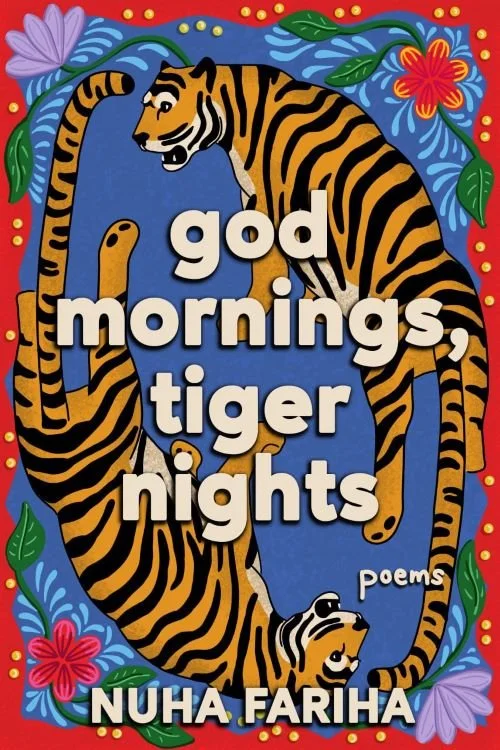
Review of God Mornings, Tiger Nights by Nuha Fariha
By Cecelia Caldwell
What does it mean, as a person, to be whole? In her recently published poetry collection, God Mornings, Tiger Nights, Nuha Fariha answers that to be whole is to be an amalgamation of many different pieces.
As a writer myself, I often struggle to decide what to write about. Both the world and my identity boast infinite issues, nuances, and quirks about which I could write, but at the same time I always doubt if there’s any one thing I can write about in a way that is thorough, moving, interesting, and the list goes on. I think I could learn a thing or two from Nuha and her embrace of transforming the disjointed into something whole.
From abecedarians to prose poems, and everything in between, God Mornings, Tiger Nights is just as varied in structure as it is in content. Nuha, in only 55 pages, manages to navigate and explore with nuance her identity as a first generation Bangladeshi American, body image and the ways in which women are perceived and degraded in society, motherhood, racism, and family—the list goes on.
I thoroughly relished my reading experience of this book, though as I sat down to write this review, I struggled to think of what to say. God Mornings, Tiger Nights isn’t really about anything. Rather, it lives and breathes; it meanders down the road that is life and, on its way, manages to paint images that are eloquent and tender yet acerbic and hard hitting at the same time. I direct you first to a passage from “Anthem for a Young Girl with a Positive PPD Test”:
“Your cells are 56,977 miles squared. They are small mountains with rambling goats, dense forests with stalking tigresses, clear lakes with diving kingfishers, algae dappled ponds with swimming monkeys. Your tissues are holy: like the marriage of cardamom, cloves and cinnamon sticks. Your heartbeat is the steady tabla under Ferdous’s callused hands. You are 56,977 miles squared, 3 million people strong. You are a miracle and nothing less.”
Here, Nuha focuses her gaze from the atomic level all the way up to the divine. “Your tissues are holy. You are a miracle and nothing less.” Is there anything more remarkable than that?
In “Shanta in her Kitchen,” Nuha’s words, written in both English and Bengali, invite the reader into the kitchen, allowing us to relish in spellbinding sights, sounds, and aromas:
“Lamb’s breath sauteed with cumin, onions, garlic and green chillis from Aladdin’s Grocery on 14th and Jasper clings to her collar like an expensive perfume. The water hisses when it’s poured over, steam rising in protest. She traps under the lid, allowing a single stream to whistle her a lonely tune.”
Nuha’s lyrical verse has a way of capturing you, sucking you into her world and making sure you’re experiencing everything as if you’re there with her. She is not only a master of imagery, but a master of all the senses, in a way that I’ve rarely seen before. “Shanta in her Kitchen” makes me feel like I’m in a kitchen myself, listening to the sizzle of garlic in oil and inhaling its aromatic sweetness.
“A New Citizenship Test,” in contrast, skews political, as Nuha challenges the United States’ so-called “democratic” structures and practices through a series of rhetorical questions. She especially directs her indictment toward Donald Trump, infusing her searing critique with statistics and fact:
“What are the duties of the President?
To keep peace and unity among the American people.
Who was the only American president to be impeached twice?
Donald Trump.
If over 650 white supremacists convene in one area, plant a bomb, and kill 5 people, what does the President do?
Nothing.”
While Nuha knows how to master subtlety, she simultaneously refuses to shy away from bluntness. It is, in one word, refreshing.
Nuha masters what we all know in our hearts as we move through life: that to exist is both beautiful and tragic. It is to be at peace and angry at the same time. It is to read both poetry and the news. Our lives, then, are not novels; they are not stories to read from beginning to end, and that are tied together by one unifying theme. We are, rather, a collage or a collection of poetry. A bunch of lines, thoughts, and hidden meanings, that come together to form something not quite unified, but still whole.
So, after hours spent mulling over what this collection really means to write a meaningful review, I think I’ve come to an answer. It means nothing specific, really, but at the same time it means everything. To be human is, as Walt Whitman so masterfully put it, to contain multitudes. God Mornings, Tiger Nights, in so few pages, spans an entire universe, and while doing so it manages to fill your nose with beautiful scents and your heart with insurmountable grief.
I leave you with this quote, from Nuha’s “Breathe:”
“Breathe. Carve your name on molten surfaces. Breathe. Breathe. Don’t stop. Breathe and breathe and breathe and breathe”
God Mornings, Tiger Nights was released in August 2023 and is available from Game Over Books at gameoverbooks.com/product-page/god-mornings-tiger-nights.
Cecelia Caldwell is a rising junior at Middlebury College studying English on the creative writing track. She is minoring in Anthropology and Spanish. An avid reader and lover of words, Cecelia is passionate about publishing, editing, storytelling, literacy, and the diversification of all of these fields. In her free time, Cecelia enjoys writing satire, working out, cooking, and tending to her garden. She lives in western Massachusetts with her mom and two dogs, Ollie and Ernie.
*****
Yellow Arrow Publishing is a nonprofit supporting women-identifying writers through publication and access to the literary arts. You can support us as we BLAZE a path for women-identifying creatives this year by purchasing one of our publications or a workshop from the Yellow Arrow bookstore, for yourself or as a gift, joining our newsletter, following us on Facebook or Instagram, or subscribing to our YouTube channel. Donations are appreciated via PayPal (staff@yellowarrowpublishing.com), Venmo (@yellowarrowpublishing), or US mail (PO Box 65185, Baltimore, Maryland 21209). More than anything, messages of support through any one of our channels are greatly appreciated.
Writer’s Block: Wanting to Write But Having Nothing to Say
By Jacqueline Goldman, written February 2025
There’s nothing quite as frustrating as staring at a blank page, fingers hovering over the keyboard, mind utterly empty. You want to write. You sit down to do it. But somehow, nothing comes. Your brain, so full of thoughts just moments ago, has hit an inexplicable wall. It’s frustrating, disheartening, and, if you’re working on a deadline, downright stressful.
Here’s the thing—this happens to every writer. You’re not alone, and you’re certainly not any less of a writer because of it. Even the most seasoned authors, those who have written bestsellers or won literary awards, experience this exact struggle. So, what can you do?
Writer’s block isn’t just about being out of ideas. Sometimes, it’s having too many scattered thoughts that refuse to take shape. Other times, it’s feeling like every idea you have is uninspired or not worth writing about. The irony, of course, is that the best way to overcome writer’s block is to write about it.
That’s exactly what I do. When I feel stuck, I write about being stuck. And in doing so, I inevitably find my way out.
It sounds counterintuitive, but if you don’t know what to say, then say exactly that. Describe the frustration, the blinking cursor, the way your mind feels like a snow globe that refuses to settle. Sometimes, the act of acknowledging the block is enough to loosen its grip. Other times, it’s just the beginning of a longer battle, one that requires patience and a willingness to push forward despite the discomfort.
Next, set small, achievable goals. Instead of pressuring yourself to produce a masterpiece, commit to just writing a sentence. Then another. Give yourself permission to write terribly—because bad words on a page are still words, and they can always be revised later.
If you’re stuck, don’t start with your main project. Instead, try a creative warm up. Freewrite for five minutes about anything, use a writing prompt, or describe a mundane object in extreme detail. Engaging with words in a low-pressure way can help ease you into a more productive mindset. I often find myself writing short poems to begin. These exercises may seem trivial, but they act as mental stretches, preparing your brain for deeper creative work.
Another trick? Change your scenery. Step away from your desk, go for a walk, people watch at a café or switch to pen and paper. A shift in surroundings can do wonders for shaking loose new ideas.
Just this afternoon, when I did this, I found a little nook in the Humanities Department at my school. It looked like something straight out of Harry Potter’s world, and that alone was enough to inspire a new piece of writing. Inspiration often hides in unexpected places—you just have to give yourself the chance to find it.
Speaking of books, read something that inspires you. Sometimes, the best way to get words flowing is to consume good writing. Whether it’s poetry, essays, or even an old piece of your own that you’re proud of, seeing the rhythm of language on the page can help reignite your creative instincts. Reading reminds you why you love words in the first place and can rekindle that spark of motivation.
If writer’s block persists, try writing in a distraction-free environment. In today’s world, distractions are everywhere. Social media, emails, and the endless stream of notifications can make it difficult to focus. Use apps that block notifications, set a timer for focused writing, or go old school with a notebook and pen.
And if that doesn’t work? Step away. If the words refuse to come, let them be. Give yourself permission to do something completely different. Cook a meal, take a shower, doodle in a notebook. Sometimes, the best ideas arrive when you’re not searching for them.
I’ve found that movement often helps. A simple walk outside can do wonders, but if you want to shake things up, try a new form of exercise—I commit to spin classes twice a week and sometimes they’ll have unique and creative themes that get me energized, shaking loose whatever thoughts were stuck in my subconscious.
Another approach is to write from a different perspective. If you feel blocked writing in the first person, try the third. If you’re stuck in prose, switch to poetry. If words aren’t working at all, draw. Creativity is fluid, and sometimes, taking a detour helps you return with fresh eyes.
Think about your favorite writers; chances are, they’ve struggled with this, too. Read their interviews, their essays on writing. Many authors openly discuss their battles with writer’s block and their personal tricks to overcome it. Sometimes, just knowing that even the greats wrestle with the blank page can be comforting.
Try embracing the block instead of fighting it. What if, instead of seeing it as an obstacle, you viewed it as a sign that something inside you needs more time to develop? Not every moment has to be productive. Some of the best writing happens after periods of silence.
Alternatively, when you feel the pressure to create, try to start and explore things from a different point of view. You can avoid the trap of rationalization and instead, find yourself accidentally creating something of value.
Writing is an act of discovery. If you sit down expecting brilliance, you’re setting yourself up for frustration. Instead, treat it as an experiment. What happens if you write without thinking? Without worrying? What if you just let the words lead you?
Once you start, momentum takes over. One sentence leads to another. One thought sparks the next. And before you know it, you’re no longer stuck. You’re writing.
You can do anything for five minutes, right? Well, typing with writer’s block is an uncomfortable feeling—like putting in your eye contacts in the morning. But once you’ve fought through the awkward stage, you can finally see clearly.
Above all when you have writer’s block, be kind to yourself. Writing isn’t about perfection—it’s about showing up. Some days will be harder than others, but if you keep putting words down, even when they feel clumsy or pointless, you’ll break through the block. And before you know it, you’ll be writing again.
Jacqueline Goldman (she/her) is an aspiring publishing professional and junior at Loyola University Maryland pursuing a degree in communication and media with a specialization in journalism and a minor in writing and business journalism. With experience as managing editor-in-chief for The Greyhound, nonfiction editor at Corridors Literary Magazine, and acquisitions editor at Apprentice House Press, she enjoys shaping compelling narratives and pushing the envelope.
*****
Yellow Arrow Publishing is a nonprofit supporting women-identifying writers through publication and access to the literary arts. You can support us as we BLAZE a path for women-identifying creatives this year by purchasing one of our publications or a workshop from the Yellow Arrow bookstore, for yourself or as a gift, joining our newsletter, following us on Facebook or Instagram, or subscribing to our YouTube channel. Donations are appreciated via PayPal (staff@yellowarrowpublishing.com), Venmo (@yellowarrowpublishing), or US mail (PO Box 65185, Baltimore, Maryland 21209). More than anything, messages of support through any one of our channels are greatly appreciated.
Her View Friday
Yellow Arrow Publishing supports women-identifying writers from a wide variety of backgrounds, not just because it’s the right thing to do, but because it makes us stronger. Women’s voices have historically been underrepresented in literature, and we aim to elevate those voices and stories through our programs, publications, and support.
Part of our mission in supporting and uplifting women-identifying creatives is to promote the Yellow Arrow community’s individual accomplishments. We’d like to further expand that support and promotion outside of our Yellow Arrow publications. Twice a month, we’d like to give a shout out to those within the Yellow Arrow community who recently published:
single-author publications
single pieces in journals, anthologies, etc., as well as prizes/awards, book reviews, and podcasts/interviews
You can support our authors by reading this blog and their work, sharing their news, and commenting below or on the blog. Congratulations to all the included authors. We are so proud of you!
Every writer has a story to tell and every story is worth telling
“Hunting Dog” by Heather Brown Barrett from Virginia
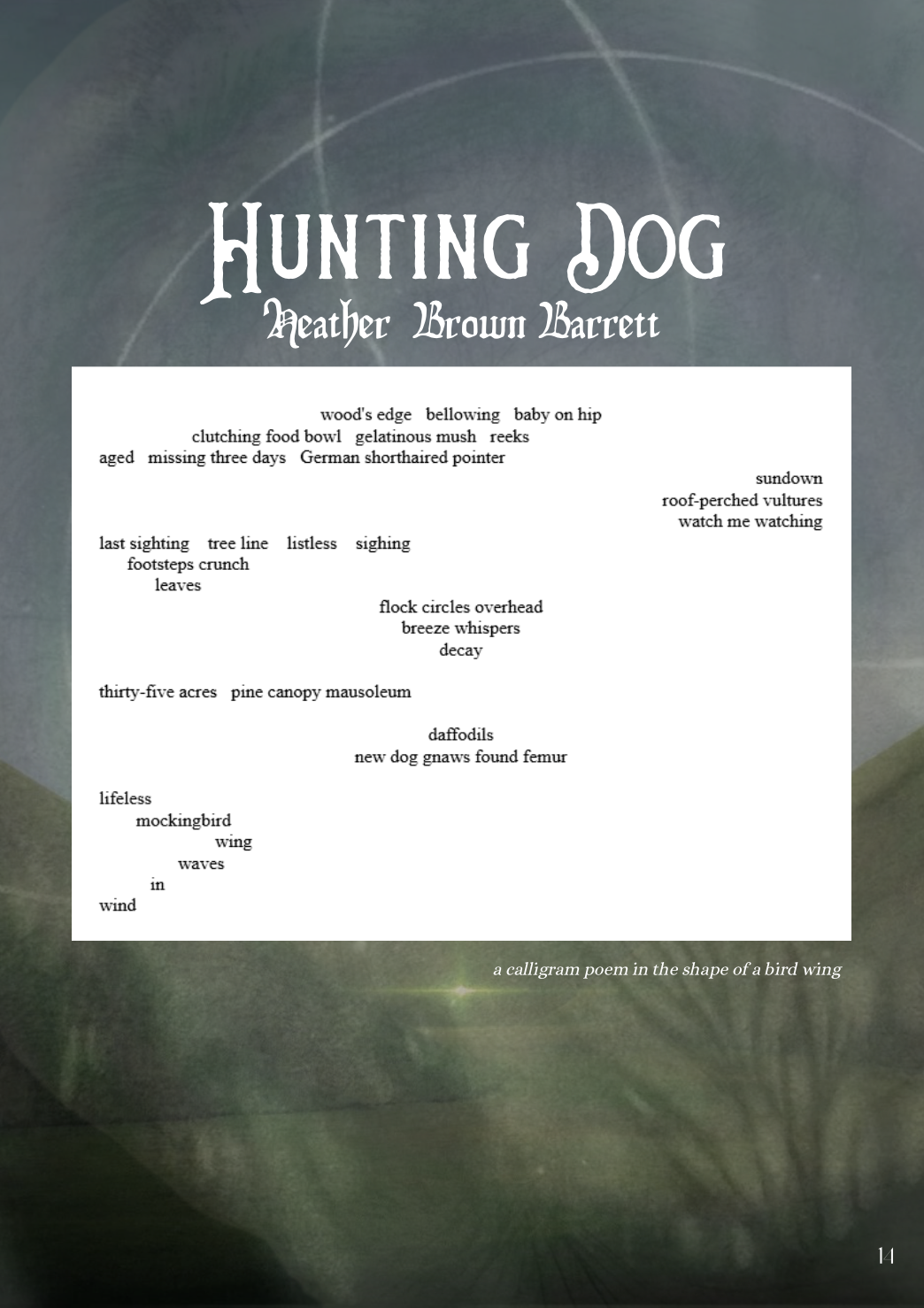
Genre: poetry
Name of publication: The Solitude Diaries (Issue IV: Renascent)
Date Released: June 1, 2025
Type of publication: online
Yellow Arrow (past and present) board, staff, interns, authors, residents, and instructors alike! Got a publication coming out? Let us help celebrate for you in Her View Friday.
Single-author publications: here.
Single pieces as well as prizes/awards, book reviews, and podcasts/interviews: here.
Please read the instructions on each form carefully; we look forward to congratulating you!
*****
Yellow Arrow Publishing is a nonprofit supporting women-identifying writers through publication and access to the literary arts. You can support us as we BLAZE a path for women-identifying creatives this year by purchasing one of our publications or a workshop from the Yellow Arrow bookstore, for yourself or as a gift, joining our newsletter, following us on Facebook or Instagram, or subscribing to our YouTube channel. Donations are appreciated via PayPal (staff@yellowarrowpublishing.com), Venmo (@yellowarrowpublishing), or US mail (PO Box 65185, Baltimore, Maryland 21209). More than anything, messages of support through any one of our channels are greatly appreciated.
The Breath of Poetry: A Conversation with Emily Decker
Poetry is an elastic and enigmatic form that can herald epic histories and also whisper the simple narratives of life. Beauty and inspiration can be found in poetry, whatever the subject, whatever the form. Poets like Emily Decker, whose debut poetry chapbook Homing: Poems is forthcoming from Yellow Arrow Publishing, remind us to stop and breathe in our environment, to appreciate each moment for all it contains.
Decker is a poet who currently resides in Baltimore, Maryland. Homing: Poems reflects relational connections and seasons of community in our lives and breathes new life into themes surrounding identity and belonging. The collection embraces the energy of the quotidian and yet encourages readers to look beyond the surface of our surroundings. We are excited to introduce Decker along with the exquisite cover of Homing: Poems (discussed further below). Reserve your copy at yellowarrowpublishing.com/store/homing-poems-paperback and make sure to leave some love for Decker here or on social media.
Melissa Nunez, Yellow Arrow interviewer, and Decker engaged in conversation through email where they discussed the creative impact of nature and our (human) habitats, and the magic encompassed in everyday existence.
May you outlive yourself by lifetimes,
storing up your sporadic fill of city tap
and regenerating from your hacked off stems,
so the next generations—or maybe just a future me—
can see what it means to grow out of our ends.
“Ode to Granddaddy Aloe”
Who are some of your favorite women-identified writers?
Oh, where to begin? Ada Limón, Linda Pastan, Marie Howe, and Mary Oliver have been my go-to poetry companions the past few years. In the fiction realm, I’ve been catching up on Nicole Krauss and Zadie Smith novels. Bernadine Evaristo’s Girl, Woman, Other was one of my favorite reads within the past several years. Ann Patchett’s novels have also been regulars in the nightstand pile.
What first drew you to poetry?
Throughout school, I always enjoyed reading and analyzing poetry. During undergrad, I gravitated toward the Victorians and the Beat poets of the ‘50s—something about the lyricism and angst of each of those eras really captivated me.
But I didn’t start writing poetry until grad school when—on a whim—my friend and I signed up for a workshop with David Bottoms, Georgia’s poet laureate at the time. He emphasized the role of narrative in a poem, and it was the first time I felt like the poem is where I belong as a writer.
His encouragement in that class, along with that of dear friends over the years, is what has continued to bring me back to the form—even after some long writing dry spells.
How did you hear about Yellow Arrow Publishing? What inspired you to submit your work?
Not long after I moved from Atlanta [to Baltimore] a few years ago, I started to focus on my writing again and took a poetry class with Ann Quinn through The Writer’s Center. Ann works with many of the authors at Yellow Arrow Publishing and encouraged us to submit for their upcoming journal, KINDLING (Yellow Arrow Journal, Vol. VIII, No. 1). I did, and “Boxing Day” became my first published poem. I loved the mission of Yellow Arrow from the start and knew that if I ever finished this chapbook, they would be at the top of my submission list. I’m beyond thrilled that Homing: Poems is in their hands.
The ruins speak to you,
don’t they? I smile, mostly
at the irony of your sound.
A squawk, really. A reminder
that grace can also be jarring,
that sometimes presence is
more memorable
than performance.
“Heron in Blue”
I love the nature imagery in your collection. Can you share your favorite bird and its significance in your life and writing?
Any time I’m near the water, I’m looking for great blue herons. They are the most elegant birds when you see them standing still, but there’s a delightful awkwardness to them, too—almost like they’re out of place and time. I often feel that way, and that out-of-placeness is a throughline in this collection. It’s just one of many examples of how we often look to the natural world and other forms of life to see ourselves reflected back in some universal way.
As an extension of that, can you also share your favorite flower and its significance in your life and writing?
I am notorious for killing my plants, although I have acquired a slightly greener thumb over the years. The aloe in “Granddaddy Aloe” is the only plant I’ve kept alive for any great length of time. But I do love flowers and generally try to keep fresh cut ones around. Not to be morose, but flowers remind me that delight and beauty are often ephemeral. So, in terms of a favorite flower, it’s usually whatever is right in front of me.
In your experience, how much do our habitats, like the creatures in your poems, speak to our identities?
I think we come to know who we are—as individuals and within the human collective—by recognizing the symbols of ourselves in the world around us. My habitat tends to be a reflection of me, or at least an aspect of my identity in the moment (e.g., the growing pile of unfolded clothes on the bed when I’m overwhelmed and myriad other ways the level of tidy or untidy in my life reflects my state of mind).
So, when I’m in another habitat, natural or otherwise, I think I’m instinctively looking for signs of myself to be reflected back, either for a sense of belonging or for insight about the world and my place within it. That’s what much of this collection and my own growth as a woman and a writer swirl around.
They say “when pigs fly” as if it’s something impossible, fantastical even. But clearly, they’ve never met my sisters and me.
“Sisterhood”
I loved the magic in your poem “Sisterhood.” What about this relationship drew you to the surreal?
The very nature of relationships, particularly between women, have a surreal quality to me. It’s a collision of stark reality and the magic of living, fantastical or not, that moves us from moment to moment in our shared lives. So, I wanted to try to capture that in this poem and through the surreal form. The sisters in my life—by birth and by friendship—are incredible women, and they are my constant reminder that not everything is beyond my capacity for endurance, for belief, for joy, or for love.
How do you tap into the mystical in the mundane in your poetry (i.e., “Road-Trip Coffee” and “Theme on a Pink Geranium”)?
I so resonate with the philosophy of everyday life as a source of wonder and the sublime. I grew up within a belief system based on an absolute idea of good and bad, heaven and hell, right and wrong, and a goal to make others subscribe to those same beliefs. Very little of what I was taught when I was young had to do with acknowledging the mystery in things and other people. These days, I fall somewhere between agnosticism and mysticism in my approach to life. But at the end of the day, I believe there is more to be gained in recognizing the unknown—and therefore the magic—flowing through our everyday lives.
As a poet, the senses are the vehicle for tapping into this concept. In “Road-Trip Coffee,” I use synesthesia to illustrate the associative nature of our senses within our memories and the feeling of uncertainty that comes in ending relationships. “Theme on a Pink Geranium” uses a familiar melody as the backdrop to a seemingly mundane interaction during a trip to a grocery store. In these examples, and in life in general, I find our senses work together, and in conflict at times, to provide our little revelations about the world and all that we don’t (or can’t) know.
The radio static smokes
out what I’ve wanted to say
for a week—the words,
a little acrid. My voice
cracks into embers
that slow dance by you
“Road-Trip Coffee”
Can you talk about the cover selection process for this collection?
Given the water settings and undefined quality of many of the poems within this collection, I wanted a watercolor-esque look to the cover. One weekend when I was working on this collection, I walked over the first bridge mentioned in “High Tide” and took a photo of myself looking down at my reflection in the water; not in a Narcissus sort of way, but as you do when you take a moment to stop and see where you are and what’s flowing past. Alexa Laharty [Yellow Arrow Creative Director], who designed the cover, was able to take that photo and run with it, creating an image that I think sets up the themes across the collection quite poignantly.
Do you have any advice for fellow women-identified writers?
I’m not sure about advice, but I will share something I’ve been struggling with as a poet in this time and hope it helps others. As this collection gets published, I’ve struggled with relevance. These poems seem so small, so insignificant against the backdrop of the very big things happening to so many people, especially to those who haven’t and still don’t have the voice they should. My poems don’t speak out about injustice, or take a stand, or challenge convention. They reflect, they muse, they wonder, they just are. So, I’ve asked myself why: Why poetry? Why publish? Why assume anyone needs to read what I’ve written?
But I keep going back to an interview Ada Limón did a couple years ago in which she talks about the breath built into poetry and how that’s what we need, especially when we feel like “the wind’s at our back and we’re just being pulled and shoved in a direction without so much as a moment to even recognize where we are.” Poetry reminds us to breathe, and that’s my hope for these poems and the ones I write in the future and the ones that any other poet—especially fellow women writers—are putting out in the world. We must keep breathing, and so we must keep writing.
it’s just me and some tulip petals
on the coffee table wrinkled and fading
in a spreading pool of light
“Morning After”
Are there any future projects in the works you would like to share with Yellow Arrow readers?
I’m working on the sketches for another collection (slowly) and submitting to journals as I polish things, but there’s nothing immediate on the horizon. Just focusing on breathing for now!
Thank you Emily and Melissa for such an engaging conversation. You can order your copy of Homing: Poems at yellowarrowpublishing.com/store/homing-poems-paperback. We appreciate your support.
Homing: Poems by Emily Decker explores the transitory nature of belonging and how we navigate our sense of place within our communities, relationships, and the natural world. The poems in this debut collection reflect on the interconnectedness of the paths we take and the moments along the way—between tides and seasons, in nature, amidst love and friendship, through memory and loss, over generations, and most of all, within ourselves—as we seek, find, and return to a place called home.
Decker was born in Virginia, on the Chesapeake Bay, and spent her childhood in Ghana and her growing-up years in Atlanta, Georgia. She holds degrees in literature and secondary English education from Georgia State University, and her poetry has appeared in Yellow Arrow Journal, Full Bleed, Hole in the Head Review, and Bay to Ocean Journal. Decker currently resides in Baltimore, Maryland, where she also loves to participate in local theater, sing, and sail. Find her on Facebook and Instagram @emadeck or at emilydeckerpoetry.com.
Melissa Nunez makes her home in the Rio Grande Valley region of south Texas, where she enjoys exploring and photographing the local wild with her homeschooling family. She writes an anime column at The Daily Drunk Mag and is a prose reader for Moss Puppy Mag. She is also a staff writer for Alebrijes Review and interviewer for Yellow Arrow Publishing. You can find her work at her website melissaknunez.com and follow her on Twitter @MelissaKNunez and Instagram @melissa.king.nunez.
*****
Yellow Arrow Publishing is a nonprofit supporting women-identifying writers through publication and access to the literary arts. You can support us as we BLAZE a path for women-identifying creatives this year by purchasing one of our publications or a workshop from the Yellow Arrow bookstore, for yourself or as a gift, joining our newsletter, following us on Facebook or Instagram, or subscribing to our YouTube channel. Donations are appreciated via PayPal (staff@yellowarrowpublishing.com), Venmo (@yellowarrowpublishing), or US mail (PO Box 65185, Baltimore, Maryland 21209). More than anything, messages of support through any one of our channels are greatly appreciated.
A Review of Walk Like the Bird Flies by Susan Ayres
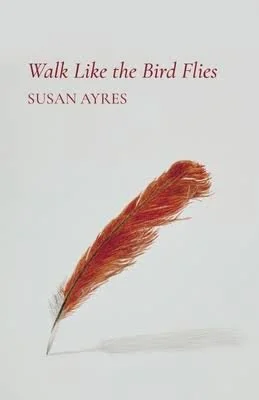
By Elizabeth Ottenritter, written December 2024
Susan Ayres’ Walk Like the Bird Flies is an entrancing collection of poetry, one that speaks to the physicality of landscapes with complex histories. Each poem serves as an exploration of the versatility of nature, meditating on the nature of humans as well. Ayres is a poet, lawyer, and a translator, whose language is reflective of her many areas of expertise. Poems such as “Rain in the Green Mountains” are a reminder as to why every word matters in such a work.
Listen to me
as one listens to the rain
falling in sheets against lightning
and the dark sky.
Ayres’ brilliant sense of place is prominent in “Most People Die Unevolved,” which considers themes of time and selective memory. Ayres allows the past to speak for itself, and yet her perspective carefully brings new questions to light. It is as though one is watching the scenery change over time, slowly, deliberately, and reminiscent of cultures engrained. “EL DIABLO ON INTERSTATE 10” accomplishes something similar when it comes to imagery. This poem could be a commentary on how we attach significance to certain people and the places they have touched:
I have always loved spotting
dirt devils, usually in the distance,
in an otherwise still landscape,
brief dance of dust
and wind reaching up to the sky.
There is a deep sense of loss as it pertains to nature, and Ayres’ portrayal of the people she has come to know is just as thoughtful. “PORT ARANSAS VIGIL” tells a story of death and the human instinct to make sense of dying in the way we know how. The significance of watching dolphins at the pier, searching for the meaning we hope will follow death is not only moving but devastatingly familiar. It is the marking of a great poet to take specific experiences and help the reader see them outlined within their own life.
A poem, such as, “LJUBLJANA MUSIC FESTIVAL” is concerned with the passing of time, a major theme in this collection that often serves as a through line. Ayres can say so much in so little words, reflective of the human life cycle and how fleeting it is. Ayres admits she is “trying to carry less” when it comes to her physical belongings, alluding to what she is carrying beyond the surface level as well. It is a beautiful sentiment, one that appreciates time as a structure yet wrestles with time’s tendency to run out.
Ayres’ and her forms change throughout Walk Like the Bird Flies, with some poems reminiscent of traditional stanzas and others appearing as prose. This can be seen in “FOREIGN CITIES 1,” “FOREIGN CITIES 2,” “FOREIGN CITIES 3,” and “FOREIGN CITIES 4,” which offer revelations on traveling and its particulars. Her words are an account, painting Ayres as less of a tourist and more of a witness. She opens up a broader discussion of history and ethics, detailing the routines of fellow visitors.
You’re as empty as the waves that will lull you to sleep.
The poem “TROUVELOT’S CRATER,” a five-part end to this collection, is an epic culmination of history, science, and nature, and how they often contradict each other. The human impact on nature, waging war on something as small as the gypsy moth, is an immediate takeaway. Ayres aims to say something deeper about interconnectedness, tying hard facts into the lyrical almost effortlessly.
Walk Like the Bird Flies is a compelling read, and an important one. Ayres’ love of language, her wit, and perpetual interest in the surrounding world can be seen in every line. Her experiences translate well to the page, turning the reader toward landscapes both familiar and unfamiliar, asking them to be attentive to both the big and the small.
Elizabeth Ottenritter (she/her) is a senior at Loyola University Maryland, where she studies writing. She is passionate about reading, crafting poetry, contributing to Loyola’s literary art magazine, Corridors, and traveling worldwide. Upon graduation, Elizabeth hopes to continue her learning and love of language.
*****
Yellow Arrow Publishing is a nonprofit supporting women-identifying writers through publication and access to the literary arts. You can support us as we BLAZE a path for women-identifying creatives this year by purchasing one of our publications or a workshop from the Yellow Arrow bookstore, for yourself or as a gift, joining our newsletter, following us on Facebook or Instagram, or subscribing to our YouTube channel. Donations are appreciated via PayPal (staff@yellowarrowpublishing.com), Venmo (@yellowarrowpublishing), or US mail (PO Box 65185, Baltimore, Maryland 21209). More than anything, messages of support through any one of our channels are greatly appreciated.
Truth & Love: A Conversation with Tramaine Suubi
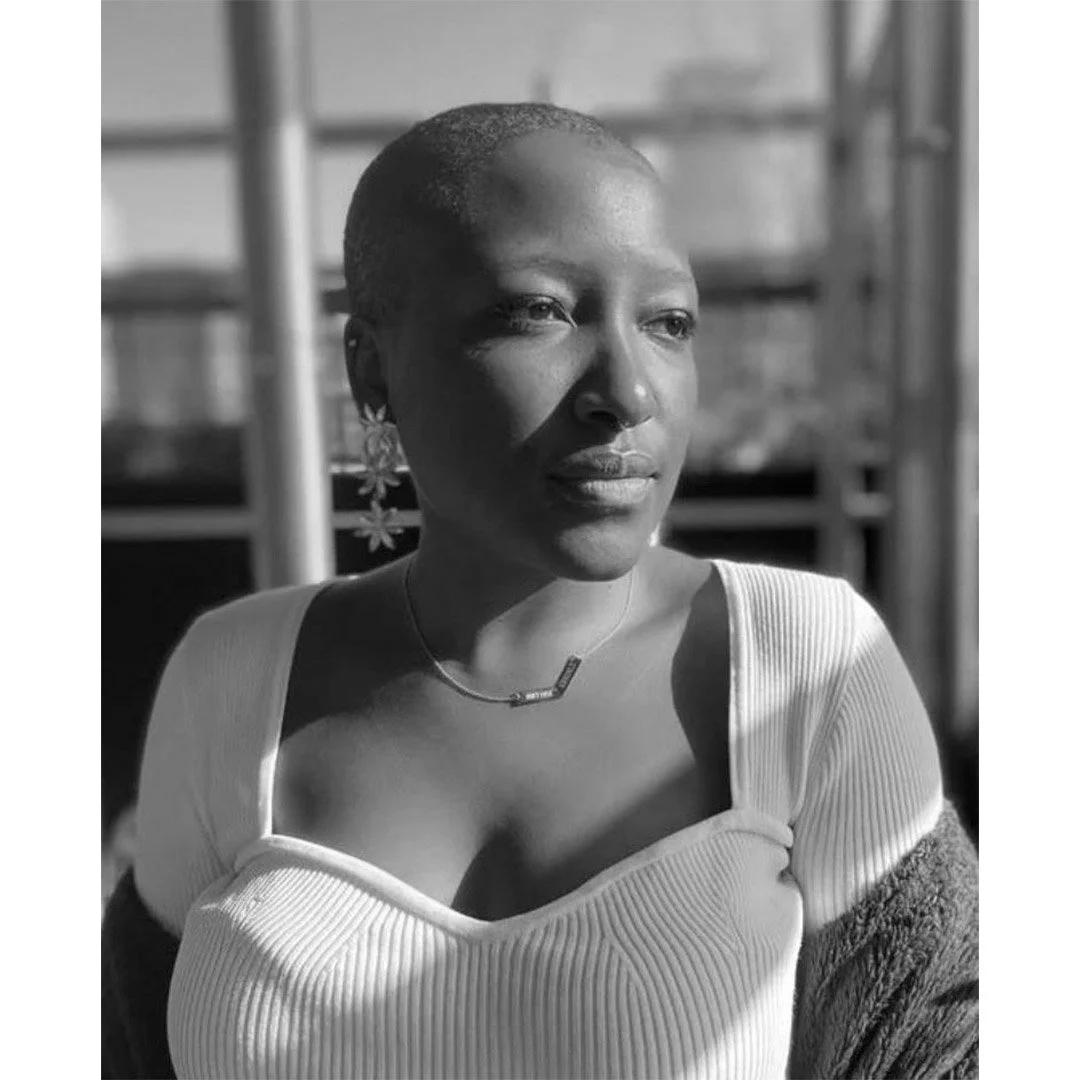
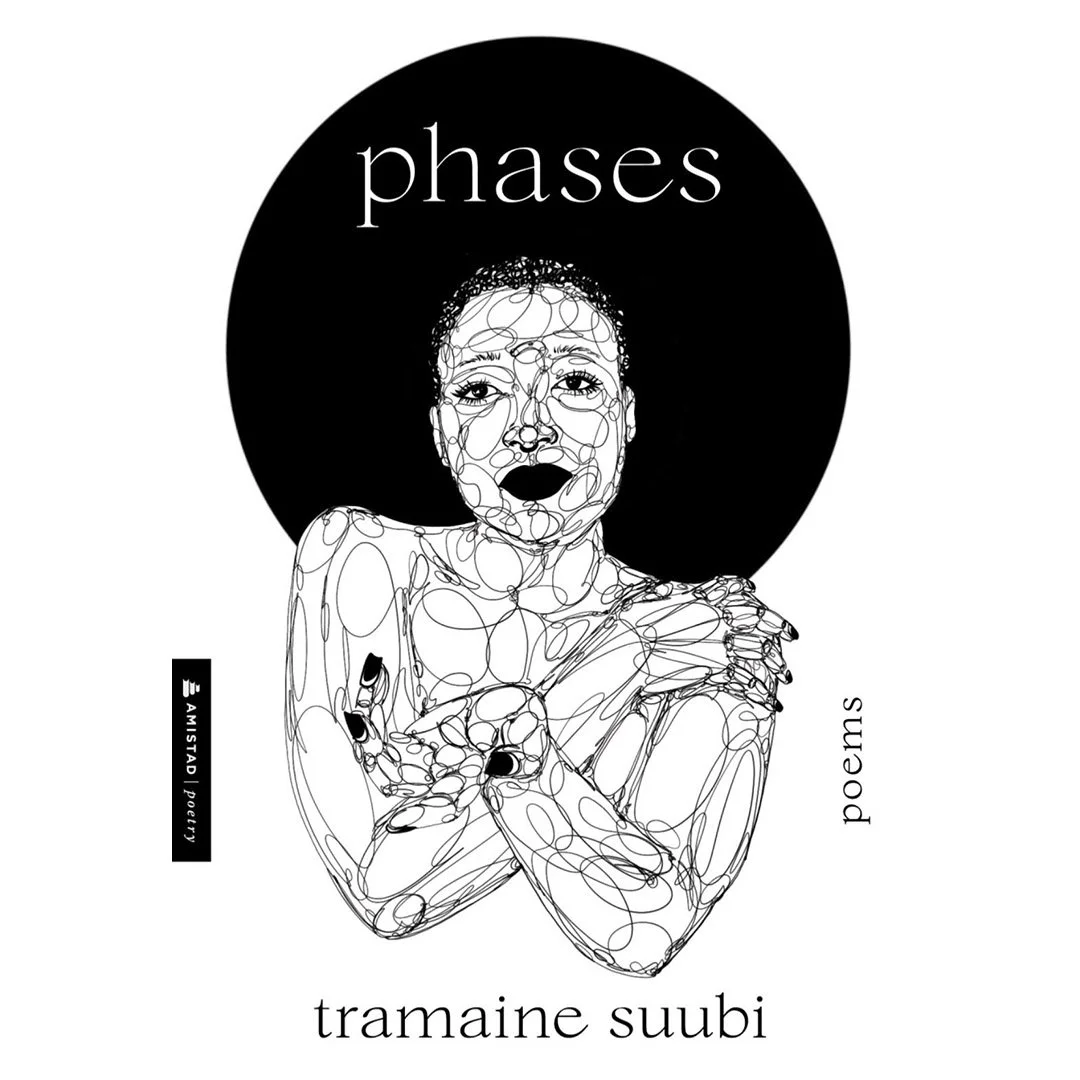
By Melissa Nunez, written March 2025
we are ruthless and raw
we are vengeance
with or without the lord
we turn conquest to consequence
wipe that jungle fever off your face
we are black girl juju
we are ranavalona (1778)
“long live the queen”
Cincinnati Review
Tramaine Suubi is a multilingual writer from Kampala who serves as managing editor of Writivism. She was a writer-in-residence for Yellow Arrow Publishing in 2023 and guest editor of Yellow Arrow Journal kitalo, Vol. IX, No. 2, fall 2024. Her firm beliefs in maternal community, self-reflection and self-love, and the liberation of all oppressed people make her a pivotal voice in the writing world.
Melissa Nunez, Yellow Arrow interviewer, and Tramaine met over Zoom this past January to discuss her journey as a writer, the rich impact of multilingualism on writing, and the importance of uplifting women’s stories and voices.
How did you first connect with Yellow Arrow? Can you describe your experience as a writer in residence?
I was first introduced to Yellow Arrow through a colleague of mine in my MFA program. They sent me a flyer about the writer-in-residence program because they knew I’d be in Baltimore. I thought, “Sure. Why not apply?” I was grateful to have my application accepted. Experiencing that support and community in the time of pandemic was beautiful and restorative for me. Learning more about Yellow Arrow, especially in the culmination of the residency, was a life-giving experience. In February, they hosted a reading for me at Bird in Hand and gave me access to workshops. I unfortunately did not take advantage of the workshops. But getting to know Annie [Marhefka] was a real gift. I really appreciate her and her vision, and it felt natural when they reached out to me last summer to offer my time and my space as a guest editor. They foster a continued connection and relationship with writers better than most writing organizations I’ve encountered.
What was your experience as a guest editor? What insights do you have for future guest editors and submitters?
Serving as guest editor was a humbling experience. I serve as an editor for Writivism, which is a literary organization that aspires to publish an annual anthology (including nonfiction, fiction, and poetry) supporting African diasporic writers. I came into the role with some experience, but I think it’s so different doing it for a magazine that publishes more than once a year, especially in a space where there are themes to consider. The selection process was about which pieces are the most relevant to the theme. Then it became, of these that are the most relevant, which are the strongest. That put me in a difficult place as a writer and editor, where I would see some incredible pieces and feel so heartbroken to acknowledge they did not fit the issue. The theme was about grief, kitalo, and so another interesting factor for me was making sure there was a holistic spectrum of grief in the issue. There was an imbalance of what kinds of grief were received, even though the prompt called to the whole spectrum of grief. People still lean toward grieving the deaths of loved ones. It was refreshing to receive responses to grieving pets and grieving relationships that have ended—not just romantic ones. Some of the most interesting pieces to me were people grieving past selves or grieving past lives or grieving past homes—that felt rich and resonant for me as an immigrant. I really did my best to make sure all the pieces were thematic. All the pieces were holistic in the nature of grief they chose to address or represent.
It was also important for me that we not only had racial and ethnic diversity but also diversity of age and ability. There were so many things that went into my process. I’m a highly strategic person. I live at the intersection of five different marginalized identities so I’m intentional about making sure that I curate inclusive spaces, not just for the sake of inclusion but for the sake of celebration and quality. I think we really lose quality when we’re not inclusive. I think we can lose celebration when we’re not inclusive intentionally. So that was a part of my selection process, and it really did mean that every piece that was selected fully earned its space in the issue. There were also plenty of pieces that were not selected that fully had earned a space, perhaps in a future issue of Yellow Arrow Journal.
It is so important to know as readers who may have submitted for this issue that grief is such a sensitive, loaded conversation and topic. I think every piece that was submitted has a space in a journal somewhere. I think some people were incredibly vulnerable and really challenging in their submissions, and as someone who’s received over a hundred rejection letters to different magazines, journals, and anthologies that I’ve submitted to, it was so humbling to flip the script as an editor and read such a range of submissions. Knowing there is a limit on how many essays and poems can be published, I cannot emphasize enough how much every piece that is submitted was a signal of bravery and a signal of vulnerability that is invaluable. The way pieces are rejected has so little to do with the writer themselves, and one of the best things you can do for yourself as a writer is just try, try again.
Who are some of your favorite or most inspiring women-identified writers?
I am in awe of June Jordan and her commitment to justice and love. Another writer I’m inspired by is Octavia Butler. The Parable of the Sower and The Parable of the Talents absolutely blew me away and totally reshaped how I think about organizing in community, community care, and collectivism. Yesika Salgado is inspiring to me in her love for Echo Park, for women, and for ferocity. She is the only writer of whom I’ve read all her books. She’s a Los Angeles native and she is just so committed to her El Salvadoran community and her Los Angeles community.
What first led you to writing?
I came to writing in my early 20s as a baby poet. I did not start writing creatively and regularly until I was an undergrad. Part of what led to that was my frustration with journaling. I’ve tried so hard with written and even audio journaling. It’s just so hard for me to maintain a regular practice, so I think I came to poetry from a place of humility and curiosity. I was older, I feel, than most poets are, and it was just a beautiful, safe space for me to explore and be experimental. Some of my earliest poems make me cringe, and that’s okay. I was cringe, but I was free. Poetry is my vehicle for truth. Truth is the most important thing to me in this life, and I think truth and love are synonymous. I found that I very much was the chameleon in most spaces I was in. I was a drifter, a floater, very much a social butterfly. I don’t think any of my close friends could tell you who Tramaine was. In poetry I found a space to just be whatever version of Tramaine I was in that moment and have that be enough. I did not have to hedge, or qualify, or explain it. Poetry was a space of freedom. Since then, I’ve explored fiction and I’m now slowly exploring personal essays and nonfiction.
i want to be stronger, for you, than you
will ever be. maybe i can lose
the early hours of day lying
with you, not to you. perhaps
your lifelong curls should remain
“delilah lets go”
Equatorial, Issue Six
I love alternate tales, especially those featuring women. I wholly enjoyed your poem, “delilah lets go.” What drew you to the character of Delilah?
I was raised in a strict Pentecostal household. My theological background is rich and expansive. I took 16 credits of theological courses in undergrad, and I’ve just always been deeply fascinated by the Abrahamic religions: who has a voice and who doesn’t, who tells their own story and who doesn’t, and who tells their story for them if they don’t. The Bible has 66 books and of those only two are named after women, Ruth and Esther, and they still don’t tell their own stories. I was always fascinated by who was villainized and who wasn’t in the Bible. Being raised in this strict bubble of purity culture (which, thank God, has since burst, and I’m doing a lot of healing in that area of my life), I was always stunned by how one-dimensional Delilah was. I was always confused by how singular Jezebel was. I was always fascinated by how people, women who are not wives and mothers, are treated in our storytelling and in our religions as humans. It was interesting to me that Delilah was at fault for her man planting his own downfall. There is so much tension in the story of this woman who was othered. She wasn’t Jewish; she was a Gentile. She was ‘unclean.’ There are other versions of the story where she was a sex worker! “This was intentional. She was plotting Samson’s downfall.” But as referenced in my poem, I think what solidified my draw and interest in Delilah is the song, Samson by Regina Spektor. If you’ve not listened to it, I highly recommend it.
I have always been fascinated by retellings, especially those of powerful women in history, pivotal women. We have authors like Jennifer Saint, who’s written Ariadne, and most recently, Hera. It’s just interesting to me how Delilah is this one-dimensional villainized character. That’s too easy, friends! Do we actually think that’s all there was to her? Who were her parents? Did she have siblings? What did she want in this relationship? Why did she cut the hair? Why is she so maligned for that? Where was she when Samson brought down the entire temple? Was she looking from afar? I have always taught my students (in sixth grade, ninth grade, and 12th grade English) to ask crucial questions of who is telling the story. Who is it for and who are we not hearing in the story? Delilah felt so emblematic of that to me. So yes, there is a Delilah poem, and I love that poem so much. But I want to see a Jezebel poem. I want to see a Bathsheba poem. I want to see a Tamar poem. I want to see alternative Mary poems. Who are these convenient women that we so clearly assign a role without giving thought to their hopes, their fears, their wants, their needs, their humanity?
I also read “tandem” from Sonora Review, and I love the phrase that you used, “mother each other.” Ideally, what would, or could it look like for women today to embrace that mentality?
The most important thing in life to me is friendship. I think friendship can show up in every relationship that we have with ourselves, with others, with the divine. I think one of the most profound places for restoration is motherhood and our mother-wounds that we all carry as human beings. Having learned of the phenomenon of chosen family and experienced it in real time, it’s been a gift to be mothered by the women I love that I’ve chosen to be present with me in my life. It’s been an honor for them to let me mother them. Another way to view that line is oftentimes, I think young girls and young women of color are parentified. Many of us, if you read acknowledgments, speeches, gratitudes, there’s often somewhere in there a “thank you” for an older sibling who parented you. I think that was a thought I was having when I wrote that line. And perhaps a third thought is what it means when it feels like it’s just the two of you against the world. This is a binary and is an oversimplification of perhaps a codependence, but how beautiful to care for each other in a way that a mother couldn’t or didn’t. In a healthy way, of course. We don’t want codependence; we want interdependence. What a beautiful way to mother each other and fill in the gaps where the mother may have fallen short.
laughing offbeat
but dreaming as one
so, we mother
each other
& take turns
flying off the
radar
“tandem”
Sonora Review
Could you share any writing rituals you may practice?
I actually love rituals but I’m a-ritualistic in my writing. Ever since I began writing more seriously as a creative writer at 20, I saw my writing as something to be protected. I didn’t want it to become a rigid practice in my life I was beholden to. I very intentionally never want to rely on my creative writing for my income. I think there are some writers who can do that and do that well, but I don’t think I’m one of them. I do have a few irregular practices I can think of.
I have a note on my notes app where I write down and date fragments. I also use my birthday, as opposed to December 31 or January 1, as placeholders for things to get done. I organize all my poetry in folders based on my birthdays and when it’s coming close, I sit with all those fragments and see if there is a poem I missed. I keep a word bank in my Google Drive of amazing words I’ve come across and have either never heard or never used in a poem before. A fourth writing ritual is one that is unintentional. I tend to live a lot of my life in twos. I don’t know what to do with that. I don’t know what that means or where it’s from, but I’ve noticed there’s a lot of pairs in my writing. There are poem pairs and a pattern of pairs within a poem. I’m noticing now, even as an emerging fiction and nonfiction writer, I’m still drawn to dualities and binaries. This feels contradictory because I’m all about breaking the binary: there are multitudes! But some part of my humanity or creativity is just so drawn to the opposite, to the binary and to the dual, and I think that’s probably why I strive to break it down so much in my writing.
How does multilingualism inhabit your writing? Do you feel that learning new languages, changes the way you think about and relate to words and the page?
Absolutely. I don’t know how learning a new language wouldn’t show up in a writer’s work, and I think I would question it if it didn’t. I speak four languages. I don’t have writing fluency in all four, but I do have speaking and listening fluency in all four. My languages are English, French, and my parents’ two indigenous languages, Luganda and Runyankore. My father tongue Luganda is the language that inspired the theme I chose as guest editor, kitalo. I think something beautiful and heartbreaking about language is it’s finite. We just do not have all the words for all the experiences we would like to, in one language. It’s limited. I think it took a long time for me to accept that. My multilingualism has really stepped in for me and filled gaps that I experienced in my most frequently used language of English. It’s in my poems in my collection that’s coming out this month. There’s multilingualism in a good chunk of them. It’s so funny because I learned English, Luganda, and Runyankole at the same time and so I felt like the most complete conversations I could have were with my parents and my older sister, who also speak the three languages. I could just weave in and out of it seamlessly, like “Oh, I don't have the word for this in English, but I have it in Luganda. Oh, I don’t quite have it in Luganda, but I have it in Runyankore.” Actually, my dad does not speak Runyankore well. It’s just my mother and my older sister who share that with me, and that created a beautiful intimacy. Transferring that to my writing was unavoidable. It had to be multilingual. That’s just such a big part of how I experience the world. I dream in four languages, why wouldn’t I write in four languages? It is interesting because French is a learned language for me, so I feel less comfort and less inheritance there. But I think the more I learn it, the more I feel comfortable claiming it and weaving it in here. I had a poem that actually started in French and then I just translated to English. That was a really beautiful moment of this language becoming a part of my spirit and my mind. Multilingual speakers have this whole other world they have access to. I think it’s an enhancement to any creative writing, and I think it’s really challenged me as a writer in a really good way.
Do you have any advice for women writers specifically on how to balance the mental gymnastics we often face with the necessary work in our lives?
I think it’s really humbling to receive that question, because I feel I’m so early in my journey as a woman and a writer. As someone who loves so many women and is very much a girl’s girl, I’ve had the time and space to observe that a lot of the mental gymnastics around being a woman has something to do with children. Whether it’s having them, not having them, trying to have them, trying not to have them—especially with [the current world situation] and how [people] seek to control women’s bodies more. I do not have a child and have the privilege of access to full reproductive care, but I think my advice would be to listen to yourself. Some people might misconstrue that and think they should listen and immediately follow. I didn’t say to follow everything yourself is saying. I said to listen to yourself, perhaps in lieu of quotes like, “follow your gut” or “follow your heart.” That is all nuanced and complicated. I’ve just noticed that so many women, especially nonwriters, really don’t hear themselves. If they do hear themselves, they don’t make it a daily practice to listen to themselves whether that’s mentally, emotionally, physically, or spiritually. We cannot control our thoughts always, but I think it’s really important to be tapped into them. What is my body telling me right now? What is my mind telling me right now? What is my spirit telling me right now? What are my feelings saying? You don’t have to follow what they’re saying. You don’t have to act on what they’re saying, but there’s so much to be said for self-awareness. Hopefully, once you’ve learned how to listen to yourself, I believe the second piece of advice I would give is to forgive yourself. I think so much of what I see amongst women amongst writers, and especially amongst women writers, is just a deep guilt and a deep shame. I’m sitting as someone who very much is a recovering people pleaser and a recovering perfectionist. Society imposes so much guilt and shame already we don’t need to be adding on to that ourselves. I think there’s a certain power and humility that’s been lost because women have not been taught to or encouraged to forgive ourselves. Once you learn how to listen to yourself and to forgive yourself, you become so much more open to all of who you are. I think once you’re more open to all of who you are, you’re better able to love yourself. Once you’re better able to love yourself, you’re better able to love others. I believe truth is love, and love is truth. Those are my highest ideals. Even though I love writing, I really wish that more women writers knew how to listen to themselves and actively did it. I wish they knew how to forgive themselves, and actively did it. And I think there’s a great poem that encapsulates what I mean by that second piece of advice. It’s called “Things it will take 20 years and a bad liver to work out.” It’s by Yrsa Daly-Ward: “You’d better learn to forgive yourself. Forgive yourself instantly. It’s a skill you’re going to need until you die.” I was so inspired by that. I believe you can forgive others and love others without loving yourself or forgiving yourself. But I think many women would have much richer lives and be much richer writers if we would listen to and forgive ourselves. You cannot be everything to everybody. I think I’m still learning that. Every time I find myself punishing myself or having really negative self-talk about failing to fill a role I thought I was supposed to fill, I think of Mary Oliver’s poem “Wild Geese.” That first line just anchors me: “You do not have to be good.” I wish more women knew they do not have to be good. They just have to let the soft animal of their body “love what it loves.”
& bending over backwards on cue
i do not weave tightrope anymore
my feet are reacquainted with rest
i do not miss the spiraling
“mental gymnastics”
Prompt Press
Can you share a little bit about your upcoming book Phases?
The whole process has felt surreal. phases is my debut and comes out in two weeks. It’s a full-length poetry collection of about a hundred poems. They were written anywhere from eight to four years ago. It’s so bizarre reading that book because I feel like I’m not even that person anymore. I was much younger, more stubborn, more ambitious, and surer of myself. Now I’m older and less ambitious. I’m less sure of myself and not in any self-defeating way. The older I get, the more questions I have and the less answers I’m finding. So, publishing phases has been such a process of listening to myself and forgiving myself because I’m just not that girl anymore. And that’s okay. I’m doing my best to love her and honor where she was when she wrote these poems of heartbreak and healing.
Can you share a bit more about your work with Writivism?
Writivism (which is an obvious blend of writing and activism) is a fairly young organization that was founded in 2013 in Uganda, which is where I was born, by Dr. Bwesigye Bwa Mwesigire. He’s currently an assistant professor in one of the California state universities. I think it’s Dominguez Hills, which is actually a Hispanic Serving Institution. He really had a vision of just challenging writers in Africa and the diaspora to push back against systems of oppression, colonization, and prejudice overall. To come from a place like Uganda, which is heavily censored, really living through an intense period of oppression, he unfortunately had to go on hiatus in 2019. It was really important to revamp it when we did in 2024, or 2023, just in time for the 10-year anniversary. I was brought on and was appointed as the managing editor, unpaid. It’s a small team. It’s a labor of love. We’re all in different parts of the world, all four of us. I’m really looking forward to publishing the backlog of works that were not published in between that hiatus, and I’m really excited to share with the world our 2023 anthology. We’re currently just taking a break trying to fundraise more. I don’t know how Yellow Arrow does it. I have so much respect for y’all. It’s a tougher time in the world where I think, almost just globally, the arts are being suppressed, if not blatantly attacked. Finding the resources has been difficult, but we’re optimistic. We hope to start back again with regular annual publishing in 2026. It’s been a transformative and enlightening experience.
Are there any comments or topics that I might not have touched on that are important for you to share with our readers?
I would like to emphasize that rejections of your writing are not rejections of you as a person. Your piece and the timing are being rejected for that collection. That is not a forever thing. I just really want writers to internalize that. It was really important for me as a writer and then as an editor to understand that.
Another thing I wanted to say is that individualism will not save us. We need each other. I don’t want to encourage this codependence, but I wish there was more interdependence amongst women writers. We are so much more powerful together than alone.
I also want to thank Yellow Arrow Journal for lifting up my voice and lifting up the voices of other women writers who are actively being violently oppressed in Sudan, in Kongo, in Tigray, in Falestin. I cannot tell you how powerful and how much of a lifeline writing has been for me and many of these women. I hope that one day we are all free.
You can purchase a copy of Yellow Arrow Journal kitalo, Vol. IX, No. 2, guest edited by Tramaine at the Yellow Arrow bookstore. You can secure a copy of Tramaine’s debut collection phases from Harper Collins and several online bookstores and follow her work on her website tramainesuubi.com/about.
Melissa Nunez makes her home in the Rio Grande Valley region of South Texas, where she enjoys exploring and photographing the local wild with her homeschooling family. She writes an anime column at The Daily Drunk Mag and is a prose reader for Moss Puppy Mag. She is also a staff writer for Alebrijes Review and interviewer for Yellow Arrow Publishing. You can find her work on her website melissaknunez.com/publications and follow her on Twitter @MelissaKNunez and Instagram @melissa.king.nunez.
*****
Yellow Arrow Publishing is a nonprofit supporting women-identifying writers through publication and access to the literary arts. You can support us as we BLAZE a path for women-identifying creatives this year by purchasing one of our publications or a workshop from the Yellow Arrow bookstore, for yourself or as a gift, joining our newsletter, following us on Facebook or Instagram, or subscribing to our YouTube channel. Donations are appreciated via PayPal (staff@yellowarrowpublishing.com), Venmo (@yellowarrowpublishing), or US mail (PO Box 65185, Baltimore, Maryland 21209). More than anything, messages of support through any one of our channels are greatly appreciated.
A Chorus of Many: Reflecting on the UNFURL Issue

By Sara J. Streeter
In 2021, I remember how drawn I was to Yellow Arrow Journal as I began my foray into the literary journal abyss. Their values and mission aligned with my own, and as a fellow Marylander, I felt a connection to Baltimore. Little did I know I would be a guest editor just a few years later!
All my nonfiction writing is vulnerable and hard to put out into the world, but my story, “Bitter / Sweet” was a particularly tender piece about my adoption journey. After working on it on and off for years, a Yellow Arrow workshop I took with Kerry Graham helped me align the string I was trying to thread through it, and “Bitter / Sweet” was published in Yellow Arrow Journal, kitalo, Vol. IX, No. 2.
In early December 2024, when the email asking if I would be the guest editor popped in my inbox, I had no idea what the next months held—for me personally or for the country. As a working parent with two young kids, I worried about taking on something else, but I knew I would regret passing on the opportunity if I didn’t try. There is never a perfect time to do anything; you just have to do it.
Unfurl: I’ve always loved the word. It ignites so many delicious metaphors and images. When we chose it for the issue’s theme, I envisioned contributors really pushing and pulling the idea, sculpting it into their own. They did not disappoint! Each piece I read was a different interpretation with a range of subjects that captured unfurl from every angle, sense, and phase. I found solace, compassion, and humanity in the words of our contributors. Each piece was a single voice, which together became a powerful chorus of many.

The idea of community has recently been at the forefront of my mind. In her book The Serviceberry, Robin Wall Kimmerer reflects on something she refers to as a “gift economy,” in which individuals share what they have with each other to strengthen connections and invest in trust. “A gift economy nurtures the community bonds that enhance mutual well-being; the economic unit is ‘we’ rather than ‘I,’ as all flourishing is mutual.” To me, this collection of writing embodies a gift economy. Each of these pieces is a unique gift of lived experience and vulnerability. In sharing their precious time, talent, and energy, our contributors make the Yellow Arrow community a rich, vibrant space. Similarly, throughout this months’ long experience (new to me!), Yellow Arrow’s staff and volunteers have extended such gracious support to me every step of the way. Finally, Yellow Arrow Creative Director Alexa Laharty’s contribution of creativity and patience resulted in a truly sensational cover design.
Thank you to our contributors, volunteers, staff, and readers for sharing your gifts. You make our community flourish.
Onward to joy,
Sara
Paperback and PDF versions are now available from the Yellow Arrow bookstore. Discounts are also available (here) if you would like to purchase copies for friends and family (minimum purchase of five). You can also search for Yellow Arrow Journal on any e-book device or anywhere you purchase print and electronic books, including Amazon and most other distribution channels. Discounted bundles of both our 2025 issues are also available from our bookstore.
Sara J. Streeter (she/her), or 한혜숙 Hea Sook Han, is a writer and a Korean-American adoptee. Since starting her writing journey in 2021, Sara found her writing community through Adoptee Voices and developed a meaningful connection to readers, both within the adoption constellation and beyond. She joined the Yellow Arrow community when her piece “Bitter / Sweet” was included in Yellow Arrow Journal kitalo Vol. IX, No. 2. You can find her at sarajstreeter.com.
*****
Yellow Arrow Publishing is a nonprofit supporting women-identifying writers through publication and access to the literary arts. You can support us as we BLAZE a path for women-identifying creatives this year by purchasing one of our publications or a workshop from the Yellow Arrow bookstore, for yourself or as a gift, joining our newsletter, following us on Facebook or Instagram, or subscribing to our YouTube channel. Donations are appreciated via PayPal (staff@yellowarrowpublishing.com), Venmo (@yellowarrowpublishing), or US mail (PO Box 65185, Baltimore, Maryland 21209). More than anything, messages of support through any one of our channels are greatly appreciated.
Best Places to Write and Read in the Baltimore Area

By Gabby Granillo, written March 2025
Baltimore, as I have come to know it, is nothing short of lively, eclectic, and cozy. Reading and writing are two of my favorite things to do and when I have the time, these are my favorite local cafés and small businesses I like to support. Having a safe space to read comfortably, write your next novel, or plan some prose for your next reading is important!
Good Neighbor

Right off the bat, the name is quite fitting. Good Neighbor is a hole in the wall that is bright with large bay windows and found in Hampden, Baltimore. It is typically not loud in noise level, aside from your expected chatter between barista and customer. The seats are very comfy, but everything is first come, first serve. This location is good for both reading and writing, however if you are an individual who needs silence to focus, this is not the place for you. Desperate to try it out anyway? Invest in noise canceling headphones and you’ll be set for hours. If you are not looking to get takeout or order a coffee on the go, I recommend getting there shortly after opening and parking yourself in a chair to read and write. Make a day out of it!
When the weather obliges, Good Neighbor has outdoor seating to accommodate more guests, however, the patio is closed late fall to early spring. Another incentive to visit Good Neighbor is their newly established shoppable hotel, called guesthouse, designed for staycations, rejuvenations, and creative writing retreats. They offer weekday discounts, free daily coffee for specific bookings, and gift cards!
Hours of Operation:
Monday–Wednesday | 7:00 a.m.–5:00 p.m.
Thursday–Friday | 7:00 a.m.–6:00 p.m.
Saturday–Sunday | 8:00 a.m.–6:00 p.m.
Location: 3827 Falls Road, Baltimore, Maryland 21211
Artifact Coffee

A unique artifact indeed! This is one of Baltimore’s best hidden gems. Free Wi-Fi, seasonal menus, handcrafted beverages, and plenty of seating: this has to be your next stop! The rustic and warm environment inside makes this a perfect place for writing inspiration, while the outdoor seating is great for catching rays with your favorite book. The noise level varies depending on the time of day and whether it’s a weekend. Many locals visit Artifact to grab a coffee and stay for the ambiance.
While Artifact is popular, you will never feel out of place in this coffee shop; friendly staff, intimate lighting, and comfortable seating make this an unparalleled experience. Its sister restaurant, Woodberry Kitchen, would also be a perfect place to host a poetry reading or book launch: they have extensive seating, a large cocktail and refreshment menu, with devoted staff and chefs to make your experience unforgettable.
Hours of Operation:
Monday–Friday | 8:00 a.m.–3:00 p.m.
Saturday–Sunday | 8:00 a.m.–4:00 p.m.
Location: 1500 Union Avenue, Baltimore, Maryland 21211
Bird in Hand

Bird in Hand is one of Yellow Arrow’s favorite partners to work with; the absolute best place to host a poetry reading, journal about your day, catch up with a fellow author, or write poetry independently. Located on the outskirts of Johns Hopkins University, it is a hub for writers, coffee lovers, and busy students. Bird in Hand doubles as a bookstore with walls lined with novels, ensuring visitors feel immersed and cozy. They have ample seating both inside and outdoors on their elevated patio.
The menu at Bird in Hand is what draws in many visitors as well! Between serving locally crafted coffee, a tea bar, and specialty spirits, they have everything. They offer breakfast meals, sandwiches, salads, and a snack for everyone. The noise level is not excessive, but far from silent. Being a busy spot, I would recommend cozying up in the corner to read or write alone but sitting at any table when working on group projects or meeting a friend.
Hours of Operation:
Sunday–Tuesday | 8:00 a.m.–4:00 p.m.
Wednesday–Saturday | 8:00 a.m.–8:00 p.m.
Location: 11 E 33rd Street, Baltimore, Maryland 21218
Pitango Bakery & Cafe Fells Point

A favorite of mine is Pitango Bakery & Cafe in Fells Point. Situated right on the water with lots of sunlight and extensive indoor and outdoor seating make this café paramount. This place is fitting for individuals who like to write and read at all hours of the day. With long hours every day of the week, a central location to shops, restaurants, and good views, Pitango is perfect.
Their menu caters to focusing on honest ingredients, inspired by authentic Italian cuisine, paralleling their attention to detail at Pitango Gelato, their sister shop.
Pitango Bakery’s vibe is light, fresh, and comfortable. You will not have trouble finding a seat with ample room, as Pitango caters to all kinds of customers: families, locals, and tourists, and it’s the perfect date location!
Hours of Operation:
Sunday–Tuesday | 7:00 a.m.–8:00 p.m.
Wednesday–Saturday | 7:00 a.m.–10:00 p.m.
Location: 903 S Ann Street, Baltimore, Maryland 21231
pitangogelato.com/location/pitango-bakery-cafe
Enoch Pratt Library

A must for any Baltimore resident, Enoch Pratt Library is a free, intellectually stimulating, and comfortable environment to write your next novel or poetry composition. The silence this spot has to offer is important and one of its best features as a reading and writing spot. They offer an online catalogue to conduct research, spark your imagination, and access audiobooks!
With long hours and hundreds of seats, make sure to take advantage of this wonderful resource: free Wi-Fi, job and career assistance, photocopier and printing services, computers for public use, and ADA/handicap accessible.
Hours of Operation:
Monday–Thursday | 10:00 a.m.–8:00 p.m.
Friday–Saturday | 10:00 a.m.–5:00 p.m.
Location: Central Library 400 Cathedral Street, Baltimore, Maryland 21201
prattlibrary.org/locations/central
The Bun Shop

The Bun Shop is a must-visit café in Mount Vernon, with late-night hours and an extensive selection of snacking buns. This is one of Baltimore’s most unique spots, praised by customers as cozy, inclusive, and friendly. The Bun Shop is great for reading and writing, with an ambiance that will most definitely inspire your latest works. With jazz playing on the overhead speakers, and plenty of outlets, this café creates community and inspires creativity. They have free Wi-Fi, vegan food options, and plentiful seating.
Catch up with friends, grab a bite to eat, or camp out at a table finishing your writing drafts! With seating indoors and a patio outside, take advantage of this adorable Baltimore café.
Hours of Operation:
Sunday–Saturday | 8:00 a.m.–3:00 a.m.
Location: 239 W Read Street, Baltimore, Maryland 212101
If you’re looking for more places to check out, check out Siobhan McKenna’s blog from a few years ago: https://www.yellowarrowpublishing.com/news/inspiring-locations-to-write-baltimore-mckenna. Where do you choose to write in Baltimore?
Gabrielle Granillo is studying English and writing at Loyola University Maryland, minoring in environmental science and art. Raised in Arizona, with much of her family still on the west coast, she now lives in central Massachusetts, her home for the past 12 years. She aims to live in northern Europe after graduation and receive a master’s degree in photojournalism. Gabby spends her days reading Irish novels, practicing street photography, and trying out new recipes. Her three favorite things are hot tea, antiquing, and road trips. She looks forward to making valuable contributions to the Yellow Arrow team, as a woman-identifying writer herself, looking to explore further editorial practices and enhance her voice using inspiration of her fellow staff members.
*****
Yellow Arrow Publishing is a nonprofit supporting women-identifying writers through publication and access to the literary arts. You can support us as we BLAZE a path for women-identifying creatives this year by purchasing one of our publications or a workshop from the Yellow Arrow bookstore, for yourself or as a gift, joining our newsletter, following us on Facebook or Instagram or subscribing to our YouTube channel. Donations are appreciated via PayPal (staff@yellowarrowpublishing.com), Venmo (@yellowarrowpublishing), or US mail (PO Box 65185, Baltimore, Maryland 21209). More than anything, messages of support through any one of our channels are greatly appreciated.
Finding Self-Reflection and Strength in Community: Yellow Arrow Journal (Vol. X, No. 1) UNFURL

We are the same.
Drained, chafed, stripped, scavenged,
we submit to the great unveiling;
“Fruit of the Spirit” by Kellie D. Brown
UNFURL, the just released issue of Yellow Arrow Journal, Vol. X, No. 1, guest edited by Sara J. Streeter, explores how people seek to find themselves. UNFURL is a soul-searching survey of the unique journeys people take when experiencing and undergoing self-transformation, journeys that all start with a little fire, a desire, deep inside. We are honored to have had the opportunity to work with the included creatives to craft such a vibrant narrative, especially at a time when such personal, heart-wrenching stories are so vital. We are also privileged to be able to share it (and them) with you. In the issue’s introduction, Sara adds:
“I am honored to bear witness to stories that weave perspective and deep reflection into such strength. They remind me that community and imagination are powerful gifts we all have access to.”
Paperback and PDF versions are now available from the Yellow Arrow bookstore. Discounts are also available (here) if you would like to purchase copies for friends and family (minimum purchase of five). You can also search for Yellow Arrow Journal on any e-book device or anywhere you purchase print and electronic books, including Amazon and most other distribution channels. Discounted bundles of both our 2025 issues are also available from our bookstore.
Sara J. Streeter (she/her), or 한혜숙 Hea Sook Han, is a writer and a Korean-American adoptee. Since starting her writing journey in 2021, Sara found her writing community through Adoptee Voices and developed a meaningful connection to readers, both within the adoption constellation and beyond. She joined the Yellow Arrow community when her piece “Bitter / Sweet” was included in Yellow Arrow Journal kitalo Vol. IX, No. 2. You can find her at sarajstreeter.com.
UNFURL features Storm Ainsely, Heather Brown Barrett, Michelle Bovée Stange, Kellie D. Brown, Tricia Gates Brown, Carrie Aurelius Carlisle, Brandy Bell Carter, Alexis F., Hillary Gonzalez, LuLu Grant, Melanie Hyo-In Han, Kalehua Kim, Majiq Vu Mai, Mansi, Sini Marcks, Mary McAfoose, Shannon McNicholas, Nia P., Emma Reyes, Lindsay B. Sears, Alyce Shu, Cat Speranzini, Beverley Sylvester, Laura Taber, Bethany Tap, Jo Tyler, and Jessica Zarrillo.
The cover of UNFURL had its own journey to creation from choosing one to feature among the incredible submissions we received to unfortunately not hearing back from the artist, and finally and happily, to finding the perfect voice for the issue’s cover in Yellow Arrow’s Creative Director Alexa Laharty. According to Alexa, “My intention with the piece was to portray the joyous emotions that accompany a release from the constraints of worry and anxiety.” Sara adds, “Alexa brilliantly showcases the cover woman’s unfurling sense of joy and freedom through her expression and stance.” Thank you, Alexa and Sara, for your incredible vision.
A huge thanks to the rest of the Yellow Arrow team for helping to shape this issue: guest editor Sara J. Streeter, along with the UNFURL editorial team, Arrieonna Derricoatte, Jill Earl, Angela Firman, Barbara Frey, Meg Gamble, Gabby Granillo, Jacqueline Goldman, Siobhan McKenna, Melissa Nunez, Kait Quinn, Leticia Priebe Rocha, and Emily Ross.
We hope you enjoy reading UNFURL as much as we enjoyed creating it. Thank you for your continued encouragement of Yellow Arrow Publishing and the creatives involved in UNFURL.
*****
Yellow Arrow Publishing is a nonprofit supporting women-identifying writers through publication and access to the literary arts. You can support us as we BLAZE a path for women-identifying creatives this year by purchasing one of our publications or a workshop from the Yellow Arrow bookstore, for yourself or as a gift, joining our newsletter, following us on Facebook or Instagram, or subscribing to our YouTube channel. Donations are appreciated via PayPal (staff@yellowarrowpublishing.com), Venmo (@yellowarrowpublishing), or US mail (PO Box 65185, Baltimore, Maryland 21209). More than anything, messages of support through any one of our channels are greatly appreciated.
Yellow Arrow Vignette BLAZE 2025

Submissions for Yellow Arrow Vignette BLAZE were open May 15 - June 15. Now in its fourth season, Yellow Arrow Vignette is an online creative nonfiction and poetry series developed to better feature women-identifying writers and share their voices beyond Yellow Arrow Journal and our single-author publications.

If you currently live, grew up in, or recently lived in the Baltimore area and are a creative who identifies as a woman, read the guidelines and submit at yellowarrowpublishing.com/vignette/submissions.
This year, we are excited to work with a new team on Vignette. Catharine Robertson will be the managing editor of Vignette BLAZE and will have help from Sophia Graney, our summer Vignette intern, along with the incredible Yellow Arrow editorial team. Below, you can read more about Catharine’s views on blaze and why she is ready to see how other Baltimore-area creatives are getting fired up about their personal (and professional) values.
What are your values? How do you know?
As I step into the Managing Editor role of Yellow Arrow Vignette BLAZE, I’m asking myself these questions at least daily. It’s been a scant three months since the slow creep of authoritarianism suddenly accelerated to a methodical march. Books have been banned from school libraries. Universities and law firms have bent the knee. Propaganda is streaming from institutions we rely on to keep us from harm.
This week I had the privilege of coaching federal employees on how to declare their values to themselves and their director, whom they admire as their protector from unethical influence by the new political appointee who heads the agency. The director is a woman of color, widely esteemed by the staff for being the most approachable leader they’ve ever had. She has BLAZED a precedent of authenticity and compassion that was lacking in the agency. They love her for it. They trust her. And after helming the largest division in the agency for two years—the division that makes policy decisions affecting the daily lives of 130 million people—she now wants them to codify team values.
I posed the following conundrum to the employees I was coaching:
If there’s ever been a time to declare our values, it’s now. We all have to say them out loud and write them down, while we can. On the other hand, if we ask staff to document their values, and then they are asked to compromise their values, it’ll be demoralizing. Or worse.
Ultimately the employees concluded that the values proclaimed by the division should flow bottom up—from the staff to the leadership. Not the other way around. That team values come from the team. Not from the top down.
We in the United States are all facing the same conundrum: What are our values? How do we know? And what will we do when they are challenged, as a challenge currently feels inevitable for many of us?
In her 1961 essay “Self respect: Its source, its power” Joan Didion wrote, “In order to remember it, one must have known it.” Because I work alongside federal employees in leadership roles, I’m doubling down now on knowing my own core values. I may be called on to remember them if I’m asked to act in ways that don’t accord with them.
The core personal values I am writing down and carrying around, like my own mini Constitution of Catharine: Justice. Honesty. Creativity. Integrity. Anyone who knows me won’t be surprised that these values are where, if violated, I’m most likely to feel moral injury. I might even postulate that integrity is my super value: If I avoid acting in ways that violate my values (justice, honesty, creativity), then I have acted with integrity.
How about you? It feels early in my relationship with you, the Yellow Arrow community, to ask very much of you. Maybe your own values are already shining through your writing. Maybe you’re the poet or the op-ed writer or the novelist or the essayist who radiates their values in their speaking and their actions. Maybe you already trumpet your values on the regular.
But I’m declaring that in 2025 there’s room to BLAZE an even clearer constellation of your values.
Know your values so that you can remember them. Write them down. Take an hour or an evening and talk it over with your loved ones. Then, like the writer you are, revise if needed. Hold on to your list of values. Post it up somewhere you’ll see it often. BLAZE it into your memory. Or maybe even into a tattoo?
What are your values? How do you know? What of them do you want others to know? What of them will you remember? How and where will you emblazon your values?
For Yellow Arrow Vignette BLAZE, we’re looking for creative nonfiction, poetry, and cover art by writers who identify as women and have a connection to the Baltimore area. For more about what this means and for information on how to submit, please visit yellowarrowpublishing.com/vignette/submissions. If you have any questions, send them to submissions@yellowarrowpublishing.com. The online issue will be released in August.
We look forward to reading the submissions for Yellow Arrow Vignette and sharing stories with you. Since its founding in 2016, Yellow Arrow has worked tirelessly to make an impact on the local and global community by advocating for writers that identify as women. Yellow Arrow proudly represents the voices of women from around the globe. Creating diversity in the literary world and providing a safe space is deeply important. Every writer has a story to tell and every story is worth telling.
*****
Yellow Arrow Publishing is a nonprofit supporting women-identifying writers through publication and access to the literary arts. You can support us as we BLAZE a path for women-identifying creatives this year by purchasing one of our publications or a workshop from the Yellow Arrow bookstore, for yourself or as a gift, joining our newsletter, following us on Facebook or Instagram, or subscribing to our YouTube channel. Donations are appreciated via PayPal (staff@yellowarrowpublishing.com), Venmo (@yellowarrowpublishing), or US mail (PO Box 65185, Baltimore, Maryland 21209). More than anything, messages of support through any one of our channels are greatly appreciated.
You published a book… What’s next?

By Ashley Elizabeth, written January 2025
You’ve done it.
From drafting your manuscript to editing, to editing again, to putting it away, then editing again, through submissions and rejections, then finally: that acceptance email comes. You’ve gone through the secrecy stage (or at least I did) until the press announces its next selections. Then you’re thrust back into editing. At least this time the next thing to do is cover design, interior layout, exterior layout, asking for blurbs, etc.—but you get it. The list goes on and on as to all the work required for your book to exist in your readers’ hands.
So, what do you do when the book is actually out?
The truth is what comes next is a personal decision, but one that should align with what you want of the manuscript. This is much easier than it sounds.
By the end of 2023, I knew that I would have two collections coming out in 2024: my debut full-length collection, A Family Thing, and my third chapbook, CHARM(ed). That said, I already knew I had a daunting task ahead of me since these two collections were vastly different thematically, and I felt like there was no connecting thread to market them together. I also wanted better for these two collections than what my first two collections garnered, so I knew I had to get to planning early, but what did “wanting better” mean?
It took a while for me to answer that specific question, but in the end, I came up with three wants: more visibility, more celebrations, and more spaces to share my work. I applied for various places to assist in widening my reach outside of Twitter/X, but to no avail, so I got even busier reaching out to venues I had read at previously and even being brave and contacting new ones to book readings or see how I could get involved. While some places said they had no openings for the year, they put me on their list for 2025, and I was grateful.
Alone, this one act combined more visibility and more spaces to share. While yes, this was a want of mine, it also was frightening for someone with social anxiety, but let’s consider this a challenge in the right direction.
Being a poet with these incredibly high expectations of myself, adding that to being a middle school educator comes with its own set of goals, challenges, and expectations. While managing the balance between edits of two different manuscripts in addition to my full-time job and other life events like one of my students stealing my car, I was continuing to submit work outside of these manuscripts and then the unthinkable happened: another chapbook of mine, red line, was accepted for publication—also in 2024.
A Family Thing was due to come out in August, and CHARM(ed) in November, so for red line to be slated for October rose internal panic because it meant that much more work had to be done. It also meant when I book events in the city talking about my experiences as an educator, I have to watch how I approach what I say, which is not so fun (red line covers part of my life as an educator after losing two of my students, my lens as a Black educator in a formerly white-led school, our lockdown situation, and my unconventional ways in the classroom).
But I don’t shy away from challenges: I embrace them.
For people with day jobs, writing by itself can feel like something you don’t have enough time for, let alone all these other moving parts. I would have loved to go coast to coast spreading my voice, but my reality isn’t set up that way as someone with such a demanding career and family life.
There have been times along my publishing journey this year that have veered me into the lane of giving up one, the other, or both, but that wouldn’t have been fair to my readers or my students, those who I continue to work for every day. It also wouldn’t have been fair to me. Since I was younger, I dreamt of becoming an author. Writing, especially writing my subject matter, is good work. Messy work at times, but good, important work.
So, after the collections came out and I spoke at all the planned readings and other engagements I had except for one due to illness, what was there to do?
I didn’t have to wait long to find my answer: After A Family Thing released, school was quickly starting and my car got stolen again, so I had life issues to worry about. After red line released, I picked up a terrible illness from school and was sick for several weeks where I was mainly focused on my health, which then also ran into the release of CHARM(ed) where I was starting to feel better but then ran into issues at school.
I haven’t touched much on the celebrations behind these publications because I consider each time I get to read from them to be a celebration of sorts, especially when I consider the themes within each manuscript. I made it through everything A Family Thing talks about, which is a celebration. Putting a good word into the atmosphere about Baltimore in CHARM(ed) is a celebration when people do nothing but try to destroy it (though I did treat myself to a chicken box and half-and-half both when I got the acceptance and when it was released). Uplifting my deceased scholars that I discuss in red line will also always be an honor and celebration as to know them, to say their names is a privilege.
Now if you asked me, “What do I recommend doing after publishing a book?” I could say take yourself on a solo date, eat a piece or two or five of your favorite cake, rest, dance in your underwear, call your sister and yap for two hours about everything and nothing, order your favorite takeout, marathon your favorite shows that you’ve seen maybe one too many times.
What I’m going to say is: Give yourself credit. You have created something no one in this world has. You have used your voice to speak up and out about something you believe in and that is probably the greatest, bravest thing you could ever do.
In short, what comes next is up to you. There is no right or wrong to your next steps, or any mandated steps for that matter, but whatever you decide to do, enjoy the journey. You’ve earned it, however “it” looks for you.
Ashley Elizabeth (she/her) is a winner of the 2024 Garden Party Collective Chapbook Contest. She is a Pushcart-nominated writer and teacher whose work has appeared in SWWIM, Voicemail Poems, Rigorous, and Sage Cigarettes, among others. Ashley is the author of A Family Thing (Redacted Books/ELJ Editions, 2024) and chapbooks red line (Garden Party Collective, 2024), CHARM(ed) (fifth wheel press, 2024), black has every right to be angry (Alternating Current, 2023), and you were supposed to be a friend (Nightingale & Sparrow, 2020). When she isn't teaching, reading, or writing, Ashley works as chapbook editor at Sundress Publications. She lives on the original land of the Piscataway (Baltimore, Maryland) with her partner and their cats.
*****
Yellow Arrow Publishing is a nonprofit supporting women-identifying writers through publication and access to the literary arts. You can support us as we BLAZE a path for women-identifying creatives this year by purchasing one of our publications or a workshop from the Yellow Arrow bookstore, for yourself or as a gift, joining our newsletter, following us on Facebook or Instagram, or subscribing to our YouTube channel. Donations are appreciated via PayPal (staff@yellowarrowpublishing.com), Venmo (@yellowarrowpublishing), or US mail (PO Box 65185, Baltimore, Maryland 21209). More than anything, messages of support through any one of our channels are greatly appreciated.