
Yellow Arrow Publishing Blog
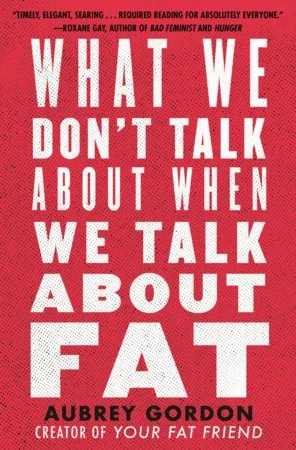
Let’s Talk About Fat: A Review of What We Don’t Talk About When We Talk About Fat by Aubrey Gordon
By Veronica Salib, written August 2022
Today, calling someone fat is an insult rather than just a description of their body. Fat is a word we shy away from, a word we hate being described as, a word we whisper. Not for Aubrey Gordon. Aubrey Gordon yells about fat. She doesn’t avert her eyes and ears at the mention of fatness and doesn’t sugarcoat the experiences that come with being fat. In her book, What We Don’t Talk About When We Talk About Fat, Aubrey talks about exactly that. The hidden parts of being fat. The parts that thin people or ‘not fat’ people have trouble comprehending.
In our current society, thin is the desired aesthetic. Everywhere you turn there are ads tailored for weight loss, a slimmer waist, and a smaller body. Influencers market products to make you lose weight fast. Weight loss is applauded. A thinner body regardless of whether or not it’s a healthy body is deemed desirable.
Aubrey is a self-proclaimed and unashamed fat person who started her literary career with her essay series called Your Fat Friend. According to her website, “she published exclusively under the pseudonym [Your Fat Friend] for four years, writing anonymously about the social and cultural realities of moving through the world as a very fat person.”
In What We Don’t Talk About, Aubrey weaves anecdotes about being a fat person into discussions about how institutions discriminate against fat people. The anecdotes, both her own and others, display the truly grotesque ways in which fat people are treated. Each chapter of the book covers a new aspect of fatness. The first starts with a description and anecdote of life as a fat person trying to travel. Aubrey shares stories on the plights of traveling as a fat person and goes on to explain the systemic discrimination against fat people.
Openly mocked, judged, bullied, and disregarded, fat people are often met with a lack of empathy that Aubrey highlights in her book. In addition to describing the discrimination, later chapters of the book explore further themes such as public health rhetoric around fatness, diet culture, the common commentary on what fat people eat or look like, concerns of fat people on desirability, and medical bias against fat people.
Aubrey’s book highlights the difficulties of being a fat person. She describes inequities and discrimination in all aspects of life from traveling to healthcare. Despite all the negativity Aubrey concludes her book on a hopeful note. At the start of her last chapter, she says, “There is a world beyond this one. In that world, diversity in size and shape are understood to be part of the natural variance of human bodies, from very fat people to very thin ones. So, too are fluctuations in weight.” She goes on to outline ways in which our society can move away from its fatphobic ways. Her recommendations include plans to criminalize discrimination based on weight, improved access to healthcare and public spaces, awareness of and cessation of fat violence against kids and adults, and the banning of dangerous weight loss drugs.
As I am on my own journey of loving and accepting the body I live in, Aubrey’s words deeply resonated with me. While my body is not very fat and I will never fully understand the struggles that very fat people deal with, I do not have a thin body.
Aubrey’s words have empowered me to accept my body the way it is. Her words and stories have validated the feelings I have living in a size 14 body while society says anything above a size 4 is unattractive. It taught me that I don’t have to live in one of two extremes. I don’t have to starve myself until I am a size 4. On the flipside, I don’t have to fake complete happiness. My body can just be a body, not a measure of my worth.
While this book may have filled me with unbridled rage at the never-ending negative experiences based on size, it also provided me with a light at the end of the tunnel. Despite society’s lack of love for bodies like mine, there are people working tirelessly to make space for them, and make sure it is well cared for and accepted. With activists like Aubrey, there will come a day in which fat is just a word. There will come a day where I no longer resent the body I was given, where I am unwavering in my love for the body that I live in. there will come a day where my body is just a vessel for my being rather than a visual representation of my worth.
Veronica Salib was the summer 2022 publications intern at Yellow Arrow Publishing. She works as an assistant editor for a healthcare media company. Veronica graduated from the University of Maryland in 2021 and hopes to return to school and obtain a master’s in publishing.
*****
Yellow Arrow recently revamped and restructured its Yellow Arrow Journal subscription plan to include two levels. Do you think you are an Avid Reader or a Literary Lover? Find out more about the discounts and goodies involved at yellowarrowpublishing.com/store/yellow-arrow-journal-subscription. Yellow Arrow Publishing is a nonprofit supporting women writers through publication and access to the literary arts.
You can support us as we AWAKEN in a variety of ways: purchase one of our publications from the Yellow Arrow bookstore, join our newsletter, follow us on Facebook, Instagram, or Twitter or subscribe to our YouTube channel. Donations are appreciated via PayPal (staff@yellowarrowpublishing.com), Venmo (@yellowarrowpublishing), or US mail (PO Box 102, Glen Arm, MD 21057). More than anything, messages of support through any one of our channels are greatly appreciated.
Fifteen Seconds in the Woods

By Beck Snyder, written September 2022
I am walking toward the forest in the middle of a chilly November night. Gravel crunches underneath my foot, completely unseen, and the path ahead is lit only by the small flashlight my phone provides. The light lets me catch a glimpse of the rundown white barn I’m passing, one that is hopefully empty, and I am beginning to wonder if having the flashlight on is worse.
Here’s the thing about me—I have a lot of bad ideas, and most of the time, I’m stubborn enough to go through with them.
Having a creative mind does that to you, I think, especially when given a prompt. Mine was simple: go to a location, take that location in, and write about it. Then, go to the same location when something was different (time, weather, amount of people there, etc.) and write about it from that new perspective.
That prompt and a few rejected ideas later led me to now, walking out towards Fairview Mountain past midnight, armed with nothing more than a flashlight, a journal, and a pen to jot down any notes. A terrible idea? Yes. Obviously. Anyone who’s seen more than 30 seconds of a horror movie could tell you that much, but I’d already been up on one of the mountain’s hiking trails earlier that week with the very same notebook and pen in hand, and as the sun shone above me, I’d felt more relaxed than I had since I headed off to the figurative mountain of work college laid out before me. How much different could the experience be at night, especially if I was bringing along a light source of my own?
Very.
The path continues past the barn, gravel and pavement giving way to packed dirt and grass that was just tall enough to need to be mowed again. I am relatively safe for the moment, with most of the forest still a fair distance away as I make my way through the meadow that sits next to a fishing lake. Claustrophobia has yet to set in, but I can still hear the chirping of nearby, unseen crickets, and a faint buzzing noise that reminds me of cicadas, but it’s far past their season. When I came here during the day, the tweeting of birds and buzzing of insects was a reminder of life, of how much this forest sustained. Now, it only sends a chill through my bones as I am reminded of just how many creatures are around that are beyond my sight.
But I am determined to continue. It is one of the few times my stubbornness has outweighed my anxiety—though, I suppose, my anxiety had a hand in keeping me moving forward. This writing prompt is one for a creative nonfiction class, one taught by my favorite professor, a man we all call Ben. The first time I was in his class, he told me he was impressed by my work. I don’t want to let him down.
I press on past the lake. It’s a cloudy night out tonight, and there is no reflection of the moon within the still, silent water. There is only my flashlight to illuminate it, and the stillness feels uncomfortable. People come up to fish on this lake constantly. There’s supposed to be something alive in there, but not even the reeds sprouting up along the edges are moving. The air itself is dead around me and trying not to think about it only makes it all the more noticeable.
I move on. Just past the lake and the meadow lies the final sign of civilization before plunging into the depths—the road that leads further up the mountain to the Outdoor School. I walked up this road once in fifth grade, followed by a pack of other fifth graders dragging duffle bags behind them, ready to spend our first full week away from home learning about identifying plants, going on hikes, and playing games about the food chain. As I continue along it, I catch sight of the pavilion where we played Predator/Prey, in which I was given the role of omnivore. I still remember the exact bush I was trying to hide behind before I was spotted, my hiding place announced to the enemy carnivores by Hunter, who ironically, was an herbivore. I can spot it now, just barely illuminated by one of the flickering street lamps.
I stop for a moment underneath that same street lamp. I’m not sure what stops me here—maybe I’m clinging to the last beam of light I’ll have before I am left alone with only my flashlight. Maybe I want to stay in the familiarity, here outside of the pavilion where I lost a game I was determined to win, all because I’d worn snow boots that I couldn’t run in. Perhaps I should have chosen this spot for my prompt. It’s more open and illuminated, has more memories tied to it—
But I didn’t choose this place. I chose to walk down the hiking trail into the forest for a more authentic prompt, one in which I had no previous memories, and at this moment, as I stare down at the little wooden arrow sign painted dark red pointing down the trail, I can’t remember why.
Ben, I think, as I suck in a terrified breath. I cannot disappoint Ben.
I start down the trail. The light from the street lamps behind me quickly disappears, covered up by the countless tree trunks and branches that seem to close in behind me. Fallen autumn leaves crunch under my feet, and while the noise gives me joy in the daylight, now it makes me cringe. I do not want to be heard. Not by whatever creature could be lurking just outside of my flashlight’s beam.
My mind, of course, is no help. A few of the tree trunks have hastily spray-painted circles and arrows decorating their trunks. They are meant to be guides, a sign that you are headed down the right path, markers to show where you’re going and where you’ve been. In the darkness of night with no moon overhead and only a flashlight, however, my brain has not-so-helpfully dragged forward memories of horror stories that kept me awake at night in middle school and suddenly reminded me of just how similar my current situation is to Slenderman.
I speed up. My spot is about a five-minute walk down the path at a casual stroll, I make it there in half the time, my breathing just as quick, and after an extra 30 seconds of deliberation, make up my mind and switch the flashlight off. It is worse, I think, if I were to turn around and see something than it would be to sit in pitch-black darkness and hope nothing is there. Ignorance is bliss and all that.
Last time, in the sun, I sat out here for 30 minutes. This time, my heart pounding in my chest as the darkness seems to constrict around me, I decide I will force myself to sit still for 30 seconds. I will sit here, listen to the sound of distant bugs and bats that I will not see, feel the cool, still air against my arms, and collect just enough information to write about it.
One . . . two . . . three . . . four . . .
I’m calming down, the longer my timer goes on inside my head and nothing terrible happens. No supernatural creature is lurking behind one of the tree trunks to kill me. It is simply me, the crickets, and the moonless sky. There is something almost beautiful about being entirely alone like this on a night as close to silent as the forest can get. It feels as if I am the last human on Earth—
A twig snaps on 15.
My stubbornness finally loses the fight, and I bolt. I tear back through the hiking trail, down along the road, past the lake, and across the meadow as fast as my legs will carry me. I do not stop until I am past the old white barn, and there, I double over to gasp for air, my lungs heaving as exhaustion takes over from adrenaline.
I am left with one comfort: those 15 seconds will be enough to write a complete prompt.
Beck Snyder is a senior at Towson University studying both creative writing and film. They are from the tiny town of Clear Spring, Maryland, and while they enjoy small-town life, they cannot wait to get out of town and see what the world has to offer. They hope to graduate by the summer of 2023 and begin exploring immediately afterward. You can find more from Beck at their Instagram @real_possiblyawesome.
*****
Yellow Arrow Publishing is a nonprofit supporting women writers through publication and access to the literary arts. We recently revamped and restructured its Yellow Arrow Journal subscription plan to include two levels. Do you think you are an Avid Reader or a Literary Lover? Find out more about the discounts and goodies involved at yellowarrowpublishing.com/store/yellow-arrow-journal-subscription.
You can support us as weAWAKEN in a variety of ways: purchase one of our publications from the Yellow Arrowbookstore, join our newsletter, follow us onFacebook,Instagram, orTwitter or subscribe to ourYouTube channel. Donations are appreciated via PayPal (staff@yellowarrowpublishing.com), Venmo (@yellowarrowpublishing), or US mail (PO Box 102, Glen Arm, MD 21057). More than anything, messages of support through any one of our channels are greatly appreciated.
Her View Friday

Yellow Arrow Publishing supports women-identifying writers from a wide variety of backgrounds, not just because it’s the right thing to do, but because it makes us stronger. Women’s voices have historically been underrepresented in literature, and we aim to elevate those voices and stories through our programs, publications, and support.
Part of our mission in supporting and uplifting women writers is to promote the Yellow Arrow community’s individual accomplishments. We’d like to further expand that support and promotion outside of our Yellow Arrow publications. Twice a month, we’d like to give a shout out to those within the Yellow Arrow community who recently published:
single-author publications
single pieces in journals, anthologies, etc.
You can support our authors by reading this blog and their work, sharing their news, and commenting below or on the blog. Congratulations to all the included authors. We are so proud of you!
Every writer has a story to tell and every story is worth telling.

Author: Miriam Edelson
Tell us about yourself: I am a neurodivergent writer, settler, and mother living in Toronto, Canada. My literary nonfiction, personal essays, and commentaries have appeared in The Globe and Mail, Toronto Star, various U.S., U.K., and Canadian literary journals, and on CBC Radio. My first book, My Journey with Jake: A Memoir of Parenting and Disability, was published in April 2000. Battle Cries: Justice for Kids with Special Needs appeared in late 2005. I completed a doctorate in 2016 at the University of Toronto focused on mental health in the workplace. My latest book, The Swirl in My Burl, a collection of essays, was published in October 2022.
Where are you from: Toronto, Canada
What describe your main writing space: It’s a mess right now—filled with papers, books, and a variety of objects. I need to clean up!

What did you just publish: I published The Swirl in My Burl. You can find it at miriamedelson.com.
Tell us about your publication: It’s published by Adelaide Books of New York (October 2022), a creative nonfiction collection of personal essays exploring growing up, mental health, parenting, nature, and politics.
Why this book? Why now? How did it happen for you? This book is a collection of essays that I’ve been writing over the last few years. Most were published previously in various journals, including “Art in the Maelstrom of Mothering” by Yellow Arrow in EMERGE: Coming into View.
What is a burl? A burl originates from a tree that is stressed. It may be caused by an injury, virus, or fungus. The burl is formed coming out of the side of the tree when the grain of the tree has grown in a distorted or unusual manner. It is a round knotty growth that when polished is full of swirls and beauty. There is an entangled splendor underneath the bark and craftspeople say that it can take 30 years for the burl’s full beauty to emerge.
The swirl in my burl is my life stories, my children, my joy and pain. Through my writing I shine a light on that jumble of memory, fact, and emotion, searching for truth. Like my stories and myself, the burl wood grain is twisted and interlocked, resistant to splitting. I look upon it with wonder as it teaches me to find strength in its misshapenness.
What is your writing goal for the year: To continue writing from the heart.
What advice do you have for other writers? Be persistent. Expect 10 rejections for every acceptance. Don’t lose hope!
What else are you working on/doing that you’d like to share: I am editing a new collection titled Deep Roots, New Threats: Confronting the Rise of the Right in Canada. I’ll need to fashion an introduction and conclusion for this project, as well as edit others’ work.
You can find Miriam on her website at miriamedelson.com.
Yellow Arrow (past and present) board, staff, interns, authors, residents, and instructors alike! Got a publication coming out? Let us help celebrate for you in Her View Friday.
Single-author publications: here.
Single pieces: here.
Please read the instructions on each form carefully.
*****
Yellow Arrow recently revamped and restructured its Yellow Arrow Journal subscription plan to include two levels. Do you think you are an Avid Reader or a Literary Lover? Find out more about the discounts and goodies involved at yellowarrowpublishing.com/store/yellow-arrow-journal-subscription. Yellow Arrow Publishing is a nonprofit supporting women writers through publication and access to the literary arts.
You can support us as we AWAKEN in a variety of ways: purchase one of our publications from the Yellow Arrow bookstore, join our newsletter, follow us on Facebook, Instagram, or Twitter or subscribe to our YouTube channel. Donations are appreciated via PayPal (staff@yellowarrowpublishing.com), Venmo (@yellowarrowpublishing), or US mail (PO Box 102, Glen Arm, MD 21057). More than anything, messages of support through any one of our channels are greatly appreciated.
Meet the Yellow Arrow Publishing 2023 chapbook authors

By Kapua Iao
For the past few years, we have been busy creating chapbooks! In 2020, Yellow Arrow Publishing released its first two chapbooks: Smoke the Peace Pipe (Roz Weaver) and the samurai (Linda M. Crate). Learning how to navigate the world of single-author publications and getting to know the authors was truly rewarding. Roz and Linda were and are fantastic writers and fantastic women. In 2021 we published three more incredible collections, No Batteries Required (Ellen Dooling Reynard), St. Paul Street Provocations (Patti Ross), and Listen (Ute Carson). This year, we had the privilege of working with three local, Baltimore authors with their collections, The most beautiful garden (Nikita Rimal Sharma), when the daffodils die (Darah Schillinger), and What is Another Word for Intimacy? (Amanda Baker).
Given all the fantastic authors we’ve worked with one on one, we couldn’t wait to review and choose our 2023 chapbook authors. The review committee blindly read through 79 submissions, and every chapbook was heart-filled and personal. And because we consider everyone that publishes with Yellow Arrow family, we spent much time really thinking about our decision. From these initial submissions, we created a longlist of 20 chapbooks then a shortlist of 10 chapbooks (see below for our longlist and shortlist), eventually selecting three to publish in 2023. It was difficult to email every submitter letting them know our decision (writing an acceptance email is as hard as a decline as you never know how either message will be received), but the process is done, and we are so excited to work with the three chosen.
So, without further ado, let’s meet the 2023 Yellow Arrow chapbook authors!

Ann Weil
Lifecycle of a Beautiful Woman
coming April 2023
Ann Weil writes at her home on the corner of Stratford and Avon in Ann Arbor, Michigan, and on a deck boat at Snipe’s Point Sandbar off Key West, Florida. Her work has been nominated for Best of the Net and appears in more than 45 journals and anthologies including Crab Creek Review, Bacopa Literary Review, Whale Road Review, Shooter Literary Magazine, Eastern Iowa Review, and DMQ Review. Ann earned her doctorate at the University of Michigan and is a former special education teacher and professor of education. Read more of Ann’s poetry at annweilpoetry.com.
Lifecycle of a Beautiful Woman explores beauty, womanhood, loving, living fully, and ultimately, aging, from the perspective of a 61-year-old woman (me!).
When did you first realize words have power?
Ha! Great question. I first realized words have power at the age of seven when I won a contest for my poem “Wobbly the Pumpkin Witch.” That was a big day for me, and I still remember the words to that poem (my 85-year-old mother does, too!). But seriously, words have always been important to me, first as a reader—my favorite pastime ever. Little Women slayed me as a teen and when I was introduced to Mary Oliver as a young mother, my life was truly transformed. Imagine that! Poetry can change your life. As an academic, I poured myself into my research and wrote scholarly articles for the field of special education, but my right-brained heart couldn’t wait to get back to reading and writing poetry. Writing has become my daily joy, and joy is its own source of power, right?

Shantell Hinton Hill
Black girl magic & other elixirs
coming July 2023
Shantell Hinton Hill is the ultimate Renaissance woman. An engineer turned pastor, Shantell situates her work at the intersections of social justice, public theology, and Black feminism/womanism. A native of Conway, Arkansas, Shantell is married to Rev. Jeremy Hill. They recently welcomed their first child, Sophie June, to their growing family. Shantell obtained a Master of Divinity from Vanderbilt Divinity School. She also earned a Bachelor of Science in Electrical Engineering from Vanderbilt University and a Master of Science in Electrical Engineering from Colorado State University.
She is a proud member of Delta Sigma Theta Sorority, Inc., and the National Society of Black Engineers. She is also an ordained minister in the Christian Church (Disciples of Christ). Her vocational experiences include work as a process control engineer, a Bible teacher, and as Assistant University Chaplain at Vanderbilt University. At Winthrop Rockefeller Foundation, Shantell focuses on community engagement, faith-based coalition building, and narrative change to imagine more just communities in Arkansas. In her spare time, Shantell is also a freelance writer/author and curates digital content that centers the wholeness and thriving.
Black girl magic & other elixirs is a poetry collection that uplifts the embodied experiences ranging from Black girlhood to womanhood, particularly in the context of growing up in the 90s in the American south. The collection brings to bear the often-unspoken truths about the survival, wit, and skill Black girls and women develop in a world dominated by a myriad of interlocking oppressions. Additionally, this collection seeks to pay homage and build upon the revolutionary work of Black women authors, poets, leaders, and culture bearers. The thematic story arc is an in-depth journey into the nuances of the over-popular term “Black girl magic” juxtaposed with the struggle to realize a world where such magic would no longer need to exist. I am hopeful this collection illustrates that I am passionate about the intersections of justice, storytelling, ethics, and Black women’s spirituality.
When did you first realize words have power?
I started writing my first novel when I was eight or nine years old. I vividly remember writing neatly lined words onto a yellow notepad of a story about a little girl who runs away and forges an adventurous life on her own. It was the summertime, and I was spending several weeks at my grandparents’ house in Greenwood, Mississippi. Besides languishing in the oppressive jim crow-esque heat, there was nothing to do except sit in the front room and listen to the ticktock of 60 Minutes or the gospel messages of John Hagee—my grandfather’s favorite shows to watch while he was sleeping soundly in his folding chair. In those days, my grandfather’s words were law. and his wishes were sovereign.
But in my novel, I created the storyline, characters, and themes that transported me to a place where I could make decisions, take risks, and make-believe other people whom I understood and who I could pretend understood me. Writing gave me license to be big. It gave me the agency to be the commentator of my world rather than a passive participant in a world controlled by others. Discovering my gift for writing unlearned my eyes to see beyond the here and now. And it remains one of the most powerful tools I use today.

Cassie Premo Steele
Swimming in Gilead
coming October 2023
Cassie Premo Steele, Ph.D., is an award-winning ecofeminist author of 16 books and audio programs ranging from novels to poetry and nonfiction and scholarship. Her novel, The ReSisters, published by a small, independent press in Maine, was a #1 bestseller on Amazon in the category of books for young people combating prejudice and racism. We Heal from Memory, her scholarly work published by Palgrave, advanced ideas about the power of poetry to heal individual and collective trauma 20 years before these ideas were introduced into the mainstream. Her nonfiction book, Earth Joy Writing, published by Ashland Creek Publishing in Oregon, continues to sell well seven years after publication and is available for sale at Congaree National Park, where she leads seasonal forest journaling workshops. Her poetry has won numerous awards, including the Archibald Rutledge Prize named after the first Poet Laureate of South Carolina, where she lives with her wife.
In the summer of 2020 as the pandemic was raging, Cassie joined a group of six women—three from Canada and three from the United States, four white and two women of color, and five lesbian and one straight—to sit and write together by Zoom once a week. They were strangers who came together during the loneliness and terror of that time and in the process, they helped each other survive.
They called themselves the Gilead Sisters.
The poems in Swimming in Gilead were written under the loving kindness and acceptance of these women who became “her eye” for each other. By opening into vulnerability, the poems show readers how to “swim in Gilead” with hope and perseverance as our rights as women are taken away.
When did you first realize words have power?
I was a child under the shadow of Watergate. In fact, I suggested putting blue construction paper on the floor and a white fence on the walls to decorate the classroom for parent night when I was in kindergarten. I knew even then that words have power—to empower and disempower, to reveal truths and cover lies, to help people and to hurt them.
I took these insights with me as I grew, and I used them to help me through a difficult childhood and later incidents of sexual assault. Poetry was always the medicine that helped me gain clarity, find healing, and rediscover my power.
The poems in Swimming in Gilead show that combination of vulnerability and authority as each poem reveals the deeper truths that allow readers to live with courage and a renewed connection to their creative fire.
We can’t wait to work with Ann, Shantell, and Cassie next year but definitely have to acknowledge all the incredible collections we received in the summer. In particular, we would love to give a shout out to our shortlisted and longlisted authors.
Meet our shortlisted authors:
Lorena Caputo
Shelby Catalano
Susan Cummins Miller
Theta Pavis
Melanie Weldon-Soiset
Sophie Zhu
And our longlisted authors:
Priscilla Arthur
Carol Barrett
M.M. Buckner
Margaret Cantú-Sánchez
Carolina Hospital
Saadia Khalid
Diane Payne
Ana C.H. Silva
Richelle Lee Slota
Ellie White
Such incredible writing! Thank you to everyone who took the time to send your words to us. It was a pleasure to read what you put on the page.
Every writer has a story to tell and every story is worth telling. We are so proud of everyone we publish at Yellow Arrow. You can learn more about all our authors here and support them by purchasing publications in the Yellow Arrow bookstore.
Yellow Arrow recently revamped and restructured its Yellow Arrow Journal subscription plan to include two levels. Do you think you are an Avid Reader or a Literary Lover? Find out more about the discounts and goodies involved at yellowarrowpublishing.com/store/yellow-arrow-journal-subscription. Yellow Arrow Publishing is a nonprofit supporting women writers through publication and access to the literary arts.
You can support us as we AWAKEN in a variety of ways: purchase one of our publications from the Yellow Arrow bookstore, join our newsletter, follow us on Facebook, Instagram, or Twitter or subscribe to our YouTube channel. Donations are appreciated via PayPal (staff@yellowarrowpublishing.com), Venmo (@yellowarrowpublishing), or US mail (PO Box 102, Glen Arm, MD 21057). More than anything, messages of support through any one of our channels are greatly appreciated.
Her View Friday
Yellow Arrow Publishing supports women-identifying writers from a wide variety of backgrounds, not just because it’s the right thing to do, but because it makes us stronger. Women’s voices have historically been underrepresented in literature, and we aim to elevate those voices and stories through our programs, publications, and support.
Part of our mission in supporting and uplifting women writers is to promote the Yellow Arrow community’s individual accomplishments. We’d like to further expand that support and promotion outside of our Yellow Arrow publications. Twice a month, we’d like to give a shout out to those within the Yellow Arrow community who recently published:
single-author publications
single pieces in journals, anthologies, etc.
You can support our authors by reading this blog and their work, sharing their news, and commenting below or on the blog. Congratulations to all the included authors. We are so proud of you!
Every writer has a story to tell and every story is worth telling.
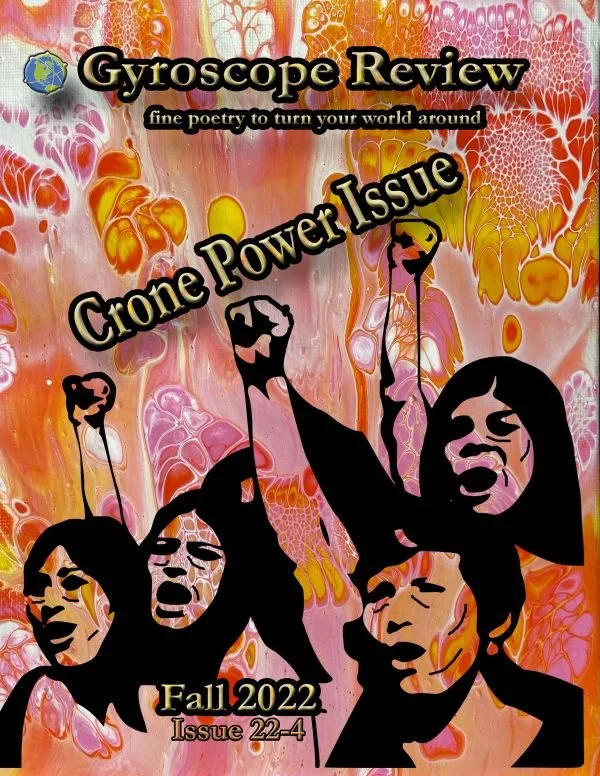
“When My College Roommate Visited Peru” by Joanne Durham from Prince George’s County, Maryland
Genre: poetry
Name of publisher: Gyroscope Review
Date published: October 1, 2022
Type of publication: print and online
gyroscopereview.com/welcome/issue/
“Deeda” by Ute Carson from Austin, Texas

Genre: poetry
Name of publisher: 34th Parallel Magazine
Date published: October 3, 2022
Type of publication: print and online
magcloud.com/browse/issue/2308621
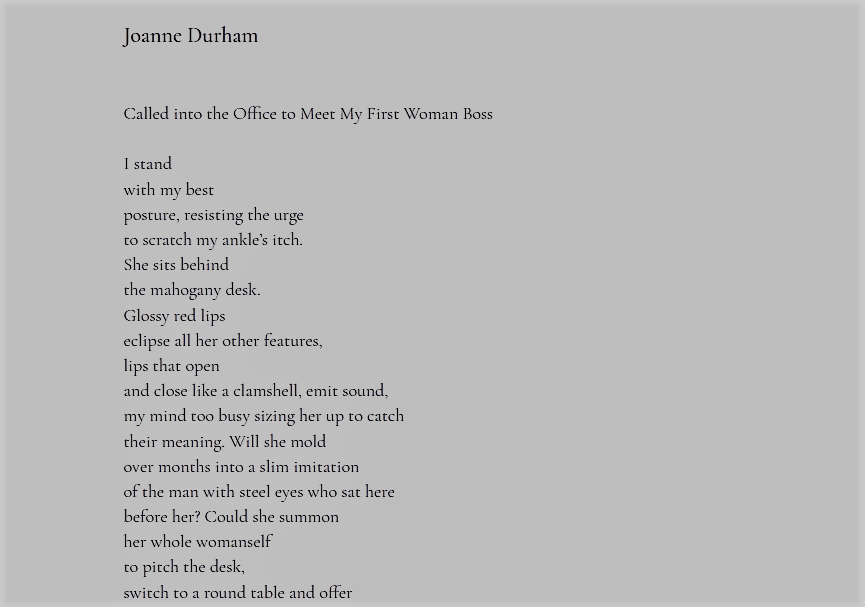
“Called Into the Office to Meet My First Woman Boss” by Joanne Durham from Prince George’s County, Maryland
Genre: poetry
Name of publisher: Quartet Journal
Date published: October 5, 2022
Type of publication: online
quartetjournal.com/current-issue
You can find Joanne on Twitter @DurhamJoanne and on Instagram @poetryjoanne.
“The Waiting Room,” “Graceful Light,” “An Old Woman’s Body,” “Earth Beneath My Feet,” and “The Rainbow Tree” by Ute Carson from Austin, Texas

Genre: poetry
Name of publisher: Indolent Books
Date published: October 17, 2022
Type of publication: online
indolentbooks.com/a-river-sings-ute-carson-10-17-22/
Want to learn more about Ute? You can find her on Facebook @ute.carson.
Yellow Arrow (past and present) board, staff, interns, authors, residents, and instructors alike! Got a publication coming out? Let us help celebrate for you in Her View Friday.
Single-author publications: here.
Single pieces: here.
Please read the instructions on each form carefully; we look forward to congratulating you!
*****
Yellow Arrow recently revamped and restructured its Yellow Arrow Journal subscription plan to include two levels. Do you think you are an Avid Reader or a Literary Lover? Find out more about the discounts and goodies involved at yellowarrowpublishing.com/store/yellow-arrow-journal-subscription. Yellow Arrow Publishing is a nonprofit supporting women writers through publication and access to the literary arts.
You can support us as we AWAKEN in a variety of ways: purchase one of our publications from the Yellow Arrow bookstore, join our newsletter, follow us on Facebook, Instagram, or Twitter or subscribe to our YouTube channel. Donations are appreciated via PayPal (staff@yellowarrowpublishing.com), Venmo (@yellowarrowpublishing), or US mail (PO Box 102, Glen Arm, MD 21057). More than anything, messages of support through any one of our channels are greatly appreciated.
Meeting Baltimore: Finding a Literary Sense of Place

By Sydney Alexander, written August 2022
I came into my internship at Yellow Arrow Publishing this summer with a few goals. Given my interest in English and creative writing, I wanted experience in the publishing world, from marketing to editing. I hoped to connect with published writers and get involved with my local community through events. However, the biggest pull factor for me was the opportunity to learn about Baltimore, the city Yellow Arrow is based in. I grew up in Howard County, where the city was a neighbor, not a home. Returning from my first year of college in Vermont, my goal was to get to know Charm City, and I am pleased to say, I did just that.
I didn’t come to my internship with a sole interest in English. As a geography major, I took classes at UMBC during the summer, learning the basics of ArcGIS which, put most simply, is a tool to make maps and analyze data. What this means is that, when I was not working on various tasks for Yellow Arrow, I was looking at a lot of maps of Baltimore. A lot!
Though geography and publishing may seem to have few overlaps, I feel that these two experiences supplemented each other greatly. It is one thing to look at a map of a place, analyzing streets, population demographics, buildings, vegetation—anything that may be quantified in points, lines, or polygons. Yet that was only one way to get to know the city. Sure, I knew objectively—in shapes, numbers, and statistics—what Baltimore was like, but I hardly knew anything beyond that. Yellow Arrow became the literary lens through which I met Baltimore.
Through my internship, I discovered a whole network connecting various literary nodes of the city, visiting local libraries and bookstores, including the Ivy Bookshop and Greedy Reads. I even learned of Yellow Arrow’s partnerships with many of these places. I attended the Guinness Arts & Drafts Festival, where I wandered past stalls of local artists selling their art, listened to Baltimore-based music groups, and watched as Yellow Arrow poets read their work. There, women writers in the Yellow Arrow community told me of their homes in Federal Hill and on St. Paul Street. From all this, a new image of the city began to sublimate in my mind. It was a place where women lived, worked, and wrote. Women were inspired here.
As the summer 2022 Event and Community Engagement Intern, most of my work for Yellow Arrow revolved around social media, creating posts, and scheduling events. However, I was still given the opportunity to try my hand at copyediting with Yellow Arrow’s writers-in-residence’s 2022 publication, I (want to) love you, Baltimore. Here, the writers-in-residence explored their relationships with the city. I discovered that it was both something like what it was to me, yet still something different.
To me, Baltimore is a seaport with colorful row houses rearranging the visible light spectrum. It is the elegant homes of Roland Park, where old trees arch their backs over bike lanes and traffic. It is Miss Shirley’s on Cold Spring Lane and Atomic Books in Hampden. Stereotypically, Baltimore is the Old Bay and crab paraphernalia at every turn. It is the husk of a building where there once was a Barnes & Noble; it is the curvature of the beltway cinching around the city’s perimeter and I-83 South feeding into the streets.
To the writers-in-residence, Baltimore is still a city framed by ramped highways (I-95, to name another). It is still a place of home-cooked food, music, and bookstores. But to these women, it is also the neighborhoods I have not visited: Fells Point. Druid Hill. Canton Park. Baltimore to them is also the city lights gilding late night activity; it is the parks for dates and heartbreak. My mental map filled itself in.
All this is to say, I realize now how important a sense of place is to writing. Many great authors draw upon their home states in their writing: Karen Russell writes of the Everglades in Florida, where she grew up; Charles Frazier of the Blue Ridge Mountains in North Carolina; Beth Wetmore describes the bleak lands of Odessa, a small town in West Texas; Stephen King is all but synonymous with Maine. Their depictions of their home states suggest an intimate understanding of life in these places. In some ways, reading their work—and reading the poems of our Writers-in-Residence—feels like a guided tour from a local. Yellow Arrow, where women write Baltimore, has gifted me with a more intimate relationship with the city.
Now, as I near the end of my internship, I think, Baltimore, charmed to meet you!
To learn more about Baltimore and places to write see a blog written by Vignette Managing Editor Siobhan McKenna: yellowarrowpublishing.com/news/inspiring-locations-to-write-baltimore-mckenna. And join us tonight for the reading of I (want to) love you, Baltimore. Learn more and RSVP here.
Sydney Alexander is a rising sophomore at Middlebury College in Vermont studying English and geography. She grew up in Ellicott City, Maryland, but enjoys the fact that she has lived all over the country, including North Carolina, California, and Wisconsin. Her work has been published online in Hunger Mountain Review.
*****
Yellow Arrow recently revamped and restructured its Yellow Arrow Journal subscription plan to include two levels. Do you think you are an Avid Reader or a Literary Lover? Find out more about the discounts and goodies involved at yellowarrowpublishing.com/store/yellow-arrow-journal-subscription. Yellow Arrow Publishing is a nonprofit supporting women writers through publication and access to the literary arts.
You can support us as we AWAKEN in a variety of ways: purchase one of our publications from the Yellow Arrow bookstore, join our newsletter, follow us on Facebook, Instagram, or Twitter or subscribe to our YouTube channel. Donations are appreciated via PayPal (staff@yellowarrowpublishing.com), Venmo (@yellowarrowpublishing), or US mail (PO Box 102, Glen Arm, MD 21057). More than anything, messages of support through any one of our channels are greatly appreciated.
Reasons why I write

By Nikita Rimal Sharma, written July 2022
I don't know how and why the habit started, but I have always had a memory of a notebook and a pen in my vicinity. There have been all kinds of notebook throughout my lifetime. Regular composition, hand-me downs, leather bound, spiral. In the past few years, a Google Chromebook has also accompanied me on days that my thoughts in my head are too fast. However the notebooks look like on the outside, or what form my words take, digital or analogue does not really matter. I just write and fill them with words, my words.
The content has its own variety. Depending on where I am at in life, it seems to take a form of its own. Somedays, it’s a big brain dump of things to do; grocery lists, plants to water, or paperwork I am trying to avoid. It includes my plans and intentions for the days to come, my dreams, hopes, goals, and everything in between. Most days, it’s a reflection on how my life is going. I reflect about events, what has been influencing me or what I am obsessed with. I think and try to make sense of a conversation I had, a life lesson I learned, or I let flow my stream of consciousness. I write about good feelings, when I am filled to the brim with gratefulness, positivity oozing out of my words. I write about my worst fears, moments of defeat and hopelessness when I can’t seem to make sense of the world around me. While processing my thoughts, I also doodle (the few things I know how to draw) while I am writing. These accompanying images may be different versions of a smiley face, floral patterns, hearts, and even stars.
And there is also poetry within the pages. Focusing entirely on a set of words and feelings and turning them into a more structured set of paragraphs never fails to exercise my creative muscles. After the pages are filled, I go through each notebook and tear out the pages that could lead into something more: a poem, a social media post, or just an idea for later. The rest goes into my recycling bin, forgotten once I’ve reached this step.
This is the only way I have known how to live and want to live. All aspects of my life on paper, some wording carefully crafted, some just blurted out. I will continue to do this because this is the only way I know how to be.
There are several reasons why writing has always been present in my life. It is how I take mental snapshots of celebratory moments such as weddings or graduations; let out my heartaches, grief, woes of depression and anxiety; or marvel at the little things that bring me joy. My mind is usually a tangled necklace with knots in several places, crumbled, unaware of its becoming. When I write, each knot starts to loosen and things finally start to make sense. The jumble in my mind straightens and sorts itself to categories. Deeper emotions and rage turn into poetry, random thoughts turn into ideas for living and writing more, to-do lists that seemed to never end now have a clear direction that I can follow without feeling overwhelmed. My memories and stories get a permanent home. When I write is when I get to feel, heal, and sort myself out and make way for more abundance in my life. It gives me a chance to figure myself out, move on from one phase or season to another and ground myself. However, I wouldn’t write if it didn’t give me one thing: joy, pure joy!
Why do you write?
Nikita Rimal Sharma’s sources of joy include lots of writing, contemplating the meaning of life, running as often as her knees let her, hiking, walking, and spending time with her Pitbull Terrier, Stone. Nikita currently resides in Baltimore, Maryland, with her husband and works at B’More Clubhouse, a community-based mental health nonprofit. She is originally from Kathmandu, Nepal. Her debut chapbook, The most beautiful garden was published by Yellow Arrow Publishing in April 2022.
Get your copy of The most beautiful garden today at yellowarrowpublishing.com/store/most-beautiful-garden-paperback.
*****
Yellow Arrow Publishing is a nonprofit supporting women writers through publication and access to the literary arts. We recently revamped and restructured its Yellow Arrow Journal subscription plan to include two levels. Do you think you are an Avid Reader or a Literary Lover? Find out more about the discounts and goodies involved at yellowarrowpublishing.com/store/yellow-arrow-journal-subscription.
You can support us as we AWAKEN in a variety of ways: purchase one of our publications from the Yellow Arrow bookstore, join our newsletter, follow us on Facebook, Instagram, or Twitter or subscribe to our YouTube channel. Donations are appreciated via PayPal (staff@yellowarrowpublishing.com), Venmo (@yellowarrowpublishing), or US mail (PO Box 102, Glen Arm, MD 21057). More than anything, messages of support through any one of our channels are greatly appreciated.
Unexpected Moments: What is Another Word for Intimacy? by Amanda Baker
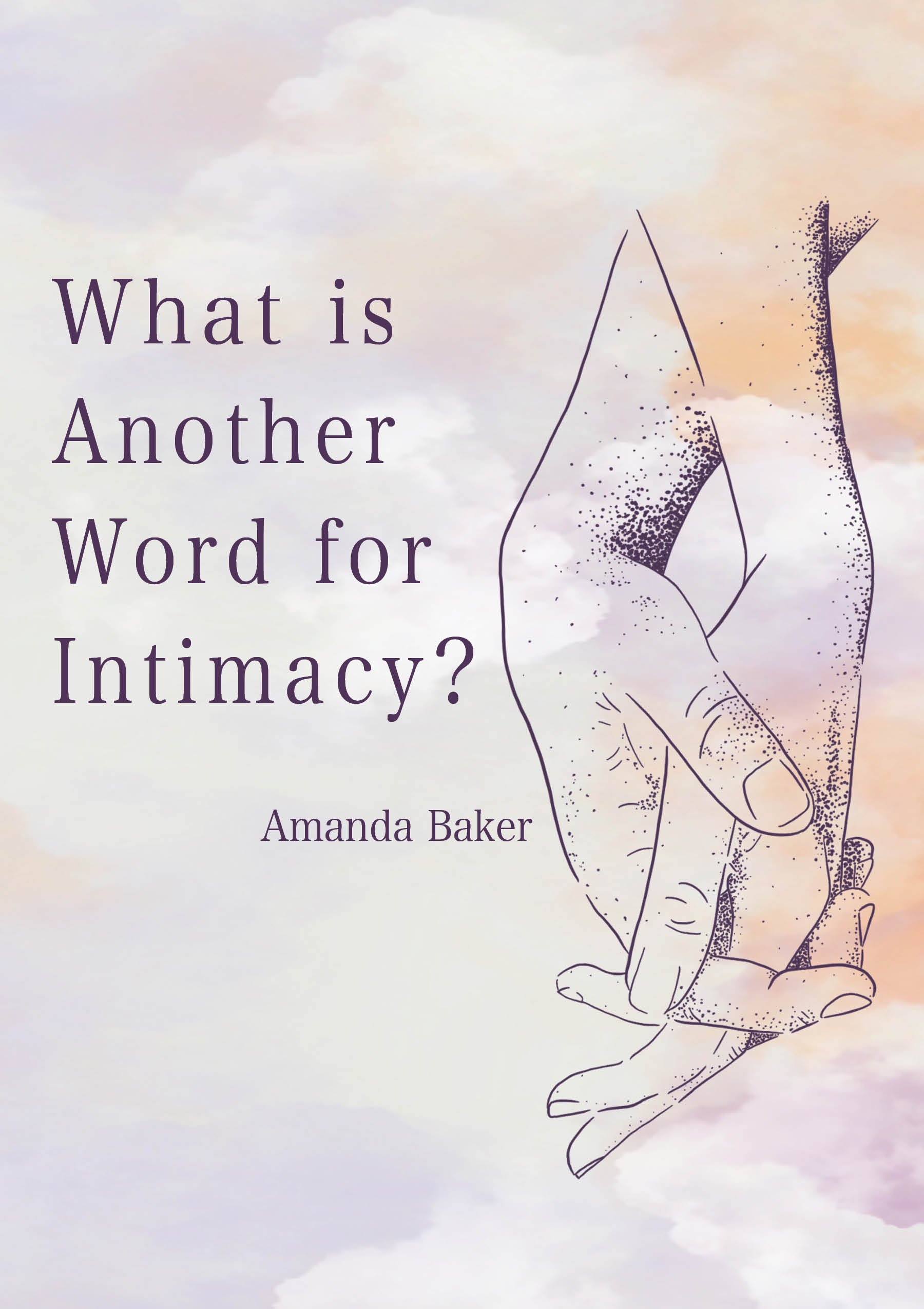
Yellow Arrow Publishing announces the release of our latest chapbook, What is Another Word for Intimacy? by Amanda Baker. Since its establishment in 2016, Yellow Arrow has devoted its efforts to advocate for all women writers through inclusion in the biannual Yellow Arrow Journal as well as single-author publications, and by providing strong author support, writing workshops, and volunteering opportunities. We at Yellow Arrow are excited to continue our mission by supporting Amanda in all her writing and publishing endeavors.
What is Another Word for Intimacy? came to fruition after years of not writing. As a child and teenager, Amanda had a passion for writing that got lost amidst the illusion of glamor in straight As and the molding of oneself to be apologetically pleasing. Who has time for vulnerability, fascination, imagination, and daydreaming when you’re told they get in the way of productivity and accomplishment? How can you access inner deepness if your heart closes? What leads to a closed heart? Without these answers, Amanda was rarely intimate, unless you count psychology books and social parties, where intimacy is diluted by the appetizers, side wall conversations, and free drinks. Amanda’s passion and deep-seated writing did not fully return until her 30s. Now, she writes to fill the void. She writes to create connections. She writes to find true intimacy, believing it is about the vulnerability that comes with being open and honest when connecting to someone else, whether in friendship, companionship, or love.
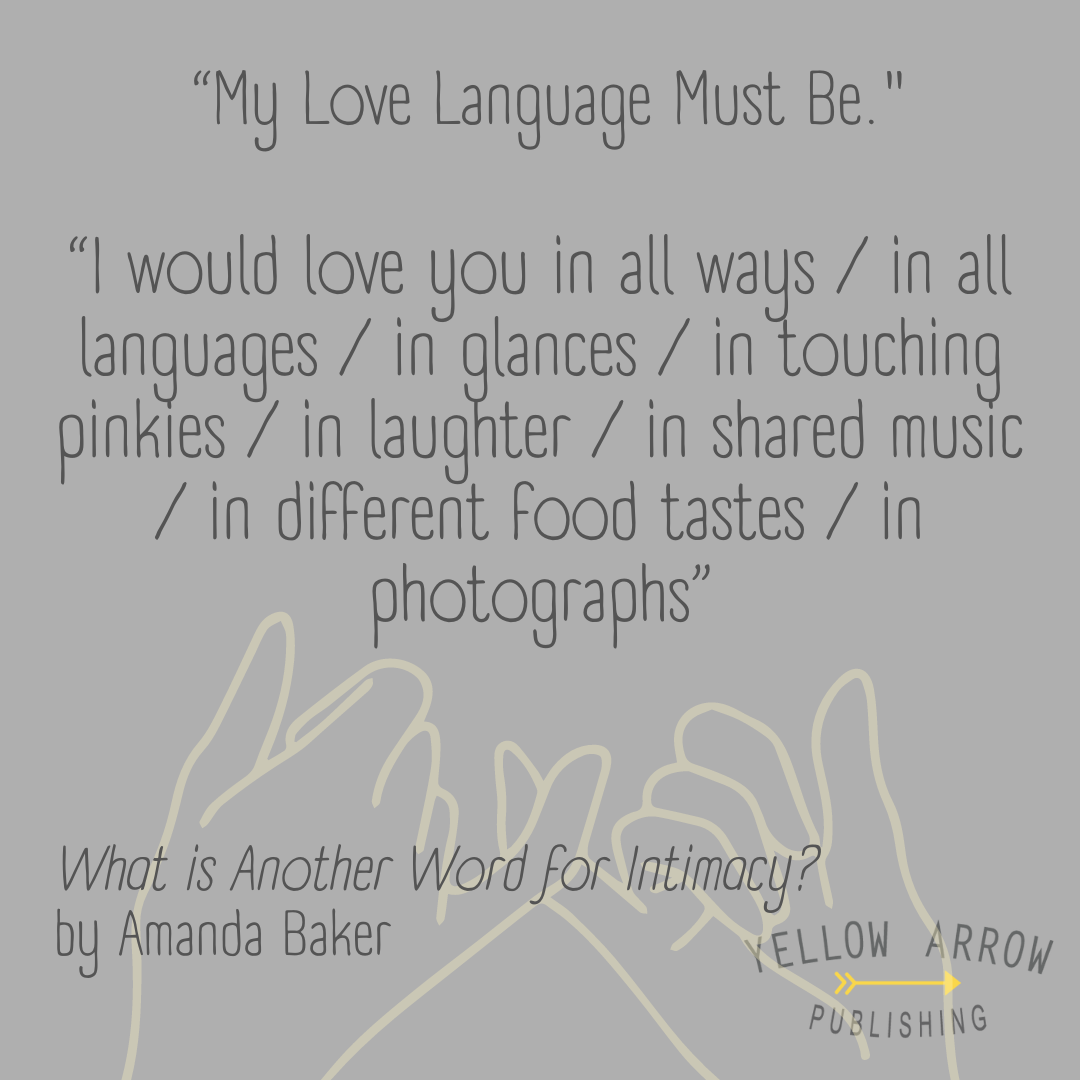
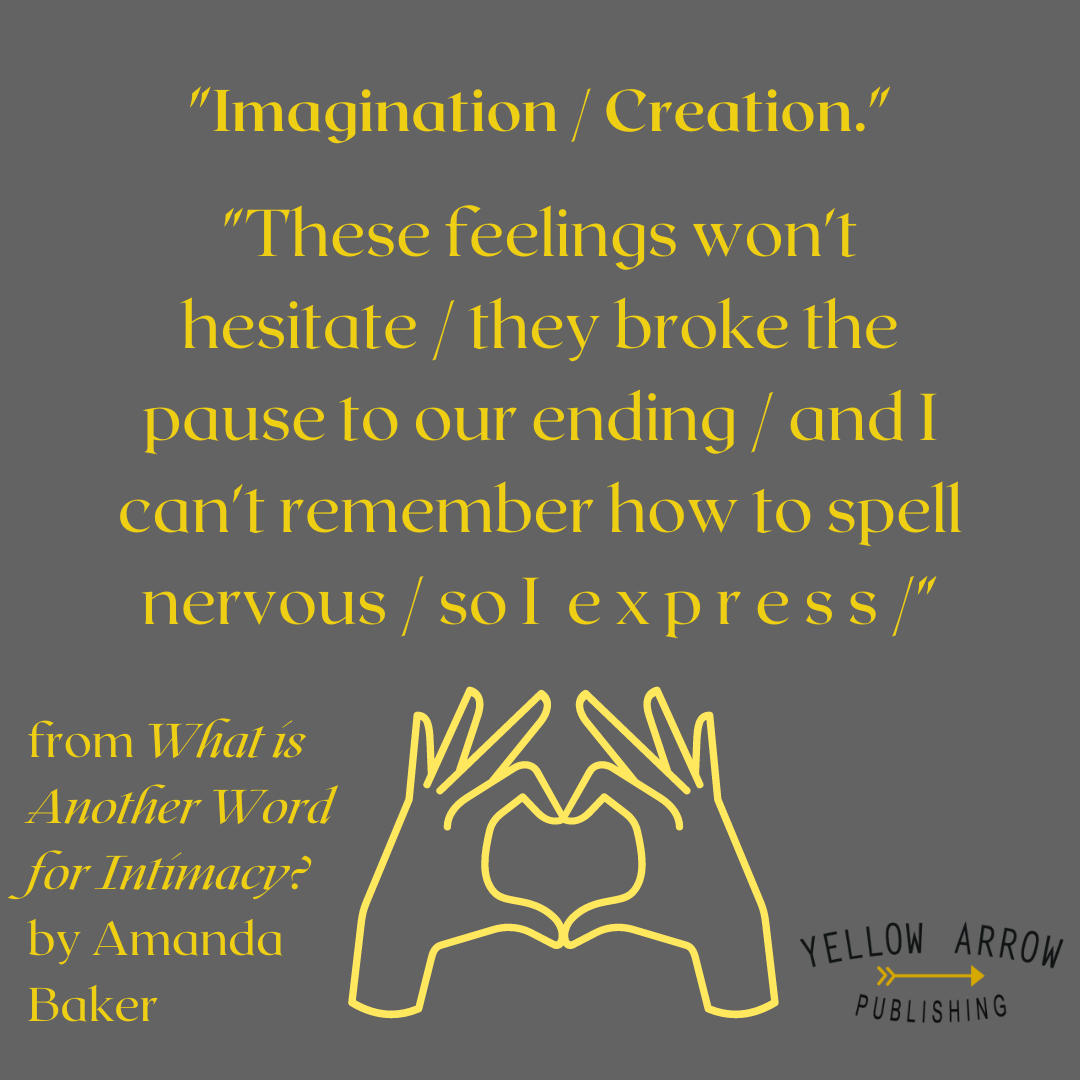
In What is Another Word for Intimacy? Amanda travels through unexpected moments of intimacy—a pack of fruit mint gum, the inside of a pocket, an old green dress that still fits—only to realize that all exists within oneself. Relationships are a vessel for growth. Relationships are a mirror, reflecting back in us what we believe about ourselves.

Amanda is a mental health therapist, 200-hour yoga instructor, and poet from Baltimore, Maryland. She attended the University of Maryland School of Social Work and James Madison University. She is a mother of her four-year-old son, Dylan, and enjoys time in nature. Amanda has self-published a poetry collection that includes written work from her early teens into her 30s. You may find her book ASK: A Collection of Poetry, Lyrics, and Words on Amazon and Barnes & Noble.
The incredible cover was created in-house by Creative Director Alexa Laharty after a few conversations with Amanda. “Intimacy does not need to be defined in words,” Amanda conveyed in a recent chat, “this cover represents all that we are not able to fully say, understand, or see. It still creates a shared authentic experience. It creates a resonance, a vitality, a life force. Touching palm lines, interlaced fingers, a hug of hands is my favorite! The way energy can be felt from miles and miles away and in a touch, in hand holding.”
Paperback and PDF versions of What is Another Word for Intimacy? are now available from the Yellow Arrow bookstore. If interested in purchasing more than one paperback copy for friends and family, check out our discounted wholesale prices here. You can also search for What is Another Word for Intimacy? wherever you purchase your books including Amazon, Barnes & Noble, and Kobo. To learn more about Amanda and What is Another Word for Intimacy?, check out our recent interview with her.
You can find Amanda on Instagram @amandabakerwrites and connect with Yellow Arrow on Facebook and Instagram, to share some love for this chapbook. We’d love to hear from you.
*****
Yellow Arrow Publishing is a nonprofit supporting women writers through publication and access to the literary arts. Yellow Arrow recently revamped and restructured its Yellow Arrow Journal subscription plan to include two levels. Do you think you are an Avid Reader or a Literary Lover? Find out more about the discounts and goodies involved at yellowarrowpublishing.com/store/yellow-arrow-journal-subscription.
You can support us as we AWAKEN in a variety of ways: purchase one of our publications from the Yellow Arrow bookstore, join our newsletter, follow us on Facebook, Instagram, or Twitter or subscribe to our YouTube channel. Donations are appreciated via PayPal (staff@yellowarrowpublishing.com), Venmo (@yellowarrowpublishing), or US mail (PO Box 102, Glen Arm, MD 21057). More than anything, messages of support through any one of our channels are greatly appreciated.
Review of The Indomitable Florence Finch: The Untold Story of a War Widow Turned Resistance Fighter and Savior of American POWs by Robert J. Mrazek

Read Charity R. Bartley Howard review of The Indomitable Florence Finch: The Untold Story of a War Widow Turned Resistance Fighter and Savior of American POWs by Robert J. Mrazek, published in Yellow Arrow Journal’s Vol. V, No. 3 (Re)Formation issue (fall 2020). Information about where to find The Indomitable Florence Finch and (Re)Formation is below.
By Charity R. Bartley Howard
Florence Ebersole Finch (1915–2016) lived a fascinating and important life. The Indomitable Florence Finch: The Untold Story of a War Widow Turned Resistance Fighter and Savior of American POWs by Robert J. Mrazek is the true telling of the life of a hero many may not have heard of before. Florence Finch saved many American lives (prisoners of war or POWs) in the Philippines during World War II. The Americans were in the country starting in early 1942 to mid to late 1945. Their goal was to help the Filipino campaign against Japanese forces, to stop Japan from occupying the area. Now, with this engaging book, her story is finally being told. Florence was humble during and after the war, and her efforts were not for the sake of glory, but rather what she felt was necessary and right.
This is an exceptionally written biography about an exceptional person. Mrazek worked from personal journals, taped interviews, and other original sources. The information was compiled from the past experiences of an elderly woman who finally explained everything to her family only a few years before she died in 2016 at age 101. Born to a Filipina woman and an American serviceman in 1915, Florence was raised in the Philippines and married an American sailor, Charles Smith. She had worked for the U.S. Army in Manila in 1941 prior to the Japanese invasion of the Philippines; it is there she met her husband. Unfortunately, he would be killed in action in the Philippines in 1942, and she soon found herself a widow within the Japanese-occupied Philippines.
At the start of occupation, Florence had taken a job at the Philippine Liquid Fuel Distribution Union (controlled by the Japanese). For two years, this led her to slyly helping the Philippine resistance against the Japanese in many ways: diverting fuel shipments, falsifying documents, and obtaining supplies for POWs. In 1944, her actions were discovered; Florence was arrested, tortured, tried, and sentenced to three years of imprisonment. She remained in captivity until American troops liberated the Philippines in 1945.
Mrazek’s book does her justice. While at the beginning it might take readers some time to get into the story and stay with it, learning the background is important to knowing the full scope of Florence’s remarkable life and achievements. Readers are given vivid details as well as facts from her time during and before the war, creating a delightful read for those who appreciate history and learning about an unsung hero. Ultimately, this is a story of a remarkable woman all readers can admire. Florence was awarded the American Medal of Freedom in 1947 and was the first woman given the Asiatic-Pacific Campaign Ribbon. In 1995, the Coast Guard (who she worked for after the war) named a building on Sand Island in Hawai'i in her honor. Without her efforts, many family members would have lost their loved ones, making her sacrifices important.
Not all war heroes are on the frontlines or are known to us today. In The Indomitable Florence Finch, readers hear the account of one of these unknown heroes. Mrazek’s account is real without being overly violent, but accurately explains what happened. Readers journey in triumph and sadness, both through her war efforts and through her personal tragedies. It helps us understand what happened before us and the sacrifices people made that allow us to live the way we do today. Knowing about her and how she was selfless sets a good example of how we should care about as well as help others. Pertinent information given our current worldwide situation.
Florence lived an interesting and heart-breaking life, full of incredible bravery. Mrazek does a superb job of interweaving the historical narrative of World War II with Florence Finch’s personal life, into an engaging as well as emotional book. The Indomitable Florence Finch also relates an element of World War II many may not have much knowledge of, but will have a better understanding of, following this dramatic telling of Florence’s experiences. There are many other stories yet to tell of brave women, and men, throughout history. If you are interested in learning more about an unsung woman hero in history, this is a well-told story of Florence Finch’s brave efforts and strengths. It is an emotional story that was needed and done in a wonderful way. This is a must read for everyone.
A PDF of (Re)Formation is available in the Yellow Arrow bookstore or as a paperback or ebook through most online distributors. The Indomitable Florence Finch was published by Hachette Books (2020; 368 pages).
Charity R. Bartley Howard lives in central Indiana with her sons and husband. She enjoys time with them outside, camping and hiking. Her degrees are in English and journalism. There is always a book open in her house as she enjoys reading, and family reading time is important as well. Spare time also means editing as well as writing articles, stories, and poems.
*****
Yellow Arrow Publishing is a nonprofit supporting women writers through publication and access to the literary arts. We recently revamped and restructured its Yellow Arrow Journal subscription plan to include two levels. Do you think you are an Avid Reader or a Literary Lover? Find out more about the discounts and goodies involved at yellowarrowpublishing.com/store/yellow-arrow-journal-subscription.
You can support us as we AWAKEN in a variety of ways: purchase one of our publications from the Yellow Arrow bookstore, join our newsletter, follow us on Facebook, Instagram, or Twitter or subscribe to our YouTube channel. Donations are appreciated via PayPal (staff@yellowarrowpublishing.com), Venmo (@yellowarrowpublishing), or US mail (PO Box 102, Glen Arm, MD 21057). More than anything, messages of support through any one of our channels are greatly appreciated.
Her View Friday
Yellow Arrow Publishing supports women-identifying writers from a wide variety of backgrounds, not just because it’s the right thing to do, but because it makes us stronger. Women’s voices have historically been underrepresented in literature, and we aim to elevate those voices and stories through our programs, publications, and support.
Part of our mission in supporting and uplifting women writers is to promote the Yellow Arrow community’s individual accomplishments. We’d like to further expand that support and promotion outside of our Yellow Arrow publications. Twice a month, we’d like to give a shout out to those within the Yellow Arrow community who recently published:
single-author publications
single pieces in journals, anthologies, etc.
You can support our authors by reading this blog and their work, sharing their news, and commenting below or on the blog. Congratulations to all the included authors. We are so proud of you!
Every writer has a story to tell and every story is worth telling.
“Betrayal” by Ute Carson from Austin, Texas

Genre: fiction
Name of publisher: Pithead Chapel
Date published: September 2022
Type of publication: online
“Where Azaleas Grow” by Sara Palmer from Baltimore, Maryland
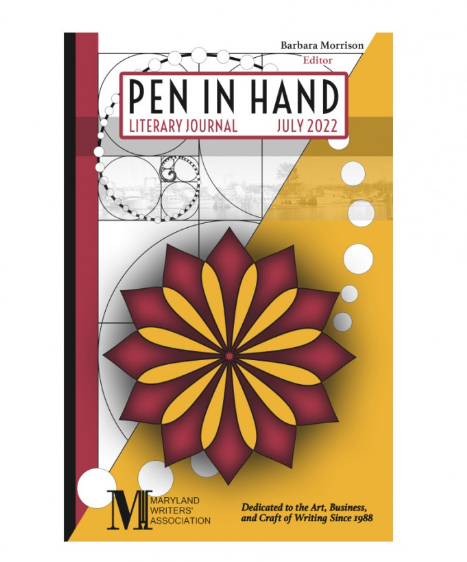
Genre: poetry
Name of publisher: Pen in Hand Literary Journal
Date published: July 2022
Type of publication: print and online
marylandwriters.org/Pen_in_Hand
Want to learn more about Sara? You can find her on Facebook @sara.palmer.5455 and @sara.p5455.
“The Certain Old Man” by Heather Brown Barrett from Southeastern Virginia
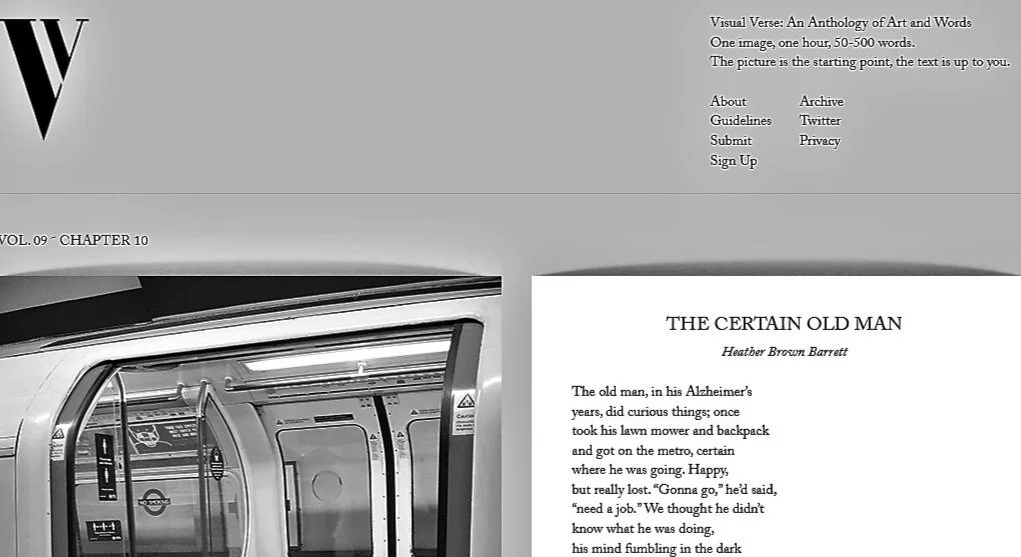
Genre: poetry
Name of publisher: Virtual Verse
Date published: August 31, 2022
Type of publication: online
visualverse.org/submissions/the-certain-old-man/
“Ars Bestia Domitor” and “Trees of Life” also by Heather Brown Barrett from Southeastern Virginia

Genre: poetry
Name of publisher: The Ekphrastic Review
Date published: September 9, 2022 and September 23, 2022

Type of publication: online
ekphrastic.net/the-ekphrastic-challenges/luristan-bronze-ekphrastic-responses
ekphrastic.net/the-ekphrastic-challenges/jo-zider-ekphrastic-challenge-responses
You can find Heather on Instagram @heatherbrownbarrett.
Yellow Arrow (past and present) board, staff, interns, authors, residents, and instructors alike! Got a publication coming out? Let us help celebrate for you in Her View Friday.
Single-author publications: here.
Single pieces: here.
Please read the instructions on each form carefully; we look forward to congratulating you!
*****
Yellow Arrow recently revamped and restructured its Yellow Arrow Journal subscription plan to include two levels. Do you think you are an Avid Reader or a Literary Lover? Find out more about the discounts and goodies involved at yellowarrowpublishing.com/store/yellow-arrow-journal-subscription. Yellow Arrow Publishing is a nonprofit supporting women writers through publication and access to the literary arts.
You can support us as we AWAKEN in a variety of ways: purchase one of our publications from the Yellow Arrow bookstore, join our newsletter, follow us on Facebook, Instagram, or Twitter or subscribe to our YouTube channel. Donations are appreciated via PayPal (staff@yellowarrowpublishing.com), Venmo (@yellowarrowpublishing), or US mail (PO Box 102, Glen Arm, MD 21057). More than anything, messages of support through any one of our channels are greatly appreciated.
Books, Baltimore, Community: How the Ivy Bookshop Connects with its Community

By Sydney Alexander, August 2022
In early August, I had the pleasure of interviewing Emily Rosen, the Operations Manager at the Ivy Bookshop in Baltimore, Maryland on Falls Road. Our conversation centered around how the Ivy connects with its local community and with Baltimore as a whole. At the Ivy, a lot more goes into the community than just the people buying and selling books. The idea of community is made special by how this bookshop connects readers with other readers in addition to how it connects readers with a variety of worlds through the books it sells.
On a base level, staff are crucial in fostering the sense of community. The Ivy draws upon locals when hiring staff members, with an internship program that often leads to jobs. The Ivy has many partnerships with local schools and youth organizations, drawing kids “from all corners of Baltimore City” who are excited about working with books and about reading. Of course, Ivy staff members bring more than just a pair of willing hands to the table. These workers also have niche interests that they can share with Baltimore’s readers: everything from gardening and nature to speculative fiction and thrillers. These special interests make for personal connections that tie bookstore workers and bookstore patrons together, adding a personal touch that makes the Ivy its own special place.
What is more, the Ivy has made a dedicated effort to bring in younger folks. Whereas this bookshop once primarily catered to families and older folks, newer partnerships have connected this bookshop with younger readers and students, which has led to an evolution of the store itself. It is important, Emily emphasized, to have younger staff who can connect with a younger demographic of readers. Younger staff on board at the Ivy has led to a greater diversity in what the Ivy stocks on its shelves, as these staff members can best draw upon and cater to the interests of young people. The mystery and Sci-Fi sections of the store have swelled. There is also a large interest in poetry; not only does the Ivy strive to connect with local poets, but staff members are poets themselves, which has led to an overflowing poetry section to match.
The Ivy’s shelves not only reflect community interests, but also the Ivy’s location. In 2020, the Ivy moved to a new home within city borders—a multistory building situated on a large property overflowing with foliage, with more space inside and out. The Ivy has made good use of its large backyard and its outdoor patio. At the height of the COVID pandemic, all programming was held outside, from author events to art camps and to yoga classes. Last March, Yellow Arrow even collaborated with the Ivy to hold a reading from poet Patti Ross’ new chapbook St. Paul Street Provocations. A story walk set up in the backyard allows younger readers to follow a winding path of words and stories intertwined with nature. What is more, the gardening and nature section of the store has grown, which reflects the Ivy’s mission to “bring the outside in,” as Emily put it.
When I asked Emily to describe the Ivy’s space, she described it as “light, airy, clean,” a space that felt like welcoming open arms. Lots of natural light illuminates floor-to-ceiling cream-colored shelves and walkways that loop through the shop. Little cards with book recommendations, “shelf talkers,” highlight staff picks and favorites. No longer stymied by the small space of their old location, the Ivy now has an open space for Baltimoreans, from children to adults, to explore, browse, and get lost in.
The Ivy also strives to amplify and share the voices of local authors and writers. Many of its events are community-based, and the Ivy prioritizes bringing together local authors with the people in their community. Most often, these are Baltimore writers and Baltimore readers, a combination that contributes to the Ivy’s identity as a uniquely Baltimore bookshop.
In all, the Ivy is a place where “everyone is on the same page” and where “lots of people meld [and] are united by a general love for books and community.” It only makes sense that this bookshop has become such a beloved and important place in Baltimore’s literary scene. It was delightful getting to know Emily and learning more about how the Ivy operates. When exploring new cities, I always love to check out the bookstore scene, and this interview offered me the opportunity to not only learn more about bookstores, but it also offered me a deeper look into the Charm City community.
On September 30, join Yellow Arrow and Bird in Hand Cafe, the Ivy’s sister store, for the book launch of when the daffodils die, the debut chapbook of Darah Schillinger. Let us know that you plan to attend here. Thank you for supporting independent publishing.
Sydney Alexander is a rising sophomore at Middlebury College in Vermont studying English and Geography. She grew up in Ellicott City, Maryland, but enjoys the fact that she has lived all over the country, including North Carolina, California, and Wisconsin. Her work has been published online in Hunger Mountain Review.
*****
Yellow Arrow Publishing is a nonprofit supporting women writers through publication and access to the literary arts. We recently revamped and restructured its Yellow Arrow Journal subscription plan to include two levels. Do you think you are an Avid Reader or a Literary Lover? Find out more about the discounts and goodies involved at yellowarrowpublishing.com/store/yellow-arrow-journal-subscription.
You can support us as we AWAKEN in a variety of ways: purchase one of our publications from the Yellow Arrow bookstore, join our newsletter, follow us on Facebook, Instagram, or Twitter or subscribe to our YouTube channel. Donations are appreciated via PayPal (staff@yellowarrowpublishing.com), Venmo (@yellowarrowpublishing), or US mail (PO Box 102, Glen Arm, MD 21057). More than anything, messages of support through any one of our channels are greatly appreciated.
Poetry is Not Just for Stuffy Old White Men

By Veronica Salib, written June 2022
Growing up, I spent a lot of time with my nose in a book. I was an awkward sort of kid who didn’t quite fit into my own body and books were a great way to escape that. They were a way to live all the lives I couldn’t quite get my hands on. As I grew into my own body in high school, I let go of that love of reading. I was busier with makeup, school dances, cheer practice, and unrequited love.
In my freshman year of high school, one of my teachers had us all celebrate Poem in Your Pocket Day (April 29). We were meant to each bring in our favorite—or just a poem—and share it with the class. Frankly, I dreaded this. Not only did I have anxiety around public speaking, but what was I going to bring. I didn’t have a favorite poem. I didn’t even have an OK-it-doesn’t-suck-that-bad poem.
I ended up picking a poem that I found posted anonymously online. It was cheesy, rhymed, and all of six lines long but that’s beside the point. That day I heard kinds of poetry that I had never heard before. Lines that perfectly described how I was feeling. People had put words to the emotions I could never quite explain.
Up until that point, I was never a fan of poetry. Poetry to me was written by stuffy old white guys who had no idea what it was like living as a 15-year-old Egyptian girl in a school of mostly white kids.
Now I won’t lie to you; it wasn’t until a year later that I fell in love with poetry. That same teacher introduced me to a spoken word poet named Sarah Kay, who absolutely captivated me. I watched every single one of her videos and every Ted Talk. I bought every poetry book she had written. I spent hours on end going through the recommended videos on her YouTube page.
What I learned was poetry isn’t just for old stuffy white guys.
Who would’ve thought?
Poetry is for women who didn’t quite feel comfortable in their skin. Poetry is for men who are struggling with their sexuality. Poetry is for people of color who had to come to terms with the microaggressions they would face daily. Poetry is for people falling in love and healing from the scars that love tends to leave behind.
Poetry is for mothers struggling to raise their sons to be good men and fathers who are amazed at their daughters’ minds. Poetry is for the angry loved ones left behind when someone passes, and that same loved one 10 years down the line when the wounds have scabbed over. And, believe it or not, poetry is for 15 (now 23) year-old Egyptian girls living in a world dominated by old white men.
Late in college, I began to write consistently for the first time. I was always one to scribble thoughts, but as soon as things got difficult, I shut down, put the notebook away, and hid. When my life got hard, and there was no hiding from the ugly, I decided to lean into it. To journal all the terrible feelings and work through them instead of working around them.
The newfound appreciation for writing returned my love of reading. This time it was slightly different. Instead of reading to escape my life, I ended up reading books about my life. I found authors who wrote about similar experiences to mine and how they grew in the direction of the sun rather than towards the roots from which they came. The comfort I found in the words of a stranger just fueled my own writing more.
When I started to go to therapy and unpack all the issues I had stuffed into a neat little gift-wrapped box, writing became my safe space. The things it was hard to say aloud went down on the paper. It was easy to look at these journal entries, poems, and notes in the margin and identify my feelings. It was like writing them out took me out of the situation and let me acknowledge the hurt I felt and the progress I had made.
Writing is what helped me quit my job. And I know that doesn’t sound like a great thing, but I promise you it is. I worked a job that I thought was an excellent fit for me, it had its downsides like every job did, but if it weren’t for my writing, I would have never realized how exhausting it was to pretend to love something that was sucking the life out of me. It helped me acknowledge my greatest loves to date, reading and writing.
It wasn’t until I skimmed through all my journal entries that I decided to make my major career switch from medicine to publishing. Don’t get me wrong; it was not an overnight decision. I’m nothing if not an anxiety-ridden, pro-con list writing, research-doing neurotic freak. But it was the spark that lit the fire.
And when I did leave my job, made the major career switch, and was met with rejection after rejection, disappointment after disappointment, it was writing that kept me sane. I acknowledged the struggles that I faced, the anger, the fatigue, the outright depression. And still, it was the writing that always made me come back; it was realizing how much I enjoyed my little short stories, how excited I got when a friend asked me to edit their paper, and how I could write pages and pages about lines in a book or poem that resonated with me.
If you asked me today, I wouldn’t say I’m a fantastic writer or poet by any means, but it is a massive part of my life. If you asked me, I would say I write for the girl who was too awkward to go out and live her own adventures. I write for the girl who used to hate poetry. I write for the girl too caught up in the boy who didn’t love her back. I write for the girl who thought poetry was for stuffy old white men. I write for the 15-year-old Egyptian girl in a school of mostly white kids.
I write for the girl who hid from the difficult things. I write for the girl who was brave enough to admit she needed help. I write for the girl unpacking her neat little gift box. I write for the girl who was too clouded by the plan she laid out for herself to realize it was killing her. I write for the girl who quit her job and dealt with all the discomfort of being in limbo. But most of all, I write for the girl I am now. The girl who has finally gotten her foot in the door, has finally begun to let go of the father who hurt her, finally started to listen to her internal dialogue, and the girl who has finally begun to embrace all the things that bring her joy.
Veronica Salib was the summer publications intern at Yellow Arrow Publishing and is currently an editorial associate. She works as an assistant editor for a healthcare media company. Veronica graduated from the University of Maryland in 2021 and hopes to return to school and obtain a master’s in publishing.
*****
Yellow Arrow recently revamped and restructured its Yellow Arrow Journal subscription plan to include two levels. Do you think you are an Avid Reader or a Literary Lover? Find out more about the discounts and goodies involved at yellowarrowpublishing.com/store/yellow-arrow-journal-subscription. Yellow Arrow Publishing is a nonprofit supporting women writers through publication and access to the literary arts.
You can support us as we AWAKEN in a variety of ways: purchase one of our publications from the Yellow Arrow bookstore, join our newsletter, follow us on Facebook, Instagram, or Twitter or subscribe to our YouTube channel. Donations are appreciated via PayPal (staff@yellowarrowpublishing.com), Venmo (@yellowarrowpublishing), or US mail (PO Box 102, Glen Arm, MD 21057). More than anything, messages of support through any one of our channels are greatly appreciated.
Let Intimacy Bloom: A Conversation with Amanda Baker

I want transformation,
But not transformed.
Blooming
But not bloomed.
[ . . . ]
Because done is an ending
And I’m never finished.
“Let Me Bloom”
Imagine a young girl about seven years of age, locks hanging loose over her keyboard, as she creates lyrics for the electronic beats pulsing from her palms to her pen to the page. This is the start, the heart, of Yellow Arrow Publishing’s final chapbook author, Amanda Baker’s, poetry. This proclivity towards melodic expression gave breath to her writing from an early age and ultimately resulted in the formation of her forthcoming chapbook What is Another Word for Intimacy?
Amanda is a mental health therapist, 200-hour yoga instructor, and poet from Baltimore, Maryland. She attended the University of Maryland School of Social Work and James Madison University. She is a mother of her four-year-old son, Dylan, and enjoys time in nature. Amanda has self-published a poetry collection that includes written work from her early teens into her 30s. You may find her book ASK: A Collection of Poetry, Lyrics, and Words on Amazon and Barnes & Noble.
What is Another Word for Intimacy? is now available for PRERELEASE (click here for wholesale prices) and will be released October 11, 2022. Follow Yellow Arrow on Facebook and Instagram for Friday sneak peeks into What is Another Word for Intimacy? The incredible cover was created in-house by Creative Director Alexa Laharty after a few conversations with Amanda. “Intimacy does not need to be defined in words,” Amanda conveyed in a recent chat, “though it is helpful. Connection does not need to be explained in metaphors, though it is helpful. An emotion does not need to be seen or read on a page, though it is helpful. This cover represents all that we are not able to fully say, understand, or see. It still creates a shared authentic experience. It creates a resonance, a vitality, a life force. Touching palm lines, interlaced fingers, a hug of hands is my favorite! The way energy can be felt from miles and miles away and in a touch, in hand holding.”
After a day of work as a mental health therapist and time spent with her son before his bedtime, Amanda met with Melissa Nunez, Yellow Arrow author and interviewer extraordinaire, over Zoom to discuss the evolution of her poetic voice and the intimacy of writing and personal connection that ties her newest collection together.
A question that is commonly asked of writers is when they started writing. I find it very compelling that you were very open to and about your poetry from a young age (Amanda’s first collection ASK: A Collection of Poetry, Lyrics, and Words spans more than a decade of writing beginning from age 14). What did you gain from the experience of publishing work from when you were young?
It was so fascinating to go back and read through my old journals. I have always recalled that kind of writing coming naturally to me. I never learned to play the piano or read music as a child, but I would pretend with the programmed beats on my keyboard, and words started to come naturally with the melody. I used to say I write lyrics, not necessarily poetry, because there tends to be that cadence or melody in my head accompanying the words. I don’t always do that now as it has kind of transformed into other ways of writing my poetry. Going back through my journals as an adult and reading what I had written and saved (mostly from ages 13 and on) allowed me to see that core self that never really changed and still exists within me. It also revealed ways that I had changed and maybe had gotten a little disconnected from myself. It is so valuable to go back and see things that are still so true to me—values I’m so passionate about, that vision and creativity still flowing. It inspired and motivated me to get back into writing more regularly.
What would you say is the biggest difference between the creation of your two collections, ASK and Intimacy?
Maturity and growth. I have come into my own regarding relationships, whether that is partnership, a marriage, or friendship, and navigating things that block that desired level of intimacy. From a young age I thought intimacy was or meant only one thing, and this new collection is about finding the truth of intimacy. These poems, for me, are that desire to understand it, know it, feel it, and be in it, and have others really be open to that same curiosity. My first collection was more about seeing changes over time, not necessarily with a specific theme, but what I think links them together is asking questions. The deeper we go, the more that we ask, the more we can expand our minds and hold other perspectives.
What is your personal definition of intimacy?

The vulnerability that comes with being open and honest within a connection with someone. I teach yoga, and within yoga comes union of the mind, the body, and the spirit. I feel like taking that union and alignment and having that with another person is the goal of intimacy. It doesn’t necessarily mean that you are an exact match within those three elements within each other, but there needs to be that same openness and acceptance. When you really get to know someone on a close level and let go of the defenses that can come out naturally in a relationship, an openness and consciousness can be built between two people when you truly see each other for who you are.
Why do you think intimacy is so important in writing?
Writing can essentially be the vessel for intimacy. I recently watched a TED Talk by Ethan Hawke called Give Yourself Permission to be Creative and he shared something that really resonated with me. He said that in order to express yourself you need to know yourself, and in order to know yourself you need to know what you love. Love and intimacy are interconnected in so many ways. If we really want to express our truth through writing, then we need to be curious and go inwards to know ourselves and to love ourselves as well. Intimacy exists in writing and reading someone’s work. You develop a relationship through the words that are shared, through that connection.
I would love you in all ways / in all languages / in glances
[ . . . ]
L O V E in a shared space / does not need language at all.
“My Love Language Must Be.”
There are many creative expressions and descriptions of love in your work. What would you want your audience to learn about love?
Two things come to mind. The first is that love is universal. I love that about love. Wherever you are, whatever country you come from, at our core—we all want love. We want to feel love and to be loved. It doesn’t need a language because it exists in all languages, it is shared everywhere if you are willing to be open to it and feel it. The second is that love exists inside you. In order to be intimate with someone else, you have to first be intimate with yourself. That opens up that level of intimacy or the multiple forms of love that can manifest in different ways with different people.
There is a strong message of healing in your poetry. How is writing healing for you?
It is so healing. I write almost every day now and it is energizing. When I’m writing, I am learning something about myself. Sometimes I start writing and don’t even know where it is going to end up. I’ll have an idea and it flows into something different, something unexpected. I think that can be a signal of healing and growth. Self-expression also helps us release things that can be debilitating or defeating, feelings that when held inside create more stress and tension. Those doubts or insecurities that naturally exist in all of us. I hope that people can see that healing over time through my writing. In my first collection, and even these poems that might not be chronologically ordered, you can see how my beliefs about things have changed, how I am now more flexible (as opposed to rigid), more open to other opinions (as opposed to being opinionated). Writing is such a big part of my coming to that place.
I love the message that writing can be healing for anyone at any age or stage. What advice would you have for those who have never tried or have felt intimidated by writing?
I think the biggest takeaway is to not stop even when there is perceived criticism. There may be those who think their way is the only way, others who categorize good writers and better writers, but it is important to realize that if you choose to share your writing it will find the people it resonates with. Your voice matters and taking the time to experiment with how you want your voice to come out is vital. Someone may start writing and find that it is not for them, and then they may start singing. [That’s] beautiful. [I encourage anyone to] continue to pursue some level of expression that aligns with you. If you find that it is writing, keep writing. One word can be a poem. Who is to say that it’s not? That’s the magic and the beauty of it. There is no right or wrong way.
How did you connect with Yellow Arrow Publishing?
I have felt a divine timing in my writing journey with so many things lining up in just the right way to get me where I am. In opening my old journals and feeling that inspired impulse to share them. Connecting with Yellow Arrow was another one. I am a therapist full time, and a colleague of mind has a friend who led me to Yellow Arrow. She mentioned I should chat with them as an opportunity to find new information for my writing. I met up with her friend and she directed me to [Yellow Arrow’s] Instagram. Literally two days later they posted their open call for submissions. It felt like a sign that I had to do this. Baltimore is my home city and their mission to empower female writers and poets drew me in. I have since attended some of their writing workshops and connected with some of the other writers within their community, and it has all seemed to just fall into place.
Do you think your profession as therapist plays into the development of your writer voice?
Absolutely. I bring a lot of mental health themes into my writing (a third collection inspired by these themes is in the works). The more that I write, the more I have embraced using that as a tool or intervention with my clients. I encourage them to express themselves in various ways, one of them being writing. I am very open about my own struggles with anxiety, depressive symptoms, and the impact of trauma (a professional label for this is a therapist with lived experiences). I include this in my writing because it is authentic to me and a way to heal, but it is also a model for other people who may be coming to see someone like myself. It shows them they are not alone, and that this is not a fix-all. This is a process I am guiding you through to be closer to and better know yourself. Writing is one path that has worked for me. Let’s find what works for you.
Now everywhere I go . . . I leave a little bit of your residue.
It fades as a broken record memory
where I can’t remember if the flavor was peppermint or sugar sweet.
“The Fruit Mint Gum Variety Pack.”

Do you have a favorite poem from the collection, one that encapsulates the core of your work?
“The Fruit Mint Gum Variety Pack” stands out for me. It is so metaphorical and relatable to other people. That thinking that something—whether a person or some connection or event—is going to dissolve and you’re not going to remember it, but the taste is just there. I also think of, “I say you can love more than one person.” Those two are my favorites.
I was intrigued by the dialogue about our memory selves or perceived selves that plays out in some of your poems. How do you approach the writing of memory while embracing the inherent perspective bias and inconsistencies?
What we remember is based on our beliefs, our history, and our views of the world. I write what is true to my memory while remaining aware others may not remember or recall things in the same way. It’s about bringing that awareness to other people while recognizing our recollections of events are not static. When it comes to intimacy, our way of seeing self tends to be more negative. That can interfere with the connections we make. When somebody sees us in a way we don’t, it can be hard to believe. That creates potential for repelling or pulling away from the intimacy as opposed to opening up to it. We [may] accept that there are other—at times more positive—ways of seeing ourselves and be open to those outside points of view. We [may] be open to integrating them with our own perspectives.
The hunger
The craving
The style
The smile. Always a smile.
I’d be always a
S M I L E.
“If they see the way they say they see me . . . then I’d be . . .”
You can read more of Amanda’s words on love and connection in her second poetry collection What is Another Word for Intimacy? Please show your support of Amanda by preordering your copy today.
*****
Thank you, Amanda and Melissa, for sharing your conversation. Yellow Arrow Publishing is a nonprofit supporting women writers through publication and access to the literary arts. Yellow Arrow recently revamped and restructured its Yellow Arrow Journal subscription plan to include two levels. Do you think you are an Avid Reader or a Literary Lover? Find out more about the discounts and goodies involved at yellowarrowpublishing.com/store/yellow-arrow-journal-subscription.
You can support us as we AWAKEN in a variety of ways: purchase one of our publications from the Yellow Arrow bookstore, join our newsletter, follow us on Facebook, Instagram, or Twitter or subscribe to our YouTube channel. Donations are appreciated via PayPal (staff@yellowarrowpublishing.com), Venmo (@yellowarrowpublishing), or US mail (PO Box 102, Glen Arm, MD 21057). More than anything, messages of support through any one of our channels are greatly appreciated.
The Fact of Living in a Place: I (want to) love you, Baltimore publication release

Yellow Arrow Publishing announces the release of our latest publication, I (want to) love you, Baltimore, by the Yellow Arrow 2022 Writers-in-Residence: Arao Ameny, Amy L. Bernstein, Catrice Greer, and Matilda Young. Since its establishment in 2016, Yellow Arrow has devoted its efforts to advocate for all women writers through inclusion in the biannual Yellow Arrow Journal as well as single- and multi-author publications, and by providing strong author support, writing workshops, and volunteering opportunities. We at Yellow Arrow are excited to continue our mission by supporting the residents in all their writing and publishing endeavors.
I (want to) love you, Baltimore is now available from the Yellow Arrow bookstore as a paperback and a PDF. A heartfelt thanks to Arao, Amy, Catrice, and Matilda for going on this journey with us. Visit yellowarrowpublishing.com/writerinresidence-program to learn more about the 2022 writers-in-residence.

Below, Yellow Arrow Executive Director Annie Marhefka, who accompanied the residents on their journey, dives deeper into what it means to be a Yellow Arrow resident and what it means to create and compile a publication as a group.
By Annie Marhefka
As writers, we like to seek out opportunities to explore our craft in a way that grounds us in place. Writing retreats are places you escape to in order to write, writing fellowships award you funds to write wherever you want, and writing residencies offer you a place to go to dedicate time to the pursuit of writing. A residency by definition is “the fact of living in a place.” Residency programs are meant to foster community among its participants. This year at Yellow Arrow Publishing, we decided to have a virtual writing residency for Baltimore residents, a thing that is at odds with itself, a thing that should not even exist.
Founder Gwen Van Velsor initially designed yellow Arrow’s residency program to accommodate emerging writers who could not spend weeks or months in a location far removed from where their obligations resided. The original residency was flexible—a place, the Yellow Arrow House, you could go to at hours of your own choosing, a space to call your own, for the sole purpose of writing. But in 2020 as we all know, our shared physical spaces became places where disease could spread rather than places where we could find community. In fact, my introduction to Yellow Arrow was through its residency program during this time; mine began in March of 2020. As a new mother who had quickly found it impossible to write, even with childcare, in my own noisy home, I was ecstatic to have been awarded a residency with Yellow Arrow. I hired a nanny to watch my child a few afternoons each week and headed off to my new writing space in Highlandtown.
The writing space was intimate—a small wooden desk in a corner by two windows that looked out over the intersection of South Conkling and Bank streets. Despite its plainness, it was apparent that someone [Gwen] had taken care to make the space feel cozy, safe, inspiring. One window was adorned with a large paper cutout of a woman writing. The silhouette cast a feminine shadow across the room when the sun peeked over the brick building across the street. An empty notebook whose cover was decorated with a picture of the Baltimore skyline laid upon the desk, along with a basket of pens, a vase of yellow flowers, and a yellow coffee mug.
While I had sought out the writing residency to escape others, to find solace in a place where I was isolated, it struck me once I arrived that the thing about the space that made it conducive to writing was the presence of other writers in the room. The only other piece of furniture in the room was a classic green chalkboard easel. On it, Gwen had drawn a swirly yellow arrow and written this quote by Emily Kamminga, a contributor to Yellow Arrow Journal, COURAGE (Vol. III):

On that first day, I wrote 3,000 words—almost an entire chapter for my work-in-progress, a memoir about my relationship with my late mother. I was elated. Then, several days later, I penned an article about the world shutting down for I Heart Highlandtown’s website. It is stunning to read that back to myself now—how I thought of it as temporary, how I thought of the pandemic story having an ending. Fast forward to 2021, when I took on the role of executive director of Yellow Arrow and had to re-envision how we would (how we could) host programs, like the writing residency, without a physical space. When our mission was centered around building community space for emerging writers and creatives, how could I create a community virtual space that was as sacred and nurturing to the soul as the space Gwen had created for me?
I knew immediately that the residency program could not be done in isolation in this way. We were all already isolating, physically; I could not then expect writers to pursue their creative endeavors alone in their rooms. They needed a safe zone. They needed a sanctuary. They needed a place—even if it was not a real, tangible location. We decided to create a virtual cohort of writers and the writers had to be in Baltimore. Even though they may never meet in person, they needed to have place in common. Places can amplify our differences and our commonalities; they can separate us, unite us, bond us. And Baltimore is where Yellow Arrow’s roots are, and where my roots are, so Charm City would be a requirement.
The four writers we selected, Arao, Amy, Catrice, and Matilda, submitted stunning portfolios of work, and would represent different facets of Baltimore—different neighborhoods, different experiences, different perspectives. My intention was to meet monthly with the four writers and check on their progress, as I did not want to overburden them in an already over-burdensome online landscape with more Zoom calls, but I also intended to let the writers guide me in how I facilitated the program. In our first meeting, they all agreed they preferred to meet weekly, and so that became the new plan. For several months, we met on Zoom and most days, we started our conversations with how everyone was doing personally. Sometimes, we let those check-ins drive our entire meeting space. Sometimes they needed to. We talked about our losses, our writing inspirations, and sometimes our inability to feel inspired at that moment.
But mostly, the writers shared their words. Arao, Amy, Catrice, and Matilda put their full selves forward throughout their residency program. The irony of having a virtual residency grounded in Baltimore was that it was not grounded in any place at all. For each Zoom call, we clicked on a web link, adjusted our lighting, and muted ourselves when we weren’t talking. Some of us even had faux backgrounds that blurred when we shifted too quickly to the left, and here we were talking about the city that surrounded us, and our relationship to it without really being in it together.
The only rule I had given them was that the writing had to incorporate Baltimore in some way—as setting, as background, as character. They drafted poems and read them aloud with a vulnerability that only a writer with a half-finished first draft fully understands. We sent clapping emojis and typed out lines that stood out to us in the chat with exclamation marks to convey how much the words impacted us, and we went off mute to cheer and cry and say, “Thank you for sharing that with us.”
Most importantly, we created a beautiful publication out of the residency program, now available from the Yellow Arrow bookstore as a paperback and a PDF. You can also search for I (want to) love you, Baltimore wherever you purchase your books including Amazon, Barnes & Noble, and Kobo. To learn more about the residents, check out our residents’ blog posts here.
I know that you, as a reader, will feel rooted in the place that inspired these beautiful poems: our Baltimore. And I know that you, as a reader, will be as thankful as I am that these writers shared their stories with us. They created for each other what I had only hoped to replicate from that tiny little writing studio in Highlandtown: the fact of living in a place, together.
Annie Marhefka is a writer and publishing professional in Baltimore. Her creative nonfiction and poetry have been published by Hobart, Literary Mama, Pithead Chapel, Anti-Heroin Chic, Sledgehammer, and others. Annie is the Executive Director at Yellow Arrow Publishing and is working on a memoir about mother/daughter relationships. Annie spent the majority of her career as an executive in human resources in the ed-tech industry before switching paths to focus on motherhood and creative writing. When she’s not writing or wrangling her children, she likes to spend her time on the Chesapeake Bay and other bodies of water. You can find Annie’s writing on Instagram @anniemarhefka, Twitter @charmcityannie, and at anniemarhefka.com.
*****
Yellow Arrow recently revamped and restructured its Yellow Arrow Journal subscription plan to include two levels. Do you think you are an Avid Reader or a Literary Lover? Find out more about the discounts and goodies involved at yellowarrowpublishing.com/store/yellow-arrow-journal-subscription. Yellow Arrow Publishing is a nonprofit supporting women writers through publication and access to the literary arts.
You can support us as we AWAKEN in a variety of ways: purchase one of our publications from the Yellow Arrow bookstore, join our newsletter, follow us on Facebook, Instagram, or Twitter or subscribe to our YouTube channel. Donations are appreciated via PayPal (staff@yellowarrowpublishing.com), Venmo (@yellowarrowpublishing), or US mail (PO Box 102, Glen Arm, MD 21057). More than anything, messages of support through any one of our channels are greatly appreciated.
Yellow Arrow Journal (VII/02) Submissions are Now Open!
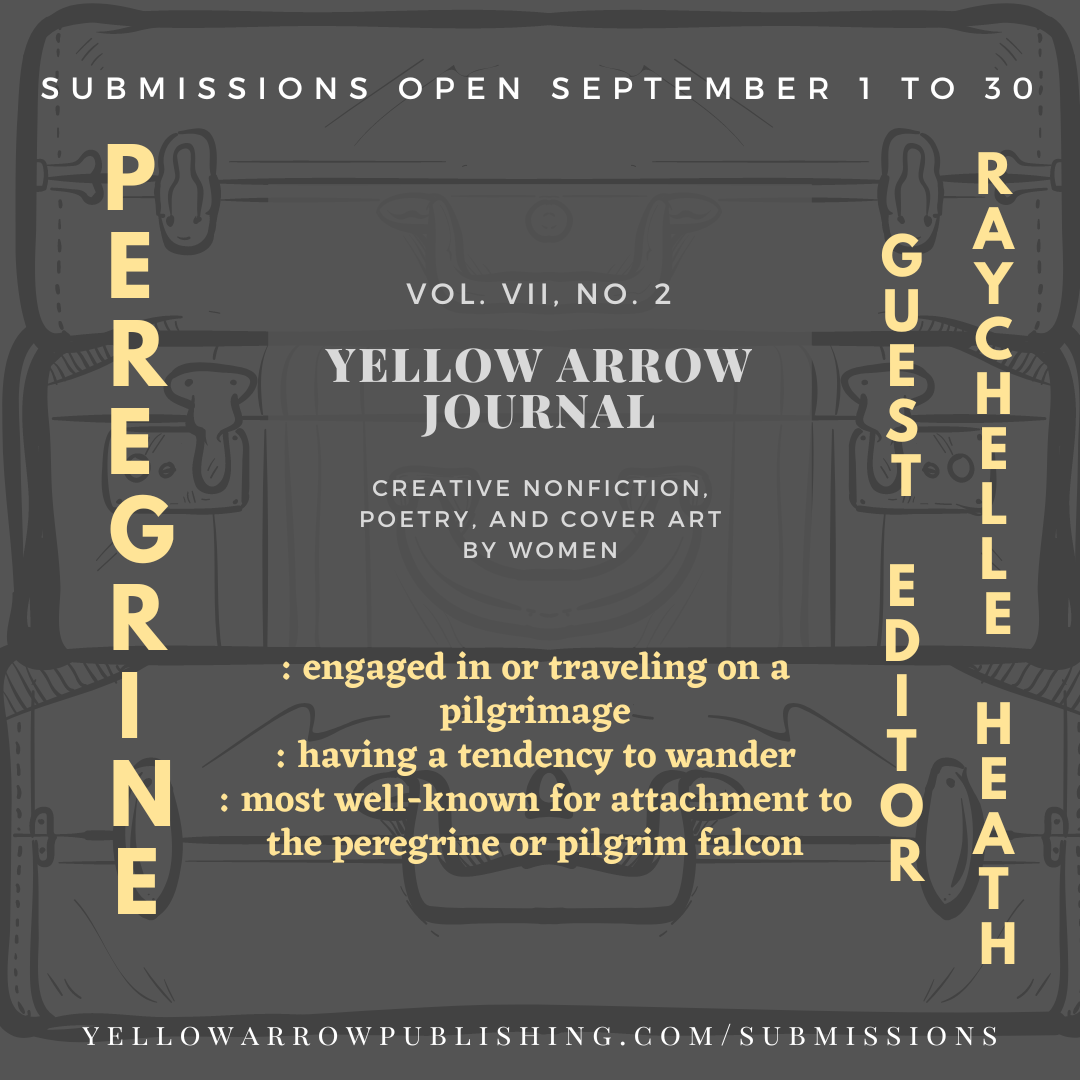
Yellow Arrow Publishing is excited to announce that submissions for our next issue of Yellow Arrow Journal, Vol. VII, No. 2 (fall 2022) is open September 1–30 addressing the overarching concept of illuminating language. Guest editor, Raychelle Heath states,
“From the moment we begin to speak we are also taught how to do it ‘correctly.’ We are given rules and protocols for how to present ourselves when we open our mouths. Without even realizing it, we are thrown into the task of code switching. One tongue for the playground, one tongue for the classroom, one tongue for speaking with our beloved abuelita Mexicana. One tongue to stay safe, one tongue to be daring, brave, to dismantle. For many of us, this code switching, this constant wrangling of words to fit into whatever space we find ourselves is our only way of knowing language. My proposition is we strip away those societal trappings that may, indeed, be holding our tongues hostage.”
This issue’s theme will be PEREGRINE
: engaged in or traveling on a pilgrimage
: having a tendency to wander
: most well-known for attachment to the peregrine or pilgrim falcon
And here are some guiding questions to help you consider what to write and what to submit:
1) What are the constituent parts of the words/language you love? Where did those parts come from? What do the sounds of those parts mean/evoke?
2) What words don’t exist in your language? What silences does that create? How does that effect how you connect with others? How does those words exist in other languages?
3) What does your language look like when it is untethered? When you allow it to wander? To dance with abandon on the page?
4) How does language illuminate our feelings? Our thoughts? Our beliefs? Is it possible to share these through different languages?
Yellow Arrow Journal is looking for creative nonfiction, poetry, and cover art submissions by writers/artists that identify as women, on the theme of PEREGRINE. Submissions can be in any language as long as an English translation accompanies it. For more information regarding journal submission guidelines, please visit yellowarrowpublishing.com/submissions. Please read our guidelines carefully before submitting. To learn more about our editorial views and how important your voice is in your story, read About the Journal. This issue will be released in November 2022.

PEREGRINE’s guest editor, Raychelle Heath, an ANFRACTUOUS and UpSpring poet with her incredible poems “lineage” and “Before the War?” and our December 2021 .W.o.W. author, holds a BA in languages from Winthrop University and an MFA in poetry from the University of South Carolina. She uses her poetry and her podcast to tell the multifaceted stories of black women in the world. Raychelle also explores her experiences with the culturally rich communities that she has encountered in her travels. Her work has been published by Travel Noire, Fourth Wave, Yellow Arrow Journal, The Brazen Collective, and Community Building Art Works. She currently works as curriculum director, sanctuary coach, and facilitator for the Unicorn Authors Club. She also regularly facilitates for The World We Want workshop. We are excited to work with Raychelle over the next few months.
The journal is just one of many ways that Yellow Arrow Publishing works to support and inspire women through publication and access to the literary arts. Since its founding in 2016, Yellow Arrow has worked tirelessly to make an impact on the local and global community by advocating for writers that identify as women. Yellow Arrow proudly represents the voices of women from around the globe. Creating diversity in the literary world and providing a safe space is deeply important. Every writer has a story to tell, every story is worth telling.
*****
Yellow Arrow recently revamped and restructured its Yellow Arrow Journal subscription plan to include two levels. Do you think you are an Avid Reader or a Literary Lover? Find out more about the discounts and goodies involved at yellowarrowpublishing.com/store/yellow-arrow-journal-subscription. Yellow Arrow Publishing is a nonprofit supporting women writers through publication and access to the literary arts.
You can support us as we AWAKEN in a variety of ways: purchase one of our publications from the Yellow Arrow bookstore, join our newsletter, follow us on Facebook, Instagram, or Twitter or subscribe to our YouTube channel. Donations are appreciated via PayPal (staff@yellowarrowpublishing.com), Venmo (@yellowarrowpublishing), or US mail (PO Box 102, Glen Arm, MD 21057). More than anything, messages of support through any one of our channels are greatly appreciated.
Worlds of Wonder: On Art and Community

By Marylou Fusco, written July 2022
For a long time, the image of a solitary writer striving alone was stuck in my head. Being by myself, cut off from all others was how I believed I’d get my best writing done. I tested this theory at a writer’s residency in the Finger Lakes region of New York State. I can’t say that I got a lot of writing done. Instead, I spent most of my time picking through produce at the farm stand down the road from my cabin or hiking trials that overlooked lakes and waterfalls. The words came after I left my cabin and returned to family and friends. And I was only able to share those words after I found a writing community that supported and encouraged me to truly grow.
Every writer is different. For some, finding inspiration or time to write is the hardest thing. For others, the editing and feedback process is the most challenging part. As Yellow Arrow Publishing’s author support coordinator, I’m excited to be a resource to accompany writers through the final steps of the publishing process: publication release and the promotion of their work in a way that feels true to them. Helping promote their work is not only an opportunity to celebrate a single writer, but a way to emphasize Yellow Arrow’s larger commitment to showcasing underrepresented voices.
These past few years, COVID has forced us all to reconsider what community can and should be. We’ve had to get creative in order to find and create support. At Yellow Arrow, we continue to be creative to allow our work to take different shapes and forms. Promotion can be an author sharing their work in a traditional setting like bookstores or cafes or it can be sharing their work in nontraditional public setting like parks and festivals. Public readings are crucial ways to build community and create a way for people to easily access the arts. We had a fantastic time at this year’s Arts & Drafts Festival with chapbook authors Nikita Rimal Sharma (The most beautiful garden) and Darah Schillinger (when the daffodils die) and the 2022 Writers-in-Residence, Arao Ameny, Amy L. Bernstein, Catrice Greer, and Matilda Young. And look forward to Darah’s book launch at Bird in Hand Café on September 30 as well as the Write Women Book Fest on October 8.
Moreover, to honor our community near and far, we have created two new writing and reading opportunities, both which start in September. Write Here Write Now is a virtual monthly write-in session lead by a guest host, exploring a specific theme. And I’m Speaking is an open mic night where readers are invited to share their prose, poetry, or spoken word.
Such events are a visible reminder that the arts are not reserved for a chosen few but available to all. Promotion can also flow into new collaborations or partnerships as we connect with other literary nonprofits that share our vision of a diverse and thriving literary community.
Maybe, most importantly, publication and promotions are about celebrating a publication that took so long to be birthed or the prose/poems that have been growing inside of us for even longer. Every piece of art brought forth on the page or spoken is a radical and affirming act. Especially now.
While it’s true that there are parts of writing we must enter into alone, there are other parts that can be eased through community. Throughout my own journey of writing, publication, and community-building, I’ve come to deeply appreciate what it means to receive and offer support as a writer. This is something I hope to share with other writers.
Unearthing the story or poem is only the start. Every writer has a story to tell and every story is worth telling.
Marylou Fusco grew up in the wilds of New Jersey and knew she was a writer forever. She holds a BA in Journalism from St. Bonaventure University and an MA in Creative Writing from Temple University. She has worked as a newspaper reporter, GED instructor, and ghost tour guide. She is a big believer in the transformative power of art and community. Marylou’s writing has appeared in PopMatters, Carve, the Philadelphia Inquirer, Mutha magazine and various literary journals. She makes her home in Baltimore, Maryland with her husband and daughter.
*****
Yellow Arrow recently revamped and restructured its Yellow Arrow Journal subscription plan to include two levels. Do you think you are an Avid Reader or a Literary Lover? Find out more about the discounts and goodies involved at yellowarrowpublishing.com/store/yellow-arrow-journal-subscription. Yellow Arrow Publishing is a nonprofit supporting women writers through publication and access to the literary arts.
You can support us as we AWAKEN in a variety of ways: purchase one of our publications from the Yellow Arrow bookstore, join our newsletter, follow us on Facebook, Instagram, or Twitter or subscribe to our YouTube channel. Donations are appreciated via PayPal (staff@yellowarrowpublishing.com), Venmo (@yellowarrowpublishing), or US mail (PO Box 102, Glen Arm, MD 21057). More than anything, messages of support through any one of our channels are greatly appreciated.
Her View Friday
Yellow Arrow Publishing supports women-identifying writers from a wide variety of backgrounds, not just because it’s the right thing to do, but because it makes us stronger. Women’s voices have historically been underrepresented in literature, and we aim to elevate those voices and stories through our programs, publications, and support.
Part of our mission in supporting and uplifting women writers is to promote the Yellow Arrow community’s individual accomplishments. We’d like to further expand that support and promotion outside of our Yellow Arrow publications. Twice a month, we’d like to give a shout out to those within the Yellow Arrow community who recently published:
single-author publications
single pieces in journals, anthologies, etc.
You can support our authors by reading this blog and their work, sharing their news, and commenting below or on the blog. Congratulations to all the included authors. We are so proud of you!
Every writer has a story to tell and every story is worth telling.
“The Woodpecker” by Annie Marhefka from Baltimore, Maryland
Genre: creative nonfiction
Name of publisher: Literary Mama
Date published: July 20, 2022
Type of publication: online
literarymama.com/articles/departments/2022/07/the-woodpecker
Want to learn more about Annie? Visit her Instagram @anniemarhefka.
“Lines” by Kay Smith-Blum from Seattle, Washington

Genre: fiction
Name of publisher: Grande Dame Literary
Date published: August 4, 2022
Type of publication: online
grandedameliterary.com/post/lines
Want to learn more about Kay? You can find her on Instagram @discerningKSB, Twitter @kaysmithblum, and Facebook @kay.smithblum.
“Becoming Velvet” and “Beneath Your Surface” by Chris Biles from Washington, D.C.

Genre: poetry
Name of publisher: Raven’s Quoth Press - Cherish (Anthology)
Date published: August 14, 2022
Type of publication: print
You can find Chris on Instagram @marks.in.the.sand.
Yellow Arrow (past and present) board, staff, interns, authors, residents, and instructors alike! Got a publication coming out? Let us help celebrate for you in Her View Friday.
Single-author publications: here.
Single pieces: here.
Please read the instructions on each form carefully; we look forward to congratulating you!
*****
Yellow Arrow recently revamped and restructured its Yellow Arrow Journal subscription plan to include two levels. Do you think you are an Avid Reader or a Literary Lover? Find out more about the discounts and goodies involved at yellowarrowpublishing.com/store/yellow-arrow-journal-subscription. Yellow Arrow Publishing is a nonprofit supporting women writers through publication and access to the literary arts.
You can support us as we AWAKEN in a variety of ways: purchase one of our publications from the Yellow Arrow bookstore, join our newsletter, follow us on Facebook, Instagram, or Twitter or subscribe to our YouTube channel. Donations are appreciated via PayPal (staff@yellowarrowpublishing.com), Venmo (@yellowarrowpublishing), or US mail (PO Box 102, Glen Arm, MD 21057). More than anything, messages of support through any one of our channels are greatly appreciated.
Review of Landing on Your Feet and Putting Down Roots by Sherry Burton Ways

Reread Kara Panowitz’s review of Landing on Your Feet and Putting Down Roots: 21 Rituals to Transform Your Life and Interior Space by Sherry Burton Ways, published in Yellow Arrow Journal’s Vol. V, No. 2 HOME issue (summer 2020). Information about where to find Landing on Your Feet and Putting Down Roots and HOME is below.
By Kara Panowitz
When my friend, Holly, read the opening to Yellow Arrow Publishing’s first Reading Club book selection, Landing on Your Feet and Putting Down Roots: 21 Rituals to Transform Your Life and Interior Space, she started crying. “This is me,” she said. “I could have written this.” The book opens with author Sherry Burton Ways sharing her personal experience with a relationship ending in divorce. This sets the stage for the book itself: how to transform your physical space, and yourself, after major life transitions. Burton Ways’ honesty and openness create a space of trust and relatability. Her recognition that it can feel daunting or too expensive to make transformations during significant life changes brings comfort, and her story demonstrates that no space is too small to create a refuge or a home. In her own words, Burton Ways’ goal for writing this book is to show readers “how their interior design can assist them with additional support.”
Burton Ways’ explanation that “interior design is not decorating” is a theme that carries throughout the rituals she presents. The biggest lesson I took away was that home is not just a physical space and group of objects, but the rituals and aspects of your life you bring to it and how they all connect together. The 21 rituals presented include some that might be expected, like rearranging furniture, selecting interior colors, and creating vision boards. Others I found less expected, such as the ritual of bathing and loving yourself through environment and crystal energy. Finally, there were rituals completely new to me, like Wabi-sabi.
One of the most useful and most accessible things about the book is that it presents actions you can take immediately or in the near future, which you can continue daily or just once in a while. You make it work for you. Burton Ways’ 21 rituals also come with tips and ideas, taking the abstract to the specific. There is something for everyone in this book and it may make you look at something you hadn’t really considered, or perhaps thought wasn’t for you, in a new way.
The rituals explored in Landing on Your Feet and Putting Down Roots also give new ideas for, and new meaning to, rituals you may already perform. The ritual of music and dance spoke to me the most. Why don’t I listen to music and dance more? I love both, and I can influence the mood and energy in my home through what I choose to listen to, and how I groove to it. Burton Ways’ descriptions made me think of music and dance affecting and permeating my space, spreading through the air and seeping into the walls (I danced that night!). She addresses the physical space by suggesting that readers create open space for dance and carry music into that physical space by displaying artwork that depicts music or even instruments.
Additionally, I enjoy the ritual of cooking but don’t always want to do it or give much thought to the process. When I read about it in the book, it brought new mindfulness and value to meal preparation and my place in it. Burton Ways writes,
“Cooking is an interior abundance ritual that can relieve stress and give your life a sense of purpose during major life transitions. Meal preparation allows you to have control over your life and express yourself . . . [and] is an anti-stress exercise because the process of cooking activates the senses that have been numbed.”
I thought about cooking in a new way, in terms of how it influences and spreads throughout my space, similar to music.
Burton Ways includes personal experiences by other women, intended for readers “to see [themselves] in this process.” These candid and insightful stories illuminate how rituals can be used in transitions, including divorce, death, a new career, and even constant change due to housing insecurity. It reaffirms that you can choose and adjust your rituals for any situation, and that something as small as a handheld rock can bring comfort and consistency during transitions. Burton Ways also shares examples from clients she has worked with that demonstrate the implementation of her rituals in an array of spaces. The stories are inspirational and a highlight of the book.
As I read Landing on Your Feet and Putting Down Roots, I felt like Burton Ways was a friend, mentor, and coach, and that we were blessed to have a visit from her for Yellow Arrow’s Reading Club. This author has many talents and a diverse array of expertise: she is an award-winning author, trainer, and speaker, and holds several certifications such as Certified Design Psychology Coach, Certified Graceful Lifestyles Consultant, and Certified Interior Environment Coach. Her passion for her work is evident in the guidance she shares on her pages.
This was a perfect book for Yellow Arrow's first Reading Club session because Yellow Arrow House in Baltimore, Maryland had just opened, and one of the primary missions of Yellow Arrow is to create a safe, welcoming refuge that feels like home, within the House and within workshops and events. The timing was also serendipitous for me because I was living alone in a new apartment and was ready to embrace transition. I immediately made changes to my space and life after reading the book and continue to revisit her words for reminders and ideas on how to implement her 21 rituals.
Finally, as I wrote this review, the COVID-19 pandemic forced everyone to spend a lot more time at home, and I began to use the rituals to ease anxiety and keep creativity flowing. That’s one of the greatest gifts of Sherry Burton Ways’ book. You can always revisit it to change your space and your life in small or big ways. Like life, changes are not always permanent. No matter what your reason for transforming your space and life, Landing on Your Feet and Putting Down Roots will speak to you and encourage you to find rituals to comfort and support yourself during times of transition.
PDF copies of HOME are available in the Yellow Arrow bookstore, and paperback and electronic versions are available through most online distributors. Landing on Your Feet and Putting Down Roots was published by FriesenPress (2017; 112 pages).
Kara Panowitz thrives on creating through writing, theatre, photography, and filmmaking, among other arts. She received both her BA in Theatre and her MA in Social Work from the University of Maryland. Kara works for an anti-hunger nonprofit and is the acting Executive Director of Megaphone Project. Previously, she has been a Peace Corps Volunteer in Madagascar, a Special Ed and ESL teacher in Baltimore, Maryland, and a bartender in Australia.
******
Yellow Arrow recently revamped and restructured its Yellow Arrow Journal subscription plan to include two levels. Do you think you are an Avid Reader or a Literary Lover? Find out more about the discounts and goodies involved at yellowarrowpublishing.com/store/yellow-arrow-journal-subscription. Yellow Arrow Publishing is a nonprofit supporting women writers through publication and access to the literary arts.
You can support us as we AWAKEN in a variety of ways: purchase one of our publications from the Yellow Arrow bookstore, join our newsletter, follow us on Facebook, Instagram, or Twitter or subscribe to our YouTube channel. Donations are appreciated via PayPal (staff@yellowarrowpublishing.com), Venmo (@yellowarrowpublishing), or US mail (PO Box 102, Glen Arm, MD 21057). More than anything, messages of support through any one of our channels are greatly appreciated.
Illuminating the Layers of Language and Shining a Light into Our Words
Yellow Arrow Publishing would like to announce the next guest editor for Yellow Arrow Journal, Raychelle Heath. Raychelle will oversee the creation of our Vol. VII, No. 2 issue. Mark your calendar! Submissions open September 1 and the issue will be released in November.
This next issue of Yellow Arrow Journal will be on the overarching concept of illuminating language. To learn more about this idea, read Raychelle’s words below. Yellow Arrow staff just finished voting on the issue’s theme, which will be released next week!
Raychelle was an ANFRACTUOUS and UpSpring poet with her incredible poems “lineage” and “Before the War?” and was our December 2021 .W.o.W. author. She holds a BA in languages from Winthrop University and an MFA in poetry from the University of South Carolina. She uses her poetry and her podcast to tell the multifaceted stories of black women in the world. Raychelle also explores her experiences with the culturally rich communities that she has encountered in her travels. Her work has been published by Travel Noire, Fourth Wave, Yellow Arrow Journal, The Brazen Collective, and Community Building Art Works. She currently works as curriculum director, sanctuary coach, and facilitator for the Unicorn Authors Club. She also regularly facilitates for The World We Want workshop.
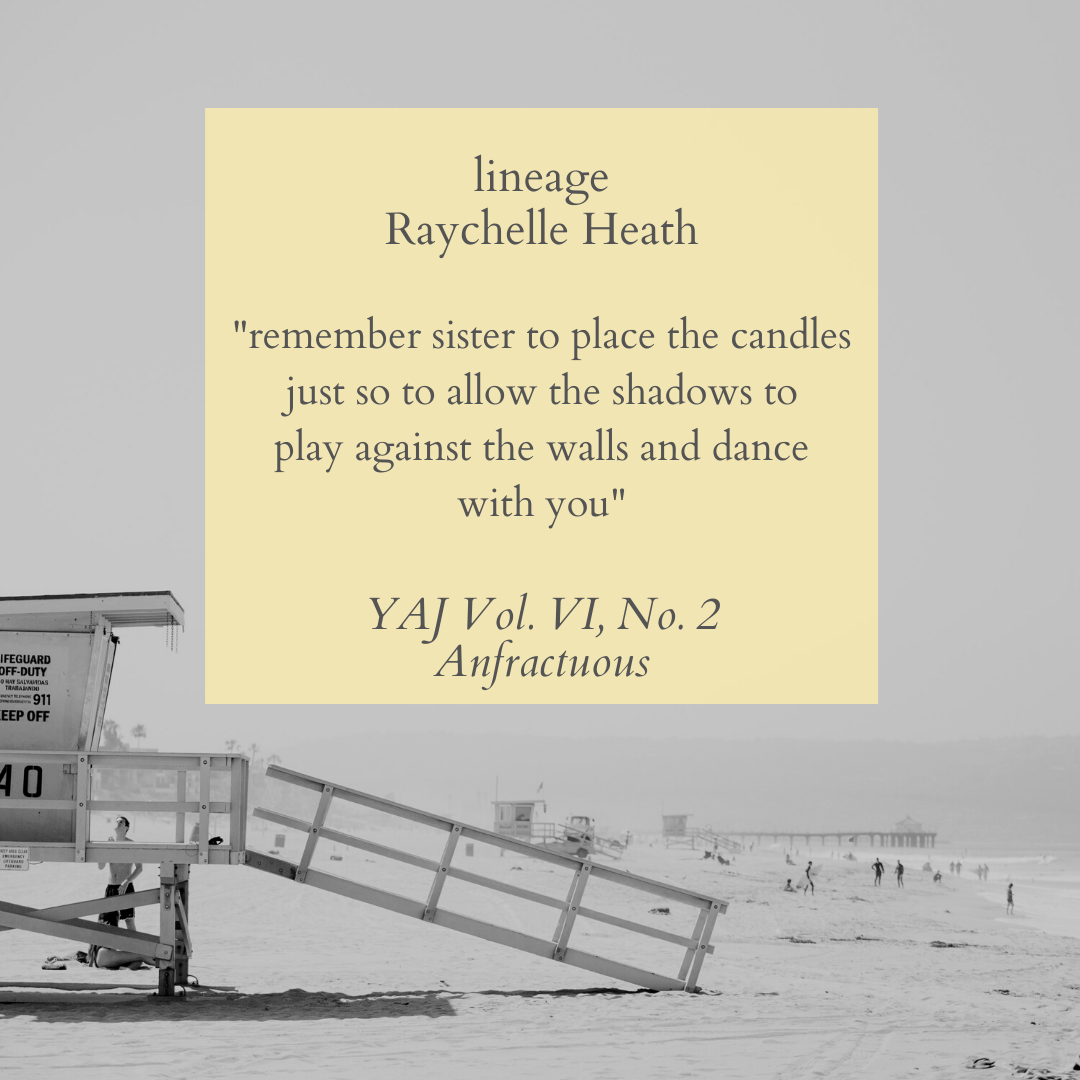
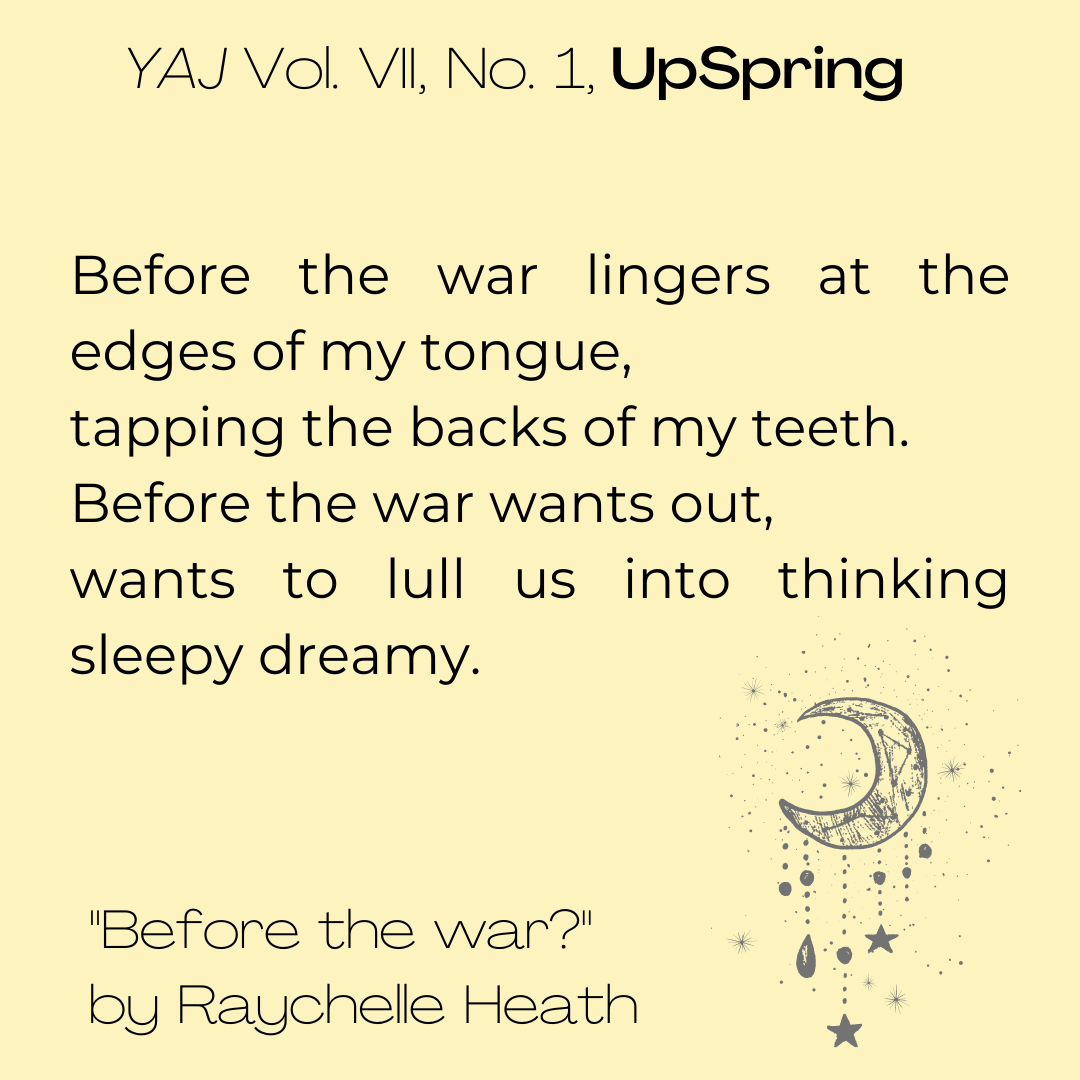
Find out more about Raychelle at https://sites.google.com/view/theraychelleheath/.
Please follow Yellow Arrow on Facebook and Instagram for the theme announcement. Below, you can read more about Raychelle’s perspectives on illuminating languages. We look forward to working with Raychelle over the next few months.
By Raychelle Heath
In her essay “Language is Migrant,” Cecilia Vicuña writes, “Language is migrant. Words move from language to language, from culture to culture, from mouth to mouth. Our bodies are migrants, cells and bacteria are migrants too. Even galaxies migrate.”
From the moment we begin to speak we are also taught how to do it “correctly.” We are given rules and protocols for how to present ourselves when we open our mouths. As a little black girl growing up in the south, I knew there was a way to speak when I was home and when I was out in public. Without even realizing it, I was thrown into the task of codeswitching as a means of survival. There was one tongue I could use on the playground and when I was running wild with my cousins; we could use “ain’t,” “y’all,” and shorten words to “comin’” and “goin’” without fear of consequence. We could try on language we heard in music and on TV. But when we were back in school or in mixed company, our tongues got buttoned up. And as I moved into adulthood, I realized that even my southern accent was a marker for some people. I felt the double-edge of so-called compliments like “well-spoken.”
But language was also a place of freedom and exploration for me. A place where I could create new connections and understandings of the world. At the age of 13, I began learning Spanish and German. I poured myself into cultural study and deep listening. I wanted to fall into the way different people curled their tongues around words like “pan” and “vielleicht.” I wanted to understand how sounds reflected place, reflected time, reflected how we love and how we hold space for each other. And somewhere along the way, my tongue, my words, got free.
Then in 2007, I made a decision that would change my life forever. I left the United States to go live in the Marshall Islands. It was my first time living outside of the only country I had ever called home. And for the next two years, I would live and work in the city of Majuro, the capital of a remote string of atolls in the Pacific Ocean. I would learn the meaning of “aelin” and “enno.” I would fall in love with words like “emman” and “enana.” Their sounds, as much as their meanings, allowed me a way in to understand my new home, and the people who had welcomed me in with “yokwe.”
“Yokwe” means hello, but it can also mean care, and its direct translation is “I love you; you are a rainbow.” It is still one of my favorite words because of all that it does. And learning it allowed me to recognize sayings from my own southern roots that hold multitudes. Sayings like “you hungry” or “bless your heart” that hold so much care, but also call a person in. Or “sweet summer child” that feels so warm but also gives you a little tap on the head. These touchstone words and phrases lay a path for how I connect to the world and others around me. They lay a path for how I see the world and my place in it.
I currently call Costa Rica home, and their version of this is “pura vida.” Pura vida directly translates to pure life. However, it is used to say hello, goodbye, and even “oh well,” depending on the day. And I think that there couldn’t be a more fitting touchstone for a place where it is not an uncommon occurrence to see a toucan or a monkey, and there are cloud forests to explore. Where there is a constant reminder of the pure life that we can have by honoring the Earth that provides for us.
Language’s primary aim is to communicate, but the ways that words do so are layered. There is a richness that lives inside of each word and each phrase that we use. Toward the end of Cecilia’s essay she says, “Language is the translator. It could translate us to a place where we cease to tolerate injustice, abuse and the destruction of life. Life is language.” She then quotes the Kaushitaki Upanishad saying, “When we speak, life speaks.”
Language has the power to illuminate life. It has the power to speak the things that we love the most into existence, even when they aren’t physically there. I can speak the name of my grandmother and call her into the room. I can speak my freedom, even when the world feels oppressive. And when I let my language be completely free, I can illuminate the best and most authentic parts of myself and my culture. And language itself can be illuminated, looking at the constituent parts of words to layer meaning. Cecilia does this beautifully when she says, “I imagined ‘migrant’ was probably composed of mei, (Latin), to change or move, and gra, ‘heart’ from the Germanic kerd. Thus, ‘migrant’ became: ‘changed heart,’ a heart in pain, changing the heart of the earth. The word ‘immigrant’ really says: ‘grant me life.’”
Each day I get to meet the page and explore what my words really want to say is a gift. It is a gift to be able to let our unique sounds speak for us, to explore the fullness of their layers. It is a gift to illuminate our words and play in their depths. It is a gift to let our language dance and be free. I am grateful for all the languages that hold me, for all of the languages that have received me. And I invite us all to dig a little deeper, to strip away any societal trappings that may be holding our tongues hostage, and to notice what language flows from the heart.
*****
Yellow Arrow recently revamped and restructured its Yellow Arrow Journal subscription plan to include two levels. Do you think you are an Avid Reader or a Literary Lover? Find out more about the discounts and goodies involved at yellowarrowpublishing.com/store/yellow-arrow-journal-subscription. Yellow Arrow Publishing is a nonprofit supporting women writers through publication and access to the literary arts.
You can support us as we AWAKEN in a variety of ways: purchase one of our publications from the Yellow Arrow bookstore, join our newsletter, follow us on Facebook, Instagram, or Twitter or subscribe to our YouTube channel. Donations are appreciated via PayPal (staff@yellowarrowpublishing.com), Venmo (@yellowarrowpublishing), or US mail (PO Box 102, Glen Arm, MD 21057). More than anything, messages of support through any one of our channels are greatly appreciated.
Meet a Staff Member: Nichola Ruddell

Yellow Arrow Publishing would like to introduce one of our readers, Nichola Ruddell. Nichola was born in Vancouver, British Columbia, and raised on Salt Spring Island. She attended university at the University of Victoria, receiving a degree in Child and Youth Care. She is also a Phoenix Rising Yoga Therapist. She enjoys writing poetry and is previously published in the online magazine Literary Mama. Her poem “Movement in the Cinnabar Valley” is published in Yellow Arrow Journal, Home Vol. V, No. 2 (and was our .W.o.W. #22 author) and Nichola recently became an associate member of the League of Canadian Poets. After living in several places with her family, she has made a home in Nanaimo, British Columbia, with her husband and two young children.
Nichola states, “I look forward to learning from other women at Yellow Arrow, creating new workshops, contributing ideas, continuing to write, and creating community from afar.” Nichola recently took some time to answer some questions for us. Show her some love in the comments or on Yellow Arrow’s Facebook/Instagram!
Tell us a little something about yourself.
As a young child I was always reading and writing. As I grew older my interests shifted, however, I always found time to write and develop ideas. After the birth of my first child, I decided to really work on my poetry and published my first piece. Since then, I have been writing and continue to develop my work. It has been such a joy working with Yellow Arrow, and I look forward to future writing projects.
What do you love most about where you live?
I love living on the west coast of Canada being surrounded by trees while also close to the ocean.
How did you get involved with Yellow Arrow and what do you do?
I had a poem published by Yellow Arrow in 2020 and then have written other pieces through their blog series. I also cocreated a workshop called “Poetry of the Body” with LaWanda Stone for the Yellow Arrow workshop series. I am currently reading the new chapbook submissions (for 2023 publications), poetry, and short stories that are submitted.
What are you working on currently?
I am currently training for a few 10-km trail runs coming up in the fall.
What genre do you write and why?
I have always been drawn to writing poetry. I write to make sense of the world and to deepen my connection to myself and others.
Who is your favorite writer and why?
I am deeply inspired by the writings of Denise Riley, Jane Hirshfield, and William Stafford. These writers are incredibly thoughtful and illuminate the human experience in a profound way.
Who has inspired and/or supported you most in your writing journey?
My father Bruce Ruddell, playwright and composer, he has always inspired me to continue to write and has been a great support in my writing journey.
What do you love most about writing?
I love the freedom and the movement of writing. Writing flushes out the mind and demands us to pay attention; it creates new ways of seeing things.
What advice do you have for new writers?
Keep reading and writing. Connect with other writers and put your work out into the world!
*****
Welcome to the team Nichola! Yellow Arrow Publishing is a nonprofit supporting women writers through publication and access to the literary arts. We recently revamped and restructured its Yellow Arrow Journal subscription plan to include two levels. Do you think you are an Avid Reader or a Literary Lover? Find out more about the discounts and goodies involved at yellowarrowpublishing.com/store/yellow-arrow-journal-subscription.
You can support us as we AWAKEN in a variety of ways: purchase one of our publications from the Yellow Arrow bookstore, join our newsletter, follow us on Facebook, Instagram, or Twitter or subscribe to our YouTube channel. Donations are appreciated via PayPal (staff@yellowarrowpublishing.com), Venmo (@yellowarrowpublishing), or US mail (PO Box 102, Glen Arm, MD 21057). More than anything, messages of support through any one of our channels are greatly appreciated.