Yellow Arrow Publishing Blog
Gratitude is a Divine Emotion: Yellow Arrow Interns

“Gratitude is a divine emotion: it fills the heart, but not to bursting; it warms it, but not to fever.”
from Shirley by Charlotte Brontë
One of the many ways Yellow Arrow Publishing encourages women writers and women in publishing is through inclusion within the organization itself. We welcome (and thrive with) our volunteers and interns, not only for our own benefit but to also (hopefully) provide a prospective future publisher with some necessary tools and knowledge about the publishing world. And even if a volunteer/intern does not plan to continue within the publishing world, the tools and knowledge of working in a women-led, collaborative organization. One that champions the different and the unique. One that looks for partners and allies rather than simple connections (see our current list of partners here).
We try to find each volunteer, each intern, space in our organization to grow and flourish in the area they are most interested in (and of course where we need the most help!). Past staff members have worked at our live events and at Yellow Arrow House. They hand bound our publications and put as much love and tenderness into each copy as we could hope. Today they focus on the ins and outs of releasing a publication, running a publishing company, and our community-driven projects. Tasks can range from editing to formatting, marketing, and putting together events and workshops. Above all else, our interns support and champion staff/board, authors, workshop attendees, and themselves. We are so thankful to have had them with us on this journey.
So let’s introduce the fall 2025 interns. Each has our appreciation.
Hannah Bishoff, Publications Intern

Lives in Baltimore, Maryland
What do you do? At Yellow Arrow, I have been working on copyediting for the most recent chapbooks and journal. I make a lot of promo images for these, and work to update blog posts and some social media. It has also been fun getting pieces ready for awards.
Where do you go to school? I am currently in my last year at Towson University as an English major. I will be graduating in Spring 2026.
What are you currently working on? Outside of Yellow Arrow, I am mostly just working on finishing my BA at Towson.
Hannah Bishoff is a senior English major at Towson University with a minor in business, communications, and the liberal arts. On the weekends, she works at a coffee shop in Towson and when not in class she enjoys reading, drawing, shopping, and watching TV. Find her on Instagram @hannaheb.
In the (near) future, she hopes to continue working in publishing, if all goes well.
What is your favorite course at school? Why did you choose to take it?
One of my favorite courses was called 18th-Century British Literature. It is not exactly my favorite because of the content, as I really only took this class because of the required literature courses for my major. I liked this class a lot as it was an intimate experience with my professor (only about seven-ish other students), who was very knowledgeable and extremely motivating. He had us write a 20-page literary research paper, which I ended up really enjoying strangely enough. This was also his last course before retiring, which I appreciated being able to take part in.
Have you read anything this year that has stuck with you?
For another one of my courses, my professor had us read three books by Annie Ernaux, a French author known for her memoirs. The one that stuck with me is called Happening, in which she, in detail, goes over her success at attempting to get an abortion in the early ‘60s. She emphasizes that she did not write this for political reasons, but to simply give her own account to help other women who have had, or may in the future have, a similar experience.
Why did you choose an internship with Yellow Arrow?
I chose Yellow Arrow because I wanted to learn more about working with a publishing company but also because I wholly identify with the mission of uplifting women’s real, raw voice. I also had a bit of experience working with a nonprofit for school and wanted to continue.
How are things going so far?
Things are going great! I especially love reading and experiencing all the publications.
Avery Wood, Program Management Intern
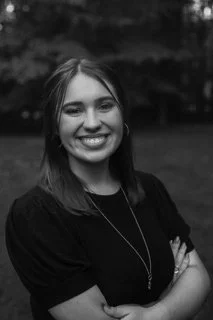
Lives in Raleigh, North Carolina
What do you do? I’m tasked/have been tasked with helping social media design and scheduling, writing two blog posts, helping write and publish the monthly newspaper, copyediting/proofreading, and helping with new asynchronous workshop design promotion. And of course, any upcoming tasks as well!
Where do you go to school? I attend North Carolina State University (NCSU) with plans to graduate in May of 2026.
What are you currently working on? Right now, credit-wise, I’ve basically finished my English degree and am primarily focused on getting my business degree now, so a big focus is on academics. I’m also the leader and facilitator of my book club, and I try to write a little daily. I cook, read, attend my school’s sports events, and travel when I have the free time.
Avery Wood (she/her) is a rising senior at North Carolina State University (NCSU), pursuing a BA in English with a focus on creative writing and a BS in business administration. Born and raised in Raleigh, North Carolina, Avery’s love for literature began with her work as lead editor for her high school literary magazine and continues to be a central part of her life through her involvement with her college’s literary journals. Following graduation, she intends to bring her passion for business and creative writing to the publishing industry. When she isn’t reading, Avery enjoys traveling, a strong coffee, cooking, and intense card games with her family. She is thrilled to be a part of this wonderful team, making a difference and amplifying female voices.
She hopes to get another internship this summer in New York within the publishing industry and hopes that leads to a job post-undergrad. She also plans to publish some of her writing works and establish herself as a writer one day.
What is your favorite course at school? Why did you choose to take it?
I enjoy learning as a whole, so it’s always difficult to pick a favorite course. When I studied abroad in Italy I took some amazing courses: Food and Religion, Pairing Wine and Food (a cooking class), Italian Cinema and Literature, Florentine Literature. And at NCSU I took fascinating classes like Medieval Monsters, Language and Gender, Screenwriting, Heaven/Hell and the Afterlife, and Contemporary Moral Issues. We’re offered a lot of amazing options for an English degree so I chose from my interests in medieval literature, gender studies, religious literature, film and screenwriting, and food and international culture.
Have you read anything this year that has stuck with you?
I’m a big science fiction and fantasy (SFF) lover, so one of my favorite books this year was The Will of the Many by James Islington. But I also love self-help narratives and keeping up with current favorites in that realm, so things like Atomic Habits by James Clear. I also met and interviewed Carin Seigfried about her book The Insider’s Guide to a Career in Book Publishing over the summer which was a very insightful experience. And finally, a piece of feminist lit that absolutely has stuck with me this year is Jacqueline Harpman’s I Who Have Never Known Men. I’m hoping to read 60 books in 2025, and I’ve read 49 so far.
Why did you choose to do an internship with Yellow Arrow?
I’m hoping to enter into the literary publishing realm post-undergrad but before then, while still in college, I’m simply hoping to gain as much experience in and knowledge of the industry as I can. An internship, and specifically with a small publishing company, seemed like the perfect place to gain some real, hands-on experience. That, coupled with Yellow Arrow’s specific mission to support women writers, seemed like a wonderful place for me to land. Supporting women writers is something I’m genuinely passionate about and a big reason why I want to go into publishing in the first place; we need to hear more female voices now more than ever! I was also curious about the operations of nonprofits.
How are things going so far?
I think things are going well so far. I feel like I’ve started to gain some confidence in my role, though I’m still unsure sometimes and often ask many, many questions. I’m trying to be as helpful a resource as I can without much knowledge on the various Yellow Arrow mechanisms. But as I continue to familiarize myself with Yellow Arrow policies and procedures, the more helpful I hope/plan to be. I’m always open to feedback, too!
*****
Thank you to everyone who supports these women and all writers who toil away day after day. Please show them some love in the comments below or on social media. If interested in joining us as an intern, you can learn more at yellowarrowpublishing.com/internships.
Yellow Arrow Publishing is a nonprofit supporting women-identifying writers through publication and access to the literary arts. You can support us as we BLAZE a path for women-identifying creatives this year by purchasing one of our publications or a workshop from the Yellow Arrow bookstore, for yourself or as a gift, joining our newsletter, following us on Facebook or Instagram or subscribing to our YouTube channel. Donations are appreciated via PayPal (staff@yellowarrowpublishing.com), Venmo (@yellowarrowpublishing), or US mail (PO Box 65185, Baltimore, Maryland 21209). More than anything, messages of support through any one of our channels are greatly appreciated.
Her View Friday

Yellow Arrow Publishing supports women-identifying writers from a wide variety of backgrounds, not just because it’s the right thing to do, but because it makes us stronger. Women’s voices have historically been underrepresented in literature, and we aim to elevate those voices and stories through our programs, publications, and support.
Part of our mission in supporting and uplifting women-identifying creatives is to promote the Yellow Arrow community’s individual accomplishments. We’d like to further expand that support and promotion outside of our Yellow Arrow publications. Twice a month, we’d like to give a shout out to those within the Yellow Arrow community who recently published:
single-author publications
single pieces in journals, anthologies, etc., as well as prizes/awards, book reviews, and podcasts/interviews
You can support our authors by reading this blog and their work, sharing their news, and commenting below or on the blog. Congratulations to all the included authors. We are so proud of you!
Every writer has a story to tell and every story is worth telling
“Birds(hit)” by Heather Brown Barrett from Virginia
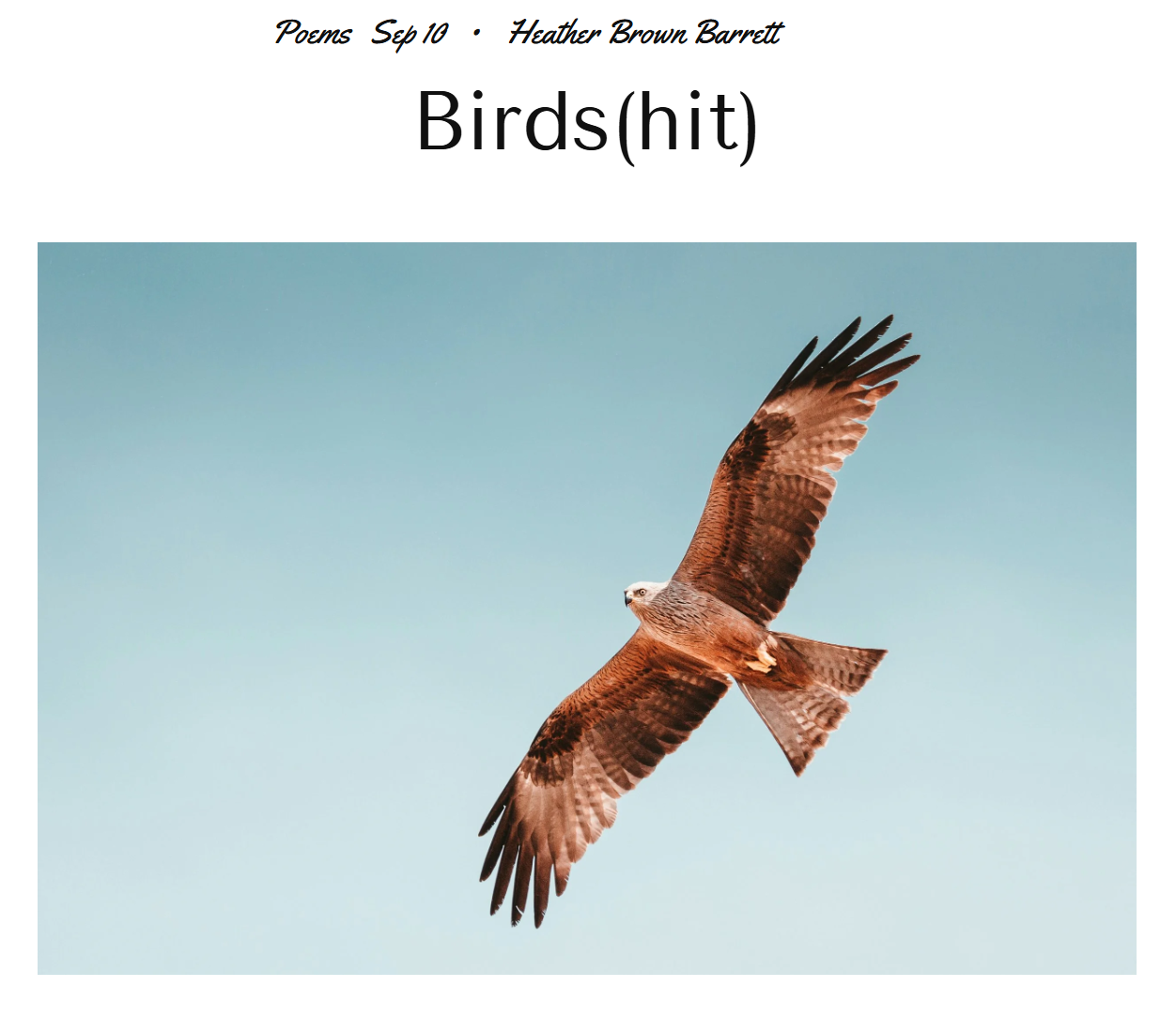
Genre: poetry
Name of publication: Little Old Lady Comedy
Date Released: September 10, 2025
Type of publication: online
littleoldladycomedy.com/all-works/uky9hre9qac7ze6lgj9k282kcrgwqp
Yellow Arrow (past and present) board, staff, interns, authors, residents, and instructors alike! Got a publication coming out? Let us help celebrate for you in Her View Friday.
Single-author publications: here.
Single pieces as well as prizes/awards, book reviews, and podcasts/interviews: here.
Please read the instructions on each form carefully; we look forward to congratulating you!
*****
Yellow Arrow Publishing is a nonprofit supporting women-identifying writers through publication and access to the literary arts. You can support us as we BLAZE a path for women-identifying creatives this year by purchasing one of our publications or a workshop from the Yellow Arrow bookstore, for yourself or as a gift, joining our newsletter, following us on Facebook or Instagram, or subscribing to our YouTube channel. Donations are appreciated via PayPal (staff@yellowarrowpublishing.com), Venmo (@yellowarrowpublishing), or US mail (PO Box 65185, Baltimore, Maryland 21209). More than anything, messages of support through any one of our channels are greatly appreciated.
Spotlighting Clara Garza: Yellow Arrow Journal X/02 KAIROS Cover Artist
By Darah Schillinger
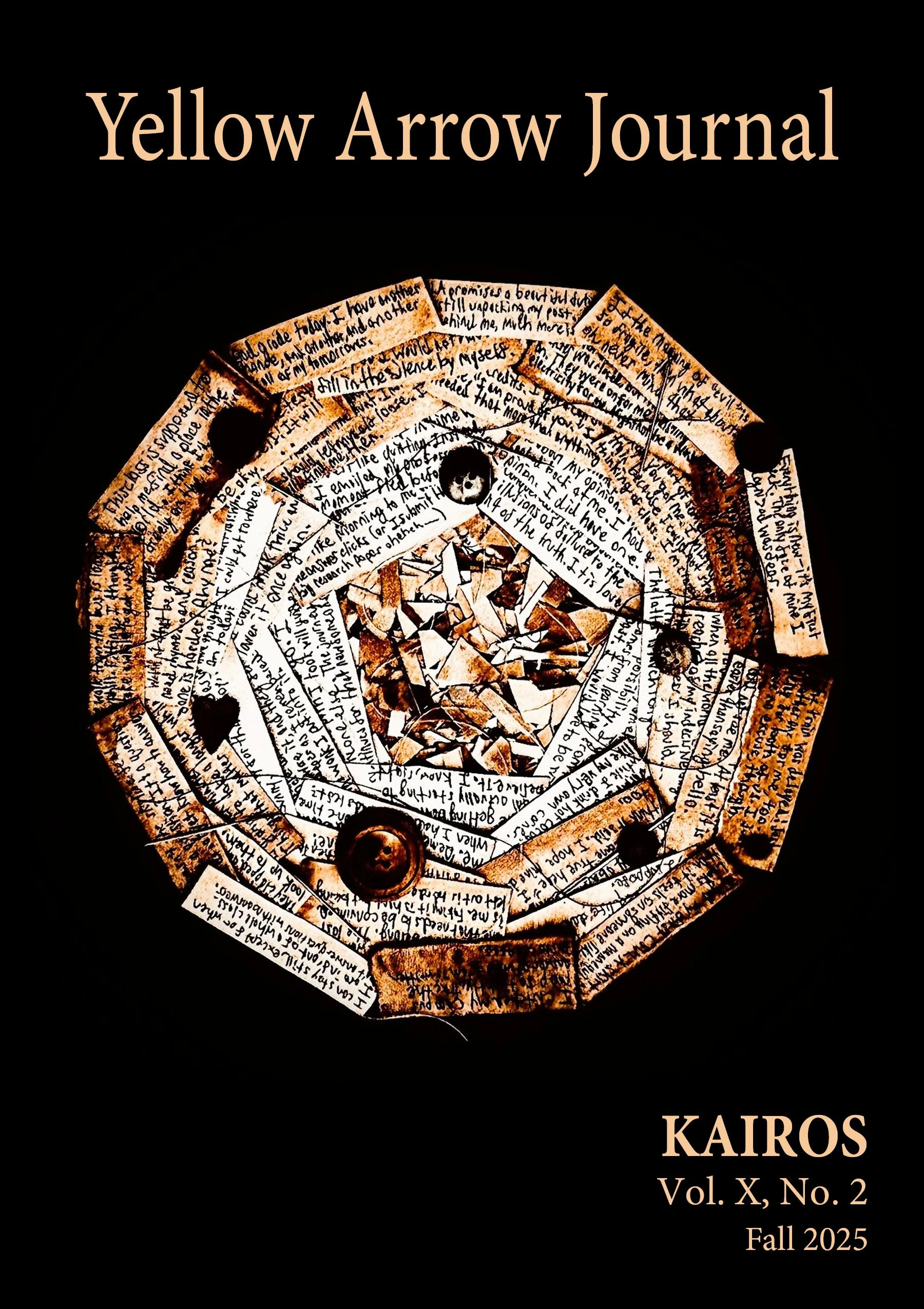
Clara Garza is a 16-year-old writer and senior at California State University, Los Angeles. She serves as a politics and world health journalist with The Borgen Project and contributes editorially to numerous journals. Her creative and critical work has earned recognition across essay, photography, performance, and visual arts contests, including in statewide and national outlets like the NOAA and KCACTF. Clara is also the cover artist for the second issue of Yellow Arrow Journal, Vol. X, on KAIROS, guest edited by Darah Schillinger. The issue comes out on November 11 and is currently available for preorder at yellowarrowpublishing.com/store/yellow-arrow-journal-kairos-paperback. KAIROS explores the aftermath and aftereffects of catalytic moments, forged from either small flash fires or conflagration, and is a Greek word meaning an opportune and decisive moment.
Make sure to take your time exploring Clara’s beautiful mixed-media collage, “The Awakening Aperture,” on the cover of KAIROS. According to Clara, “The circle (inspired by the aperture of a camera, or the lens that captures a fleeting fragment of time) is composed of pieces of the diary of a fictional college student experiencing college life, from the day she is accepted to the school to her graduation. Her initial doubt is reflected by the moody outer rim of the circle, and as she opens herself to the brightness of college, she starts to appreciate her life more fully.” Thank you, Clara, for sending us your artwork and for letting us showcase it to our community.
Recently, Clara answered some questions about herself and her aspirations from Darah.
“The Awakening Aperture” beautifully captures a decisive moment through both concept and form. What first inspired this piece, and how did it evolve from idea to execution?
This piece originated from a college art project prompt that focused on empowering dreams and transforming lives. Since the deadline was the following day when I first received it, I found myself feeling like I could make it—especially since I did not want to take the easy option of painting a college graduate with outstretched arms looking toward the sky. The ending of that story felt too static for me. That evening, I stood just outside my house, pondering how I could incorporate my major (English) into the work of art. A few minutes passed, and the visual of a collage made of literary quotes flashed in my mind. Had I continued with that idea, the paper would have been white, and the camera would have been positioned so that the edges of the collage were not visible. “How would that be empowering dreams or transforming lives?” I thought. Shortly after, I conceived the idea of transforming the quotes into diary entries, and the author into a student who undertook the task of creating an aperture into one of the most transformative experiences of her life. The construction of the piece involved collage, aging techniques, and a sense of symmetry. Each diary strip was individually written, cut, and placed to follow the aperture’s form. The aperture is the symbol of zooming in on one’s own potential more clearly.
As a writer, journalist, and visual artist—is there a particular medium that feels most like home to you? Or is it freeing to switch between them?
I feel nomadic in my eclecticism: The entire world of expression feels like home to me; it is just a matter of circumstances and my personal sense of desire to identify where I will be residing for the night. In that way, I could not imagine, not switching between them—and quite a few more!
What most often inspires your visual work? Are there specific artists, places, or experiences that consistently fuel your imagination?
Funnily enough, I do not know. The most consistent fuel for my imagination is being alone, especially when standing right outside my house in the evening. I can never quite predict when the next idea will come.
This journal issue explores KAIROS—an opportune or decisive moment. How does your piece engage with this idea, especially in the context of memory, self-discovery, or growth?
I believe in the poise of the littlest moments in great endeavors. It is up to the individual to find the kairos in what they remember, do, and desire for the future. There will never be a “perfect” moment to do something, and time is always of the essence, so being opportune and decisive converts ordinary time into meaning.
Your use of mixed media—sewing supplies, suede, torn paper—adds a tactile and almost archival feel to the work. What role do material textures play in conveying the emotional landscape of the diary entries?
Textures create a feeling. Mixed media pop out of an image. These domestic items feel like home to me and hopefully to many others. In monetary value, they might not be worth more than a few cents. In this sense, the diary entries could be from anyone. Through arrangement, these feelings become more immediate to observers.
The circle in your piece acts as both a literal and metaphorical aperture. Why did you choose this symbol and what does it reveal about how you perceive time or change?
Pictures are still, but apertures see all even when the camera is not on. They understand the shift between shadow and light that forms every act of creation. In that space between what is captured and what is lost the still becomes living and perception becomes creative awareness.
There’s a quiet optimism in how the college student character moves from doubt to belonging. What message or emotion do you hope viewers take away when they first encounter “The Awakening Aperture” on the cover of Yellow Arrow Journal?
I hope the viewer feels drawn into the light of the future and acknowledges the beauty in darkness. I hope they see that fragments make up a meaningful whole and that the past continues to grow with you as a reflection, since it will never be quite over, and that they strive to foster the continuation of many awakening apertures of their own.
As a politics and world health journalist with The Borgen Project, how does global advocacy influence your art, if at all?
I often think about how the number of successful individuals with a fortunate upbringing reflects the number of those with unanswered potential who lack the resources to pursue their passions. In that sense, I plan to continue using my platform, which combines artistic and journalistic voices, to draw attention to and advocate for action on behalf of many individuals facing unfair circumstances. This is a continuing cause we must recognize as long as it persists.
Given your editorial contributions and contest success, what advice would you give to other young creators trying to find their voice?
Random thoughts are artistic superpowers. Never dismiss them—listen to them. They are prompts in themselves. How might two intertwine? There is no such thing as not belonging in a particular realm of thought, nor is the lack of specialization a valid excuse for not finding one’s voice somewhere new. Your career(s) should be your passion, and your passion is invaluable to the world. You are not just another child with a dream. You have potential. You can pursue many things deeply if they move you. Take a step back from life and look at yourself like the protagonist in a fantasy story. Analyze the decisions the protagonist makes; the reality is that every decision has strengths and flaws. Do not stop at saying that you could have done something different, better, or worse. Take action and stay unpretentious throughout the process. Have fun sharing what you have done. It is never too early or too late to rethink the direction you are going in because 360° of possibilities will always be around you.
What’s next for you—creatively, academically, or professionally? Are there any upcoming projects you’re especially excited about?
I am applying to pursue a master’s degree in screenwriting. Since film requires a mastery of artistic awareness, I am excited to leverage my eclecticism to write impactful movies. Film feels like a natural extension because it combines story, picture, and emotion within a single medium. An upcoming project I look forward to is my thesis on the subtle presence of ideological reinforcement and dismantling in children’s literature. I am also excited about my visual and literary works being accepted into more journals.
Thank you Clara for finding the time to answer our questions and for being a part of KAIROS. And thank you to everyone for supporting the creatives involved in the issue. You can preorder your copy of KAIROS at yellowarrowpublishing.com/store/yellow-arrow-journal-kairos-paperback. If you want to reserve a copy of both issues of 2025, make sure to pick up a discounted journal bundle at yellowarrowpublishing.com/store/yellow-arrow-journal-bundle, for yourself or as a gift.
Darah Schillinger (she/her) is a writer based in Lexington Park, Maryland. Her poems have appeared in AVATAR Literary Magazine, Yellow Arrow Journal, Maryland Bards Poetry Review, Empyrean Literary Magazine, Grub Street Magazine, and Eunoia Review and on the Spillwords Press website. In October 2024, her poem “An elegy for the Pompeii woman the Internet wants to fuck” was named a finalist for the Montreal International Poetry Prize. Her first poetry chapbook, when the daffodils die, was released in July 2022 by Yellow Arrow Publishing. Her second collection, Still Warm, is a work in progress.
*****
Yellow Arrow Publishing is a nonprofit supporting women-identifying writers through publication and access to the literary arts. You can support us as we BLAZE a path for women-identifying creatives this year by purchasing one of our publications or a workshop from the Yellow Arrow bookstore, for yourself or as a gift, joining our newsletter, following us on Facebook or Instagram, or subscribing to our YouTube channel. Donations are appreciated via PayPal (staff@yellowarrowpublishing.com), Venmo (@yellowarrowpublishing), or US mail (PO Box 65185, Baltimore, Maryland 21209). More than anything, messages of support through any one of our channels are greatly appreciated.
Meet the 2026 Yellow Arrow Publishing Best of the Net Nominees
Best of the Net recognizes the work of writers published online by independent presses. The project was started in 2006 by Sundress Publications to create a community among the online literary magazines, journals, and self-publishing platforms. The award represents an incredible opportunity for Yellow Arrow Publishing to further showcase and support our authors. Our staff is committed to letting our authors’ shine. Every writer has a story to tell and every story is worth telling.
Here are our Best of the Net 2026 nominees from Yellow Arrow Vignette AMPLIFY. Best of the Net announces the winners in January.
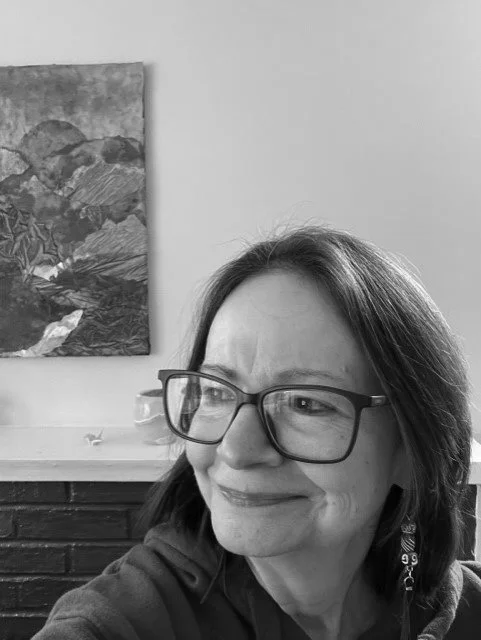
Barbara Westwood Diehl
“Wish You Were Here”
poetry
If you look closely, you will see a distant ship
slipping over the horizon, pulling the city with it.
Barbara Westwood Diehl is senior editor of The Baltimore Review. Her fiction and poetry appear in a variety of journals, including Quiddity, Potomac Review (Best of the 50), SmokeLong Quarterly, Gargoyle, Superstition Review, Thrush Poetry Journal, Atticus Review, The MacGuffin, The Shore, The Journal of Compressed Creative Arts, Raleigh Review, Ponder, Fractured Lit, South Florida Poetry Journal, Poetry South, Painted Bride Quarterly, Five South, Allium, Split Rock Review, Blink-Ink, Switch, Unbroken, Bacopa Review, and Free State Review.
Tracy Dimond
“IT WORKS, THERE IS NOTHING WRONG WITH IT”
poetry
I’ve never felt so womanly
Since having a hysterectomy
A hollowed-out Barbie
The aesthetic without the danger
Tracy Dimond is the author of the full-length poetry collection, Emotion Industry (Barrelhouse). A 2016 Baker Artist Award finalist, she is also the author of four chapbooks, including: TO TRACY LIKE / TO LIKE / LIKE (akinoga press) and Sorry I Wrote So Many Sad Poems Today (Ink Press), winner of Baltimore City Paper’s Best Chapbook. Her poems have appeared or are forthcoming in Smartish Pace, Lines + Stars, Washington Writers Publishing House, and other places. She blogs about chronic illness, creativity, and movement at poetsthatsweat.com.

Katherine Fallon
“ON THE NTH ANNIVERSARY OF YOUR DEATH”
poetry
My wife looks stricken when I unbox my grief, knowing there was never anything she could do, and even less now it’s been long enough you’ve lost your meat, could have skeletonized six times over.
Katherine Fallon is the founding editor of Whittle Micro-Press and the author of the chapbooks Zero Sum (Bottlecap Press), The Book on Fractures (Ghost City Press), The Toothmakers’ Daughters (Finishing Line Press), and Demoted Planet (Headmistress Press), which was the finalist for the Georgia Author of the Year Award. A Pushcart Prize nominee and Best of the Net finalist, her work has appeared in AGNI, Colorado Review, Nimrod, Meridian, Passages North, Best New Poets, and elsewhere. You can find her online at katherinefallon.com or whittlemicropress.com and on Instagram @ghostelephants.
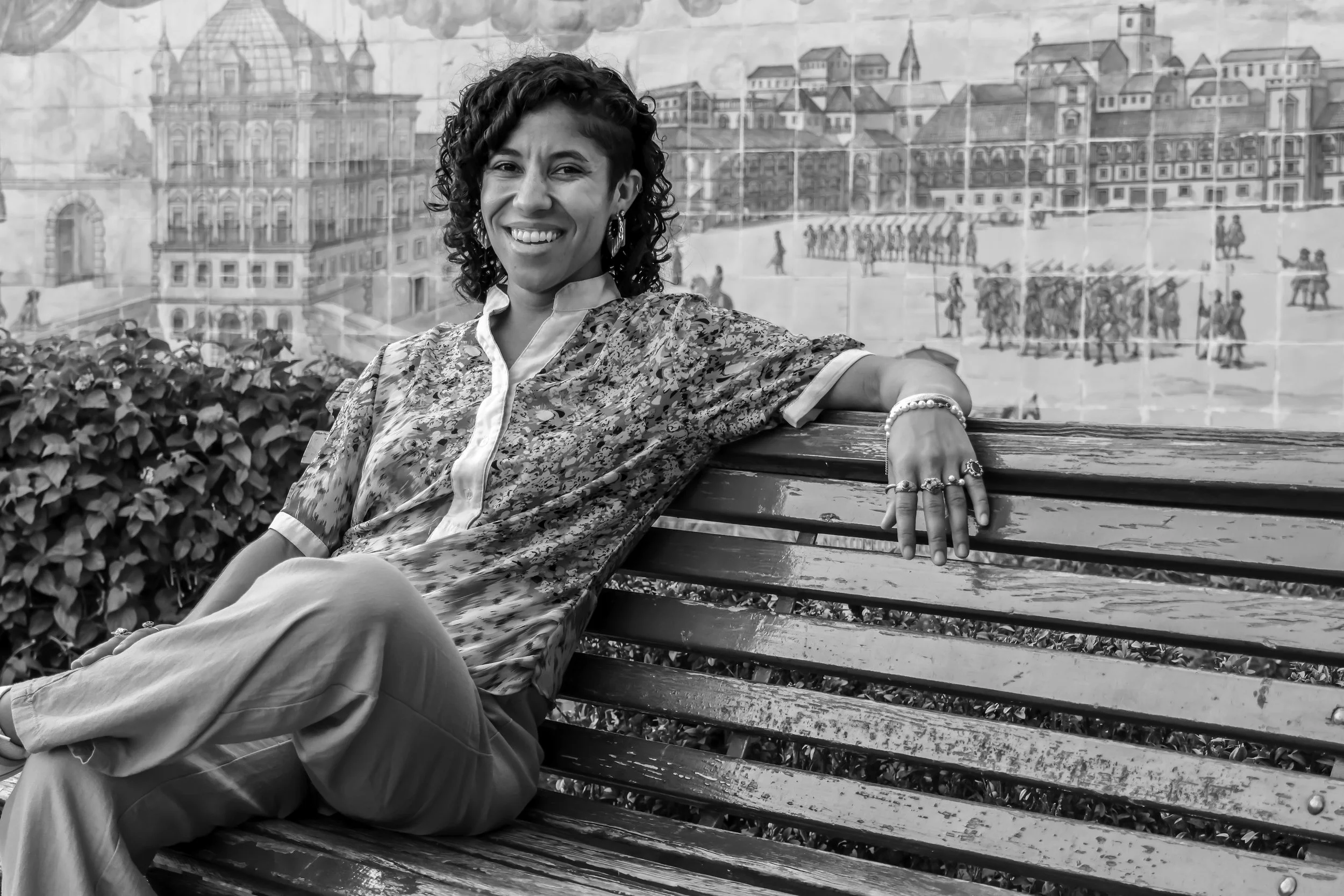
My-Azia Johnson
“Crisis in the Club”
creative nonfiction
All this self-analyzing drowns out the DJ’s mix as the chaos rages inside me.
My-Azia Johnson (they/them) cherishes the unique sources of intimacy found in themself and within their beloveds. A community caretaker with a fiery passion for transformative justice, My-Azia uplifts the Black, queer, mentally ill, and gender-expansive perspective. From their journey through the ex-vangelic to ethical slut pipeline, they share stories of breakthroughs and breakdowns experienced along the way. They’re confident that pleasure is a liberatory pathway to radical change and they see their work as a satirical conversation with the dark-spirited cunni-linguists who agree. Their lens draws from a burgeoning understanding of pleasure activism, biomimicry, decolonization, and somatic wisdom.
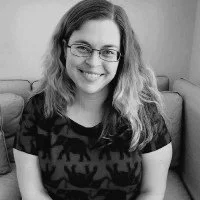
Anne Slesinki
“I am not her mother”
poetry
We play our parts until it is time to go home:
a girl fainting into the water,
a mother smiling, and an ocean.
Anna Slesinski is a Baltimore City poet and artist. After receiving her high school diploma from the Baltimore School for the Arts, with a visual arts major, Anna studied creative writing and studio art at Goucher College. She received her BA in creative writing from Goucher in 2006, followed by an MFA in creative writing and publishing arts at the University of Baltimore in 2015. Her thesis, a book of poetry titled Eating the Sun, was published in May 2015. Her work has been previously published in Welter Literary Journal and by the Baltimore Ekphrasis Project.
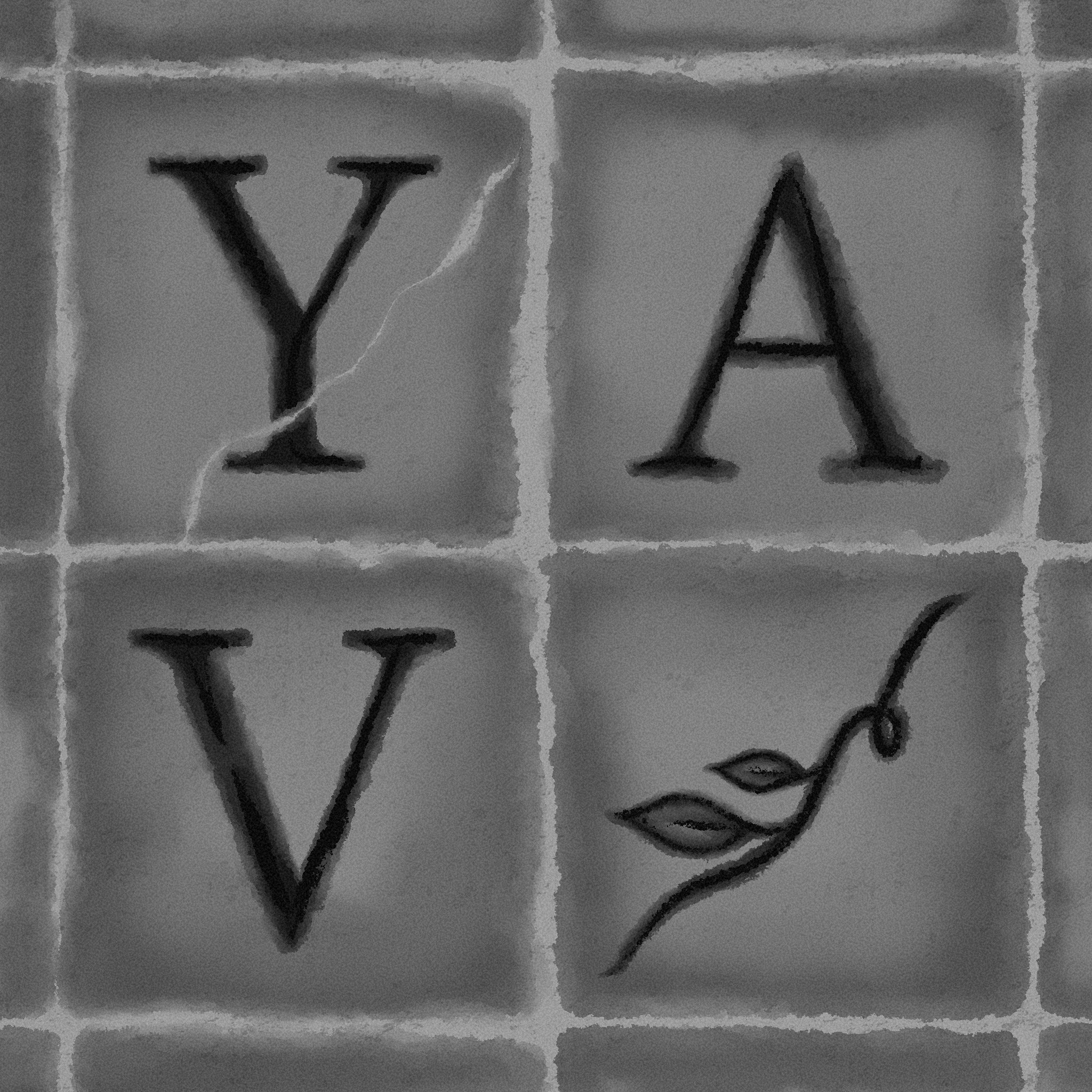
Laura Taber
“Undressing”
poetry
First, I’ll remove my wedding ring
(The ghost of it, since I don’t wear it anymore)
Laura Taber is a mom of two who was born, raised, and currently resides in Baltimore, Maryland. She has a BS from Vanderbilt University and works in marketing for retail and tech brands. She enjoys journaling, drawing, hiking, exploring Baltimore, and spending time with her family. She recently shared her angsty adolescent poetry on stage at Mortified in Baltimore. Through her writing, Laura aspires to capture and share a raw and honest view of the human experience.
*****
Yellow Arrow Publishing is a nonprofit supporting women-identifying writers through publication and access to the literary arts. You can support us as we BLAZE a path for women-identifying creatives this year by purchasing one of our publications or a workshop from the Yellow Arrow bookstore, for yourself or as a gift, joining our newsletter, following us on Facebook or Instagram, or subscribing to our YouTube channel. Donations are appreciated via PayPal (staff@yellowarrowpublishing.com), Venmo (@yellowarrowpublishing), or US mail (PO Box 65185, Baltimore, Maryland 21209). More than anything, messages of support through any one of our channels are greatly appreciated.
Living in the Silence: Naming a Dying Thing by Vic Nogay
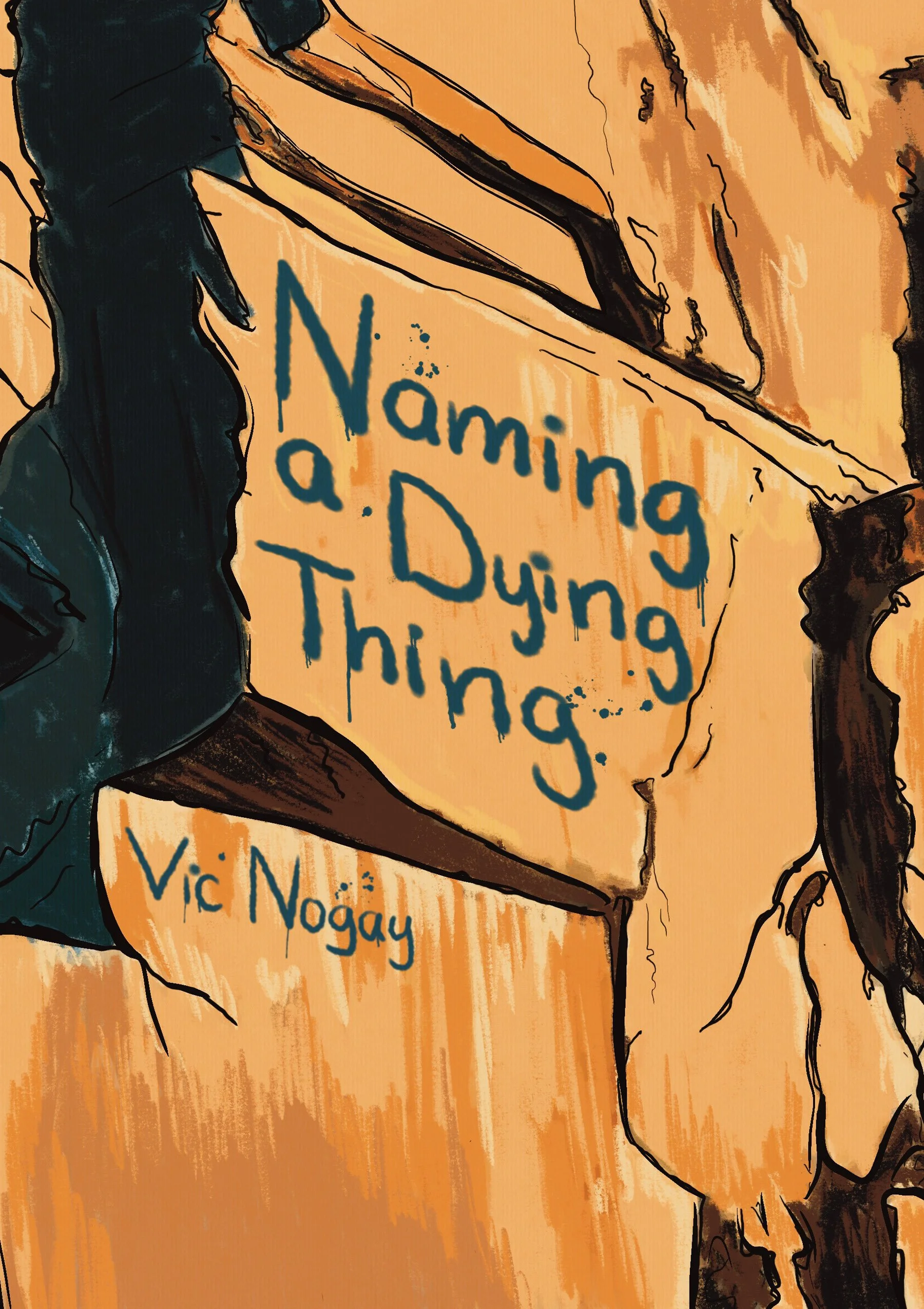
Yellow Arrow Publishing announces the release of our third and final chapbook of 2025, Naming a Dying Thing by Vic Nogay. Since its establishment in 2016, Yellow Arrow has devoted its efforts to advocate for all women writers through inclusion in the biannual Yellow Arrow Journal as well as single-author publications and Yellow Arrow Vignette, and by providing strong author support, writing workshops, and volunteering opportunities. We at Yellow Arrow are excited to continue our mission by supporting Vic in all her writing and publishing endeavors.
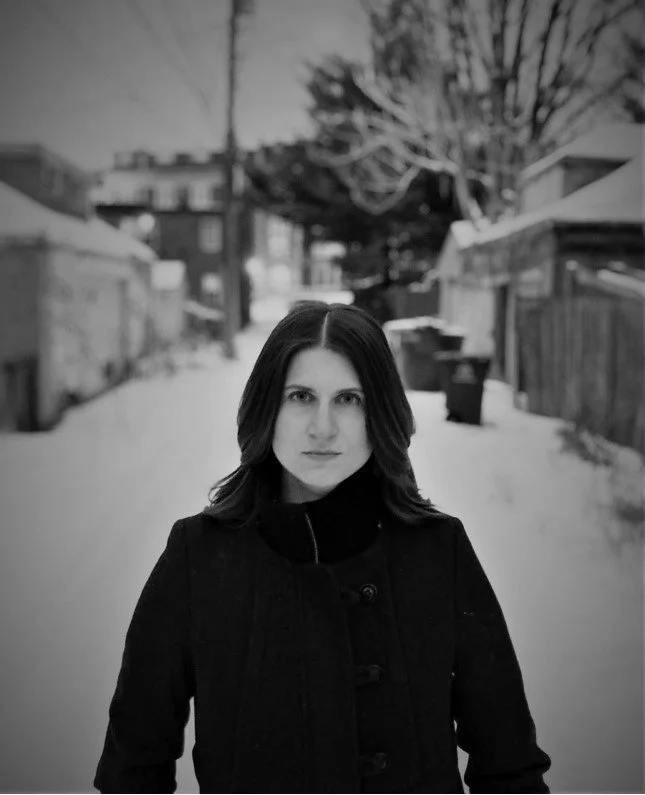
Like humid Ohio summers, often wistful and lovely, yet undeniably heavy, Naming a Dying Thing by Vic Nogay is a sticky collection. At times a confrontation, at others an abdication, the poems within this offering reckon with the roles of women and mothers in a society that demands they be somehow everything and nothing all at once. Naming a Dying Thing contemplates and subverts success and failure in love and in life, holding both up to a hostile American reality. There are no answers here.
Vic Nogay is a Pushcart Prize and Best Microfiction nominated writer from Ohio. She is the author of the micropoetry chapbook under fire under water (tiny wren, 2022) and is the microeditor of Identity Theory. With Naming a Dying Thing, Nogay avows the labor of motherhood and loss, bears the weight of a changing world, and unspools the taut line of memory, leaving the frayed edges to rest out in the sun.
The cover and interior art were created by Alexa Laharty. According to Vic, “As a reader, I love closing a book and returning to the cover with new eyes, finding nods or clues the author gave us right from the beginning, and I wanted readers to have that same experience with this collection. I explained my ideas to Alexa, and she really delivered!”
Paperback and PDF versions Naming a Dying Thing are now available from the Yellow Arrow bookstore. If interested in purchasing more than one paperback copy for friends and family, check out our discounted wholesale prices here. You can also search for Naming a Dying Thing wherever you purchase your books including Amazon, Barnes & Noble, and Kobo. To learn more about Vic and Naming a Dying Thing , check out our recent interview with her.
You can find Vic Nogay on social media @vicnogaywrites and connect with Yellow Arrow on Facebook and Instagram, to share some love for this chapbook. You can also share a review to any of the major distributors or by emailing editor@yellowarrowpublishing.com. We’d love to hear from you.
*****
Yellow Arrow Publishing is a nonprofit supporting women-identifying writers through publication and access to the literary arts. You can support us as we BLAZE a path for women-identifying creatives this year by purchasing one of our publications or a workshop from the Yellow Arrow bookstore, for yourself or as a gift, joining our newsletter, following us on Facebook or Instagram, or subscribing to our YouTube channel. Donations are appreciated via PayPal (staff@yellowarrowpublishing.com), Venmo (@yellowarrowpublishing), or US mail (PO Box 65185, Baltimore, Maryland 21209). More than anything, messages of support through any one of our channels are greatly appreciated.
Meet the 2025 Yellow Arrow Publishing Writers-in-Residence
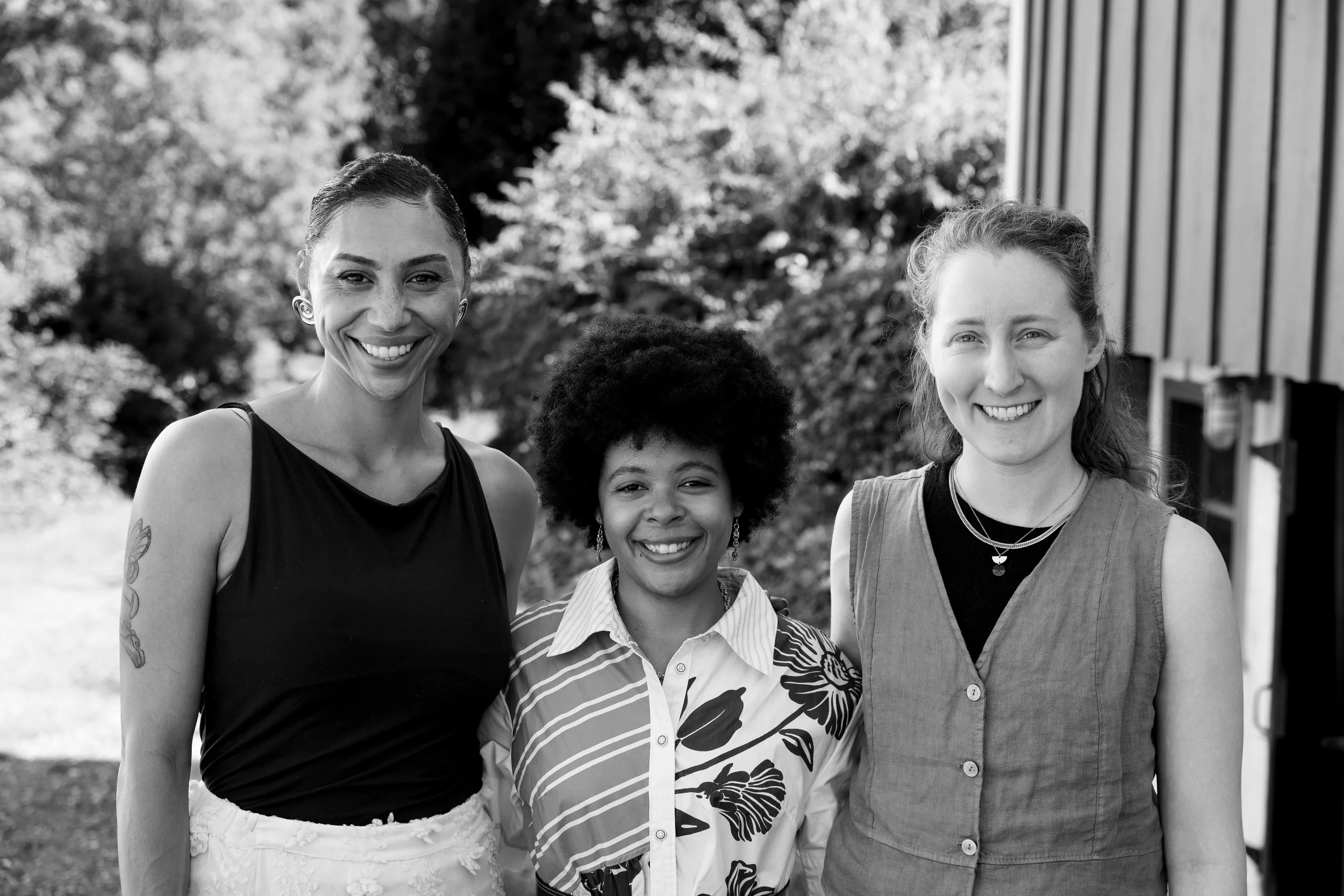
Every writer has a story to tell and every story is worth telling. Since 2019, Yellow Arrow Publishing has been proud to offer a residency program that enables us to support, uplift, and amplify the voices of women-identifying writers residing in the Baltimore area. We continue to evolve the program and are delighted to share our 2025 writers-in-residence with our community.
First, a note of thanks: As our programs and community continue to grow, we consider our team tremendously fortunate to have once again received such a diverse and talented group of applicants. We are reminded and in awe of the passion and storytelling that surrounds and charms us—our deepest gratitude to all those who applied or took this opportunity to learn more about Yellow Arrow. We encourage you to stay engaged with us and continue sharing your stories.
For 2025, we are thrilled that The Ivy Bookshop, Bird in Hand Coffee & Books, and Backwater Books are partnering with us to provide an inspiring location from which our writers can work at their craft. Each of these beautiful bookstores shares our belief that women’s voices deserve to be fostered, nurtured, and amplified, and we are so thankful for their support.
This year, Yellow Arrow selected three extraordinary women writers for the residency program. Each writer demonstrated not only a unique talent but a genuine desire to immerse themselves within the Baltimore writing community. The passion, heart, and deep love for their craft are truly infectious.
Please join us in congratulating our 2025 writers-in-residence: Mali Collins, Hannah Fenster, and Lillian Snortland. We at Yellow Arrow are proud and honored to have you!
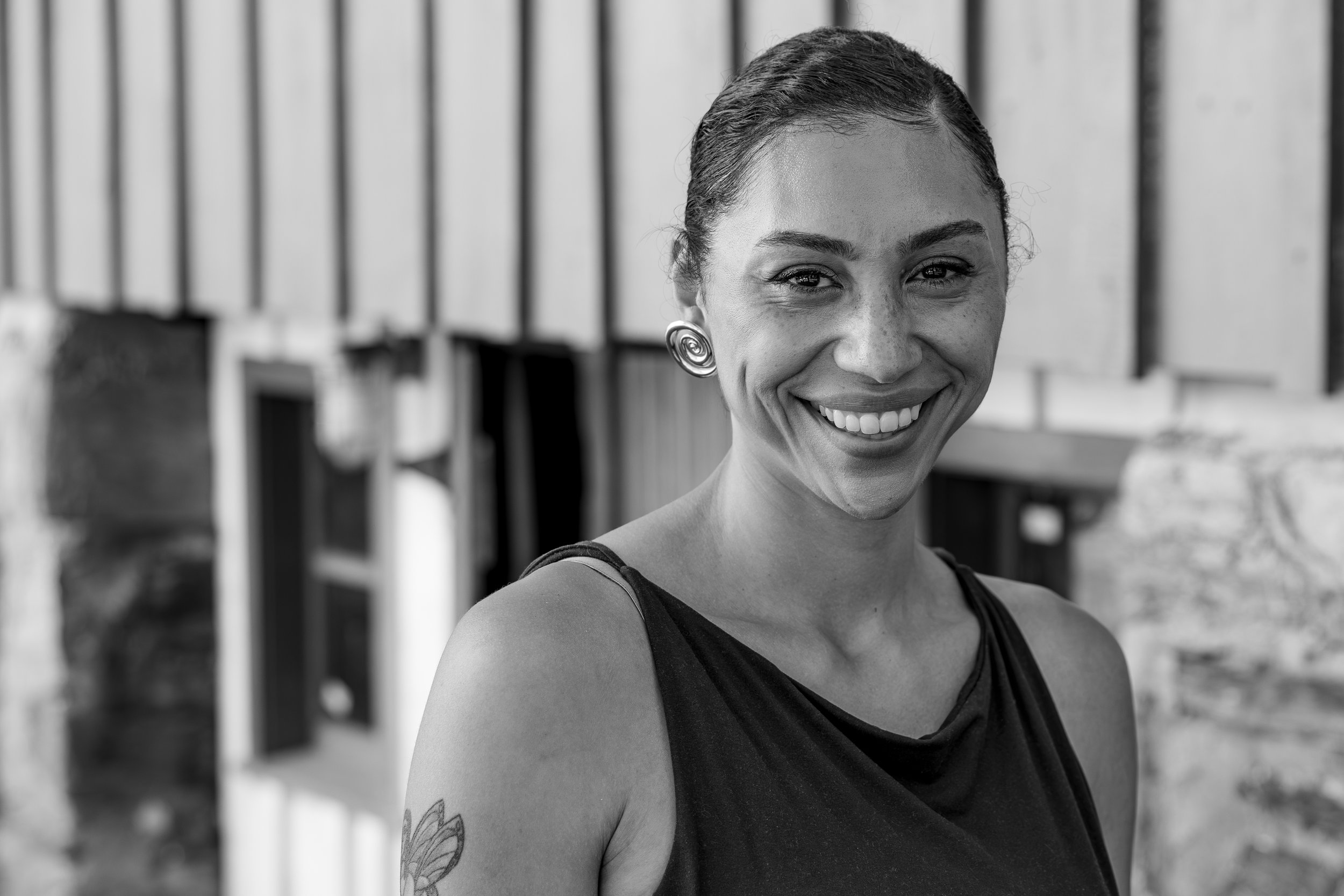
Mali D. Collins (she/her) is a doula, writer, and assistant professor of African American studies at American University. Her first monograph, Scrap Theory: Reproductive Injustice in the Black Feminist Imagination, was published earlier this year by Ohio State University Press. Her other academic work can be found in American Quarterly, Souls, and The Black Scholar. She has written for popular outlets such as Rewire News, AfroPunk, and The Root and has creative work published by SALT: Contemporary Art + Feminism and the HAUNT Journal of Art. During her residency, she’ll be working on her experimental and free form poetry collection which explores the themes of kinship, care, ancestry, and relationships through the prism of the restless self (un)made through the markers of gender and Blackness in our contemporary moment. Find her on Instagram and Threads @protectblackmotherhood and on Twitter/X @dr_reprojustice.

Hannah Fenster (she/her) is a writer, movement artist, and bookseller based in Baltimore, where she is the events manager with The Ivy Bookshop and Bird in Hand Coffee & Books. Since 2019, she’s performed and designed immersive theater with Submersive Productions, which transforms spaces around Baltimore into audience-centered, connective experiences. She writes on performance for The Hopkins Review and serves as a managing editor with 3Cents Magazine. Her work appears in The Lacanian Review, The Urban Activist, Lumina Journal, Entropy Magazine, and elsewhere. Before becoming a bookseller, she taught writing at Goucher College, her alma mater. Find her on Instagram @hwindow21.

Lillian Snortland’s (she/her) poetry, essays, features, creative nonfiction, and short stories have appeared in Postscript Magazine, OUCH! Magazine, Goucher Magazine, Yellow Arrow Journal, and Amplify Arts publications, as well as been performed at Voxel Theater and exhibited at the Temporary Arts Centre in Eindhoven, Netherlands. Her essay “The Tragedies of Ecstasy” was nominated for a 2025 Pushcart Prize through After the Art Literary Magazine. Her work moves within the intersection of internal social anxiety and external visceral transformation, often situated in surreal liminal spaces and featuring the permeability of the physical body. She loves collaborating with killer teams in any creative medium, including film writing/production (having participated in the Baltimore 48 Hour Film Project and the Maryland 72 Film Fest), tabletop role play, and musical jams. Originally from Eugene, Oregon, Snortland graduated from Carleton College with a BA in Classical studies and a minor in French/Francophone studies, and has an MFA in nonfiction from Goucher College. She enjoys lounging in parks, zooming via public transit to Baltimore cultural events, and hosting thematic parties in her apartment. Find her on Instagram @chaimihai.
*****
Yellow Arrow Publishing is a nonprofit supporting women-identifying writers through publication and access to the literary arts. You can support us as we BLAZE a path for women-identifying creatives this year by purchasing one of our publications or a workshop from the Yellow Arrow bookstore, for yourself or as a gift, joining our newsletter, following us on Facebook or Instagram, or subscribing to our YouTube channel. Donations are appreciated via PayPal (staff@yellowarrowpublishing.com), Venmo (@yellowarrowpublishing), or US mail (PO Box 65185, Baltimore, Maryland 21209). More than anything, messages of support through any one of our channels are greatly appreciated.
I Can Only Write for Course Credit (Finding Motivation Amid College Burnout)
By Kristen Caruso, written August 2025
I don’t think I’ve ever said that to anyone, including myself, before now, but it’s true. It’s been almost one year since the last writing course I’ve taken, and apart from the occasional scribble in my notebook, it’s also been one year since I’ve truly written anything. Now, coming up on the first semester of my junior year, and taking an advanced fiction writing course, I questioned myself: will I even be able to write for that?
Before this summer began, I envisioned myself spending hours with a notebook or Word document, inspired by the possibility of the next three months without a lecture to attend or paper to write. Then there I was, with just a few weeks before school started, and the only thing I’d written was my first blog post for Yellow Arrow. Which I was happy to do—but it was also an internship-related task. And I couldn’t remember the last time I sat down to write without having to.
Clearly I needed to be motivated, but not for an end goal. With this in mind, and inspired by Yellow Arrow’s Invitation to Write course, I decided that what I needed was structure: a writing routine. Each week, I set aside just 30 minutes a day, logging that time on my intern timesheet as blog 2 work, to write. A flexible, attainable amount of time I could weave between all my work and going to the beach.
As I was scrolling through different writing routines and challenges, I realized that I had to make one that was more customized to what I need—fitting for a burnt-out college student forcing herself back in, and with only a few weeks left of the summer. Here’s what I came up with:
Week One - Writing Prompts and Challenges (Any Genre)
Each day, I spent the whole 30 minutes responding to a writing prompt or challenge from a list I made ahead of time. For this week, there were a couple of rules I set for myself. Firstly, I couldn’t stop writing for more than a few seconds at a time. And I couldn’t go back and edit or expand upon something I’ve written previously. Only moving forward.
Week Two - Focus on Fiction
Although I let myself play around with different genres and styles in the first week, I knew I had to force myself to practice fiction writing to prepare for my upcoming course. It’s (fairly) easy for me to start writing poetry or poetic prose, but fiction feels more definite. I needed this push to get me into the right head space.
Week Three - Expansion
To me, an important part of fiction writing, especially when the professor has a minimum word count, is being able to expand on an idea or starting point. I needed to not just get in the mood to write prose, but practice fleshing out a whole story. For this week, I chose one of my drafts from the week before to expand on. It didn’t need to be complete by the end, just longer and more complex than how it started.
After crafting my new writing routine, the only thing I could do was start—and hope I was up for the challenge.
WEEK ONE
The first week had some trial and error. At first, I wasn’t sure what time of day I would prefer to write at. I thought I’d be pretty flexible, being able to easily slip in and out of the writing mindset at any time as long as I had it set aside in my Google calendar. This was not the case. I realized within the first few days that I wrote more and felt more confident when I wrote in the morning. Freshly made iced coffee and a whole day in front of me, I was able to let myself get lost in the prompts.
WEEK TWO
Focusing just on fiction was harder than I thought it would be. I kept using the list of prompts each day, but now with the prose lens, I found it tricky to find inspiration for stories rather than personal pieces of poetry. That’s when I had to tweak my routine just a bit. Before jumping right into writing, I let myself do something inspiring for at least ten minutes. This varied from reading a chapter of a current read to scrolling on Pinterest to rereading older pieces I’ve written. It wasn’t until I was in the right headspace that I could begin.
WEEK THREE
The last week of this challenge was my favorite. Once I smoothed out some kinks and problem-solved to get motivated in the first two weeks, I was glad to expand on something I wrote on earlier. I picked a work-in-progress that I was most excited about and had lots of ideas for already. This is also a week where I was allowed to revise and edit. This challenge wasn’t about hitting a word count goal for me—just finding motivation and inspiration for writing again, which I really felt at the end.
Challenging myself to write every day forced me to not just write, but also pay attention to my writing needs, and learn how best to create a writing routine that fits them. I feel much more confident in my ability to get started writing, and more in-tune to who I am as a writer. My brain feels warmed up. If you want to start a writing routine for yourself, I suggest doing a trial period. Try different times of the day, before and after work, in different locations, with or without having just eaten. I tried this in the summer, but I also imagine that the different seasons may play a huge role as the weather and schedules change. I didn’t realize before I started this challenge how impactful these factors were in how I felt during and after writing. This probably isn’t true for everyone but listening to what makes you perform at your most comfortable and confident level goes a long way in creative spaces. While I tried this over the summer, without classes or being on campus, I knew a writing routine for the school year would look drastically different. But now I know how to approach it in a way that works best for me and my writing, and I’m ready to take on the semester.
Kristen Caruso (she/her) is a junior at the University of Rochester but calls New Jersey home. As a double major in English and business with a minor in French, she hopes to combine her areas of study in a publishing career. Kristen’s interest in publishing began as the editor-in-chief of her high school’s yearbook organization and continues to thrive on the editorial board of her university’s art and literature journal. She enjoys coffee, the color green, poetry, nonfiction about trees, the ocean, Rochester snow, New Jersey pizza, music that’s somewhat bad, and lists that are too long. Find her on Instagram @kris10caruso.
*****
Yellow Arrow Publishing is a nonprofit supporting women-identifying writers through publication and access to the literary arts. You can support us as we BLAZE a path for women-identifying creatives this year by purchasing one of our publications or a workshop from the Yellow Arrow bookstore, for yourself or as a gift, joining our newsletter, following us on Facebook or Instagram, or subscribing to our YouTube channel. Donations are appreciated via PayPal (staff@yellowarrowpublishing.com), Venmo (@yellowarrowpublishing), or US mail (PO Box 65185, Baltimore, Maryland 21209). More than anything, messages of support through any one of our channels are greatly appreciated.
Her View Friday
Yellow Arrow Publishing supports women-identifying writers from a wide variety of backgrounds, not just because it’s the right thing to do, but because it makes us stronger. Women’s voices have historically been underrepresented in literature, and we aim to elevate those voices and stories through our programs, publications, and support.
Part of our mission in supporting and uplifting women writers is to promote the Yellow Arrow community’s individual accomplishments. We’d like to further expand that support and promotion outside of our Yellow Arrow publications. Twice a month, we’d like to give a shout out to those within the Yellow Arrow community who recently published:
single-author publications
single pieces in journals, anthologies, etc., as well as prizes/awards, book reviews, and podcasts/interviews
You can support our authors by reading this blog and their work, sharing their news, and commenting below or on the blog. Congratulations to all the included authors. We are so proud of you!
Every writer has a story to tell and every story is worth telling.
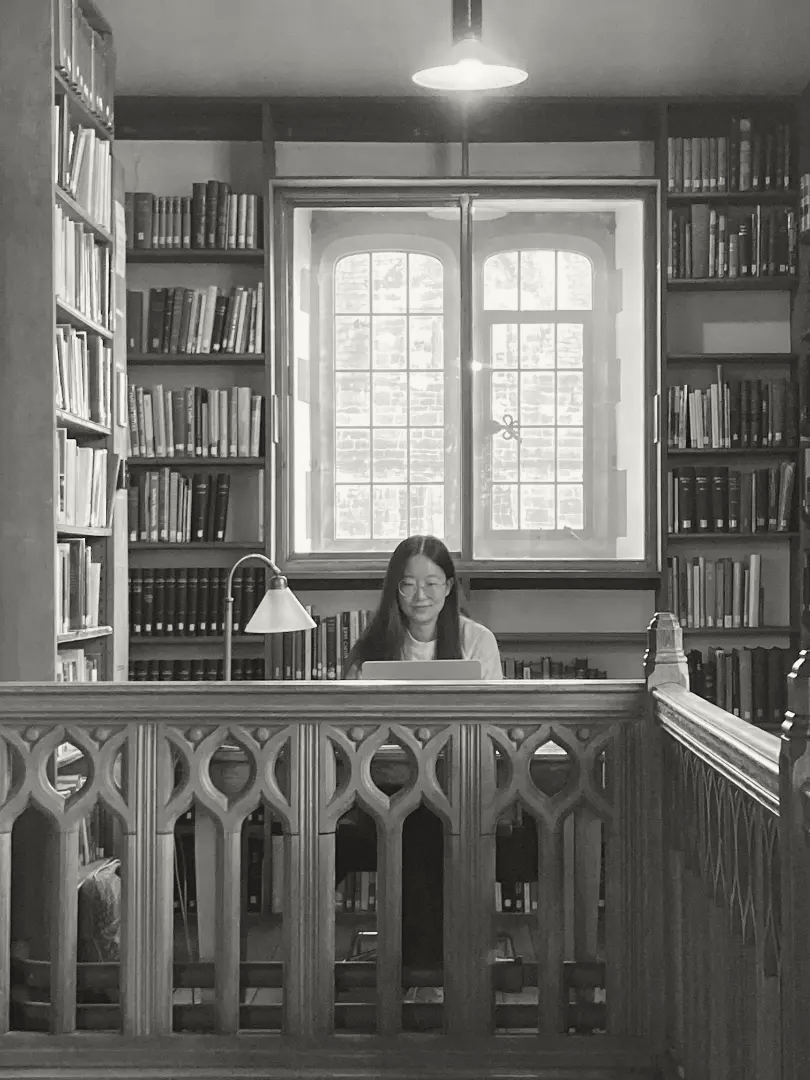
Author: Melanie Hyo-In Han
Born in Korea and raised in East Africa, Melanie Hyo-In Han is a poet, translator, and PhD candidate in creative writing. She holds an MFA in poetry and translation and is the author of My Dear Yeast and three chapbooks, as well as the translator of several collections of Spanish poetry. Melanie has received awards and fellowships from Sundress Academy for the Arts, Banff Centre for Arts and Creativity, Kees Eijrond Foundation, and elsewhere. Currently, she is the Coeditor-in-Chief of Flora Fiction and Two Languages Prize Editor at Gasher Press. Learn more at melaniehan.com.
Where are you from: Korea/East Africa
Tell us about your main writing space in three words: sunlit, airy, quiet
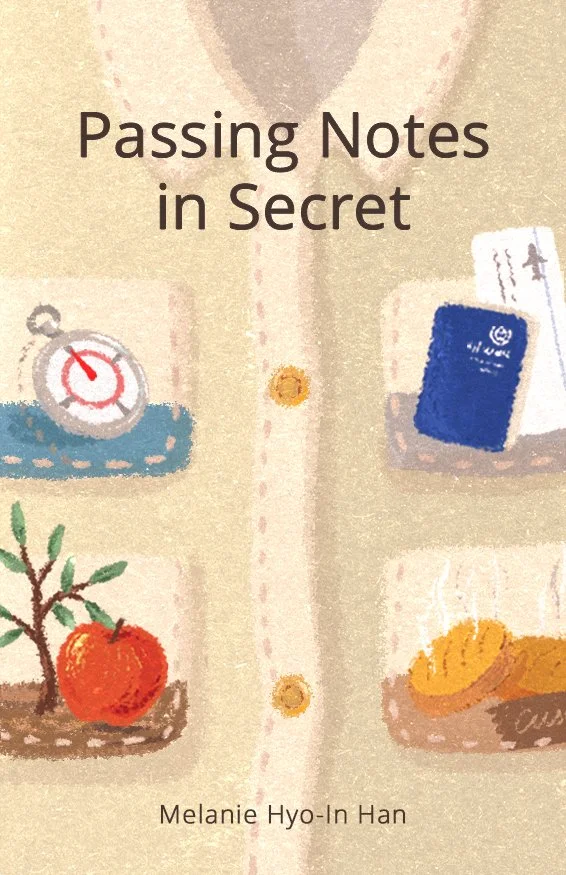
Tell us about your publication: My newest poetry chapbook, Passing Notes in Secret, was published in August 2025 by boats against the current. It’s a collection of poems that examines South Korea’s colonial history alongside themes of identity and belonging within the Korean diaspora. By moving between continents and languages, I reflect on how history shapes personal narratives and collective memory, as well as the ways culture is carried, adapted, and preserved through generations.
Why this book? Why now? How did it happen? I started writing this collection in order to connect with my Korean family’s past after reading Min Jin Lee’s novel, Pachinko. While reading the book, I realized just how little I actually knew about Korean history, so I decided to interview my grandparents and ask them about what it was like to live through the Japanese occupation of Korea, as well as through the Korean War. Talking to them encouraged me to start writing about their lives and my own stories of having grown up as a member of the Korean diaspora. What had started as a casual conversation with my grandparents turned into research about Korean history and led me to the writing of the poems in this chapbook.
What advice do you have for new writers? Someone with a book that needs a home? Don’t be afraid to send your work out. Your voice is valuable, your work is important, and your story belongs in the world.
What else are you working on/doing that you’d like to share? I’ve had the privilege of partaking in several writing residencies this past year (I’m currently at one in Costa Rica!) and have absolutely loved having the dedicated time and space to reflect, read, and write. I’d really encourage every writer to go on a writing residency and see what a change in scenery and pacing can do to fuel creativity and one’s sense of possibility!
Yellow Arrow (past and present) board, staff, interns, authors, residents, and instructors alike! Got a publication coming out? Let us help celebrate for you in Her View Friday.
Single-author publications: here.
Single pieces as well as prizes/awards, book reviews, and podcasts/interviews: here.
Please read the instructions on each form carefully; we look forward to congratulating you!
*****
Yellow Arrow Publishing is a nonprofit supporting women-identifying writers through publication and access to the literary arts. You can support us as we BLAZE a path for women-identifying creatives this year by purchasing one of our publications or a workshop from the Yellow Arrow bookstore, for yourself or as a gift, joining our newsletter, following us on Facebook or Instagram, or subscribing to our YouTube channel. Donations are appreciated via PayPal (staff@yellowarrowpublishing.com), Venmo (@yellowarrowpublishing), or US mail (PO Box 65185, Baltimore, Maryland 21209). More than anything, messages of support through any one of our channels are greatly appreciated.
The 5am Writers Club
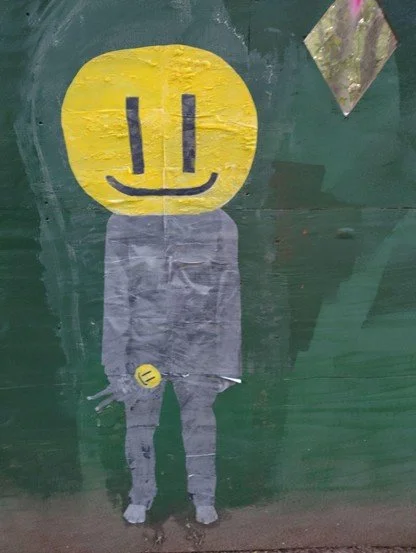
Photo M. Revenaugh
By Mickey Revenaugh, written September 2025
Every morning, seven days a week, 365 days a year, you will find me upright before sunrise, coffee in hand and laptop open. I post a proof of life on all the socials, then dig into whatever project is most bedeviling me at the moment. Some days the words rattle out like marbles from a tipped tin, other days are type-two-delete-one. But by the time the rest of the world wakes up, I’ve staked my claim. I am a writer because I belong to the 5am Writers Club.
That might sound backward. Don’t you have to be a writer first, before you get to join any club with “writers” in its name?
I’m here to argue the opposite. Hear me out.
Most of the identities I hold proudly are self-ascribed. While there’s objective evidence that I get all raucous over the lives of women, and that I prefer sidewalks to dirt, and that I get hooked on things that might kill me, no one else bestowed on me the title of feminist city slicker in recovery. That was all my doing.
Same thing with being a writer.
Of course, as the kids say, you have to put in the work.
Me, I figure I’ve composed millions of words over my long lifetime. There were the middle school crush and apocalypse poems, a few dozen of which I remember assembling into a manuscript and sending off to a New York City publisher by mail, with a self-addressed, stamped envelope, just like my writer father did; just like him, I welcomed my book back a month later with a nice noncommittal note to keep at it. I wrote multiple stories per issue for the high school newspaper I edited, and the upstate alternative newspaper I edited, and the collection of teacher magazines I edited. I produced a constant flow of “no more than 20 pages” pieces for writers group workshop critique and then 20 times that for my MFA thesis. I’ve had some stuff published along the way and lots of stuff not. Right now, I’m in the final editing stages for a nonfiction book, one that takes me back to my journalism roots but also lets me put a creative riff on things like the hairstyles at a homeschool conference and the crackle of tweens putting on a 12-kid prom.
I’ve put in the words.
But it’s the 5am club that has me waking up every day thinking I am a writer.
Most folks who do this predawn writing routine do so because they have day jobs, or kids and day jobs, or cats and kids and day jobs: you write before the alarm rings for your other obligations (though the cats apparently serve as their own furry clocks). But I didn’t join the 5am writers club until the day after I retired from my day job, which did get me in the habit of wee-hours working by giving me a U.K.-based team and boss to manage. Petless and childfree, I shot awake on that dark December morning in 2022, tiptoed into my newly liberated home office, and typed in the hashtag that I’d heard about from grad school compatriots and writing group friends.
#5amwritersclub
This was on Twitter back when Twitter was still called Twitter and was only 90% hellscape. What came up on my screen when I searched on the hashtag was evidence of globally distributed secret cells of creatives sheltering in place, sending bite-sized dispatches into the darkness. Poets and romance novelists and sci-fi writers and memorists, lit fic purists and multigenre maximalists, the semifamous and the not-yet-published, all raising a hand to say, “I’m here.” Some would add #amwriting, others would fret about feeling blocked. Some were there to celebrate the #writingcommunity and others indulged in #shamelessselfpromotion. The variety was astounding, clamorous yet soundless beyond the wave of my own breathing, like dancing in the middle of a silent rave where everyone’s wearing message tees.
I lurked for a bit, trying to intuit the rules. What soon became clear is that the only rule of #5amwritersclub is that, other than no trolling (everyone is very, very kind), there are no rules.
You post your thing, you add your hashtag, you heart some stuff, and you get on with it.
Most importantly, no one questioned my right to be in the club. It was all just thumbs-up and the occasional personal “Hello” after a few weeks. (And a little barrage of DMs from people wanting to help with marketing or sell me crypto, but I ignored those.)
I soon developed my own signature kind of post: a photo of some odd thing I saw in my wanderings around Brooklyn and elsewhere—a “random click”—posted as a writing self-prompt. For each picture, I would write a few hundred words, just locally on my laptop, not for sharing quite yet. (Others were more forthcoming, including someone writing a memoir in daily tweets, all lowercase with lots of ellipses, and the poet who posted a new haiku every day. I could only dream of being that bold, or that productive.)
Over that first year of 5ams, I put together a whole novella in flash—who knew there was such a thing?—with a photo and a chunk of text on each page, telling the warped story of a young art school dropout squatting in an abandoned cement factory in the Hudson Valley. She appeared to me before daybreak every morning, and I channeled her. Someday she may see print.
Along the way I “met” writers from all over the world: because it’s always 5am somewhere, their posts might come in hours before mine or hours afterward, but we were all in the same club. Some folks gathered for a virtual donut party on Fridays while others just raised their tea mugs in virtual toasts. There were many self-made cover reveals and pictures from book fairs and laments about manuscripts started but never finished. Some people disappeared for social media fasts while others went from posting monthly to popping up hourly. A stalwart speculative fiction writer from Florida wrote one morning about the scream of an oncoming hurricane—and then fell silent for a week. We all barraged him with relieved greetings when he returned, hawking his dystopian dolphin tales from another, drier location.
Around the 18-month mark, I discovered that my next-door neighbor, a much-published writer of edgy fiction, was hosting the occasional two-week sprint she called the Ungodly Hour Writing Club. Each weekday morning for a fortnight, you’d log into Zoom at 5:30 a.m. with camera and mic off and just write together in companionable silent witness. Sara would occasionally post an inspirational quote in the chat, and some try-hards like me would wish everyone a good day at 6:30 a.m. sign-off time, but that was it. Your Zoom profile pic, name, and pronouns were your living hashtag. Another Ungodly sprint is starting this week as I write this. I’ll check in with my 5am compatriots on Bluesky, Instagram, Facebook, and Threads (but not Twitter/X, not anymore), then roll right into Zoom. Sara’s keeping sessions open till 7:00 a.m. this time. We’re all very grateful.
Since mid 2024, my predawn writing sessions have been focused on this real-life book I’m writing about various forms of unconventional education American families have been flocking to since the pandemic: multiple flavors of homeschooling, microschools, roadschooling, virtual schooling, and the like. I have an agent and an editor and a university press publisher, and deadlines both self-imposed and official. I’ve been using my photo prompts as “WIP warmups” to ease into the vast wordy morasse of my manuscript. I do work on this project at all hours of the day and night, but predawn sets the tone. I’m finally heading into what I hope will be final revisions before the beast goes into production and then emerges in print in 2026.
I’m looking forward to seeing what emerges from the darkness then at the #5amwritersclub.
Mickey Revenaugh (she/her) is a nonfiction/fiction writer who is also cofounder of Connections Academy, a global network of virtual K–12 schools. Her various obsessions meld in School’s Out, forthcoming in 2026 from Johns Hopkins University Press. Mickey’s shorter work has appeared in Vice, Catapult, Chautauqua, and many others. She holds an MFA from Bennington College, an MBA from New York University, and a BA in American studies from Yale University, but she may be proudest of serving as board president for Yellow Arrow Publishing. You can find her at @mickeyrevenaugh on social media or mickeyrevenaugh.com on the web.
*****
Yellow Arrow Publishing is a nonprofit supporting women-identifying writers through publication and access to the literary arts. You can support us as we BLAZE a path for women-identifying creatives this year by purchasing one of our publications or a workshop from the Yellow Arrow bookstore, for yourself or as a gift, joining our newsletter, following us on Facebook or Instagram, or subscribing to our YouTube channel. Donations are appreciated via PayPal (staff@yellowarrowpublishing.com), Venmo (@yellowarrowpublishing), or US mail (PO Box 65185, Baltimore, Maryland 21209). More than anything, messages of support through any one of our channels are greatly appreciated.
Unsettling the Silence: A Conversation with Vic Nogay
Poetry is often born from tension—the space between beauty and loss, the sacred and the ordinary, the personal and the political. In her soon-to-be-released poetry collection Naming a Dying Thing, Vic Nogay invites readers into this space with a voice that is at once lyrical and unflinching. Her work lingers on themes of motherhood, loss, and nature, encompassing the cycles that both sustain and unsettle us.
Nogay is a writer, reader, and editor from Ohio with a richly variegated publication archive (find out more at vicnogay.com/publications). Her second poetry collection, Naming a Dying Thing, to be published by Yellow Arrow Publishing in October 2025, is a reckoning with memory and present experience woven together as a “tarnished treasure” of the self. This collection reflects our mission while carving a powerful place for itself in contemporary poetry. You can get your copy of Naming a Dying Thing at yellowarrowpublishing.com/store/naming-a-dying-thing-paperback.
Melissa Nunez, Yellow Arrow interviewer, and Nogay connected with each other to discuss the inspirations behind Naming a Dying Thing, the role of sound and rhythm in her work, the push-and-pull of modern motherhood, and the grounding force of nature.
I am trying to find wonder in the world, but I have
driven many highways, seen you flayed, our names
in paint, sprayed and slipping down the length of you.
“Appalachians”
Who are some of your favorite women-identified writers?
Toni Morrison, Maggie Smith, Louisa May Alcott, Tess Taylor, Alison Stine, Tiffany McDaniel, Natalie Babbitt, Kalynn Bayron, Amy Turn Sharp, Tiana Clark, R. F. Kuang, Claire Taylor, Amy DeBellis, Madeline Anthes, Barbara Kingsolver, Gabrielle Zevin, Amy Butcher, Gwendolyn Kiste, and Rachel Harrison . . . just to name a few!
How did you discover Yellow Arrow Publishing? What inspired you to submit Naming a Dying Thing?
I can’t say for certain, but I’m pretty sure I discovered Yellow Arrow on Twitter back when it hosted a thriving literary community. I submitted this collection to Yellow Arrow and a select few other presses whose missions aligned with my own. I love that Yellow Arrow is a nonprofit indie publisher that puts their mission at the forefront of who they are. A press that vocally and proudly exists to champion all women-identified writers is a community I am so grateful to be a part of.
What inspired the creation of this poetry collection?
The pandemic unlocked some kind of portal in my brain that sucked me back into a creative writing practice I had been avoiding for years. It forced me to reckon with a past gilded by time and memory, as well as my more present experiences with motherhood, marriage, miscarriage, and general political/social chaos. Over the past five years, my writing has returned to the same topics, turning them over and over again looking for answers that don’t exist. At least I haven’t found them yet. Having these pieces together in one collection is like holding a piece of my soul in my hands, a record of my life. A tarnished treasure, but treasure all the same.
Can you walk us through the cover selection process?
As a reader, I love closing a book and returning to the cover with new eyes, finding nods or clues the author gave us right from the beginning, and I wanted readers to have that same experience with this collection. I discussed this concept with [Yellow Arrow Creative Director] Alexa Laharty, and she was totally on board! We explored several images in the collection and felt the spray paint on the blasted mountain rock face was unique, evocative, and representative of the collection as a whole.
I’m holding you and my breath
while your big bluestem heart beats
under thunder and a sturgeon moon.
“Now you are six”
There are many strong themes in this collection, one of which is motherhood. In your opinion, what does “motherhood” mean in a modern society? What has changed and what has remained the same?
For me, motherhood is like breathing—a constant oscillation between restriction and expansion, limitation and growth. I find my experience as a mother to be healthiest and most fulfilling when I remove myself as much as possible from the context of our modern society. It’s impossible to do, of course, but the effort is worthwhile. I find modern expectations of motherhood do not embrace the essential push/pull, only the push, only the expansion, only the expectations. Modern society offers mothers no relief. My resistance is in taking relief wherever I can find it.
I was struck by the balance of beautiful lyricism with a brazen, unadorned honesty in your poetry (e.g., “Testimony” and “Folk tale”). What drew you to this contrast in voice?
A change of voice within a poem is often striking, even unsettling. When I employ this change, I deliberately want to unsettle. Unsettle the poem, unsettle the reader, unsettle myself, unsettle the systems that confine us. It’s a hex on injustice and those who wield it like a weapon. I hope it feels like the curse it is intended to be.
I love the skillful use of alliteration, assonance, and repetition in poetry. My eye was drawn to words connected to the concept of the “sacred,” words like “hallow” and “burrow,” which appear in multiple places in multiple forms in this collection. Can you speak to the allure of these words/concepts for you?
I think words with two vowel sounds split by a double consonant have always felt so rich and warm and earthy to me. I like the contrast of exploring the ethereal, sacred, and unknowable with words that feel tangible, resonant, and specific. Contrast gives a poem anticipatory movement. The sounds and rhythm of words are as important as their definitions.
At ten weeks, for six days, I labored;
my body exiled my body.
When it was over, I did not look
but let my love hallow
“Testimony”
Another thread apparent in this collection is love and relationship. In your opinion, how does love both connect and divide us from others? How does this play out in marriage and in parenthood?
Woof, this is a tough one for me. I have no authority to speak on this topic. I’m just fumbling through it all. The poems are as close to opinions as I get.
The cycle of growth and decay in nature is very present in the imagery of your poetry. How does this speak to patterns in our personal lives?
I grew up very disconnected from the natural world, and I think this lack of familiarity or understanding created a dependence on the heavily curated, manufactured illusion of reality in suburban America. Even now, I’m not a skilled outdoorswoman by any stretch, but the time I’ve spent learning about and caring for native Ohio plants and wildlife has connected me to it all, removed the flimsy false barrier between humanity and the rest of this one earth. The natural life cycle, and feeling acutely a part of it, has been surprisingly comforting and inspiring.
light me up & listen
for the passerine,
furious & thrumming—
ten thousand tiny bird wings
out of my mouth.
“birds are singing in december when you say that you are leaving me”
Aside from writing, you are also an editor at Identity Theory and have worked on editing for other publications in the past. How does that experience compare to working with Yellow Arrow on your own personal collection?
It’s fascinating to switch sides! As an editor, I feel very confident and responsible for supporting the writers I publish. It feels a little intimidating to be the writer in this scenario. Like, who am I to publish a book? I wish the editorial confidence carried over to my writing persona!
Do you have any advice for fellow women-identified writers?
I feel a deeply ingrained pull to see and consider multiple perspectives of my own life and experiences. But when I’m writing that inclination dissolves. What am I saying? Poetry is not diplomatic; the only person your words owe a voice to is you.
Do you have any hobbies outside of the writing world that help bring balance or peace to your mind and life?
Oh yes. My dear sweet chickens! I have 11 bantam hens that are just entering their first laying season. Caring for them daily feels so essential. I feel so small and indebted to them. I love cleaning their coop, watching them forage, talking with them, and snuggling. I have never felt a peace like this.
Are there any future projects you are currently working on you would like to share with our readers?
I am at work on my first novel. It’s a ghost story, but that’s all I can tell you for now!
Thank you Vic and Melissa for such an engaging conversation. You can order your copy of Naming a Dying Thing from Yellow Arrow Publishing at yellowarrowpublishing.com/store/naming-a-dying-thing-paperback. You can find out more about Vic Nogay online @vicnogaywrites.
Like humid Ohio summers, often wistful and lovely, yet undeniably heavy, Naming a Dying Thing by Vic Nogay is a sticky collection. At times a confrontation, at others an abdication, the poems within this offering reckon with the roles of women and mothers in a society that demands they be somehow everything and nothing all at once. Naming a Dying Thing contemplates and subverts success and failure in love and in life, holding both up to a hostile American reality. There are no answers here.
Nogay is a Pushcart Prize and Best Microfiction nominated writer from Ohio. She is the author of the micropoetry chapbook under fire under water (tiny wren, 2022) and is the microeditor of Identity Theory. With Naming a Dying Thing, Nogay avows the labor of motherhood and loss, bears the weight of a changing world, and unspools the taut line of memory, leaving the frayed edges to rest out in the sun.
Melissa Nunez makes her home in the Rio Grande Valley region of south Texas, where she enjoys exploring and photographing the local wild with her homeschooling family. She writes an anime column at The Daily Drunk Mag and is a prose reader for Moss Puppy Mag. She is also a staff writer for Alebrijes Review and interviewer for Yellow Arrow Publishing. You can find her work on her website at melissaknunez.com/publications and follow her on Twitter @MelissaKNunez and Instagram @melissa.king.nunez.
*****
Yellow Arrow Publishing is a nonprofit supporting women-identifying writers through publication and access to the literary arts. You can support us as we BLAZE a path for women-identifying creatives this year by purchasing one of our publications or a workshop from the Yellow Arrow bookstore, for yourself or as a gift, joining our newsletter, following us on Facebook or Instagram, or subscribing to our YouTube channel. Donations are appreciated via PayPal (staff@yellowarrowpublishing.com), Venmo (@yellowarrowpublishing), or US mail (PO Box 65185, Baltimore, Maryland 21209). More than anything, messages of support through any one of our channels are greatly appreciated.
Amy Mackin on the Good, the Bad, and the Ugly of Her Publishing Journey
“It’s really a labor of love”
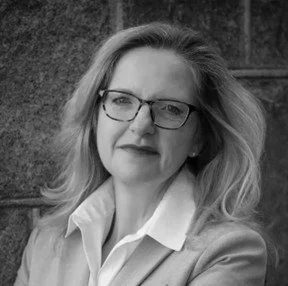
Amy Mackin writes at the intersection of education, cultural history, public health, and social equity. Her work has appeared in outlets such as The Atlantic, Chalkbeat, The Washington Post, Witness, and The Shriver Report. She earned her MA in American studies from the University of Massachusetts and her MFA in nonfiction writing from Vermont College of Fine Arts. Over the last several years, she has held leadership writing roles in the public health, science, and higher education sectors. Mackin loves the fickle weather and spectacular landscapes of New England, where she resides with her family and always at least one friendly feline.
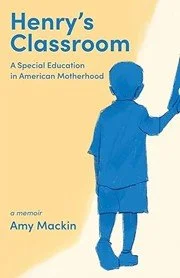
In a recent conversation with Yellow Arrow summer 2025 publications intern Kate Tourison, Mackin reflects on the unexpected challenges and heartfelt successes that came with publishing her memoir Henry’s Classroom: A Special Education in American Motherhood with Apprentice House Press this past spring.
With Henry’s Classroom, Mackin combines her family’s personal experiences with years of research, exploring the medical, social, and educational barriers her son encountered during early childhood, ultimately revealing a larger story of ineffective systems that are failing millions of families across America.
“My son, who I call Henry in the book, was diagnosed with developmental delays at 16 months old, which set us on the journey of engaging with early intervention services and then moving into the special needs preschool, and then from kindergarten through fifth grade with the district's special education program,” explains Mackin. When reflecting on the publication process, Mackin relays some of the difficulties she encountered, starting with submitting her work, stating that “that’s probably the most difficult part.” Mackin reached out to a number of literary agents, wanting her story to be published by big-name companies like Penguin Random House or Simon & Schuster. The querying process, however, was much more challenging than she had anticipated.
“I had two agents respond to me, both of whom I admired their work and would have been thrilled for them to have represented the book, and they both asked for additional pages, then they both asked for the full manuscript, and ultimately they both rejected it,” Mackin says, laughing. “One said there was too much research in the memoir for them, and the other said there was not enough research in the memoir for them.”
Finally, Mackin chose to pivot. “I had decided that I was going to take a break because I had been kind of worn out by the process, but I had a couple of friends who had had really good experiences with small presses, so I decided I was going to go that route.” As she began looking into independent presses, Mackin stumbled across Apprentice House Press, a student-run book publisher located in Baltimore, Maryland.
I had never heard of Apprentice House,” she explains. “But I said, you know what, I'm just going to submit and see what happens, and then I heard back from Apprentice House maybe six weeks later, saying that they were actually interested in publishing it. I was thrilled.”
For Mackin, this had been a long time coming. Henry’s Classroom had started as a project for her MFA, and it had gone through several subsequent iterations and genre changes before Mackin began thinking seriously about publication. “Writing, you know, it was very much a solitary, isolating thing, generally. Even with me, I was in a low-residency MFA program for some of this, and once that ended, I didn't have a local writing group or anything like that to bounce these kinds of ideas off of, so it was very, very isolating. It’s very uncertain about, you know, the quality of what you’re putting out there, if people will resonate . . . you’re not really sure if you told the story or gave the story, honored it the way you wanted to, and so it’s been incredibly validating for me hearing some people’s reaction to the book.”
After having signed with Apprentice House, Mackin spent the next year working on a final draft for publication. On May 6, 2025, Henry’s Classroom became available to the public. But the work did not end there—for Mackin, marketing and publicity was half of the battle.
“I did hire an independent publicist. It is really expensive, I mean, I think that needs to be out there. I purchased the amount of services I could afford, and I ended it at that. It was helpful, but I do also think that you can do it yourself, just because I think when you’re publishing with a small press, you’re typically not getting an advance . . . you’re doing all the editorial work, and all of the publicity work, the writing, in your spare time. And a lot of us are introverts by nature, and we’re not really comfortable self-promoting. So I mean, you only do it because you really believe in the story you have to tell, and you really believe in the power of books. It’s a lot, and you know, it’s really a labor of love,” she concedes.
Ultimately, Mackin boils it down to two primary objectives. First, realizing your target audience:
“I made a decision pretty early on that I would [be] helping other families navigate this, or sometimes just letting other families or parents vent about the frustration of the system. So I’m interested in engaging with educators, and parents and families, and I’m kind of targeting that group. I did a book launch event, I’ve done a couple of book signings where people came out and wanted to talk about these things, and it was great. Just last week I actually spoke at an international conference on maternal scholarship, and the reactions have been really, really positive, and it’s led to really great discussion. That’s been probably the best part of all of this, just the conversations I’ve been able to have.”
Mackin’s second piece of advice is to look to other successful writers for inspiration: “Find books similar to yours that have been published with a similar size press and see where they’re getting promoted. And then, you know, contact those podcasters, contact those magazines, those newspapers, and say, ‘Hey, I saw that you covered this book, I write in a similar vein, wondered if you’d be interested in doing a feature on this.’ A local press is definitely your friend when you’re an independent author, and your local communities are going to want to support you.”
In addition to nearby news outlets, Mackin turned to her local booksellers and librarians. “I took my book, and I kind of drove around maybe a 90-minute radius as soon as the book came out. I talked to independent booksellers and many were very willing to consign my book and put it on their bookshelves, and also to have a book talk or a book signing event with me.”
When asked if there is anything she would have done differently, from start to finish, Mackin offers one last piece of wisdom to writers in her position: “I wish that I had entertained the idea of a small press publication sooner,” says Mackin. “I think a lot of writers feel like the goal is to get a literary agent, to publish with one of the Big Five, to get those reviews by the big industrial reviewers, all of that. And I think that is a laudable goal for a lot of people and is appropriate but depending on what your goal is for your own work, really think about that. Because for me, this meets the goal that I was trying to get to. And, getting published with a Big Five wouldn’t necessarily. I am so grateful that this book is out in the world now and is allowing me to have these conversations in a larger way that I know it's helpful to me and I feel like has been helpful to other people.”
You can find Henry’s Classroom: A Special Education in American Motherhood, published by Apprentice House Press, at Bookshop.org. Thank you, Amy and Kate, for such a great conversation about publishing.
Kate Tourison (she/her) is a rising senior at Loyola University Maryland where she majors in English and communication with a specialization in advertising and public relations. As a lifelong book lover, she is thrilled to join the Yellow Arrow team and engage with an inspiring community of women writers. During her spare time, she enjoys watching old episodes of Gilmore Girls, taking long walks with her dog, and, of course, reading! You can find her at @katetourison on Instagram.
*****
Yellow Arrow Publishing is a nonprofit supporting women-identifying writers through publication and access to the literary arts. You can support us as we BLAZE a path for women-identifying creatives this year by purchasing one of our publications or a workshop from the Yellow Arrow bookstore, for yourself or as a gift, joining our newsletter, following us on Facebook or Instagram, or subscribing to our YouTube channel. Donations are appreciated via PayPal (staff@yellowarrowpublishing.com), Venmo (@yellowarrowpublishing), or US mail (PO Box 65185, Baltimore, Maryland 21209). More than anything, messages of support through any one of our channels are greatly appreciated.
Spotlighting midnight & indigo

By Kristen Caruso, written June 2025
“For Black women who write and the readers who’ve been waiting for our words.”
As explained on their website, midnight & indigo began years ago, on a Christmas morning with a typewriter wrapped up in a bow and 10-year-old Ianna A. Small, the founder and editor-in-chief of the press. That typewriter, combined with Small’s immense love for reading and writing, would inspire her to search for books with characters that look like her, and eventually write them herself: “Something magical happens in the pages of a book, when you see yourself reflected in the characters you love,” Small says. “Or the first time you see your own words staring back at you from a previously blank page.”
Ianna A. Small is the magic behind midnight & indigo Publishing and midnight & indigo, a cozy corner of the literary world where Black women writers’ stories come alive. By day, she’s orchestrating a symphony of words as editor-in-chief and cheering on the next wave of storytellers through midnight & indigo’s writing program. By night, you might catch her lost in a Black or South Asian novel, yelling at a twist in a Korean horror movie, or perfecting her roti-making skills. She binges Insecure, The Golden Girls, and cultural food documentaries like it’s a competitive sport, and dreams of one day running midnight & indigo from a lounge chair overlooking the archipelagos of her happy place: Greece. A proud Syracuse University alumna, Small is a member of ACES: The Society for Editing and the Editorial Freelancers Association.
Founded in 2018, now having published over 400 Black women writers in print and ebook journals, online essays, and special speculative fiction anthologies, midnight & indigo has become a powerhouse in amplifying the voices of Black women all over the world highlighting their contributions to the literary landscape. For Small, midnight & indigo is more than just a job, it’s her purpose and passion, and she’s proud to say that the press is not backed by any corporate investors or huge budgets, just the talent and hard work of their team.
As for publications, midnight & indigo publishes a triannual journal, available in print or as an ebook. The journal focuses on short stories, essays, and speculative fiction. Each issue publishes anywhere between eight and 22 works and writers, with beautifully photographed and designed covers. Their online journal is updated all year round on a rolling basis.
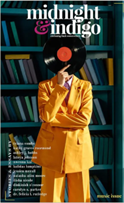
Their current issue, The Music Issue (Issue 13), combines the intricately linked relationships between writing and music, exploring the generational, powerful, deep, and often complex connection Black women have to different genres. From church hymns to K-Pop to Nat King Cole to ‘90s CD booklets, the inaugural music issue highlights 12 writers through essays and short stories.
On their website, midnight & indigo also posts glimpses of the content of their journals as essays and blog posts, such as “What Writing a Romance Novel Out of Spite Taught Me About the Fictional Man” by Desiree Winns. A cleverly honest and much needed essay, Winns describes how her frustrations with the lack of Black woman leads in romance novels—and men’s dismissal of romancing Black women in real life—drove her to write one of her own.
Another featured piece is “Candles in the Window: A Generational Blessing of Hospitality” by Lex Dunbar, a personal work of how always being welcomed home by their great-grandmother and her hospitality being passed down to them, Dunbar found a home in their queerness and trans identity. These beautiful essays show just a glimpse of the talent and powerful voices that exist in the rest of the midnight & indigo publications.
Apart from publications and literary journals, midnight & indigo also offer opportunities for Black women to learn about different aspects and genres of the craft. In 2022, midnight & indigo launched its Writing Program for Black Women Writers. Here, Black women can participate in a variety of online, virtual workshops and seminars taught by authors, creatives, and writing professionals, all created specifically for Black women. The classes are tagged with different topics: craft, fiction, nonfiction, and editing, with course options of length ranging from one day to four weeks. Some of the upcoming workshops and courses this fall include “Exploring Memoir: Personal Story & Power for Creative Nonfiction Writers” with Dhayana Alejandrina, “Decolonizing Our Writing Voice” with Dr. Kiara Lee, and “Polish and Pitch: A Black Woman Writer’s Guide to Self-Editing and Querying” with Catherine Mwitta. Since its launch only three years ago, more than 600 writers have participated in the online writing program.
Another service offered by midnight & indigo is Developmental Editing & Story Coaching, with Small herself being the editor. Patrons have the option to choose between a shorter (under 7,000 words) and longer (under 90,000 words) piece of work to be reviewed, receiving an analysis of many story elements including pacing and flow, character, and style and voice, as well as a one-hour, face to face feedback session. The goal of these editing sessions is to strengthen manuscripts and take them to the next level. Developmental editing is not the same as copy editing—it will focus on the big picture, structural feedback and issues of a manuscript.
midnight & indigo is not only an organization that publishes and broadens the reach of Black women writers’ voices and stories, but they also encourage, inspire, and guide new and upcoming writers to do the same. “Black women have always written—across kitchen tables, in the margins of time, through memory, imagination, and truth,” their website states. “midnight & indigo was founded to hold that work and honor the writers behind it.”
If you or anyone you know is a Black woman looking to be published, midnight & indigo’s upcoming deadlines are August 31, 2025, for speculative fiction, and September 30, 2025, for short stories and creative nonfiction. Spread the word and keep an eye on midnightandindigo.com/write-for-us for more information and new calls for submissions!
To find out more about midnight & indigo or support them, you can follow their Instagram @midnightandindigo and Facebook @midnightandindigo or sign up for their newsletter here.
“midnight & indigo is a literary journal and publishing company dedicated to celebrating and nurturing the voices of Black women writers worldwide.” (All quotes and Small’s bio came from midnight & indigo’s website, midnightandindigo.com.)
Kristen Caruso (she/her) is a junior at the University of Rochester but calls New Jersey home. As a double major in English and business with a minor in French, she hopes to combine her areas of study in a publishing career. Kristen’s interest in publishing began as the editor-in-chief of her high school’s yearbook organization and continues to thrive on the editorial board of her university’s art and literature journal. She enjoys coffee, the color green, poetry, nonfiction about trees, the ocean, Rochester snow, New Jersey pizza, music that’s somewhat bad, and lists that are too long. Find her on Instagram @kris10caruso.
*****
Yellow Arrow Publishing is a nonprofit supporting women-identifying writers through publication and access to the literary arts. You can support us as we BLAZE a path for women-identifying creatives this year by purchasing one of our publications or a workshop from the Yellow Arrow bookstore, for yourself or as a gift, joining our newsletter, following us on Facebook or Instagram, or subscribing to our YouTube channel. Donations are appreciated via PayPal (staff@yellowarrowpublishing.com), Venmo (@yellowarrowpublishing), or US mail (PO Box 65185, Baltimore, Maryland 21209). More than anything, messages of support through any one of our channels are greatly appreciated.
Her View Friday
Yellow Arrow Publishing supports women-identifying writers from a wide variety of backgrounds, not just because it’s the right thing to do, but because it makes us stronger. Women’s voices have historically been underrepresented in literature, and we aim to elevate those voices and stories through our programs, publications, and support.
Part of our mission in supporting and uplifting women writers is to promote the Yellow Arrow community’s individual accomplishments. We’d like to further expand that support and promotion outside of our Yellow Arrow publications. Twice a month, we’d like to give a shout out to those within the Yellow Arrow community who recently published:
single-author publications
single pieces in journals, anthologies, etc., as well as prizes/awards, book reviews, and podcasts/interviews
You can support our authors by reading this blog and their work, sharing their news, and commenting below or on the blog. Congratulations to all the included authors. We are so proud of you!
Every writer has a story to tell and every story is worth telling.
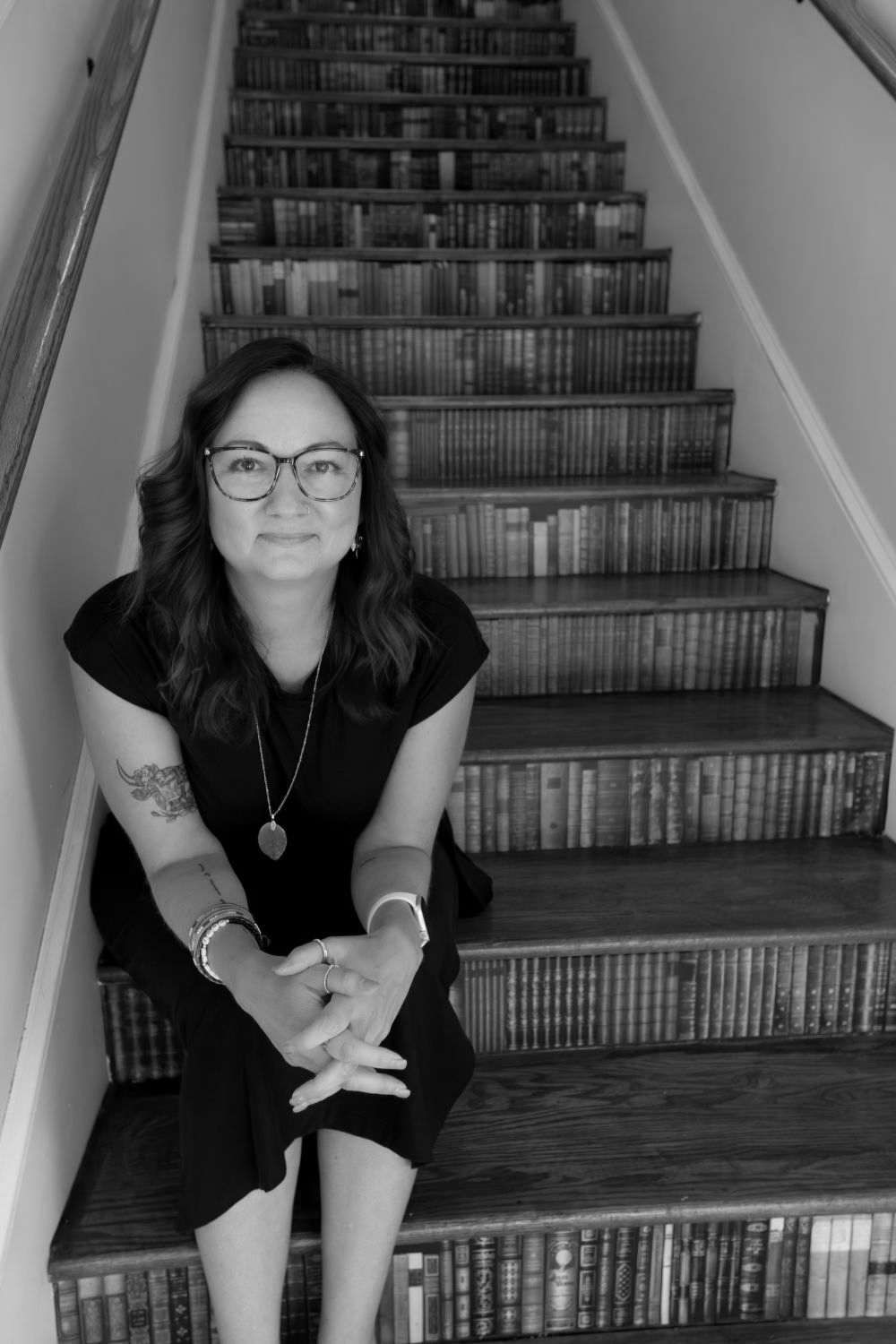
Author: Annie Marhefka
Annie Marhefka is the executive director at Yellow Arrow Publishing; she has a BA in creative writing from Washington College, an MBA, and is an MFA candidate at the University of Baltimore. When Annie is not writing, she is usually trying to find her way back to the water.
Where are you from: Baltimore, Maryland
Tell us about your main writing space in three words: cozy, cluttered, warm.

Tell us about your publication: Strangers We Know By Heart is a collection of hybrid love letters to strangers and was the winner of the 2025 Garden Party Collective chapbook contest. It is available for preorder now at gardenpartycollective.bigcartel.com/product/strangers-we-know-by-heart-by-annie-marhefka!
Why this book? Why now? How did it happen? Years ago, a stranger sent my mother a letter that was the most impactful demonstration of empathy I have ever experienced, and that act of bravery has stuck with me since that time. I started writing these love letters to strangers a few years ago and found it was both moving and comforting as a writing practice, imagining myself in someone else’s shoes and addressing them through my writing. I started sharing them at some point—a letter to my hairstylist, my child’s teacher, my favorite bartender. I realized that even though we aren’t living in an isolated time anymore, a lot of people still feel isolated, or misunderstood. I’ve always gravitated toward writing about human connection, but writing directly to someone you don’t know or hardly know is sometimes scary. But in every interaction between two strangers, there is a possibility for connection. That has been my hope for these pieces.
What advice do you have for new writers? Someone with a book that needs a home? My advice is to connect with other creatives! Writing does not need to be an act of isolation—it can be an act of community building, too. My work has grown so much stronger because of the talented folks I get to work with at Yellow Arrow and those that I’ve met at Baltimore literary events.
What else are you working on/doing that you’d like to share? I spent most of my career working as a human resources executive, so I’m currently combining my passions working on a collection of nonfiction essays that are written in various HR forms (employment policies, FAQs, job descriptions, etc.). It’s been really fun to play with the structure!
Yellow Arrow (past and present) board, staff, interns, authors, residents, and instructors alike! Got a publication coming out? Let us help celebrate for you in Her View Friday.
Single-author publications: here.
Single pieces as well as prizes/awards, book reviews, and podcasts/interviews: here.
Please read the instructions on each form carefully; we look forward to congratulating you!
*****
Yellow Arrow Publishing is a nonprofit supporting women-identifying writers through publication and access to the literary arts. You can support us as we BLAZE a path for women-identifying creatives this year by purchasing one of our publications or a workshop from the Yellow Arrow bookstore, for yourself or as a gift, joining our newsletter, following us on Facebook or Instagram, or subscribing to our YouTube channel. Donations are appreciated via PayPal (staff@yellowarrowpublishing.com), Venmo (@yellowarrowpublishing), or US mail (PO Box 65185, Baltimore, Maryland 21209). More than anything, messages of support through any one of our channels are greatly appreciated.
Meet a Staff Member: Jennifer M. Eyre
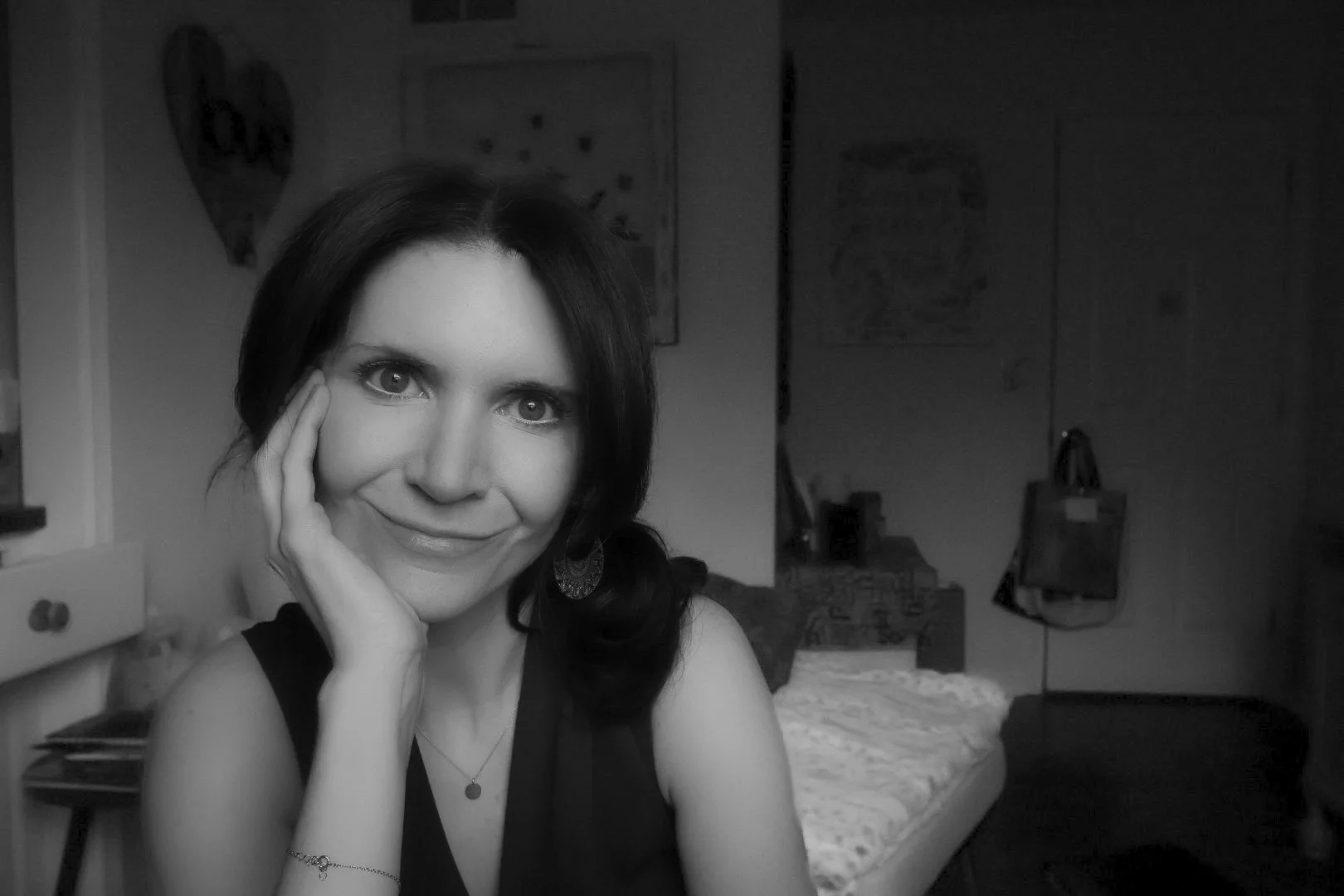
Yellow Arrow Publishing would like to introduce Jennifer (Jen) M. Eyre (she/her), writers-in-residence coordinator. Jen is a writer for both children and adults. She enjoys writing poems, essays, short stories, and everything in between. In January 2023, Jen graduated with her MFA in writing from the Vermont College of Fine Arts, where she rediscovered her love for free-verse poetry. She has been a member of the Society of Children’s Book Writers and Illustrators (SCBWI) since 2017 and has completed courses through Gotham Writers’ Workshop and Writer’s Digest University. If Jen isn’t writing, she is likely capturing stories through her second love, photography. Jen lives with her husband, daughter, and ornery orange cat in Harford County, Maryland. You can find her on Threads @jmeyrewriter and Instagram @jmeyrewriter.
Jen says, “What makes Yellow Arrow so unique is that it prioritizes the writer. Their commitment to uplifting and supporting women-identifying writers is at the forefront of every one of their endeavors, and that’s magical. Writing is such a vulnerable art form, and I look forward to playing a part in creating a safe and supportive environment for our writers to create and share their stories.”
Tell us a little something about yourself:
In 2025, I began exploring a second passion of mine, photography, and have been having such a wonderful time doing so. While writing will always be my first love, I've enjoyed making time for this additional creative outlet. It's been fun blending my passion for storytelling with photography and finding ways for them to complement one another.
What do you love most about Baltimore?
Baltimore’s dedication to the arts has played a significant role in my life since I was a child. Baltimore fed my love for theater with its commitment to supporting the performing arts. I was fortunate enough to have venues such as the Mechanic Theatre and the Baltimore Arena so close by. Baltimore’s advocacy for individuality and creativity has only grown stronger through the years. Whether you’re in search of a local theatre group or an independent bookstore, there is something to inspire any creative passion.
How did you get involved with Yellow Arrow?
A million years ago, Annie Marhefka and I were both members of our high school literary magazine staff. Through Facebook, we remained in contact throughout the years, and I began noticing her posts promoting Yellow Arrow. At the time, I was in the process of reigniting my writer self, and her Yellow Arrow posts continued to grab my interest. The organization’s commitment to honoring its mission to uplift and support women-identifying writers was apparent. There was an added level of commitment to this mission that I had not yet seen in the publishing industry and that not only intrigued me but also provided the extra push of inspiration I had been lacking. I began submitting work to Yellow Arrow and had a few pieces published in their journal and Vignette.
In the spring of 2025, Annie and I met for coffee and reconnected over our common goals and experiences. When she asked if I would be interested in joining the Yellow Arrow team, I couldn’t say yes fast enough.
I am beyond thrilled to be Yellow Arrow’s new writer’s-in-residence coordinator. I am so excited to explore this role and contribute to nurturing and expanding the incredible infrastructure of this program. The collaboration and dedication to providing opportunities to Baltimore’s women-identifying writers have been nothing less than invigorating. It’s an honor to be part of such an uplifting and collaborative team, and I can’t wait to see what our 2025 writers in residence will do.
What are you working on currently?
I’ve recently begun exploring the nonfiction space. I am in the very early stages of drafting a free-verse poetry collection that “checks in” on the ‘90s diet culture millennials and how growing up in that era has shaped our lives (for better or worse). I typically write for younger audiences, so this venture is new for me, which makes it that much more exciting.
What genre do you write the most and why?
Despite the current project I just described, I tend to write for children and young adults. I am drawn to evergreen, lyrical picture books as well as angsty young adult contemporary fiction. I believe these genres appeal to me because I relied heavily on books and movies as a child, using them as a form of escapism. Stories offered relief and validation, which I believe is so important for children. I want to be a part of that.
Can you recall an early memory that might have sparked your love of writing/reading?
This may sound silly, but I remember watching Anne of Avonlea on PBS as a child and being so incredibly in awe that Anne wrote a book about her adventures. There’s a scene where she unwraps an advanced copy of her book from crisp brown package paper. The way she looked at the book was all I needed to believe there was nothing else I wanted to do more. Not so much because her book was published but because she had the courage to create such a precious, personal contribution to the world.
What book is on the top of your to-be-read pile?
Theater Kid by Jeffrey Seller.
Who has inspired and/or supported you most in your writing journey?
My husband, Matt, is my biggest cheerleader. He does everything within his power to make sure I have the time, space, and encouragement I need to create. He is the first to read my drafts and never complains when I send him the 453rd version of something to read.
My daughter, Madison, has always been a fierce and supportive presence, even when she was little. She embraces my identity as a writer and has encouraged me many times to keep going, even when it’s been hard to pick up a pen. She has more power than she’ll ever know, and I couldn’t do a second of this without her.
If you could have a workspace anywhere, where would it be and why?
I’ve always dreamt of writing in a studio apartment in Paris or London, next to a window that overlooks a cobblestone street. I have no reference point, and have never seen such a place in person, but the image is clear as day in my head. I’d be surrounded by piles of books and loose, handwritten manuscript pages. There would be endless rose-scented candles, and I’d write at an antique desk covered in ink stains.
What advice do you have for new writers?
Write what you want and don’t get hung up on the rules. If you are passionate about what you have to say, then put pen to paper and write it down. There were so many times I inhibited myself because of what I was afraid others would think. I’ve learned to view writing rules as guidelines, not laws. If you trap yourself in a box of rules, you’ll miss the point and the joy of creativity.
What’s your vision for Yellow Arrow in 2025/2026?
My vision for [Yellow Arrow] is to use the writers-in-residence program as a tool to further connect our writers with one another, providing an added layer of support and encouragement. While writing can sometimes feel like a solitary endeavor, it’s important to have a community of creatives who not only encourage us but also relate to the intricacies of being a woman writer in this day and age.
*****
Yellow Arrow Publishing is a nonprofit supporting women-identifying writers through publication and access to the literary arts. You can support us as we BLAZE a path for women-identifying creatives this year by purchasing one of our publications or a workshop from the Yellow Arrow bookstore, for yourself or as a gift, joining our newsletter, following us on Facebook and Instagram or subscribing to our YouTube channel. Donations are appreciated via PayPal (staff@yellowarrowpublishing.com), Venmo (@yellowarrowpublishing), or US mail (PO Box 65185, Baltimore, Maryland 21209). More than anything, messages of support through any one of our channels are greatly appreciated.
Follow your spark, your ember: Yellow Arrow Vignette BLAZE
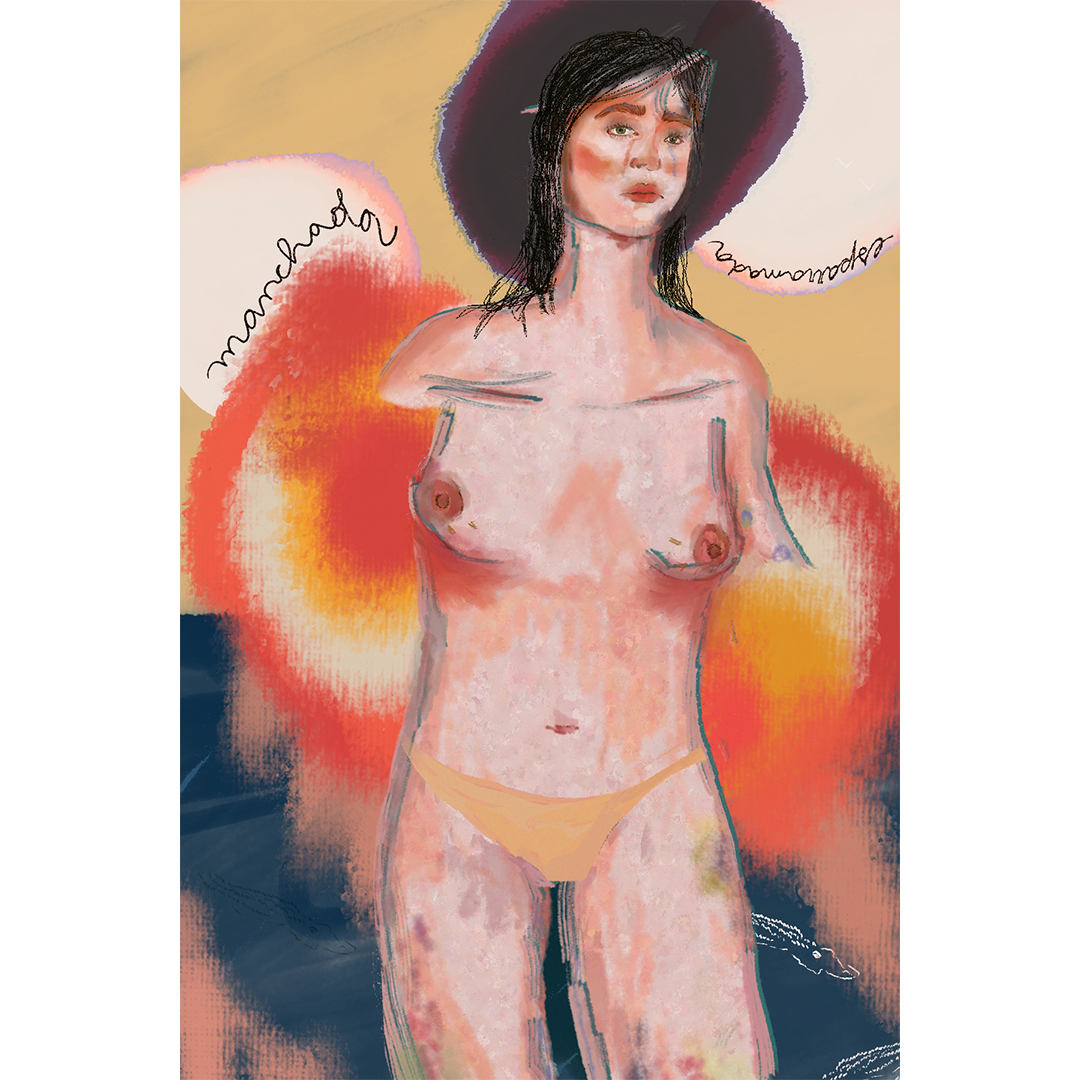
Welcome to the fourth issue of Yellow Arrow Vignette, Yellow Arrow Publishing’s online creative nonfiction and poetry series. For this issue, we aligned with our 2025 yearly value BLAZE.
The heat of passion. The beginning of a flame. The way the wind takes a spark or an ember and carries it, igniting more fire (or change) elsewhere. The changing of seasons. Transformation. The concept of being in heat and the way our sexual desires can send out their own strong signals—a blaze of pheromones. A blaze of glory. And, of course, the temptation to burn it all down.
With that, here is the BLAZE issue of Yellow Arrow Vignette:
Vignette BLAZE continues to focus on sharing and augmenting the creative work of voices and themes that aren’t heard loudly enough, showcasing writers who live in or are otherwise connected to our home base of Baltimore. We want our readers to experience the spectrum of voices that Charm City offers.
Before diving into the pages and words of our incredible BLAZE authors, explore the ‘cover art’ for the issue on the landing page, “Manchada” by Clara Longo de Freitas. Longo de Freitas is an illustrator and writer. Her editorial artwork has been published at The Washington Post, The Hill, and NPR. She enjoys painting with acrylic and drawing with ink in her free time, especially rats and bats. Originally from Brazil, she has called Baltimore, Maryland, her home for three years, where she lives with her 9-year-old Brittany Spaniel. According to Longo de Freitas,
“The theme BLAZE suggested a release, the expansion of something ‘conspicuously brilliant.’ What happens after that initial spark? The one that leads to combustion, that jolts you and your surroundings into movement. BLAZE also suggests shedding light. I painted a woman radiating her insides out, revealing herself, albeit not completely graceful. She is burnt and hurt and bruised. But I doubt she regrets it. Because BLAZE is also about direction, and it doesn’t look like she will be going back.”
Discover more of Longo de Freitas’ work at claralongodefreitas.com. We hope you see the intensity burning in the cover art and through the poetry and creative nonfiction in BLAZE. Thank you to all the writers who followed the call and sent in their beautiful pieces. We were amazed by the breadth of our collection of submitters and hope that you have the opportunity to blaze your own path. And to the incredible creatives who let us include their work in BLAZE: Catarina Broccolino, Rebecca Brock, Trinity Chapree, Brianna Coleman, Tracy Dimond, Kat Flores, Kassie Foster, Thomasin LaMay, Clara Longo de Freitas, Kavitha Rath, Lillian Deja Snortland, Liz Swanson, Veracruz, Marceline White, and Kitty Yanson. Thank you for trusting us with your words.
And of course, thank you to the Yellow Arrow Vignette team, Catharine Robertson and Sophia Graney, along with the rest of the staff that worked on BLAZE: Kristen Caruso, Jill Earl, Jennifer M. Eyre, Meg Gamble, Kerry Graham, Kapua Iao, Nat Kaplan, Alexa Laharty, Anna Leonard, Annie Marhefka, Siobhan McKenna, Kait Quinn, and Mickey Revenaugh. Our staff diligently read through every submission, worked on edits, and contributed amazing feedback!
The reading for Vignette BLAZE is 6:00 p.m. Friday, September 5, at Bird in Hand. RSVP here. See all events from Bird in Hand.
*****
Yellow Arrow Publishing is a nonprofit supporting women-identifying writers through publication and access to the literary arts. You can support us as we BLAZE a path for women-identifying creatives this year by purchasing one of our publications or a workshop from the Yellow Arrow bookstore, for yourself or as a gift, joining our newsletter, following us on Facebook and Instagram or subscribing to our YouTube channel. Donations are appreciated via PayPal (staff@yellowarrowpublishing.com), Venmo (@yellowarrowpublishing), or US mail (PO Box 65185, Baltimore, Maryland 21209). More than anything, messages of support through any one of our channels are greatly appreciated.
Worldbuilding Tips and Tricks: Making Your Setting Feel Real

By Jacqueline Goldman, written March 2025
Worldbuilding is an essential part of storytelling, shaping the way readers experience a fictional world. A strong setting enhances immersion, deepens character interactions, and adds layers of meaning to the narrative. Whether you’re creating a world for a novel, a screenplay, or a creative project, thoughtful worldbuilding makes the difference between a forgettable backdrop and a vibrant, living world that captivates audiences.
Worldbuilding is one of the most exciting yet daunting aspects of storytelling, whether you’re writing a novel, designing a Dungeons & Dragons campaign, or developing a setting for a creative project. A well-built world immerses readers, players, or audiences in a setting that feels lived-in, consistent, and full of possibilities. But how do you craft a world that feels real? Here are some key tips and tricks to bring your setting to life.
1. Start with the Big Picture
Before diving into the fine details, establish the broader framework of your world. Ask yourself fundamental questions:
What is the genre and tone of your world? High fantasy, grimdark, post-apocalyptic, steampunk?
What is the level of technology and magic?
Is it a single continent, a massive archipelago, or an entire universe?
How do people in this world survive? What are their sources of food, water, and shelter?
What are the major conflicts or struggles that shape the world’s current state?
Answering these macrolevel questions will help set the foundation for everything else.
2. History Shapes the Present
A world without history is a flat world. Consider major events that have shaped its present state:
Wars, revolutions, and conflicts
Natural disasters and their impact
The rise and fall of civilizations
The evolution of magic, technology, or religion
You don’t need to write a full history textbook, but having a rough timeline of key events will add depth to your world.
3. Culture is More Than Aesthetic
Culture isn’t just about architecture and clothing—it influences everything, from language and customs to politics and religion. Consider:
How do different regions or races interact?
What are their traditions, celebrations, and taboos?
What are the major religions and belief systems?
How do people express themselves through art, music, or literature?
Try to think beyond stereotypes—cultures should feel nuanced, with internal conflicts and unique customs.
4. Economy and Trade Matter
A setting feels more real when it has a functioning economy. Consider:
What is the primary currency?
What are the major exports and imports?
How do people make a living?
Are there economic disparities between regions?
Economic factors shape the interactions between different regions and influence political relationships, creating opportunities for conflict or cooperation. Whether it’s bustling trade cities, agricultural hubs, or isolated villages, these economic structures determine the wealth and power dynamics within a society.
5. Geography Influences Everything
Where people live affect their culture, economy, and daily life. Think about:
Climate and weather patterns
Major landmarks (rivers, mountains, deserts, forests)
Natural resources and their scarcity
How geography affects warfare, trade, and expansion
A world with vast deserts will have different survival tactics and trade routes than one dominated by ice and tundra.
6. Language and Naming Conventions
Names carry weight, and consistent linguistic rules make a world feel organic. Think about:
Naming conventions for cities, regions, and people
How different cultures speak and communicate
Slang, idioms, or dialects
Multiple languages (do they evolve over time?)
Avoid using real-world names unless you have a reason; unique, internally consistent names strengthen immersion.
7. Magic and Technology Need Rules
If your world has magic or advanced technology, establish clear rules:
Who can use magic or access technology?
Are there limits? What are the costs?
How does it impact daily life?
Are there laws or organizations that regulate it?
A well-thought-out system prevents plot holes and keeps the world believable.
8. Politics and Power Structures
Governments, factions, and leaders shape your world’s conflicts and alliances:
What type of governance exists? Monarchies, republics, theocracies?
Who holds power and how is it maintained?
Are there secret societies, rebel groups, or criminal organizations?
How do different factions interact?
Political intrigue can add rich storytelling elements and logical motivations for characters.
9. Daily Life and Small Details
Big picture worldbuilding is important, but the small details make it feel lived-in:
What do people eat?
How do they celebrate milestones like birth, marriage, and death?
What are common superstitions?
What games do children play?
A bustling marketplace, a folk song sung at a tavern, or a regional dish can make your world feel authentic and tangible in a way that grand landscapes or epic quests cannot. These everyday moments ground the setting in a reality that feels familiar, even if it's entirely fantastical.
10. Balance Planning and Organic Growth
While it’s important to establish key details of your world, leave room for discovery and flexibility. A rigidly planned setting can feel artificial, while one that evolves naturally can surprise both the creator and the audience. Consider:
Which aspects of your world must remain fixed?
Where can you allow room for development as the story unfolds?
How can you incorporate new ideas without breaking established lore?
Are you allowing characters and events to shape the world naturally?
Sometimes, the most interesting elements emerge during storytelling itself, allowing your world to grow in unexpected but logical ways.
Final Thoughts
Worldbuilding can be a long and sometimes overwhelming process, but it’s also one of the most rewarding aspects of creative storytelling. Remember that not every detail needs to be planned from the start—sometimes, the best elements of a world develop as the story unfolds. Keep notes, stay flexible, and allow your world to breathe and evolve over time.
Worldbuilding is an art, and no world is ever truly finished. The best settings feel like they existed long before the story started and will continue to evolve after it ends. Whether you’re designing for a novel, a game, or just for fun, these tips will help you craft a setting that feels deep, immersive, and full of possibilities.
So go forth and build—but don’t forget to leave a little magic behind the curtain!
Jacqueline Goldman (she/her) is an aspiring publishing professional and junior at Loyola University Maryland pursuing a degree in communication and media with a specialization in journalism and a minor in writing and business journalism. With experience as managing editor-in-chief for The Greyhound, nonfiction editor at Corridors Literary Magazine, and acquisitions editor at Apprentice House Press, she enjoys shaping compelling narratives and pushing the envelope.
*****
Yellow Arrow Publishing is a nonprofit supporting women-identifying writers through publication and access to the literary arts. You can support us as we BLAZE a path for women-identifying creatives this year by purchasing one of our publications or a workshop from the Yellow Arrow bookstore, for yourself or as a gift, joining our newsletter, following us on Facebook or Instagram, or subscribing to our YouTube channel. Donations are appreciated via PayPal (staff@yellowarrowpublishing.com), Venmo (@yellowarrowpublishing), or US mail (PO Box 65185, Baltimore, Maryland 21209). More than anything, messages of support through any one of our channels are greatly appreciated.
BLAZE-ing the Path: The Importance of Yellow Arrow Publishing and Yellow Arrow Vignette

The creation of Yellow Arrow Publishing in 2016 by Gwen Van Velsor (read more about it at yellowarrowpublishing.com/news/foundations-yellow-arrow-van-velsor) was not just the creation of an independent publishing group. Through the inspiration of the Camino de Santiago, yellow arrows blazing the trail forth, the birth of Yellow Arrow meant the beginnings of a profound mission and team with the recognition that “every writer has a story to tell and every story is worth telling.” The purpose and importance of Yellow Arrow lives in its commitment to truth and words created from the brilliance of woman-identifying creatives. The vibrance of life, literature, and creativity that springs from the genius of female writers is proudly amplified through the call to action of Yellow Arrow as an entity.

Even more poignantly aligned with the mission of Yellow Arrow, is the purpose of Yellow Arrow Vignette: a seasonal, digital publication of a collection of poetry, creative nonfiction, and starting in 2024, a selected piece of cover art. Every summer, Yellow Arrow inspires creatives and writers with a central theme to that season’s Vignette, Yellow Arrow’s yearly value, guiding them as they spin poems and stories of life and living to be shared with an audience of readers and visionaries alike.
This year, Yellow Arrow Vignette 2025 was pleased to light the way into the summer with BLAZE, calling out to writers and storytellers and creatives with Baltimore roots to ignite their sparkling truths and values into written words. Managed by Catharine Robertson, Vignette Managing Editor, and Sophia Graney, Vignette intern, BLAZE calls forth the imagery of blazing a trail, of sparking the imagination, of illuminating the way, of being brilliant and perfectly resplendent. Truly, with BLAZE, Yellow Arrow works to encompass the true beginnings of Yellow Arrow as a press.
Perhaps now, more than ever, it becomes imperative to amplify voices that were previously unheard, allowing creatives to shout their values and opinions and stories from the rooftops. For what feels like forever, women’s voices have been pushed to the wayside, falling victim to domineering words and “wisdom” from male philosophy and prose. By being able to focus on woman-identifying voices, we are highlighting perspectives that might not have otherwise been known, giving a chance for the world to learn more about what the everyday woman experiences. This is precisely the plight of George Eliot (Mary Ann Evans) when she wrote her essay “Silly Novels by Lady Novelists” in 1856. By simply believing that all women were able to write—and therefore consume—were mediocre romances with not a singular true feminine thought or experience to illuminate the truth, a massive injustice was given to female audiences. The truth of struggle and anxiety and hurt and betrayal that women experience was never explained, and a veil of misleading joy was the only valuable takeaway from these “silly novels” that led female readers down a tragic path.
Yet, it becomes important to note that there is a path beyond the veil and a light illuminating the truth of our modern day. Yellow Arrow aims to uplift the voices that have such specific and integral things to say, allowing the strength of powerful stories to be heard and shared. With stress from life, politics, and even each other, being able to write and have the words be published on a page makes everyone realize they are not alone in their feelings.
The path to stronger voices is not the only thing being illuminated. With the work of Yellow Arrow, the value of the press’ mission allows for light and illumination to the literary arts. We live in a world of words: from social media posts, to news articles, to classical literature, to signs along the road, to the very same silly novels that George Eliot disapproves of. Spoken, written, collected, and shared, we all live a life that is inescapable from the constant stream of consciousness and thought from another. The remarkable objective about Yellow Arrow—especially Vignette—is that while the mission is to share every story that is possible, the truth becomes that publication through Yellow Arrow expands the reach for people to access literature. Vignette being published digitally allows for a new format that is not just purchased physical copies. As well as that, publishing voices that are underrepresented means that there is now access to new stories that might never have been told before. Expanding the reach of a written word, one step at a time, no matter how insignificant it may seem, is the most important facet of why Yellow Arrow publishes.
Passing through the hands of directors, editors, readers, and interns, each piece of art entrusted to the Yellow Arrow team has been treated with the utmost care and compassion. The fact of the matter is that any sort of written work is a celebration in its own right. The idea that someone with a story took the time to share it with the rest of the world is a wonderful feat of creativity and strength and purpose.
The mission of Yellow Arrow was born on the Camino de Santiago Walk, a path traversed by millions of pilgrims over centuries of life. The mission of Yellow Arrow was sparked by those that have walked The Way before and is carried on by those who will walk it in the future. Each step we take, each poem we write, each picture we paint adds to the blazing inferno of emotion and creativity that is so valuable in a world that threatens to stall each movement of progress. Through the power of uplifting voices and the shining purpose of Vignette, Yellow Arrow works tirelessly in reminding the world that “every writer has a story to tell and every story is worth telling.”
Yellow Arrow Vignette will be released this month, and we are eager to share the words of those included. To learn more about Vignette, visit yellowarrowpublishing.com/vignette/submissions. Thank you for championing our writers and for sharing their beautiful words.
Sophia Graney is a rising senior at Loyola University Maryland double majoring in English and writing with a keen interest in Shakespearean studies. With a myriad of passions, Sophia is constantly writing, organizing, and advocating for the student body as part of Loyola’s student government or chatting with friends for hours in the on-campus Starbucks. When not studying or writing her own poetry and prose in Loyola’s humanities building, Sophia can be found at Loyola’s rock-climbing wall or at the beach in her hometown of Fairfield, Connecticut. Find her on Instagram @sophia.graney.
*****
Yellow Arrow Publishing is a nonprofit supporting women-identifying writers through publication and access to the literary arts. You can support us as we BLAZE a path for women-identifying creatives this year by purchasing one of our publications or a workshop from the Yellow Arrow bookstore, for yourself or as a gift, joining our newsletter, following us on Facebook or Instagram, or subscribing to our YouTube channel. Donations are appreciated via PayPal (staff@yellowarrowpublishing.com), Venmo (@yellowarrowpublishing), or US mail (PO Box 65185, Baltimore, Maryland 21209). More than anything, messages of support through any one of our channels are greatly appreciated.
Meet a Staff Member: Emily García

Yellow Arrow Publishing would like to introduce Emily García, events manager. Emily holds an MFA in writing from California College of the Arts and was born and raised in Oakland, California, though she now lives in Baltimore, Maryland. Her work has appeared in ZYZZYVA Magazine, Hobart Magazine, South Dakota Review, 34THPARALLEL Magazine, Wallstrait Journal, and BmoreArt Magazine.
Emily says, “I’m so looking forward to getting to know everyone and to planning some fun events for our team and community.”
What do you love most about Baltimore?
Baltimore has been an adjustment (we moved here from the Bay Area for my husband’s job) but after two years, it’s started to grow on me. I love the old house we live in and the ease and quickness with which we’ve gotten to know our neighbors. People have been kind and inclusive.
How did you get involved with Yellow Arrow and what do you do for us?
Funny enough, I ran into Annie [Marhefka] at the Association of Writers & Writing Program’s (AWP’s) conference in Los Angeles this year when I went over to check out the Yellow Arrow booth. My work background is in restaurants and events and when I asked about getting involved with Yellow Arrow, Annie told me the team was looking for help with events. Since I’m newer to Baltimore, I’d been wanting to connect with the local literary scene, and it seemed like a perfect opportunity.
What are you working on currently?
I just started writing my second novel, and I almost always have a short story going so I can switch back and forth between projects.
What genre do you write the most and why?
I write mostly fiction. It’s my favorite genre to read.
Can you recall an early memory that might have sparked your love of writing/reading?
I can’t remember a time when I wasn’t reading; I was a shy, awkward kid and sitting quietly with a book somewhere was when I felt the happiest.
What books are on the top of your to-be-read pile?
Vincenzo Latronico’s Perfection and Elif Batuman’s Either/Or.
Who has inspired and/or supported you most in your writing journey?
I’ve been very lucky to have had so much support! My family, my husband, my friends, my teachers.
If you could have a workspace anywhere, where would it be and why?
I’m a sucker for northern California and the Central Coast so . . . probably somewhere in Marin County or Santa Cruz. A beautiful little study with a view of the Pacific. Comfy chair, big desk, built-in bookshelves.
What advice do you have for new writers?
Keep going! Don’t stop!
What’s your vision for Yellow Arrow in 2025?
I’m really excited that AWP is coming to Baltimore next year—it’s a great opportunity to welcome people and show off the city. I envision us hosting some wonderful events over the course of the conference.
*****
Yellow Arrow Publishing is a nonprofit supporting women-identifying writers through publication and access to the literary arts. You can support us as we BLAZE a path for women-identifying creatives this year by purchasing one of our publications or a workshop from the Yellow Arrow bookstore, for yourself or as a gift, joining our newsletter, following us on Facebook or Instagram, or subscribing to our YouTube channel. Donations are appreciated via PayPal (staff@yellowarrowpublishing.com), Venmo (@yellowarrowpublishing), or US mail (PO Box 65185, Baltimore, Maryland 21209). More than anything, messages of support through any one of our channels are greatly appreciated.
Yellow Arrow Journal (X/02) KAIROS Submissions are Now Open!
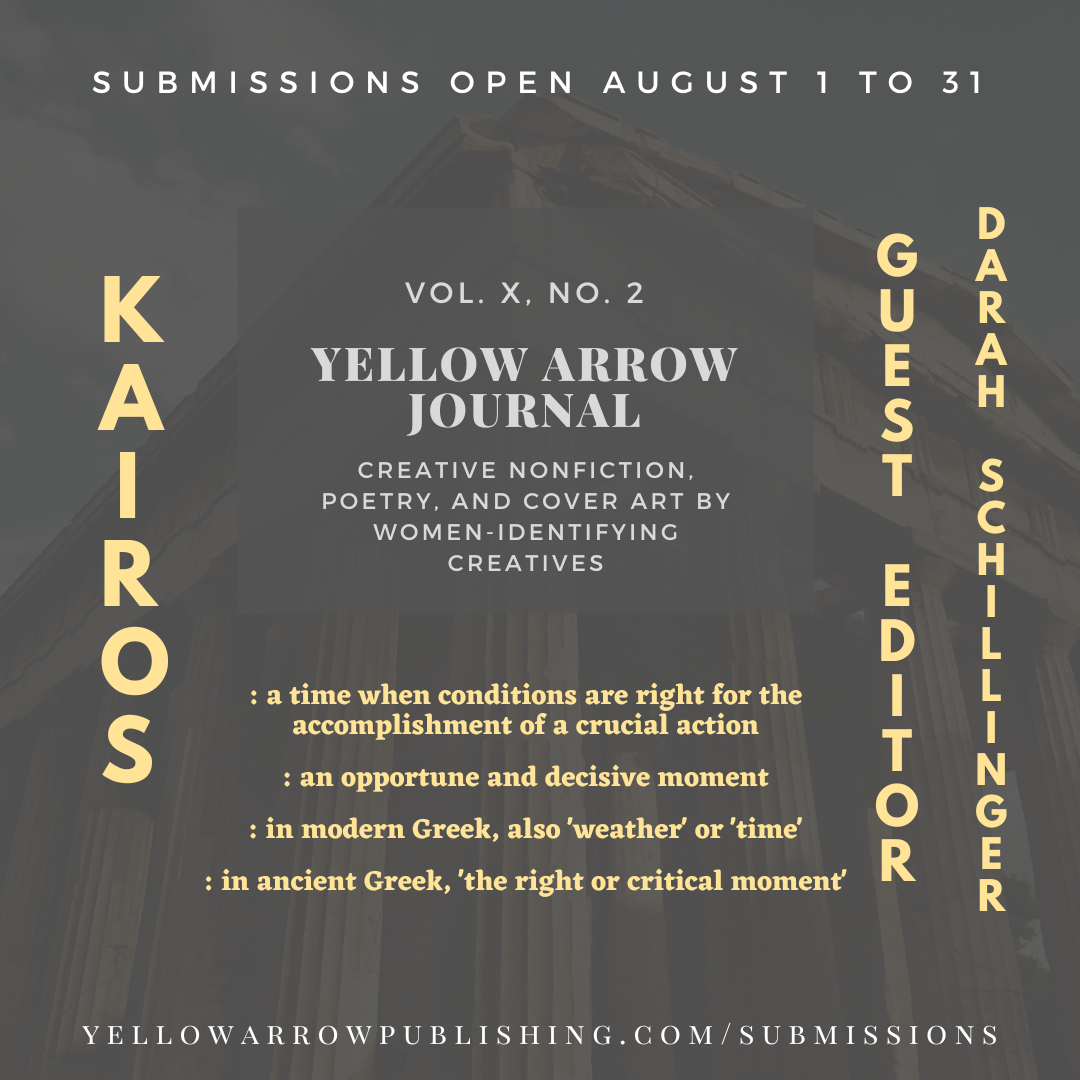
Yellow Arrow Publishing is excited to announce that submissions for our next issue of Yellow Arrow Journal, Vol. X, No. 2 (fall 2025) are open August 1-31, exploring the aftermath and aftereffects of catalytic moments, forged from either small flash fires or conflagration. And in her introductory blog, guest editor Darah Schillinger (she/her) explained how moments of her life, even those painful, helped to shape the person she is today.
“Over the two and half decades of my life so far, I have become and unbecome, unveiled and recovered, so many parts of my identity that when I look at a picture of myself young (“straight, neurotypical, healthy”) I instead see a child that I haven’t spoken to in 20 years and wish well. As a writer, I have spent much of my adult life considering the aftermath of these catalysts, looking for meaning in them and the varied ways these moments have shaped my present and future. And while finding some kind of meaning, every now and then, I know, and am okay with the fact, that I will continue to discover new things about myself through these events.”

By working through the aftermaths of each moment, each event, Darah was able to discover more about who she is and who she wants to be. Darah is a writer based in Lexington Park, Maryland. Her poems have appeared in AVATAR Literary Magazine, Yellow Arrow Journal, Maryland Bards Poetry Review, Empyrean Magazine, Grub Street Magazine, and The Eunoia Review and on the Spillwords Press website. In October 2024, her poem, An elegy for the Pompeii woman the Internet wants to fuck, was named a finalist for the Montreal International Poetry Prize. Her first poetry chapbook, when the daffodils die, was released in July 2022 by Yellow Arrow Publishing. Her second collection, Still Warm, is a work in progress.
The second issue of volume X will reflect on this idea, our (collective/individual) experiences with the blazes, trials, and/or life events that shape both our present and imagined futures as we search for our path(s) forward. This issue’s theme is KAIROS
: a time when conditions are right for the accomplishment of a crucial action
: an opportune and decisive moment
: in modern Greek, also ‘weather’ or ‘time’
: in ancient Greek, ‘the right or critical moment’
Here are some guiding questions about the topic and theme:
Consider the long-term effects of an event, feeling, or experience. How has it shaped you, your speaker, or your writing as a whole?
Has this impactful experience uncovered something positive?
What is the timeliness of your writing? What is it about now that makes you want to reflect?
When you write, what is it you are looking for? If you’re unsure, search for something.
Yellow Arrow Journal is looking for creative nonfiction, poetry, and cover art submissions by writers/artists who identify as women, on the theme of KAIROS. Submissions can be in any language as long as an English translation accompanies it. For more information regarding journal submission guidelines, please visit yellowarrowpublishing.com/submissions. Please read our guidelines carefully before submitting. To learn more about our editorial views and how important your voice is in your story, read about the journal. This issue will be released in November 2025.
The journal is just one of many ways that Yellow Arrow Publishing works to support and inspire women-identifying creatives through publication and access to the literary arts. Since its founding in 2016, Yellow Arrow has worked tirelessly to make an impact on the local and global community by advocating for writers who identify as women. Yellow Arrow proudly represents the voices of women from around the globe. Creating diversity in the literary world and providing a safe space is deeply important. Every writer has a story to tell, every story is worth telling.
*****
Yellow Arrow Publishing is a nonprofit supporting women-identifying writers through publication and access to the literary arts. You can support us as we BLAZE a path for women-identifying creatives this year by purchasing one of our publications or a workshop from the Yellow Arrow bookstore, for yourself or as a gift, joining our newsletter, following us on Facebook or Instagram, or subscribing to our YouTube channel. Donations are appreciated via PayPal (staff@yellowarrowpublishing.com), Venmo (@yellowarrowpublishing), or US mail (PO Box 65185, Baltimore, Maryland 21209). More than anything, messages of support through any one of our channels are greatly appreciated.
Gratitude is a Divine Emotion: Yellow Arrow Interns
“Gratitude is a divine emotion: it fills the heart, but not to bursting; it warms it, but not to fever.”
from Shirley by Charlotte Brontë
One of the many ways Yellow Arrow Publishing encourages women writers and women in publishing is through inclusion within the organization itself. We welcome (and thrive with) our volunteers and interns, not only for our own benefit but to also (hopefully) provide a prospective future publisher with some necessary tools and knowledge about the publishing world. And even if a volunteer/intern does not plan to continue within the publishing world, the tools and knowledge of working in a women-led, collaborative organization. One that champions the different and the unique. One that looks for partners and allies rather than simple connections (see our current list of partners here).
We try to find each volunteer, each intern, space in our organization to grow and flourish in the area they are most interested in (and of course where we need the most help!). Past staff members have worked at our live events and at Yellow Arrow House. They hand bound our publications and put as much love and tenderness into each copy as we could hope. Today they focus on the ins and outs of releasing a publication, running a publishing company, and our community-driven projects. Tasks can range from editing to formatting, marketing, and putting together events and workshops. Above all else, our interns support and champion staff/board, authors, workshop attendees, and themselves. We are so thankful to have had them with us on this journey.
So let’s introduce the summer 2025 interns. Each has our appreciation.
Kristen Caruso, Program Management Intern
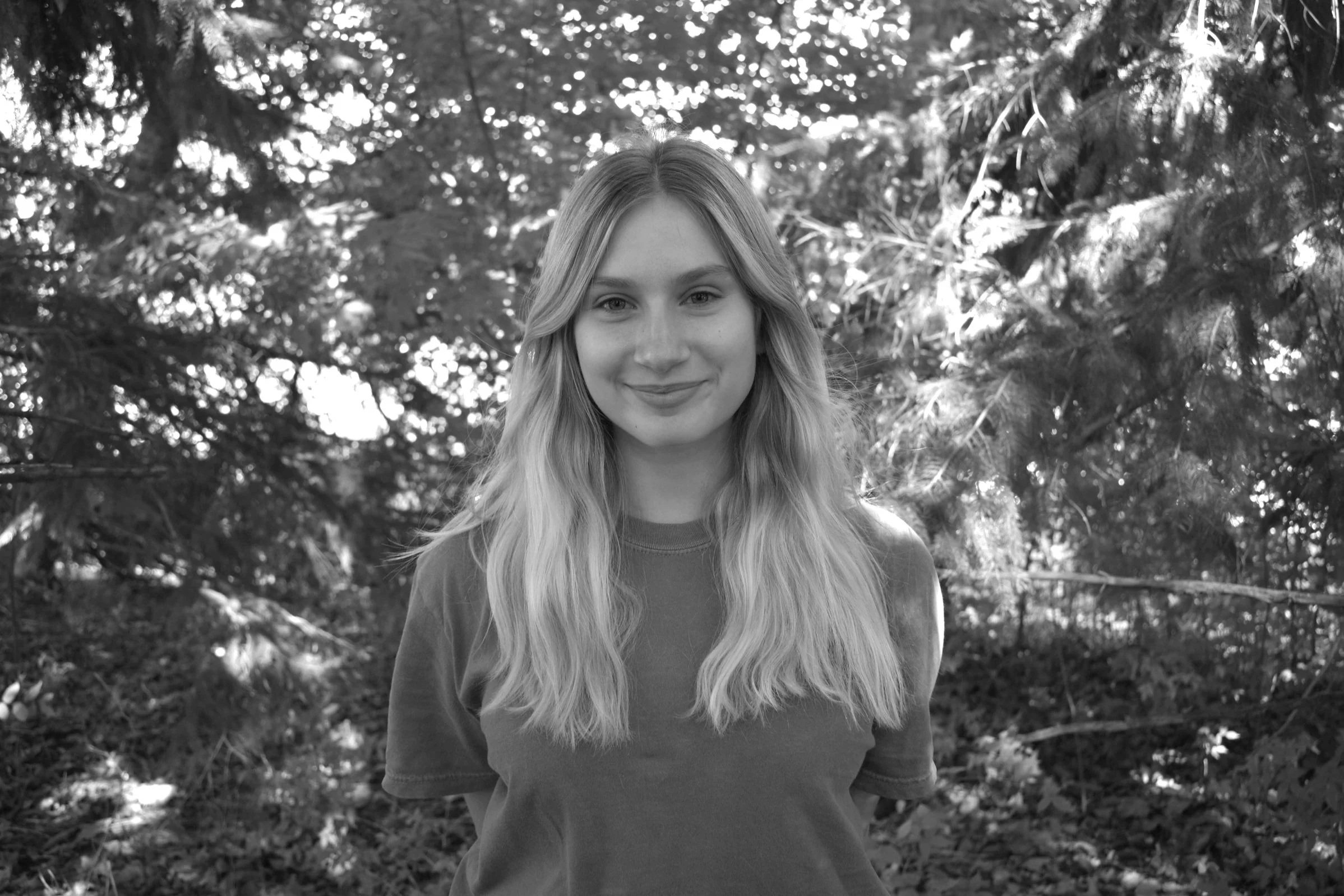
From Hillsborough, New Jersey
What do you do? For Yellow Arrow, I work on the promotion for upcoming events, submissions, and [workshops and writers-in-residence] applications, creating social media graphics and pamphlets, scheduling posts, and writing captions. I also read and voted on the Vignette BLAZE submissions, edited part of the Yellow Arrow website, wrote blog posts, and created the July newsletter.
Where do you go to school? I’m a student at the University of Rochester, graduating in 2027.
What are you currently working on? Outside of Yellow Arrow, this summer I’m a calculus student, a writer of poetic prose and unfinished stories, an avid public library goer, a 5k runner, and an ocean swimmer.
Kristen Caruso (she/her) is a rising junior at the University of Rochester but calls New Jersey home. As a double major in English (creative writing) and business, with a minor in French, she hopes to combine her areas of study in a career in the publishing industry. Kristen’s interest in publishing began as the editor-in-chief of her high school’s yearbook organization and continues to thrive on the editorial board of her university’s art and literature journal, LOGOS. She enjoys coffee, the color green, poetry, nonfiction about trees, the ocean, Rochester snow, New Jersey pizza, music that’s somewhat bad, and lists that are too long. Find her on Instagram @kris10caruso.
She still has two more years left of school, but hopes to continue writing and learning for now, and eventually work in the publishing industry.
What is your favorite course at school? Why did you choose to take it?
I really enjoyed both my Intro to Fiction Writing and Intro to Poetry Writing courses. They were the first times I’ve truly been a part of a writing community, and I loved talking about writing and getting feedback from my peers.
Have you read anything this year that has stuck with you?
For my poetry writing class, I read Then the War, a collection of poetry by Carl Phillips. His work is just absolutely striking, and I connected deeply with a lot of his motifs—the ocean, forests, trees. Phillips came to my school to do a Q&A and a reading, and I loved hearing him talk about his work and how his life has impacted it.
Why did you choose an internship with Yellow Arrow?
When I first heard about Yellow Arrow, I was struck by its mission. Finding a cause worth working for and being passionate about was really important to me. And after meeting and working with people, I see how passionate they all are about it too.
How are things going so far?
Things are going really well! Everyone I have met and worked with are so kind and passionate about what they do. I love that my position requires me to meet different people and work on different projects.
Sophia Graney, Vignette BLAZE intern

From Fairfield, Connecticut
What do you do? I help a lot with all the work related to Yellow Arrow Vignette this summer. So far I’ve done lots of reading and reviewing/voting. Coming up is a lot of work in terms of sending emails, creating graphics and marketing for social media and for the website, and helping organize a launch event. As well as that, I’m helping more generally on reading and voting on chapbook submissions.
Where do you go to school? I’m going into my senior year at Loyola University Maryland! Graduation is expected to be May 2026.
What are you currently working on? Outside of Yellow Arrow, I’m working at my summer job at a beach. As well as that, I’m preparing for my senior year and my incoming role as student body president at Loyola. I’m also working on a few slow projects of beginning work for my senior thesis, teaching my younger cousin to read, and taking as many photos of life as possible.
Sophia Graney is a rising senior at Loyola University Maryland double majoring in English and writing with a keen interest in Shakespearean studies. With a myriad of passions, Sophia is constantly writing, organizing, and advocating for the student body as part of Loyola’s student government or chatting with friends for hours in the on-campus Starbucks. When not studying or writing her own poetry and prose in Loyola’s humanities building, Sophia can be found at Loyola’s rock-climbing wall or at the beach in her hometown of Fairfield, Connecticut. Find her on Instagram @sophia.graney.
She’ll [soon] be applying to graduate schools for funded English PhD programs!
What is your favorite course at school? Why did you choose to take it?
I can’t exactly choose one. I have two favorite courses that I have stuck with me. One was a civic literacy writing class where we learned about lots of issues facing literacy rates in our country and ways around Baltimore that were helping aid in the pursuit of reading and literary access. It was a service-based class that was taught by my favorite teacher and seemed like a no brainer to take. My other favorite class was my Shakespeare Histories and Tragedies class. I just love Shakespeare and learning about my favorite plays in a college setting was really exciting.
Have you read anything this year that has stuck with you?
On Photography by Susan Sontag.
Why did you choose to do an internship with Yellow Arrow?
Yellow Arrow was introduced to me by my friend Mel Silberger who had an internship with the press when I was a first year and she was a junior. She carried on with the group her senior year and to me, it just felt like something I wanted to be a part of, especially when I learned more about the mission of Yellow Arrow. Feminism and gender-based advocacy is a niche I have carved out for myself throughout my time in college and being a part of a woman-identifying press that aims to uplift voices is so important to me and just seemed like something I wanted to be a part of, even if just a little.
How are things going so far?
Excellent! I’m really loving the work that I’m doing. It didn’t feel like much in the beginning, just because it was a slow and steady stream of work. Now it’s more a cohesive list of objectives to complete, and I can start to see my work and its tangible effects which is always super awesome.
Kate Tourison, Publications Intern

Lives in Ellicott City, Maryland
What do you do? So far, I’ve had the pleasure of working closely with [editor-in-chief Kapua Iao] to read, format, and edit for Yellow Arrow chapbooks and Yellow Arrow Vignette BLAZE, create social media graphics to promote publications and writers in the community, engage with the Yellow Arrow website, Instagram, and Facebook, and begin writing some of my own pieces for the Yellow Arrow blog.
Where do you go to school? I go to Loyola University Maryland and will graduate next year, in May 2026.
What are you currently working on? It’s been a slow summer for me. I’ve just finished my fourth (and final) summer orientation at Loyola as a part of the new student and families programming. It’s always a highlight for me to help welcome the incoming class of first-year students and prepare for the fall semester. Aside from that, I’ve mostly been focused on graduate program research and working at my local ice cream shop.
Kate Tourison (she/her) is a rising senior at Loyola University Maryland where she majors in English and communication with a specialization in advertising and public relations. As a lifelong book lover, she is thrilled to join the Yellow Arrow team and engage with an inspiring community of women writers. During her spare time, she enjoys watching old episodes of Gilmore Girls, taking long walks with her dog, and, of course, reading! You can find her at @katetourison on Instagram.
She would love to continue working in publishing after graduation in some capacity, but being an English professor has also been a life-long dream. So I guess we shall see!
What is your favorite course at school? Why did you choose to take it?
This is a really tough one. I’m going to have to go with a tie between my seminars on Banned Books and James Joyce. The course on banned books was a no-brainer for me because I have always been passionate about reading and promoting diverse voices in literature and having conversations about the influence of modern politics on censorship. The class was an absolute blast. The class on James Joyce, on the other hand, was somewhat of a last minute decision. Ulysses was one of those books that felt impossibly daunting, even as an English major. The class, however, was such a rewarding experience with the most wonderful professor, and I can now confidently say that Joyce is one of my favorite writers.
Have you read anything this year that has stuck with you?
My gosh, I’ve gained a few new favorites this year. One that has really stuck with me is one of my first reads of the year, Yellowface by R.F. Kuang. The book follows June Hayward, a white woman and failed writer, after she steals a manuscript from successful Chinese American author Athena Lui and publishes it as her own. Kuang satirizes the U.S. publishing industry, commenting on the “push” for racial diversity and exploitation of minority stories and voices while simultaneously shedding light on the dangerous world of social media and “cancel culture.”
Why did you choose to do an internship with Yellow Arrow?
A friend of mine had previously interned for Yellow Arrow, and told me about their very positive experience. Combined with my interest in the company’s mission and ethos, working with Yellow Arrow was my top choice.
How are things going so far?
Amazing!
*****
Thank you to everyone who supports these women and all writers who toil away day after day. Please show them some love in the comments below or on social media. If interested in joining us as an intern, you can learn more at yellowarrowpublishing.com/internships.
Yellow Arrow Publishing is a nonprofit supporting women-identifying writers through publication and access to the literary arts. You can support us as we BLAZE a path for women-identifying creatives this year by purchasing one of our publications or a workshop from the Yellow Arrow bookstore, for yourself or as a gift, joining our newsletter, following us on Facebook or Instagram or subscribing to our YouTube channel. Donations are appreciated via PayPal (staff@yellowarrowpublishing.com), Venmo (@yellowarrowpublishing), or US mail (PO Box 65185, Baltimore, Maryland 21209). More than anything, messages of support through any one of our channels are greatly appreciated.